Time to Rethink Tampons.

Thankfully, I’m well past periods. I started very young (10 years old), but I was one of the fortunate people who had short duration, light periods most of my life. Even so, I was more than happy to see them go. Like many people, I used tampons, and I don’t like to think just how much I spent on them, either. Back in the day, the tubes were cardboard, not plastic, so at least that build up of waste isn’t on my shoulders. Tampons are handy, easily carried about and all that, but they do carry risks, and the plastic tubes are now a serious environmental problem. I never had the opportunity to use a menstrual cup, but if I were still dealing with periods, that’s definitely the way I’d go.

Via AsapScience.

University of North Dakota: How To Be A Racist Ass.

More University of North Dakota students wear blackface (Photo: Facebook).

More University of North Dakota students wear blackface (Photo: Facebook).

Just what in the fuck is being taught at UND? How to be the very best racist you can be?

The University of North Dakota is investigating another racially-charged photo that was posted to social media. This time, the photo contains four white people wearing black facial masks with the caption “Black Lives Matter”.

A facebook user posted the picture on her page, tagging UND saying “the problem is growing worse here at UND.”

UND spokesperson tells Valley News Live that police and administration were notified Wednesday about the picture and they are investigating. The spokesperson tells us the students in the picture attend UND.

This picture comes just 24 hours after another one. The first picture was posted on snapchat. It showed three white students smiling and holding up a peace sign with the caption of “locked the black b*tch out.

UND President Mark Kennedy sent out statement on Thursday saying he is appalled that within 48 hours two photos have been taken and that the university has much work to do.

Nice you think so, Mr. Kennedy. I’d say you haven’t been paying much attention to what’s happening right under your nose. I’m really not sure why you’re all of a sudden appalled, as you do live Ndakota, and surely you must be aware of the rampant racism problem here, first and foremost against us Prairie ni**ers (Indians), then anyone else who isn’t a lovely shade of pasty white.

The following statement is from UND President Mark Kennedy:

I am appalled that within 48 hours two photos with racially-charged messages have been posted on social media and associated with the UND campus community. It is abundantly clear that we have much work to do at the University of North Dakota in educating our students, and the entire University community on issues related to diversity, inclusion, and respect for others.

The UND Police Department and the Office of Student Rights and Responsibilities are going through their processes in investigating these two incidences. We are moving as fast as we can. I understand that we all would like a swift resolution. However, our society, our legal system, and campus conduct processes are predicated on due process. We must maintain the integrity of our policies and procedures by following due process.

I have been disappointed to learn that we have people in our university community who don’t know that the kind of behavior and messaging demonstrated in these two photos is not ok, and that, in fact, it is inexcusable.

Our mission is educational in nature. Our student conduct process is educational in nature. This is our opportunity to provide an education to all members of our campus community, especially those who may not understand the gravity of their actions. Based upon my conversations with students and others, I can assure you that the messages of the two photos are painful to many individuals.

I have heard from many within our campus community, as well as alums and individuals not directly connected to the University, who are encouraging us to use this situation as an opportunity to address what some see as long standing issues within our community and across the country.

We must demand better of ourselves and our university community. I am directing my team to explore best practices for diversity education amongst premier institutions and will work collaboratively with the AVP for Diversity and Inclusion and University Senate to bring it to reality at UND.

As I have said before, we value diversity and inclusion and take seriously respect for others as well as the exchange of different thoughts and ideas. To achieve the vision of One UND, we must take steps to demonstrate these values across our university community.

You really want to do something, Mr. Kennedy? First, dump the UND cops. There isn’t a cop shop anywhere in Ndakota that isn’t a hotbed of bigots. Next, lose the mealy-mouthed, “well, we must investigate for a really long time” bullshit, because what that says is that you’re going to use that line until this conveniently blows over, assuming more open bigotry doesn’t pop up on student social media. For once, stand up, tell the truth, and fucking do something, because you have a bigger problem than you think – not only are you rife with white students who are asshole bigots, they appear to be quite fucking stupid, too. At the very least, you may wish to seriously up the standards for white students, just to insure minimal intelligence.

Via KYFR.

North Dakota: Climate Justice Meets Racism.

Standing Rock Sioux Chairman Archambault (left) and Chief Arvol Looking Horse.

Standing Rock Sioux Chairman Archambault (left) and Chief Arvol Looking Horse.

…North Dakota is not the whitest state in America, but it’s arguably the most segregated. More than 60 percent of its largest minority population, Native Americans, lives on or near reservations. Native men are incarcerated or unemployed at some of the highest rates in the country. Poverty levels for families of the Standing Rock tribe are five times that of residents living in the capital city, Bismarck. In Cannon Ball, the heart of the tribal community, there are rows of weathered government homes, but no grocery store. Tucked behind a lonely highway, this is where mostly white farmers and ranchers shuttle to and from homesteads once belonging to the Sioux.

Add to that a contempt that many Native Americans say they feel from North Dakotans and particularly from police, and many people of Standing Rock are not surprised by the extreme response of law enforcement against activists.

“We’ve run on empty for a number of generations,” said Phyllis Young, a former tribal councilwoman for the Standing Rock Sioux, the community that’s vowed to stop the pipeline in its path. “But now we’re taking a stand. We are reaching a pinnacle, a peak.”

[Read more…]

Feds Seek Infrastructure Input.

Lucas Reynolds.

Lucas Reynolds.

Two weeks after a joint announcement by the Departments of Justice, of the Army, and of the Interior called for the halt of construction on the Dakota Access Pipeline (DAPL) in North Dakota, the three agencies invited representatives from all 567 federally recognized tribes to participate in government-to-government consultations on infrastructure decision making.

The agencies sent a letter to tribal offices, informing of their intent to seek tribal input on two questions specifically:

— How can federal agencies better ensure meaningful tribal input into infrastructure-related reviews and decisions, to protect tribal lands, resources, and treaty rights within the existing statutory framework?

— Should the federal agencies propose new legislation altering the statutory framework to promote these goals?

The plan for the initial consultation sessions was announced September 9 when the agencies called for the immediate, yet temporary halting of construction following federal judge James Boasberg’s denial of the Standing Rock Sioux Tribe’s request for an injunction of the DAPL.

[Read more…]

Comics.

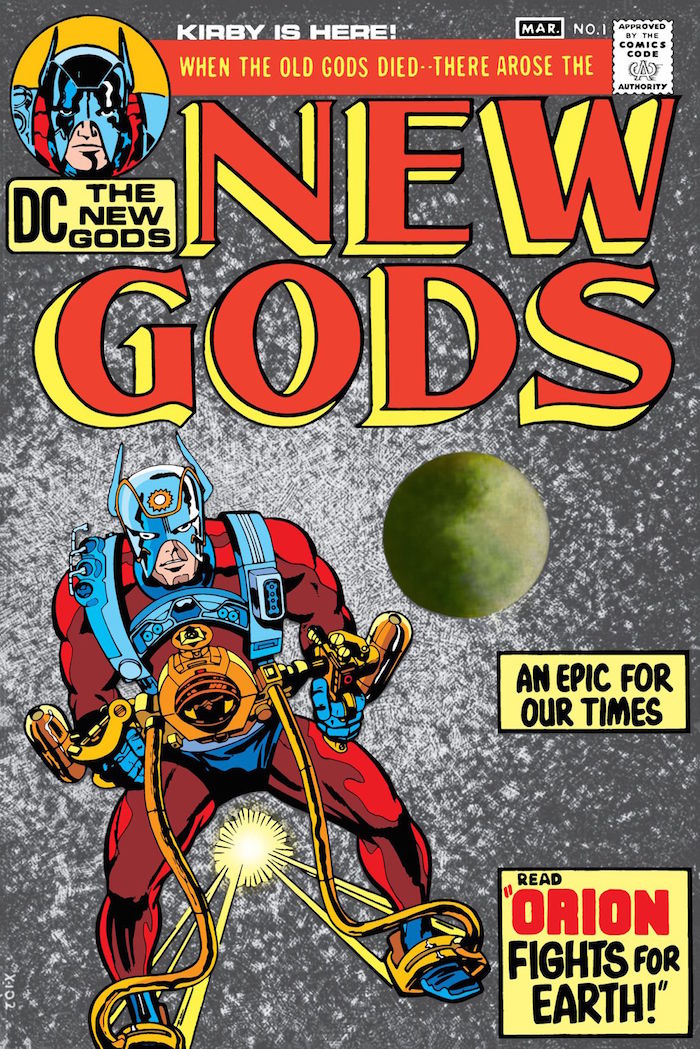
Cover for The New Gods #1. Illustrated by Jack Kirby. Photo courtesy of DC Comics.

Cover for The New Gods #1. Illustrated by Jack Kirby. Photo courtesy of DC Comics.

The New Gods #1 (Reprint)

One of the comics featured in this week’s roundup is a digital reprint of a classic Jack Kirby comic. Kirby, longtime collaborator with Marvel icon Stan Lee, helped create famous characters like The Hulk, The Fantastic Four, and the X-Men. Unlike the more straightforward, BAM! POW! creations of Lee, Kirby’s written and illustrated works are tinged with the weird, the cosmic, and the symbolic. If readers try the reprint of New Gods #1 (reviewed below) and like what they read, other Kirby must-reads include the OMAC series, Devil Dinosaur, and Machine Man. In these comics, it’s clear Kirby didn’t care if you couldn’t keep up with his breakneck speed and garbled, grandiose language. This is old-fashioned science fiction, which neither strives for accuracy nor ease of readability, but falls somewhere wonderfully in-between.

Originally published in 1971, The New Gods tells the story of a battle between the forces of good and evil, with the New Gods (a group of super-powered heroes) battling the evil Darkseid. The main hero, Orion, rides around on little golden leg harnesses, uses his “Astro-Force” to blast away his enemies, and comes off like a grumpy old man as he quarrels with those trying to help him. This comic is baffling in its own self-reference and complexity, and biblical in its language and scope, but it’s absolutely a must-read for those who gravitate toward the weird and extra-dimensional. The closest piece of fiction one could compare The New Gods to are the latter novels in the Dune series, by Frank Herbert. And Kirby’s artwork is unparalleled in its ability to conjure grandeur with an economy of lines.

Cover for Jim Henson’s Labyrinth Tales. Illustrated by Corey Godbey. Photo courtesy of BOOM! Archaia.

Cover for Jim Henson’s Labyrinth Tales. Illustrated by Corey Godbey. Photo courtesy of BOOM! Archaia.

Jim Henson’s Labyrinth Tales

Artist and writer Corey Godbey captures all of the charm and mystery of Jim Henson’s Labyrinth, and turns that into a storybook for kids. Less of a true comic than a series of full illustrations with narration, this book is so beautifully illustrated it will absolutely stick in the minds of young ones. The illustrations by Godbey are honeyed and sweet, and the world presented is simply magical. Though children’s books aren’t often covered in this column, this work is an absolute must for readers with young children.

Cover for Black Hammer #3. Illustrated by Dean Ormston. Photo courtesy of Dark Horse Comics.

Cover for Black Hammer #3. Illustrated by Dean Ormston. Photo courtesy of Dark Horse Comics.

Black Hammer #3

The heroes of Black Hammer used to be comic book heroes with rich backstories and varied interpersonal lives, but now they’ve been retconned. After a multidimensional crisis writes them out of their own stories, they’re forced to live in a small, timeless farming town. This issue focuses on Barbalien, the alien barbarian, as he attempts to adjust to his new life, and as he reminisces on how he got to earth to begin with. This is a hugely imaginative comic with wonderful art by Dean Ormston. If the series pitch intrigues readers, it’s probably best they go back to the start and try out issue #1.

Via The Creators Project.

Sacred Burial Ground Sold to Dakota Access.

Courtesy LandofDakota.com Cannonball Ranch, which is full of sacred burial sites and artifacts, was sold on September 22 to Dakota Access LLC.

Courtesy LandofDakota.com
Cannonball Ranch, which is full of sacred burial sites and artifacts, was sold on September 22 to Dakota Access LLC.

No words. None. Okay, a few. If the owners, who reside in Flasher, were all that concerned about liability, why didn’t they offer the land for sale to Standing Rock? I smell shit. A whole lot of bullshit.

Cannonball Ranch in North Dakota has been sold to Dakota Access LLC. The ranch is not the site of the Standing Rock Camp where protectors are taking a stand against the Dakota Access pipeline, but the ranch has hundreds of burials and artifacts.

MyNDNow reports the land was sold by David and Brenda Meyer on September 22 for liability reasons. David Meyer told MyNDNow that there were just too many people on the property.

“It’s a beautiful ranch, but I just wanted out,” he said.

Standing Rock Sioux Tribal Chairman David Archambault II made a statement at the Protecting Native Land and Resources, Rejecting North Dakota Pipeline Forum:

“Recently, they purchased the Cannonball Ranch, yesterday the transaction was final, the documents are signed and recorded with the county and the money was transferred. So the owner of the Cannonball Ranch, where we’re demonstrating, what we’re protecting, has now been sold to the pipeline company so it’s really disturbing to me because the intention is all wrong. Without having any further review and without understanding what the process was… it’s not fair. It’s not right and the company is going to try to move forward without any consideration of tribes. I am not asking that you stop this pipeline, I’m asking that you do a full EIS [Environmental Impact Statement].”

Read his full statement on the Standing Rock Sioux Tribe Facebook page.

On the same day as the Cannonball Ranch sale, more than 1,200 archaeologists and museums sent a letter to President Barack Obama, the Department of Justice, the Department of the Interior and the U.S. Army Corps of Engineers urging a full Environmental Impact Statement be completed as well as a survey of cultural resources along the pipeline’s route.

“The destruction of these sacred sites adds yet another injury to the Lakota, Dakota, and other Indigenous Peoples who bear the impacts of fossil fuel extraction and transportation. If constructed, this pipeline will continue to encourage oil consumption that causes climate change, all the while harming those populations who contributed little to this crisis,” reads part of the letter.

Via ICTMN.  See comments for additional info.

The Rewards of Being A Dirty Rotten Judge: $203,100 A Year.

Judge Walter S. Smith Jr. (right) swears Felipe Reyna in as an Associate Justice of the 10th Court of Appeals in January 2004. (Baylor University).

Judge Walter S. Smith Jr. (right) swears Felipe Reyna in as an Associate Justice of the 10th Court of Appeals in January 2004. (Baylor University).

Appointed to the Western District of Texas by President Ronald Reagan in 1984, Walter S. Smith Jr. quickly developed a reputation as one of Texas’ harshest federal judges. People who worked with him knew he had a temper.

That’s what a former clerk in Smith’s Waco office says she had in mind when he forced himself on her in the late 1990s. After harassing the woman at work one morning, Smith called her into his office, wrapped his arms around her and shoved his tongue down her throat as he pressed his erection into her, according to a deposition the woman gave in 2014. He tried to direct her toward the couch even as she pulled away and kept saying no.

“I just panicked, and all I thought about was his anger, you know,” the woman testified. “And I was like how am I going to get out of here without making him angry.”

A panel of judges with the federal Fifth Circuit appeals court began investigating Smith after a Dallas lawyer named Ty Clevenger filed a complaint against the judge in 2014. Clevenger wants Congress to impeach Smith for his conduct toward women in his office. In late 2015, the Fifth Circuit judges didn’t recommend impeachment, but rather handed Smith the super serious punishment of barring him from hearing any new cases for a full year. They’ve also asked that the court’s so-called Judicial Council keep investigating Smith for allegations of additional sexual misconduct.

But as the Express-News first reported yesterday, Smith, 75, submitted his resignation to President Barack Obama last week. Which means that, as a retired federal judge, he’ll draw an annuity equal to his current salary of $203,100 per year – for the rest of his life.

There’s much more at the linked article, be warned, there is a great deal of detail about the sexual abuse and harassment. Too little happened to this horrible excuse of a human being, and now, he’s managed to put himself in the cosy position of receiving a great deal of money every year until he dies. Perhaps that won’t be long, given his age, but whether he lives one year or twenty more years, this is a slap in our collective faces of just how rotten the system happens to be. This man has seen little punishment for what he put his co-worker through, and now he gets to be rewarded by a guaranteed golden salary. Saying serious reform is needed is a serious understatement.

Full story at San Antonio Current. Content Note: extensive detail of sexual abuse and harassment.

Street Signs: The Good and The Bad.

Official signs are cropping up across the city, with four of Toronto's major streets now bearing signs with their Anishinaabe names. Spadina, or Ishpadinaa, is one of them. (Craig Chivers/CBC) .

Official signs are cropping up across the city, with four of Toronto’s major streets now bearing signs with their Anishinaabe names. Spadina, or Ishpadinaa, is one of them. (Craig Chivers/CBC).

Toronto is joining a number of other places as far as street signs go, adding the language of the original inhabitants of the land.

“By doing this, it shows that the First Nations people are still here. We’re still on their land. We share it but we’re still on their land,” Grant said.

That’s the problem though, isn’t it, that all the colonial people are still on their land, dominating that land, and dominating the original inhabitants, and not in good ways. While I have been in favour of various street sign initiatives, I think they have little impact on on non-Native people. Oh, they might ooh and aah for a moment or three, and then it’s ignored and forgotten.

Indian Country Today reported on this effort in Toronto back in July of 2013:

gikinoo-feat

[Read more…]

Cool Stuff Friday: MAD.

mad

MAD (taken from the Danish word for “food”) is a not-for-profit organization that works to expand knowledge of food to make every meal a better meal; not just at restaurants, but every meal cooked and served. Good cooking and a healthy environment can and should go hand-in-hand, and the quest for a better meal can leave the world a better place than we found it. MAD is committed to producing and sharing this knowledge and to taking promising ideas from theory to practice.

MAD is a great place to lose yourself for ages on end. Food, food, food, but not all the regular ways food is addressed. Here, there is the breathtaking culture of food, from all over the world, the history of food, the art of food, traditions of food, innovations and artistry of food. Any curiosity you may have about food, you can find satisfaction at MAD. I’ve been trying to catch up, reading at the site for the past month or so, and I’ve barely made a dent. Two articles in particular got my attention in recent days: Turning Trash Into Delicious Things: a Brief Guide by Arielle Johnson, and A People’s History of Carolina Rice, by Michael Twitty.

The first article grabbed my attention because it addresses the waste of craft brewers, and that particular waste happens in my household, as Rick is a home brewer:

On an artisanal-industrial scale, spent grains—the malted barley that is steeped in water to make beer—is a major source of waste for craft brewers, with (roughly) 8 kilos of leftover barley for every 50 liters of finished beer. It can be used as animal fodder, but you can go beyond that, since it also presents creative flavor opportunities.

That waste, it turns out, can be used to make koji, which in turn can be used to make a form of miso. Click on over to the article for details, and recipes! The article on Carolina rice was eye-opening, and details the history of this rice from 3500 B.C.E. to 2013. There’s personal history in this overview of one food:

1770s: My great-great-great-great-great-great grandmother is captured in a war in Sierra Leone and brought to Charleston, without a doubt to grow and mill rice on a Lowcountry plantation. She is a member of the Mende people, who would later lead the Amistad slave ship revolt in 1839.

[…]

1835: My great-great-great grandmother, Hettie Esther Haynes, is born and is later sold out of South Carolina, away from her mother Nora, into the cotton country of Alabama during the largest forced migration in American history—the domestic slave trade. Thousands of Gullah-Geechee will know this fate as rice cultivation faces competition from other countries and slaveholders are forced to reduce the number of bondspeople.

Now I’m going to read about The Carbon Footprint of Eating Out, A War Zone Cuisine, and Culture of the Kitchen: Cooks Weigh In.

Have a wondrous wander through the fields of MAD, it’s a journey you won’t regret.