Eurasian Jay from Giliell, click for full size!

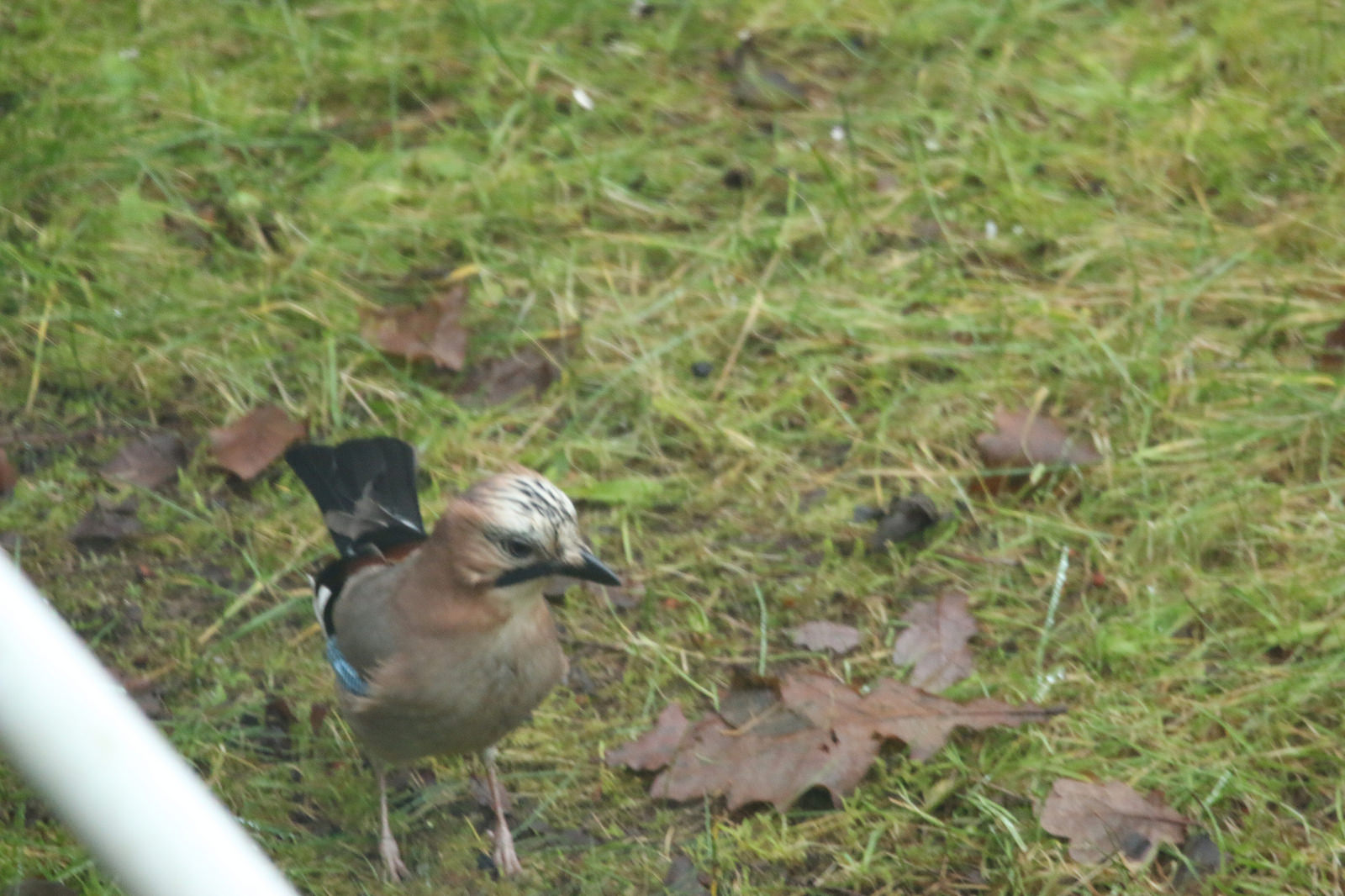
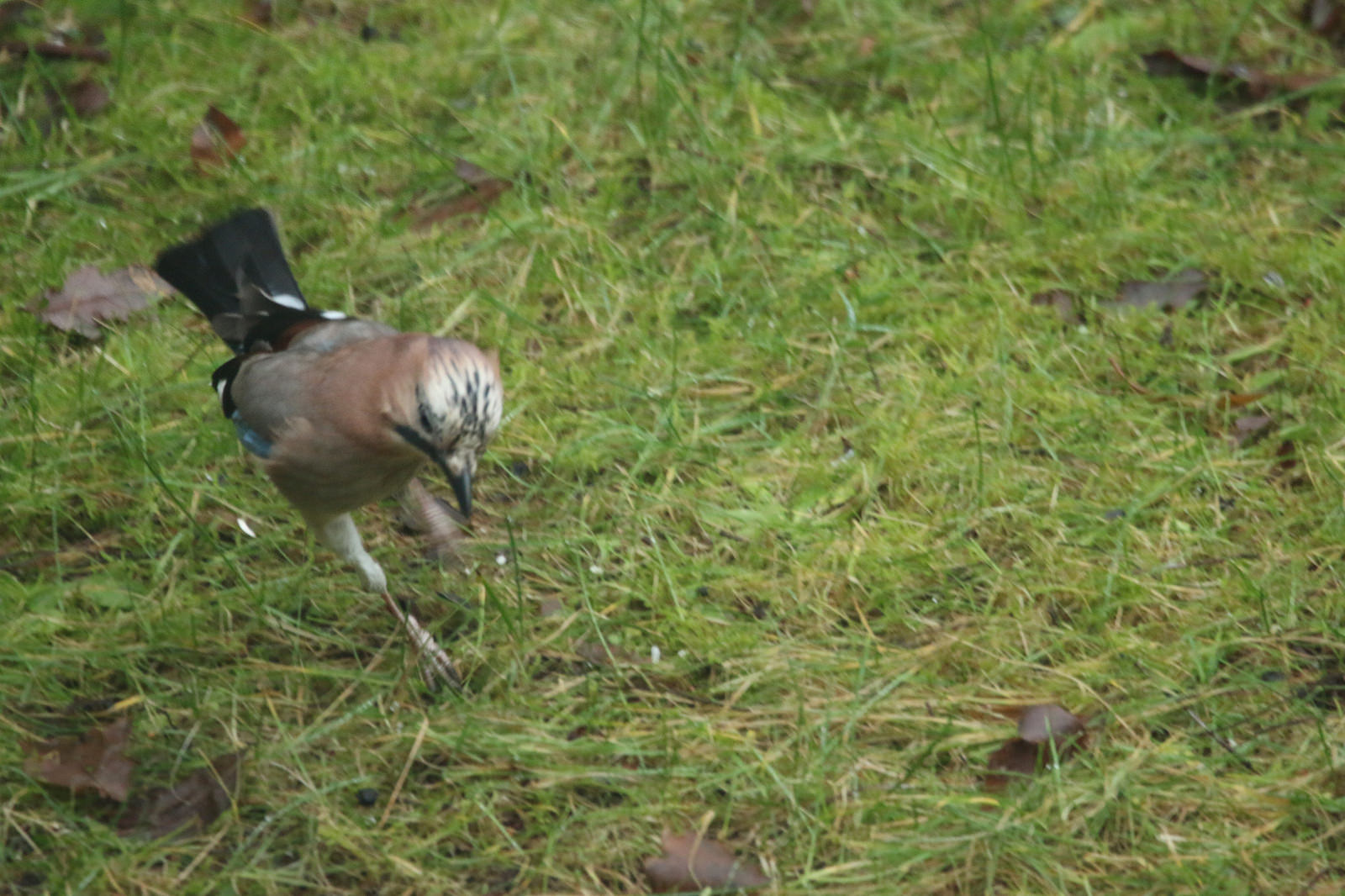
© Giliell, all rights reserved.

Eurasian Jay from Giliell, click for full size!
© Giliell, all rights reserved.
The Illustrations to Tales of Mystery and Imagination, by Edgar Allen Poe, by Harry Clarke, 1919. Click for full size.

But, for many minutes, the heart beat on with a muffled sound.

Two aggressive geese in a roundel.
Text Translation:
[Of the goose] The goose marks the watches of the night by its constant cry. No other creature picks up the scent of man as it does. It was because of its noise, that the Gauls were detected when they ascended the Capitol. Rabanus says in this context: ‘The goose can signify men who are prudent and look out for their own safety.’ There are two kinds of geese, domestic and wild. Wild geese fly high, in a an orderly fashion, signifying those who, far away from earthly things, preserve a rule of virtuous conduct. Domestic geese live together in villages, they cackle together all the time and rend each other with their beaks; they signify those who, although they like conventual life, nevertheless find time to gossip and slander.
All wild geese are grey in colour; I have not seen any that were of mixed colour or white. But among domestic geese, there are not only grey but variegated and white ones. Wild geese are the colour of ashes, that is to say, those who keep apart from this world wear the modest garb of penitence. But those who live in towns or villages wear clothes that are more beautiful in colour. The goose, more than any other animal, picks up the scent of a someone happening by, as the discerning man knows of other men by their good or bad reputation, even though they live far away. When, therefore, a goose picks up the scent of a man approaching, it cackles endlessly at night, as when a discerning brother sees in others the negligence that comes with ignorance, it is his duty to call attention to it.
The cackling of geese on the Capitol once helped the Romans, and in our chapter-house daily, when the discerning brother sees evidence of negligence, his warning voice serves to repel the old enemy, the Devil. The cackling of the goose saved the city of Rome from enemy attack; the warning voice of the discerning brother guards the life of his community from disruption by the wicked. Divine providence would not, perhaps, have revealed to us the characteristics of birds, if it had not wanted the knowledge to be of some benefit to us.
Folio 53r – the nightingale, continued. [De ansere]; Of the goose.
Trivium – Until The World Goes Cold. Lyrics at the link.
From Charly: This is the knife I have given to my Mom for Christmas. Scary sharp – I could slice that tomato paper thin. Seems to hold edge well, it was already used since I made it and the edge was not touched up prior to photographing.
Measurements: Overall length ~26 cm, blade ~14 cm lenght, ~2 mm thick, blade grind convex with no secondary bevel.
Materials: handle scales chemically treated Elder wood (Sambucus nigra) coated with PU, blade N690 steel hardened at home in impromptu settings.
I hope to improve the design based on my mothers feedback and make more knives like this one in the future, it was fun. Beautiful! Click for full size.

© Charly, all rights reserved.
From Giliell, click for full size!
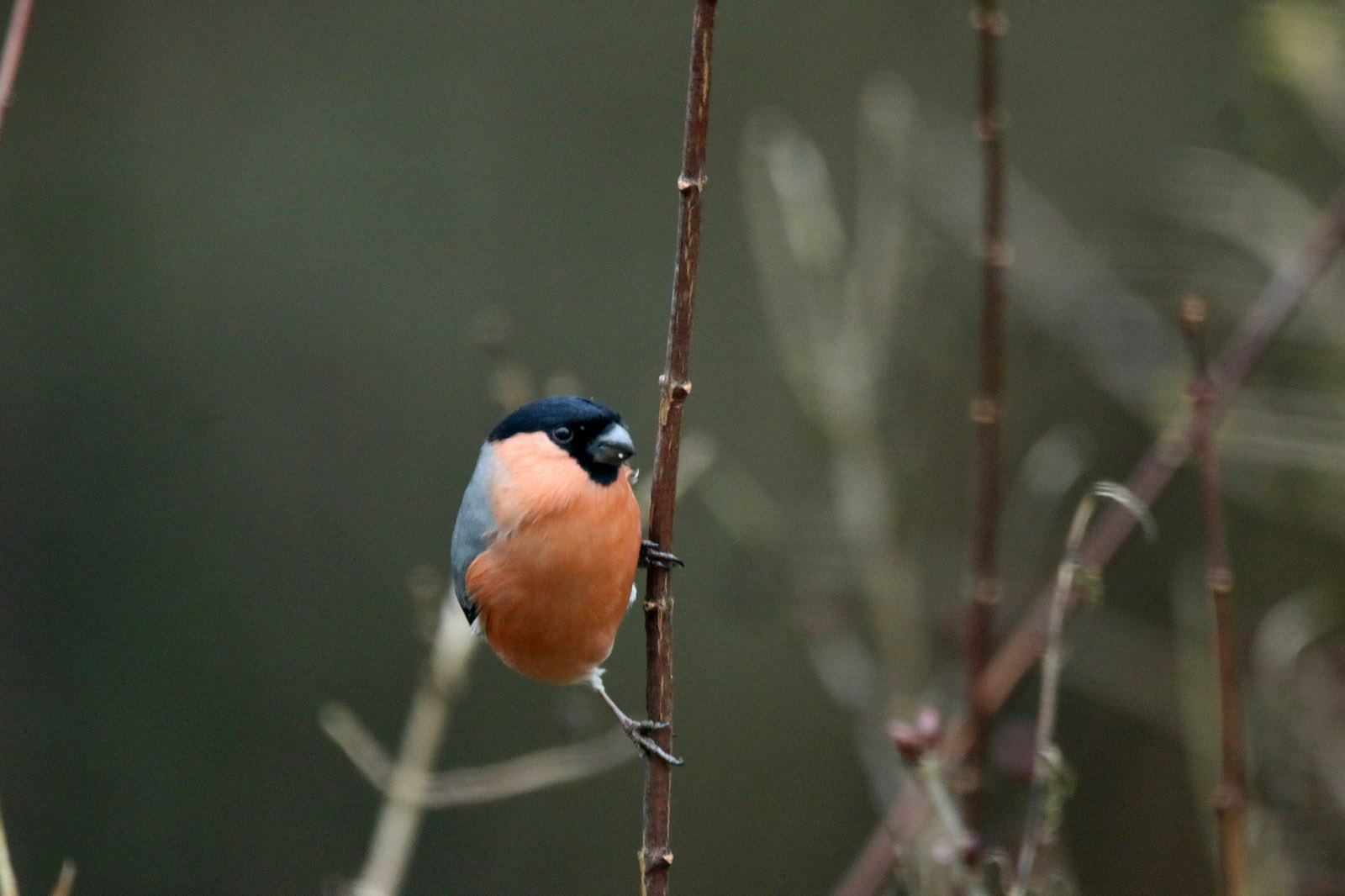


© Giliell, all rights reserved.

A fine example of christian “logic”.
Michele Bachmann is slithering back into the political scene. Maybe. Just say no, people. Michele was on Jim Bakker’s glurge-fest last week, saying she was considering running for Franken’s vacant seat:
Bachmann said that she has “had people contact me and urge me to run for that Senate seat” and that she is asking God if doing so in His will for her.
Bachmann said that she would be willing to run in order to take godly principles into the Senate but is concerned that she will be unfairly attacked by Washington insiders because “the swamp is so toxic.”
Uh huh. None of this is new, and it’s just amazing how you can sit there and opine on the toxicity of that Washington swamp, given that your hero was supposed to have cleaned that all up. Guess that wasn’t one of the miraculous “accomplishments” of the Tiny Tyrant.
“I trust in a big God,” Bachmann said, asserting that she “was supposed to run for president” in 2012 in order to make the the repeal of Obamacare the central issue of the Republican platform. “I feel like I was wildly successful … I didn’t win, but I moved the debate. So I didn’t shed a tear when I left the contest because I felt like, you know, I fulfilled the calling that God gave me.”
A “big god”. Right. I guess everything has to have a ‘big’ appended to it now. I wish this bit of idiocy would die. All I can think about now is Honeycomb Cereal…
- Honeycomb’s big…yeah yeah yeah!
- It’s not small…no no no!
- Honeycomb’s got…a big big bite!
- Big big (taste/crunch) in a big big bite!
That almost works if you use ‘god’ instead of Honeycomb. Oh look, Michele thinks she was single-handedly responsible for the republican upset over healthcare! My my, some people might think that to be a tad arrogant. You didn’t move a thing, Michele. All anyone wanted was for you to shut the fuck up. Pretty sure people still want that.
“So the question is am I being called to do this now?” she added. “I don’t know.”
You don’t know? How is that possible? Your BIG god doesn’t have a BIG answer for you? Lazy slacker god. Or perhaps you aren’t praying enough, Michele. Go away and pray. Please.
Bakker eventually piped in to express his concern about the nasty nature of politics today, saying that “right now, they want to kill the president of the United States and if they could put a contract [out on Donald Trump]—which they probably already have—they would do so.”
Oh FFS, get off this theme already, Jim. It’s dead. Over. Gone. The stupid is too much to bear. You assign every possible evil to this nefarious ‘they’, ‘they’ get away with everything, but y’know, here in gun central, no one can get a contract going. Uh huh. At some point, you need to make an effort to be somewhat coherent, else you’ll even start losing the seriously gullible.
There’s video at RWW.
The Illustrations to Tales of Mystery and Imagination, by Edgar Allen Poe, by Harry Clarke, 1919. Click for full size.


“They swarmed upon me in ever-accumulating heaps.”

Portrait of the nightingale.
Text Translation:
Of the nightingale The nightingale is so called because it signals with its song the dawn of the new day; a light-bringer, lucenia, so to speak. It is an ever-watchful sentinel, warming its eggs in a hollow of its body, relieving the sleepless effort of the long night with the sweetness of its song. It seems to me that the main aim of the bird is to hatch its eggs and give life to its young with sweet music no less than with the warmth of its body. The poor but modest mother, her arm dragging the millstone around, that her children may not lack bread, imitates the nightingale, easing the misery of her poverty with a night-time song, and although she cannot imitate the sweetness of the bird, she matches it in her devotion to duty.
Folio 52v – the jay, continued. De lucinia; Of the nightingale.
I know the pieces fit ’cause I watched them fall away.
Mildewed and smoldering. Fundamental differing.
Pure intention juxtaposed will set two lovers souls in motion
Disintegrating as it goes testing our communication
The light that fueled our fire then has burned a hole between us so
We cannot seem to reach an end crippling our communication.
I know the pieces fit ’cause I watched them tumble down
No fault, none to blame, it doesn’t mean I don’t desire to
Point the finger, blame the other, watch the temple topple over.
To bring the pieces back together, rediscover communication
The poetry that comes from the squaring off between,
And the circling is worth it.
Finding beauty in the dissonance.
There was a time that the pieces fit, but I watched them fall away.
Mildewed and smoldering, strangled by our coveting
I’ve done the math enough to know the dangers of our second guessing.
Doomed to crumble unless we grow, and strengthen our communication.
Cold silence
has a tendency
to atrophy any
sense of compassion
between supposed lovers,
between supposed brothers.
I know the pieces fit [8x]
Awwww. From Raucous Indignation, Pepper. Click for full size!

© Raucous Indignation, all rights reserved.
A Crested Pigeon, from Lofty: While having lunch in a local reserve, I heard a noise like an old fashioned bicycle pump. It turned out to come from this Crested Pigeon hiding in the foliage of a nearby tree. Once spotted it jumped down to the ground and acted all innocent. Of course having heard this one, the next time I stopped at a reserve, loads of these pigeons were strutting around waving their tails at each other but I had left the camera home. Click for full size!


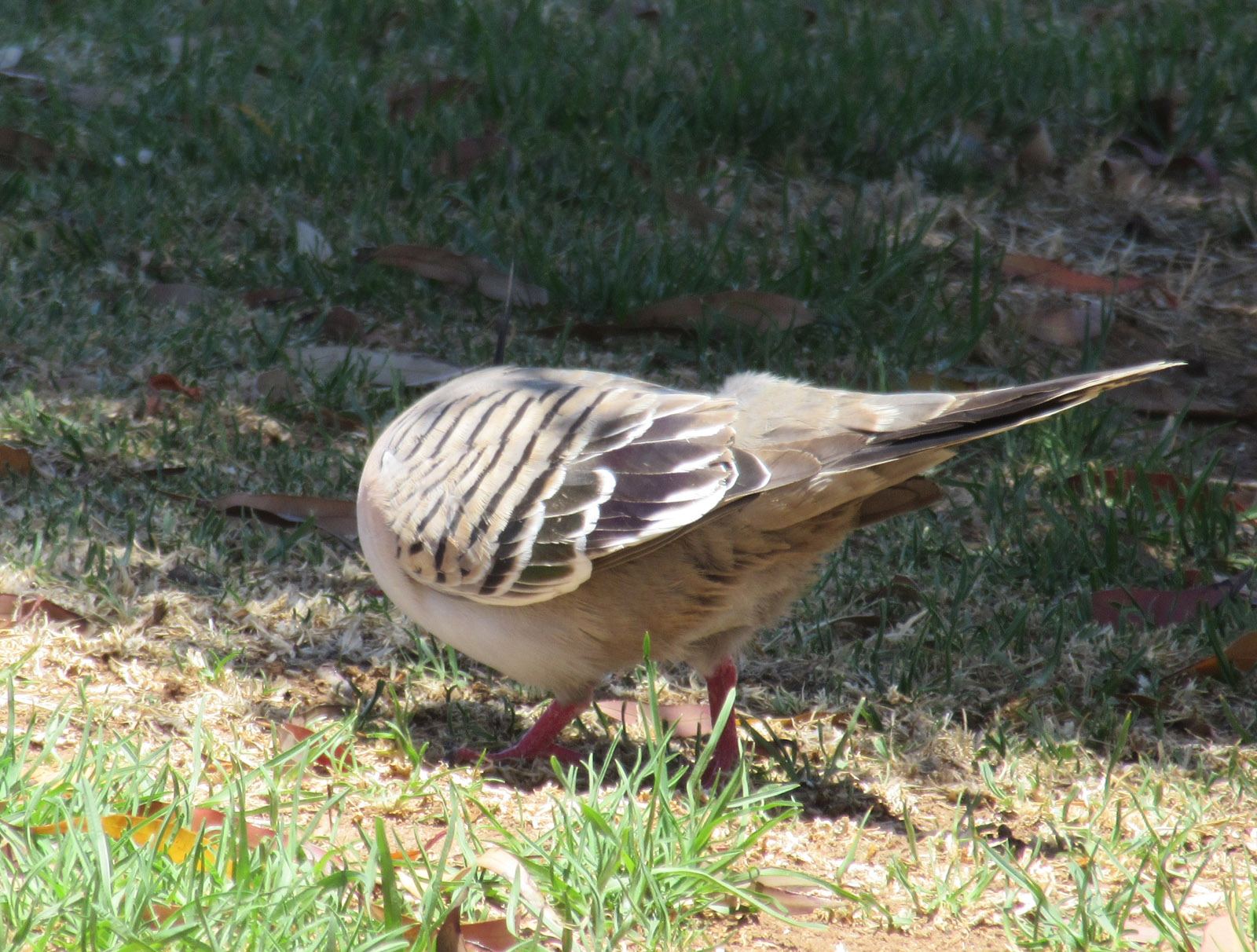


© Lofty, all rights reserved.

So…eventually, the path report makes its way to your door. Mine: Adenocarcinoma, moderately differentiated, with invasive feature and ulceration. Translation: invasive adenocarcinoma. There, that was easy. In my case, nothing I didn’t know already, but don’t get frittered by language. Look it up. If you have questions, write them down. Never be afraid to ask. The more you understand, the better you’ll be able to manage.
If ever there was a time to express yourself, this is that time. (You should be doing that anyway. Don’t wait til’ cancer comes knocking.) This is a good time to treat yourself a little. Doesn’t have to be major. I got a couple things at Big Lots:

© C. Ford.
You would not believe how incredibly obnoxious that pink nail polish is, dialed up to about nth. Everyone in the hospital loved it, kinda cheered us all up. Looks right good on the toes. Of course, for me, yet more art supplies. Got a lovely case of Daler Rowney pencils, which brings me to expression.

© C. Ford.
Draw. Write. Craft. Sing. Get your camera out. Make up new and awful fart jokes. Mortify your teenager by whipping your shirt open and saying “look, you were right, I’m full of shit!” Howl out your window and freak the fuck out of your neighbours. (They deserve it for those fucking fireworks after midnight anyway.) Something. Anything. I can’t quite do a nice bellyflop on my bed and play around with markers yet, but I’m working on it. Did you know you can get paper clips which are shaped like elephants? Make a chain of elephants. The list goes on. And on. Embrace all the moments. Even when you have a good prognosis in front of you, it doesn’t hurt to be aware of the clock. I was taking a whole lot for granted, and this has been quite the smack. And right now, I have a whole lot of rats who deserve a bit better from me, so I’m going to go and make them one hell of a salad. :D