One of those moments of photographic serendipity, spotted by Opus on a walk through the botanical garden, red maple seed and luna moth wing. Click for full size!

© Opus, all rights reserved.

One of those moments of photographic serendipity, spotted by Opus on a walk through the botanical garden, red maple seed and luna moth wing. Click for full size!
© Opus, all rights reserved.
A gorgeous Great Tit from Giliell, click for full size!

© Giliell, all rights reserved.
We had a lot of freezing rain over the weekend and it caused some minor damage to the trees in my neighbourhood. A few small branches down here and there, but nothing serious. I wish I could say the same about our favorite trail in the woods. Today we found major storm damage there, including three large trees, each about 25 – 30 meters high, pulled up by the roots and laying across the path. There are also several smaller trees and lots of large branches down across the forest and over the path. We went around a lot of obstacles today and in places we had to scramble up and over. This will likely cause damage to the flowers as well because people are treading off the walking path and onto the beds where the trilliums and jack-in-the-pulpit grow. We also heard a few branches cracking overhead which gave the whole place quite an eerie feel. All in all not our usual walk today.

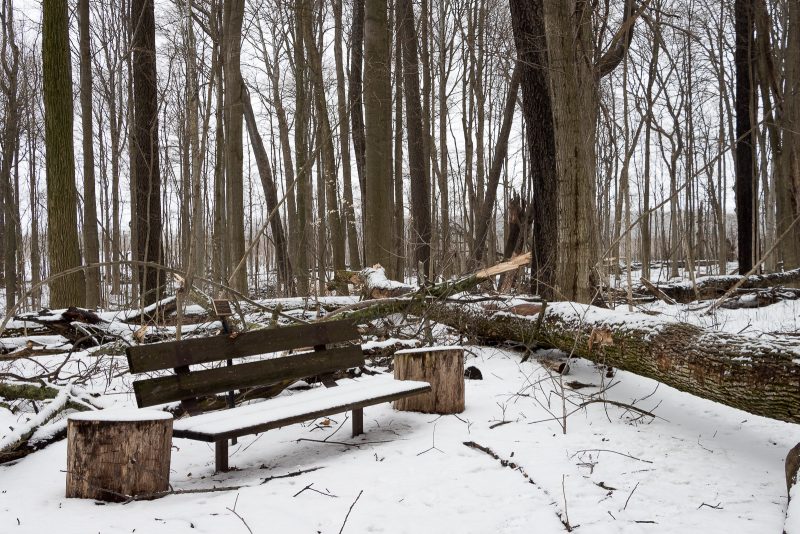


©voyager, all rights reserved

Page from Wake by Rebecca Hall and Hugo Martinez (all images courtesy Hugo Martinez).
In 1712, New York City witnessed a dramatic uprising when over 20 black slaves, fighting against their unjust conditions, set fire to several houses of white slaveowners and fatally shot nine. Known today as the New York Slave Revolt of 1712, the insurgence resulted in the conviction and public execution of 21 slaves, as well as more severe slave codes. While sources often state that these rebels were all men, the historian Dr. Rebecca Hall has identified four women who were captured during the clashing and were tried. Their names were Amba, Lilly, Sarah, and Abigail.
Erased from history books, their stories will now be told in vivid form by Hall, who has devoted much of her career to unearthing the roles of women in slave revolts. Hall is currently working on her first graphic novel, which will highlight female rebels in various 18th-century uprisings, from three in New York to those that broke out on slave ships. Titled Wake: The Hidden History of Women-Led Slave Revolts, the 150-page work emerges out of Hall’s 2004 dissertation on the same topic. She is now collaborating with independent comic artist Hugo Martinez to produce the storyboards and, through Friday, May 4, is raising $5,900 on Kickstarter to realize it for submission to publishers.
“The way the history of slave resistance has been written, this very gendered narrative developed about how manly and masculine enslaved men actually were, which served to elide the role that women played,” Hall told Hyperallergic. “I was going against everything being taught in women’s roles in slave resistance by insisting that, if I looked, I bet I would find these women.” She recalled how her dissertation advisor had told her that she wouldn’t find any sources to realize her chosen topic; how one archive claimed that it had no related material.
This is a fascinating, and I think, a necessary work. You can read and see much more at Hyperallergic, as well as on the kickstarter page, where there’s also a video. They are close to their goal, but could use a bit more help, so if you can’t donate, you can help to spread the word!

©
Hyperallergic asked CM Campbell, a black artist, to design a rather special tax form. Head on over to see the full form!
This is no Jolly Roger, but it looks grim nevertheless. I do not think any other part of human skeleton is more evocative than skulls. And I wonder sometimes whether this is a purely a cultural thing, or whether there is something innate in us that associates skulls with death, danger and general unpleasantness. There might be, because our brains are clearly predisposed to recognizing facial features.
Content warning for description of a very unpleasant medical procedure.
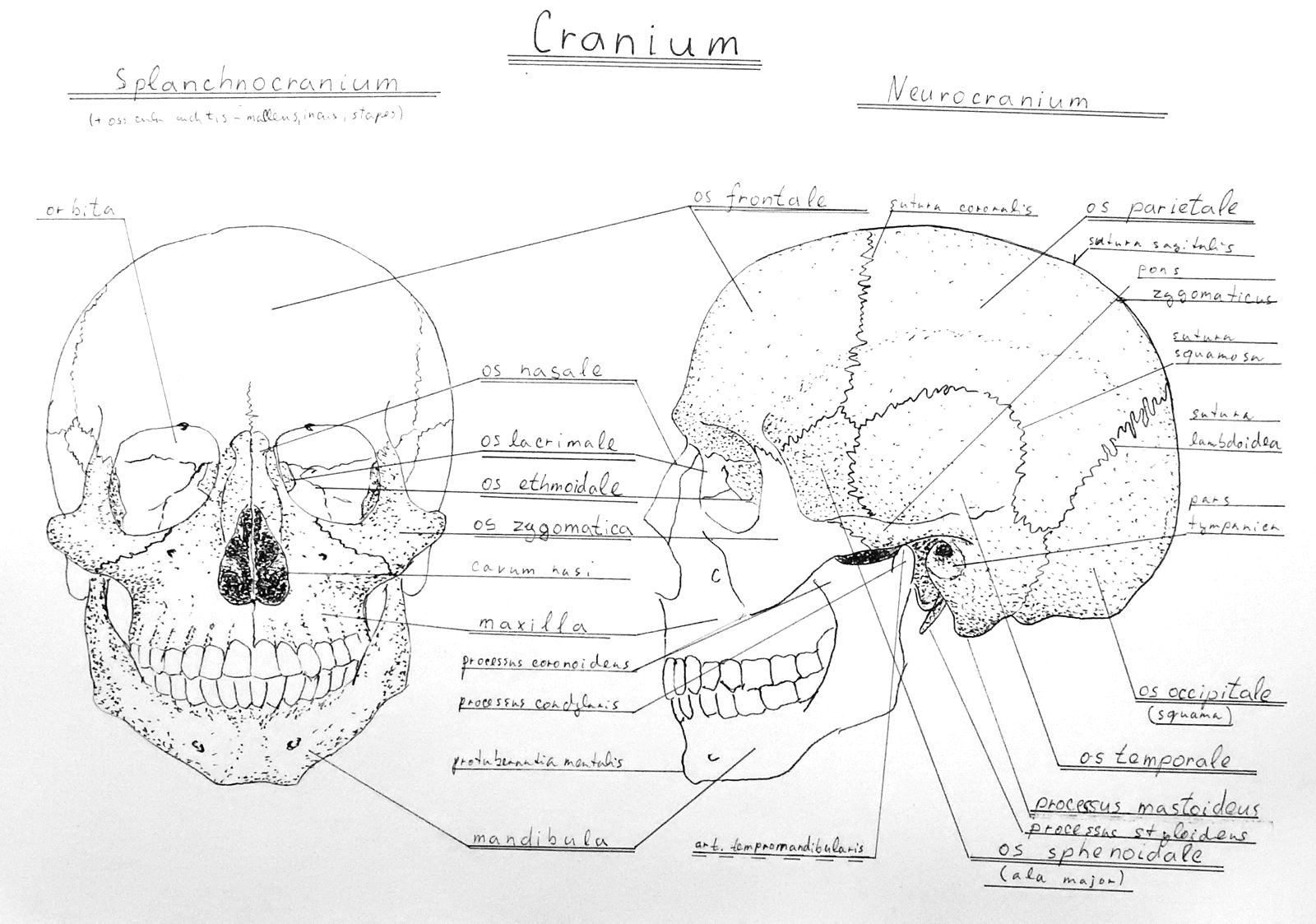
©Charly, all rights reserved. Click for full size.
The four dots at the jaw bones – bellow the eye sockets in each maxilla and two on the chin on mandibula – and two dots above the eye sockets are points where the nervus trigeminus exits the protective shell of the skull to innervate facial muscles. That is why these points are more sensitive to pressure than other parts of the face. Professor Kos told us that an inflammation of this nerve is allegedly the most painful illness there is. The whole face hurts and a feather caressing the cheek may feel like being burned with hot poker. One way to reduce the pain in very severe inflammation cases (I do not remember whether this was an old procedure or one or still in use) was to inject a powerful neurotoxin directly into these points. Extremely painful procedure, but one that provided the needed long relief. He told us the patients would scream and sometimes pass out. And the neurotoxin used? Alcohol.
Nervus trigeminus is near surface once more just behind mandibula, right bellow the ear lobe. This knowledge has helped me twice in self-defence, once when I was held in chokehold but I managed to slide my hand to my attackers head and drill my forefinger into this point and second time when another person was having their arm twisted by a wannabe teenage ninja. The pain is so intense, that anyone will let go of anything they hold and try to get their head dout of the way. If you feel brave you can experiment on yourself. I did. I do not recommend it.
Vår.
Vår is Swedish for the season spring. In the South Coast of Finland, spring can start in March or in April and end in late May. The first two pictures are taken from Ursininkallio in late March 2018. The sea ice had started to melt. Bays and areas shielded by islands were still frozen apart from places with strong currents. However, spring progresses haltingly and some areas already thawed would refreeze and then melt again.
The third photo was taken on the eastern shore of Laajalahti in Munkkiniemi, Helsinki about one year earlier than the first pictures. The bay Laajalahti was frozen, but the ice was porous, rotten ice. There was little snow left on the ground.
The fourth photo was taken in mid-May 2017 in the park Kaivopuisto in Helsinki. Many deciduous trees were still bare but there was already green grass for barnacle geese to eat.
Click for full size!


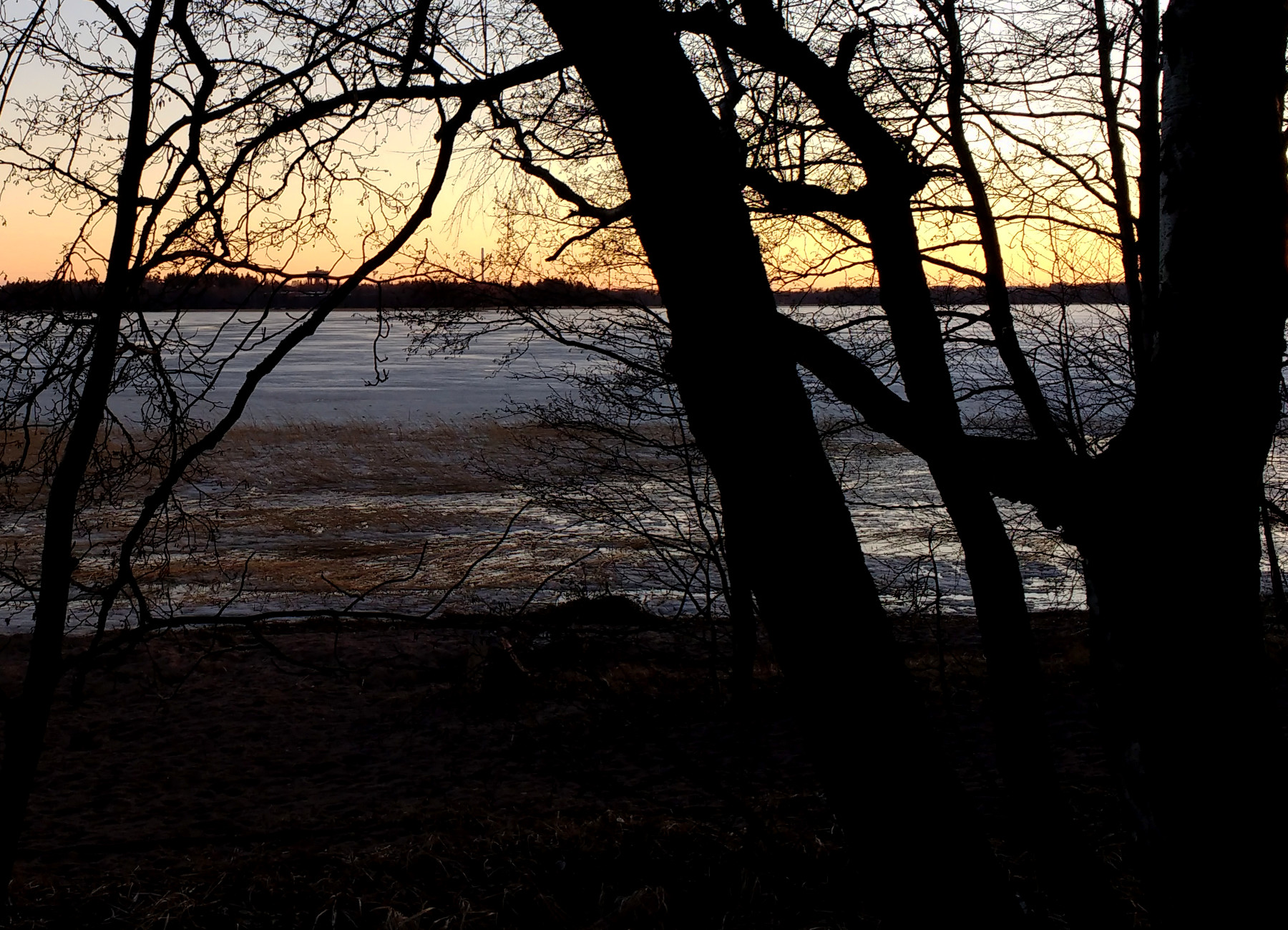

© Ice Swimmer, all rights reserved.
From Nightjar, click for full size! Tulips are so lovely on their way to being vanitas.
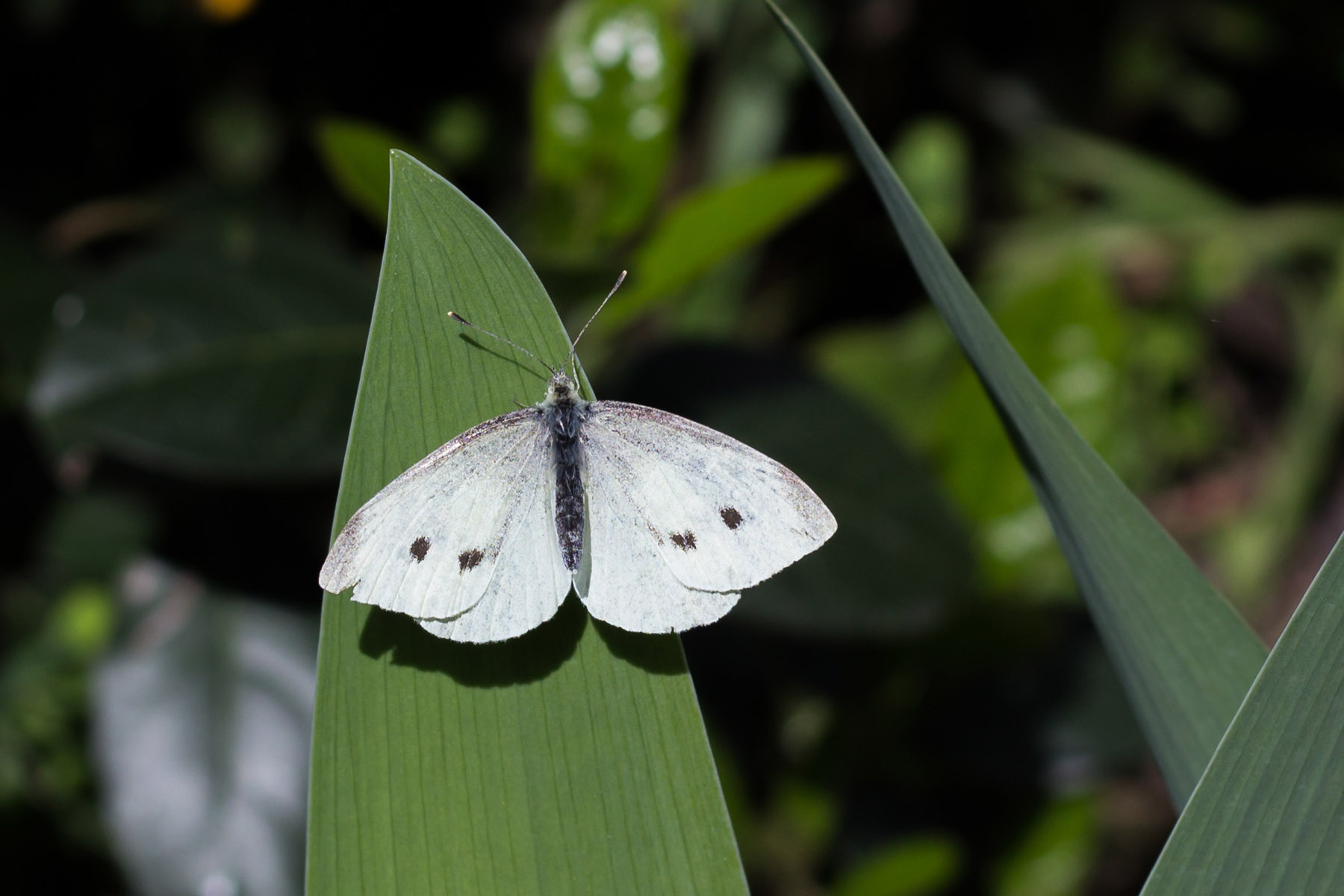

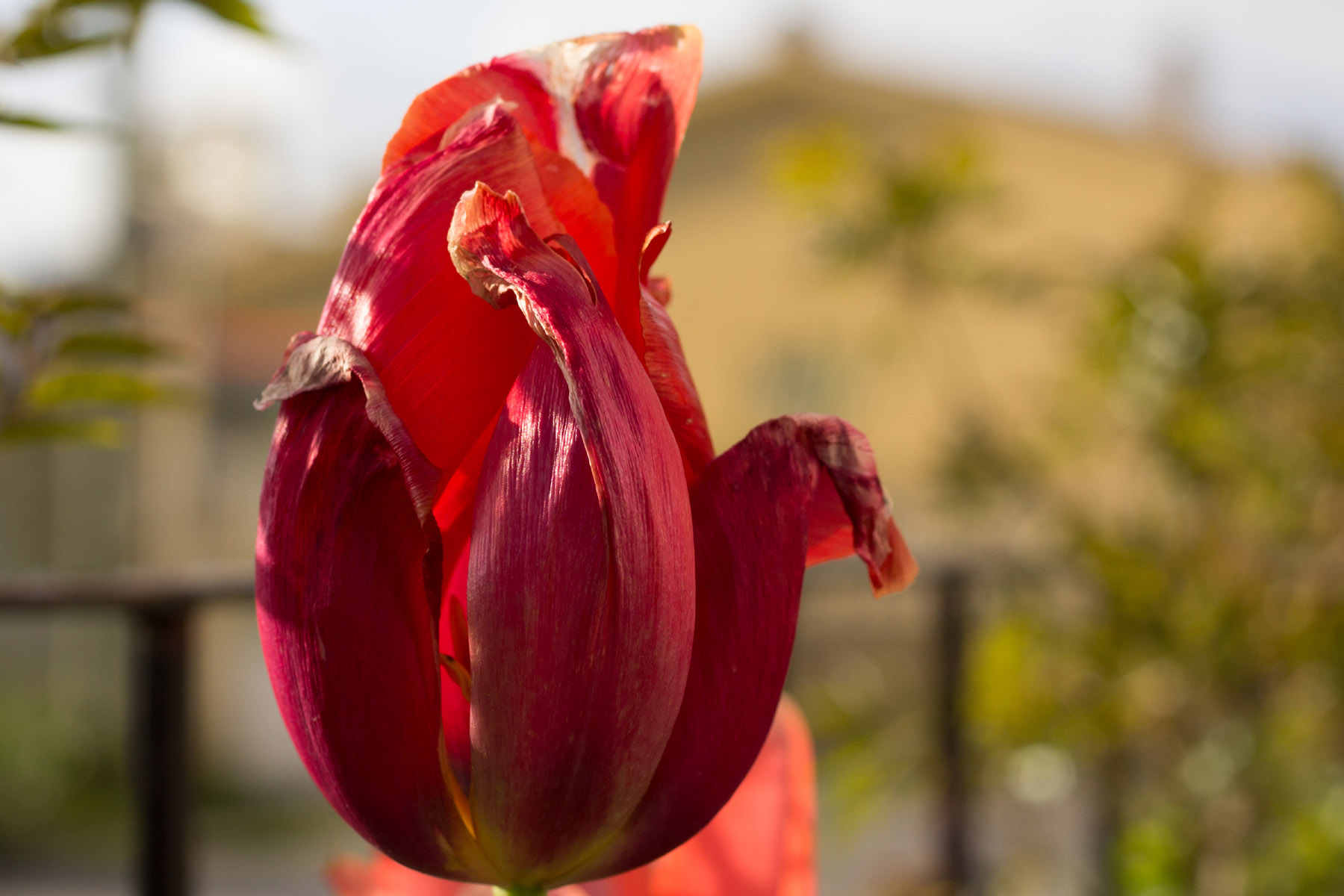

© Nightjar, all rights reserved.
More Brambling from Giliell, such a gorgeous dinosaur, click for full size!
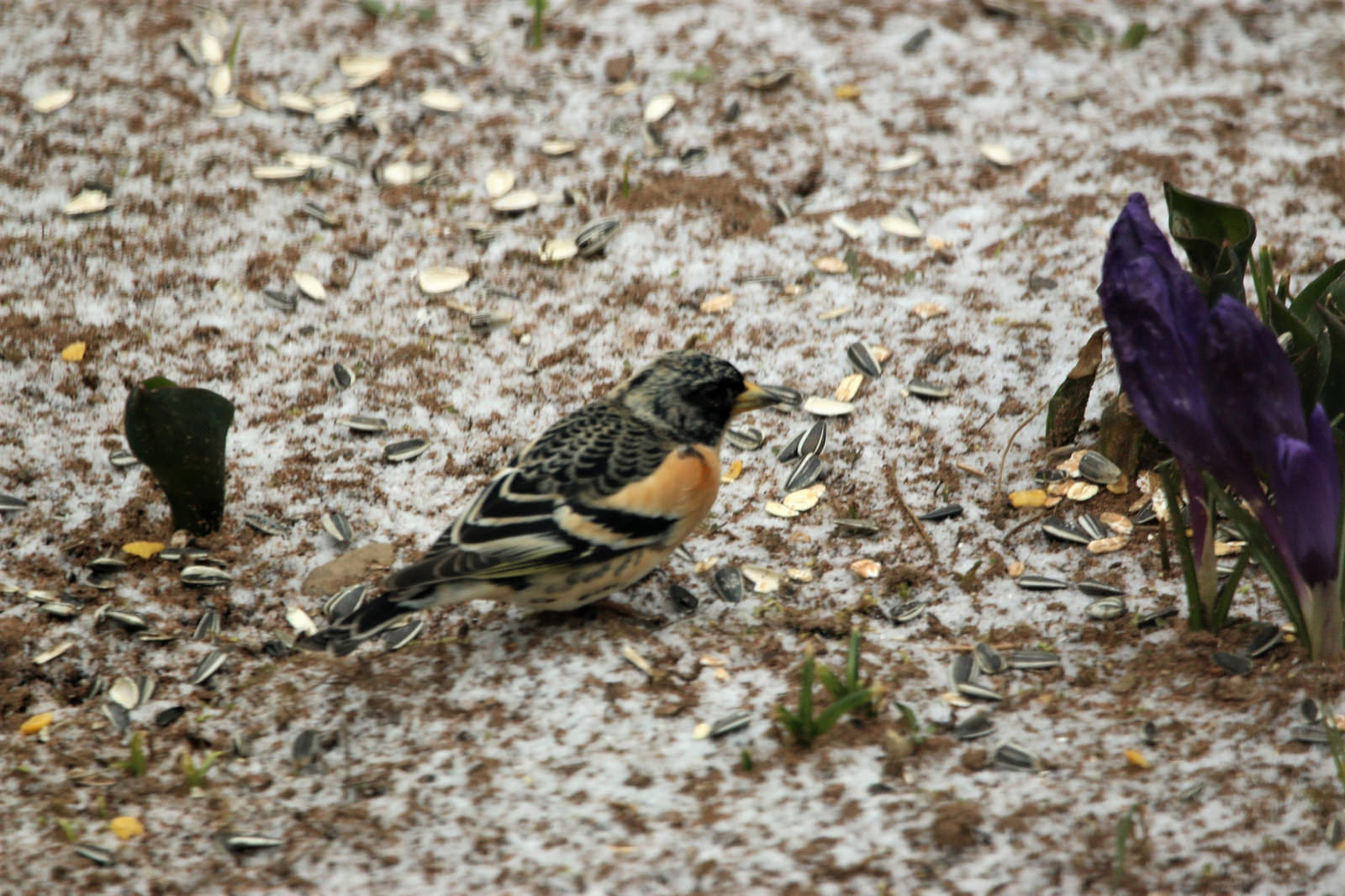

© Giliell, all rights reserved.
Today Jack and I drove out to the country so we could take our walk beside a pretty little river called the Thames. It’s named after England’s Thames river, but it’s much smaller, much slower, very shallow and not fit for boat travel of any kind. Even a canoe can only go a few feet before getting stuck on a sandbar. I know about that from experience. Today, though, the water was very high with a strong current and large areas of flooding. There’s also still a lot of ice.
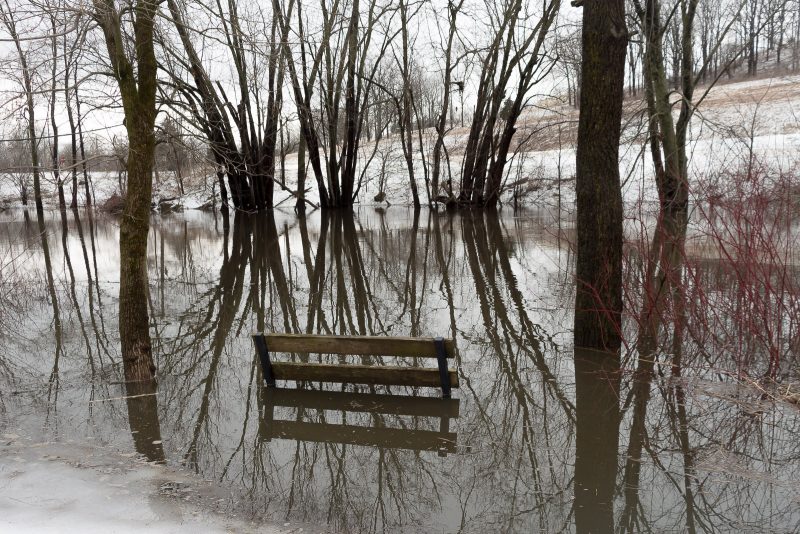
Thames River
©voyager, all rights reserved
When the weather is not suitable for work outside, I will make use of my belt grinder, now Mark 2. So today I took another old file and I decided to make a dagger out of it. The inspiration is dagger used by Vesemir and Ciri in the game Witcher 3, but there will be some design changes even for the blade (less daggery, more knifey). I will post my progress, but beware that I am no expert, just a self-taught hobbyist goofing around. Risk of concussions from facepalming for any expert. You have been warned.
I started with an old file that I threw in the stove fire last year to soften the steel. I cleaned some of the rust on the belt grinder when I was testing the new design. But before proceeding I needed to make the tang slightly longer. So today I just made the tang more pointy and chamfered the edges. Then I took an old piece of round stock of structural steel, cut it lengthwise for a few cm and fitted it onto the file tang.

Old rusty file
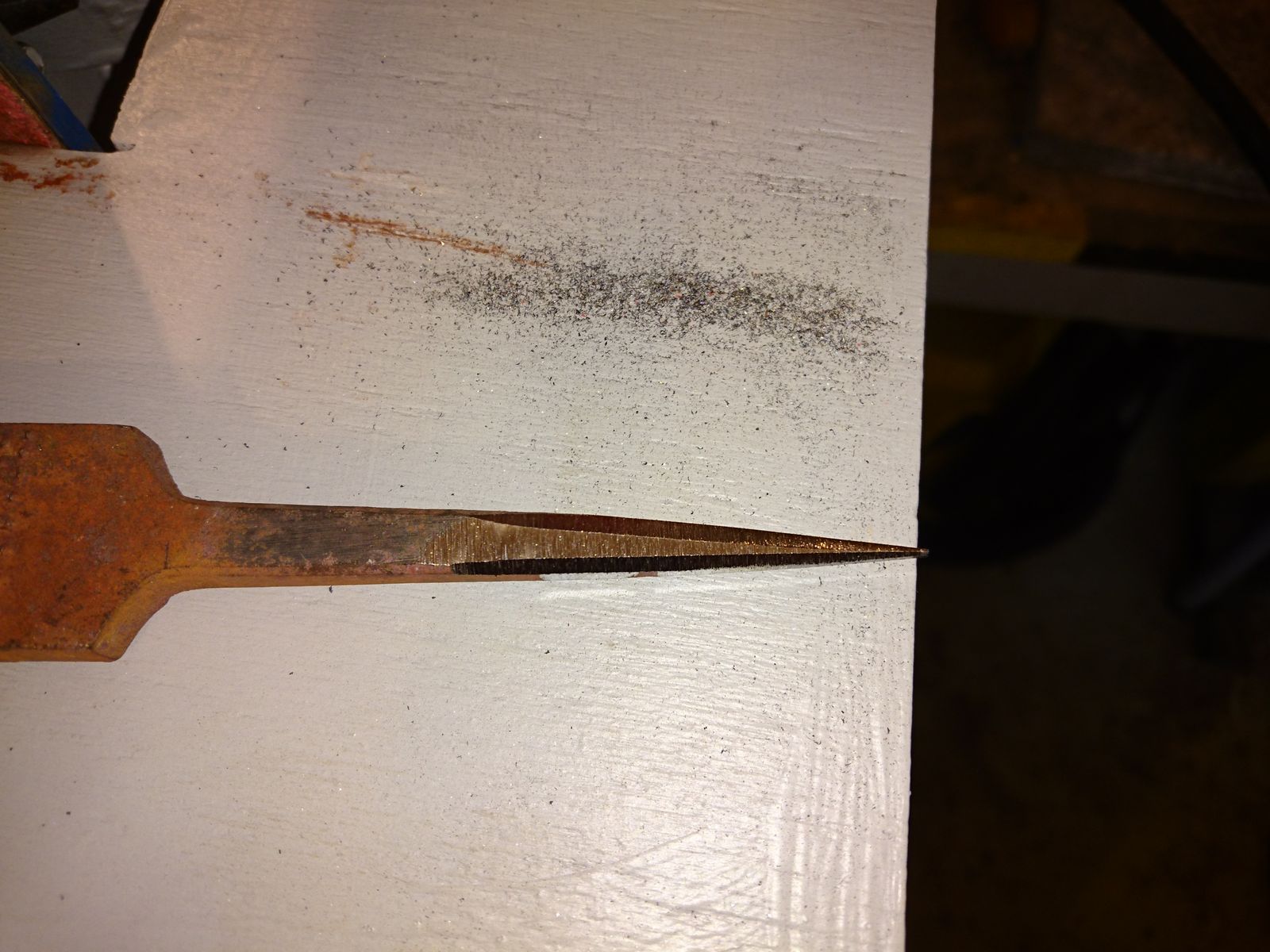
Chamfered file tang
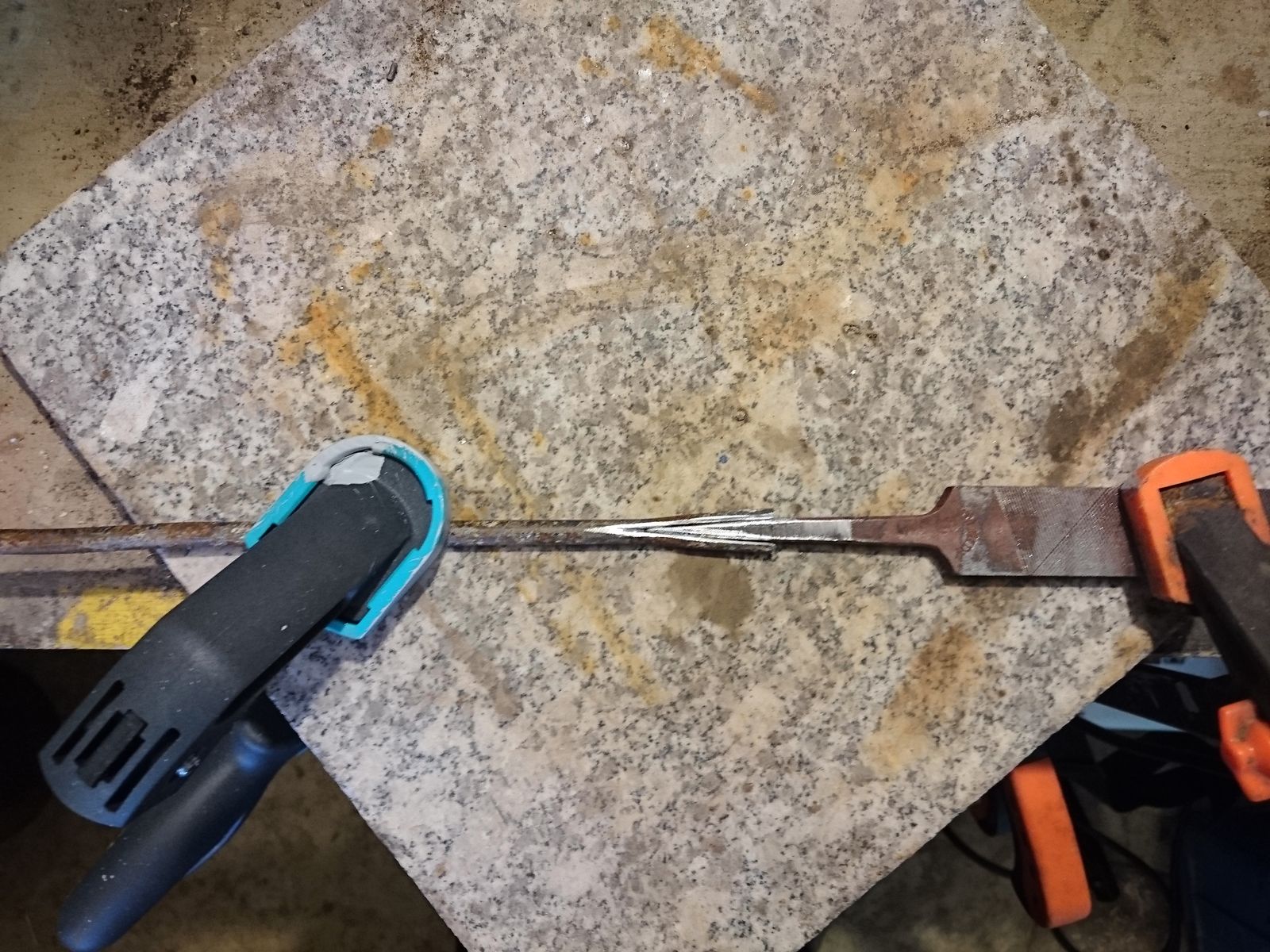
Fitted tang extension
After that there came the trial by fire, or more precisely, electric arc. My first real welding. I admit I should have tried to simply weld scraps together a few more times before I try for something real. I should have. But learning skill on something that is subsequently thrown away simply is not me. I always try to learn on the real thing. Not smart, I know, but that is just me. I have already forced my self to try it once on scraps.
I must admit, I could not have done a better job. That is to say, the job is crap, but I lack the skill to do better. But it holds together even after grinding off the slag and rust from the whole thing. There are some visible slag inclusions in the weld, but it is definitively welded together and since it will all be hidden in the handle, I will not lose sleep over it. Hopefully no rampaging rhino will stamp on it and ruin it all.

Welded tang extension with slag.

Cleaned and the tang ground to rough shape.
With that done I finally could do some work on the belt grinder. Since I do not have machinist’s blue, I used 1 cm thick blue marker to cover one side of the file. Then I have drawn the center line and quarter marks using a steel ruler and a self-made steel marking needle. After that I ground the file into a symmetrical leaf shape. With that I was done for the evening and I will resume the work at some other random date.

©Charly, all rights reserved.
