Making Vice Jaws

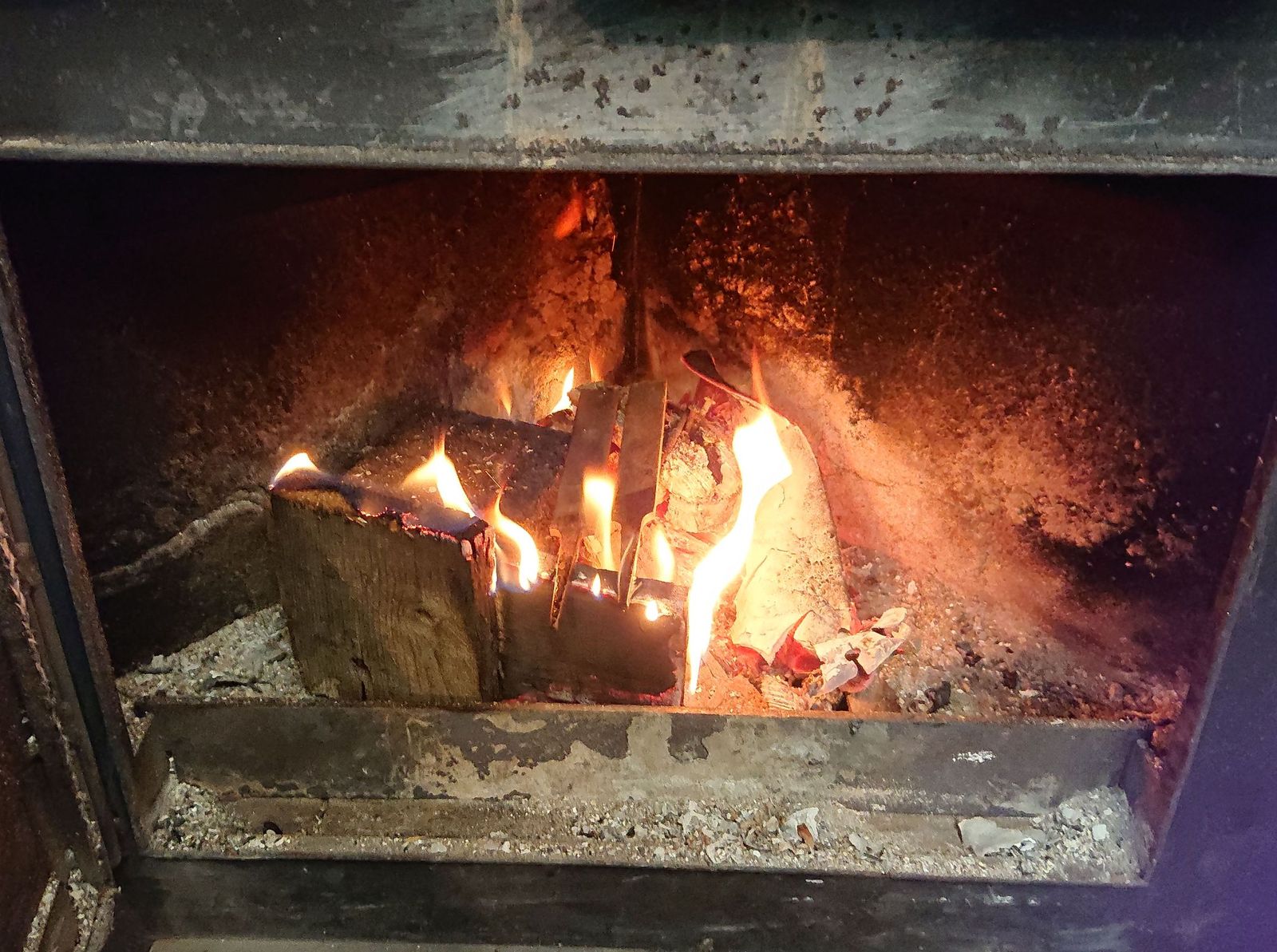
I could not work on anything else much today. Outside it is still very windy and the workshop concrete floor was freezing cold even with the fire roaring in the stove. So I could not be there for more than two hours at a time and then I had to go inside to warm my feet for about the same. But I have managed to do something useful – three sets of jaws for my bench vice.

© Charly, all rights reserved. Click for full size.

© Charly, all rights reserved. Click for full size.


On the left aluminium, then beech wood and then spruce wood covered with an old carpet. I needed these for a long time and I had to do with impromptu padding the jaws of the vice with slabs of these three materials several times on each project. And impromptu padding leads to time loss each time you use it, not to mention the cussing. For a hobbyist making one – two knives per year it is not a big problem, but now…

The dark spots on the backside covered with masking tape are where a strong 6×3 mm neodymium magnets are hidden – they collect the magnetic dust in the shop very quickly. Thus the masking tape. I had eight these magnets for a long time and I had no use for them, so I have used them for this.

And the jaws work very well. The grooves on the alluminium ones might be a bit too shallow for stock thicker than 10 mm, but I am not going to do anything about them just yet, they do seem to work just fine as they are and I will probably need to hold even 3-4 mm stock in them more often than something bigger, so they cannot be too much deeper than they are.

© Charly, all rights reserved. Click for full size.

Working with aluminium is a bugger. Whenever I have an urge to file, cut or drill aluminium, I usually sit down quietly in the corner and wait until it passes. But sometimes there is no way around it.

Did I already mention that working aluminium is a bugger? It is worth repeating. It is soft but relatively strong in tension. It is an extremely good heat conductor. And it is also extremely prone to galling and cold-welding. The end result is that it blunts and overheats saws and drillbits and clogs-up files and abrasives.

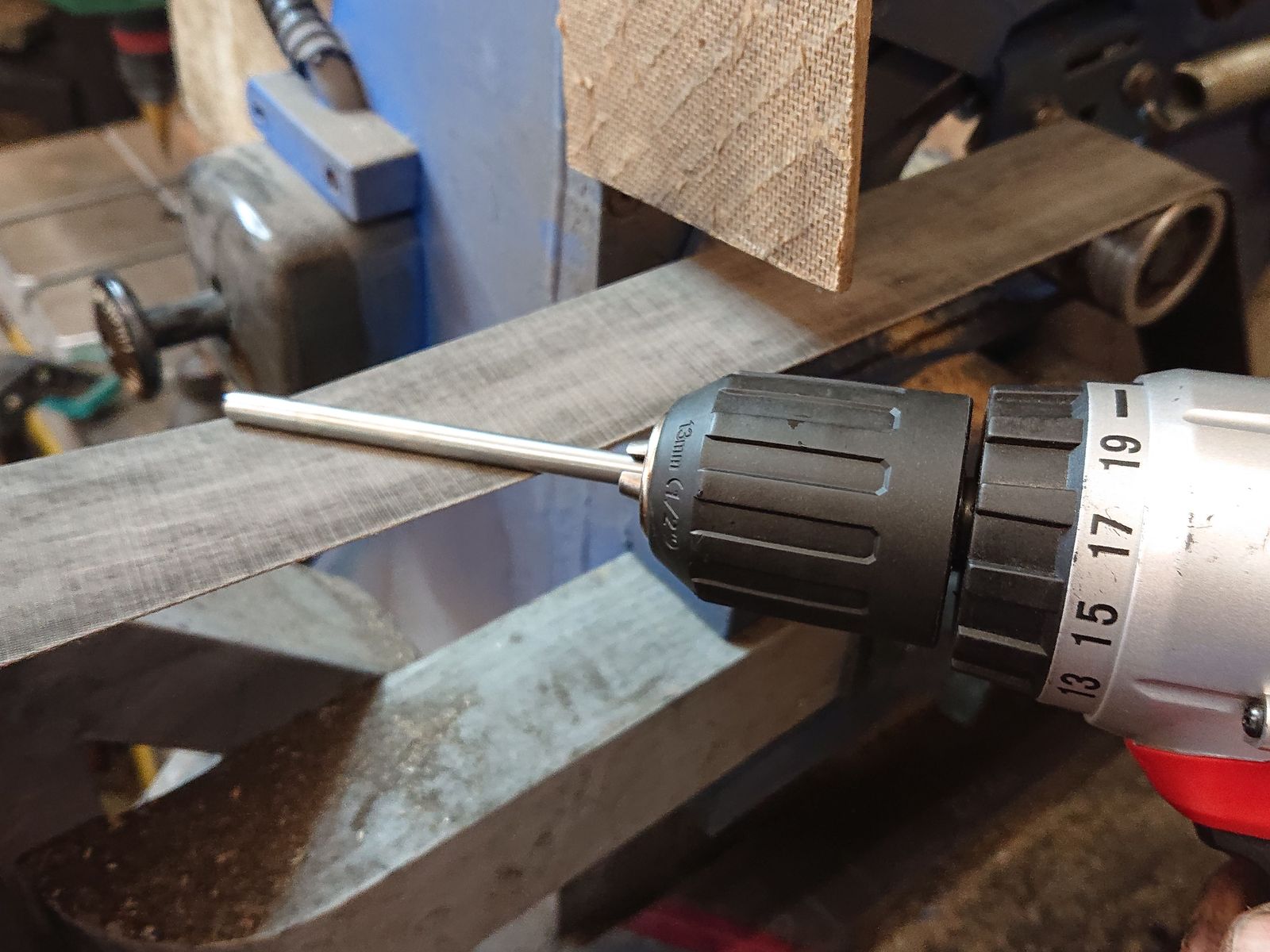
A few years ago I got a useful tip from a machinist at my former workplace. I complained about how filing and cutting aluminium by hand is more difficult than steel because of the clogging of the tool teeth. I told him that I tried using powdered chalk to coat the file and clean it with a brass brush – a tip from another machinist – to prevent this, but it did not seem to work very well. And this machinist told me “wet your file with alcohol to keep it cool”.  And it does indeed help a lot. I still need to keep a brass brush at hand to clean the file from time to time, but the alcohol does prevent the shavings from sticking to it very strongly. And unlike oil, it dries off and does not make a mess, so I use it for drilling aluminium too.

Even so, it is worth repeating. Working aluminium is a bugger.


The Art of Book Design: The Little House in the Fairy Wood

Ethel Cook Eliot. The Little House in the Fairy Wood. Illustrations by Mabel Hatt. New York, Frederick A. Stokes, 1918.

This is another short children’s storybook with delightful artwork. There are only 3 colour illustrations in the book, but I’ve included them below the fold. I love the picture of the fairies dancing. They look so free and full of joy. I hope you enjoy this book as well. [Read more…]

Right Wing Terrorism: I’d like to mourn , but I’m too angry

As you may have heard already, there was a right wing terrorist attack in the German city of Hanau. The terrorist killed 9 people, mostly Kurds in two hookah lounges, went home, killed his mother and then himself. His manifesto is the typical mix of racism, incel misogyny and conspiracy theories. This attack only comes a few days after police arrested a right wing terrorist network that had planned attacks on mosques, trying to start a civil war.

It also comes after a couple of weeks into a political crisis started without need by the German liberals and Conservatives in Thuringia who voted together with the far right AfD for a liberal candidate for the Ministerpräsident. The discussions afterwards were endless rehashes of the bullshit horseshoe theory, as if the Left candidate who’d governed Thuringia for the last 5 years was the illegitimate son of Mao and Stalin, when at best he would have passed as a Social Democrat in poor light in the 1980s.

We’ve had the murder of a conservative(!) mayor by Nazis last year, we’ve had an antisemitic terrorist attack in Halle last year, when only a sturdy door prevented a massacre. Yes, right wing terrorism is a growing threat in Germany, yet still our politicians act like it isn’t. Even when talking about the horrible terrorist attack last night, the former leader of the Social Democrats (that’s Labour for the Brits) had this to say on Twitter:

“The enemy of democracy stands on the right [6 words in the original tweet]: It’s undeniable that left wing scatterbrains beat up police officers, set fire to cars and dumpsters and cause lots of monetary damage time after time. All of this is bad and mustn’t be played down [30 words]. #hanau”

That’s 9 words on right wing terrorism that just killed 10 innocent people, 30 words on “left wing terrorism” that causes damage against property. That’s equating burning dumpsters with dead Kurds. That’s zero words of condolence for the survivors, for the friends and family of the victims. That’s zero words towards our fellow citizens, friends, family, neighbours who are afraid to go to a café, a lounge, a Döner take away, a mosque because they have to fear for their lives because racists think they should be dead because of their skin colour, looks, ethnic origin or religion.

That’s contemptible, and Gabriel’s tweet is just the tip of the iceberg.

My heart goes out to the victims and their families, to all racially marginalised people in Germany who again not only have to see how their own get murdered, but also how those in charge play down right wing terrorism and compare them to dumpsters.

Bonsai for Beginners – Part 3 – Basics of Tree Physiology

Previous part.

Of those many books that I have read about the art of growing bonsai trees, only one goes sufficiently in-depth about this issue. Unfortunately, that one book is probably only available in Czech. I will not go too much into depth here, just the basics for your own research should you wish it.

The distinction between a tree and a bush/shrub is not clear-cut, but there are properties that some plants have that make them definitively shrubs – like roses – or definitively trees – like spruces. A rose, no matter how big and old will be unruly and bushy. Spruce, no matter how small, will be a tree, with a definitive main stem.

The most important factor in this is the absence or presence (and strength) of so-called apical dominance. In plants with strong apical dominance, the main stem produces hormones that regulate and/or inhibit the growth of secondary branches. That is the reason why spruces almost invariably have one upright stem with comparatively thin branches – they have very strong apical dominance like most conifers do. Roses, on the other hand, do not have apical dominance worth speaking of. They continuously sprout new twigs from the base of the stem near the roots. Common hazel is somewhere in between – at the start it has strong apical dominance, but the bigger the main stem gets the smaller inhibiting influence it has, it slows its growth and inevitably suckers start to sprout from the base even when the main stem is perfectly healthy and strong.

Apical dominance applies to roots too. Some plants tend to grow long, thing, non-branching roots, some have bushy ones.

It also changes during each season – in many plants with leaves the hormones are produced by the leaves, thus the more leaves there are on the branch/stem, the more it inhibits those below it. That can be used to your advantage for certain species – more on that when talking about them.

For a beginner, plants with strong apical dominance should be avoided, especially fast-growing ones. Many such plants when cut do not branch out but simply the bud nearest to the cut continues as the main stem. Some might even die. Best are plants with some apical dominance, but not a very strong one. But also not so weak as to tend to sprout suckers each season.

That, unfortunately, means that for a beginner or a small-scale grower, the most iconic of all bonsai trees – pines – are not suitable, as well as most of the coniferous trees overall. They are the most difficult to manage and to form, and some of them are downright snowflakes. Best suited are leafy plants, with moderate growth rate.

I will go into more detail when talking about specific species in due course.

Speedwell, Veronica

Our weekly flowers from Nightjar are here, and they look frosted with fairy dust.

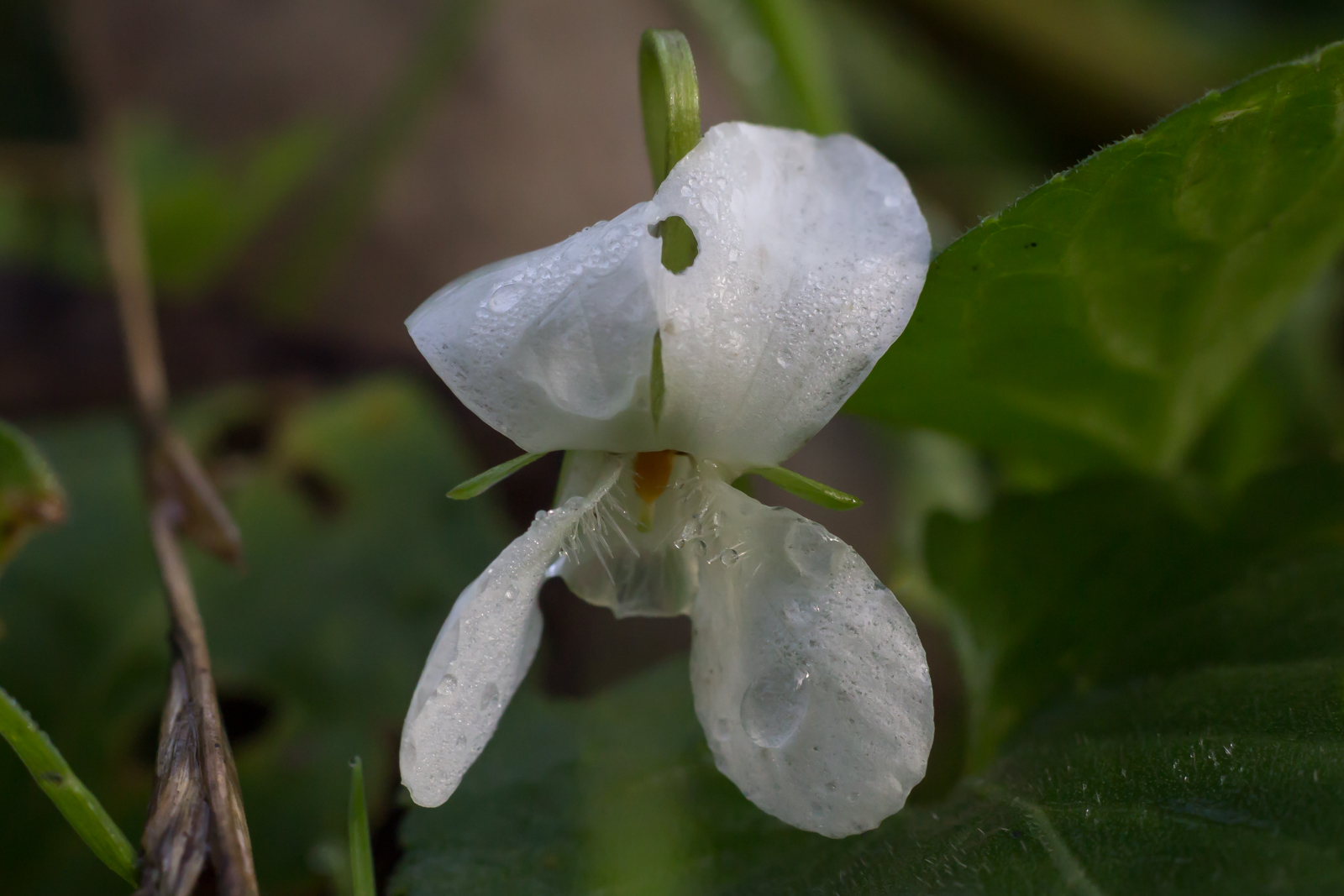
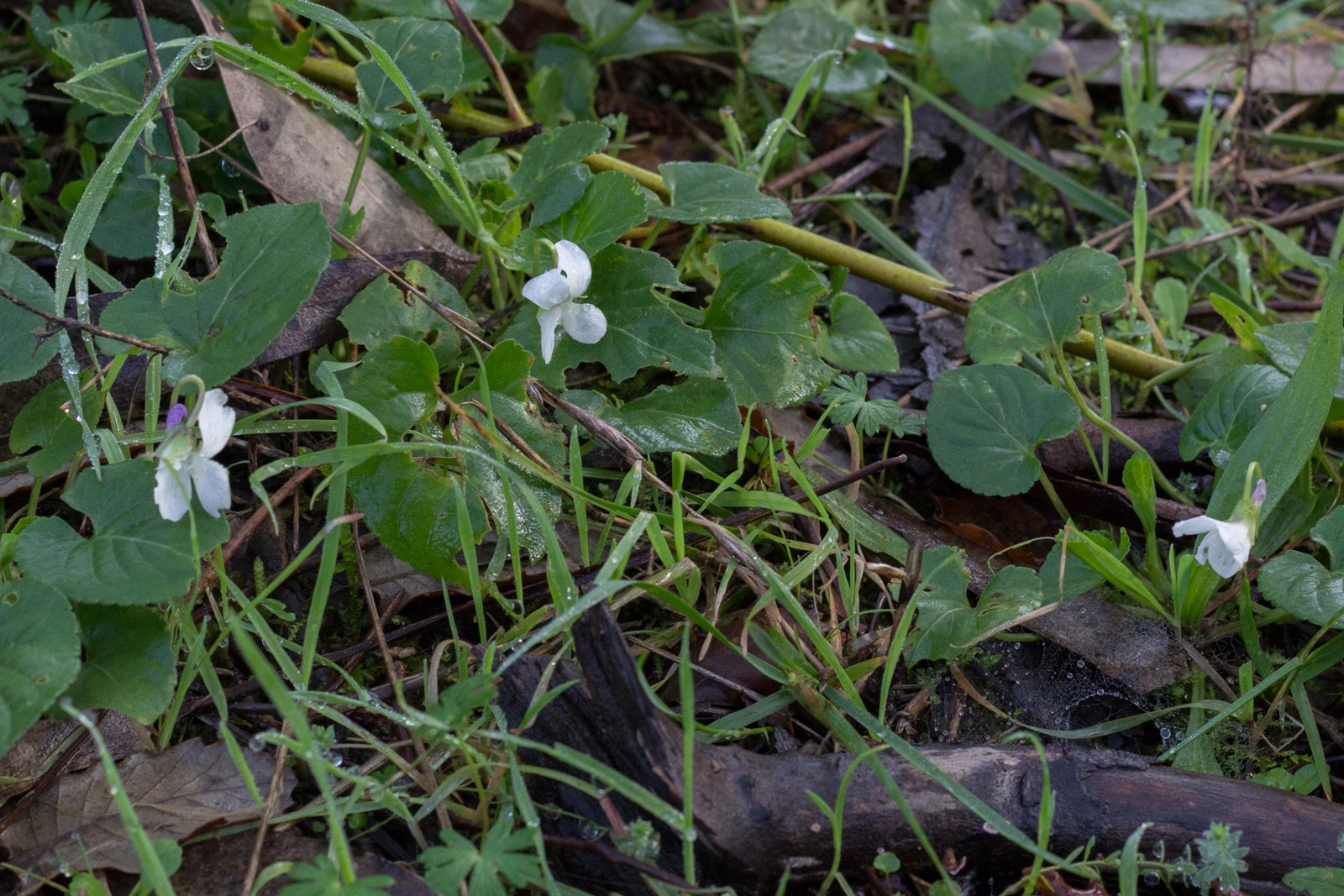
Veronica persica or winter speedwell. These tiny blue flowers measure about one centimeter and are very common here in winter, especially in cultivated fields. They are so small to the naked eye that I never noticed how beautiful and shiny they are before seeing their photos on the computer.

Veronica, ©Nightjar, all rights reserved

New Forge Build – Start

The lining inside my portable mini forge is starting to fall apart, and instead of repairing it I have decided to build a completely new one. I have observed a few problems with the old one, how to achieve the best circulation of the hot gasses etc, and I think I can do a better job at it now than I did then.

I started with a rummage around my junk-pile. I thought about the hows and whats and I selected a few pieces of steel v-profile, a few treaded rods with matching nuts & washers and a long piece of stainless chimney duct. Then I made a sketch (sorry for the grime, it occurred to me to make the pictures only after  I have done all the work).

© Charly, all rights reserved. Click for full size.

It is slightly bigger than the previous one, but it should still be easily portable. And the fireclay bricks fixed at the front and back will save me some time preparing for my work. I hope. I see no reason why it should not work as expected, but proof of the pudding is always in the eating. In my previous job, I have always reminded engineers that reality, not their expectations, is the ultimate arbiter of what works and how.

After I was done with the sketch, I started to make a list of parts. I have decided to not weld it together, but to use screws. Partly because my welding sucks big time, partly because the fireclay bricks are all miss-shapen and of different sizes and I wanted to have a bit of room to play and partly I reasoned that if it all goes south, I will be able to disassemble it easier. This has meant however that I had to ad a lot of nuts, screws, and washers and that has proved to be a bit of a problem. A lot of the M8 nuts and screws in my junkpile were rusty beyond rescue and I had trouble getting all I need.

© Charly, all rights reserved. Click for full size.

However, I have managed to get everything I need without having to go shopping. I cut the steel profiles to size, wire-brushed them, drilled holes, then filed some of the holes to an oval shape in order to be able to adjust the size of the holders for fireclay bricks and I assembled it to try it out. It seemed to work alright, so today I disassembled it all again. Then I degreased every profile thoroughly with acetone and I spray-painted them with silver stove paint (not the duct, since that is already stainless and the paint would probably not hold on it anyway). When the paint dried, I could finally assemble the whole thing together.

Here it is.

© Charly, all rights reserved. Click for full size.

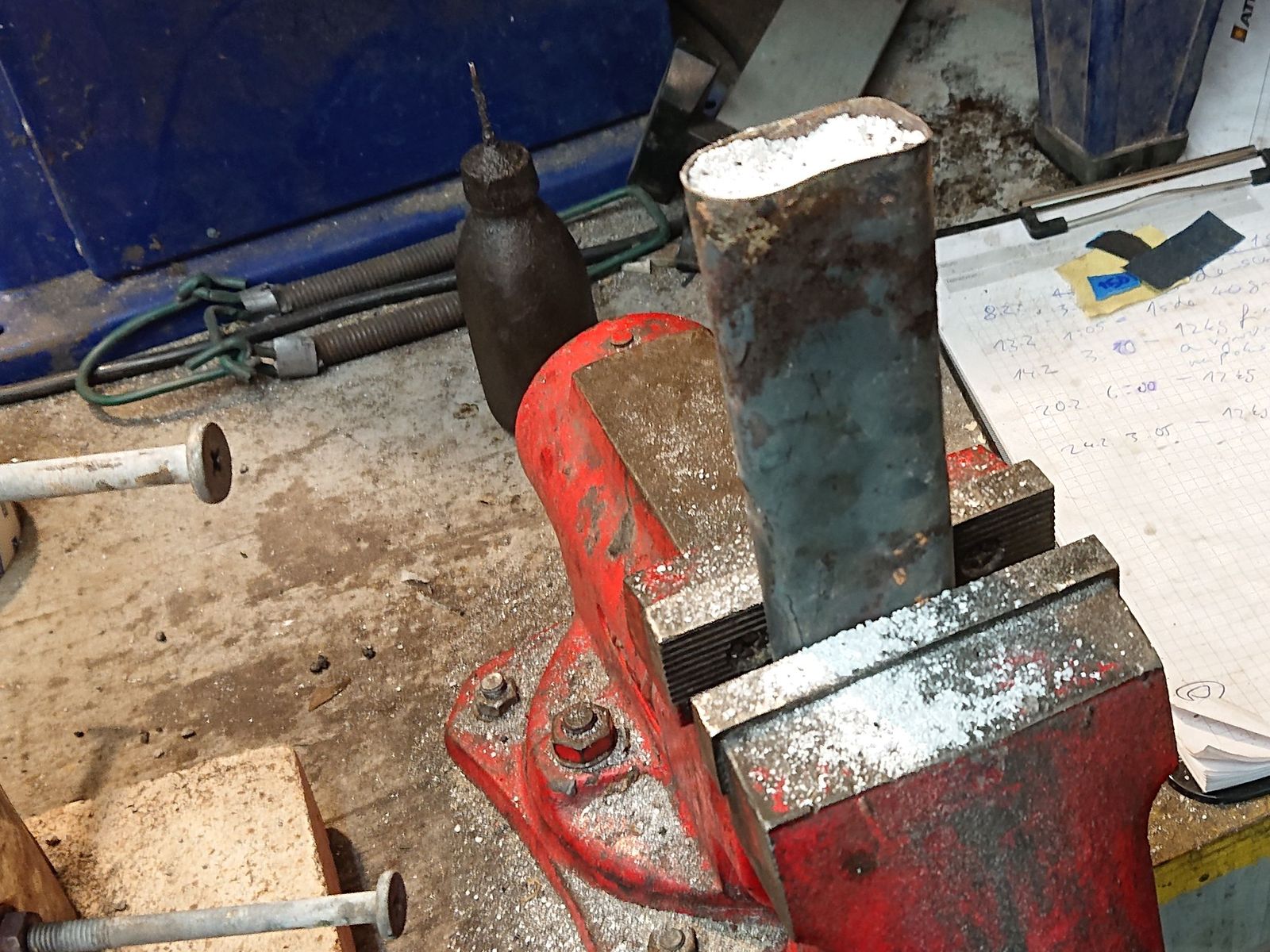
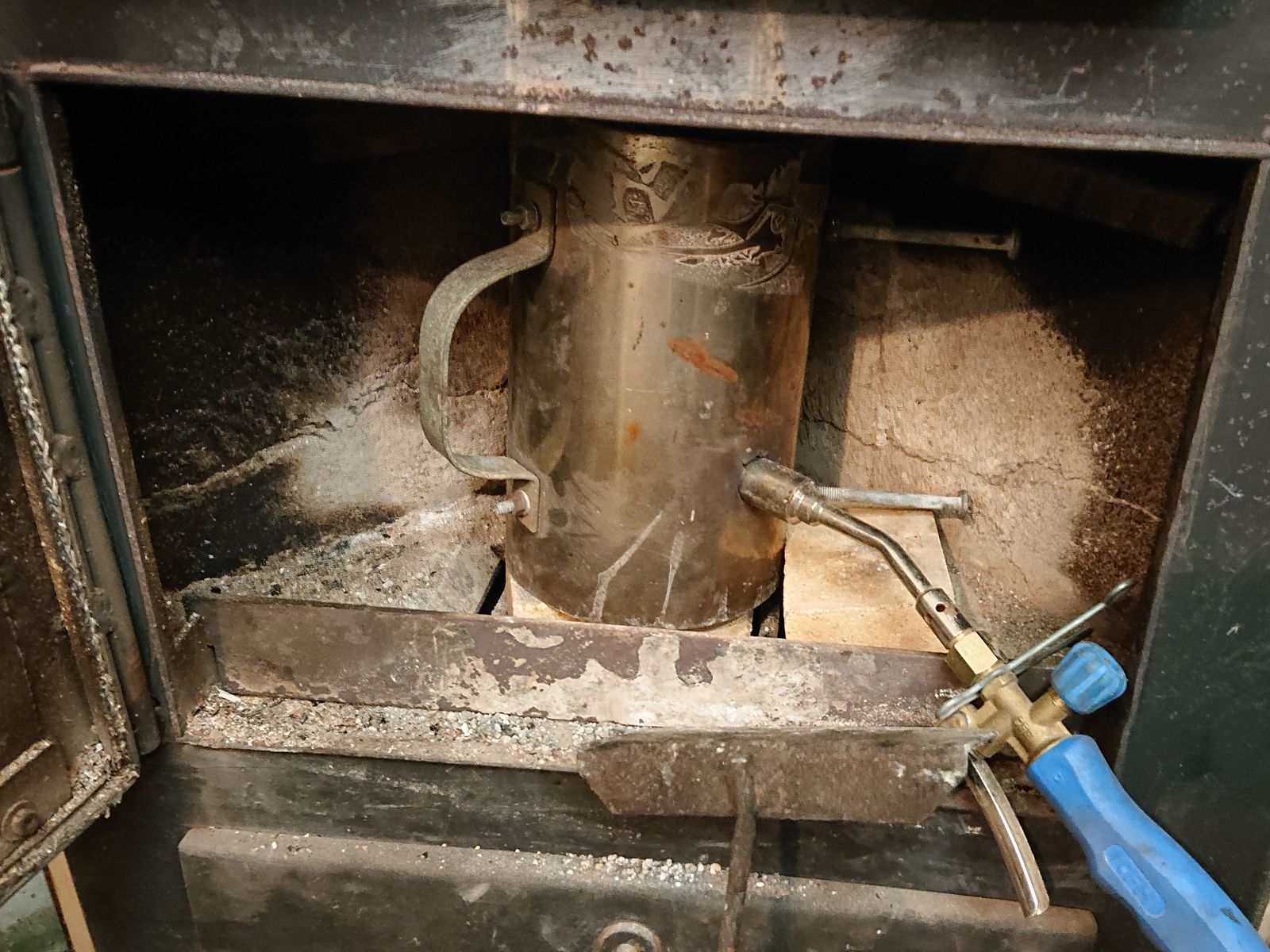
Today I have made the mold for the inside – the actual chamber and the in- and outlet. This time with my old trusty method “just wing it, mate”. Tomorrow I hope to fill it with refractory cement.

I will post about how that went.