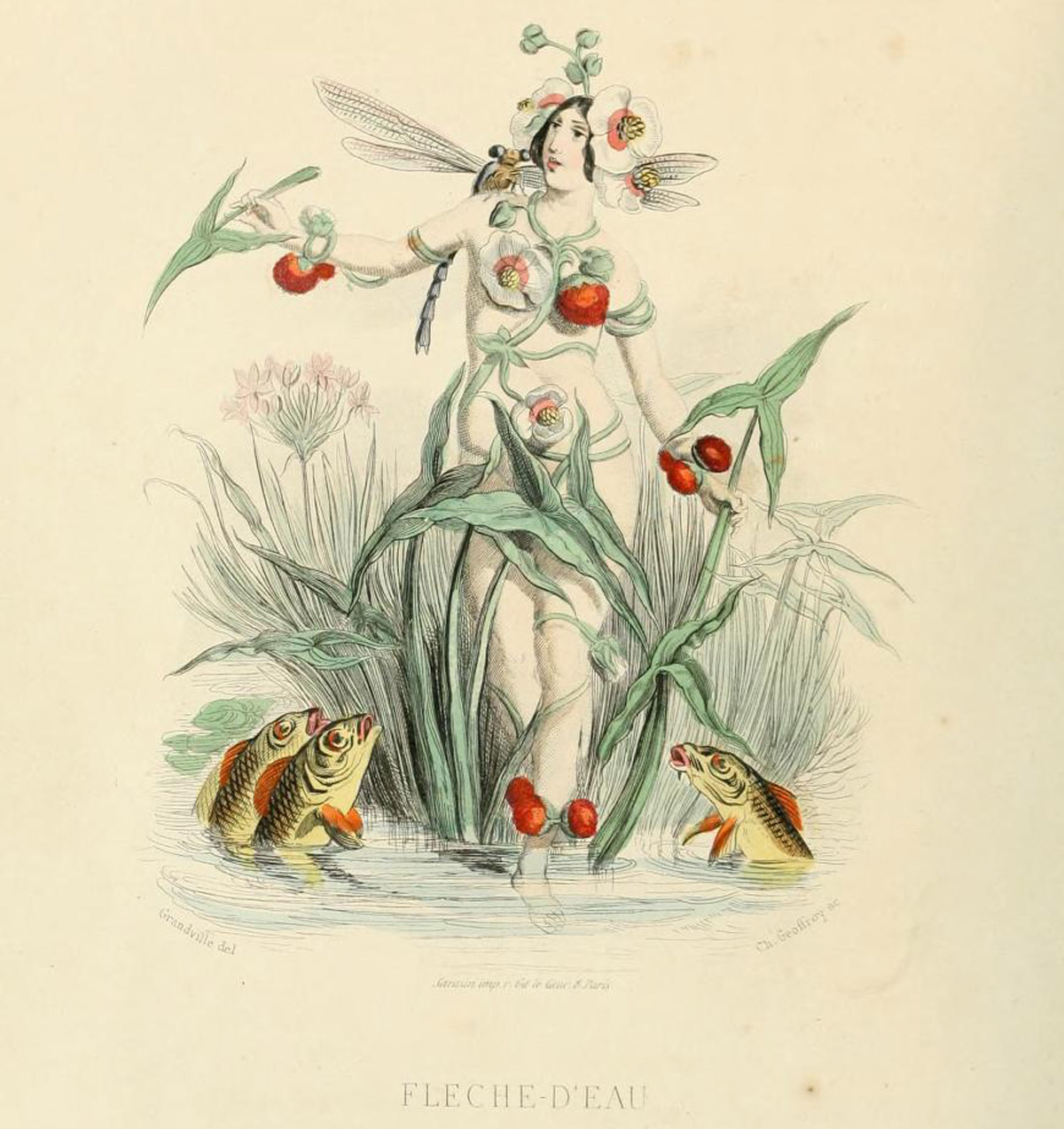
Fleche – D’Eau. J.J. Grandville, Les fleurs animées. So very sensual, yet captivatingly innocent.

Fleche – D’Eau. J.J. Grandville, Les fleurs animées. So very sensual, yet captivatingly innocent.

Œillets (Carnation). J.J. Grandville, Les fleurs animées. I think people tend to devalue carnations these days. I have always liked them, beautiful flowers.
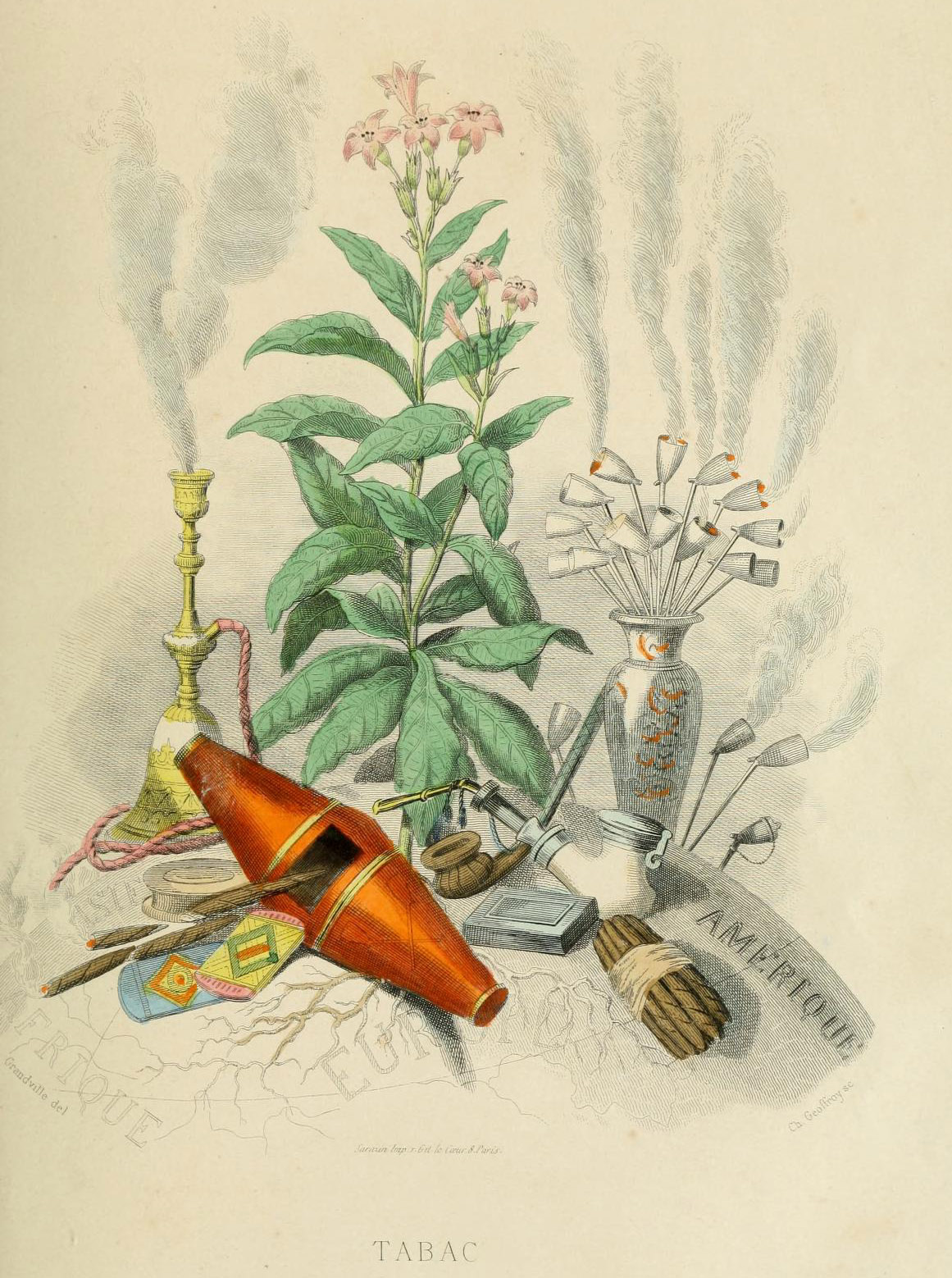
Tabac (Tobacco). J.J. Grandville, Les fleurs animées.
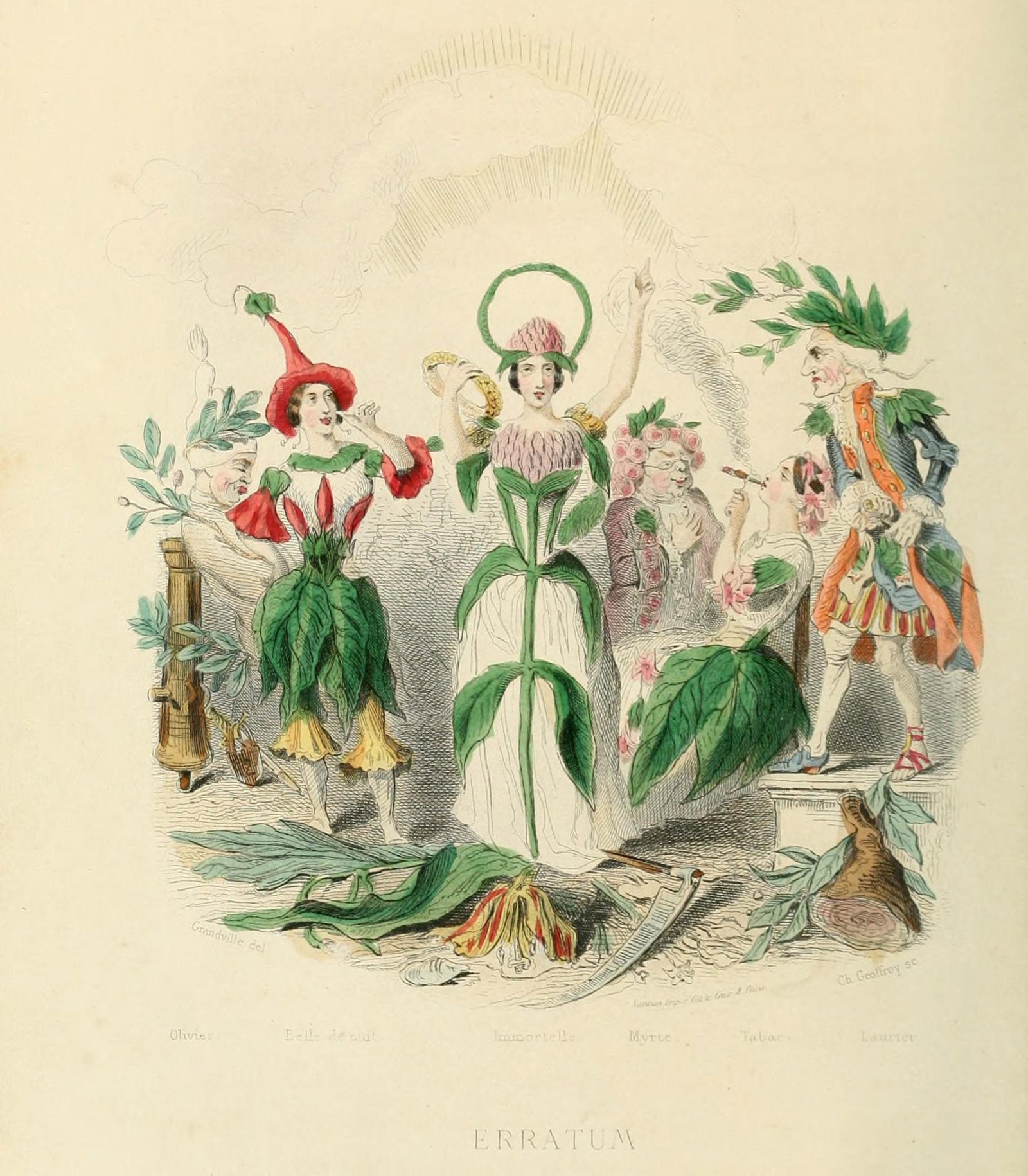
Olivier, Belle de nuit, Immortelle, Myrtle, Tabac, Laurier. J.J. Grandville, Les fleurs animées.
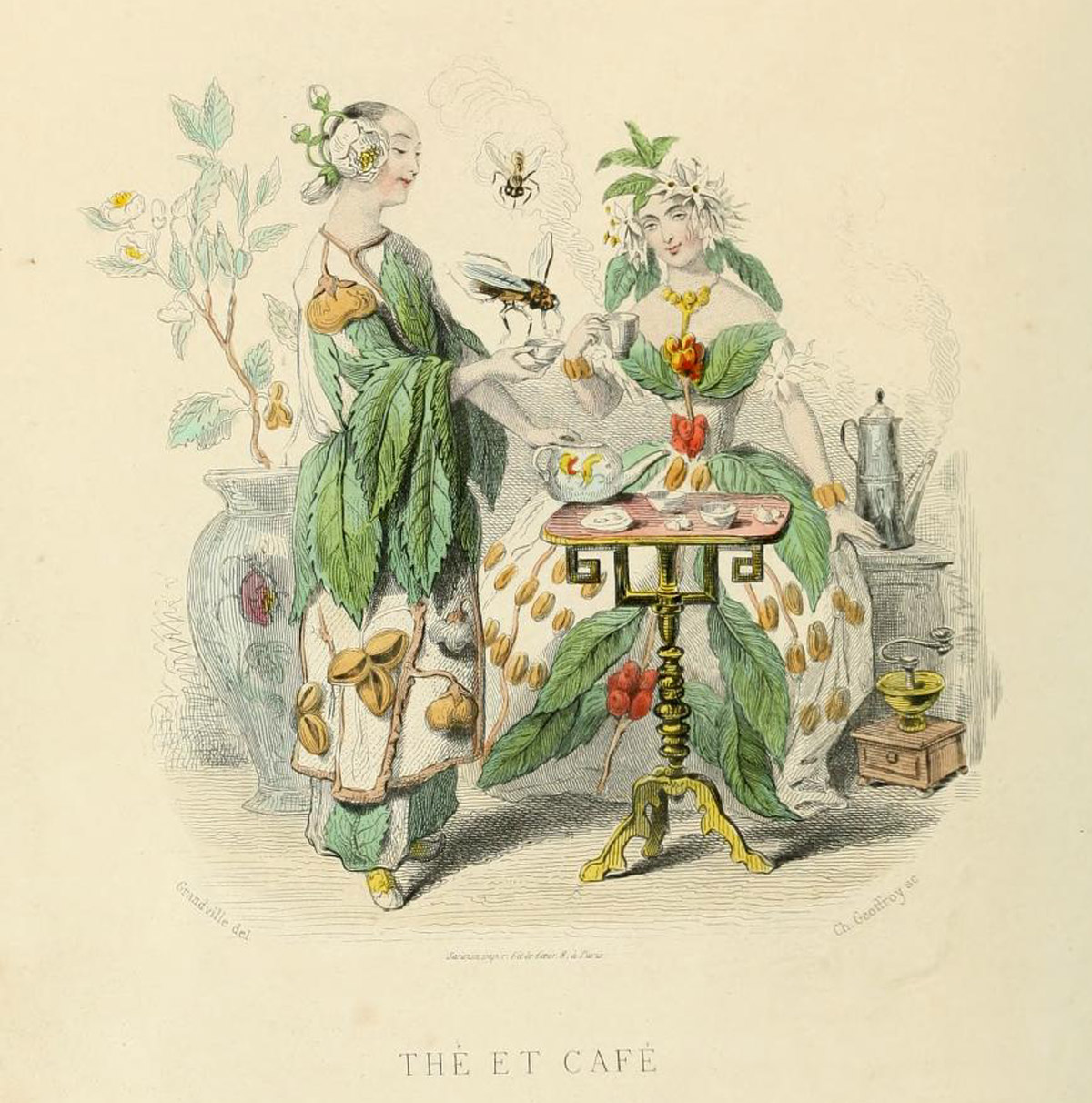
Thé Et Café (Tea and Coffee). I haven’t noted it before, but all of these can be clicked for full size. J.J. Grandville, Les fleurs animées.
Café looks absolutely blissed out. Now I want coffee.

[Sœur] Nenuphar. (Water Lily). J.J. Grandville, Les fleurs animées.

Guimauve. (Marsh Mallow). J.J. Grandville, Les fleurs animées.
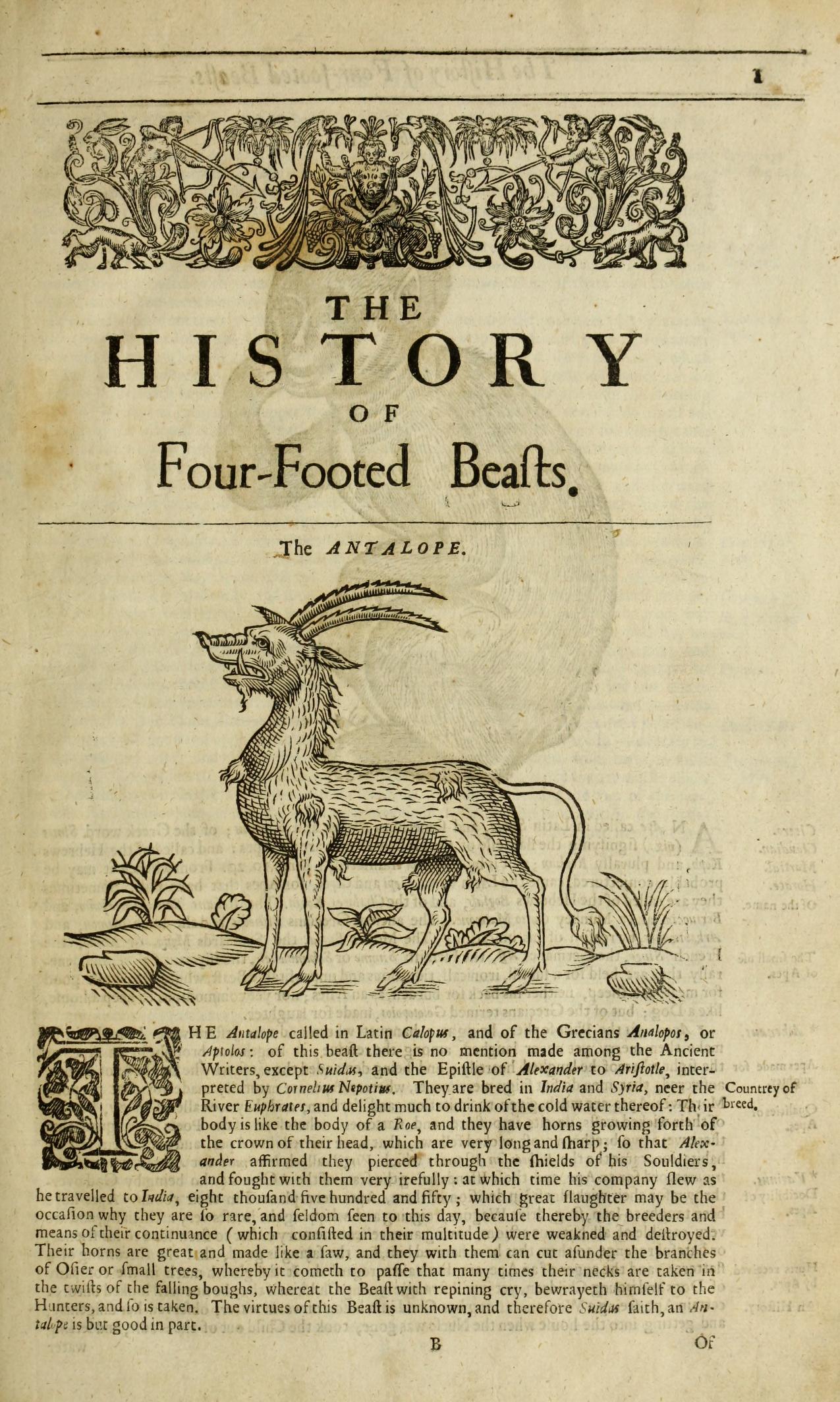
Published in 1658, more than thirty years after his death, this book brings together Edward Topsell’s The History of Four-footed Beasts (1607) and The History of Serpents (1608). Totalling more than 1000 pages, this epic treatise on zoology explores ancient and fantastic legends about existing animals, as well as those at the more mythic end of the spectrum, including the “Hydra” (with two claws, a curled serpent’s tail, and seven small mammalian heads), the “Lamia” (with a cat-like body and woman’s face and hair), and the “Mantichora” (with lion’s body and mane, a man’s face and hair, and a grotesquely smiling mouth). Topsell was not a naturalist himself (he in fact was a clergyman) and so relied heavily on the authority of others, in particular Konrad Gesner, the Swiss scholar who was also behind many of the brilliant illustrations which adorn the volume, and Thomas Moffett. On his utilising others for his work Topsell writes “I would not have the Reader,… imagine I have … related all that is ever said of these Beasts, but only so much as is said by many”. This approach leads him to repeat some wonderfully fantastic claims: elephants are said to worship the sun and the moon with their own rituals, apes are terrified of snails, and “…the horn of the unicorn … doth wonderfully help against poyson”. Although it is abound with such fanciful ideas, Topsell’s work, as John Lienhard explains “was actually an early glimmer of modern science. For all its imperfection, it represents a vast collection of would-be observational data, and it even includes a rudimentary rule for sifting truth from supposition.”
This is a grand look at early ideas of the natural world, and all the people busy trying to figure it all out. The artwork is marvelous, and retains much of that early Medieval illuminated flavour. Creatures real, and not real inhabit the pages, along with many grand, if terrifying remedies such beasties can provide for many an ill.
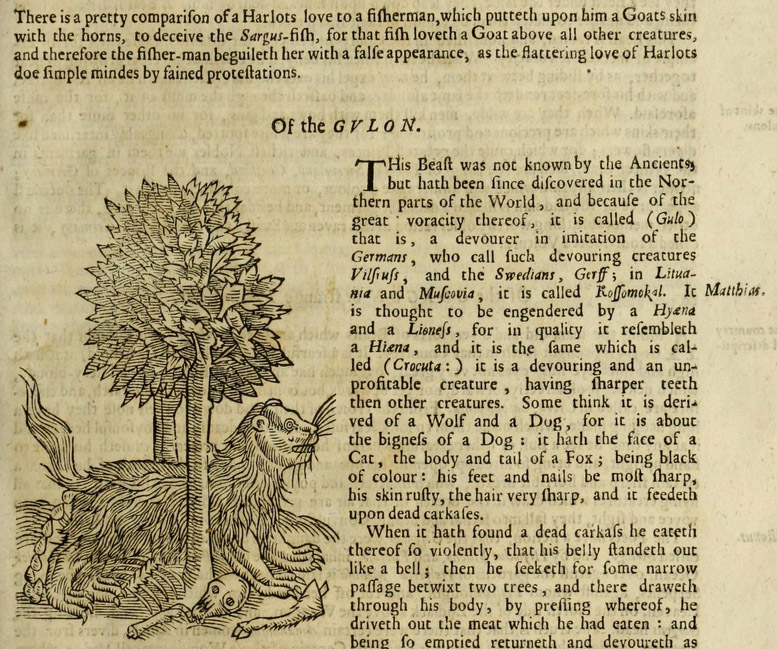
Gulon.

Some remedies utilising goat bits, particularly their dung.

A beautiful badger.

Cures which can be effected by use of badger bits.

Squirrels are depicted as dangerous and bloodthirsty. Appropriately, as Iris would say.
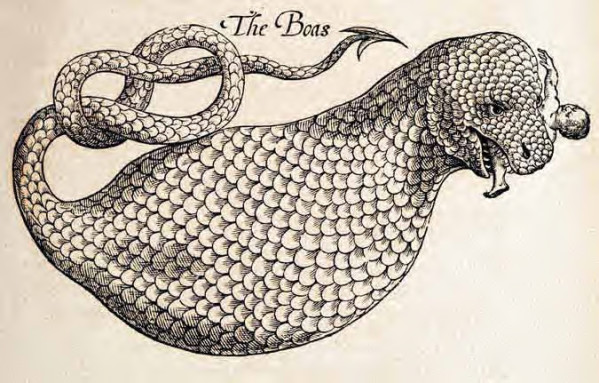
The book includes serpents and insects.
The whole book is available here, and select images here.
Via The Public Domain.

Cigue (Hemlock). J.J. Grandville, Les fleurs animées.

Tulipe, J.J. Grandville, Les fleurs animées.
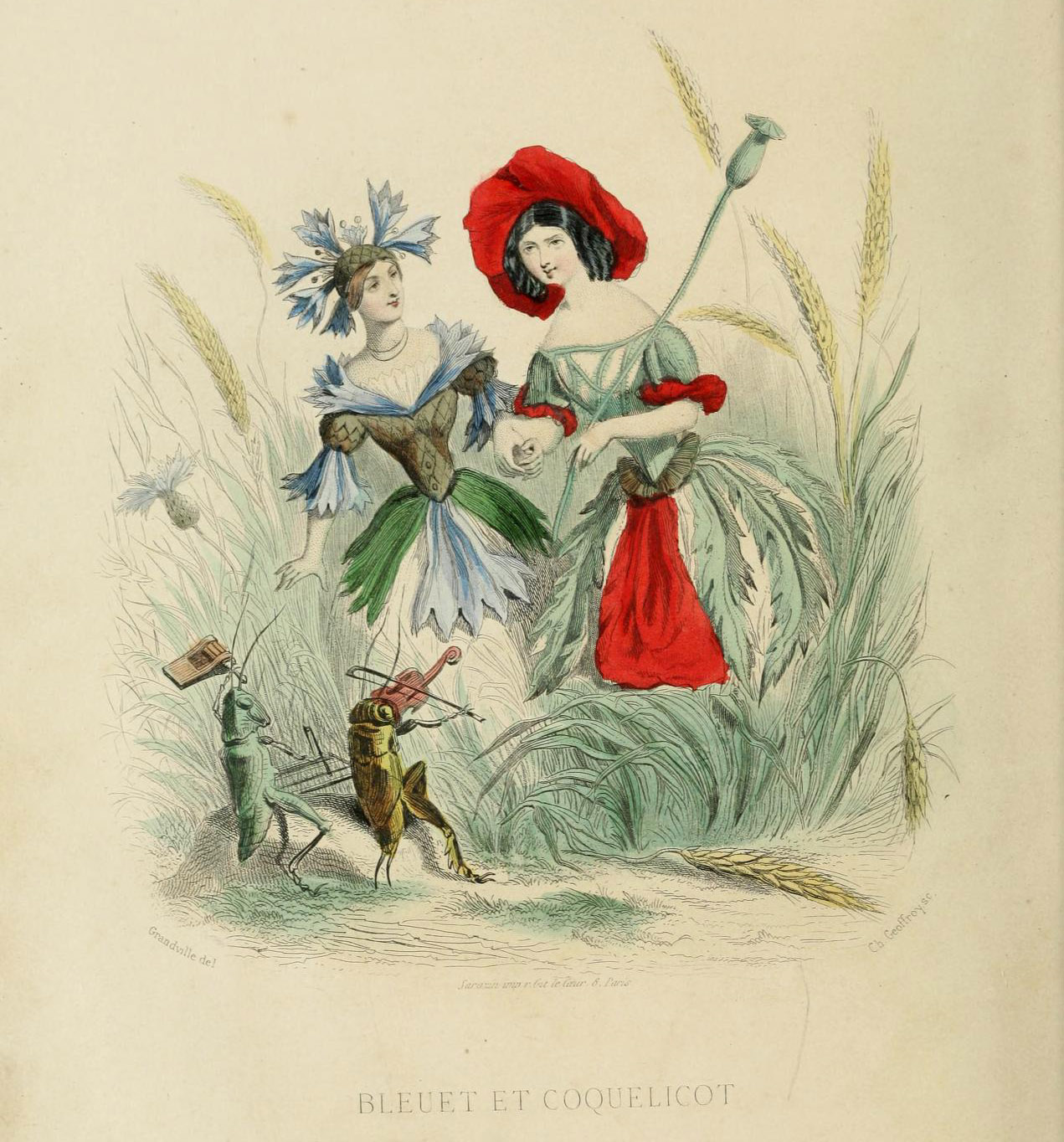
Bleuet Et Coquelicot (Cornflower and Poppy), J.J. Grandville, Les fleurs animées.

:D There’s a nice bit of 12th century medicine. I’m afraid that all the actual medical treatments shown and addressed only make a person very happy they are in this century.

Those little circles are cautery points. Yikes. The hemorrhoid treatment looks damn scary, too.

Illustrations from a delightful piece called the “Future Dictates of Fashion” by W. Cade Gall and published in the January 1893 issue of The Strand magazine. On the premise that a book from a hundred years in the future (published in 1993) called The Past Dictates of Fashion has been inexplicably found in a library, the article proceeds to divulge this book’s contents – namely, a look back at the last century of fashion, which, of course, for the reader in 1893, would be looking forward across the next hundred years into the future. In this imagined future, fashion has become a much respected science (studied in University from the 1950s onwards) and is seen to be “governed by immutable laws”.
The fashions run from 1900 to 1993. You can see all of them here, and read the full original piece from The Strand here. The 1950s tickle me the most, it has to be those rather fab pirate/cavalier boots. And I’m a sucker for capes and cloaks. The 1970s were never that fabulous. :D


I’ve never been one for taking baths, I didn’t even like them as a child, and couldn’t wait until I was allowed to shower instead. If I could get this sort of treatment, though:
If people could afford a to have private bath – and not many could – they would use a wooden tub that could also have a tent-like cloth on top of it. Attendants would bring jugs and pots of hot water to fill the tub. In John Russell’s Book of Nurture, written in the second half of the fifteenth-century, he advises servants that if their lord wants a bath they should:
hang sheets, round the roof, every one full of flowers and sweet green herbs, and have five or six sponges to sit or lean upon, and see that you have one big sponge to sit upon, and a sheet over so that he may bathe there for a while, and have a sponge also for under his feet, if there be any to spare, and always be careful that the door is shut. Have a basin full of hot fresh herbs and wash his body with a soft sponge, rinse him with fair warm rose-water, and throw it over him.
He adds that if the lord has pains or aches, it is good to boil various herbs like camomile, breweswort, mallow and brown fennel and add them to the bath.
I might well change my mind.
Via Medievalists.net.