ΜΟΛΩΝ ΛΑΒΕ, my ass

Myke Cole dissects the weird phenomenon of laconophilia, or Sparta worship. There’s something about it that has fascinated men for centuries — the whole fiercely macho, iron man myth keeps going and going, despite the fact that it is actually that, a myth.

The Spartans, popular wisdom tells us, were history’s greatest warriors; in fact, they lost battles frequently and decisively. We are told they dominated Greece; they barely managed to scrape a victory in the Peloponnesian Wars with wagonloads of Persian gold, and then squandered their hegemony in a single year. We hear they murdered weak or deformed children, though one of their most famous kings had a club foot. They preferred death to surrender, as the legend of the Battle of Thermopylae is supposed to show—even though 120 of them surrendered to the Athenians at Sphacteria in 425 B.C.E. They purportedly eschewed decadent wealth and luxury, even though rampant inequality contributed to oliganthropia, the manpower shortage that eventually collapsed Spartan military might. They are assumed to have scorned personal glory and lived only for service to the city-state, despite the fact that famous Spartans commissioned poetry, statues, and even festivals in their own honor and deliberately built cults of personality. They all went through the brutal agōgē regimen of warrior training, starting from age seven—but the kings who led their armies almost never endured this trial. They are remembered for keeping Greece free from foreign influence, but in fact they allied with, and took money from, the very Persians they fought at Thermopylae.

I’ve actually used a short clip from the opening of that comically over-the-top movie, 300, in introductory biology classes when discussing the flaws of eugenics. You know the one, the bit about how they culled the weak, shown with a mountain of infant skulls, and sending young boys off to fight unrealistically gigantic wolves with a stick. It’s a horrible way to run a society, and isn’t going to “improve the stock” in the way they imagine it. Spartan culture doesn’t seem to have survived very well, and has left to us only these destructive myths. Really destructive myths.

For much of this time, laconophilia was a relatively benign ahistorical myth, but Spartan admiration unmistakably turned malignant in the late-nineteenth century with the advent of scientific racism. German scholar Karl Müller included in his influential Geschichten hellenischen Stämme und Städte a history of the Dorian race responsible for founding classical Sparta. Müller’s work lionized the invaders’ Northern origins, which dovetailed into the early evolution of Nordicism, the pseudo-anthropological notion of a Nordic master race that would become a cornerstone of Nazi ideology. Müller was hardly alone, and European thinking about inherent inequality and Nordic superiority was already maturing in the fevered minds of thinkers like the French aristocrat Joseph Arthur de Gobineau, whose writings influenced the famous composer and German nationalist icon Richard Wagner. It is not surprising that Adolf Hitler saw in Sparta “the first völkisch state” and gushed about the ancient city-state’s legendary eugenics: “The exposure of the sick, weak, deformed children, in short, their destruction, was more decent and in truth a thousand times more human than the wretched insanity of our day which preserves the most pathological subject.”

The only “wretched insanity of our day” we have to worry about is the fascism Hitler endorsed, and the toxic masculinity celebrated in all of this Spartan nonsense. Pathological cultures, like Sparta, might capture the imagination, but they don’t last.

When you put it that way…

HJ Hornbeck succinctly summarizes the catastrophic collapse of the credibility of the Atheist Community of Austin. It’s rather shocking — at this time last year, if you’d asked me, I would have said the ACA was the perfect model of a dynamic, progressive, activist atheism group, largely because of the excellent people they had representing it. Now most of those people are out, a rather nasty subculture has taken over, and their reputation is in shambles. It’s just a shame. Matt Dillahunty worked his butt off helping to build that and become a full-time professional atheist, which I’ve come to conclude is a terrible aspiration for anyone, and now he’s an example of how not to run an organization. I wonder if debating terrible people like Jordan Peterson is going to continue to put food on the table for him — he might want to consider alternative careers.

What’s also sad about it is that overall, any kind of organized skepticism/atheism is on the decline. There are fewer meetings, attendance is down, and part of the reason for that is that any time someone sets themselves up as a Thought Leader, we know they’re going to fall and fall hard. We’re not going to have the equivalent of megachurches because authority must always be challenged, and human individuals are intrinsically imperfect. Humans also tend to overreach and grasp for more authority than they can handle. Organized religion seems to be fine with that, but organized atheism has a tendency to splinter.

It doesn’t have to be that way. I just got back from Skepticon, a skeptic/atheist conference that, rather than focusing on one hero of the movement, always strives for diversity and bringing in new speakers and new ideas, which undermines the trap of the cult of personality. It celebrates a community, as the ACA used to do. There’s no figurehead, there’s a team of hardworking organizers, but they’re not the people the content of the conference revolves around, and that’s good. It’s a separation of powers that keeps the institution strong.

That philosophy that everyone matters and that it’s the attendees that makes the conference means that everyone who goes comes away with the warm fuzzies and a sense of anticipation for next year. Attendance may have its ups and downs, but somehow, they keep pulling it off, and everyone walks away happy (well, except for the horrible people who want to sue it out of existence; there’s always that asshole).

The ACA could have been a similarly joyful organization, but it has ground to a halt now, and is never going to have the sterling reputation it once possessed…and is probably going to accelerate its own destruction.

The arctic is melting and is on fire

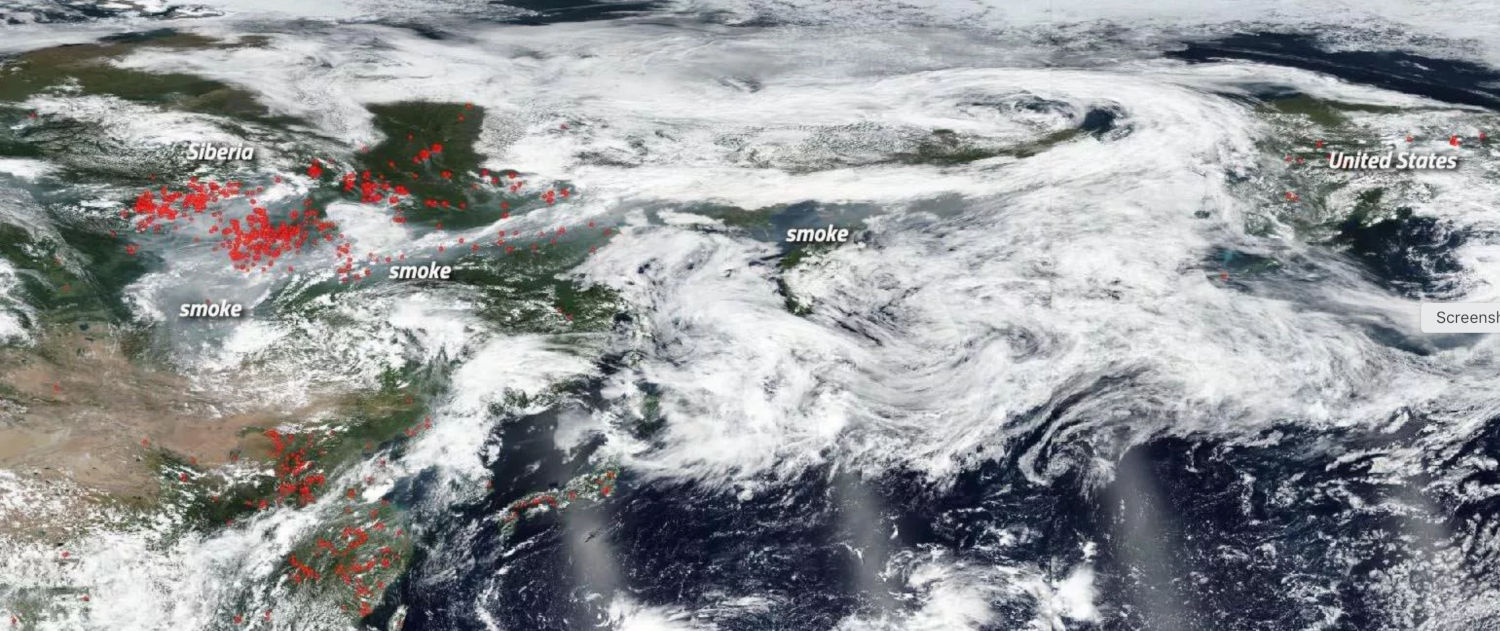
Isn’t this a lovely example of a catastrophic threshold effect? Humans produce excess carbon in the atmosphere, warming the planet; warming the planet dries out gigantic swathes of peat in the arctic, which catches fire and releases more carbon into the atmosphere. The Earth has all these colossal reservoirs of sequestered carbon, and we burn through one, the buried fossil fuels, and it unlocks all the others, such as the peat bogs.

The Arctic is warming twice as fast as the rest of the planet, leading to the desiccation of vegetation, which fuels huge blazes. Fortunately for us, these wildfires typically threaten remote, sparsely populated areas. But unfortunately for the whole of humanity, so far this year Arctic fires have released some 121 megatonnes of CO2 into the atmosphere, more than what Belgium emits annually. That beats the previous Arctic record of 110 megatonnes of CO2, set in 2004—and we’re only in June.

Yes, that article is from June, and being late in paying attention to it by a mere two months feels like I’m disgracefully tardy. We’re talking about climate events on a planetary scale, and they’re moving so fast that we need to be talking on a time scale of months. Usually, scientists and science reporters are telling you that geology moves incredibly slowly, but humans have effectively goosed the planet into bringing change so fast that we’re seeing it in a fraction of a lifetime.

These fires are largely happening where few people live, so we don’t see the effects directly. Aren’t we fortunate that we have satellites that let us see what destruction we have wrought?

All those fires are producing clouds of soot that darken the arctic ice, absorbing heat from the sun and increasing warming and melting. These are “some of the biggest fires on the planet”, and I don’t think anyone is going to put them out.

Meanwhile, back in the American fantasyland, we have a leadership that is denying that climate change is occurring, or that it’s entirely natural, or part of a normal cycle, and besides, even if it is happening, it would hurt the economy to do anything about it. Someone ought to explain to them that gradual change can lead to a crisis point and catastrophe…and that can happen in politics, too. There are fires smoldering everywhere.

Maya’s experiment

I was not looking forward to today — we have these swarms of spiders hatching out, and we have to do something with them all. They’re in cramped little petri dishes, an entire clutch together, which is fine early on, since they naturally aggregate after first emerging from the egg sac, and then a few days later start ballooning and dispersing by wafting away on the wind. “Wafting away on the wind” isn’t a great strategy for maintaining a laboratory colony, though. Last year I would pluck them out one by one and put them in tiny individual containers, which is ridiculously labor intensive, and then feed them flies individually, even worse, and that wasn’t going to work at all with the numbers we’re dealing with. Especially since fall term starts way too soon, and students are going to be occupied with mere classes.

So my student Maya is doing a simple experiment to see the effects of population density on juvenile mortality. We didn’t put the spiderlings in individual containers, but in two different sizes of containers in different numbers. We opened up the petri dishes of spiderlings and counted out individuals into larger containers.

It was amusing and different. The spiders, as soon as the lid was off, saw freedom awaiting them and would put out a thread to start ballooning. We’d gently sweep in with a paintbrush and snag them, move the brush over their new container, and give a little shake — sometimes they’d oblige by neatly rappelling down, sometimes they’d jump off, sometimes they’d get obstinate and you’d have to dab the brush against the container to convince them to move. Meanwhile, while you were distracted, more spiderlings were launching themselves skyward. More than a few escaped. More than a few, I’m sure, snugged themselves down in our clothing. It’s all good.

(Oops, just found one in my shirt sleeve. Now my office has some new residents.)

The end result is that we now have a known number of spiders in known volumes of space. We’ll track survival every few days to see how they fare. Once they get larger, we’ll spread them out a little more, but currently we find that the adults coexist nicely with two in a 5.7L container, so we’re hoping that the babies won’t fight and cannibalize each other at a somewhat higher density.

(Just found another baby under my shirt collar.)

That strange feeling when you see your lawyer celebrated in a Ben Garrison cartoon

It’s true. The lawyer defending us is Marc Randazza.

The wall that protects the First Amendment is not manned with pretty, happy smiling thoughts and easy-to-love characters. That rampart is manned by ugly people, disturbing images, and thoughts that you could swallow no easier than if they were made from cat shit mixed with broken glass. The picture of them is a picture of ugly, scowling faces; burning crosses; images of mothers having sex with goats in outhouses; lies about winning medals of honor; and protests at soldier funerals. They’re dirty. They’re ugly. They’re mean. But when they all sing together, that collection of voices that most decent people among us hate, are collectively a beautiful chorus because when you weave them all together they sound like the same 45 words, the same five freedoms, the same First Amendment.

So, umm, that’s a description of me? Dirty, ugly, and mean? OK, it’s a fair cop.

Anyway, he’s our lawyer, and he’s not cheap. We still need contributions to our legal defense fund. Don’t hold that loon Garrison against us.

The best explanation for the death of Epstein

Jamie Bernstein explains the most likely explanation for Epstein’s suicide: neglect, terrible conditions, and America’s prison system.

The truth is that the Metropolitan Correction Center where Epstein was being held, like other federal jails, has suffered from decades of budget shortfalls and understaffing. The night that Epstein died, the two corrections officers that were on staff were both working overtime hours, and for one of the officers, it was his fifth night in a row working overtime. In terms of conditions at the jail, Slate writes that “in the Special Housing Unit where Epstein was held, the fluorescent lights are kept on 23 or 24 hours a day, prisoners are prohibited from calling out to each other, and the cell windows are frosted to prevent any glimpse of the outside world,” conditions that can often lead to mental illness and suicidal tendencies. They also point out that even though mental illness and suicide is extremely common in jails, at MCC there was only one psychiatrist on staff for both MCC and another local jail, a population of 2000 prisoners.

In a way, I think I want to believe Epstein was murdered because it’s a tidy end to the story of Epstein. It’s easy to believe that Epstein, by dealing with experts at crimes and coverups, ended up as the victim of one of those crimes and coverups. I want to believe it was murder, but the truth is much scarier.

The truth is that the MCC already had a reputation as an extremely dangerous place that was often mismanaged, creating situations that put their inmates at risk. Slate writes this about the MCC

We know that MCC, the federal prison in Manhattan that also recently housed Joaquín “El Chapo” Guzmán, was deemed “worse than Guantanamo” by someone who spent time in both facilities. We know that cells are infested with bugs and rats so big they’re “more like roommates” and that the temperature swings from unbearable heat to frigid cold. We know that inmates have not received adequate medical care, that a corrections officers was found guilty of raping an inmate, and that officials allegedly tried to cover up the fatal beating of another prisoner.

It seems likely that Epstein was taken off suicide watch early because suicide watch is expensive and they need to conserve their budget. It seems likely that the inmate who was staying with Epstein was transferred out because he needed to be moved and the jail didn’t have the resources or manpower to quickly find a replacement cellmate. It seems likely that the corrections officers who were working the night of Epstein’s death were not checking on him every 30 minutes because they were overworked and tired and likely had many other inmates to check-in on every 30 minutes, along with a lot of other work to do, so doing those bi-hourly checks just fell by the wayside.

We don’t need a vast conspiracy among powerful people to explain why Epstein died. We already have the information we need to know what happened, but we don’t want to face it because it means we might have to do something about it. Epstein likely died due to suicide in a jail that didn’t have the budget or wherewithal to be able to fully protect him and provide him with mental health resources when he showed suicidal tendencies. He died because federal jails in the US are terrifying hell-holes with conditions that exacerbate mental illness then do not provide inmates the medical care they need to manage their conditions. It’s not a conspiracy so much as a total lack of regard from politicians and the taxpaying public who vote for them.

If you want a conspiracy theory, you can have one…but it should revolve around the right-wing demonization of drugs and mental illness, the proliferation of for-profit prisons, and the awful people who run prisons as punitive pits for the unwanted. I’ll believe in that before I believe in shadowy assassins staging murders as suicides in prisons.

Next question: why aren’t we doing something about our national hell-holes? A billionaire was driven to suicide in one, shouldn’t that be enough to motivate Republicans to change policies? I know they’re only about self-interest, but the odds are improving that they’ll eventually end up in one, you know. Trump himself could end up in the Metropolitan Correction Center, and I don’t believe his pampered ass would last long “with bugs and rats so big they’re ‘more like roommates'”, although his Cabinet might be preparing him for that situation.

Oh, dear. Daniel Povey has been fired.

Earlier this spring, there was a major protest at Johns Hopkins University — students actually occupied the administration building to protest the formation of a private police force on campus. It warmed my heart to see such classic action.

Some professors didn’t like it at all. Daniel Povey gathered a group of like-minded conservative thinkers who weren’t affiliated with the university, grabbed some big ol’ boltcutters, and assaulted the protesters late one night. Punches were thrown. Povey and his friends were thrown back. He’s calling it a “counter-protest”, but protest movements don’t involve planned violence, and usually involve peaceful non-violence training, rather than angry mobs.

Daniel Povey has now been fired from his non-tenured position at Johns Hopkins. I find that interesting in itself, in that the institution he pretended to have been defending wants nothing to do with him.

According to Povey’s termination letter, he was suspended and banned from campus in May over allegations that he “engaged in violent and aggressive behavior when attempting forcibly to enter Garland Hall,” and his conduct “was motivated by racially discriminatory animus and created a hostile environment.”

Povey has admitted leading a group of people to the campus building around midnight on May 8, carrying bolt cutters. “You believed the group of nonaffiliates you brought with you could become violent,” the termination letter also says. As a faculty member, “you created a dangerous situation that could have ended in serious harm to our students, yourself and others in the community.”

Povey was repeatedly told not enter Garland Hall prior to the exchange, despite his requests to enter the building to access computer servers there, according to the letter.

“These actions by a member of our faculty are entirely unacceptable. The safety, security and protection of our students and others are of paramount importance to the university,” wrote Andrew S. Douglas, vice dean for faculty. While the university will continue its investigation until it reaches its conclusion, “your own account of events based on your oral and written statements provides more than sufficient grounds for immediate termination, and we are hereby terminating your appointment with the university.”

Even more fascinating, though, is his rant about his firing. It’s as if he felt compelled to provide independent verification of everything he was accused of in the administration’s letter.

“My feeling is that this mostly has to do with underrepresented minorities, specifically black people (and trans people). There seems to be nothing that Americans, or American institutions, fear more than being accused of racism (or similar isms), which leads to ridiculous spectacles like what we’re seeing here, where such a huge organization can be paralyzed by a handful of deluded kids.”

If Povey had known in advance “that everyone inside the building was black (that was what I saw; although from media coverage it seems that there may have been a white trans person in the core group) — I wouldn’t have gone ahead with the counterprotest,” he said. “I’m not an idiot; I know that as a person who demographically ticks all the ‘oppressor boxes,’ I would have to be severely punished for opposing such a group.”

White men in “this environment seem to be expected to constantly atone for their existence by telegraphing their exclusive concern for every demographic group but their own, like a neutered puppy dog or some Justin Trudeau man child,” he said. “It’s pathetic, in my opinion, and I don’t accept it at all. I am not prepared to apologize for being who I am. I don’t think that empathy should preclude critical thinking or basic self-respect.”

Povey goes on to criticize critiques of “toxic masculinity,” compare current discourses on gender and race to Animal Farm and Nazism, discusses animus toward market-dominant minorities, and ends with some Bob Dylan: “I ain’t sorry for nothing I’ve done/I’m glad I fought, I only wish we’d won.” He at one point uses the word — widely considered a slur — “retarded.”

I’ll spare you all the long defense of Nazi Germany in which he argues that Hitler might have been “a little bit triggered” by all those rich Jews. You can read it if you want. You probably don’t want to, not recommended.

As you might have guessed, Povey is a white man, and he thinks he was fired because he is a white man, rather than for being an insensitive bigot who used violence to attack students.

He deserved to be fired, although as you might expect, he’s failing upwards. He brags about getting a better job in industry, in Seattle. Sorry, Seattle. I won’t be surprised if he gets enlisted in the Intellectual Dork Web, since he fits the bigoted profile perfectly, or gets a writing gig for Quillette.

All right, Daniel. You know what we say.

The curse of having Wisconsin as a neighbor

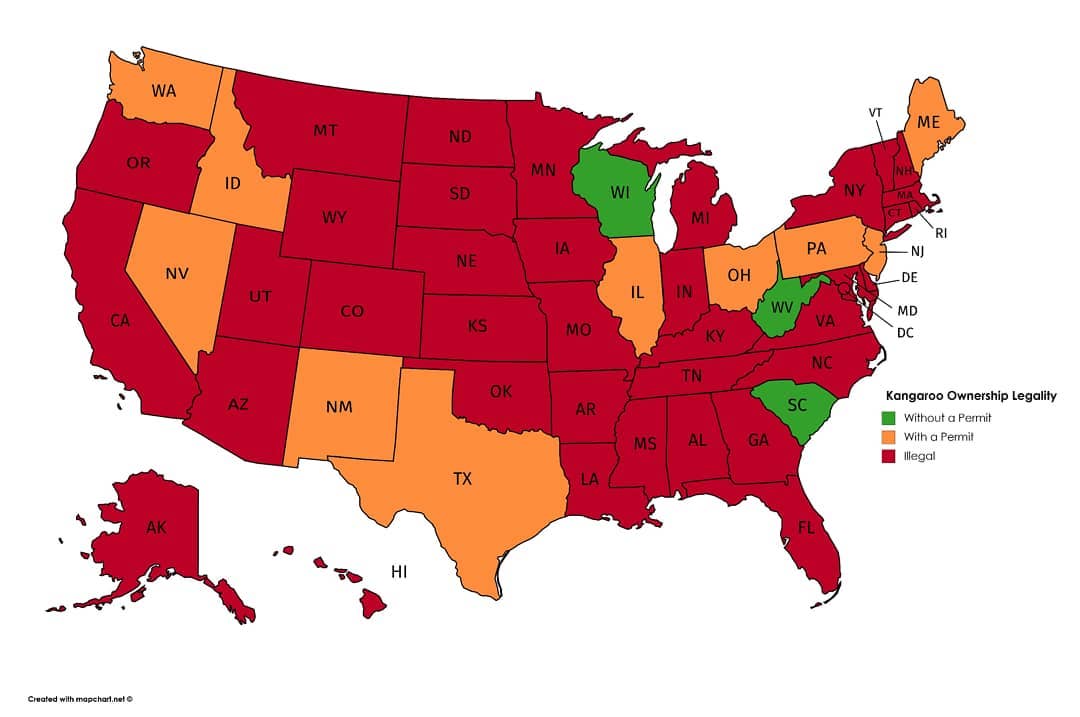
I had a terrible dream last night. I had to buy a gun, and not just any gun, but a high-powered assault rifle, to defend myself. I’d been browsing the interwebs before bed, and last thing I’d seen was this map.

How awful, I thought, that those irresponsible Wisconsonites next door are so slack in regulating their kangaroos.

So of course I dreamed of wanton kangaroos hopping across the border…wearing cheese hats and smuggling cases of LaCroix into my neighborhood. I had to shoot them.

Tonight I’m going to make a point of reading something less traumatic before bed — I’m about halfway through Kameron Hurley’s The Light Brigade, so that should be soothing. So far, there aren’t any kangaroos in it at all. Or LaCroix.

D’Souza must really be an embarrassment to his alma mater

We learn a great deal from this tweet.

  • Dinesh D’Souza doesn’t understand the difference between weather and climate.
  • Dinesh D’Souza doesn’t understand the difference between anecdote and data.

  • Dinesh D’Souza doesn’t understand the that the planet is spherical, and the Southern hemisphere has seasons out of phase with the Northern.

Dinesh D’Souza is a goddamn idiot. But we already knew that.

It’s the Spider Purge!

Oh, no. My daughter and granddaughter are coming to visit for a week on Friday, and my wife has decided we have to make a more baby-friendly home. Which means…THE SPIDERS MUST GO. I tell her that the spiders were here first, so maybe it’s the baby who should make accommodations. That didn’t work. The baby will need to learn to love spiders eventually, so why not start early? No go. Maybe the baby would like to learn spider-catching technique, so you’re depriving her of a learning opportunity. Nope. So Mary’s been out in the sun room, destroying a happy, loving community by scooping up spiders and their many egg sacs, and has brought them to me. At least I’ve got a nice home for them in the lab.

[Read more…]