Humanity’s imminent, mysterious extinction

You want something more to fear? Try this on for size.

Across the world, there’s evidence that spider populations are in danger of collapse. A landmark 2019 study in Nature found that the number of spiders, insects, and other arthropods dropped precipitously in Germany from 2008 to 2017, with the total number of different species researchers counted declining by 33 percent and total biomass dropping by 40 percent. Remember the Australian trapdoor spiders I told you about? They’re disappearing, too. After a century of settlers clearing land for crops and raising livestock, they’re becoming harder and harder to find. It’s all but certain that entire species of spiders will go extinct before we even have a chance to discover them, falling victim to industrial agriculture, pesticides, and climate change.

Then there’s this:

Alaska canceled the snow crab fishing season for the first time on Monday, as crab populations mysteriously plummet.

An estimated 1 billion snow crabs suddenly disappeared from the Bering Sea, according to CBS News. The collapse deals a heavy blow to Alaska’s biggest crab industry, and could drive many fishers out of the business.

“Mysteriously.” What a useful word. We send out trawlers to shred the seafloor, we drop traps and snatch away millions of crabs, and we spew garbage and microplastics into the ocean, and then shrug and say it’s a mystery why populations abruptly and catastrophically crash.

Another example: we’re seeing fewer vehicles with dead bugs splattered all over them.

From 1996 to 2017, insect splatters fell by 80 percent on one of the routes Moller regularly travels. On the other, longer stretch, they plunged 97 percent. Conventional measures show similar trends, and more recent observations have seen even sharper declines, Moller told us.

This article takes the somewhat interesting approach of speculating about alternative causes — which is fine, they’re being thorough, but we’re eventually going to have to face the reality that something “mysterious” is also happening to insect populations.

So, given this uncertainty, isn’t it possible that our spookily clean windshields are caused by factors other than rapidly declining insect populations? After all, we still see bugs everywhere, we just don’t seem to mash them with our cars as much.

Many smart people we spoke with, including entomologists and wheat farmers, speculated that maybe the cars have changed, not the bugs. As vehicles become more aerodynamic, the thinking goes, their increasingly efficient airflow whisks the bugs away from the windshield instead of creating head-on splatters.

Um, no. That’s a very silly explanation, as the experts they consult state, but also for obvious reasons. Car grills have not become more aerodynamic, nor have radiators. Also, the cars…or rather trucks people are driving are not particularly sleek. In fact, the trends are for more aggressively blunt, large, flat front ends. A lot of column inches get wasted on this ridiculous hypothesis, which can also be dismissed experimentally.

But we also saw 60 percent declines in insects between 2004 and 2021 in a British study from the Kent Wildlife Trust, which built on a Royal Society for the Protection of Birds effort in which thousands of people used “splatometers” to measure bug splatters on license plates, which aren’t much affected by aerodynamic advances elsewhere.

So then we get another off-the-wall hypothesis. It’s not that insects are in decline, it’s that there are fewer insects splattered by individual cars because we’ve vastly increased the number of cars on the road. I’m losing patience with their efforts to find any explanation other than that we’re poisoning the environment, but OK…being thorough is good.

Americans now drive three times as many miles as they did in 1970, and the explosion of trucks and SUVS means many of us do it in cars with much, much larger windshields. Back-of-the-napkin math suggests acreage of windshields out on the American road has tripled. And that’s probably an underestimate in some places: A large majority of our increase in driving has come on a narrow set of major urban roads, according to our analysis of Bureau of Transportation Statistics data. And as Kenny Cornett of design-software giant Autodesk points out, more traffic means more vehicles riding in each other’s bug-free aerodynamic slipstreams.

So in our little thought experiment, which makes the depressingly accurate assumption that bugs are a finite resource, our bugs-per-windshield metric would have been cut by two-thirds even if the number of bugs had remained constant.

I…I don’t even. This would only work if, instead of sampling a tiny fraction of the extant population with our windshields, we were exhaustively extracting enough bugs with one car to deplete the population for the next car. If that were the case, then maybe tripling the number of cars would be responsible for the population crash. But that’s not the case. The column of insects wiped out by the passage of a car is minuscule compared to the population in the fields, over the lakes, around our homes.

Treating the excessive driving habits of Americans as a rationalization for insect extirpation rather than as part of the problem is troubling, too.

Weirdly, the article concludes that the problem may not be as big as we think because…we have so many cars?

So, simple math hints that the very real ecological disaster of the collapse of insect populations may look even more apocalyptic thanks to the parallel rise of another ecological time bomb: the world’s intensifying love affair with ever more and ever bigger automobiles.

No. This makes no sense. We’ve got other methods of sampling insect populations that are not bug-splatters on cars. When I first moved to the Midwest, a regular feature on the news was when vast clouds of mayflies and midges would hatch out and rise from our lakes to appear on weather radar. Nope, not so much anymore. I would go outside and marvel at the dense masses of flying insects that would cluster around streetlights — nowadays, all summer long, the lights are lonely and shining into an emptiness. I wanted to use spider populations as a proxy for insects, and spiders aren’t leaping in front of cars on the freeway…and see the first article cited, they’re in decline, too.

What’s going on? Oh, I know the answer: it’s something “mysterious”. Problem solved.

Don’t worry, though. We don’t even like bugs, so who cares if they disappear. Then, when they’re gone, the birds and fish and reptiles will fade away, but they’re not our pets, so who cares? Unexpected crop failures…well, we’ll come up with a technology to deal with that. And finally, when humans mysteriously go extinct, there will be no one left to worry about it, and all the windshields on the decaying cars we leave behind will be shiny and clean and their grills will gleam unspattered. No one will be standing around wondering what happened to all the people, and best of all, there will be no one standing around smugly to utter the non-answer, “It’s a mystery.”

I’d include a photo of a spider, but I’ve learned how that usually ends

Stupid bird. No one is afraid of you.

Someone understands! Here’s an article by a man who discovered the joys of spidering. They’re beautiful and exotic and weird! How can anyone settle for mere bird-watching once you’ve seen a few spiders?

My first spider—the one that started all this—was black, with a head like a garden shovel’s blade and eight beady eyes that all but disappeared against the velvet of its upper body. At the end of its abdomen, two fat spinnerets poked out like the notched tail of a fish; on its back, a cream-colored strip stood in contrast to the black. As spiders go, it was unremarkable. And as I watched it scuttle across the carpeted floor of my in-laws’ basement, I had no idea that it was about to send me down the deepest rabbit hole of my life.

It was September 2021, and I was having some trouble adjusting. My wife, our one-year-old son, and I had temporarily relocated from Colorado to her parents’ house in Lincoln, Nebraska, after my wife’s mother was diagnosed with cancer. I occupied my free time as best I could, but within a couple of months I had hiked all of the few local trails. After a decade in the Front Range, where I could explore somewhere different every week, it felt claustrophobic.

In need of a new, Midwest-friendly way to get outside, I decided to try birding. I spent hours watching my in-laws’ bird feeders through binoculars, jotting down sightings of house finches and northern flickers. But when I tried to branch out and cover more ground, I ran into a roadblock: my toddler son, who came along on most of my outdoor adventures and was constitutionally incapable of sitting still. On our first trip to a local wildlife refuge, I raised binocs to my face and immediately heard him beating feet down the trail. After spending 30 minutes trying in vain to corral the giggling imp, I gave up and headed home.

One night after putting him to bed, I was sitting on the couch when I spotted something dark moving across the off-white carpet: that little black spider. Inside my brain, something clicked. There were spiders living inside the house. If I could bird-watch, why couldn’t I spider-watch. too? Ignoring the crawling sensation on my skin, I took out my phone, got down on my hands and knees, and snapped a photo.

Unfortunate side-effect, though: way too many people are arachnophobic, and very few people want to talk about spiders with you.

Sharing my new hobby was turning out to be difficult, however. If you think people tune out when birders start talking, try telling them about the wolfie you saw walking around with several dozen spiderlings clinging to her abdomen, or the fishing spider you watched shish-kebab a moth. My wife tried to be supportive, even though spiders make her hair stand on end. When I asked friends if they wanted to see pictures of my most recent find, their mouths said, Sure!, while their eyes said, Please don’t. For every new spider appreciator I converted, a dozen people told me about their spider bites, asked me if I was afraid of black widows, or just warned me to be careful.

They’re almost never spider bites. But try telling them that? That’s not what they want to hear.

The good thought here is that love of spiders can be infectious — if you can get anyone to really look, they can learn to appreciate them.

If the human fear of spiders is indeed genetic, you wouldn’t have known it watching my son. In the months after my spider-wakening, I took my new obsession from the backyard to the trail, mostly with Rhys in tow. Maybe it was because he could look at them face to face, but spiders fascinated him in a way that birds hadn’t. I remember the hikes we did together mainly in connection with the new species we saw. One time we spotted an enormous banded garden spider hanging upside down in the reeds at Lincoln’s Pioneers Park Nature Center, its body like a wasp-striped football and its legs in a perfect X. Later, at Colorado’s North Table Mountain, a rust-red Apache jumping spider climbed onto a tree root and looked at us, cocking its head as Rhys knelt down and did the same. Sometimes he spotted them before me, pointing at an orb web or a wolf spider blending in against a rock. Once or twice, perhaps possessed by the spirit of John Crompton, he tried to lick them.

You’ll have to let me know if my obsession has positively or negatively affected your opinion of arachnids. I will say it’s probably not a good idea to start licking them.

I never did like those genders, anyhow

When I was learning German, I struggled with the whole concept of gendered words — you had to use different articles with different nouns, and adjective endings were all over the place. One of the nice things about English is that we’ve jettisoned all that nonsense, but our language used to have them.

Maybe we should continue the trend and get rid of the gendered pronouns? They just get in the way and flag people with often inappropriate assumptions. All the people who complain about having to respect pronouns should appreciate that since it makes everything so simple and means they won’t have to worry about “compelled speech” anymore.

It’s a property of English, learn to respect it! Or go learn Spanish.*

*(We Americans might all have to learn Spanish anyway, or at least some hybrid of Spanish and English**)

**(Which I would hope would ditch the gendered nouns, too.)

Consult your local school board and city council for all your medical decisions

Getting surgery is a lot like requesting a zoning change, you know.

Once again, Oz has opened his mouth and willingly given Fetterman a delightful bon mot for his campaign.

A woman can’t possibly decide to get an abortion on her own! She must have a doctor who decides for her, and a small troop civil servants and bureaucrats crowded into the clinic to vote on the procedure. The authorities must be involved in every step of a pregnancy!

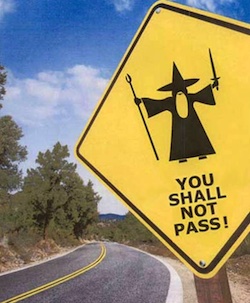
Play the game, you lose; don’t play the game, you lose

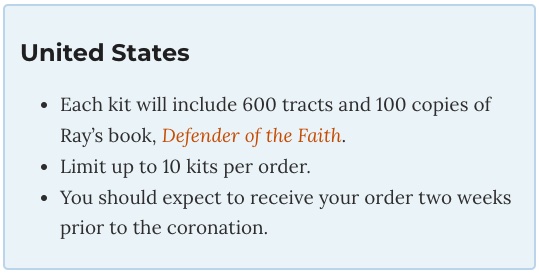
You’ve all heard of this Christian Nationalism nonsense, right? It’s all the rage with old people and conservative freaks and Facebook readers.

So what is Christian nationalism? It’s an ideology that says Christianity is the foundation of the United States and that government should protect that foundation. Political scientist Ryan Burge has found that the term “Christian nationalism” was mentioned in more tweets in July 2022 than in all of 2021.

I’ve got good news and bad news. The good news first: it’s declining a little bit!

We did find that agreement grew slightly from 2007 to 2017 from 27 percent to 29 percent, as other scholars have found as well. But since then, the proportion of Americans who affirm this explicit Christian nationalist statement has mostly declined to somewhere around 19 percent, a statistically significant drop.

When a fifth of the country thinks we’re a Christian nation, in defiance of the principles we were founded on, that’s still a problem…but they’ll be outvoted, right? Unfortunately, here’s the bad news: the people most prone to this fallacy are more likely to vote, and there are all these wealthy special interest groups propping up the idea.

But while fewer Americans say they agree with a core Christian nationalist tenet, its influence on our political life may nevertheless be expanding. The U.S. Census reports older Americans like those ages 65 to 74 vote at rates about 25 percent higher than Americans ages 18 to 24. Our research finds older Americans are also most likely to embrace Christian nationalism. And powerful people and lobbying groups like the Family Research Council, the National Association of Christian Lawmakers, and Florida Gov. Ron DeSantis (R) are working to promote Christian nationalist policy goals in government, the courts, and at the polls.

Recent experimental research shows when Christian Americans are told their numbers are declining, they respond with a greater commitment to Christian nationalism and Trump support. In other words, learning that they are or may soon be a minority pushes them toward extremist beliefs.

So get out there and vote! That last bit is concerning, though, because if these jerks lose elections, they’ll leap deeper into extremism, and they won’t mind follow criminal strategies to win in spite of losing. They’re already gearing up to compromise elections.

The Republican National Committee and its allies say they have staged thousands of training sessions around the country on how to monitor voting and lodge complaints about next month’s midterm elections. In Pennsylvania, party officials have boasted about swelling the ranks of poll watchers to six times the total from 2020. In Michigan, a right-wing group announced it had launched “Operation Overwatch” to hunt down election-related malfeasance, issuing a press release that repeated the warning “We are watching” 10 times.

Supporters of former president Donald Trump who falsely claim the 2020 election was stolen have summoned a swarm of poll watchers and workers in battleground states to spot potential fraud this year. It is a call to action that could subject voting results around the country to an unprecedented level of suspicion and unfounded doubt.

“We’re going to be there and enforce those rules, and we’ll challenge any vote, any ballot, and you’re going to have to live with it, OK?” one-time Trump adviser Stephen K. Bannon said on a recent episode of his podcast. “We don’t care if you don’t like it. We don’t care if you’re going to run around and light your hair on fire. That’s the way this is going to roll.”

Bannon? Isn’t he in jail yet? You know he doesn’t care about the law, or ethics, or common decency. He’s going to lie and cheat to get his way, and then…uh-oh.

Election administrators say they welcome more participation from the public but worry that improperly trained observers could try to enforce rules that they are misinterpreting. Even a handful of bad actors, they note, can inject chaos into the voting system and sow distrust.

“The problems don’t need to be in a thousand polling places,” said David Becker, the executive director of the Center for Election Innovation and Research in Washington, D.C. “If there’s a violent incident in one polling place, that’s enough, because the election deniers have been pouring gasoline all over the country, and it just takes one match.”

I am dreading 8 November, when the midterm elections take place. I won’t be watching the returns, because I sense a national crisis coming our way.

If the Republicans come back and win, and retake any portion of the government, we face years of stalemates and continued losses, and a strengthening of the loony faction. If the Republicans lose, there is going to be such a shriek of protest and armed assholes rampaging and years of legal wrangling over nothing.

We sane Americans can’t win.

One shining ray of light in the new UK government

There’s one less pompous supercilious twit in the cabinet — in a snit, Jacob Rees-Mogg has quit before he could be fired.

The move comes despite Mr Rees-Mogg suggesting he would be ‘open’ to a job in Mr Sunak’s cabinet. In u-turn on previous criticism of the new PM, he told the Telegraph today that he no longer considered Mr Sunak “a socialist.” He added that the Conservative party should unite around the new leader.

But these overtures have not been enough and Mr Rees-Mogg – who was a close ally of both Boris Johnson and Liz Truss – has left the government today.

He did make me laugh with his exit. Rishi Sunak, a man with hundreds of millions of pounds, a socialist?

From Dickens to Wodehouse to the Goons to Monty Python, Britain has always been a source of great comedy. Somebody needs to inform the people that you’re not supposed to elect the buffoons to high office, though.

I get comments

Somebody who calls himself Truth Matters, who has been telling me I’m chicken for refusing to debate criminal creep Kent Hovind, now is trying the pity approach.

dude I feel sorry for you, you are messing with the wrong God. A square inch on your skin is more complex than every building throughout all history and everything we have ever created including the internet combined. The Bible mentions hydrothermal vents thousands of years ago and you know that the didn’t have submarines back then. You still have some time left I suggest you pray to Jesus and ask Him to save you or else you are going to be judged (and nobody paid for your sins so guess who is going to pay for your)

Expressing my contempt for Kent Hovind is not messing with the wrong God. I might suggest that he stop worshipping a certain false god, though.

The complexity argument is not an argument for a deity — it’s an argument that supports my claim that biology is a product of a long trial-and-error process over millions of years, which would produce the details we observe. Claiming it was all made by divine fiat is an unconvincing copout.

Not in the Bible

The Bible does not mention hydrothermal vents. I think he’s referring to the fountains of the deep that spurted huge volumes of water to flood the Earth. Moses didn’t see those, and if they were the source of the flood waters, Noah would have been cooked and poisoned.

The concept that Christians can sin because a religious fanatic was murdered 2000 years ago is one of the most perniciously evil ideas Christianity ever invented. It’s the source of the arrogance this kind of person exhibits — and it’s ironic that his messiah preached humility.

Nope. I’m not going to debate that wretched cretin, Hovind.