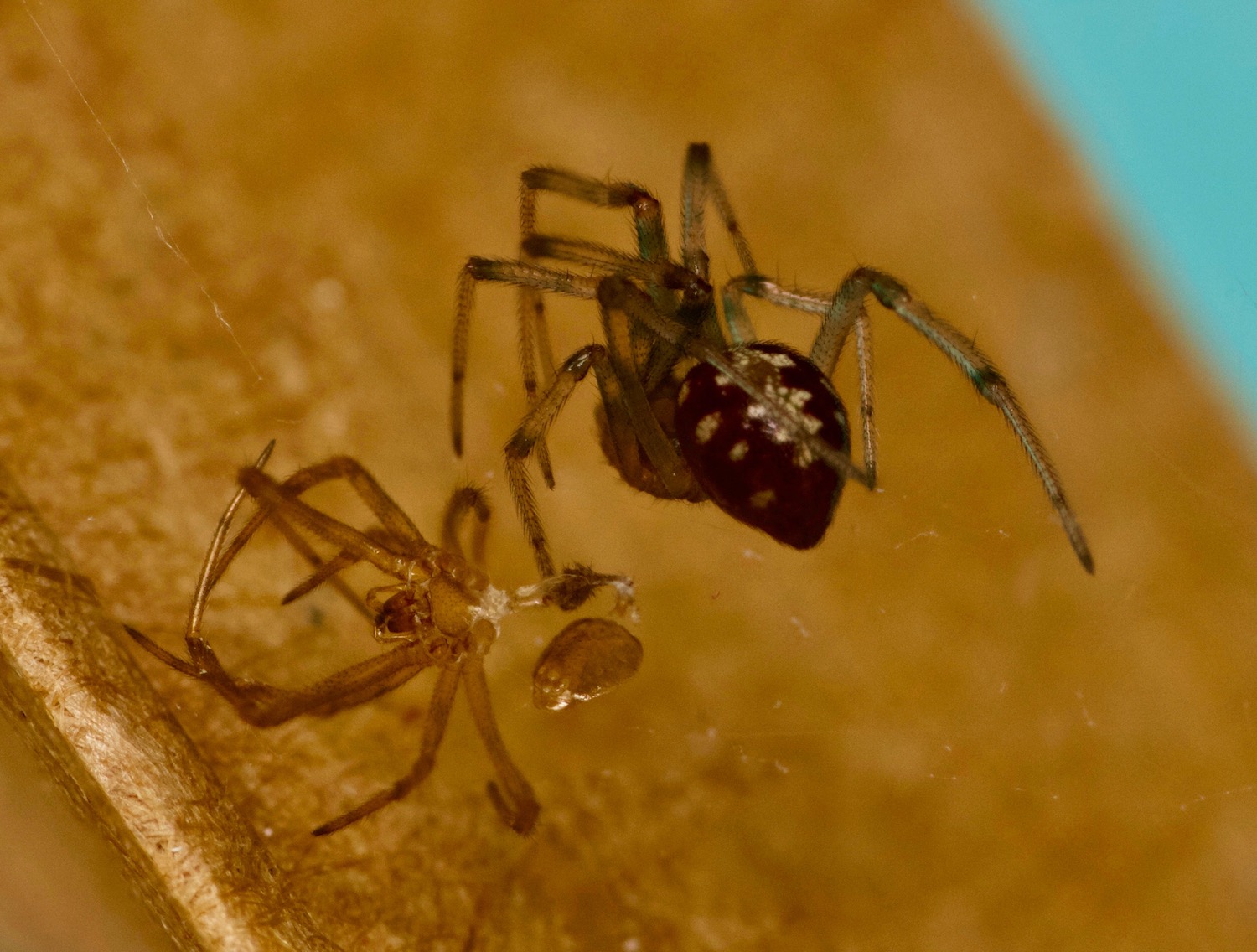
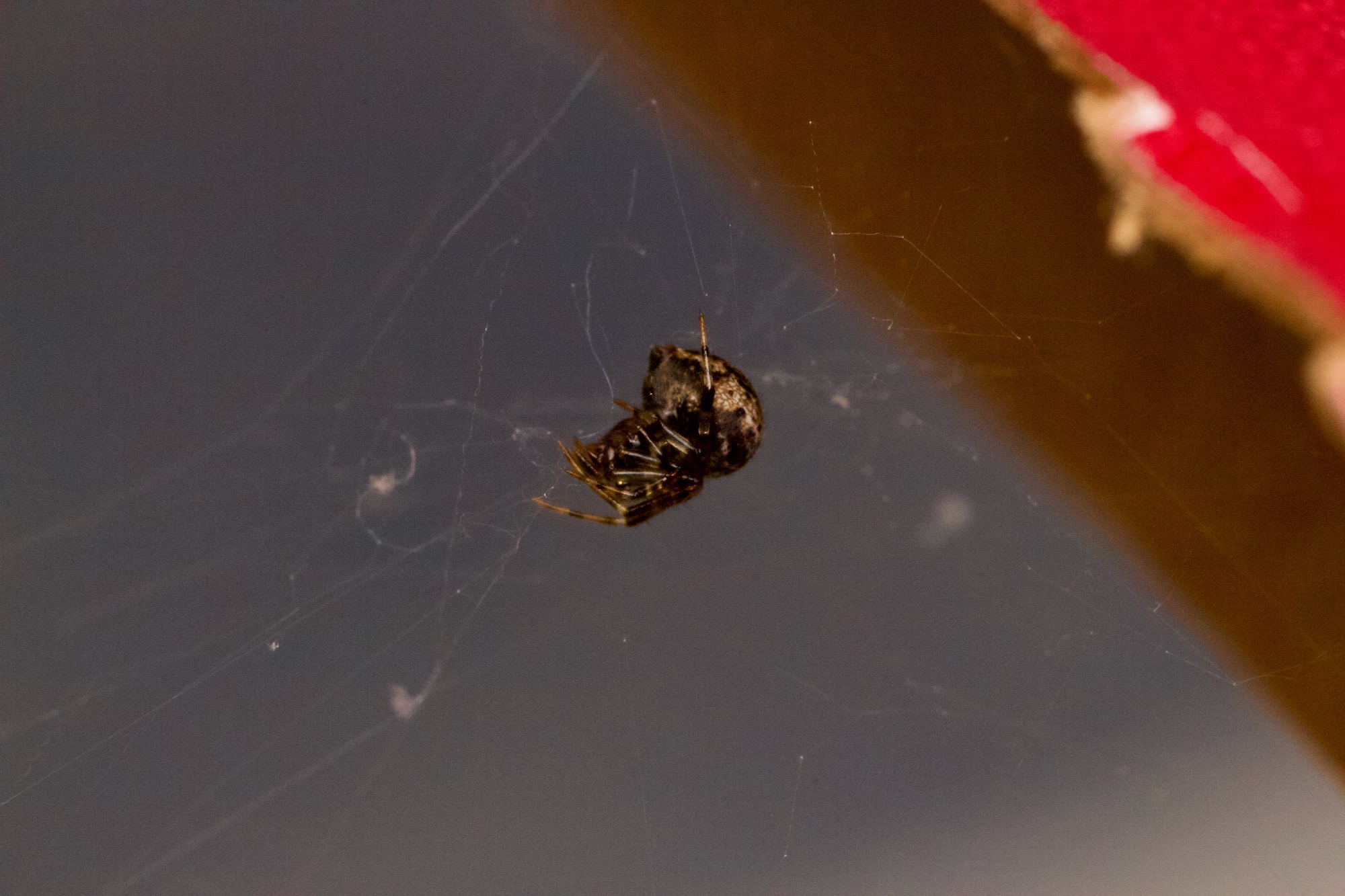
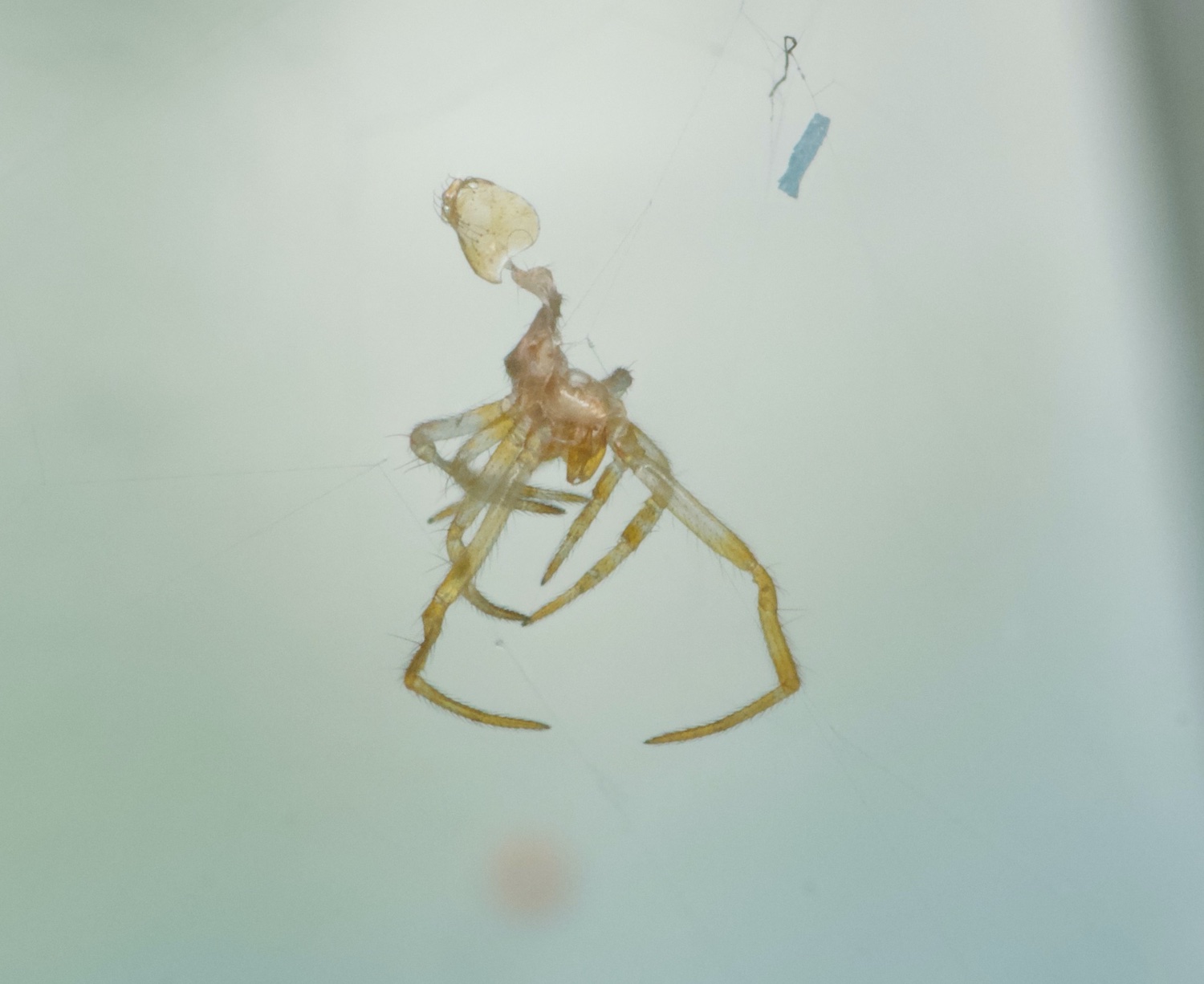
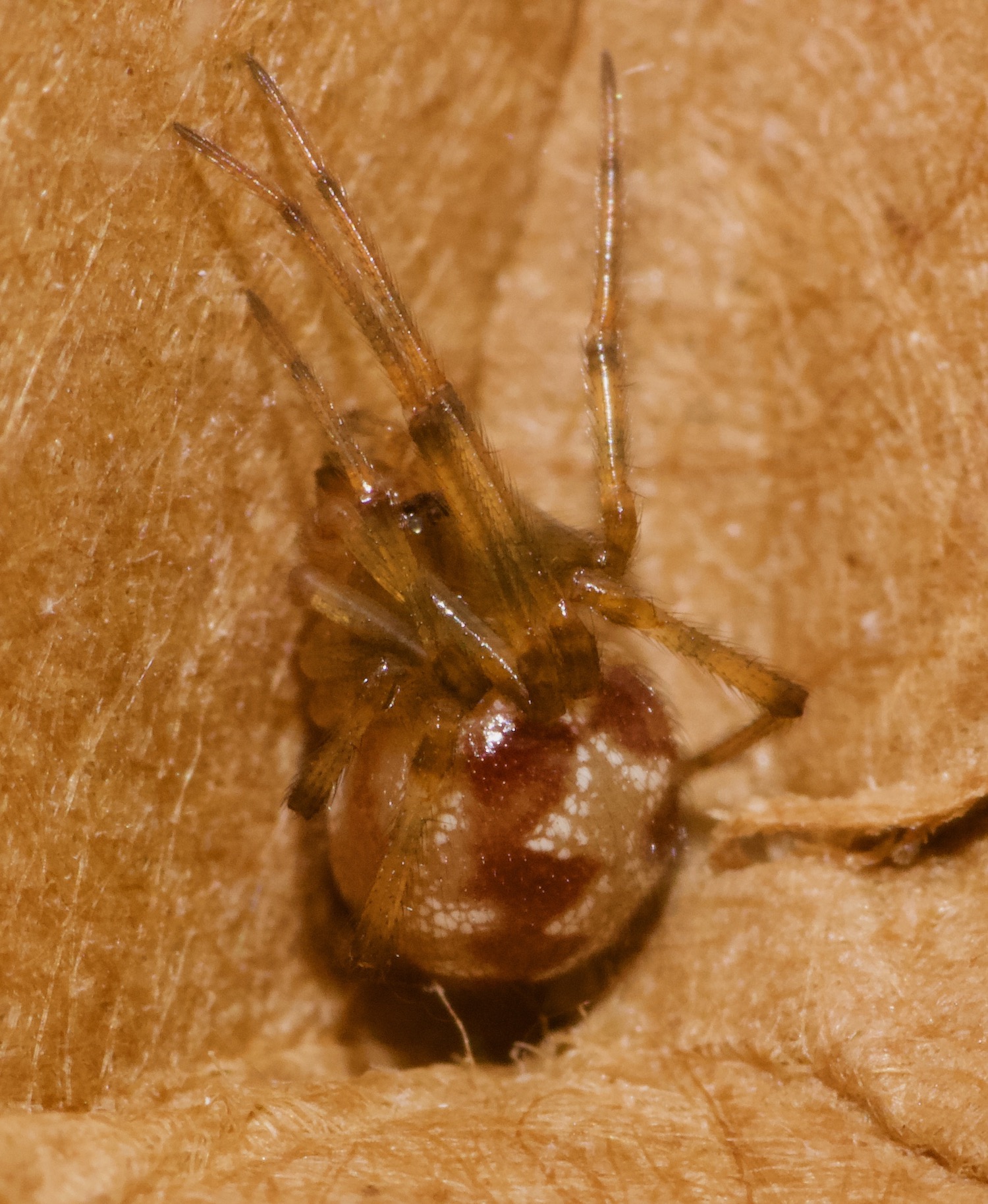
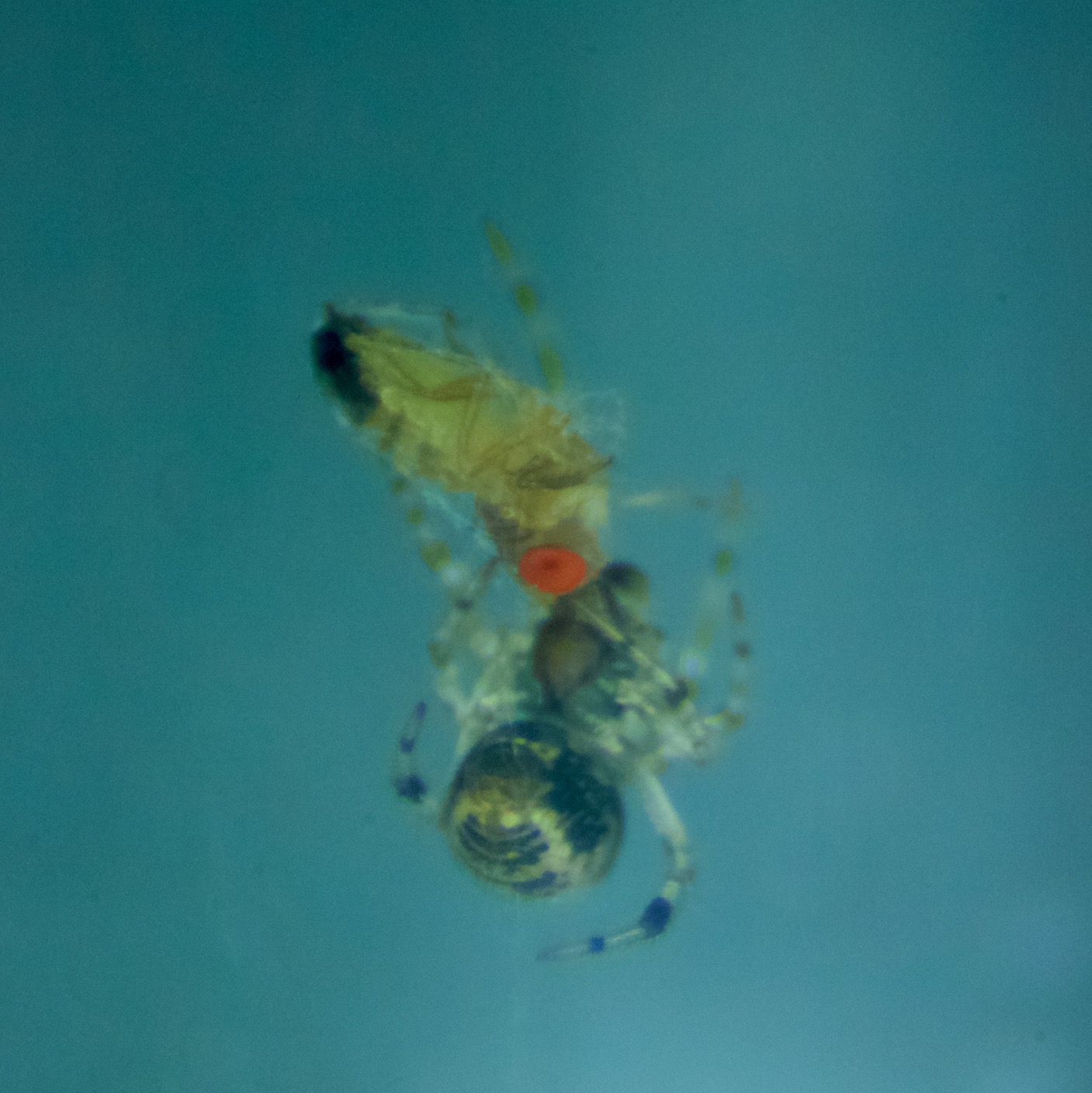
Cobweb construction under way #SpiderSunday

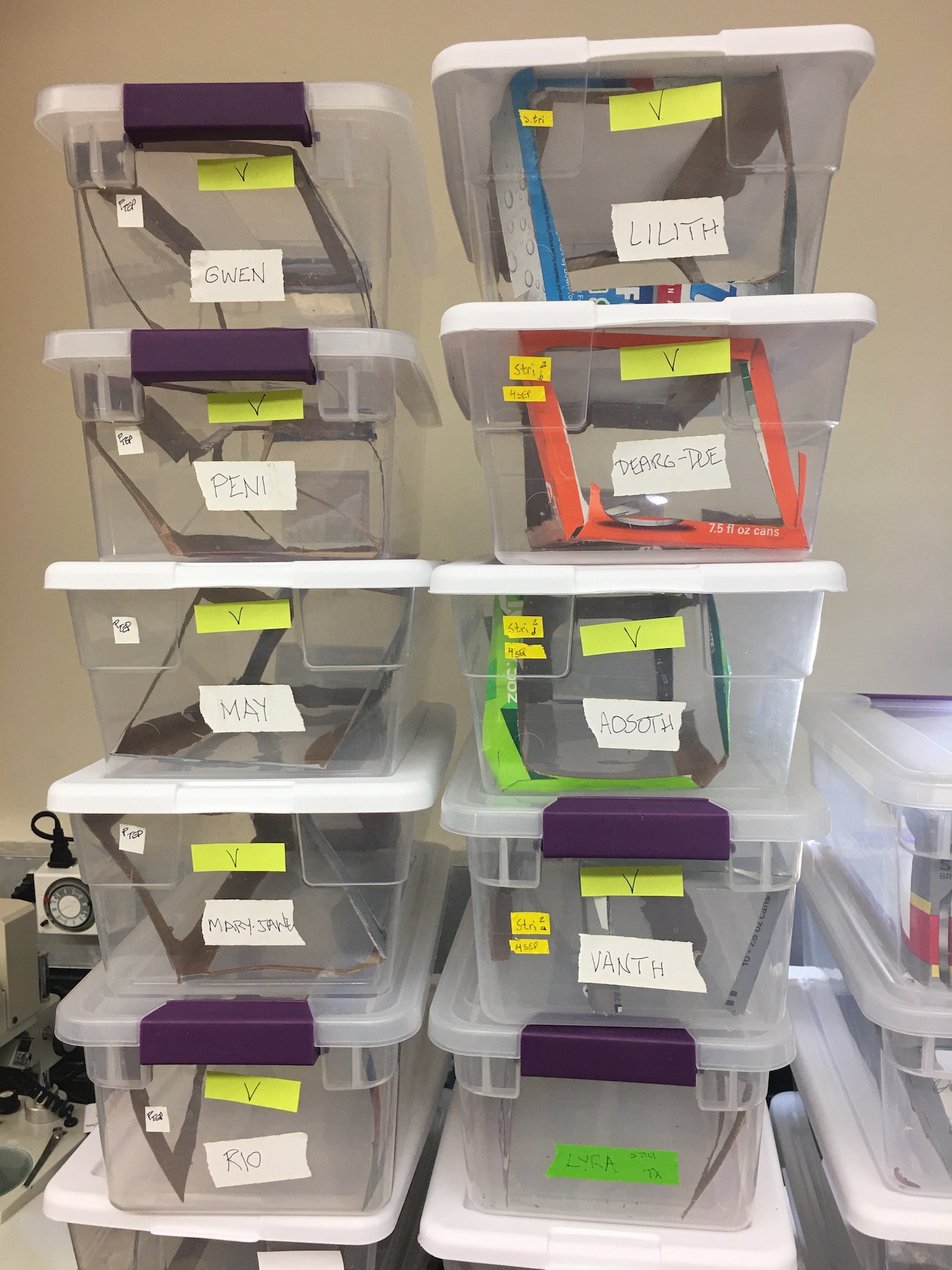
I had set up a bunch of new cages for my new generation of lab-born spiders (I keep wanting to call them azi) yesterday, and I popped in this morning to see how they were doing. They’re looking great! They still seem so small to me, but they’ll grow, I’m sure.

One of the signs that they’re doing well is that they started filling up all the open spaces in their cardboard frames with cobweb. This little Parasteatoda has been zipping back and forth all night to make lots of strands of webbing.

They also seem to have eaten all the flies I gave them yesterday. I may have to give them a few more tomorrow.

Spiders: The Next Generation

This is how I spent my morning:

I was cleaning up cages to set up more space for the next generation of spiders. The previous generation were all wild-caught; these are all lab-born, raised in isolation, so they’ve never seen another spider, which is why they are all flagged with a big “V” for virgin. The plan is to let them get cozy in their roomy new boxes, put up some cobwebs to decorate the place, and then next week I’ll introduce males to them, one by one. I’m going to watch them and then, as soon as the male has accomplished his duty, I’ll scoop him right up and put him in a vial, nice and safe.

I’ve got more juvenile females to set up with cages, but the remaining spiders are still on the small side. These spiders are small, too, especially compared to the behemoths I caught at the end of the summer, but they’ve got to start sexing it up sometime.

Spider Queen

The other day, Mary stopped by the lab and immediately spotted two spiders lurking in the crannies that I hadn’t even noticed before. Obviously, females were endowed with superior spider spotting skills by Evolutionary Psychology in the Pleistocene, when it was their essential duty to scour the cave of venomous spiders while their man slept in, or ate his raw mammoth, or knapped flint spearheads.

Anyway, then I ran across this painting of Mary’s bronze-age Nordic avatar, so I had to include it.

(possibly by Docatto, from a game called Legend of the Cryptids)

The image is captioned “The remote areas of the Outlly continent are under the control of the snow spiders and their riders. The leader of the riders, Kastehelmi, patrols the sparkling snowy fields on her trusted friend Salomo to drive out any unwelcome intruders. The only colors they want painting the endless white expanses are their own.”

There’s another image also captioned appropriately, “When Kastehelmi sights an interloper, she summons a swarm of snow spiders. Suddenly, the ivory plains are speckled in scurrying black dots of all sizes. Mealtime has come at last. They pierce the flesh with their legs and crush bones with their tough mandibles. Not even a drop of blood is left behind, as this would blemish their perfect domain.”

Yep, sounds like her.

Triangles are fine, but Rorschach is lovely

My concern about my declining Parasteatoda population led me to check on the juvenile stock. They’re fine. They’re looking good. They look to be about 50:50 male:female, too, and the males are flaunting huge pedipalps, so maybe I should think about breeding them soon, even though they look so small compared to the big adults currently in the breeding cages. Here’s a quick look at the teenagers.

[Read more…]

God must love triangles

Another sad discovery in the lab: another spider, Gilly, has died suspiciously of an exploded abdomen. This has only been happening since I started feeding them waxworms and mealworms, so I suspect gluttony might be the culprit.

Strangely, this has only been happening to my Parasteatoda, while the two species of Steatoda are doing just fine. My colony is currently dominated by Steatoda triangulosa, which is unexpected, since they were relatively rare in our collection sites. I do have about 20 or so juvenile Parasteatoda growing up in smaller containers, though, so the pendulum may swing back in a few weeks when they get promoted to the big breeding cages.

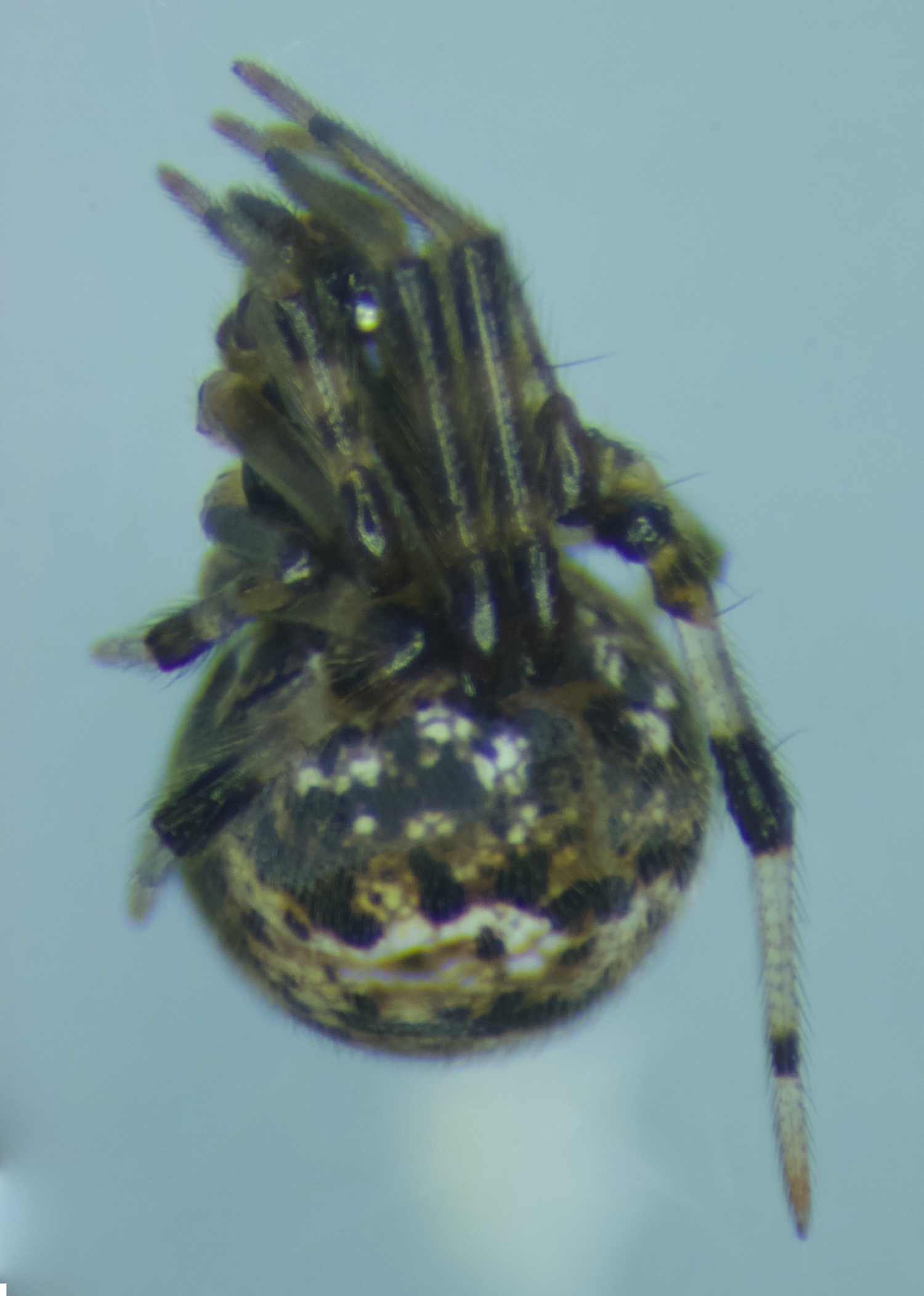
Meanwhile, here’s the latest juvenile (Steatoda triangulosa, of course) that is ready for breeding, I think. The picture catches her at a good angle so you can see both the zig-zag brown stripe down the side of her abdomen, and the sawtooth or triangle pattern you can see dorsally.

You can sort of see a white-flocked Christmas tree on her abdomen, maybe. (NO, IT’S TOO SOON FOR CHRISTMAS REFERENCES!).

Humans are good for something

Winter is a tough time to be an arachnophile, especially in the Great White North. It’s even tougher to be a spider. They’re mostly gone from outdoors — I’ve been looking, and everything is frozen and windy, the bugs are all dead, and it’s no place for an arachnid.

They do have some places to thrive, though: in your house. We people at least provide refugia for a few species, like the theridiidids I’ve been following. My wife, who has the eyes of an eagle, found this tiny little guy in our kitchen and scooped him up. He’s a juvenile so it’s hard to tell, but the palps look swollen and he’ll probably be ready to mate after his next molt.

The photo isn’t the best. A) he’s very smol, b) I’m shooting through plastic, c) he’s dangling on a single slender thread spanning the tube, and is practically vibrating, and d) he’s very excited because I fed him a fly, and he’s fangs-deep in that juicy fresh beast.

He’s Parasteatoda, and has a spectacularly stark pattern of angular pigments on his abdomen (not adequately shown). Once he has settled down and is nestled in a comfortable web — it takes a few days for them to build a cozy nest — I’ll have to get some better shots.

At least when people ask where spiders go in the winter, I have an answer. They go to my house.

Beautiful plumage

I’m buried in paperwork today and have scarcely had time to do anything with the spider colony today, but I did make my usual scan through the adult cages for new egg sacs (nothing today — they’re still all lurking, full of insect goo), and looked through the juveniles to see who I needed to promote to a larger container. Here’s one with a beautiful complex pattern of mottling on her abdomen, so I grabbed a photo just prior to moving. She’s not appreciative of being shuttled around and disturbed, so she’s in her standard “leave me alone” pose.

That’s Parasteatoda, by the way. Beautiful plumage! Lovely plumage! She’s just restin’, really she is.

Spider speedrun

Now for something totally different. I’m gearing up for a project in which I track the developmental progression of pigmentation in juvenile spiders, and along the way, also map out variation in that pigment. Analyzing all that will require a fair amount of data; I’ll have to do a daily collection of pigmentation images for a single cohort of spiders, and organize those for analysis. I have a poor idea of how much time that will take, so I did a speedrun this morning. I lined up 6 containers of juvenile spiders (all S. triangulosa from the same clutch, plus one S. borealis of roughly the same age), and racked them up for fast photography. I gave myself 30 seconds per spider to get a photo series, which turned out to be easily done, the fastest part of the whole process.

Then I took all the images and made a focus stack, which took a while but since it was all automated was fairly painless. Then I rotated all the images to the same orientation, anterior upwards. First glitch: some of the spiders were annoying and presented a side view to me, rather than the dorsal view I wanted. I went with it anyways; the only way to get them to oblige is to catch them in repose in the appropriate position, so that’s going to take a couple of trials to get right. Next, everything was scaled to the same size.

Data collection: a few minutes. Processing the images: over an hour. I think I’ll be able to automate some of the processing, though, which ought to simplify and speed it up. The end result is a series of standardized images of 6 spiders in which I can see the dorsal pigmentation fairly well, although two of them were not compliant about lying in an optimal position.

[Read more…]