In case you’re wondering where all the spiders go in the winter…

Easy. They’re in my house.

It’s been consistently cool out here in Minnesota — temperatures have been right around 0°C, we’ve had a little light rain, a little snow. It’s not a happy time for spiders outdoors, and not at all good for their prey. The mosquitos are mostly dead! I see an occasional fly, but mostly the local arthropods are busy diapausing or retired to refugia or migrating away, while some are in their larval stages hiding away in lakes and streams. It’s not easy being a spider right now.

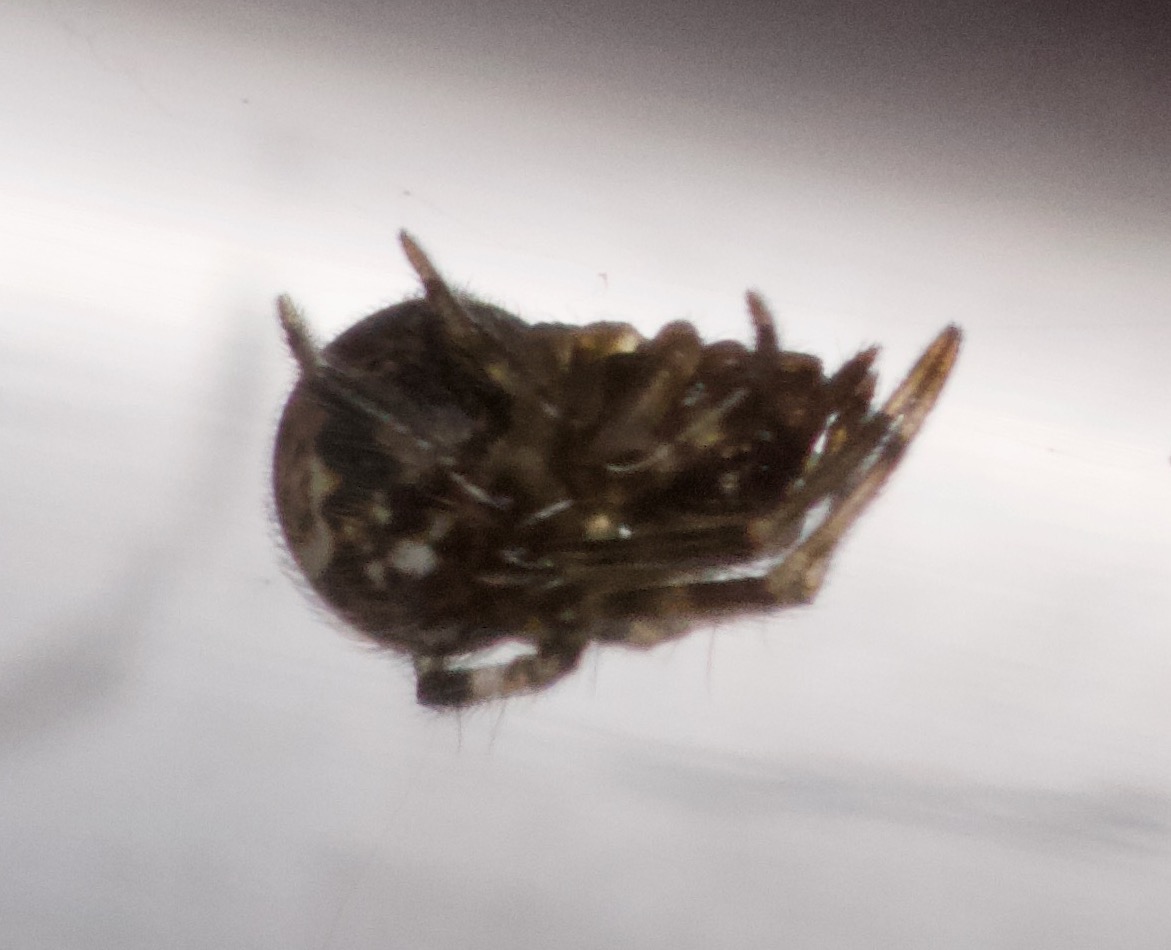
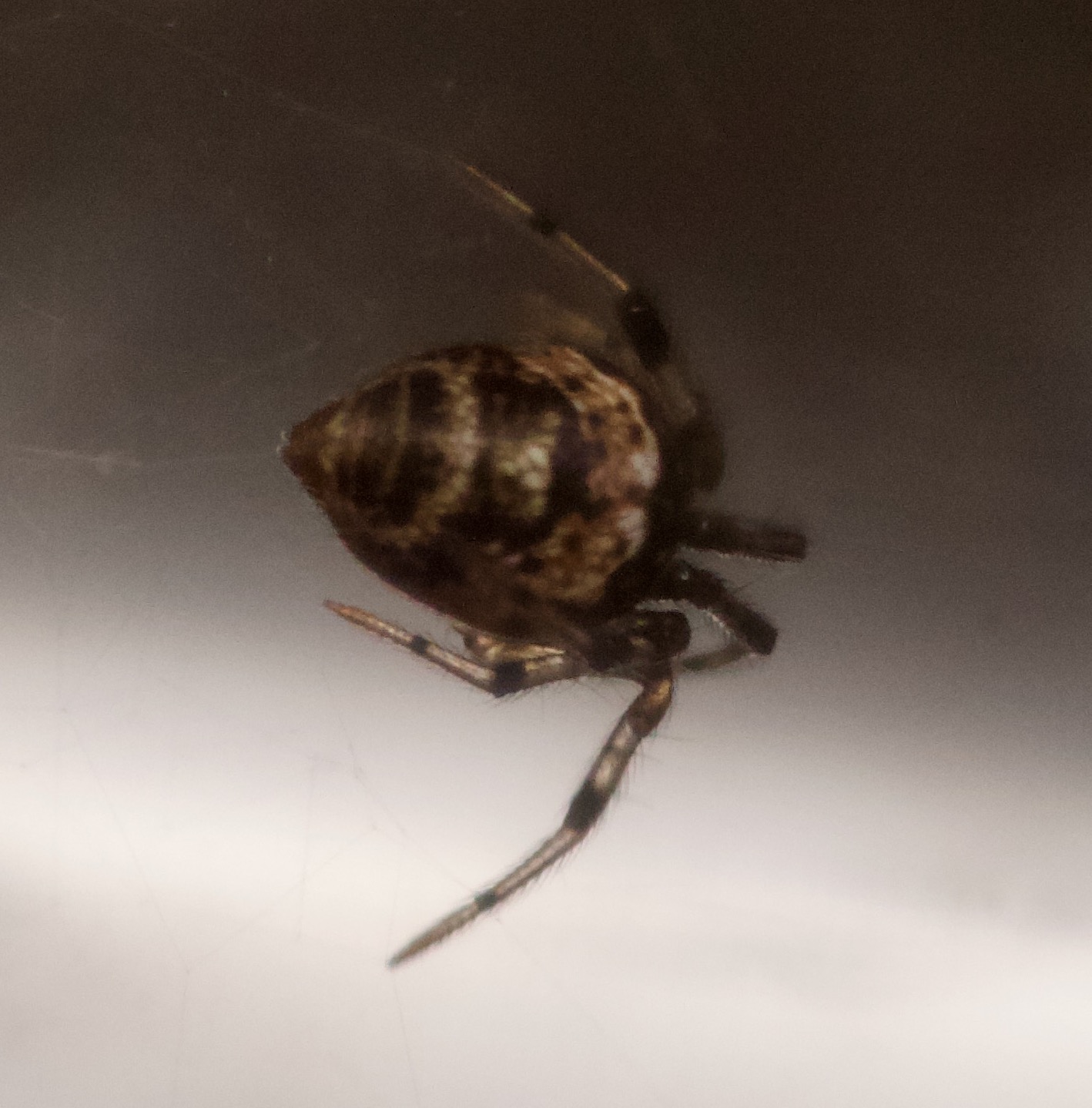
Mary of the piercing eyes spotted these little ones spinning away in out of the way places in our kitchen, though. They’re tiny, little more than dots, but they’d put up barely visible webs under a windowsill, possibly hoping to catch the rare fruit fly from the produce we keep on the counter. I had to zoom in with my camera lens to recognize them, and yes, they’re Parasteatoda.

They’re lucky, now they get to go into my lab where they’ll get a more reliable diet.

P.S. They’re not all in my house. There are some hanging out in your house, too.

Meet a few of my Texas gals

This morning I set up some housing for a few of my new Texas imports, moving them out of their cramped vials and into big roomy spaces with cardboard frames. As usual, they were a bit frantic and were scurrying all over the place at first — I found the easiest way to shift them was to let them come out onto my hand, and then hold them gently over their new digs, and often they’d just drop a dragline and rappel down into their new home, and if they didn’t, a gentle nudge with a paintbrush would send them on their way.

They’re still a little bit stressed. After running around in circles for a bit, they found a comfy corner of the frame and just hunkered down and refused to move further. I left them a few flies and then took some photos before leaving them alone to settle in. I assume they’ll saturate the space with webbing and then hang somewhere comfortable, but that’ll take a few days.

Here are a few photos of them sullenly occupying a corner. They are all Steatoda triangulosa.

[Read more…]

No respite from the gloom. Must be winter for sure.

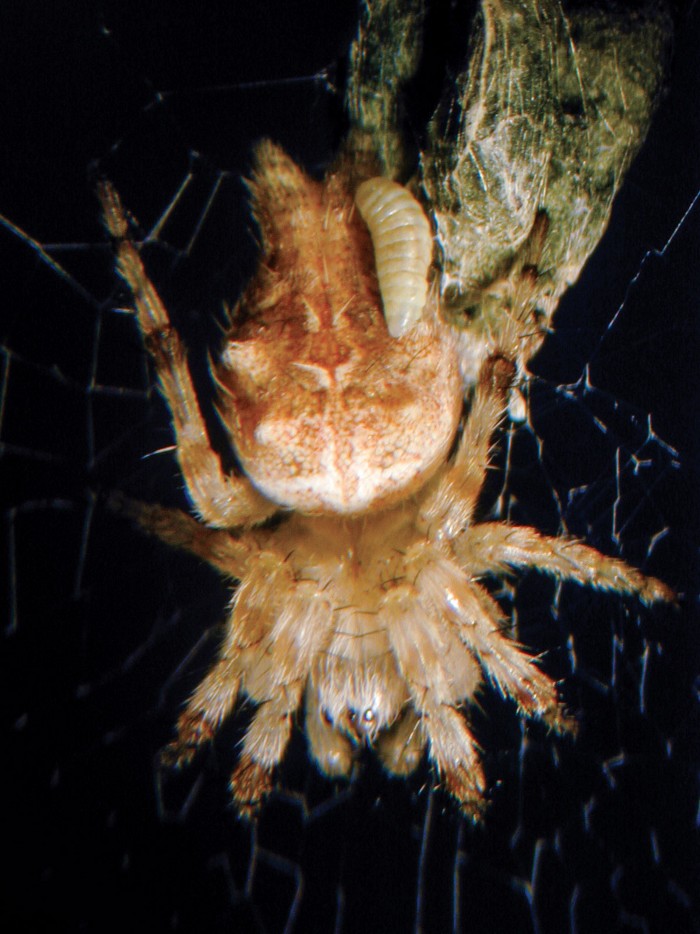
Oh no. Even warm cozy Earth isn’t safe from the nihilism of the void. Here’s a story about parasitic wasps that lay their eggs on spiders. It’s another horrible tale of zombie arthropods, their endocrine system hijacked by wasp larvae to force them to build a nice silken web to house the wasp.

After the web is spun, the nearly mature wasp overlord injects the spider with poison, finally killing it. But in terms of free will, Eberhard says, the spider has been dead all along.

“Once the spider has been stung by the female wasp, it’s effectively reproductively dead,” Eberhard tells Newscripts. “It’s maybe going to live for another couple of weeks, but it now has that egg on it, and later the larva, and so it’s done for.”

Unfortunately for the spider, it doesn’t end with death. After killing the spider, the newly hatched wasp regurgitates digestive fluid onto the host body and sucks out its insides for nutrients. Dracula, surely, would be proud.

We live in a dark universe, obviously.

The loneliest little robots

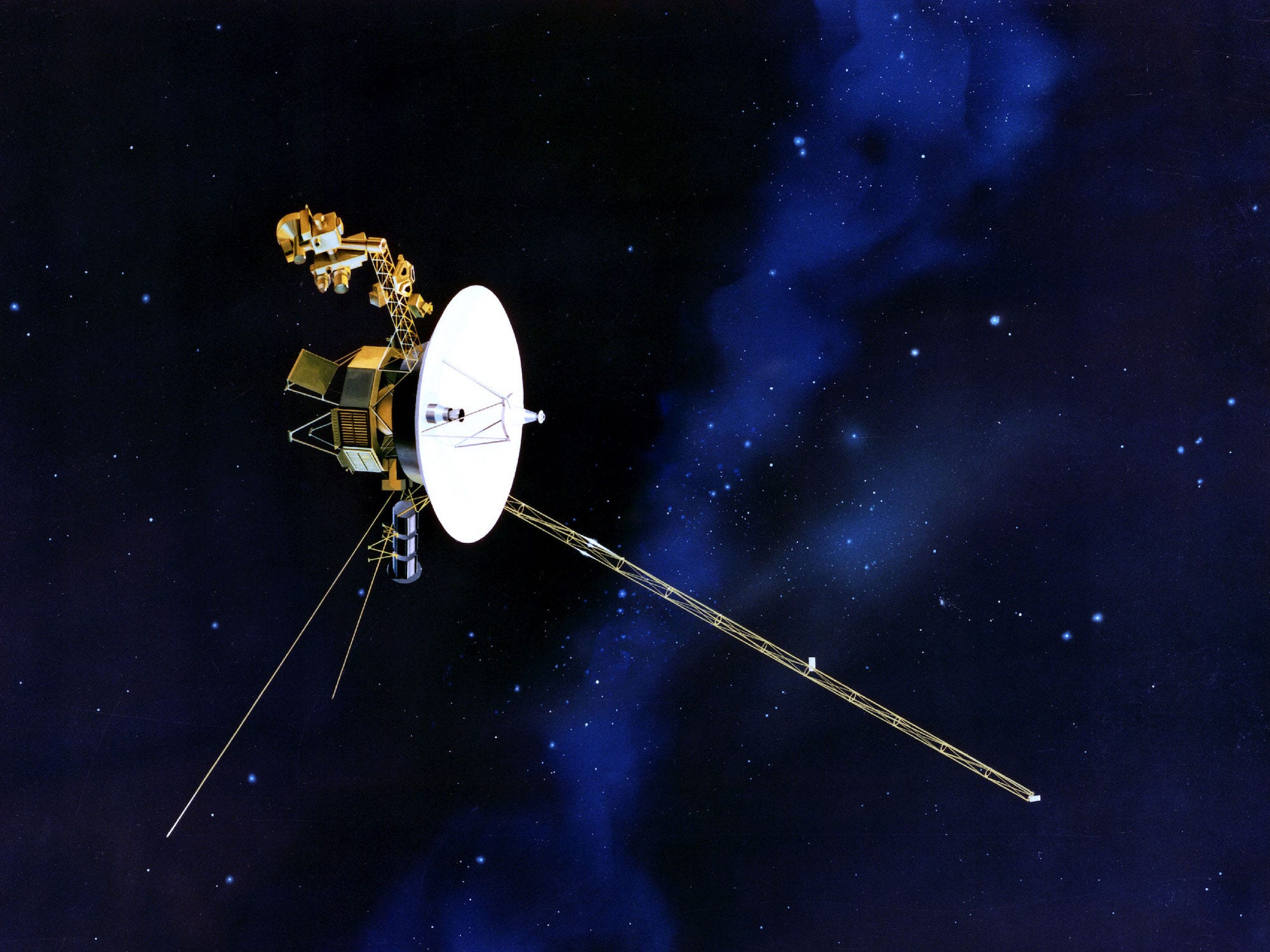
It’s feeling chilly here in Minnesota this morning. Then I realized it could be worse — I could be adrift in a soulless, nearly empty void, sensing a sharp drop in the frequency of encountering rare particles in the vacuum as I crossed a boundary into interstellar space. Yeah, I was just reading about Voyager 2 leaving the heliosphere.

It’s far, far away.

From beyond the heliosphere, the signal from Voyager 2 is still beaming back, taking more than 16 hours to reach Earth. Its 22.4-watt transmitter has a power equivalent to a fridge light, which is more than a billion billion times dimmer by the time it reaches Earth and is picked up by Nasa’s largest antenna, a 70-metre dish.

It’s traveling at 55,000 km/hour, it’s been zooming out there for about 42 years, and it’s only 16 light-hours from Earth? That puts those silly SF novels in their place. 8,760 light-hours in a single light-year…Voyager has barely started out.

The two Voyager probes, powered by steadily decaying plutonium, are projected to drop below critical energy levels in the mid-2020s. But they will continue on their trajectories long after they fall silent. “The two Voyagers will outlast Earth,” said Kurth. “They’re in their own orbits around the galaxy for 5bn years or longer. And the probability of them running into anything is almost zero.”

Maybe…maybe I should just crawl back into bed and snuggle up under the covers. It’s warm in there, and I’ve only got a little while.

People love to be told what tribe they belong to, I guess

I submitted a DNA sample to 23andMe, and now they send me periodic updates on what they’ve figured out lately from my genes. For instance, they’ve informed me about traits I might have.

This is strange. I know what I take away from it, but I wonder what the general populations learns from this kind of list. Here are the two important messages I learn from this kind of revelation:

  • Notice all the “likely”s and “less likely”s? That will never change, because if there’s one thing we can be confident of, it’s that every trait is the product of multiple genes interacting in complex ways. It says I’m not likely to have a cleft chin, but I know for a fact that under my beard there is a cleft chin, and that I’ve passed that on to my children and inherited it from my father. It doesn’t mean 23andMe did something wrong, it means that they’re missing information about all the factors that contribute to chin shape, and are estimating from knowledge of a few genes. They’re drawing on correlations in the large database that they have, but can’t infer mechanisms or the full range of interactions that occur during jaw development.
  • What’s really depressing, though, is how trivial all these traits are. Does anyone really care that I’m less likely to get dandruff? Wouldn’t I get better information about that by checking my shoulders than by analyzing my DNA? Part of the reason for the triviality is that they also have a “health report” that they charge extra for which summarizes more substantial predilections, which I haven’t paid for. It would have exactly the same kind of probabilistic statements. It might, for instance, say I’m genetically predisposed to heart disease, but I could probably guess that from the fact that my father died young of heart disease, and would be better off going to my doctor to have my cholesterol and blood pressure checked (as I do regularly, and no worries — I’m in good shape for a man of my age).

So what I take away from this is a lesson in uncertainty and doubt; is that the information they’re trying to share with the general public? Because that’s not what I get from their “traits tutorial”, which starts off “Our Traits Reports are a fun way to explore how your DNA makes you unique.” Where’s the fun? Where’s the uniqueness? Am I special in my resistance to bunions, or am I supposed to be entertained with the news that I probably have blue or green eyes? (Not blue, by the way, more green, kind of hazel; I usually say they’re the color of rich algal swamp mud).

My general impression is that this is “fun” in the way taking Myers-Briggs tests and horoscope readings are fun; it’s mostly bogus, phrased in a way to seem positive, and we can poke through them for affirmations of stuff we were pretty sure of, already.

I signed up mainly for the ancestry component, but even there, it’s vague.

My god, I’m a white guy! Who’d have guessed?

Meanwhile, this is just nonsense.

Yes, I’m a member of haplogroups that include European royalty, which is true of almost all the white people from Northern Europe. You might as well announce that I have pale skin, just like the kings and queens of old Europe! Whoop-te-doo! I am fun and unique.

I am not opposed to the idea of 23andMe, and think they’ve gathered a lot of potentially useful information. I just feel that the way its presented to the public is biased to reinforce false ideas of genetic determinism to induce people to participate, and that worries me.

You need some Halloween spiders

Here, have a few. These are from my collection of juvenile P. tepidariorum.

I can tell this one is going to be a big boy.

Webs! This one is an artist.

While this one is looking at me and making mystical gestures.

Hey, I’ve had dozens and dozens of trick-or-treaters come to my house tonight, and I’m nearly out of candy. Would it be OK if I started handing out spiders?

Everyone likes cute furries more than spiders, I’ve noticed

I can’t be the only one who reads outside my discipline to get material to help me cover all those evolutionary phenomena I know little about. I know a bit about fish and arthropods, but my understanding of the details of mammalian evolution is a bit thin — yet for some reason, students are more interested in the history of mammals than of spiders. I really appreciate it when I stumble across information that fills in the gaps in my knowledge in presentable ways, and Nature has done just that with a graphically rich article on How the earliest mammals thrived alongside dinosaurs. There is lots of good stuff here, and I particularly like the emphasis on the importance of fossilized infants. Development matters!

Sometimes it goes a little too far, though — for example, this illustration is way too dense to be useful, but it it interesting.

Why didn’t she get vaccinated?

Now I’ve got the heebie-jeebies. A woman undergoing safety training for a lab tech job was offered a smallpox vaccination because she’d be working with Vaccinia virus, and she turned it down. She didn’t understand the possible consequences at the time of training.

Naturally, what happens next? She’s trying to inject a mouse and accidentally pokes herself with the syringe needle. There are graphic photos at the link! It looks like some nasty ulceration of her finger and some systemic problems as well.

Although she continued to be treated, by day 10 her finger was looking very swollen, and she wasn’t feeling well.

“On day 12, she was treated at a university-based emergency department for fever (100.9°F or 38.3°C), left axillary lymphadenopathy [swollen lymph nodes], malaise, pain, and worsening edema of her finger,” a case report explains.

“Health care providers were concerned about progression to compartment syndrome (excessive pressure in an enclosed muscle space, resulting from swelling after an injury), joint infection, or further spread.”

She survived and is healing.

Vaccinations are important for people dealing with dangerous pathogens, but also for everyone else. Have you gotten your flu shot? If not, what’s your excuse?