New cage is a success so far

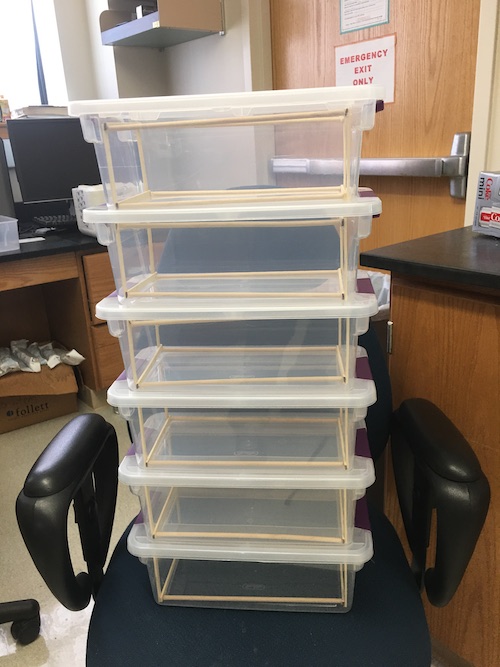
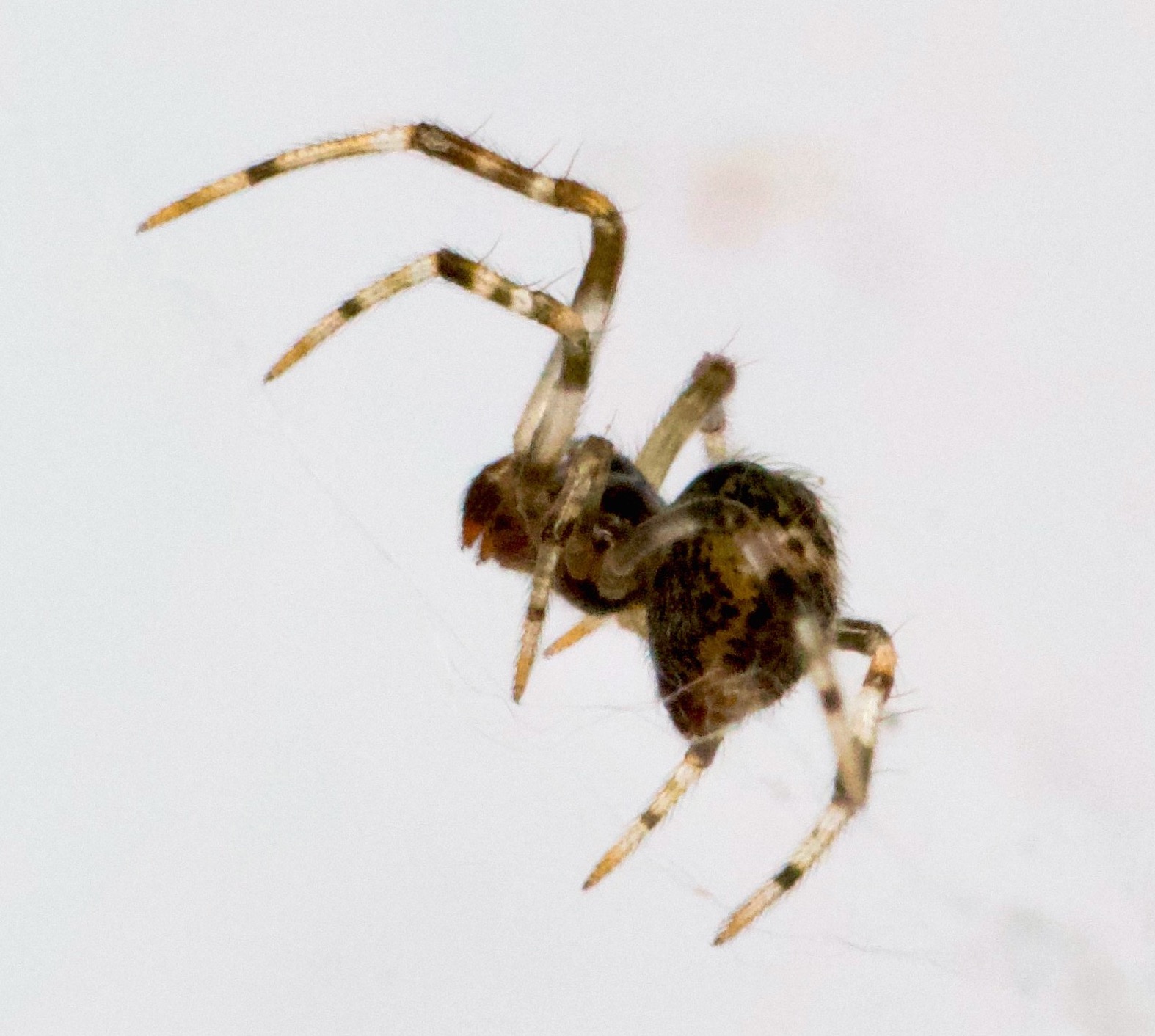
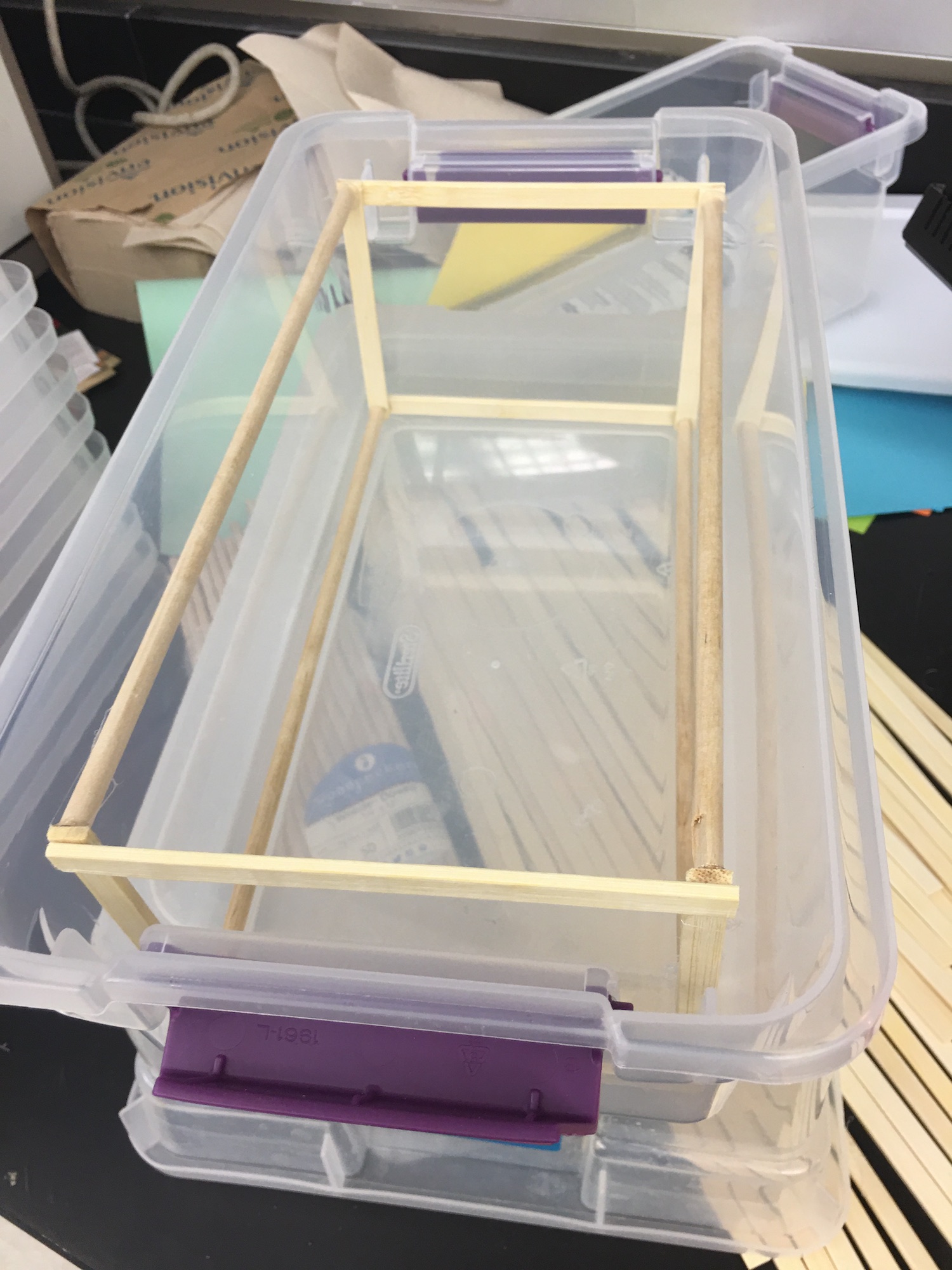
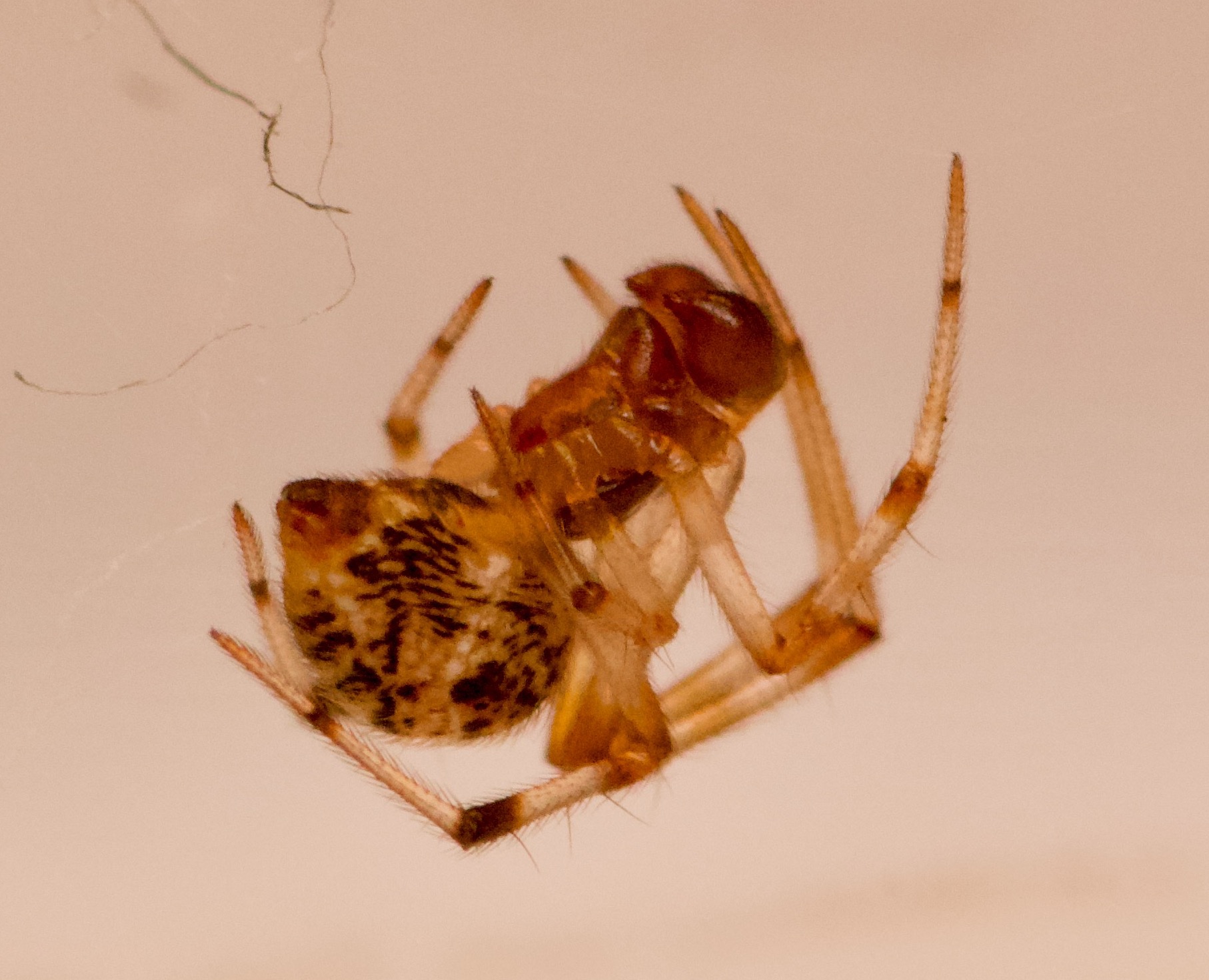
You may be pleased to hear that my initial test of my new spider cage architecture didn’t kill my test subject, and she actually looks a little more lively and relaxed this morning. She has started filling in a web and was hangin’ upside down and chillin’ like a boss — now that she has a bit of a cobweb, I’ll toss some flies in this morning and see how she reacts.

Then this weekend I’ll have to assemble another dozen or so frames. It takes about 5 minutes to cut sticks to size and tack ’em together with hot glue, so that won’t be too time-consuming.

Crazy fly lady syndrome

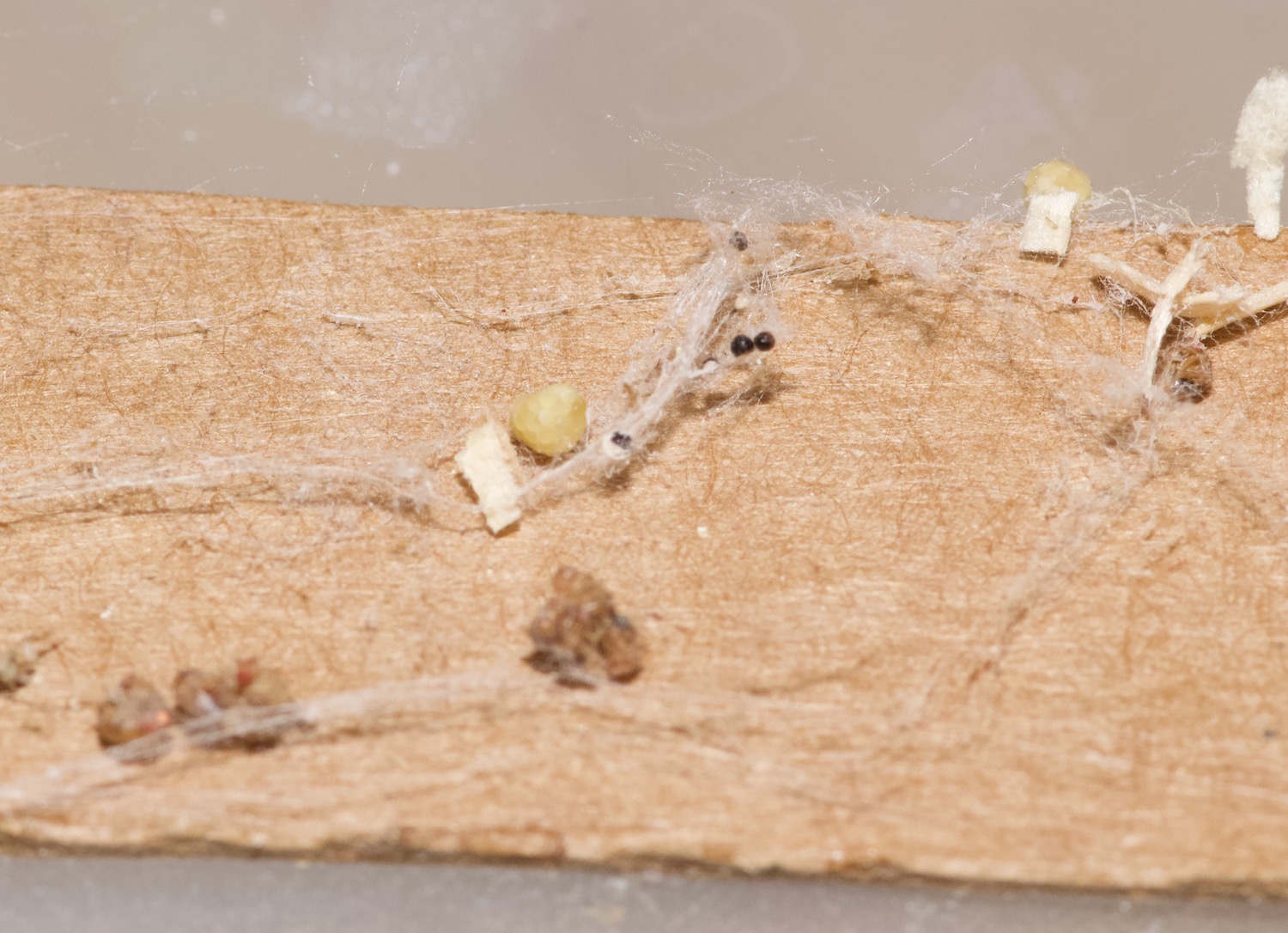
I’ve been getting worried about the spider colony lately — I saw a phenomenon last year that I’m seeing again, where elderly female spiders begin hoarding the carcasses of their prey, and building thick, tangled webs that they hunker down in and don’t move. They wrap up all these dead flies into a mass and also scrabble up random debris to make a nest (the latter is probably normal) and they cease being productive. I also see the production of dead egg collections, often without even bothering to build an egg sac. Here’s an example:

Yuck. Filthy. You might spot the yellowish egg clumps at the top right and near the center. I’ve never seen this in the wild — usually the webs are regularly purged of dead prey — and it could be that this is a normal consequence of aging (senile spiders!) or I could have cause and effect reversed…maybe it’s the accumulation of filth that makes for unhappy spiders. I should just clean up the cage and see if it makes them happy and ‘normal’ again!

[Read more…]

Look what I’ve got…

Adam Rutherford, lovely gentleman that he is, sent me a review copy ahead of its release date in the US, so I’ve got a head start. It’s looking good so far, although I’m so overwhelmed with work this week I might be a little slow getting through it — I’m the biology coordinator this year, and we’re managing a faculty search this week — but once I’m done, I’ll post a more thorough review.

If you’d like to pre-order it and send a message to publishers that you value this kind of quality science content in contrast to the deluge of racist dreck we usually get, click on the book cover below.

Never underestimate insects

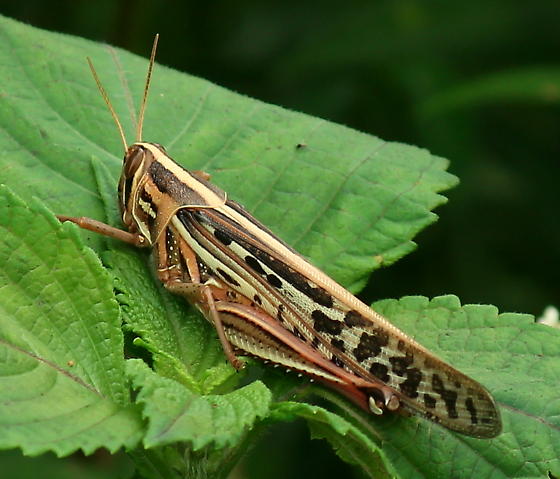
Kenya, Somalia, and Ethiopia are being hit hard by massive clouds of locusts — would you believe a mass of insects 37 x 25 miles in area sweeping across East Africa? And that’s only one of multiple swarms.

Also troubling — this is a side-effect of climate change.

The swarms are reaching such an unusual size now because of cyclones that rained on the deserts of Oman last year, the FAO’s senior locust forecasting officer Keith Cressman tells Reuters’ Nita Bhalla.

“We know that cyclones are the originators of swarms – and in the past 10 years, there’s been an increase in the frequency of cyclones in the Indian Ocean,” Cressman tells Reuters. Eight cyclones occurred in 2019.

“Normally there’s none, or maybe one. So this is very unusual,” Cressman says. “It’s difficult to attribute to climate change directly, but if this trend of increased frequency of cyclones in Indian Ocean continues, then certainly that’s going to translate to an increase in locust swarms in the Horn of Africa.”

I used to raise Schistocerca, and they are amazingly, scarily prolific when given good conditions, which is what these cyclones are providing.

They’re going to need a lot of spiders — big spiders. Locusts are impressively large and well-armored.

Frustrations with Jenoptik, and a better photomicrography solution

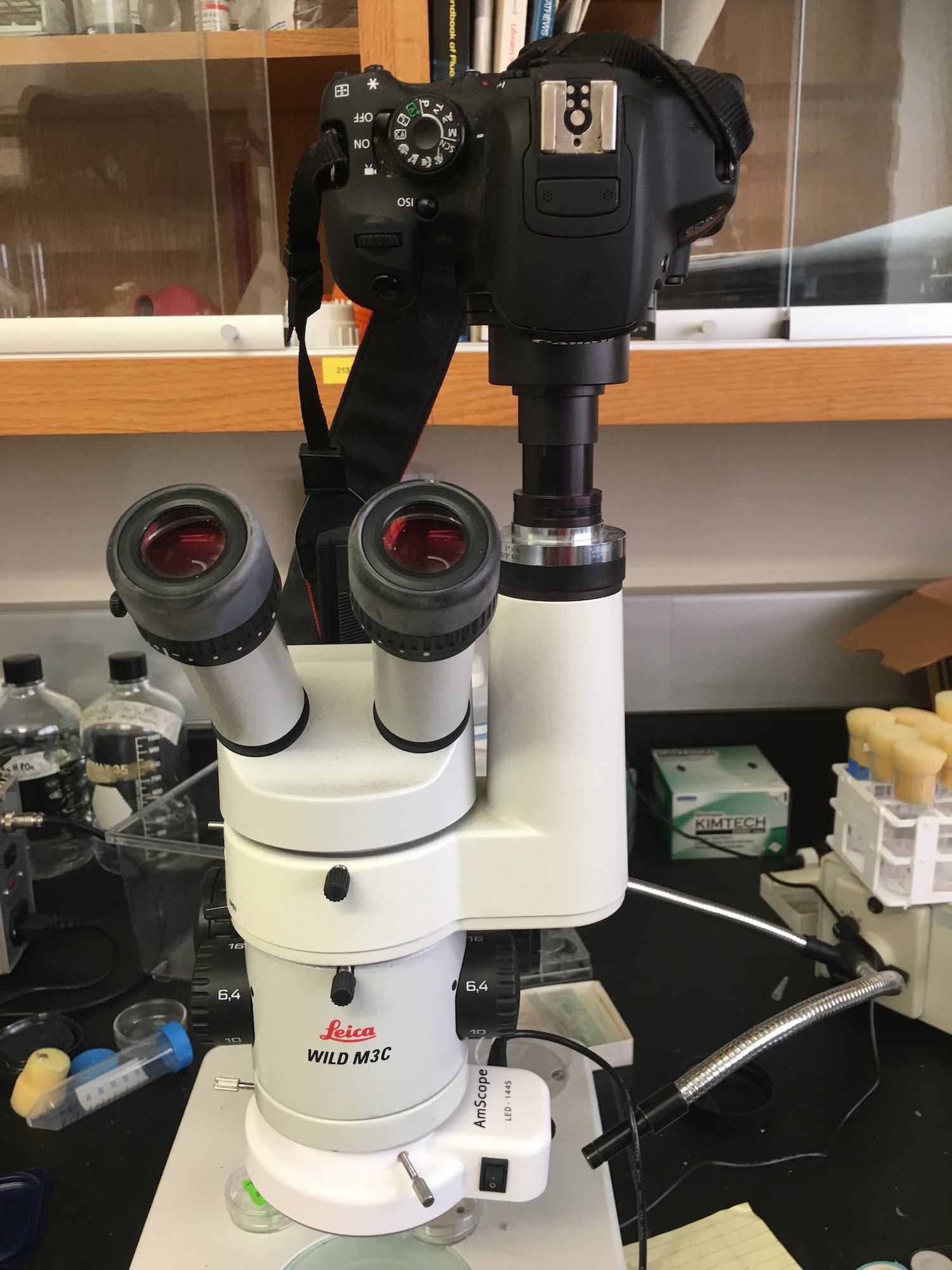
In my lab, I have a nice, inexpensive setup for capturing microscope images. About 10 years ago, I bought a dedicated photomicrography system from Jenoptik, a cooled CCD camera with a software package called ProgRes. It did what I needed, which was basically to provide an easy way for students to see on the computer screen what they were looking at on the microscope, and also to capture time lapse recordings of developing embryos. It had other useful features, like being able to calibrate the images, automatically annotate them with scale bars, etc. I had quite a few students learning how to easily get scientific-grade images out of this thing.

“Had”. The system has a few huge flaws: like most of the companies making these gadgets, the scientific side feels like a low-profit sideline for them, and most of the money is coming out of industrial imaging applications. That means poor support for us people who are on a tight budget who aren’t going to buy a hundred cameras for our factory, and that means you’re screwed when something doesn’t work. The software for this system breaks every time there’s an update to the MacOS. Like, it runs, but it doesn’t connect to the camera, so all I see is a blank screen. And the software hasn’t seen an update since 2010.

The last time this happened, they sent me a camera firmware patch that had to be run from a PC, not a Mac, and a slightly patched version of the application. It got it working again, but I can see the writing on the wall: as far as Jenoptik is concerned, they are done, they’ll continue to sell off their inventory as long as suckers are willing to buy it, but it’s not as if they’re going to invest any further resources into maintenance and development for mere biologists. It’s frustrating. The system is currently dead and useless.

So I’ve been exploring alternatives…on a tight budget. I’ve come to the conclusion that simple consumer grade cameras are far better bang for the buck. They won’t work if you’ve got some specific, narrow application, like low-light fluorescence imaging, but for the kind of general transmitted light microscopy I do, they’re better: higher resolution, more control, more imaging options. The only thing they lack is that one touch of a button capture of an annotated image.

I was tinkering this morning. Canon Rebel cameras come with something called the EOS Utility, which allows you to connect the camera with a USB cable (or in some models, over wifi) and control everything — aperture, exposure, focus, ISO, I mean everything, and take pictures with a click of a button. You can also set it up to do time lapse with intervals as short as 5 seconds (my usual is one image every 60 seconds, so no problem), and it was impressive to watch. It takes a photo, downloads it to the computer, and shows a preview image, and you end up with a folder of 30mbyte RAW images, which is just what my camera is set to take, I could go to a lower resolution. I’ve got tools to convert those to mp4s, and I also have tools to do bulk processing.

It’s somewhat more complex than a dedicated software solution, but I have smart students. They can master this easily. And the output is much nicer.

Now the next step: paying for this. Anybody want to buy a Jenoptik C3 camera? I can’t use it anymore, but maybe they’ll be better about keeping it updated for Windows machines. Otherwise, it’s going to get stuffed in a drawer and forgotten.

I can get a Canon t5i body (I don’t need lenses) for a few hundred dollars, and even the nice t7i for a bit more, and I’m happy with used cameras, too. It’s about a fifth of the cost of my Jenoptik! I may have to write an in-house grant proposal to scrape up that much, or if there’s anybody out there that has an old Canon sitting in a closet, I’ll take it off your hands. I’ll even put a label on it naming it after you: the [your name] Spider Cam! What an honor! I know some companies would dream of this promotional opportunity, but I’m sorry, I won’t accept the Exxon Spider Cam or the Facebook Spider Cam. I do have limits.

Until I can set up a dedicated lab camera, though, I’ll make do with my personal camera. If anyone out there is setting up a lab and need a low-cost camera system, I’ll offer a word of advice: steer clear of Jenoptik.

What’s with these MFing spiders in this MFing lab?

There hasn’t been much fertility in this lab, and I don’t know what’s going on. The spiders are getting weird and lazy. Here’s Yara (last seen here), who has been building thick clumpy cobwebs and also assembling debris into a nest — she’s partly obscured by a wood shaving here. The strange thing is above her, and to the left.

Those are unhappy looking eggs enclosed in a thin web, not an egg sac. I can say with some confidence that they’re not going to develop.

This is awkward and annoying. Next week I’m going to sterilize cages with alcohol and set up new frames and repopulate, hoping this problem will go away. Maybe they’re stressed? Maybe they’re just old and lapsing into decrepitude?

Is this how an innocent man responds?

I already wrote about the data-faking scandal with Jonathan Pruitt, but the one thing I was missing was any explanation from Pruitt himself. Science just covered the matter, and got a statement from him.

At first, he was in the fray tweeting—but no longer. “There are so many voices and they are so loud and diverse, there’s no way to address it.” Instead, he says he’s focusing on his fieldwork, setting insect traps across the South Pacific before and after cyclones hit to learn how different species are affected by these tremendous storms. Last year, he reported on work in which he collected data on spiders before and after a U.S. hurricane. It’s one of the papers now being scrutinized.

That’s right, there are more papers under investigation, and he’s collecting more data that will have to be carefully scrutinized. What he ought to be doing, if he’s innocent, is working to validate his previous work, not flying off to the South Pacific. His career is in dire peril, and he knows it. Instead, he seems to have resigned himself to being caught and his future is bleak.

Pruitt says he has no expectations that he will be able to continue in behavioral ecology, saying he knows he has lost the trust of his colleagues about his data. But these cyclone data will be useful no matter what happens, he says. “If I’m on fire and my longevity is [short], I will bequeath them to another researcher.” He is concerned, however, that as each retraction happens, even innocuous mistakes in his data or experiments will be cause for more retractions. It’s a worry that Dingemanse shares. Such careful inspection of data will often turn up something, no matter how well collected and compiled, he says. “If you looked at my data [this way], you might also come up with causes for concern,” Dingemanse says.

What? No. I’ve got a pile of data I’m sorting through right now, and I’d happily let anyone look at it. It’s just tables of counts of spider species in various locations, but I’ve got a paper trail — all the on-site notes for each site — and the numbers are honestly recorded. I have no fear that it can be misinterpreted.

Also, the colleagues who made this discovery have a vested interest in not seeing causes for concern, since they’ve had to retract published work. It has cost them to report the problems. You know they tested the heck out of the data set before making that difficult decision.

Also, there’s this little tell.

Simmons has spent the past 3 days poring over the 11 papers Pruitt has written for his journal, going back to a data repository now mandated by his journal and others to check raw data. Yet he laments that the initial hashtag—#Pruittgate—is too damming and thinks “we need to, as much as we can, avoid a witch hunt.”

Jeez. The “witch hunt” accusation has become as predictable and useless as the “-gate” suffix.