A questions about those ancient bacterial fossils…

Both Jerry Coyne and Larry Moran have good write-ups on the recent discovery of what are purportedly the oldest fossil cells, at 3.4 billion years old. I just have to add one little comment: a small, niggling doubt and something that bugs me about them. All the smart guys are impressed with this paper, but this one little thing gives me pause.

I’m a microscopist — I look at micrographs all the time, and one of the things I always mentally do is place the size of things in context. And I was looking at the micrographs of these fossils, and what jumped out at me is how large they are. They’re not impossibly large, they’re just well out of the range I expect for prokaryotes.

Most prokaryotes have diameters in the range of 1-10µm, while typical eukaryotes are about 10 times that size. There are exceptions: Thiomargarita gets up to 500µm across, so like I say, there’s nothing impossible about these cells, it’s just that the micrographs show lots of cells with 10-30µm diameters. And the authors come right out and report that:

The size range is also typical of such assemblages, with small spheres and ellipsoids 5–25 µm in diameter, rare examples (<10) of larger cellular envelopes up to 80 µm in diameter, and tubes 7–20 µm across (see ref. 24).

How odd. When I poke into the nervous system of an embryonic insect or fish, those are the sizes of cells I often see (well, except there aren’t many tubes of that size!). When I poke into a culture or embryo contaminated with bacteria, they’re much, much smaller. So maybe paleoarchaean bacteria tended to be larger? And they do cite a source for that size range of prokaryotes…

Then here’s a new problem: the source cited, ref. 24, is the Schopf paper, the older paper that claimed to have found ancient bacterial fossils, a claim that has since been discredited! Uh-oh. What they’re calling “typical of such assemblages” is a data set that’s widely considered artifactual now. Furthermore, that’s a simplified version of what Schopf said — he actually broke the sizes down into categories, and the range was more like 1-30 µm.

  • Very small solitary, paired or clustered rods (ca 0.75 µm broad, ca 1.5 µm long), inferred to be prokaryotic (bacterial) unicells: one unit (ca 2600 Myr old), one morphotype.
  • Small, solitary, paired or clustered coccoids (average diameter ca 3 µm, range ca 2–5 µm), inferred to be prokaryotic (bacterial, perhaps cyanobacterial) unicells: three units (range 3320–2600 Myr old), three morphotypes.
  • Large solitary or colonial coccoids (average diameter ca 13 µm, range ca 5–23 µm), inferred to be prokaryotic (bacterial, perhaps cyanobacterial) unicells: three units (range 3388–2560 Myr old), four morphotypes.
  • Narrow unbranched sinuous filaments (average diameter ca 1.25 µm, range ca 0.2–3 µm), with or without discernable septations, inferred to be prokaryotic (bacterial, perhaps cyanobacterial) cellular trichomes and/or trichome-encompassing sheaths: 10 units (range 3496–2560 Myr old), 17 morphotypes.
  • Broad unbranched septate filaments (average diameter ca 8 µm, range ca 2–19.5 µm), inferred to be prokaryotic (perhaps cyanobacterial) cellular trichomes: four units (range 3496–2723 Myr old), 10 morphotypes.
  • Broad unbranched tubular or partially flattened cylinders (average diameter ca 13 µm, range ca 3–28 µm), inferred to be prokaryotic (perhaps cyanobacterial) trichome-encompassing sheaths: five units (range 3496–2516 Myr old), five morphotypes (e.g. figures 3a–e and 4l).

So Schopf was reporting larger cells in his older samples, and now Wacey et al. are describing what look like very large cells to me in their 3.4 billion year old rocks. I’m not a microbiologist so I could be way off on this, but…isn’t this just a little bit strange? Maybe there are some micro people out there who can reassure me that this isn’t a surprising result.


Wacey D, Kilburn MR, Saudners M, Cliff J, and Brasier MD (2011) Microfossils of sulphur-metabolizing cells in 3.4-billion-year-old rocks of Western Australia. Nature Geoscience Published online Aug. 21, 20110 [doi:10.1038/ngeo1238]

(Also on Sb)

The epigenetics miracle?

Jerry Coyne is mildly incensed — once again, there’s a lot of recent hype about epigenetics, and he doesn’t believe it’s at all revolutionary. Well, I’ve written about epigenetics before, I think it’s an extremely important subject central to our understanding of development, and…I agree with him completely. It’s important, we ought to spend more time discussing it in our classes, but it’s all about the process of gene expression, not about radically changing our concepts of evolution. I like to argue that what multigenerational epigenetic effects do is blur out or modulate the effects of genetic change over time, and it might mask out or highlight allelic variation, but ultimately, it’s all about the underlying genetic differences.

Coyne mentions one journalist who claims that new discoveries in epigenetics would “make Darwin swoon,” which is a bizarre standard. Darwin knew next-to-nothing about genetics — he had his own weird version of Lamarckian inheritance — and wasn’t even equipped to imagine molecular biology, so yes, just about anything in this field would dazzle him. My freshman introductory biology course would blow Charles Darwin away — he’d have to struggle to keep up with the products of American public education.

(Also on FtB)

The epigenetics miracle?

Jerry Coyne is mildly incensed — once again, there’s a lot of recent hype about epigenetics, and he doesn’t believe it’s at all revolutionary. Well, I’ve written about epigenetics before, I think it’s an extremely important subject central to our understanding of development, and…I agree with him completely. It’s important, we ought to spend more time discussing it in our classes, but it’s all about the process of gene expression, not about radically changing our concepts of evolution. I like to argue that what multigenerational epigenetic effects do is blur out or modulate the effects of genetic change over time, and it might mask out or highlight allelic variation, but ultimately, it’s all about the underlying genetic differences.

Coyne mentions one journalist who claims that new discoveries in epigenetics would “make Darwin swoon,” which is a bizarre standard. Darwin knew next-to-nothing about genetics — he had his own weird version of Lamarckian inheritance — and wasn’t even equipped to imagine molecular biology, so yes, just about anything in this field would dazzle him. My freshman introductory biology course would blow Charles Darwin away — he’d have to struggle to keep up with the products of American public education.

(Also on Sb)

Quacks everywhere

David Colquhoun has posted an excellent series of posts on the Steiner Waldorf schools, 19th century crackpottery that persists even now, by hiding their fundamentally pseudoscientific basis under a fog of fancy invented terms. He discusses their goofy philosophy of anthroposophistry, their devious efforts to get state funding, and their unfortunate but unsurprising history of racism. It’s wild and crazy stuff, and it’s been sidling under the radar for a while.

What initially drew me to DC’s site was his article on quackery in retreat: the University of Westminster has discarded some of their previous offerings in naturopathy. There is still a fair amount of junk in their curriculum, but there’s hope that those are waning too.

I needed that bit of solace, because my university’s official listserve sent me a wonderful offer earlier this week.

[Read more…]

Anti-Caturday post

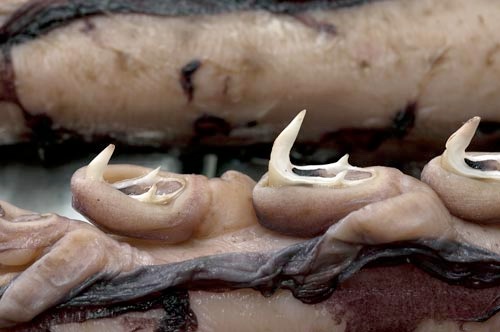
I vividly recall the first time I encountered a cicada killer, the amazing huge solitary wasp. I was in eighth grade; I was bumming about in our backyard, not doing much of anything, when I heard this loud clattering buzz overhead, looked up, and saw this giant beast slowly cruising towards our apple tree. It looked like something that ought to be accompanied by Flight of the Valkyries, an armored predatory monster determinedly homing in on its helpless prey. It disappeared into the foliage and then reappeared a moment later carrying a cicada that looked to be twice its size, and it landed on a branch overhead and started chomping. I could hear its jaws cracking open the bug from the ground. It just shredded its meal — and it wasn’t tidy, either. Bits of dead cicada came fluttering down around me. I was frantically looking about the yard for something I could use as a club in case it turned its dead glittering eyes on me.

And ever since that day it has been my dream to grow up and become a Sphecius wasp, a cold, brutal killer capable of rending my enemies into shattered fragments with heedless indifference, inspiring terror in all who behold me. Until now. A new species of wasp has been discovered in the fierce jungles of Indonesia.

Behold the dreaded killer of Sulawesi.

The male measures about two-and-a-half-inches long, Kimsey said. “Its jaws are so large that they wrap up either side of the head when closed. When the jaws are open they are actually longer than the male’s front legs. I don’t know how it can walk.”

Its jaws are longer than its legs. Awesome. I’m in love.

(via Bug Girl)

(Also on Sb)

Spam advice

The Dennis Markuze story has made it to Ars Technica. I am much relieved to have that pest gone from my mailbox, but I was thinking about one point everybody is missing: the human brain seems to have an edge over computers.

I just checked, and the FtB site has accumulated about 2100 spam hits which none of you have seen, but which were automatically intercepted by the software (you aren’t missing much: somebody really wants to sell you shoes, lots of shoes). Markuze was hitting me on email and twitter for more than that, and the thing was, those all got past the filters I’ve got in place. So one obsessed crazy man with minimal technical skill and nothing but persistence outperforms all the spambots out there, at least on the scale of individuals, if not in breadth of attack.

Spammers might want to think about that. Instead of writing a new generation of software to circumvent our filters, maybe they should recruit social misfits with obsessive-compulsive disorder, and write software that amplifies their efforts. You can blame me if they take my advice.

(Also on Sb)