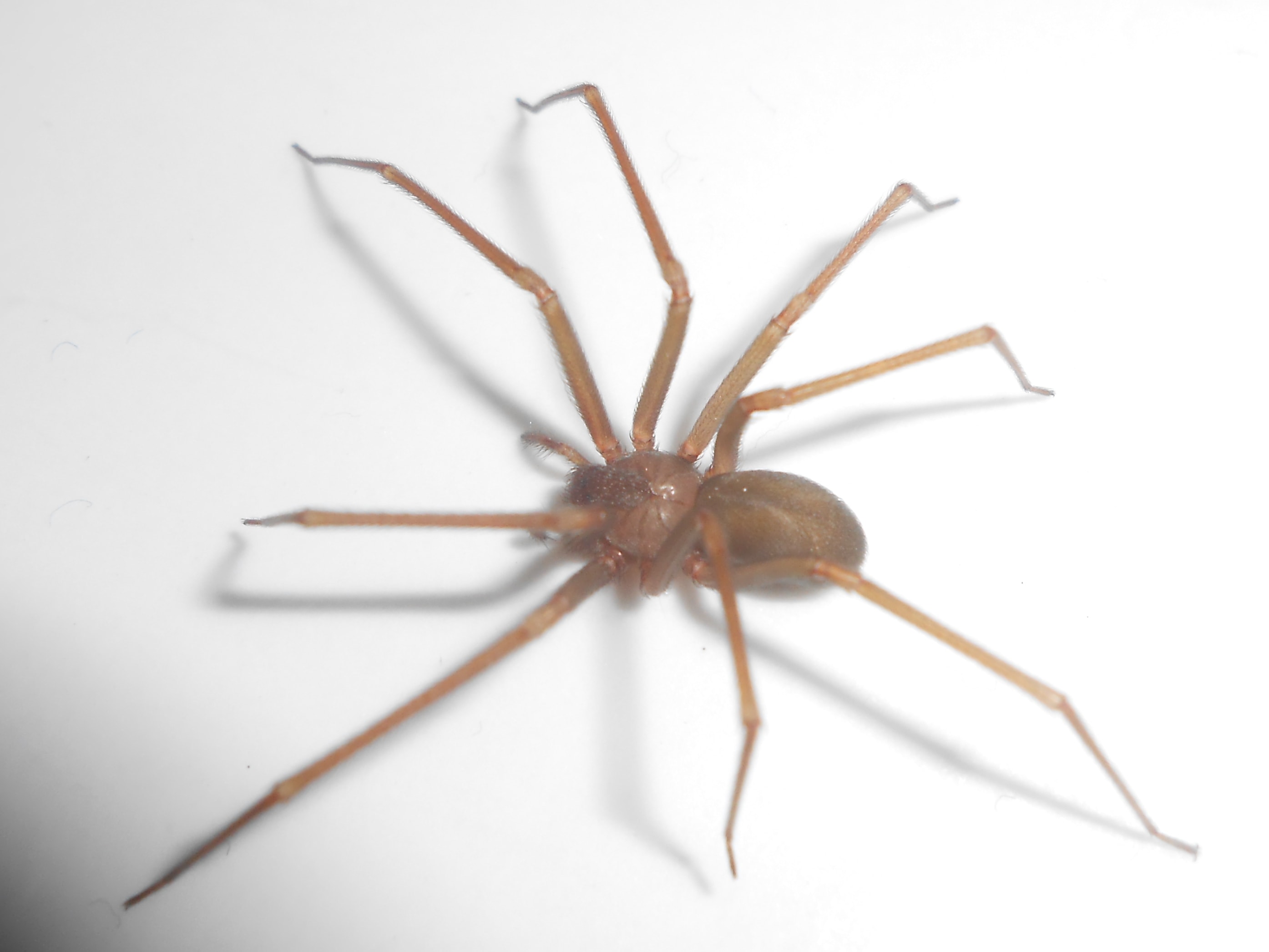
Always good for a laugh.
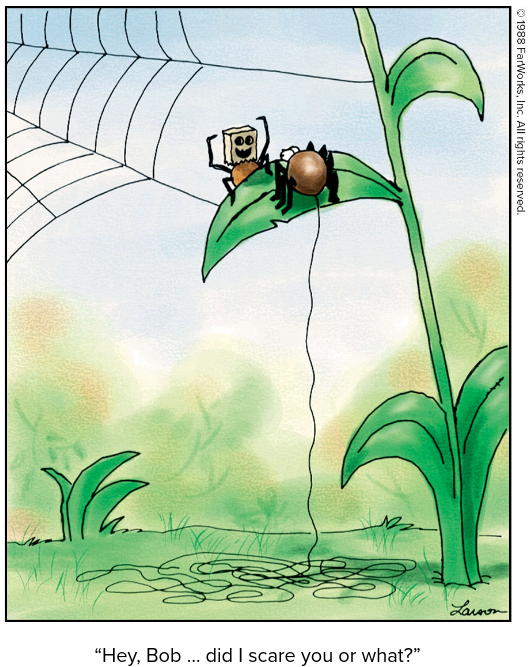
Which reminds me…yesterday, my wife tried to cheer me up by telling me she saw some small insects in the house, which means the return of the spiders can’t be far off. This seems to be an unusual response by most hu-mans.
I’m kind of laid up from a fall yesterday, having trouble getting any sleep because any turn of my head sends alarm signals up and down my spine. This is cramping my plans. I have a spider agenda! I need to move all the spiders, especially the lady spiders, to shiny clean new containers, so they can spend the next week getting comfortable and filling it with new silk. They won’t know it, but they’ll be making their nuptial bed. Yeah, time to try breeding! They’re still on the small side, so they’re comparable to human teenagers, but we’ll see if they’re as horny as people get in their youth.
I still have concerns about species matching, though. There are two spider species, Parasteatoda tepidariorum and Parasteatoda tabulata, that I can’t tell apart, short of dissecting their genitalia, which absolutely ruins them for mating, and I don’t want to put P. tep together with P. tab, since that could just end with cannibalism (wait, different species, so not cannibalism? Just violent murder?). My solution for this go-round is simple: I’m going to put male spiders on their sister’s nuptial bed. I want an inbred line anyway.
I’ll try to record their activities next week, so maybe I’ll have a movie for you then. With any luck, it won’t be a gory murder/horror flick, but instead a little incest porn. I hear that’s popular, but have no idea why.