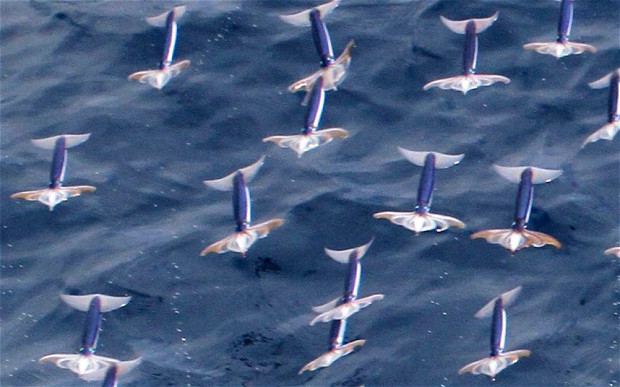
Give that fish a hand!

I have a bit of a peeve with a common analogy for the human genome: that it is the blueprint of the body, and that we can find a mapping of genes to details of our morphological organization. It’s annoying because even respectable institutions, like the National Human Genome Research Institute, use it as a shortcut in public relations material. And it is so wrong.

There is no blueprint, no map. That’s not how the system works. What you actually find in the genome are coding genes that produce proteins, coupled to regulatory elements that switch the coding genes off and on using a kind of sophisticated boolean logic. Each cell carries this complex collection of regulated genes independently and identically, but the boolean logic circuits produce different outputs varying with the inputs from the environment and the diverging histories of each cell. For instance, there is no code anywhere in the genome that commands the forelimbs to make five and only five digits: instead, a cascade of genes and cell movements produce a patterned tissue that in us contains sufficient mass and is of a size to generate five nuclei of condensing tissue that produce fingers.

It’s better to think in terms of cellular automata. The embryo is a pool of autonomous cellular robots that have general rules for how they should respond to environmental cues…and those cues tend to vary in predictable ways across the embryo, leading to a consistent cascade of action that produces a relatively consistent complex product, the multicellular organism.

The unfortunate consequence of those properties, though, is that you’ll never be able to look at a single gene from the genome and sort out what it does in the embryo. All the genes will be rather cryptic; you might be able to figure out that, for instance, the gene codes for an adhesion protein that makes the cell stick to a certain other class of cell, and that it’s switched on by gene products X and Y and turned off by gene product Z, but obviously you won’t be able to figure out its role until you figure out what activates genes X, Y, and Z, and whether the cell happens to be in a particular adhesive environment. And then when you look at X, Y, and Z, you discover that they have similar patterns of conditional logic in their expression.

In order to understand what a particular gene does, you have to understand what all the other genes do, as well as all the details of signaling and cell interactions that are going on, oh, and also, it’s entire developmental history, since epigenetic interactions can shape the future behavior of a cell lineage.

Hey, let’s all give up. This stuff is too hard.

No, let’s not. What it means is that you can’t derive the organism from the mere sequence of the genome — that is, the genomic information is not sufficient to comprehend morphology, because developmental processes add extra-genomic information to the generation of the organism. It means developmental biologists have job security (yay!), because the only way to decipher what is going on is to work backwards, from morphogenetic/physiological events to the underlying genes involved. This is not to imply that the genomic information is unimportant, only that understanding it requires complementing it with an understanding of cell:cell interactions, signaling, signal transduction, induction, and molecular patterning…all stuff that developmental biologists love.

Now if all you get from this is that the genome and organism are complex, interlocking, interdependent features that are so immensely and tightly integrated that evolution must be impossible, you aren’t thinking like a developmental biologist yet. Ask an evo-devo person about this stuff, and they’ll tell you that this is great…the way development works makes evolution of form easy.

That’s because there is no blueprint. What you have instead is a collection of flexible robots that have this property called plasticity: give them a novel environment or condition, and they don’t curl up and die and do nothing. Instead, they just follow the rules they’ve got and try to make something coherent out of whatever situation they find themselves in. They aren’t committed to making five fingers in any way; give them a reduced tissue mass, or an enlarged mass, or a variation in the signaling environment, and they’ll build something. And often it’s something surprising. Development is really, really good at producing emergent properties, precisely because it is autonomously rule-based rather than blueprinty.

All this buildup has a point: there’s an evolutionary issue that has a developmental resolution. It’s some really cool work on the development of the limb.

So I work on zebrafish. They don’t have limbs, obviously, but they do have fins where we tetrapods build legs and arms. Fins are thin membranous folds of ectoderm (our fancy word for skin), infiltrated with thin rods of cartilage called fin rays. Developmentally, they arise from things called fin folds — flaps of ectoderm that flatten to form a double-walled sheet.

In development, tetrapods add an extra element to the fin fold: mesoderm, that tissue that forms bone and muscle, expands to fill the fin fold with the raw material of a muscular, bony limb.

pita-bread

You can visualize the developing limb as something like a slab of pita pocket bread. Fish are content with just the bread, giving it a little reinforcement, while tetrapods open up that hollow space and stuff it full of filling. That filling represents a field of great potential, which is then organized in reproducible ways to make limb bones and digits and muscle. The question addressed here isn’t about the precise organization of the limb, but a more general one about where all that tasty filling came from in evolution.

We have hints. There are genes switched on in the distal part of the fin/limb that are more strongly activated in tetrapods than in fish; these genes are associated in space and time with an increase in the volume of mesodermal tissues. The gene of interest here is called Hoxd13. It’s one of a well-known array of genes that are responsible for patterning the body axis, some of which have also been recruited into patterning the limb. The hypothesis is that expressing greater levels of Hoxd13 in a fish fin would lead to an expansion of mesoderm that would be a potential evolutionary precursor to turning a fin into a leg.

So here’s what Freitas and others did, and this just blows me away that we can do these kinds of transgenic experiments routinely nowadays. They made a construct of a Hoxd13 gene coupled to a glucocorticoid switch: just by exposing the developing fish to dexamethasone (Dex), they can turn the gene on. It’s like adding a volume control to a gene that they can turn up at will. They also used other techniques, coupling Hoxd13 to a heat shock promoter, so they could also turn it on just by putting the embryos in warmer water. It’s power. We can have complete control of a gene, and ask what happens when we overexpress it in a fish.

When you activate Hoxd13 at an appropriate stage in fin development, here’s a diagrammatic illustration of the results:

edexpansion

“Ed” is the endoskeletal disc; it’s the mass of mesodermal tissue that is found at the base of the fish fin, and that fills the whole tetrapod limb. “Ff” is the fin fold, the ectodermal flap that makes up the fin. “Ff” is the pita bread, “Ed” is the filling.

Switching on an excess of Hoxd13 has a couple of effects. One is that another gene, cyclin d1 is also turned on at a higher level. The cyclins are cell cycle regulators; amping up this gene leads to greater proliferation, so more mesoderm is made in this region. This mass then floods into the fin fold, building a lumpy meaty mass that does the poor zebrafish no good, but looks like the core of a limb.

The fish does not build a hand or digits; it lacks the rules to carry out that degree of differentiation. But look at the limbs of these fossils from the fish-tetrapod transition.

autopods

There’s a lot of anatomical exploration going on in this series. This fits a model in which tetrapod ancestors carried a genetic variation that expanded the core of mesodermal tissue in their fins, which was then organized by the standard rules of limb mesoderm into bone and muscle. Again, this is opportunity, a new field of potential that in these early stages of evolution hadn’t yet been refined into a specific, and now familiar, pattern, although elements of that pattern are foreshadowed here.

This morphology fits a simple developmental model. The ancestral change was nothing more than the addition of new regulatory enhancers (and they have a candidate, called CsC, which is found in mouse but not zebrafish) that increased the expression of Hoxd13, which in turn led to an expansion of the raw material of limb mesoderm, which was then shaped by existing developmental rules into a crude bony, muscular strut.

Graphic abstract.eps

Subsequent evolution refined that structure into a more specific limb morphology by layering new rules and new patterning elements onto the existing framework of genetic regulators.

So how did fish get legs? By progressive expansion of tissue that was then used autonomously by existing genetic programs to form a coherent structure, and which was then sculpted by chance and selection into the more familiar and more consistent shape of the tetrapod limb. Add raw material first, and the plasticity of developmental rules means that the organism will make sense of it.

The details are complicated, but complexity enables emergent evolutionary novelties. And that’s something beautiful about evolution and development.


Freitas R, Gómez-Marín C, Wilson JM, Casares F, Gómez-Skarmeta JL. (2012) Hoxd13 contribution to the evolution of vertebrate appendages. Dev Cell. 23(6):1219-29. doi: 10.1016/j.devcel.2012.10.015.

See? This is why I don’t watch superbowl commercials

I guess GoDaddy had one of their awful commercials air during the show. It showed an attractive woman model next to a funny-looking male nerd, and then lingered over a long sloppy kiss, with a message:

The voice says something along the lines of you should use GoDaddy because it does this brilliant thing of combining SEXY and SMART.

After the average American Super Bowl viewer managed to hold down their Doritos and Bud Light through the endless kissing scene, they were treated to this moral at the end of the commercial:

Sexy women aren’t smart.

Smart men aren’t sexy.

But I learned something useful! I actually have one or two domain names registered with GoDaddy (they were cheap, I got them before I knew their owner was a world-class asshole), and now I know that I have to figure out how to transfer those domains to another registrar this week.

A superbowl commercial was actually good for something!

Only a bird

Another feathered dinosaur has been found in China, prompting Ken Ham to dig in his heels and issue denials.

Yet another supposed “feathered dinosaur” fossil has come to light, again in China. (Dr. Elizabeth Mitchell, AiG–U.S., reported on another Chinese fossil of a supposed feathered dinosaur in April 2012) Now, one headline described the fossil as “almost birdlike,” and the authors of the report in Nature Communications note many features the fossil shares with living birds, particularly those that live on the ground. In fact, Dr. Elizabeth Mitchell and Dr. David Menton (AiG–U.S.) both examined the photos of the fossil and the criteria the authors used in classifying the fossil as a dinosaur. They agreed that it is a bird, not a feathered dinosaur.

Oh, really? It’s just a bird? Take a look at this image of Eosinopteryx, and you tell me.

eosinopteryx2

Notice a few things about this animal: it’s got teeth. The forelimbs have clawed digits. It has a long bony tail. It lacks the bony keel that anchors breast muscles in modern birds.

The only thing that might cause you to question its dinosaur nature (and it’s a criterion that’s proving more and more inappropriate) is that lovely gray fringe of feather impressions that surround the whole fossil. And look at those forelimbs! It looks like it has stubby wings. It does not, however, have the skeletal and muscular structure to allow for extended flapping flight, and the wings are way too short for it to have been an adequate flyer.

But Mitchell and Menton and Ham looked at that and said ‘ALL BIRD’. They’re idiots.

Ham goes on: there are no transitional forms, he squeaks, there can be no transitional forms, transitional forms don’t exist…all while looking at a winged, feathered reptile with teeth and claws and a bony tail.

The fossil record doesn’t reveal any kind of dinosaur-to-bird evolution—and it certainly does not show a molecules-to-man evolution. We have no proof of transitional forms, and we won’t. God’s Word says clearly that He created animals and plants according to their kinds (Genesis 1). Through genetic loss and other factors, new species have emerged over time—but birds are still birds and apes are still apes. Nothing in the history of biology has legitimately shown that dinosaurs could develop the genetic information to evolve into birds.

Pitiful. Pathetic. I’d like to see a creationist sit down in front of me with that illustration and try to defend the claim that it’s only a bird.


Godefroit P, Demuynck H, Dyke G, Hu D, Escuillie F, Claeys P (2013) Reduced plumage and flight ability of a new Jurassic paravian theropod from China. Nature Communications 4, 1394. doi: 10.1038/ncomms2389

What I taught today: Axis specification

We began today with chocolate. Always a good thing at 8am, I think — so I brought a candy bar to class. Then I told the students that I loved and respected them all equally and that they all had equal potential, but that I was going to mark just one person as special by giving them that candy bar*. So I asked them how I could decide who should get it, telling them right off that dividing it wasn’t an allowed solution, and that yes, this could be an openly unfair process.

There were lots of suggestions: we could do it by random chance. I could throw it into the middle of the room and let them fight over it. We could analyze everyone’s DNA and give it to the most average person…or the most genetically unusual. I could just give it to the first person to raise their hand, or the person closest to me, or the person farthest from me. We could have a competition of some sort, and the winner gets it. I could give it to the person who wants it most, or who needs it most.

The point I was making is that this is a common developmental problem, that you have a potentially uniform set of cells and that somehow one or a few have to be distinguished as different, and carry out a different genetic program than another set of cells. One cop-out is to invoke mosaicism: that is, they aren’t uniform, but inherit different sets of cytoplasmic determinants that make them different from the very beginning, but that even in that case, these determinants aren’t detailed enough to specify every single cell fate in most organisms. Even with an initial prepattern, you’re eventually going to end up with a field of cells, like the dorsal side of the fly wing, and within that uniform field, some cells will have to be programmed to be epithelial, others to be bristles, others to be neurons. And that means that in every organism, even the most classically mosaic, you’ll reach a point where cells have to process information from their environment and regulate to build differential structures.

And with that I went on to talk about some animals that were judged as being mostly mosaic in character: molluscs, tunicates, echinoderms, and nematodes. Even here, these animals all required complex molecular interactions to build their embryos.

For example, I’d earlier used echinoderms as classic examples of regulative development. You can dissociate them at the 4-cell stage and each blastomere can go on to build a complete embryo. But at the 8-cell stage, when the cleavage plane separates an animal half from a vegetal half, that’s no longer true: the top four cells when isolated are animalized, forming only a ciliated ball, while the bottom four cells are vegetalized, only making a static blob with a bit of a skeleton inside. Clever experiments can quantitatively juggle these cells around, removing just the bottom 4 cells (the micromeres) at the 16-cell stage, or assembling composite embryos with different ratios of the different tiers of cells, and get different degrees of development. Even when you’re discussing an organism in which you’d call the pattern of development mosaic, it absolutely depends on ongoing cell:cell signaling at every step, and the final form is a consequence of interactions within the embryo. It’s a mosaic-regulative continuum.

I also described very superficially the work of Davidson and Cameron on specification events in echinoderms. These interactions can be drawn as a kind of genetic circuit diagram, where what you’re seeing is the pattern of genes being switched on and off. We can describe a cell type as the output of mappable gene circuitry, and we can even identify modules of networks of genes associated with a particular kind of cell, and that we can also see a limited number of genes that mediate interactions.

Next week I promised to start going into more detail, when we start talking about early fly development and axis decisions. The next class we’re actually going to switch gears a bit and discuss Sean Carroll’s Endless Forms Most Beautiful.

Slides used in this talk (pdf).

*Yeah, I lied again. I brought enough candy bars for everyone, and after we’d generated a list of ways to share just one, I gave them to everyone. They’ll never trust me again.

Another really stupid argument from William Lane Craig

Craig is not one of the clever ones. He’s one of the glib, superficial ones, and he impresses a lot of superficial people. Here’s one of his latest, the Argument for God from Intentionality.

God is the best explanation of intentional states of consciousness in the world. Philosophers are puzzled by states of intentionality. Intentionality is the property of being about something or of something. It’s signifies the object directedness of our thoughts.

For example, I can think about my summer vacation or I can think of my wife. No physical object has this sort of intentionality. A chair or a stone or a glob of tissue like the one like the brain is not about or of something else. Only mental states or states of consciousness are about other things. As a materialist, Dr. Rosenberg [the interlocutor] recognizes that and so concludes that on atheism there really are no intentional states.

Dr. Rosenberg boldly claims that we never really think about anything. But this seems incredible. Obviously I am thinking about Dr. Rosenberg’s argument. This seems to me to be a reductio ad absurdum of atheism. By contrast, on theism because God is a mind it’s hardly surprising that there should be finite minds. Thus intentional states fit comfortably into a theistic worldview.

So we may argue:

1. If God did not exist, [then] intentional states of consciousness would not exist.

2. But intentional states of consciousness do exist!

3. Therefore, God exists.

The link is to a philosopher’s debunking, pointing out the obvious fallacies and some of the more subtle arguments against it from serious, non-superficial philosophers. It doesn’t bring up the first counter-argument that came to my mind, though.

We know what the physical nature of intentional states are; they are patterns of electrical activity in a network of cells with specific physical properties. We don’t know how to read that pattern precisely, but we can measure and observe them: stick someone in an MRI and ask them to think about different things or engage in different cognitive tasks, and presto, blood flows shift in the brain and different areas light up with different levels of activity. These are properties not seen in chairs or stones, which lack the neuronal substrates that generate these patterns.

Intentional states are ultimately entirely physical states; they are dependent on organized brain matter burning energy actively and responsively in different patterns. There is no evidence that they require supernatural input, so Craig’s first premise that these could not exist without supernatural input is not demonstrated.

More trivial excuses for the anti-choicers

Oh gob, the stupidity. The latest wave of anti-choice legislation is based on one trivial premise: it’s got a heartbeat! You can’t kill it if its heart is beating! So stupid bills have been flitting about in the Ohio, Mississippi, Wyoming, Arkansas, and North Dakota legislatures trying to redefine human life as beginning at the instant that a heartbeat can be detected. Here’s Wyoming’s story, for instance:

About two weeks ago, state Rep. Kendell Kroeker (R) introduced a measure to supersede the medical definition of viability. Current state law says abortions are prohibited after a fetus has “reached viability,” and Kroeker sought to replace those words with “a detectable fetal heartbeat.” The Republican lawmaker said the idea for his heartbeat bill just came to him one day because “it became clear that if a baby had a heartbeat, that seemed simple to me that it’s wrong to kill it.” On Monday, a House panel struck down Kroeker’s bill because it was too medically vague. But if Ohio and Mississippi are any indication, this likely won’t be the last time that fetal heartbeat legislation shows up in Wyoming.

It’s a step back from the inanity of declaring that life begins at conception — you can’t detect the heartbeat until 5-6 weeks of gestation — but still, it’s an arbitrary and ridiculous definition that relies entirely on folk knowledge about living things. If we’re going to do that, though, I propose that we go to the One True Source of knowledge and accept the Biblical definition of living creatures: they have breath in their nostrils. Therefore, abortion is legal right up to the instant that the baby draws its first breath.

Don’t argue with me! It’s in the Bible! Do you want to go to hell?

But the heart thing? Nonsense. Here’s what I routinely see:

Zebrafish embryos have a heartbeat one day after fertilization. That one above is a two-day embryo, and it’s even more special and sacred because it carries a heart-specific GFP, so it’s heart glows green. We don’t suddenly think of the organism as complete and inviolate because cardiac cells are twitching.

Or even better, you can dissociate the heart tissue of just about any animal, including humans, and culture single cells in a dish…and look! They beat!

If that were a human cell, does that means we could never throw that petri dish away? Speaking of human, let’s jack up the consequences. Here’s a clump of induced pluripotent stem cells, adult cells forced into an embryonic state by transfection with a few genes that reprogrammed this population into a cardiac cell state. It’s the religious right’s nightmare, transformed by the hand of scientists into living embryonic tissues, growing in a lab under a microscope…and it’s alive! IT’S ALIVE!

Is anyone seriously going to decide that that is human and deserving of all of the rights and protections we accord to adult people?

I suppose it depends on whether those cells are derived from a female or not.