Magic RNA editing!

One of those wacky Intelligent Design creationists (Jonathan McLatchie, an arrogant ignoramus I’ve actually met in Scotland) has a theory, which is his, to get around that obnoxious problem of pseudogenes. Pseudogenes are relics, broken copies of genes that litter the genome, and when you’ve got a gang of ideologues who are morally committed to the idea that every scrap of the genome is designed and functional, they put an obvious crimp in their claims.

So here’s this shattered gene littered with stop codons and with whole exons deleted and gone; how are you gonna call that “functional”, creationist? McLatchie’s solution: declare that it must still be functional, it’s just edited back into functionality. He uses the example of GULOP, a gene responsible for vitamin C synthesis, which is pretty much wrecked in us. Nonfunctional. Missing big bits. Scrambled. With missing regulatory elements, so it isn’t even transcribed. No problem: it’s just edited.

As I mentioned previously, the GULO gene in humans is rendered inactive by multiple stop codons and indel mutations. These prevent the mRNA transcript of the gene from being translated into a functional protein. If the GULO gene really is functional in utero, therefore, presumably it would require that the gene’s mRNA transcript undergo editing so that it can produce a functional protein. It’s not at all difficult to understand how this could occur.

Yes, RNA editing is a real thing. RNA does get processed before it’s translated into protein. McLatchie has a teeny-tiny bit of knowledge and is abusing it flagrantly.

I’ve hammered out dents in a car, and I’ve touched up rust spots with a little steel wool and a can of spray paint. My father was also an auto mechanic and could do wonders with a wrench. Auto repair exists, therefore…

old-wrecked-car-outback-australia-14466708

…patching up that vehicle should be no problem at all, right? I expect to see it cruisin’ down the highway any time now.

Maybe two cans of spray paint this time…?

You should always ignore some old guy opining on women’s abilities

I had this vague impression that Dave Winer was one of the good guy pundits of the computer culture, but this column in which he asks “Why are there so few women programmers?” is gakworthy and stupid.

Now, I’m sure there is sexism, probably a lot of sexism. But I also think there’s something about programming that makes many women not want to do it. Here’s a theory why that might be.

Programming is a very modal activity. To be any good at it you have to focus. And be very patient. I imagine it’s a lot like sitting in a blind waiting for a rabbit to show up so you can grab it and bring it home for dinner.

There is specialization in our species. It seems pretty clear that programming as it exists today is a mostly male thing. Which also raises the obvious question that perhaps we can make it so that it can better-use the abilities of the other half of our species?

Let’s blame it on biology! Let’s pretend that there’s some intrinsic biological difference that makes discriminating against women in computer science perfectly natural!

It’s a beautiful example of letting your bias dictate your explanation, though. Most psychological studies show men are more impulsive than women (although I’m not a fan of characterizing a whole gender that way, either) — it’s women who have the cultural stereotype of being more patient. It also ignores historical data: 80% of the calculators at Bletchley Park in WWII were women.

Yet now, when it’s time for convenient excuse-making, we get the claim that men are more patient than women. Convenient, isn’t it, how biology is always dragged in to justify the status quo?

I also have to say…who hunts rabbits from a blind?

There isn’t that much specialization in our species, either — it’s not as if men evolved to fit the niche of sitting at a desk for long hours doing the fine motor work of typing, while women were shaped by nature to…sit at a desk for hours doing the fine motor work of sewing.

I also recommend this simple, clean, short presentation on women’s math skills. The difference (if there is any; the presentation acknowledges a very slight statistical difference, while I’m not so sure it’s valid) is not sufficient to account for any difference in aptitude for computer science.

P.S. See the bit in Winer’s comment that is struck out? He acknowledged that he might be off-base later, but that was the bit he thought he might be wrong on. I don’t get it.

Just in time for my cancer class

In a few weeks, we’ll be having a discussion of the ethics of cancer research: what is a reasonable intervention in the case of a patient who has no hope of survival? And look at the interesting case that just appeared on my radar: two cancer surgeons who treated brain tumors by deliberately infecting them with bacteria.

Two UC Davis neurosurgeons who intentionally infected three brain-cancer patients with bowel bacteria have resigned their posts after the university found they had "deliberately circumvented" internal policies, "defied directives" from top leaders and sidestepped federal regulations, according to newly released university documents.

Dr. J. Paul Muizelaar, 66, the former head of the neurosurgery department, and his colleague, Dr. Rudolph J. Schrot, violated the university’s faculty code of conduct with their experimental work, one internal investigation concluded.

All three patients consented to the procedures in 2010 and 2011. Two of the patients died within weeks of their surgeries, while the other survived more than a year after being infected.

The premise behind their experimental procedure is probiotics, which immediately throws a warning on the play: there’s a lot of abuse of the concept out there.

Muizelaar and Schrot called their novel approach “probiotic intracranial therapy,” or the introduction of live bowel bacteria, Enterobacter aerogenes, directly into their patients’ brains or bone flaps. The doctors theorized that an infection might stimulate the patients’ immune systems and prolong their lives.

But there are some serious problems here. They didn’t have institutional review and approval of their procedure! That’s not a warning flag, it immediately calls the entire research into question and brings the ethics of the doctors under the microscope. You don’t get to do that.

And then there’s their logic. This is a disease with a median survival of 15 months. Their first patient died less than 6 weeks after the surgery, while the second lived for a year, which the report says “buoyed the doctors and seemed to bolster their theory”. That makes no sense at all — with so few trials they can’t possibly make that kind of assessment. Furthermore, their third patient died of sepsis.

At least it sounds like we’ll have something to talk about. That seems a paltry reward for three people’s deaths.

(via The Tree of Life)

A quick microscopy lesson

Since people were asking, this is my low-end videomicroscopy setup — the one I’m comfortable putting in a box and hauling out to the wilderness of a biological research station. “Low end” means, unfortunately, a few thousand dollars, but there are ways to shave that down a bit.

videomicroscope

Don’t cut too many corners on the optics, though. I’m using the Leica/Wild M3C here, because I like what I see in it. I just checked eBay, and found a model just like it for $620. There are equivalents that don’t have the fancy brand name; look into Lomo, for instance. You might be able to find off-off-off brand scopes like this for a few hundred dollars. Hot tip: don’t look at the magnification first. If someone tries to sell you an inexpensive scope for cheap by bragging about “1500x!” or something similar, walk away. Clarity and resolution are the features you want, not raw magnification. The best thing to do is look at something in the scope; if it’s blurry or has color fringes, forget it.

I did cut corners on one thing here: back in the lab, I have a nice fiber optic dual gooseneck illuminator that’s good and bright and lets me play with transmitted and epi illumination. I left it at home today! It was my one big mistake. Instead, I brought a small cheap lamp from one of our student scopes, and it was not at all adequate to the task. Good lighting is essential!

For image capture, there’s a couple of ways to go. On this setup, I brought a simple RS-170 surveillance camera which I attached to the phototube on the scope, which puts out a standard video signal; that went into a Sony Digital Video Media Converter, which has multiple outputs, including a digital video signal that I could run into my Mac laptop. I used BTV Pro as a cheap, simple image acquisition program. The compromise here is that the camera puts out a fairly low resolution signal, but it’s easily displayed in real time on the computer, so the students could watch an enlarged live video stream. I could also capture stills, video, or timelapse with the software.

A better alternative for resolution would be to scrap the video camera and converter altogether, and go directly to a DV camera or your favorite digital camera. The old Nikon Coolpix cameras were great: they have a threaded lens, and you could buy a simple adapter that would screw on, then you’d plug it into the scope phototube. Other cameras require a somewhat fancier adapter, and I’ve even seen adapters for the iPhone. I’ve got the Coolpix system in my lab, but have discovered the unfortunate aspect of letting students fiddle with them is that they get broken.

That’s the system, it’s fairly idiot-proof and it’s quick and easy to put together. The only thing I’ll change next year is that I’ll be sure to bring the fiber optic illuminator — it was just that the Wild is so damned solid and heavy as it is, that I just couldn’t grab the similarly heavy illuminator and bring it to the car in one trip. I was lazy. Next time, two trips.

Hamza Tzortzis can learn

Tzortzis has learned that claiming miraculous knowledge in the Qu’ran has “become an intellectual embarrassment for Muslim apologists”. Progress!

Regrettably, the scientific miracles narrative has become an intellectual embarrassment for Muslim apologists, including myself. A few years ago I took some activists to Ireland to engage with the audience and speakers at the World Atheist Convention. Throughout the convention we had a stall outside the venue and as a result positively engaged with hundreds of atheists, including the popular atheist academics Professor P. Z. Myers and Professor Richard Dawkins.  During our impromptu conversation with Professor Myers we ended up talking about God’s existence and the Divine nature of the Qur’ān. The topic of embryology came up, and Professor Myers being an expert in the field challenged our narrative. He claimed that the Qur’ān did not predate modern scientific conclusions in the field. As a result of posting the video[8] of the engagement on-line we faced a huge intellectual backlash. We received innumerable amounts of emails by Muslims and non-Muslims. The Muslims were confused and had doubts, and the non-Muslims were bemused with the whole approach. Consequently, I decided to compile and write an extensive piece on the Qur’ān and embryology, with the intention to respond to popular and academic contentions.[9] During the process of writing I relied on students and scholars of Islamic thought to verify references and to provide feedback in areas where I had to rely on secondary and tertiary sources. Unfortunately they were not thorough and they seemed to have also relied on trusting other Muslim apologists. When the paper was published it was placed under a microscope by atheist activists.[10] Although they misrepresented some of the points, they raised some significant contentions. I have since removed the paper from my website. In retrospect if this never happened, I probably wouldn’t be writing this essay now. It is all a learning curve and an important part of developing intellectual integrity.

Of course, he now has a new strategy:

  1. The Qur’ān allows multiple and multi-level meanings.

  2. Our understanding of natural phenomena and science changes and improves with time.

  3. The Qur’ān is not inaccurate or wrong.

  4. In the case of any irreconcilable difference between a Qur’ānic assertion and a scientific one, the following must be done:

    • Find meanings within the verse to correlate with the scientific conclusion.

    • If no words can match the scientific conclusion then science is to be improved.

    • Find a non-scientific meaning. The verse itself may be pertaining to non-physical things, such as the unseen, spiritual or existential realities.

#1 and #2 are correct. #3 is assuming what they want to demonstrate. #4 is an exercise in rationalization, and cannot generate new knowledge; it’s an admission that science will drive progress and understanding, while the religious apologists will follow along behind and try to steal the credit.

It was the week before classes, and all through the house…

The faculty were melting down. It’s going to be a busy week — I have syllabi to finalize and multiple meetings to attend and cranky fish to fuss over (Morris has toxic water everywhere, full of minerals, and we’re dependent on the RO system to clean up the crap…and they’re shutting it down and flushing it with chlorine this week. What? Yikes!). And then I have other things I’m stuck with.

Tomorrow evening at 7:30 I’m doing a book event on KFAI radio. There goes my afternoon and most of the evening.

This weekend we have our Bridge to Biology program — a huge number of our incoming first year students in biology get taken out to the Lake Itasca Field Station, where we try to lose them in snipe hunts get them enthused about science and biology. I’ll be out there with a microscope and cameras and embryos (I hope, if the RO system doesn’t poison everything).

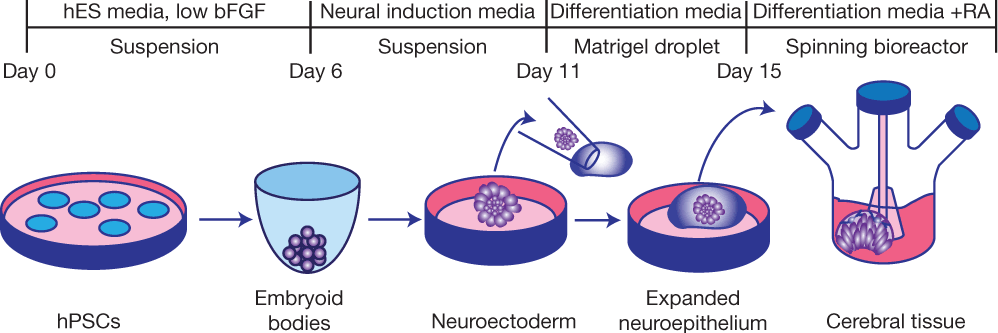
Oh, yeah, I’m preparing all my class stuff. I’m teaching cell biology and cancer biology this term. Any students reading this? You can get a jump on everything by reading the first couple of chapters of Life by Sadava et al., we shall be marching through the first third of this book in the cell biology class. In cancer biology, we’re going to focus on The Emperor of All Maladies by Mukherjee for the first few weeks, so read that whole thing now. Then once you all know what horrible things cancer does to people, we’ll dive into the mechanisms. You’re fortunate, too: last time I taught this, we used Weinberg’s Cancer Biology text, which is really aimed more at graduate level work; this time around we’re using Hesketh’s Introduction to Cancer Biology. The first two words in the title will make it a less daunting exploration, I hope.