Vast, dense swarms of migrating squid, all swirling about a boat. How can the sailors resist leaping into the water with them?
Pharyngula
Evolution, development, and random biological ejaculations from a godless liberal

Vast, dense swarms of migrating squid, all swirling about a boat. How can the sailors resist leaping into the water with them?


We can also write off Africa and Asia. After all, the Americas and Australia were colonized by all those Old World people, so there’s hardly anybody left behind, and we in the New World are now the future of humanity.
That’s how it works, right? Human beings are like locusts: we strip our homes to bedrock, then take wing and flit off to the next environment to exploit. At least, that’s the impression I get from Stephen Hawking, all-around smart guy and obsolete resident of the dead old homelands.

It’s a fascinating example of motivated reasoning. Bill Maher has been raked over the coals on his irrational, anti-scientific attitude towards vaccines; his own guests have scorned his views on his own show; he’s been confronted repeatedly with the evidence and the rebuttals. He’s got to know by now that there is no rational justification for claiming that vaccines or thimerosal cause autism, or that the drug companies are profiting hugely by including poisons in their vaccines (which makes no sense, even if you do believe in greedy pharmaceutical mega-corporations).
So what does he do? He invites anti-vax crank extraordinaire, Robert F. Kennedy Jr., to sit around and commiserate with one another about how they’re called cranks and liars for merely denying the scientific consensus.

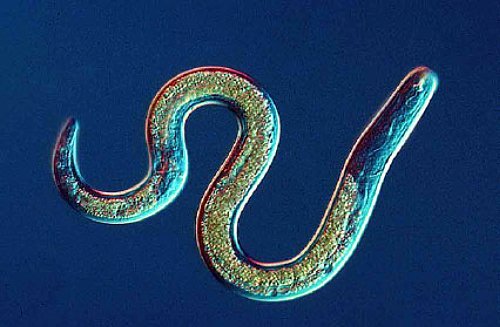
The latest fatuous obsession by Paul Nelson, Philosopher of Biology at the Discovery Institute, is a real corker. He has decided that nematodes could not possibly have evolved, because scientists (real ones, not creationist pseudoscientists) have produced an extremely detailed literature documenting their development; because Brenner, Horvitz, and Sulston (no creationists among them) won the Nobel Prize for their work describing the cell lineages to produce the worm; and because he doesn’t understand developmental biology at all. I’ve got palm impressions in my forehead from smacking myself so many times while watching this terrible little video.
This is why Paul Nelson is laughed at by developmental biologists. He cannot be taken seriously. I figured, though, that if you’re not already familiar with concepts and details of development, you might find him credible — he’s so pompously earnest! — so I thought I’d explain all the ways he goes wrong.


Vox Day has responded to the release of that video interview. Once again, he’s weasely: he’s now saying he was ambushed, that it was supposed to be all about gamergate, and Pakman surprised him with other questions. But he says some more things that irritate me.

In one of his Crash Course Astronomy episodes, he made a joke that could easily be interpreted as transphobic (he didn’t intend that, but you know what everyone says about intent…). So he did something very smart.

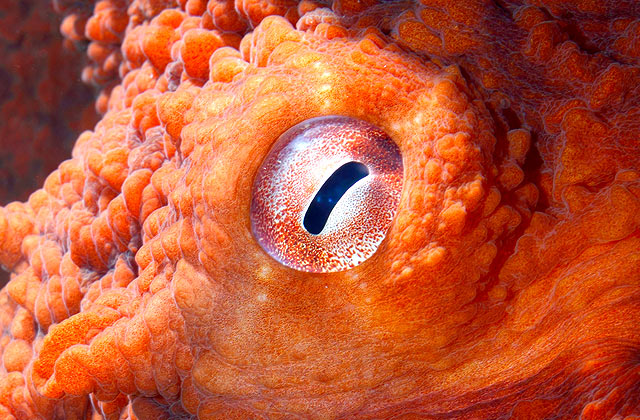
According to three-time octopus wrestling champ Gary Keffler, giant Pacific octopuses get a bad rap. As he told The Seattle Times, “People always hear these awful stories about them, killers of the deep. The ones we have here are pretty laid-back.”

I am sure that’s exactly what you think when you see a picture of vampire squid.
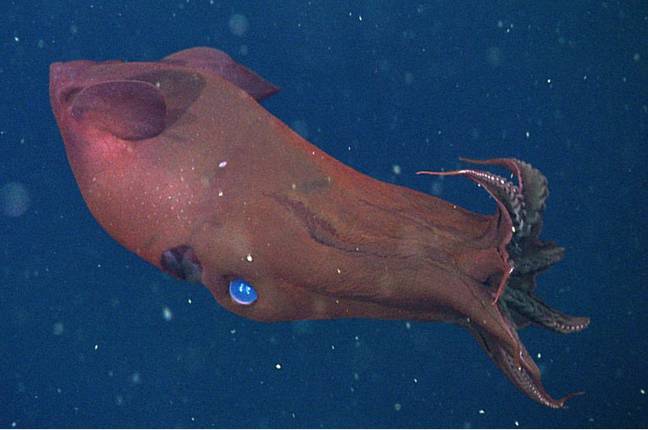
But it’s true! Where most cephalopods do the deed once, spawn, and die, Vampyroteuthis has multiple cycles of reproduction. Unfortunately, they’re also cold, gelatinous, and lethargic…which, if you think about it, is also what the undead vampire of myth would be like, so they’re just fulfilling the stereotype.


I got as far as the first paragraph before I started throwing red flags, and by the second I was ready to call off the whole game on account of dishonesty. Psychology Today (I should have been alerted by the source) defends EP.
The human brain, just like every aspect of every organism on the planet, is the product of evolution. If you accept that evolution is true, you can’t avoid that conclusion. That’s why I often get confused when I hear reasonable people being broadly dismissive of evolutionary psychology (EP).
EP is simply an approach to psychology that explicitly acknowledges evolution as the designer of brains. This approach may sound non-controversial in principle, at least among those who accept evolution. Nevertheless, many non-creationist critics find plenty of reasons to object to EP, or at least to what they consider EP to be. For examples of some such criticisms see Ed Hagen’s Evolutionary Psychology FAQ.