That isn’t the Carrizo Plain National Monument.

It’s obviously Oz.

“Improv for Scientists” — that looks useful. I guess I’ll have to go. 29 April, early afternoon, here on the UMM campus.
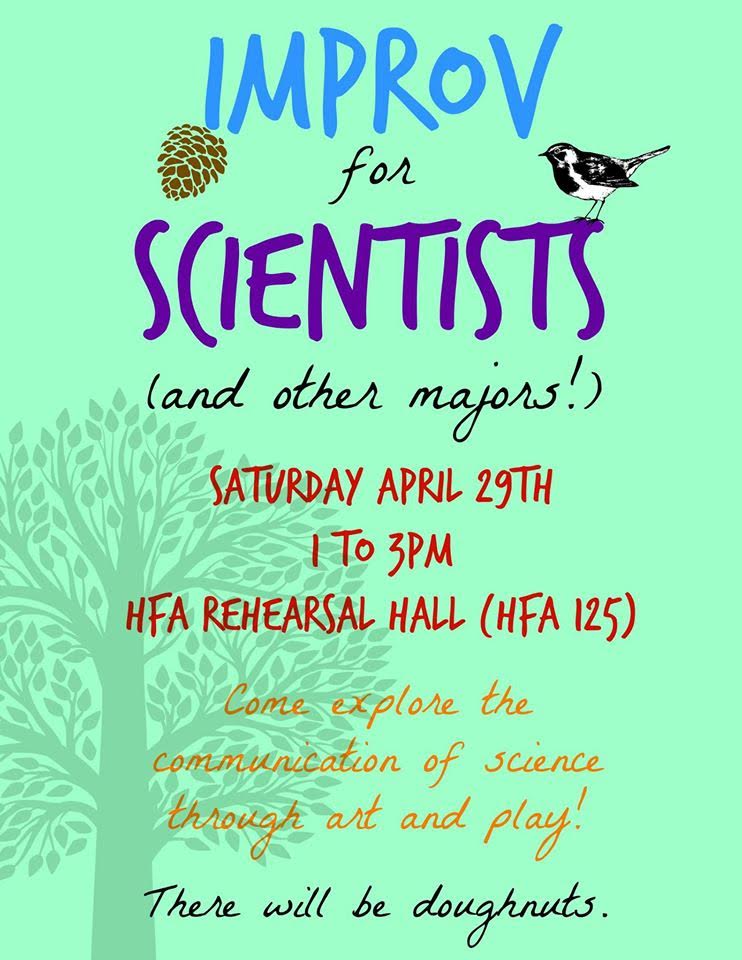
Doughnuts are just a bonus.


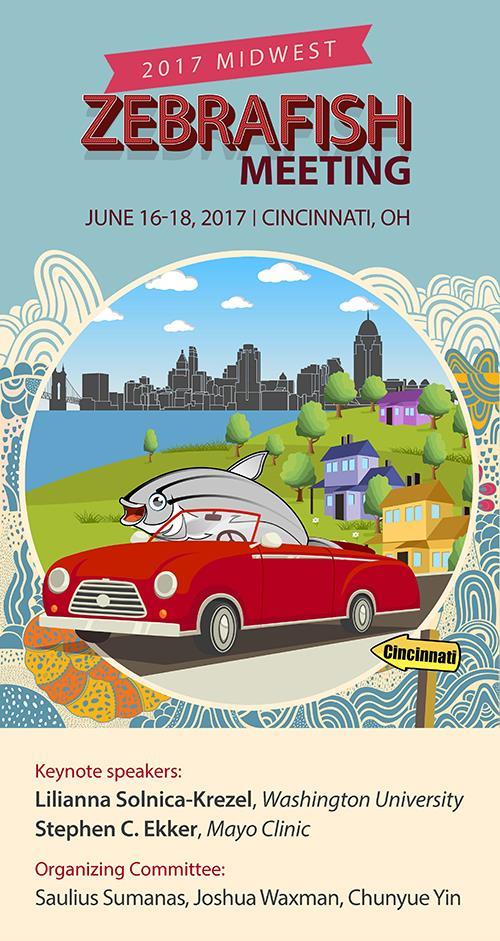
A student and I are going to attend the 2017 Midwest Zebrafish Meeting in Cincinnati, Ohio. We’re getting in on Thursday night, and the meeting schedule has us free all day Friday, until the opening remarks at 6pm.
Hmmm. What to do all day long? What embarrassing, horrible spectacle is there within a short drive of Cincinnati that could provide amusement?
You guessed it. I’m going to the Ark Encounter! I imagine there will be lots of developmental biologists and geneticists in town that day…anyone want to join us? Or if you’re not there for the meeting, but just idling about in the neighborhood, feel free to come along, too. It’s not as if you need a Ph.D. to laugh at the pseudoscience on display.
Also, if anyone wants to meet up for serious conversation during the conference, I’m up for that — as mentioned above, I’ll be there with a student who might be looking for a graduate program in another year, and I’d like to introduce them around.

Did you know that most of us have two nostrils? It’s strange — we have a single trachea, but it branches into two pathways up top, and furthermore, those two terminal pathways are elaborate and mazelike, with a network of sinuses and these convoluted turbinate bones taking up much of the space behind your nose. I’d always just chalked it up to a side effect of bilateral symmetry (eh, you know, developmental biologist), but at the very least, it does have physiological consequences. Among those consequences is that there is a nasal cycle. You don’t breathe in equally through both nostrils, there is an alternating rhythm.
Try it yourself right now. Consciously consider what you feel as you breathe in and out normally — you probably can detect that one nostril seems a little bit more open than the other (if you’ve got a cold or allergies, your perception of this phenomenon may be messed up. Sorry. Get better soon.) As I sit here, for instance, I can tell that my right nostril has somewhat freer airflow than my left. It’s not that I’m having any problems breathing through either, it’s a subtle difference, simply a small, barely detectable asymmetry that is unnoticeable except when I’m consciously thinking about my breathing.
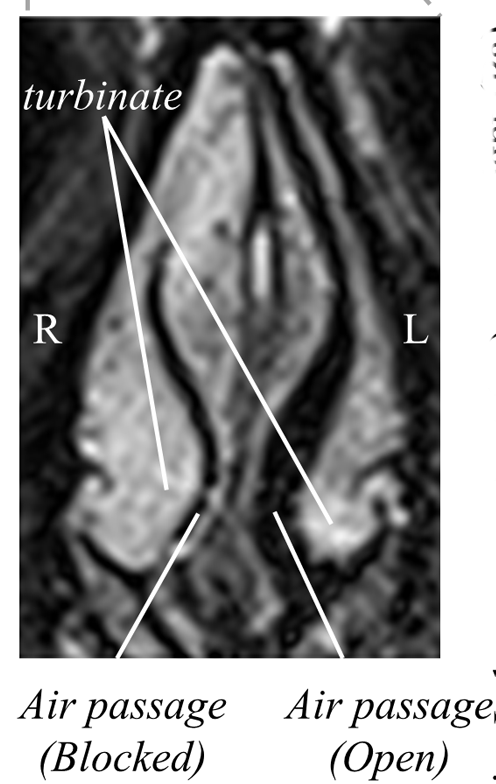
MRI scans through a face
The cool thing about it, though, is that it alternates with a cycle length between about half an hour and 8 hours. The mechanism for that is that a portion of your septum and your inferior turbinate are covered with erectile tissue that becomes gradually engorged in response to sustained airflow, and relaxes as airflow is reduced, so your nostrils take turns getting aroused by breathing and then swapping off with each other to relax and recover.
You can measure the nasal cycle in a precise and continuous way with scientific instruments, if you’d like, but there’s also a rough and ready way. This weekend my wife and I drove to a meeting in Glenwood, and then on to Minneapolis, so we had a couple of long drives together, and we were talking about respiratory physiology, as one does, when I explained about this nasal cycle thing, and we decided to measure it. Since we didn’t have access to an electronics lab in the car, we did a subjective estimate: every half hour, we’d just try to be consciously aware of our breathing and report which nostril was doing most of the work. It beats playing Slug Bug, anyway.
So we did a day’s worth of crude measurements. One problem right away was that Mary was a bit congested and stuffed up, which meant the whole day went by with no change for her, which was a bit boring. She did finally detect a shift that evening, so her nasal cycle was estimated to be a bit longer than 8 hours. Another slight problem is that we also took our son and his girlfriend out to lunch, and mid-meal we had to announce “Nostril check!”, which meant we got some funny looks. But that’s OK, I’m used to getting funny looks.
As for me, I’ve gotten over a nasty cold that had been afflicting me for a while, so my face and sinuses and nasal erectile tissue were in fine fettle, and I was able to measure a couple of cycles, which were both about 3 hours in length.
Give it a try yourself. The obvious weaknesses with the way we were doing it is that the observations are personal and subjective, unlike those done with gadgetry that directly measures airflow, and since we were only doing a check every half hour our results were pretty chunky. The interesting thing about it, though, is that this is a rhythm our bodies express throughout your life, and most of us never even notice. It makes one wonder what other sneaky little patterns your organs are doing without your permission or control.
Kahana-Zweig R, Geva-Sagiv M, Weissbrod A, Secundo L, Soroker N, Sobel N. (2016) Measuring and Characterizing the Human Nasal Cycle. PLoS One 11(10):e0162918


Forget teddy bears — we’ve been representing the wrong species in our children’s toys. A hospital in Scotland has found that their premature babies like crocheted octopus toys — there’s even a group dedicated to providing them.
So, why octopuses? Well, apparently, the tentacles remind the baby of clinging to the umbilical cord in the womb, and this makes them feel safe and secure.
The hospital cares for approximately 1,000 premature babies every year, so that requires lots of octopuses for cuddling. Having the octopus close to hand can also prevent the babies from trying to pull out their tubes.
It’s not just humans, either. Our cat has a favorite toy, a crocheted octopus, of course, which she’ll drag around while making strange noises. There’s just something cute and adorable about octopuses.

More noise from that perfectly respectable cephalopod RNA editing paper with the bad press release. This time it comes from Quartz.
It turns out these impressive abilities may originate at the molecular level. Researchers from Tel Aviv University in Israel and the Marine Biological Laboratory at Woods Hole, Massachusetts, published a paper on April 6 illustrating that octopuses and their relatives, squid and cuttlefish, can readily change the way they use their DNA. Rather than using their genetic code as a blueprint to build the proteins they need to survive, cephalopods use it more like guidelines.
“This may explain why they’re such good problem solvers,” Clifton Ragsdale, a neurobiologist at the University of Chicago unaffiliated with the paper, told Scientific American.
NO IT DOESN’T! If a paper came out that announced that neurons get more of their ATP from glycolysis (which is actually often the case), would you then declare that you’ve figured out how humans got to be so smart? No, you wouldn’t, because the mechanism is so far from the outcome. LeBron James likes Fruity Pebbles, that must be the secret of his basketball skills!
RNA editing is a mechanism that allows the proteins produced by genes (and also, and probably to a greater extent, the non-coding RNAs) to acquire different sequences over time, just like mutations to the nucleotide sequence would. It tells you nothing about the complex sequence of historical events that led to the emergence of greater intelligence.
Also, “Rather than using their genetic code as a blueprint to build the proteins they need to survive, cephalopods use it more like guidelines” is just wrong and implies so much nonsense. Who or what is following these “guidelines”? They make it sound like squid take their genetic output and consciously adjust it to suit some vaguely understood better goal. Post-transcriptional processing is chemistry, too!
I’m also chattering away to a tiny audience over on Mastodon (I’m @[email protected], if you’re interested), so I figure I’ll also put my comments there over here, so you can argue with me.
It’s annoying because the study doesn’t address the question everyone thinks it does. It’s clear that most people are reading the press release, not the paper, and can’t understand the science behind it.
It’s a bad translation problem.
So now I’m wondering about #scicomm responsibilities. SJ Gould & Dawkins made masterful contributions to the public understanding of science, but they also separated everyone from the source material for their ideas, to the point everyone credits them completely for their evolutionary views.
You have to get down to the root to see the problems. Great communicators seem at their best explaining the twigs and leaves.

That article I wrote up today? Take a look at the colossal botch phys.org made of it.
How octopuses, squid, and cuttlefish defy genetics’ ‘central dogma’
Jesus fuck, how can you write for a science news site and get everything that wrong? The central dogma of molecular biology (not genetics, dinglepoofs) says that the information in proteins can’t be written back into DNA. This study doesn’t even try to address the central dogma, much less “defy” it.
Now look at this paragraph. There’s a misplaced quotation mark in there, so I’m not even sure what part is actually the words of the biologist. No, not all information is stored in DNA. The RNA editing part is not new, not surprising, and isn’t going to surprise any knowledgable biologist (the degree that some cephalopods exploit RNA is unusual, but it’s not in itself revolutionary), and most definitely does not invalidate Crick’s central dogma.
In fact, RNA editing is so rare that it’s not considered part of genetics’ “Central Dogma.” “Ever since Watson and Crick figured out that genetic information is stored in DNA, we’ve had this view that all the information is stored in DNA, and it’s faithfully copied to another molecule when it’s used—that’s RNA, and from there, it’s translated into the proteins that do all the work. “And it’s generally assumed that that’s a pretty faithful process,” explains study co-author Joshua Rosenthal, a cephalopod neurobiologist at the Marine Biological Laboratory in Woods Hole, MA. “What the squid RNA is showing is that that’s not always the case—that, in fact, organisms have developed a potent means to manipulate information in RNA.”
I’m not even going to begin on all the news stories crediting cephalopod intelligence to this process.

Animated gif, so below the fold to spare everyone the constant distraction.

Did you know cephalopods may have traded evolution gains for extra smarts? I didn’t either. I don’t believe it, anyway. The paper is fine, though, it’s just the weird spin the media has been putting on it.
The actual title of the paper is Trade-off between Transcriptome Plasticity and Genome Evolution in Cephalopods, which is a lot more accurate. The authors discovered that there’s a lot of RNA editing going on in coleoids. The process is not a surprise, we’ve known about RNA editing for a long time, but the extent in squid is unusual.
RNA editing is basic college-level stuff, so if your experience in biology is limited to high school classes or pop press summaries, you may not be familiar with it, so a quick summary follows.
There is a small family of enzymes in vertebrates called the ADARs, or Adenosine Deaminases Acting on RNA. These enzymes bind to double-stranded RNA, and convert the adenosine bases to inosine. Inosine preferentially base-pairs with cytosine, so this functionally converts the As in the double-stranded stretch into Gs.
There are limitations on this enzyme, so it doesn’t charge off and convert every A in every RNA into a G, which would be lethal! Since it only works on double-stranded RNA, which requires that the sequence of the RNA be such that it can fold back on itself and create regions where long bits of the sequence are binding to itself, it only works on some RNAs. This requirement also means that in some ways it is evolutionarily and genetically fragile — mutate a base somewhere in that dsRNA stretch, and it stops being double-stranded, and the enzyme no longer converts A to G.
Before the creationists and ID creationists get all excited, this is not revolutionary, and does not in some way preclude evolution. The presence of these enzymes means that there is an alternative way to tweak some bases in a sequence other than by directly modifying it by mutation in the genome. In a simplistic way, you can just think of it as another way a single-base pair mutation can occur — it’s just done in the transcriptome, rather than the genome.
It also has some advantages. Because the enzyme is not perfect, some RNAs escape the modification, which means the organism can have both the unedited and edited forms of the protein — so if the unedited form performs some useful function, that function hasn’t been eliminated in one swoop. It may provide a kind of soft transition between two forms of a protein.
There is also a disadvantage. Because the formation of double-stranded RNA requires the maintenance and cooperation of multiple bases in multiple regions of the sequence, coming to rely on RNA editing for one base can lock in the sequence of multiple other bases. That’s the meaning of the title of the article: the tradeoff is that yes, you can get a useful adaptive modification by modifying the transcriptome (transcriptome plasticity), but if you’re dependent on that, you’ve also limited the amount of change you can tolerate in associated regions of the genome (genome evolution). There is basically a window around the change you want that is approximately 200 bases long that you now have to constrain in order for your key change to continue to work.
That’s limiting. The authors point out that only about 3% of human RNA messages are recoded by ADARs, and only about 25 total are conserved across mammals. That implies that a lot of the RNA editing going on is spurious, but some tiny part of it is functionally necessary.
In contrast, some cephalopods, the squid and octopuses, have many more.
The authors searched for non-synonymous sequences between RNA and DNA. They found lots, and further, the A-to-G mismatches, which is what you’d expect if this were a result of ADAR editing, were greatly enriched. Most importantly, they compared multiple species, and only the coleoids exhibited this pattern, while Nautilus and Aplysia did not. This is a property of the organisms, not an artifact of their methods.
So how many sequences are modified by ADARs in squid? That’s tough to determine, since we know there will be spurious editing all over the place, but we can say confidently that it’s orders of magnitude more than what is seen in humans. The most relevant and conservative estimate in the paper is that “1,146 editing sites (in 443 proteins) are conserved and shared by all four coleoid cephalopod species”. Compare that to the 25 in mammals.
Also interesting is that the sequences identified are often developmentally and neurobiologically significant. Protocadherins (molecules involved in cell adhesion, and therefore important in the development of multicellular animals) were enriched both in overall number and in RNA editing sites. They also specifically compared the function of neuronal channel proteins in both the edited and the unedited versions. The unedited proteins were still functional, but the edited versions were more sharply tuned in their electrical properties.
Here’s an example. They recorded the potassium current for unedited K+ channels on the left, and for edited channels on the right. These are conserved editing sequences maintained in squid, cuttlefish, and octopus, and you can clearly see that editing removes differences between those species to produce a more similar pattern of current flow.
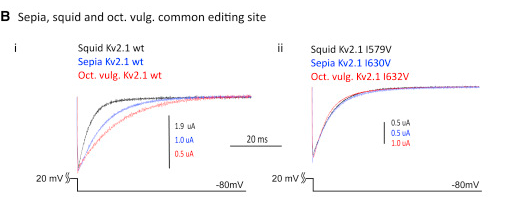
Conserved and Species-Specific Editing Sites Affect Protein Function
Unedited (WT) and singly edited versions of the voltage-dependent K+ channels of the Kv2 subfamily were studied under voltage clamp.
(B) (i) Tail currents measured at a voltage (Vm) of −80 mV, following an activating pulse of +20 mV for 25 ms. Traces are shown for the WT Kv2.1 channels from squid, sepia, and Octopus vulgaris. (ii) Tail currents for the same channels edited at the shared I-to-V site in the 6th transmembrane span, following the same voltage protocol.
That we’re seeing changes in nervous system activity is probably why the first article I cited seems to think this has something to do with making cephalopods smarter. It doesn’t, directly. It’s more that one of the mechanisms driving the cephalopod radiation after the Cambrian was adoption of modification of the transcriptome via RNA editing. It’s a pattern that isn’t easily reversed — a lot of proteins would have to be tweaked at the genome level to make them independent of ADARs — but it works, so there’s no particular pressure on them to modify the mechanism.
Liscovitch-Brauer, Noa et al. (2017) Trade-off between Transcriptome Plasticity and Genome Evolution in Cephalopods. Cell 169(2):191-202.