There’s a metaphor in here somewhere

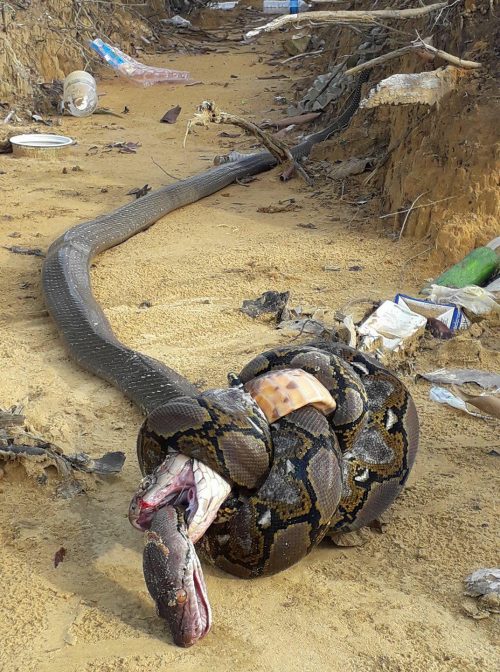
This is where fighting gets you.

Amazing find!! This was shared today on one of the snake pages, nothing about the location but it would’ve been in south east Asia somewhere.
A King Cobra (the worlds longest venomous snake) has attempted to catch, kill and eat this Reticulated Python (grows to be the longest snake in the world) and has been coiled and strangled by the python and died in the process. Both were dead when found.
The King has met its match…

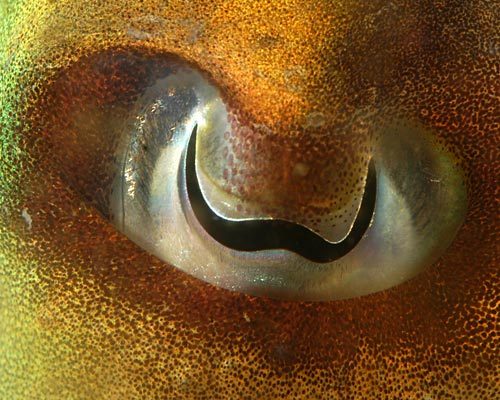
Making an eye

How timely! We just started talking about evolution in my first year intro biology course, and next week we’re getting into eye evolution, and this video comes out.

I assigned it to my students, naturally. That and some reading.

Lobsters are not people

I’ve been getting a tremendous amount of pushback from Jordan Peterson cultists on this video about his ‘lobster’ claims — it’s my most popular (or should I say, unpopular) one yet. I’m seeing a lot of “context!” and “strawman!” and “he really meant to say…” and “you need to watch these 6 hours of videos to understand” kinds of comments. No one cares that his reasoning is flawed or his evidence is weak or wrong, all that matters is that he comes to the conclusion they like — they sound exactly like creationists, or Sam Harris fans. It’s more than a little ugly, and rarely have I seen a more unpleasant collection of people using poorly understood evolutionary justifications for bad science since the last time I looked at an evolutionary psychology article.

Interestingly, though, a colleague independently came to the same conclusions and made very similar arguments. He remains nameless, unfortunately, because no one wants that troop of Peterson’s baboons flinging feces at them, but he did allow his arguments to be posted.

In case you want to use this, here’s an updated write-up. You don’t need to attribute it to me (“a handsome biologist” will do) as I don’t care to engage with you-know-who’s fanbois.

The lobster (i.e., arthropod) and human (i.e., chordate) lineages did not diverge “350 million years ago”. They already existed as separate phyla by the Cambrian (~550 million years ago). Molecular divergence estimates are on the order of 800 million years ago. This error jumps out immediately to anyone with even a basic knowledge of evolutionary history.

All bilatarian animals, including all the non-social ones, have serotonin. Some plants, fungi, and amoebae produce versions of serotonin. Serotonin has several functions — in humans, most of it is found in the gastrointestinal tract. It’s not particularly surprising that lobsters and humans both use serotonin as a neurotransmitter, nor that this would be involved in the neurobiology of any particular behavioural system. There are only so many neurotransmitters, and it is pretty likely that any innate behavioural system is going to evolve to be regulated by the same basic ones. Social hierarchies are almost surely examples of homoplasy across phyla, as is the co-option of serotonin in affecting various behavioural systems.

That anti-depressants “work on lobsters” is not very surprising given the pharmacology of serotonin reuptake inhibitors, which we might expect to work on any neurons that use serotonin as a neurotransmitter. This does not imply that the neural systems of lobsters and humans are especially similar beyond this, however. For one, lobsters don’t even have brains in the same sense as vertebrates. We share some superficial similarities in neural biochemistry (as do pretty much all animals), that’s about all.

Leaving aside the comparison of deeply divergent lineages, there is enormous variability in social structures even among our closest primate relatives. Bonobos have promiscuous sex and matriarchy as part of theirs. The point is that even where hierarchical systems have a presumed genetic basis, this is a rather malleable trait evolutionarily and the specific forms of social hierarchies can be quite different even among species with brains that are extremely similar.

Of course, innate tendencies and genetic hardwiring are at best only part of the story in a complex, cultural primate like humans. Consider language. The physical and neural structures involved in language use are encoded genetically. Which language we learn is cultural. Social behaviour is similar. Yes, there can be genetic underpinnings based on brain chemistry, but how this manifests in a given human society may be greatly dependent on cultural influences. We could also have a culturally-driven system that is enabled because there is a neurological system that can support it. Nature via nurture and nurture via nature.

Moreover, culture can easily override genetic programming in humans — we see examples of this all the time. One of the great things about human brains and human societies is that we can overcome our most base biological impulses through a combination of personal choices and societal norms. In fact, modern society would not function were it not so.

This is an unremarkable example of convergence. Anyone with any competence and basic training in evolutionary biology would come to the same conclusion.

WE! DO NOT! TALK ABOUT! THE ORANGUTAN!

My first thought was this joke, “WE! DO NOT! TALK ABOUT! THE ORANGUTAN!” Academics do have bitter fights, sometimes — they’re usually pretty polite, but I have seen a distinguished professor stand on his chair to point and scream at the speaker at a conference, who fired right back in kind. It was loads of fun.

But they’re also fighting over serious issues. This SciAm article is a good summary of ongoing battles among taxonomists. The core problems is that naming a species has a set of rules, and one of those rules is that the species has to be named in a published journal article…and online publishing has removed most of the barriers, and it’s become trivial to snag the preliminary work of a serious researcher and dump it to an online vanity “journal”, stealing credit and getting the privilege of naming it.

Vandals have zeroed in on the self-publishing loophole with great success. Yanega pointed to Trevor Hawkeswood, an Australia-based entomologist accused by some taxonomists of churning out species names that lack scientific merit. Hawkeswood publishes work in his own journal, Calodema, which he started in 2006 as editor and main contributor.

“He has his own journal with himself as the editor, publisher, and chief author,” Yanega says. “This is supposed to be science, but it’s a pile of publications that have no scientific merit.” (In response to questions about the legitimacy of his journal, Hawkeswood delivered a string of expletives directed towards his critics, and contended that Calodema has “heaps of merit.”)

Raymond Hoser also owns his own journal, the Australasian Journal of Herpetology (AJH). AJH has faced similar criticism since it was launched in 2009, despite claims by Hoser that the journal is peer-reviewed. “Although the AJH masquerades as a scientific journal, it is perhaps better described as a printed ‘blog’ because it lacks many of the hallmarks of formal scientific communication, and includes much irrelevant information,” wrote Hinrich Kaiser, a researcher at Victor Valley College in California, and colleagues in the peer-reviewed journal Herpetological Review.

They do propose a solution. The International Commission of Zoological Nomenclature (ICZN), which approves species names, is behind the times, so tear it down and replace it with a more modern institution.

…move the code under a different purview. Specifically, they suggest that the International Union of Biological Sciences (IUBS)—the biology branch of the International Council for Sciences—should “take decisive leadership” and start a taxonomic commission. The commission, they propose, would establish hardline rules for delineating new species and take charge in reviewing taxonomic papers for compliance. This process, they say, would result in the first ever standardized global species lists.

“In our view, many taxonomists would welcome such a governance structure,” the authors write. “Reducing the time spent dealing with different species concepts would probably make the task of describing and cataloguing biodiversity more efficient.”

It may be time to make such a radical change. Raymond Hoser has named over 800 taxa. I’ve seen the work involved in actually thoroughly characterizing a new species and justifying it’s difference from extant species, and I can assure you that Hoser has not done that work 800 times.

Mary’s Monday Metazoan: A horror story

This is not a pleasant story. Sometime in the 1960s, a hunting dog shimmied up a hollow space inside a tree, presumably after some smaller animal, and when the hollow narrowed, got stuck. There was no rescue. The poor dog died of thirst, alone in the dark, and then its body was mummified by tannins in the wood, and remained there for decades until the tree was cut down. And there he was.

Now its on display in a museum, which is rather grim. I hope none of you are claustrophobes, because this would give me the heebie-jeebies.

How to cheat your way into a successful (?) scientific career

Not even the Swedish democratic-socialist paradise is quite perfect. Climb up the academic hierarchy, get a cozy position, and then you too can be hoodwinked into bypassing more worthy candidates to promote glad-handing frauds like Ashutosh Tiwari.

The Linköping University (LiU) in Sweden is quite busy these days with the affair around their fake professor Ashutosh Tiwari, trying to figure out what actually happened inside their own Department of Physics, Chemistry and Biology (IFM). How could a person with some very shady claims to a doctorate, a publication list consisting mostly of papers in his own private predatory journal, titles and awards from his own fake research institutions and predatory conferences fool the system for years in this way? How could he get the prestigious Marie-Curie fellowship, which in turn delivered him a habilitation degree of Docent at LiU and grant money from Swedish public? In this regard, how could he have just last year been awarded funding from the Swedish Research Council, Vetenskapsrådet (VR) if he wasn’t even employed at LiU or anywhere else since early 2015?

The details are amazing. As a post-doc, he created his very own personal journal, appointed himself editor (how prestigious-looking!), and started churning out papers that he “peer-reviewed” himself and approved for publication…and at least some of those papers are full of faked data. Then he got himself a position at a good university and even got promoted on the basis of his voluminous publications.

He even got an external reviewer to submit a review that qualified him for a docents degree. Either it sailed over his mentors’ heads, or it was a formality that was rubber-stamped, because it is an incredible document.

What Tiwari also needed, was an external assessment, to go along with Turner’s promotion statement. And this is where it gets really funny. The assessment was prepared by the biochemist Tautgirdas Ruzgas, professor for Biomedical Technology at Malmö University, and it reads as either a cry for help or a sarcastic attempt at trolling from a bedazzled scientist who cannot believe LiU was about to embarrass itself by making an utter fake a member of their academic teaching staff. Here it begins, in English:

“Ashutosh Tiwari (born 78) defended PhD thesis “Chemical study of plant seed gums” at University of Allahabad, India, in 2005. His PhD certificate and CV do not specify the science subject of PhD thesis. However, judging from the thesis title, master and bachelor education the subject of the PhD thesis is, the most probably, materials chemistry, physical chemistry, organic chemistry, polymer chemistry or similar with the gravity in chemistry”.

Yeesh. Tiwari is clearly a crooked fraud, and the bulk of the blame has to rest on his shoulders. But his supervisors and administrators at Linköping University should not be left off the hook. They failed in their responsibility to vet their colleagues and have some standards for the quality of their work. Calcified hierarchies and self-serving panjandrums roosting in them are the bane of progress.

Damn, but I missed an angle. I should have named my blog The Journal of Pharyngula Studies, PZ Myers, ed.

Mary’s Monday Metazoan, for real: Turtles are achieving the feminist ideal!

It’s true. 99% of the hatching Pacific Green Sea Turtles are female, thanks to rising temperatures, since sex determination is temperature dependent in these species.

Will the feminization of the oceans be the change that finally persuades Republicans to do something?

PS. Feminists don’t really want to get rid of males. Well, not all of them. Not all of the time.