Michael Behe has a problem: he uses polar bears as an example of how “damaging” a gene can have an advantageous effect. As Nathan Lents explains:
Behe offers them as an example of how harming genes can help an organism and lead to adaptive evolution. Imagine an ancestor bear population that looked pretty much like brown bears. Then came some random mutations that reduced the production or deposition of pigment into the fur of the bears. This made the bears white and – voilà! – the bears acquired natural camouflage in snowy climates so as to better sneak up on their prey.
This seems like a pretty straightforward example and most people will simply take it at face value. Behe jumps from this example to his claim that this is all that unguided mutations can do. However, even in this apparently “pro-Darwinism” example, Behe exaggerates his claims and misrepresents what science has actually revealed. The evolution of polar bears was not only a matter of harmful mutations.
The first part is fine: there are all kinds of ways a genetic change can produce an adaptive phenotype, and downregulating a gene is one of them. It’s the second part that’s the problem. Behe leaps from a few examples to an assertion that this is a universal rule, which is not the case. Lents shows another example in polar bears.
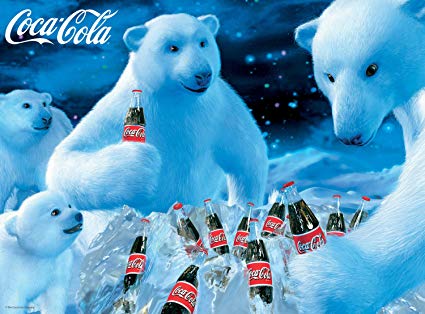
Look at those polar bears, slurping down all those sugary soft drinks. It’s a little known fact that they’re using Coca-Cola to wash down their diet of fatty, blubbery seals, and they pretty much eat nothing but meat and fat, which, if any of us tried the Polar Bear Diet, we’d be dead of coronary disease in short order. It would be interesting to know how these animals cope with a diet high in cholesterol and fats, so Lents cites a paper that looked at the molecular sequence of apolipoprotein B (APOB), a protein that is important in the transport of fats in the blood, and compared it to that of brown bears. Surprise — the form found in polar bears is better at clearing fats from the bloodstream.
Substantial work has been done on the functional significance of APOB mutations in other mammals. In humans and mice, genetic APOB variants associated with increased levels of apoB are also associated with unusually high plasma concentrations of cholesterol and LDL, which in turn contribute to hypercholesterolemia and heart disease in humans (Benn, 2009; Hegele, 2009). In contrast with brown bear, which has no fixed APOB mutations compared to the giant panda genome, we find nine fixed missense mutations in the polar bear (Figure 5A). Five of the nine cluster within the N-terminal ba1 domain of the APOB gene, although the region comprises only 22% of the protein (binomial test p value = 0.029). This domain encodes the surface region and contains the majority of functional domains for lipid transport. We suggest that the shift to a diet consisting predominantly of fatty acids in polar bears induced adaptive changes in APOB, which enabled the species to cope with high fatty acid intake by contributing to the effective clearance of cholesterol from the blood.
Clearly, the authors do not expect the polar bear APOB to be “broken.” Rather, a bare majority of the amino acid changes are in the most important region for the clearing of cholesterol from the blood. In other words, these mutations likely enhance the function of apoB, at least when it comes to surviving on a diet high in saturated fats.
So APOB in polar bears isn’t broken at all. It does carry mutations relative to brown bears, but they haven’t resulted in reduced functionality at all — quite the opposite, actually.