The knights errant sally forth against the Hitchens dragon, end up toast

Some columnist named James Knight has decided to strike back against New Atheist tyranny by rebutting their major claims, and he’s starting out by picking on Hitchens and Dawkins, who, he says, make terrible arguments.

As you’ll see, Dawkins and Hitchens have ready-made methods for twisting meanings and distorting logic in a way that the more pliant and impressionable individuals don’t seem to notice.

Prepare yourself; that’s from a guy who’s about to launch into a series of theological arguments. Self-aware, he’s not.

Knight has a whole series of excerpts from the Hitch he warbles about, and I’m just going to pick two of the more famous arguments he’s made, and I think that will be enough to see that Knight is all pompous puffery. I’m sure you’re all familiar with Hitchens’ theistic challenge.

Name me an ethical statement made or an action performed by a believer that could not have been made or performed by a non-believer.

Now read Knight’s pratfall:

To me that is the sort of pliable question that sounds intelligent but isn’t really. I think Hitchens’ question shows a lack of understanding of what religious belief entails, and also the overlooking of something that should be trivially obvious. The short answer is, the question is as meaningless as asking whether quenching thirst is better than feeding oneself. It is true in most cases that there is no ‘statement’ or ‘action’ that a theist can make or do that others cannot, but that tells us nothing meaningful about the God debate, because a proper analysis involves much more than just the statement or action – it involves analysing the beliefs, intentions, humility, motive, and other psychological factors that do not come out in a mere action. Naturally we could name good moral actions taken by both religious and non-religious people that have produced the same results, but that does not tell us anything about what is directing the action, or whether the person is living a Godly life, and it certainly has no bearing on whether there is a God.

That’s not a reply, it’s an evasion! We don’t understand what religious belief entails? Then tell us what it does. Throughout his replies, he does this constantly: you just don’t understand, he whines, implying that there is some great deep thought behind his claims, while never illuminating exactly what it is.

But most importantly, it’s an abject concession. He can’t cite anything a believer does that could not be done by a non-believer — there is no special grace granted by faith. We have good moral actions taken by both religious and non-religious people that have produced the same results, is one concession, but this is the bigger one: that does not tell us anything about what is directing the action. Exactly! You cannot discern the presence of a guiding moral force outside of any individual person, and Knight agrees…so how can he talk about a Godly life? How does he know?

It certainly does have bearing on the argument about the existence of gods. I have never debated anyone who doesn’t eventually get around to an argument from consequences: How can you be good without god? Aren’t you worried about Hell? Society will fall apart without god! Yet here is Knight, admitting that there are no moral consequences to disbelief, while also implying that goodness is a Godly life. He wants to simultaneously argue that unbelievers can be morally good, while predicating the standard for moral goodness on a god.

Here’s another famous Hitchism that Knight dislikes:

What can be asserted without evidence can also be dismissed without evidence.

Watch out, here comes the egregious relativism, which sounds like something straight out of Answers in Genesis.

To express fully what is wrong with this statement would take a whole essay in itself. But briefly, it grossly caricatures religious faith to state that it is ‘asserted without evidence’, when, in reality, evidence is in the eye of the beholder, and different people accept and interpret different evidences differently. Maybe some people are too easily seduced by interpretations that shouldn’t ever be offered as reasons for belief in God, but equally there are going to be lots of people whose psychological agitations predispose them to a scepticism that demands too much evidence, or the wrong kind of evidence.

I suspect Christopher Hitchens’ main problem is that he’d never thought through properly what evidence for God actually means, and how it might be different from the more simplistic evidence found in empirical science. Never once did I ever hear Christopher Hitchens tell us what he thinks good evidence is, what makes good evidence good, how belief in God differs from knowledge of the empirical world, and what he thinks would be satisfactory evidence for God.

I really despise the vacuous Well, we just interpret the evidence differently argument — it’s a lie. Over and over, I see it said in order to defend ignoring the bulk of the evidence.

I see a pad of post-it notes next to my keyboard on my desk. This is clearly evidence that tiny invisible elves from 3M climbed up the wall outside my window, translocated extradimensionally through the glass into my office, and left me a present. Or is it evidence that I picked up a pad at the central office and put it in a convenient spot near my phone? You don’t get to say that the existence of this pad is equal evidence for both claims; you have to ignore the consilience of phenomena that provide better explanations. There is a cabinet of these things just down the hall from me; it’s a mundane object with obvious utility; there are torn-off post-it notes with scribbled comments attached to my phonebook. At the same time, 3M elves have no evidence for their existence, have posited powers with no known mechanism, and are arbitrary, ad hoc, bizarre explanations for a perfectly ordinary object. It is not demanding too much evidence to expect some independent corroboration of the mechanisms of the phenomenon that aren’t more simply explained by my ability to walk 50 feet to a collection of supplies.

In the same way, believers like to say they do have evidence for their supernatural phantasm…and then they point to their Bible. Sure, it’s evidence. Evidence backed up by documents and history that over the course of many centuries, human beings collected stories and legends and hectoring homilies and poetry, all written by people, and assembled them into a clumsy compilation, and stamped it all with the imprimatur of religious authority. Meanwhile, you’re trying to tell me this hunk of cellulose and ink was magically transported into the world of Catholicism by the equivalent of invisible elves.

Who actually has evidence for the origin of the object?

Knight’s second paragraph is a complaint that Hitchens’ didn’t tell them what evidence for their god would be acceptable, which is a fair complaint. Or it would be, if there weren’t another problem: define God. I can’t tell you what would be evidence for or against it if you’re not going to settle down and get specific about this god’s properties and nature. Is it an anthropomorphic being with a penis that can impregnate human women? Is it a vast eternal cosmic intelligence that encompasses the entire universe and manipulates matter and energy with its will? Is it benign fluff, a happy feeling of love that permeates us all? I suspect he’d tell us some meaningless noise about a “ground state of being”, which seems to be the universal bafflegab right now to avoid answering the question.

You know, this is the big difference. If you tell a scientist that their evidence doesn’t distinguish between two alternatives, it’s the scientist who thinks hard about the problem, comes up with what would be differing consequences of an experiment if his hypothesis was valid or invalid, and does the work. We actually love this part of theorizing, thinking through the implications of a hypothesis and then testing them. And that’s a process that involves getting specific about the details of our hypothesis.

Theologians, on the other hand, hate that part. We can ask them what the difference would be between a universe that had a god and one that didn’t, between a god that answers prayers and one that doesn’t, between a Christian god and a Muslim god, between a Catholic god and a Protestant god, and they love to tell us that the differences are profound, but not anything specific. And then they yell at us that we haven’t given them the criteria that we could use to discriminate between the alternatives. And then, most aggravatingly, if we go ahead and make some predictions ourselves about what the universe ought to be like if there is or isn’t a god, they yell even more that their god isn’t like that, we used the wrong premises, we didn’t address their idiosyncratic view of a god…which is always conveniently tailored to circumvent whatever test we propose.

Do you theological wankers even realize that as the proponents of hypothesis about the nature of the universe, it is your job to generate testable hypotheses about how it all works? And that we, as agents in opposition to your nonsense, would be overjoyed to have you say something explicit about an implication of your ideas that we could test? Actually, I think you do know, because you so invariably avoid presenting any useful descriptions of what your philosophy entails. We keep waiting. And right now, your silence and the vacuity of what few feeble replies you make are just added to our stockpile of evidence that you’re all farting theology out of your asses.

James Knight ends with what he thinks is an insightful comment about the nature of god debates.

The God one accepts or denies is only likely to be as intellectually tenable as the intellectual tenability of the person holding those ideas.

I will therefore take the lack of intellectual competence of his arguments for gods as evidence of his own, personal intellectual emptiness.

Don’t worry, James. You’re in the company of a great many idiots, so you’ll just blend in.

Saying it like it is


I was reading the latest issue of Secular Nation, and one article in particular made me smile.

Why Atheist Libertarians Are Part of USA’s 1% Problem
By CJ Werleman

In the days running up to Thanksgiving, Walmart urged its workers to donate food to their most in-need colleagues. You know, instead of Walmart having to pay said workers a livable wage. When people ask me what libertarianism looks like, I tell them that. By people I mean atheists, because for some stupid reason, far too many of my nonbeliever brethren have hitched their wagon to the daftest of all socio-economic theories.

It doesn’t help when atheist luminaries publicly extol their libertarianism. Penn Jillette writes, “What makes me a libertarian is what makes me an atheist — I don’t know. If I don’t know, I don’t believe….I’ll wait for real evidence and then I’ll believe.”

Well, the only excuse Jillette has for his breathtaking ignorance is that he earns his living performing as a Las Vegas magician. Also, he graduated from a clown college.

Famed science author and editor of Skeptic magazine Michael Shermer says he became a libertarian after reading Ayn Rand’s tome Atlas Shrugged. Wait, what? That’s the book that continues to inspire college sophomores during the height of their masturbatory careers, typically young Republicans (nee fascists). But unless your name is Congressman Paul Ryan (R-WI), most people grow out of the “Screw you, I have mine” economic principles bestowed by the Russian-born philosopher by the time they’re legally old enough to order their first beer.

You can begin crying now: O WHY DOES HE DIVIDE THE ATHEIST COMMUNITY SO? BOOO HOO HOO.

Also look for good articles on electing atheists to political office by Edward Tabash, and Herb Silverman writing about his hopeful expectations for atheists in politics. Just not Tea Party politics, please.

I’m looking forward to financial statements from Answers in Genesis

And that’s just weird. Accounting and finances bore me, but there’s something funny going on with AiG and the Ark Park. I expressed some mild skepticism about Ken Ham’s claim that the debate with Bill Nye brought in enough money to fund their theme park; it just seemed odd that a project that had been languishing in the doldrums for years and was facing imminent cancellation could be so revitalized by a debate that their founder lost. Suddenly AiG has gotten awfully cagey about saying how much they’ve raised, as well.

They still aren’t saying. But I thought this brief statement was suggestive. This is AiG replying to a question about how much was raised to meet the requirements for advancing construction.

Mike Zovath, the Ark project coordinator, said the minimum amount was sold, which constituted most of the bonds, and AiG purchased some. They did not provide exact figures.

They aren’t saying! They aren’t saying anything at all! But that one phrase in there, that AiG purchased some of the bonds, is suggestive: AiG and the Ark Park are supposed to be independent ventures. It looks like maybe someone did some creative accounting and shuffled funds from one enterprise, Answers in Genesis, to another, the Ark Park, to meet minimal requirements for the project.

If that’s the case, it means that their progress towards building their silly theme park may look like a win for them, but what they’re really doing is gambling the whole of Answers in Genesis on its success.

Which is why I would really like to see their financial disclosures. I wouldn’t be surprised if their tax forms for this year reveal a massive loss for AiG.

The chupacabra beat must be a valuable and difficult one

It’s a mystery. Ben Radford has been a pimple on the butt of CFI for quite some time. Remember the time he picked a fight with a four year old, and made a series of bogus arguments about pink? How about his denial of the influence of media, in which he misrepresented a science paper? It’s been a pretty poor run for a skeptic.

That’s just a commentary on the quality of his output. More damning is that he is guilty of sexually harassing Karen Stollznow for years (a fact that led to CFI temporarily suspending him). Despite all that, he still has a job at CFI. Totally mysterious.

And now, in the latest news from while I was out of town, Ben Radford writes a bizarre, anecdote-laden mess of an article about false rape accusations. Yes, they happen…rarely. They’re important to detect. But rape — now that’s a much bigger and much more important problem. A topsy-turvy inside-out post emphasizing the injustice (willingly conceded!) of false rape accusations is what I’d expect of an MRA blog, not Skeptical Inquirer.

It’s got to be bad when your own boss disavows your article: Ron Lindsay tore it apart. And just to add an avalanche on top of that slingstone, Orac writes a leventy-kajillion word post deploring the whole mess. A guy with a sexual harassment history hanging over his head, pretending that false accusations are a serious problem? Not credible. Bad idea to have even written it (and I’m wondering who on the editorial staff let that choice sail through?)

The biggest mystery right now, though, is why Ben Radford still has a job. When he’s not stalking women and making embarrassingly bad arguments on the internet, he writes about mundane skeptical issues like chupacabras and bigfoot and UFOs. That must be an extremely important set of topics for CFI, requiring rare skills that only a scarce few individuals possess. Or maybe it’s extremely hazardous — is it a dirty job that actually requires wrasslin’ monsters? Because, otherwise, I don’t know why they’re keeping a toxic hack around.

Another reason to avoid debating creationists

You might win. I think Bill Nye thoroughly trounced Ken Ham in their notorious debate over creationism, but how do you think the fervent supporters of a kooky belief might react to seeing their leader crushed by the forces of secularism? By digging a little deeper into their pockets to help the cause. Ken Ham is claiming that the debate brought in enough attention and extra donations to permit groundbreaking of his Ark Park project.

Take that with a grain of salt, though. Creationists aren’t very good with quantitative reasoning — he could have found a nickel on the sidewalk and claimed it was close enough to tens of millions — and also, suspiciously, none of the news reports I’m seeing are citing any specific numbers. They are saying how much he needs (roughly $70 million for the first phase), but they’re not saying how much he has, which would seem to me to be the more important number. All Ham has said is it’s “enough”.

He was raising money with junk bonds. I wouldn’t past him to be trying to raise confidence with unfounded claims of fund-raising success. Show me the numbers.

What is Kent Hovind doing with his time in prison?

I know you’re all wondering that, since he’ll be getting out in August 2015. We know he’s been talking to God, who has been reassuring him that he’s wonderful and right and unjustly imprisoned, but he’s also planning lawsuits for the instant he gets out (pdf), with at least one already planned against RationalWiki.

So if you’ve been publicly accusing Kent Hovind of being a tax fraud, you might want to brace yourself — as soon as he’s released from prison, where he’s been serving a sentence for tax fraud, he’s going to be looking for opportunities to fix his reputation by dragging people who have accused him of tax fraud into court to complain about being called a tax fraud. It could be fun!

At least it’ll be a change from his usual habit of lying to children.

American Atheists…expelled!

Just today I mentioned that American Atheists were going to have a booth at CPAC, which prompted many of you to say that you’d rather atheists didn’t attempt to recruit from that mob of sanctimonious assholes. You didn’t have to worry. CPAC had their own idea.

On Tuesday, American Atheists President David Silverman received a phone call from American Conservative Union Executive Director Dan Schneider informing him that the ACU board is breaking its agreement to permit American Atheists to host an information booth at the Conservative Political Action Conference (CPAC), March 6-8.

They’ve been kicked out, even before the convention started.

The conservatives cited Silverman’s “tone” as a problem, to which Dave makes the perfect reply:

Silverman repudiated Schneider’s assertion: “This is exactly the problem. The ACU, which has invited CPAC speakers such as Rush Limbaugh, Ann Coulter, and Sarah Palin, is afraid of my tone? My ‘tone’ was clearly an excuse to back out after our press release angered religious conservatives.”

This is actually the best possible result. We aren’t at risk of tainting atheism with any more of those jerks, and American Atheists has effectively highlighted their intolerance. Win win!

They will return with stories, I’m sure

David Silverman, Amanda Knief, and Dave Muscato are going to be at an American Atheists booth at CPAC, that radical Conservative Political Action Committee meeting all the wingnuts attend.

It’s a cunning trick. If they survive, they know we’re all going to have another reason to attend the convention in Salt Lake City — so that we can take them to a bar and ply them with beverages and get them to tell us all the stories.

Why we’re atheists

Two long reads for you today: Sean Carroll gives us some post debate analysis, and along the way, explains how modern physics really doesn’t support the excuses of theologians. The video of that debate may be down (but apparently it’s going to be restored at a later date), but there’s a lot to chew on in that discussion.

Second, Kenan Malik explains all the reasons he doesn’t believe in god. The short version: “Only an atheist view allows us to be truly human.” I like it.

Ken Ham and I agree on something

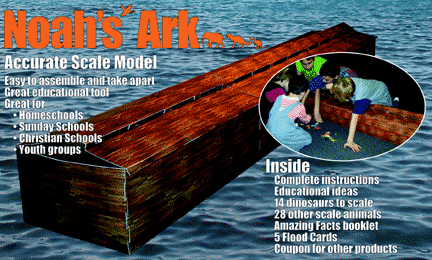
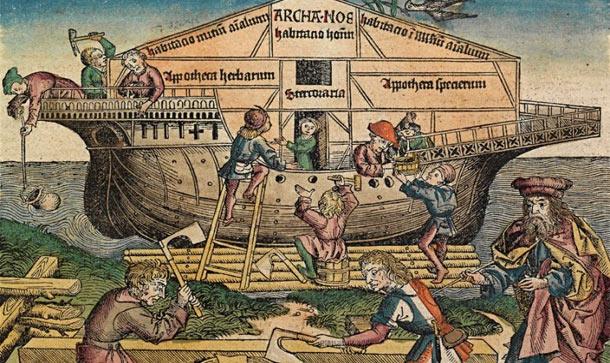
There’s this new movie coming out, Noah, by Darren Aronofsky and with a top-notch cast…and it looks like crap.

I can get into a good fantasy story, but not one that takes itself so seriously and purports to be based on a true story. And you know this one is going to be peddled to the public as a good old Bible story, so of course it must be wholesome and good and true. So I’m unimpressed and uninterested.

So is Ken Ham, but for different reasons. He hates it because it is so unbiblical. He’s got a list of deviations from the One True Bible story, and apparently his followers saw it and are leaving youtube comments threatening to boycott the movie because it’s too worldly and godless. Who knew youtube comments could get even stupider?

  1. In the film, Noah was robbed of his birthright by Tubal-Cain. The serpent’s body (i.e., Satan), which was shed in Eden, was their “birthright reminder.” It also doubled with magical power that they would wrap around their arm. So weird!
  2. Noah’s family only consists of his wife, three sons, and one daughter-in-law, contrary to the Bible.
  3. It appears as if every species was crammed in the Ark instead of just the kinds of animals, thus mocking the Ark account the same way secularists do today.
  4. “Rocks” (that seem to be fallen angels) build the Ark with Noah!
  5. Methuselah (Noah’s grandfather) is a type of witch-doctor, whose mental health is questionable.
  6. Tubal-Cain defeats the Rocks who were protecting the finished Ark.
  7. A wounded Tubal-Cain axes his way inside the Ark in only about ten minutes and then hides inside. Tubal-Cain then convinces the middle son to lure Noah to the bottom of the Ark in order to murder him (because he was not allowed a wife in the Ark). Tubal-Cain stays alive by eating hibernating lizards. The middle son of Noah has a change of heart and helps kill Tubal-Cain instead.
  8. Noah becomes almost crazy as he believes the only purpose to his family’s existence was to help build the Ark for the “innocent” animals (this is a worship of creation).
  9. Noah repeatedly tells his family that they were the last generation and were never to procreate. So when his daughter-in-law becomes pregnant, he vows to murder his own grandchild. But he finally has a change of heart.
  10. Noah does not have a relationship with God but rather with circumstances and has deadly visions of the Flood.
  11. The Ark lands on a cliff next to a beach.
  12. After the Flood Noah becomes so distant from his family that he lives in a cave, getting drunk by the beach.

There were many other bizarre, unbiblical aspects in the preview cut. Though it’s possible that some of these elements may not make the final cut (though we suspect most will), compare the above list to the trailer that has just been released! The comparison should be very revealing for you. You wouldn’t get much of a hint of most of the biblical problems in the list above based on watching on this cleverly-put-together trailer. A real con job, to be frank!

Yeah, the guy who’s trying to build a Noah’s Ark theme park with junk bonds is claiming that the movie is a con job.

The movie sounds nutty from all the weird nonsense in that plot description, but then, the raw story straight from the bible is also absurd. And why is he complaining about #12? The lizard-eating stowaway isn’t in the Bible, but that part certainly is, in Genesis 9:20-25:

20 And Noah began to be an husbandman, and he planted a vineyard:

21 And he drank of the wine, and was drunken; and he was uncovered within his tent.

22 And Ham, the father of Canaan, saw the nakedness of his father, and told his two brethren without.

23 And Shem and Japheth took a garment, and laid it upon both their shoulders, and went backward, and covered the nakedness of their father; and their faces were backward, and they saw not their father’s nakedness.

24 And Noah awoke from his wine, and knew what his younger son had done unto him.

25 And he said, Cursed be Canaan; a servant of servants shall he be unto his brethren.