
Evelyn Raymond. Little Lady of the Horse. Boston, Roberts brothers, 1894.

Evelyn Raymond. Little Lady of the Horse. Boston, Roberts brothers, 1894.
It made me giggle.

First trilliums of the year, ©voyager, all rights reserved
It’s been a beautiful, sunny day and spring has decided to kick into high gear. Today we found may-apple, trout lilies and a small grouping of trilliums that are probably red because the red ones always come up first. I carefully noted the spot and will try to get photos of them in bloom. I say ‘try’ because red trilliums are quite short-lived, often lasting only a day or two after they bloom. They’re also more fragile than the white ones. They’re thinner and more transparent, and their stems droop, so you need to photograph them from underneath. As you might imagine, at my age, getting underneath a short flower isn’t something you attempt willy-nilly. You need to make sure that a) you have room to maneuver, b) there is something to hold on to (sturdy saplings are preferred), and c) you have someone with you in case of emergency. The expression “Help. I’ve fallen and I can’t get up,” isn’t as funny as it used to be.
Stay sane out there.

Illustrated by Ella DuCane. Described by Florence DuCane. Flowers and Gardens of Japan. London, A. and C. Black, 1908.
via: The Internet Archive
In any endeavor, there are purists, assholes and assholish purists, i.e. snobs. No doubt in bonsai circles is no shortage of such people too. I have not met any because I am not involved in any society. I have zero contact with other bonsaists and I like it that way.
I am of the opinion that if it looks like a tree and is grown in a pot, then it is a bonsai. And if it makes the owner happy and the tree is healthy, then that is all that is necessary and it is nobody else’s business to give unsolicited advice on how the tree should look.
However, that does not mean that there are no recommendations that are pertinent for any beginner regarding the style, size, and composition of their first bonsai tree.
First, let’s talk about size. Bonsai come in sizes from just a few cms to several decimeters or even over 1 m tall. And here come in play two factors – the space you have available and your physical strength. Your tree must have enough space to grow in height and width as well, and it must get enough light to thrive. For outside trees, this is not usually a problem, but for indoor, the tree(s) container(s) should be of such a size that you can put them on your windowsill diagonally and the tree(s) should not be higher than about half of the window. That way you can turn them 90° twice a week to achieve even growth and they will get enough light.

© Charly, all rights reserved. Click for full size.
And in regard to strength, square-cube law comes into play, I learned this the hard way. When you double the size of a tree and its pot with equal proportions, the weight increases eight-times. A pot that is visually just slightly bigger can become deceptively heavier and it can happen that the tree is unmanageable without help. Trees at circa 50 cm are a big handful for a single person and anything bigger than that might need an extra hand. But they look soooo damned good and impressive…
As for style, there is a whole Japanese terminology that I have never bothered to not forget. Sure, I have it in a book somewhere and I read up on it thoroughly, but it is not useful to me now. That is not to say that it is not useful at all. As all terminology, its purpose is descriptive, in order to allow better communication. And since I do not communicate about my trees too often, I do not need to remember it. If I need to describe my trees sometime, I can always look it up.
The word “descriptive” is key here. A bonsai is a tree in a pot by definition, so the only criterion here is it should look like a tree. My advice to a beginner would, therefore, be to try and shape the plant you have to look like a tree – any tree – and not try and shoehorn it into some specific style.
Both size and style are to a certain extent also species-dependent. Some trees can take heavy abuse and be contorted into wild shapes, some are fragile, sensitive and brittle, some have huge leaves, some tiny etc.
Regarding composition, the usual rules of art apply. For example, the tree and its pot should fill a picture with 4:3 or 16:9 ratio, the golden ratio applies etc. Most people have an adequate aesthetic feeling to do this properly in my opinion, There are, however, several bonsai-specific rules that are important to mention.
The tree is a statue that has a front and a backside, but it is three-dimensional. So branches should point in all directions, not only to the sides. But no branches should point straight forward towards the observer, it creates an unpleasant feeling when observing the tree, it actually strains the eyes a bit.
The trees are meant to be observed with approx 1/3 of the tree at eye height- for example when they are on a windowsill, you should be appreciating them when seated. In order to achieve the best result, the tree trunk should be bent ever so slightly towards the observer. It creates an optical illusion that makes the tree appear slightly bigger than it actually is. Trees that straight create an illusion of being bent backward and that, again, is not entirely pleasant to look at.
Big wounds, if they are not part of the composition, should be hidden on the back or on the sides. Wounds, like dead branches and hollows, that are part of the composition should, of course, be visible and therefore positioned either on the front or on the sides. If wounds on the front side are not avoidable, the tree should not be displayed until they heal, but that is not a problem for me – or for a beginner.
And lastly, the pot is a part of the composition, so its shape and color should complement the tree, but it should not clash with it or compete with it. A straight-lined square pot will look strange with a tree that is all twisty-bendy, and plain brown pot will look a bit drab with a plant that has bright red leaves or flowers. When in doubt, an ordinary bowl works most of the time.
Hopefully, I have not forgotten anything important here. Next time I will maybe finally write about a concrete species and how to care for it.
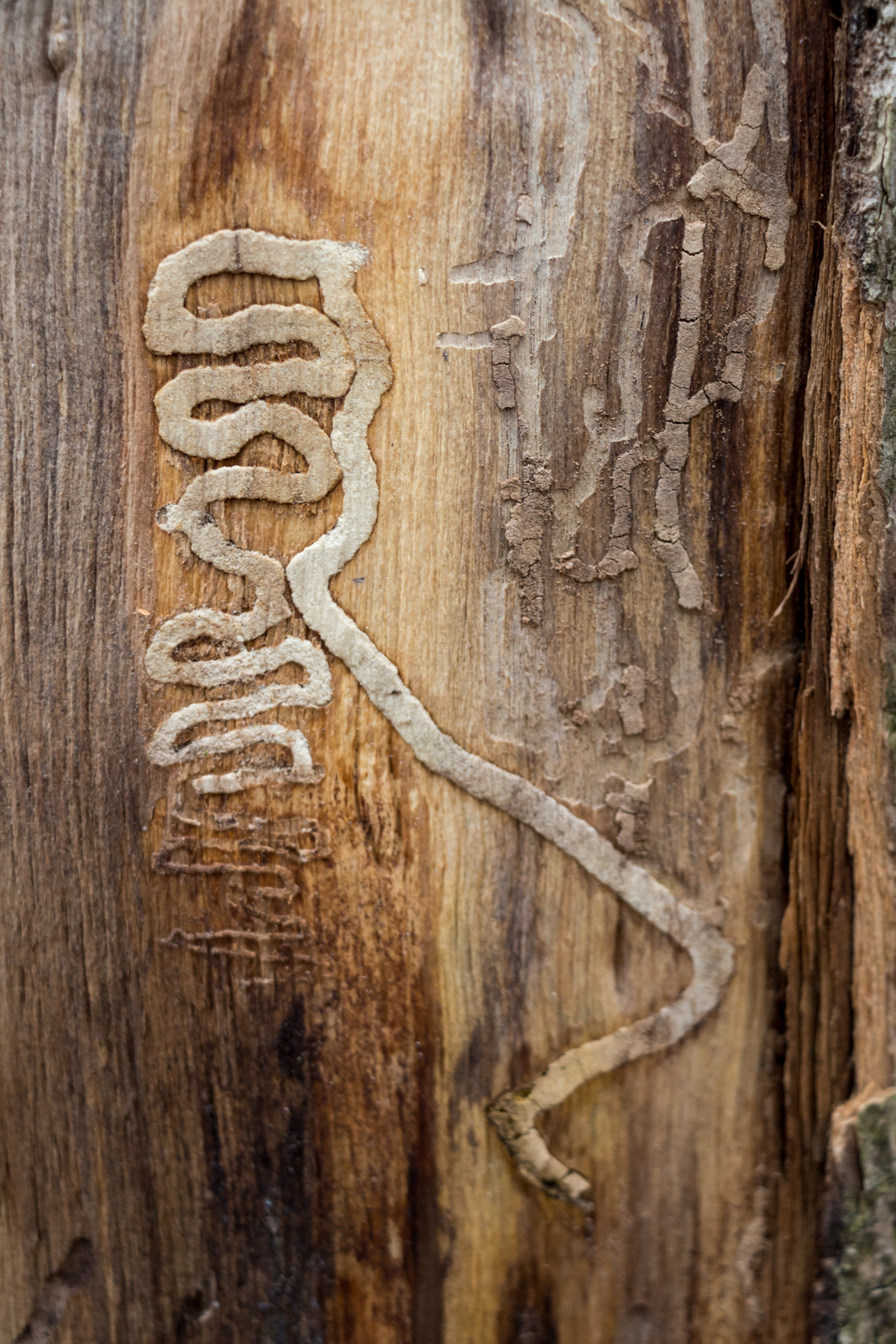
Gnomish Runes, ©voyager, all rights reserved
Recently, while talking with a couple of gnomes, I discovered that many of the markings we see on fallen trees and branches are actually a form of map-making done by the little people of the woods. I was told that they are mostly made by Gnomes and Elves, who are terribly forgetful, as a way of remembering where their caches of food are stored. I commented that they look convoluted and, after having a good laugh, I was told that they are convoluted for humans, but the little folk travel in circuitous routes because they like to see the sights and visit other little folks along the way. Well, then, I guess that explains it.
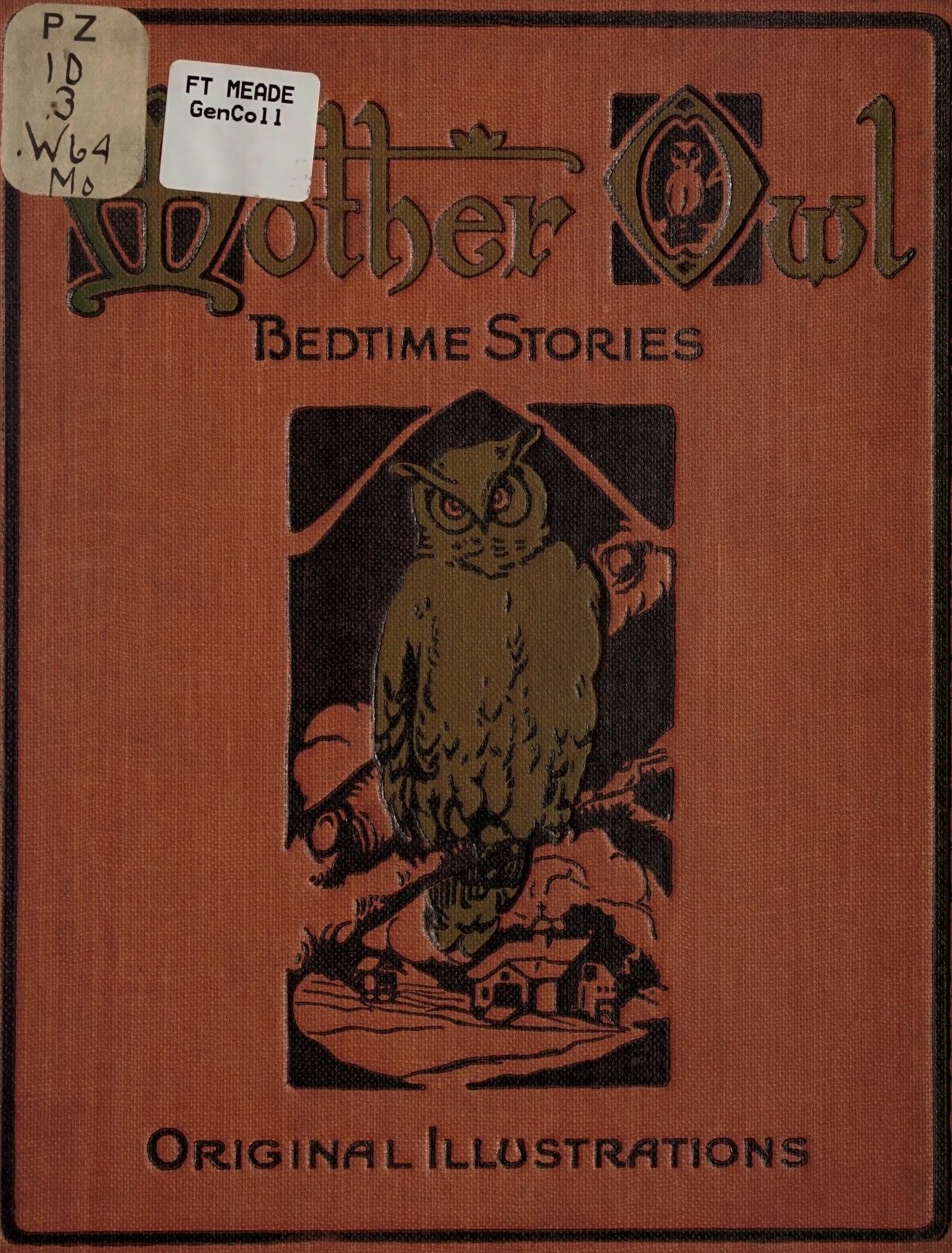
Hamilton Wike. Mother Owl; Bedtime Stories. Philadelphia, Pa., National publishing co., 1921.
Our Monday flowers from Nightjar are here,
I think this vetch is Vicia angustifolia, a wild relative of fava bean and pea plants. Even though I can only do short walks near my house now, I don’t think I will run out of wildflowers any time soon. There’s a lot of diversity around here right now. I hope you are all well, stay safe!

©Nightjar, all rights reserved

©Nightjar, all rights reserved
After lots of sanding and polishing and some more sanding and polishing and then dropping it on the concrete because it’s so smooth and getting a dent in it which I won’t sand out again, the dragon egg is done.

©Giliell, all rights reserved
What you can see in this picture is that I didn’t get it completely round. For one thing, I don’t have a lathe on which I could actually turn it. The other one is that I wasn’t willing to remove so much material. The piece of burl that I used was a triangle and if I’d gone for a really round design, I would have lost about an estimated 30% in size. Also I don’t think that most people will notice anyway.

©Giliell, all rights reserved
There’s that damn scratch on top. Clearly not my favourite side. One thing about the resin I’m currently using is that it allows for rather thick pours without many bubbles. Usually the maximum in fast curing resins is 1cm (though it depends a lot on how you’re mould is. The other eggs I posted a while ago have more than 1cm in any direction, but they also have a large surface that allows for cooling). This block had a lot more than that in any dimension and actually I’d speculated on getting bubbles, which I thought would look cool. But as you see, nothing happened. Sure, it got warm and cured super fast, which allowed some of the gold leaf to stay afloat, but no bubbles. Definitely a good resin for dragon eggs.
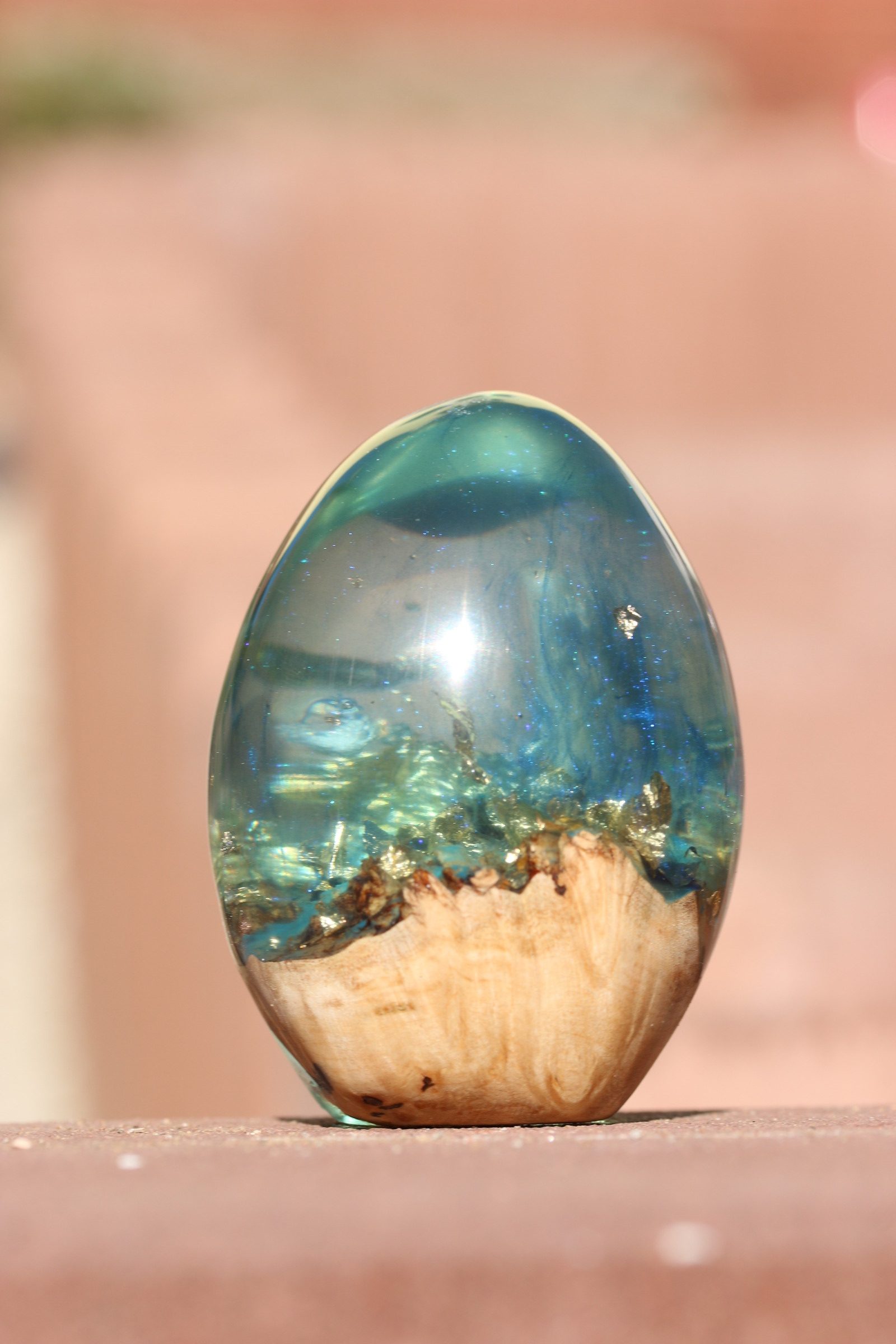
©Giliell, all rights reserved
OK, I got one bubble, probably from when I stirred the darker blue resin that you can see in this shot in. The burl got a bees wax coating to make it shine.

©Giliell, all rights reserved
Here you can see the odd shape of the burl. The remaining bottom is clear resin. While the biggest part was poured in one go, I actually did three castings: the first one to create a solid bottom, gluing the burl into the mould. BTW, I used an old milk carton for that. The second casting added one thin layer to the burl:

©Giliell, all rights reserved
Fluorescent pigment, here under UV light. In normal daylight this is just blue as you can see in the pic above. It glows white under UV light and then…

©Giliell, all rights reserved
…it glows green in the dark.
I think I’ve proved to my own satisfaction that you can make dragon eggs without a ladle and it#s definitely something I want to repeat, probably with a somewhat larger piece, though I already dread the sanding…
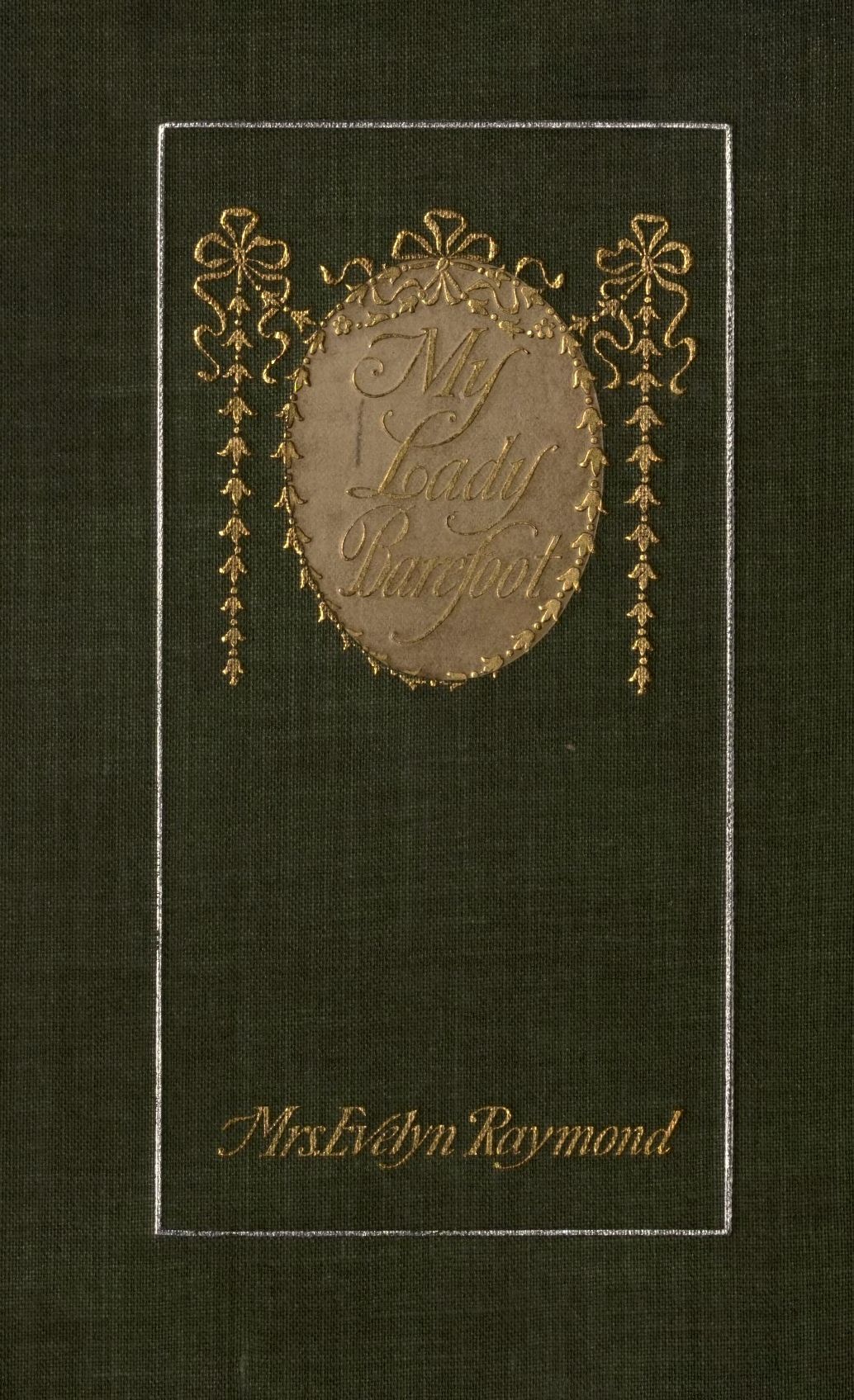
Evelyn Raymond. My Lady Barefoot; A Story for Girls. Philadelphia, The Penn pub. co., 1899
Our current prime minister has been in the past often criticized as akin to Donald Trump re: conflict of interests and use of state resources to enrich himself and his family. And rightly so in my opinion, I cannot stand the man personally and politically.
However, when SARS-CoV-2 hit the Czech Republic, he, unlike Donald Trump, has done the right thing. In response to the pandemic, he has left decisions on the policy to actual epidemiology experts from the very beginning. Thus when CZ had mere 116 cases, 12 days after the first three on March 1., he declared a state of national emergency and just two days later virtually everything was put on hold except the absolute bare minimum (grocery stores, delivery services, apothecaries and some more). It was criticized by the opposition (our equivalent of US conservatives) as needless panic-making and fearmongering and the measures as needlessly draconian and a PR for himself and his party. Especially the order of mandatory face masks (home-made and improvised masks are allowed) was met with scorn.
On March 18. I have taken the data of confirmed cases so far, plotted them on a graph and calculated the best-fit exponential curve. It was at a daily increase of 39%, an effective doubling every two-three days, approsimately the same trajectory it has had all over Europe. This growth meant we should have over 140.000 cases today, but we, luckily, do not. We have less than 5.000. Howso?
Look at this graph:

The red curve is the actual cumulative cases as reported every day at midnight. The blue curve is the exponential best fit that I have calculated on March 18. And then there is the orange curve, which is also an exponential best-fit but only for the last week from March 28. to April 3. You can see that the two best-fit lines intersect on March 21.-22.
That is, in my opinion, the day when the enacted measures started to have a visible effect – eight to ten days after they were enacted. I do not know whether I am doing the right thing here mathematically – I have dabbled in statistics at work, but not in epidemiology – but it does seem right to me.
The new rate of growth is still exponential, but instead of 38% daily it is 8% daily. And although the difference between multiplying the cases daily by 1,08 instead of 1,39 does not intuitively look like much, it means the doubling of the cases is prolonged from mere 2-3 days to 10-11 days. Still not enough for an illness that can take up to 6 weeks to heal and kills 1% of infected people, but a very noticeable drop.
And AFAIK that drop is not due to insufficient testing. Testing has grown proportionally, although still not as much as it perhaps should have. But the ratio between positive/negative tests is getting lower, and that indicates that the drop in overall cases is real.
Now there is certainly much more to it than this oversimplified graph. For example, Germany took longer to enact strict active measures, relatively speaking. That is, CZ government enacted nation-wide strict measures when we had just several hundred people ill, whilst the German government did leave many decisions to individual states and instead of strict orders tried to control the situation with recommendations only at first. This has led to a bit of inconsistent reaction and different measures being enacted (and ignored by people) in different states. It worked, but not as much as was desired. Strong nation-wide measures started being implemented only when there were several thousand people ill already- at about the same time as in CZ. And at about the same weekend the curve began to break in Germany as well.
It was similar in Italy too, there the curve began to break at around March 15. (only estimated, I did not calculate the fit curves for Italy, I am doing this in OpenOffice and that is not the best program for this kind of work), about two weeks after the most-hit municipalities were put on lock-down.
Another quick analysis that can be done just by looking at the numbers – In Italy, it took 22 days for the cases to grow from about 100 to 20.000. In Germany, it took 24 days, in Spain 18 days, in UK and France 25 days and in the USA 20 days. The Czech Republic is now 24 days from its 100th case and we are nowhere near 20.000.
So even these amateurish and quick&dirty analyses show that quick reaction, regardless of what the nay-sayers say, is essential in avoiding the worst in case of an epidemic. The enacted measures work as intended. I only hope that our government and our people do not relax too soon.
Stay safe, stay at home whenever possible, and fingers crossed for you and your loved ones.
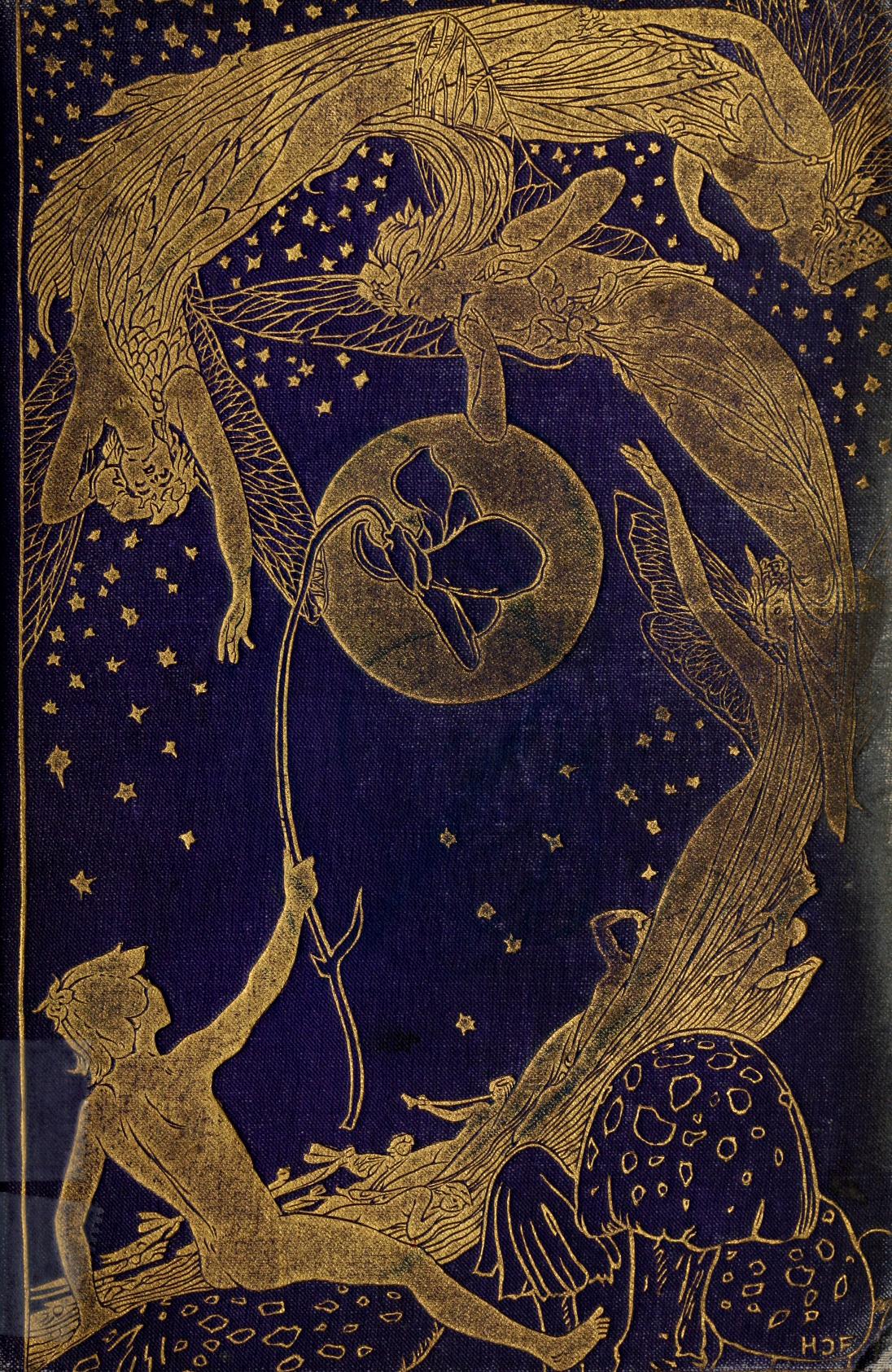
Andrew Lang. The Violet Fairy Book. Illustrated by H.H. Ford. London, New York, Longmans, Green, 1906.
Andrew Lang published a series of 12 Fairy Books, all identified by colour. The books were illustrated by H. J. Ford, and they’re filled with detailed black and white line drawings, plus a series of coloured plates. These books are amongst my favourite in the Fairy Tale genre and I’ve been saving them for a special occasion. I think the pandemic qualifies, and so for the next 12 weeks, Children’s Book Saturdays will feature the Andrew Lang series. We begin with the Violet Fairy Book, and it was difficult to choose which illustrations to share because there are so many that I like. I”ve attached all of the colour plates, plus many line drawings that include dogs, cats, snakes, lions, bears, boars, horses, dragons, plus a mermaid, because I know at least one mermaid fan out there. If you’d like to see the entire book, you can check it out at the link to The Internet Archive here and below. During the pandemic, The Internet Archive is allowing all their on-loan books out with no waiting lists, so now is the time to check them out. It’s easy to register (find a book you want, click the “borrow” button and the site will ask for your email – that’s all) and they have millions of things you can check out all for free. Any book that isn’t offered for loan can be read at the site. The site also carries music, magazines and artwork. There’s a lot of good stuff for adults and children. Enjoy!
Because I have so many links about art saved (>200), I’m trying to group them by themes. Today’s theme is abandoned spaces, and although the title seems a bit dark, it’s not a commentary on current events in the world.
What remains after we are gone? After the life industrial has faded and transformed into its modern, shiny, robotic cousin? (Well, that’s how the moving pictures show it…)
The end of everything? The slow decay of silent things, with no one to witness their passing? The carcasses of once-great buildings, now uncertain in their unstable uselessness and sharp aura of danger? There is potential in these abandoned and lost spaces – but a melancholy potential, the complete opposite of new beginnings, a potential that is meaningless and only full of the possibilities of what could have been, what never was, what never will be. A lot of never will be.

From THE END OF EVERYTHING, by Jan Erik Waider.
Still, what it can be is a whole lot of art.