I Cannot Tell a Lie – I Chopped Down The Cherry Tree

But I really did not enjoy the task.

Cherry_Tree_2012

©Charly, all rights reserved.

My father has planted this tree for me when I was about 10 years old. I liked cherries back then. Now I cannot eat cherries any more, because for some reason they cause me hypoglycemia which is really unpleasant. But I enjoyed the blossoms in the spring nevertheless, I always looked forward to them and I did not mind the birds eating all the fruit at all.

I did not take any pictures with my new camera last year, so I can only share pictures that I made with the old one in 2012.
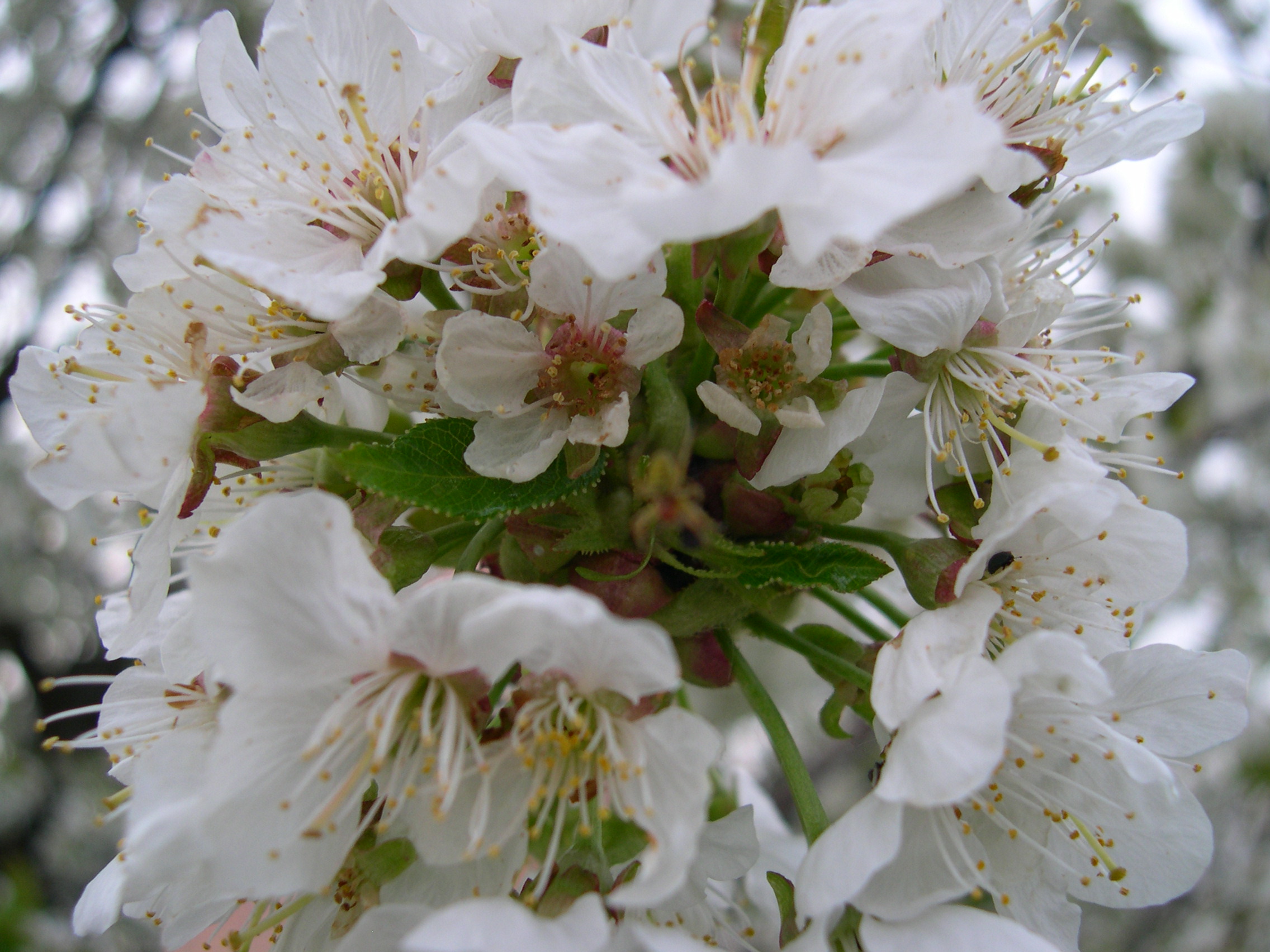
Cherry Blossoms

©Charly, all rights reserved, click for full size.

Last fall mushrooms sprouted on the trunk and that is a really bad sign. There are two kinds of wood in a tree – sapwood, which delivers nutrients from roots to the crown, and heartwood, which is usually more dry and dark and is essentially blocked off and completely dead. Accordingly, there are two types of fungi that can attack wood on a living tree – ones that attack the sapwood, and ones that attack the heartwood. Have a guess at which of these two is more dangerous.

If you like me during my studies guessed those that attack sapwood, you guessed wrong. Fungi that attack sapwood will cause the tree to wither and eventually die, but the tree remains standing relatively intact afterwards for long enough to be felled safely. However fungi that attack heartwood are more insidious – the tree can grow for many more years at absolutely normal rate without anything really visible on the outside. And then, when enough heartwood has rotten away, a branch will suddenly snap, or a the trunk will spit or break. And this of course is dangerous, because to an untrained eye the apparently healthy tree is essentially a ticking bomb that can kill someone at any time – which is something that has happened in CZ a few years ago and it has made the headlines. Heartwood is dead and dry, but it still has a function – it is the scaffolding that holds the tree upright and together.

This tree has developed a split in the trunk at about 10 years  age. We were doing our best to keep fungal infections away, but the split never closed off and we were evidently unsuccessful in the end. I was not able to take a good picture of the mushroom, because it lasted only a few days, none of which was on a weekend. I was unable to determine the exact species too. But I was confident enough in assessing that it is a heartwood eating fungus. So I decided to fell the tree before it becomes dangerous to do so. The tree was huge, so all winter I have cut branches when I could. They were all still healthy and I started to have doubts. But this friday I have finally cut the trunk right above the ground and my assessment of the situation was confirmed. The fungus has already invaded the inner 10 years growth and was spreading. The tree would probably live a few more years, maybe even a decade, but I do not think it was worth the risk, since I do not know how fast the fungus spreads.
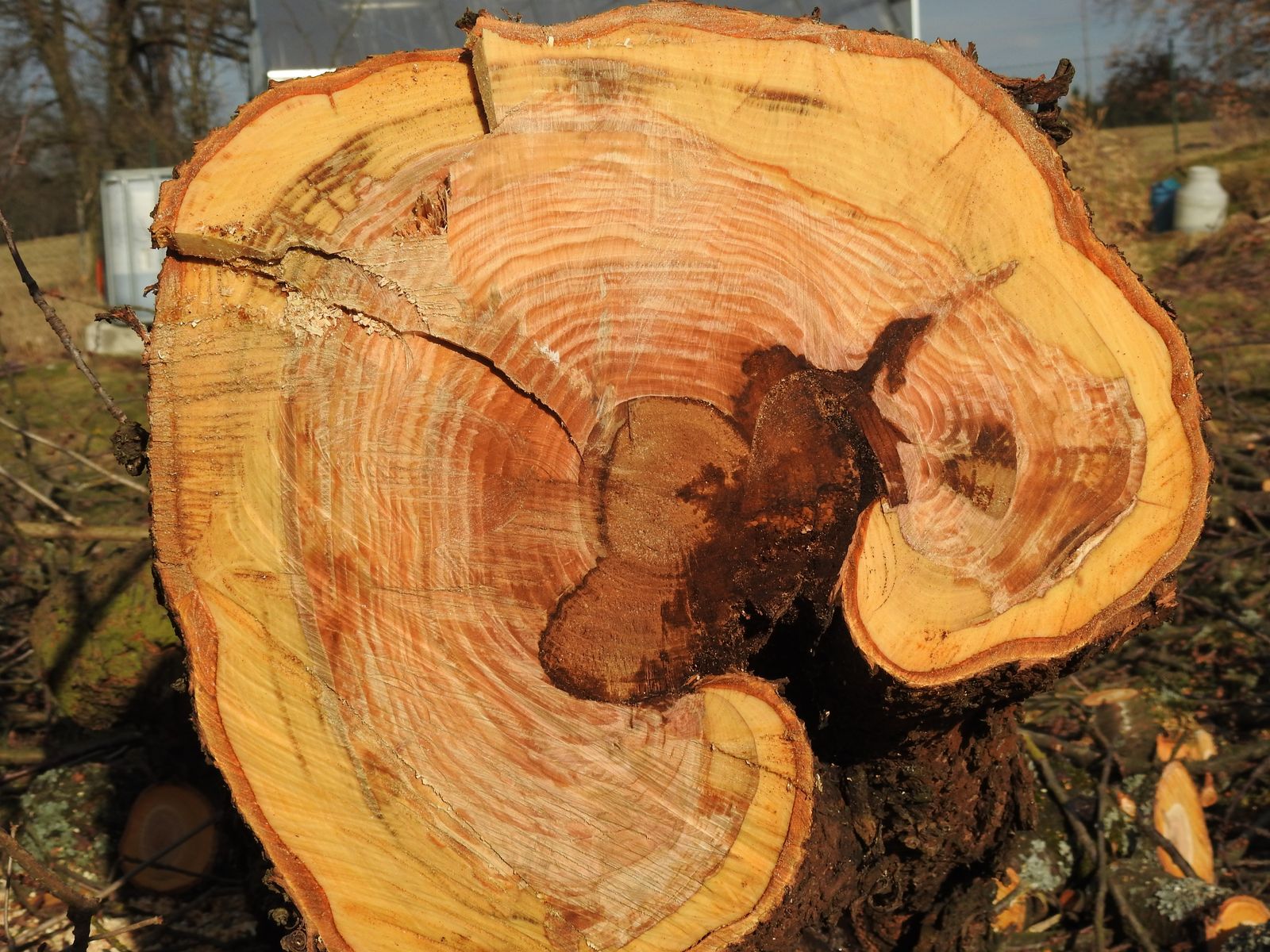
Cherry trunk - cut

©Charly, all rights reserved, click for full size.

I have felt real connection with that tree. I was hoping for it to live longer and age with me. If I ever feel something that could be described as a spiritual experience, it is in the presence of a tree in the spring.

I will plant a new cherry tree on the spot as soon as possible.

F Is For Frozen.

Frozen.

It was Mid-January 2018 and the sea was starting to freeze for real, first in the more enclosed bays like Töölönlahti, which is in the middle of the Helsinki Peninsula. I was on my way to sauna, and wanted to take a few photos. The sea had been a bit higher when it froze, so some rocks had broken through the ice when the sea level sunk.

The bonus picture is edited from the same original, getting both the rocks and the other shore in the same picture just didn’t work. The cliffs are Linnunlaulu cliffs and the white building with the tower is Villa Kivi, a home for writers (more specifically members of the Union of Finnish Writers). In the distance one can see the dome of the (Lutheran) Helsinki Cathedral.

Click for full size!

© Ice Swimmer, all rights reserved.

E Is For Exile.

Exile.

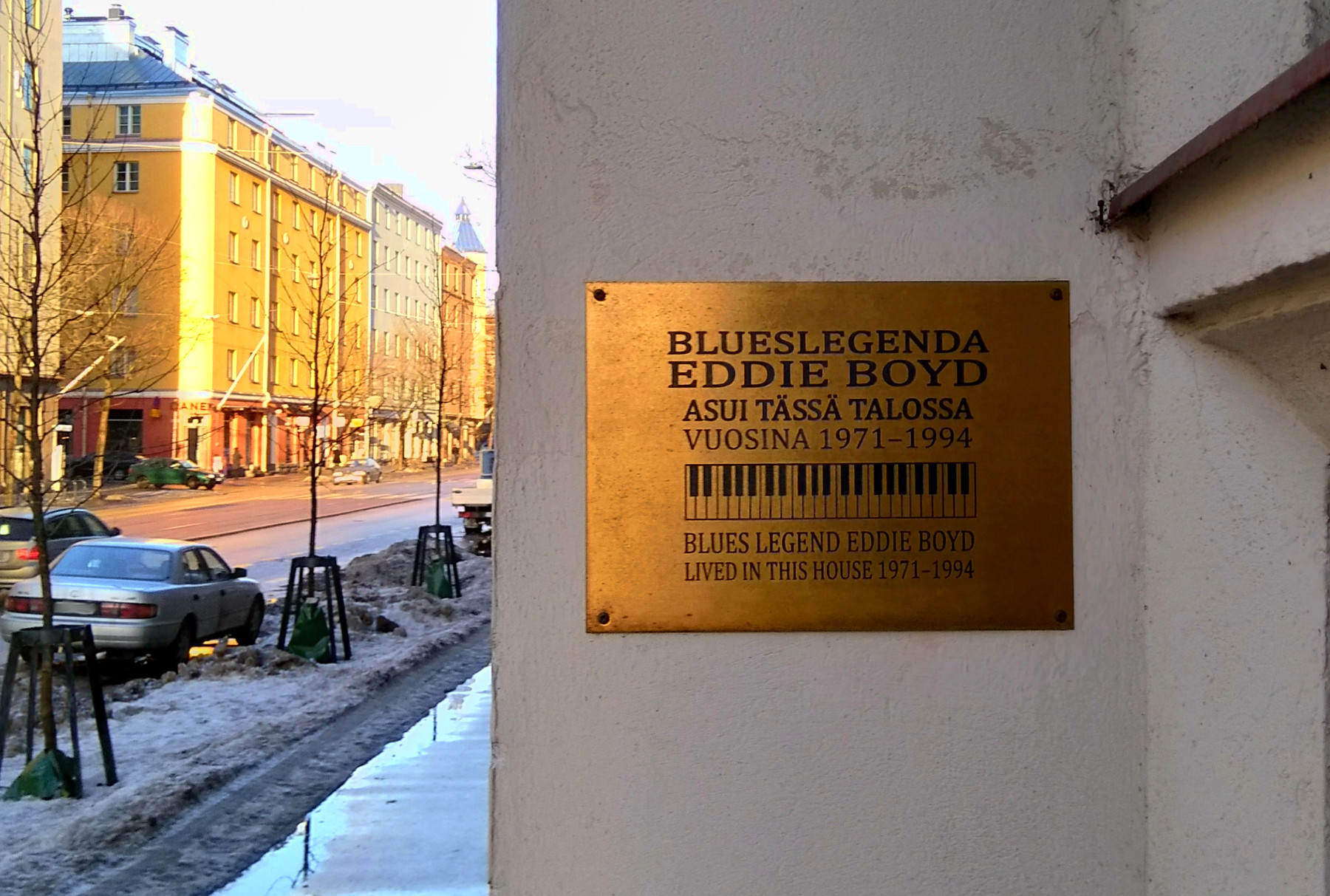
Eddie Boyd (born 1914) was an African-American blues artist (singer, songwriter and pianist) who moved to Europe to get away from the racial discrimination in the U.S. in the late 1960s, ending up in Helsinki, Finland in 1970. He married his Finnish girlfriend in 1977 and died in Helsinki 1994 at the age of 79.

Boyd had some hits in the U.S. in the early 1950s, the biggest one being Five Long Years. In Europe he recorded and toured with Fleetwood Mac ja John Mayall Bluesbreakers and various Dutch and Finnish musicians. He performed blues until 1984, concentrating on gospel music in the last decade of his life. Click for full size!

© Ice Swimmer, all rights reserved.

“Clock Activated. Red Castle. Green Castle.”

Oh, all the conspiracy theorists are having themselves a little meme war, which they think will set the stage for a video which will take down all those nefarious liberal elites, who are busy with demonic activity, and doing horrible things to children, all this stuff they just know is true, but there’s never even the slightest scintilla of evidence. They are now positive that “the storm” is going to break.

Conspiracy theorists tapped in to “The Storm” have declared today to be the day in which they “post a continuous barrage of memes” in order to prepare the nation for the release of a video that they believe will serve as the “nail in many coffins” for liberal politicians who are involved in a massive alleged pedophile cult.

The Storm is a conspiracy theory that has captured the imaginations of “Pizzagate” truthers who believe that the highest ranking liberal political and business leaders are engaged in a secret satanic pedophile ring dedicated to trafficking and abusing children. At the helm of The Storm sits an anonymous poster on 4chan and then 8chan message boards known only as “Q.” Many followers of The Storm believe “Q” to be a high-ranking government official whom President Trump has ordered to leave cryptic clues—dubbed “crumbs” by conspiracy theorists—about supposed behind-the-scene efforts to unravel the alleged pedophile ring. An archive site of QAnon posts has documented nearly 1,000 cryptic messages since late October of last year.

Since the theory began in October, hordes of people have been engaged with it. YouTube videos about “QAnon” regularly rack up hundreds of thousands of views. The most dedicated participants in the conspiracy theory, including Infowars Washington bureau chief Jerome Corsi, spend hours per day in Discord chat rooms attempting to decode posts written by “Q.”

I don’t know who is behind the whole Q business, and I can’t say I much care, but they must be laughing their ass off on how easy it is to manipulate these people. You can read and see more of the full conspiratorial stew at RWW.

Stephen Shames.

Stephen Shames photograph archive.

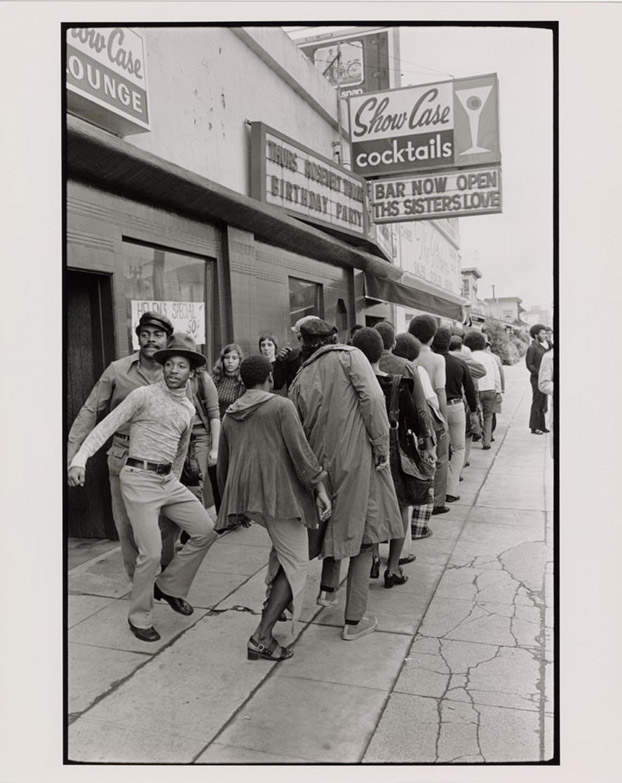
The Briscoe Center has acquired the photographic archive of Stephen Shames. Perhaps best known for his role as the Black Panther Party’s photographer between 1967 and 1973, Shames has also documented many political and social issues over a 50-year career.

“Shames has used his camera to document the intimate histories of a wide range of subjects, including black political activism in the Bay Area, everyday life in New York City, and child poverty across America,” said Don Carleton, executive director of the Briscoe Center. “His archive will not only be preserved here at the center, it will be actively utilized in our mission to foster exploration of the American past, which is why a selection of his work prints is currently on display in the center’s exhibit hall.”

[…]

“As a young man I was privileged to have inside access to the Black Panther Party. Later, as a photojournalist and artist I traveled the world and embedded myself in the lives of many living on the edges of society,” said Stephen Shames. “I hope students and scholars can use these archives to enter worlds they cannot see in person, but can experience through historic photography. I learned a great deal from the people I photographed. I hope others can expand their knowledge and understanding of our world through my work.”

An exhibit of Stephen Shames’s photography is now on display at the Briscoe Center, University of Texas at Austin. You can read more here.

Finding The Perfect, Paint Worthy Egg.

Sandro Botticelli, “The Birth of Venus,” tempera on canvas (c. 1486, via Wikimedia).

Sandro Botticelli, “The Birth of Venus,” tempera on canvas (c. 1486, via Wikimedia).

Egg tempera! A time honoured technique. Many artists have at least played with egg tempera, even if they later chose a more modern and convenient medium. Karen Chernick at Hyperallergic has an article on how to source the very best egg you can for making your paints.

…But there’s also a centuries-old artistic tradition of painting using the eggs themselves. Egg tempera was a ubiquitous technique during the early Italian Renaissance, when it was considered the standard for portable easel paintings. Botticelli, Raphael, and Andrew Wyeth all painted with tempera. Today, the quick-drying medium, which employs a 50/50 blend of egg yolk and color pigment, is mostly in use by a brave few contemporary practitioners (who must not mind the smell of aging eggs in the studio).

These seasoned artists know what to look for in the perfect paint-worthy egg. Some of them, such as Mary Frances Dondelinger, have been known to use hundreds of eggs a month. Others are regulars at particular farmers’ markets, or swear by a specific brand of store-bought eggs. Just in case you’re not able to raise your own hen (which most agree is the very best option), here’s your guide to sourcing the ideal egg, according to six contemporary egg tempera painters.

The full story is at Hyperallergic.