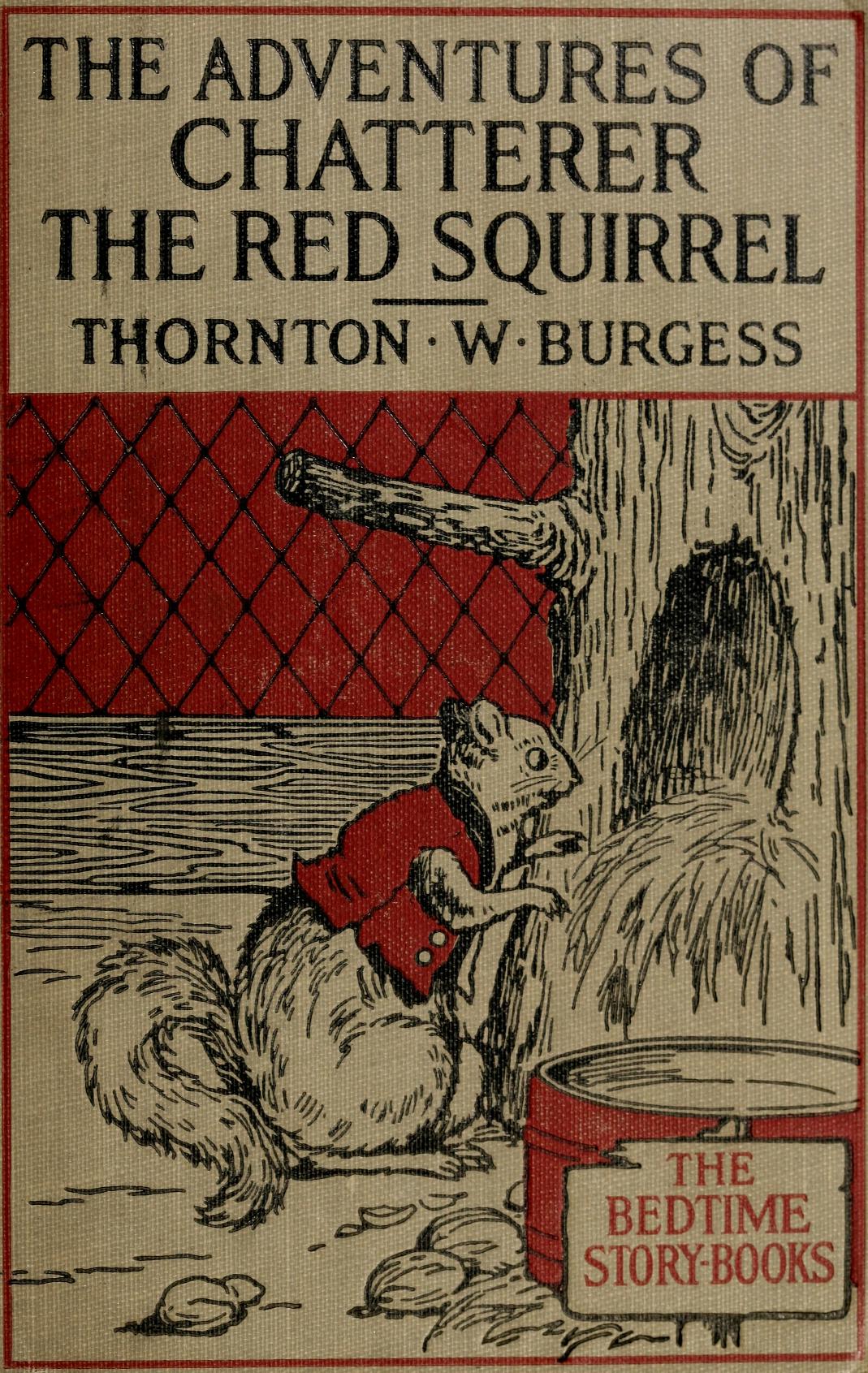
Thornton W. Burgess. The Adventures of Chatterer the Red Squirrel. Illustrations by Harrison Cady. Boston, Little, Brown, 1920.
via: The Internet Archive

Thornton W. Burgess. The Adventures of Chatterer the Red Squirrel. Illustrations by Harrison Cady. Boston, Little, Brown, 1920.
via: The Internet Archive
On the thread about the recent right wing terrorist attack in Germany, we had a slight disagreement about the role of misogyny in that particular attack. I decided to give that an extra post for several reasons. For one I didn’t want to get into that discussion on that thread, when we are all in basic agreement about the fascist nature of that attack. For another I don’t want to play “oppression olympics”, making this attack on young migrants some sort of white women’s woe. And finally I think it’s important to talk about these matters in a more general way, to raise awareness about the links between misogyny, white supremacy and how the former is a “gateway drug” for the latter.
The terrorist attack in Hanau shows many similarities to other recent right wing terrorist attacks: El Paso, Christchurch, Halle. The terrorist talked openly about their murder fantasies, they talked about exterminating groups of people, they tried to broadcast their attacks for maximum effect. And they were also misogynists. Sorry that the link is in German, I hope Google translate is passable. This is no coincidence. White supremacists are by nature concerned with two things:
These men usually have very “traditional views” on relationships and family life. They’re stuck somewhere in the 1960s (interestingly in the 1960s of West Germany) while the women are in the 2020s. It’s hard not to feel a pang of sympathy when they talk about missing things many of us take as ordinary things: a partner, a family, an intact personal support system, until you remember that they also think they are owed these things by women and that it’s feminism and the immigrants’ fault that they’re not getting it. Which links up to #2
Jürgen Elsässer. Chefredakteur eines der am meist abonnierten Magazine für Rassisten, Querfront und Weltverschwörer. https://t.co/WdomJLvQCt pic.twitter.com/FC3v0iMNL8
— Populisten-Schreck 🇪🇺 🇩🇪 (@gutmenschen_inc) February 20, 2020
Men of colour are painted as both sexual predators from whom the white women must be protected, as well as a threat to white men’s access to white women. Especially young muslim men are their object of hatred: They are presumed to have more patriarchal views and societies, they are able to live the life those white men think they are owed, and on top of that they have to pay lip service denouncing those men in order to maintain the mainstream narrative of our societies being superior because “we” “respect” women. It’s quite telling how those who pre 2015 told women they need to dress modestly are now vigorously defending miniskirts.
Young male refugees present an additional danger. Not only do they tilt the gender balance some more, they also embody a lot of the stereotypes those men base their value on. Those young men have often seen war and violence. They had to prove themselves and make it against terrible odds. They are fighters and survivors. In short, they em,body everything those dudes think that men should be and they are not. As we know those men don’t even need to be anywhere close. At the height of the racist Pegida demonstrations there were five protestors for every Muslim in Saxony.
The “men of colour as a threat” is of course also an angle that gets white women attracted to far right groups, though so far they have constantly lower support among women than among men.
I hope these two points demonstrate why white supremacists are also always misogynists. They want a clear hierarchical structure with them at the top and they cannot get this without doing what men everywhere have done for millenia: controlling the fertility of women and others capable of having children. You will not find a white supremacist who is not a misogynist, or one who isn’t against abortion on demand (they aren’t against all abortions, though, let’s remember the recent eugenics debates).
Lastly I would like to come back to something I mentioned at the top: misogyny as a gateway drug. Now I have to formulate this carefully because I don’t want this to come off wrong: In many parts of society it is more acceptable to say misogynist shit than it is to say racist or antisemitic shit. I’m not talking about attitudes, just about the “saying it out loud” part. While many centrist people will quickly shush their own for talking favourably about Hitler, it hardly ever happens when some dude complains about women not fucking them. Or women having a career. German has it’s own horrible word for mothers who do not dedicate 24/7 to their kids: We are “Rabenmütter” raven mothers (which proves they know just as much about ravens as about anybody else). Attitudes like “women are naturally better with children” and “a child needs his mother” are widespread and can act as a gateway into the right wing mindset. A guy who feels lonely can easily get sucked into the world of right wing conspiracies, finally finding the culpable for his own personal woes.
Some time ago I watched a youtube video on making shaker charms with open bezels. Keyword is “a while ago”. It looked simple enough, so I decided to give it a try: you put your bezel onto some tape, add a layer of UV resin and harden that. Then you add your glitter, mix water with some glue, put it into the bezel, freeze it solid, add UV resin to the now solid top, harden, done.
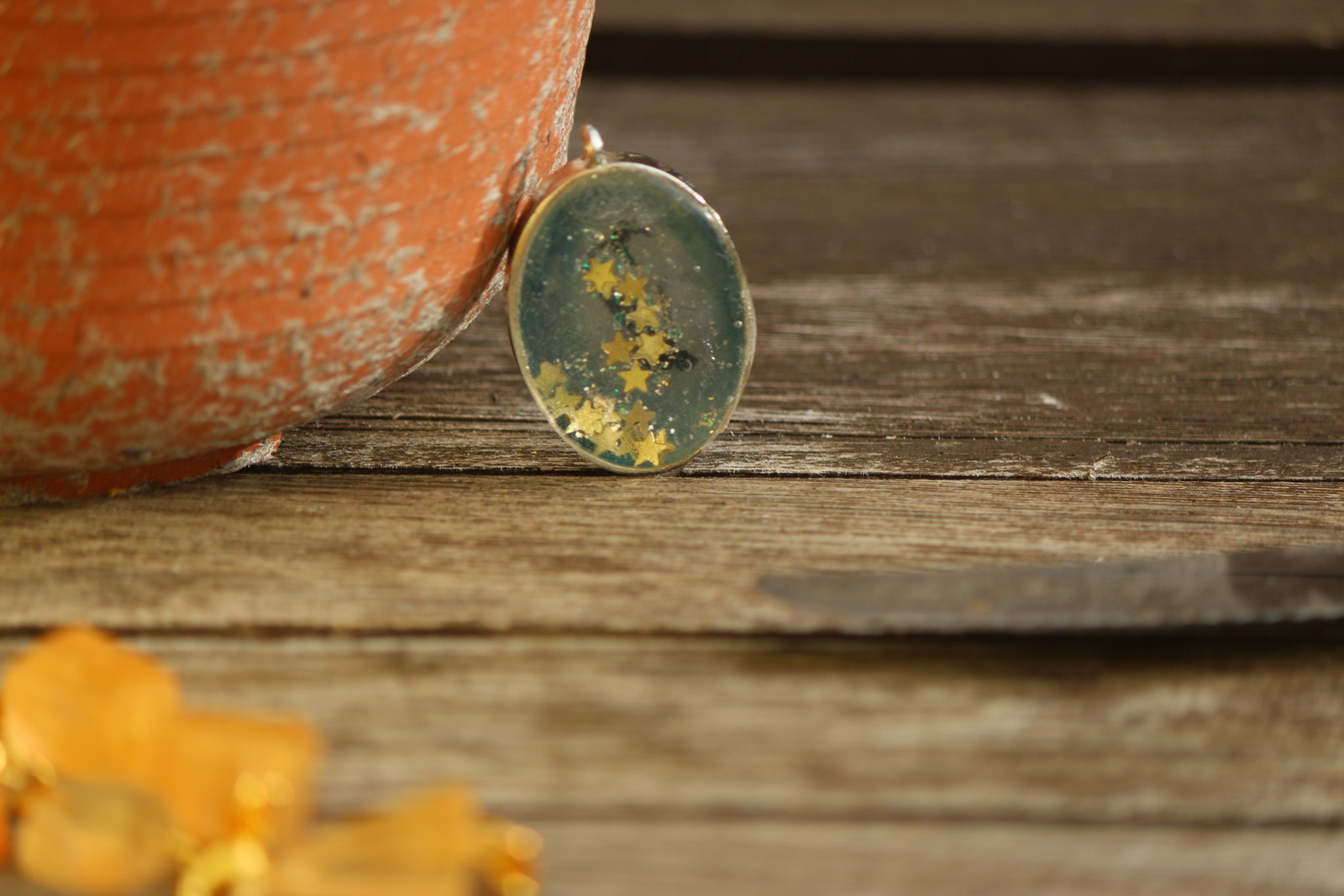
So far, so good. Only that of course it didn’t work out like this, leading to these rather pitiful examples:

©Giliell, all rights reserved
©Giliell, all rights reserved

©Giliell, all rights reserved
The unicorn one is the best of the batch, but still nowhere near acceptable. I figured out a couple of problems myself:
One: I’d overfilled the the bezels. I need to leave space inside for the resin to go. Two, working on three of them at the same time isn’t a good idea. Inevitably condensation happens on the other ones as you’re dealing with the first one. Three, my UV resin is too thick. It’s quite thick anyway and the cold from the frozen bezels makes it impossible to spread quickly and evenly.
While I figured out those three things. One thing remained a mystery: the surface of the ice. If this surface isn’t smooth, you’ll never get a clear resin layer. While I didn’t think the video in question was one of those fake craft videos, I kept wondering about it. Rewatching the video I saw that the person used distilled water, which I think will make quite a difference.
Next try: distilled water.
I’ll also add in another step: Once the water is frozen really, really solid, I’ll put another drop of water on top. It should hopefully create a super smooth surface and also create a barrier between the resin and any glitter that might have floated to the top. Wish me luck.

Various Authors. The Birthday Party and Other Stories, A Book for Girls. Boston, T. B. Noonan, 1885.
February is my busy month for birthdays. Today’s birthday belongs to my friend Janet with whom I travelled to Mexico. Today is also the day she closes the sale of her house here. Double congratulations, Janet, dinner’s on me tonight, kiddo. Oh wait, you’re older than me again. Ahem, dinner’s on me tonight, Grandma.
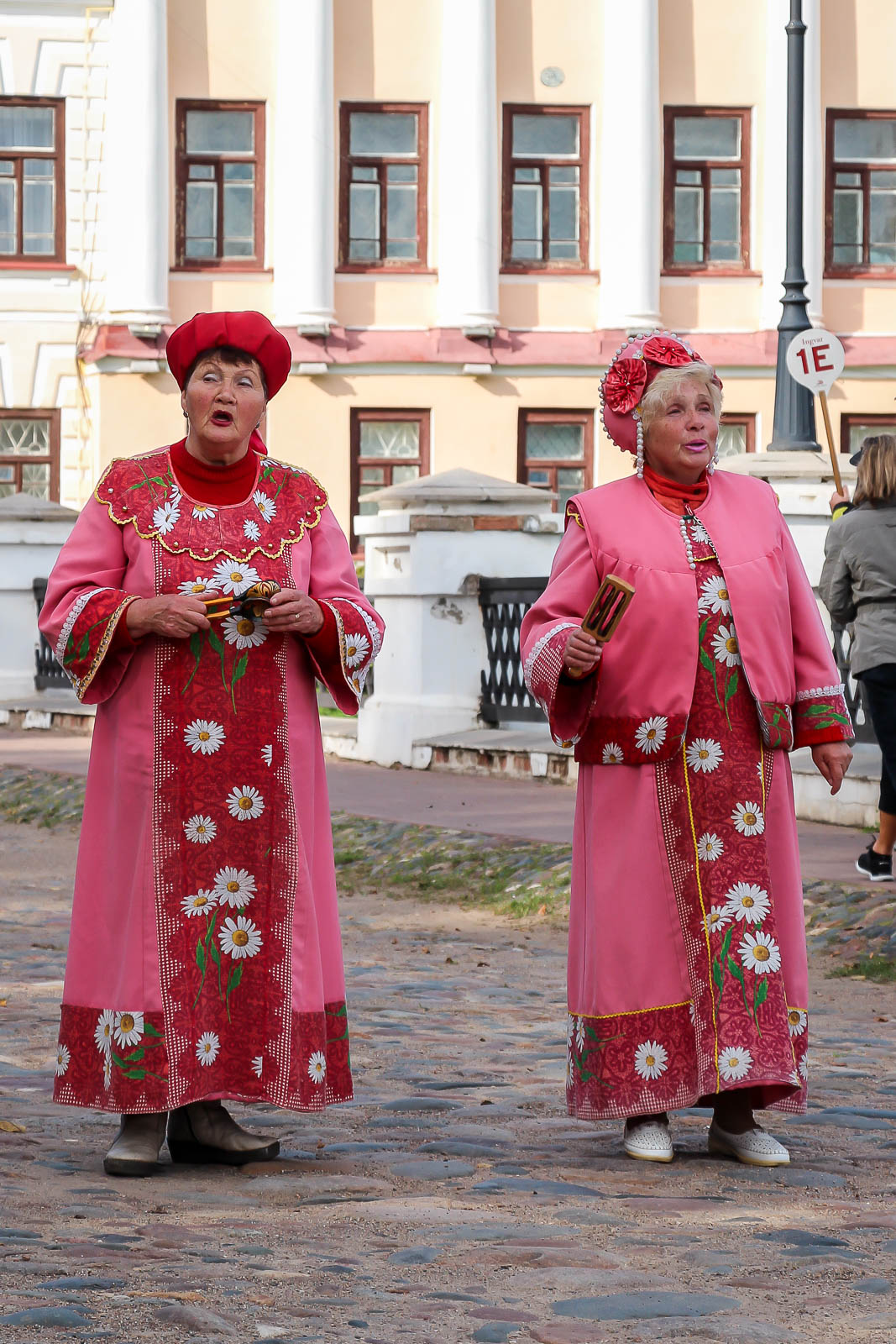
Welcome to Uglich. ©voyager, all rights reserved
When we disembarked in Uglich we crossed a cobblestone bridge into the city where we were greeted by a duo singing a traditional Russian folk song. Their voices were clear and strong, and it was a charming welcome to the first of Russia that we saw outside of the big city of Moscow. On the other side of the bridge, we met our local tour guide who was to take us on a planned tour of the city. Being a tour guide is a noble profession in Russia, and once upon a time, the tour companies had a full-time stable of guides. There have been cutbacks, though, and now the guides all work as private contractors on an as-needed basis. For most of our trip, the guides were outstanding. They were all multi-lingual, friendly, thoroughly professional, and each of them had a comprehensive knowledge of the history and geography of the country. There was one guide, though, that we disliked.
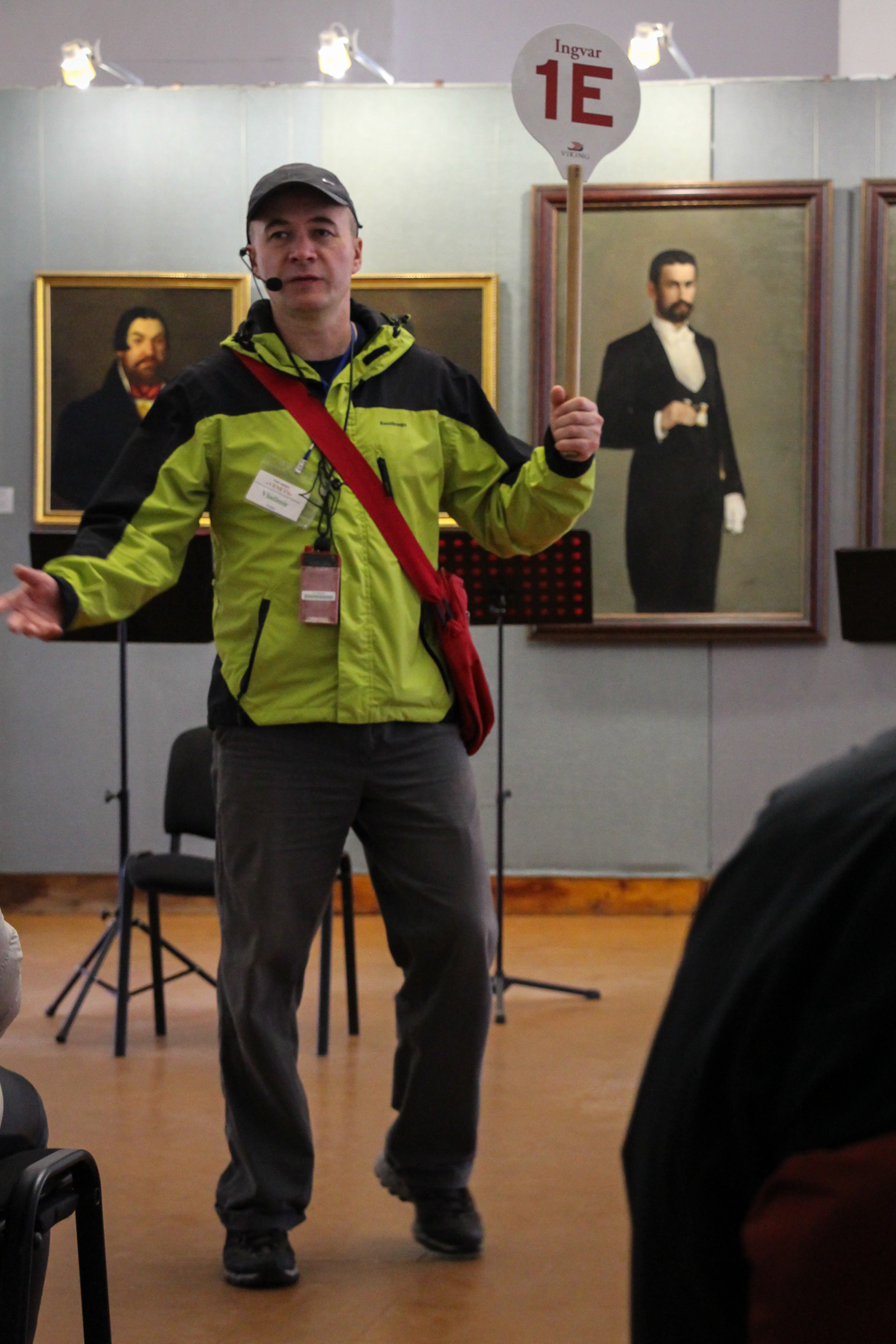
Our Uglich Tour Guide. ©voyager, all rights reserved
This fellow was our guide in Uglich, and everyone in our group was unhappy with his performance. To begin with, he walked too fast. Way to fast for all of us. My friend and I were the youngsters on our cruise, with most of the other people being in their 70’s and 80’s, and everyone struggled to keep up. He also spoke while he was walking, without turning around at all, so that most of us missed what he had to say. We figured out the reason for the rush at the end of the tour, though, when we were taken into a woodcarvers shop and told that we had 15 minutes to look around and buy. We all suspected that the haste at the beginning of the tour was to make sure we had enough time to shop and that some sort of kick-back was likely involved. Working on an as-needed basis is difficult, so we understood the circumstances, but we’d signed up for the “slow” tour (most of the tours had an option for a quick, active group or a slower group with less walking) and this walk was anything but slow. We managed, though. It’s surprising how fast you can go with the right motivation. Turns out that I’m quicker when I’m worried about being left behind and lost in an unfamiliar place where I don’t speak the language and even the alphabet looks strange. We did have our guide books with us so we could at least recognize what building or church we were passing or were about to visit.
**************
The city of Uglich is first mentioned in the All-Russia Chronicles of the Ipatievsky Monastery of 1148, however, there is archeological evidence that settlements have existed at the site since the First Millenium. The city houses many ancient churches, and we were able to visit three of them. Our tour began with a walk through the main area of churches viewing them from the outside before attending a 3 man a capella concert in a modern building used as a civic centre.
Our first stop after this was at the Transfiguration Cathedral, which is part of the city’s Kremlin (fort). This cathedral was first built in the early 1200s and it’s been rebuilt several times since then. The current church was built in 1713 and it’s the bright yellow building with orange trim and dark green onion domes that greeted us as we came into port. Beside the Church is the Bell Tower, which was erected in 1730.

The Transfiguration Cathedral, Uglich. ©voyager, all rights reserved
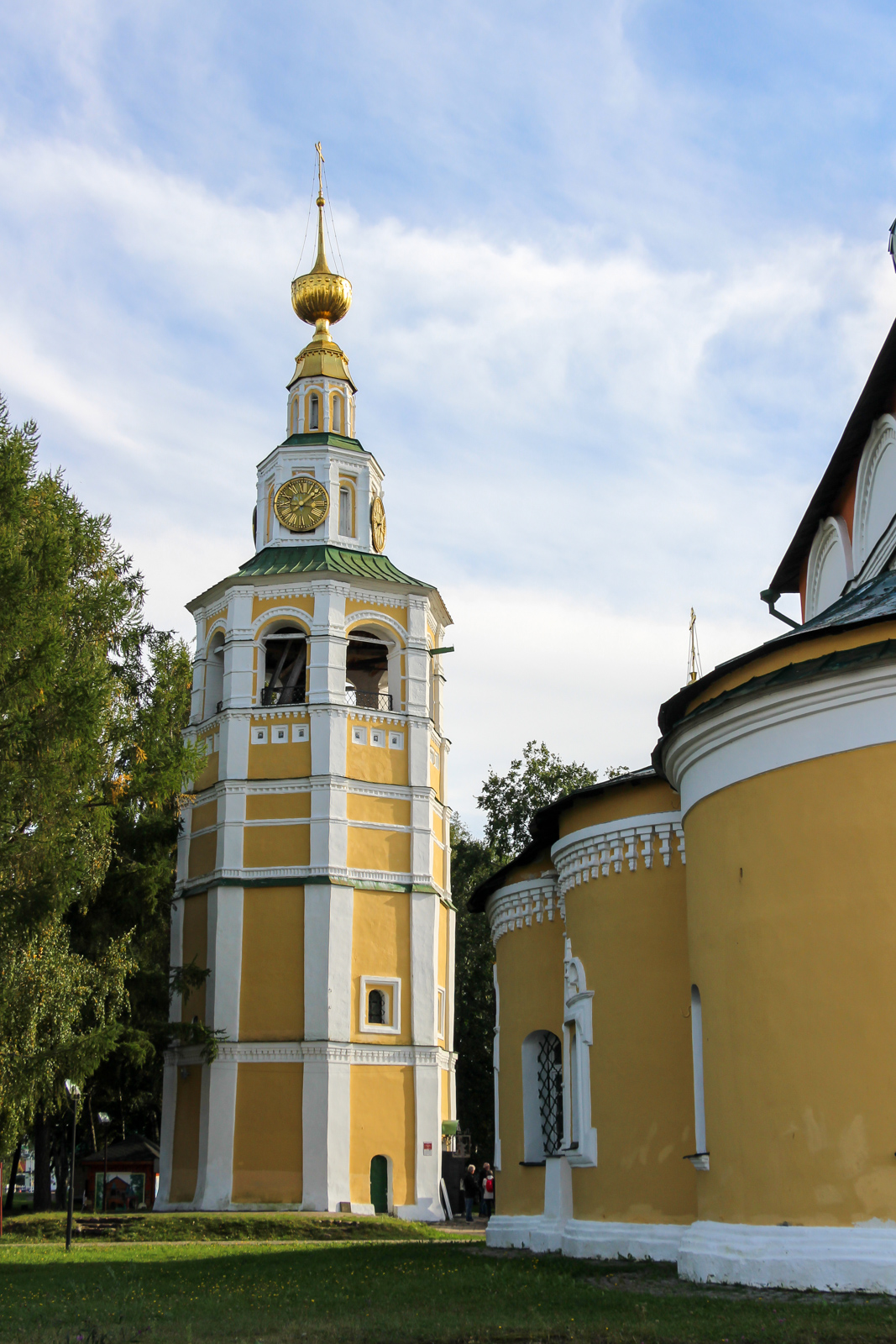
Transfiguration Cathedral and Bell Tower ©voyager, all rights reserved
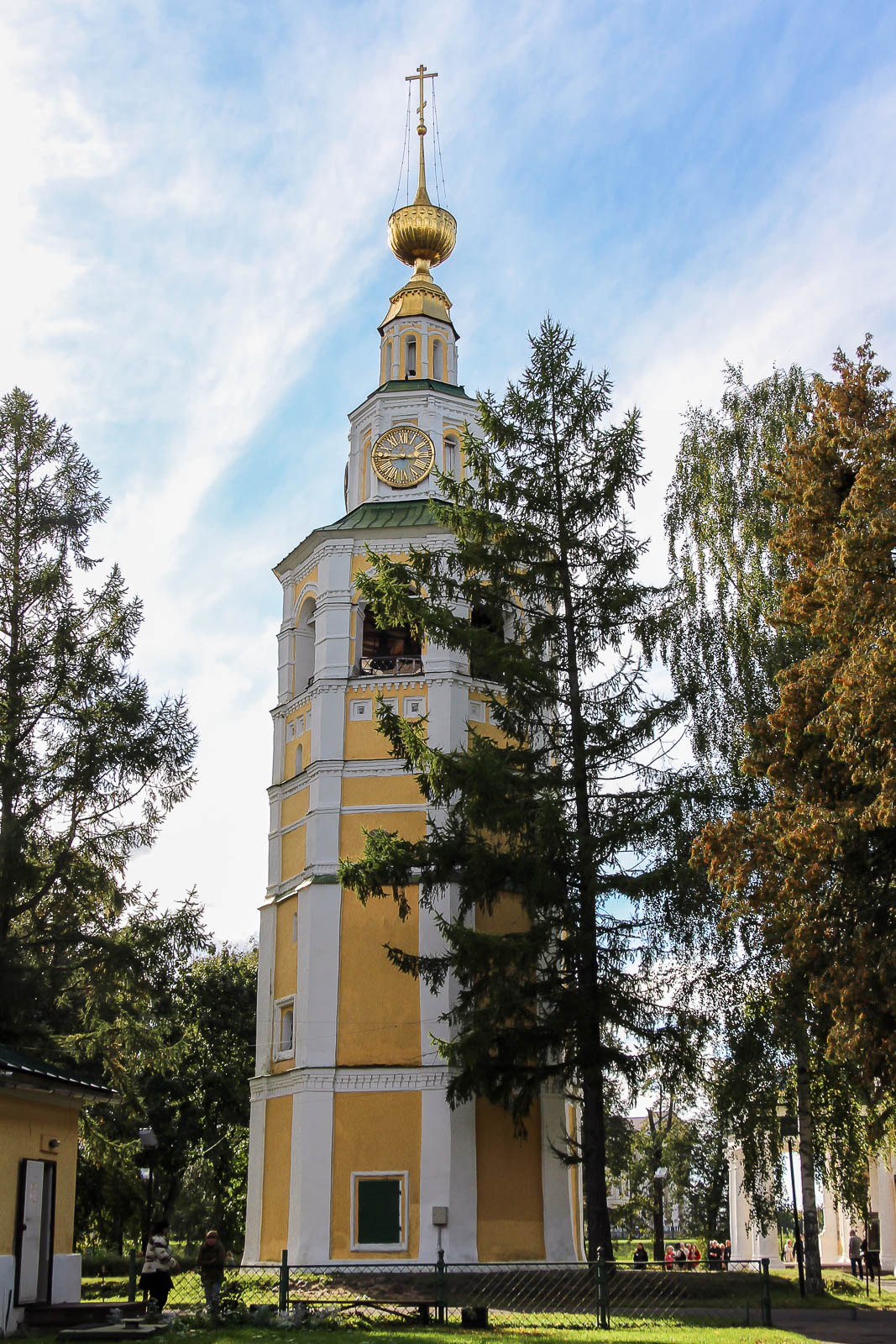
Transfiguarion Bell Tower
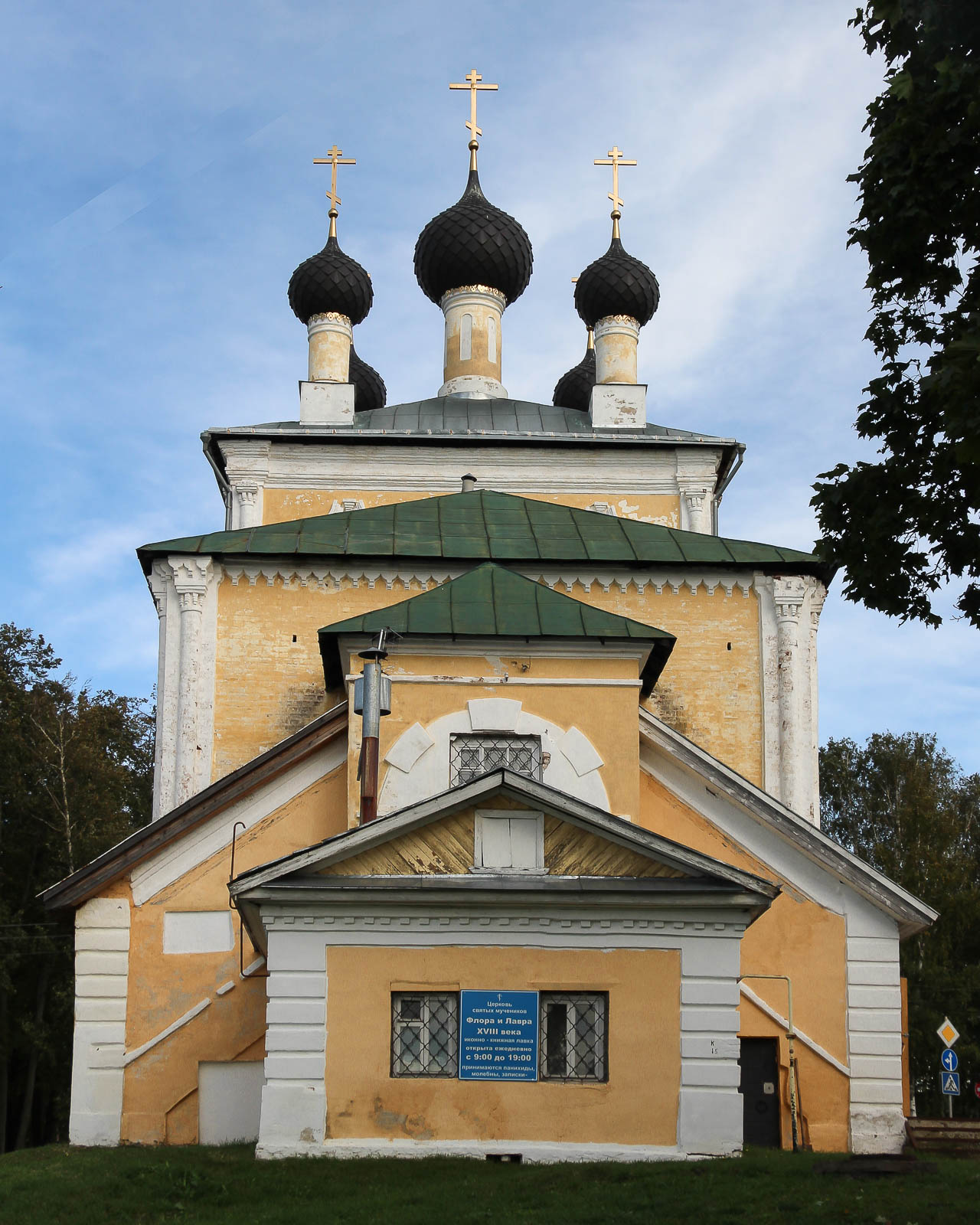
Transfiguration Cathedral ©voyager, all rights reserved
We were given a very brief tour of the interior of the church later in the tour, just before being whisked off to the woodshop to buy souvenirs. Our guide told us the church is still in use and, as with all churches in Russia, there are no seats. All worshippers are expected to stand for services, including dignitaries and in previous times, the Aristocracy. Many of these services can go on for 4 hours. Gold was a prevailing detail in almost all of the churches we visited here and throughout Russia and every church has a unique set of icons.

The Icon Wall, Transfiguration Cathedral ©voyager, all rights reserved

Icon Wall, Transfiguration Cathedral ©voyager, all rights reserved

Icon Wall and cupola, Transfiguration Cathedral ©voyager, all rights reserved
That’s it for today. In the next installment, you’ll hear the curious story of Dmitri and see the church built in his honour.
Nightjar has been searching out wildflowers for us,
Viola riviniana or dog-violet. A completely unexpected find, not only because it is too early for wild violets but also because I rarely find completely white dog-violets. And there were only white violets, no signs of any purple ones nearby. I expect that to change in about a month from now.

©Nightjar, all rights reserved

©Nightjar, all rights reserved
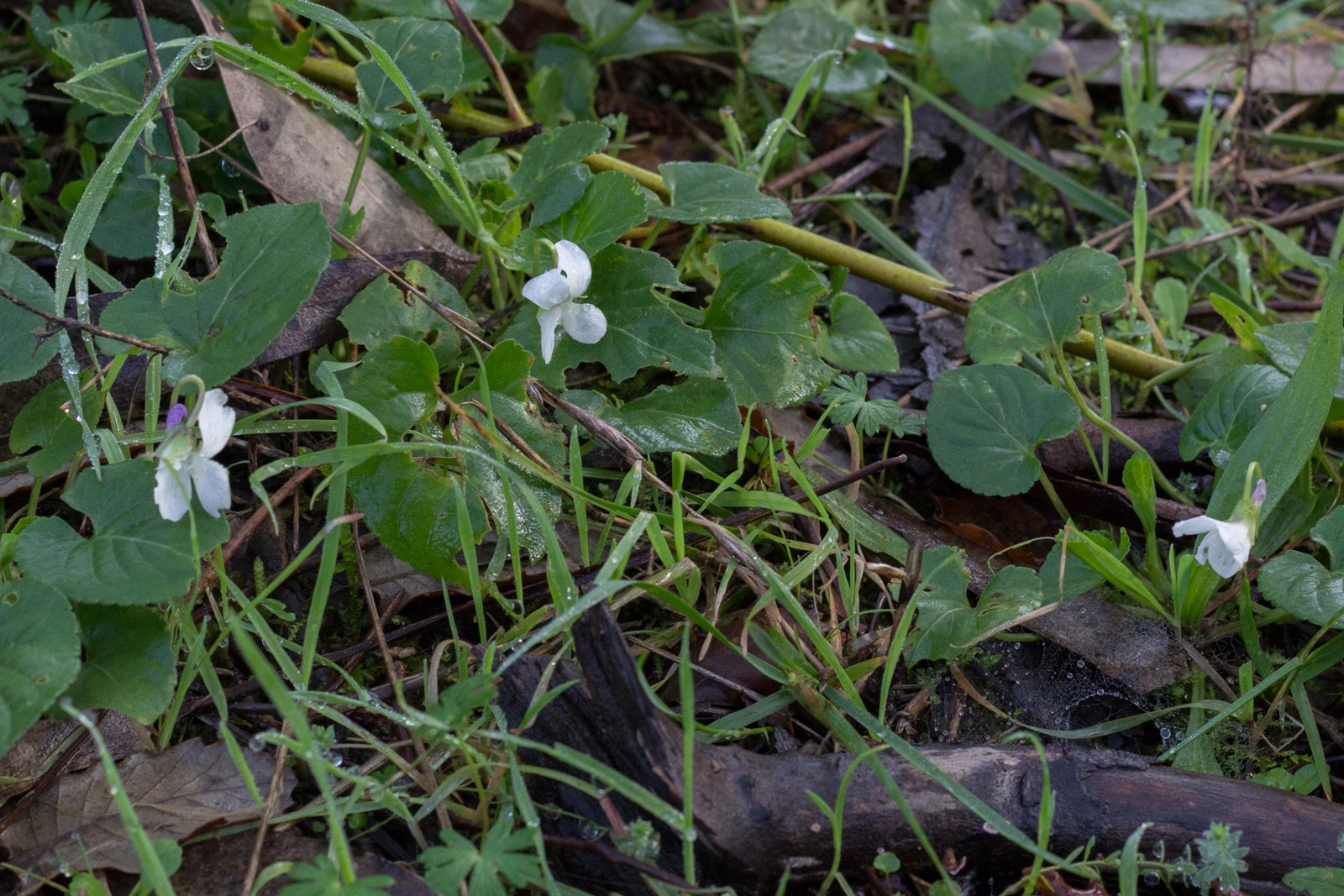
©Nightjar, all rights reserved
The usual residents on any pond are mallards, who I think are underappreciated for their beauty, both male and female, just because they are common. Makes me wonder if people who live in places with colourful parrot that make us ohh and ahh see them the same way as we do with out local wildlife.
Anyway, mallards also feature in the best known German children’s song: Alle meine Entchen (all my little ducks):
It’s a 150 years old and will probably last at least another 150 years: It features animals, is easy to sing and play and describes something even city kids may see and know.

©Giliell, all rights reserved
We also got a pair of Egyptian geese at the pond. While originally coming from, you guess, Egypt, they are now pretty common around Europe. They can cause trouble in places where humans like to spread on laws they consider THEIR lawns, but are for the rest harmless.

©Giliell, all rights reserved

©Giliell, all rights reserved

©Giliell, all rights reserved
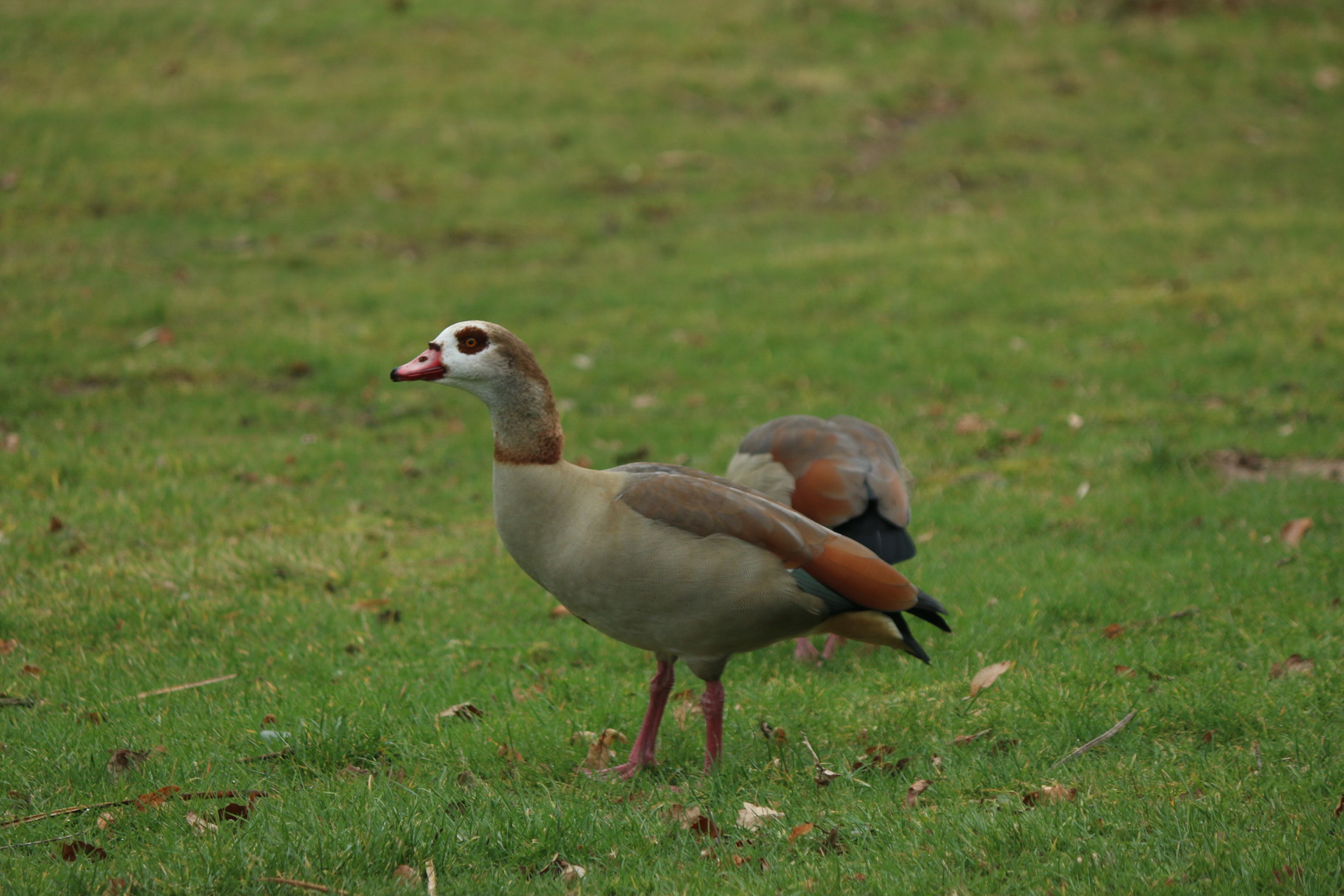
©Giliell, all rights reserved
As a mold for the inner chamber, I have used a piece of a paper tube of slightly bigger diameter than is my goal and a bottom made of plywood with supports that could hold the forge on its side like an impromptu bucket. I have covered the plywood and the tube with a plastic paper bag to make it waterproof. For the inlet-outlet channels, I have inserted into the orifices plastic tubes at an angle. Both tubes are at an identical angle, slightly inward and off-center. The idea is to create a rotating vortex of hot air in the forge since in the previous one I got the best results when I have managed to achieve this. Both channels should be approximately the same.

© Charly, all rights reserved. Click for full size.

© Charly, all rights reserved. Click for full size.
After that, I have mixed ordinary fireclay with pearlite at a ration 1:3 to the consistency of dry cement and stuffed the whole structure almost full, with only about 5-10 mm gap at the top (at the bottom the gap is taken care of by the thickness of the plywood. I think I have used too little binder (water glass) – I have used the amount recommended for the fireclay and I forgot that the dry pearlite will suck out most of it – so the result is not very strong and it is a bit crumbly. But I hope it won’t be a problem since it is not a load-bearing structure and I will make 5-10 mm hard coating on top after it dries. It did not crumble when I have carefully taken out the tubes and the plywood bottom after three days.
Now it will take its time to completely dry. Today it is over a week and still, it is very wet. I have added a fan to blow air through it to aid the process a bit, but even so, I suspect it will take at least a month to dry properly. Luckily I have twelve knife blades hardened and in work now, so I won’t need the forge for some time. Plus soon there will be more than enough work in the garden to keep me occupied for weeks.
So, in the meantime, we all can watch cement dry.

© Charly, all rights reserved. Click for full size.
I’ve been using my holiday to get some creative work done. Let’s start with the items that gave this post its title: Dragon eggs:

©Giliell, all rights reserved
Working with alcoholic ink is always such fun. You never know what you get until it’s done. The effect is created by dripping the ink on the resin. You always need to add some white ink. This is heavier than the resin, while the other ink is lighter. The white ink takes the colourful ink down with it, creating what is often called a petri dish effect. I love them and now I#ll have to do something with them.

©Giliell, all rights reserved
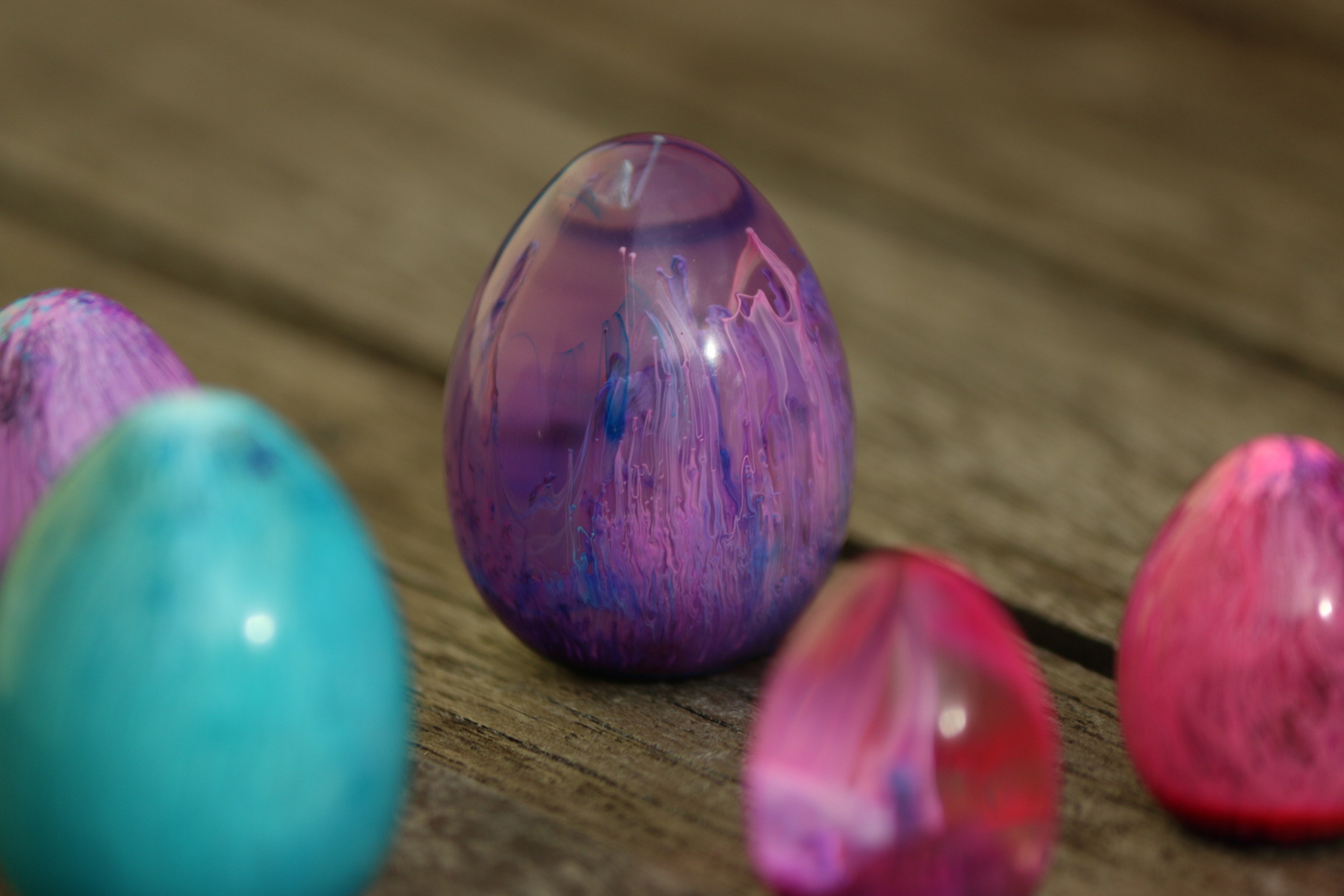
©Giliell, all rights reserved

©Giliell, all rights reserved
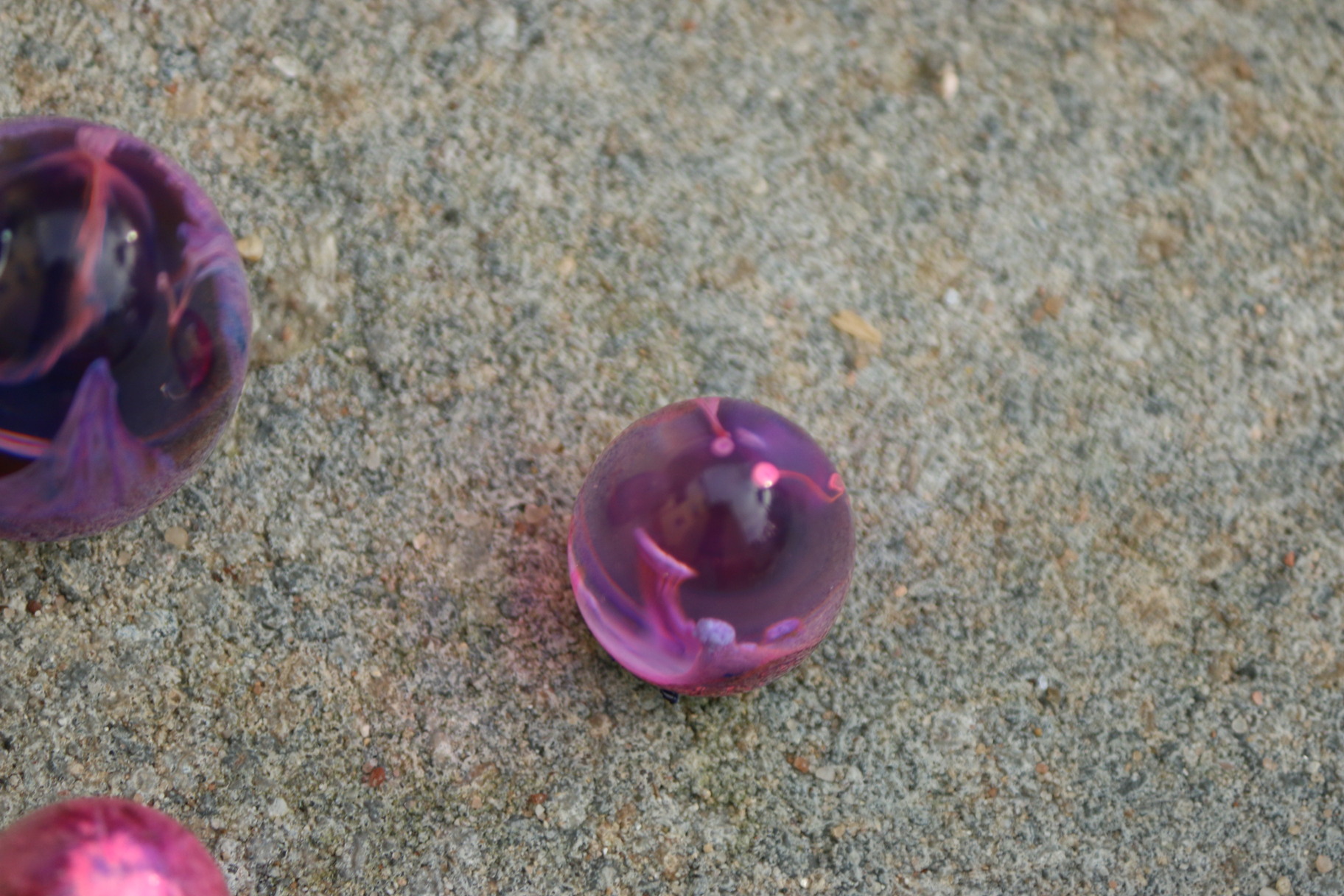
©Giliell, all rights reserved
Next one is another wood and resin project. A while ago Marcus sent me some of his spalted maple. Did I mention that Marcus like to send challenges? These pieces were really thins, way too thin to do the usual “break it and then sand it down” method. So what I did was making bezels to go around the resin.
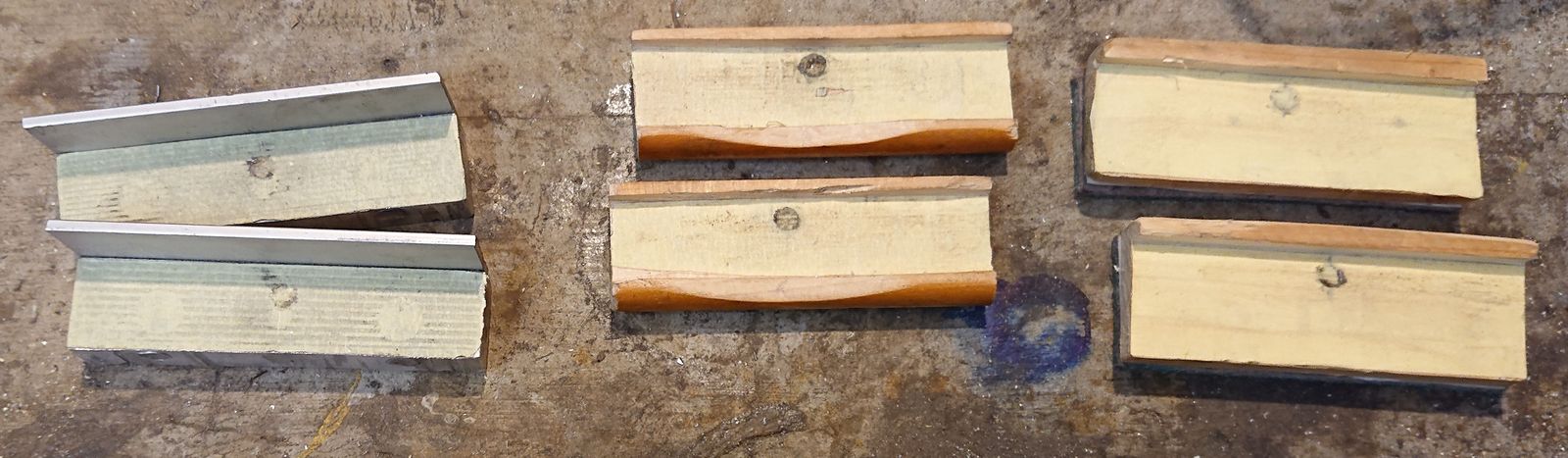
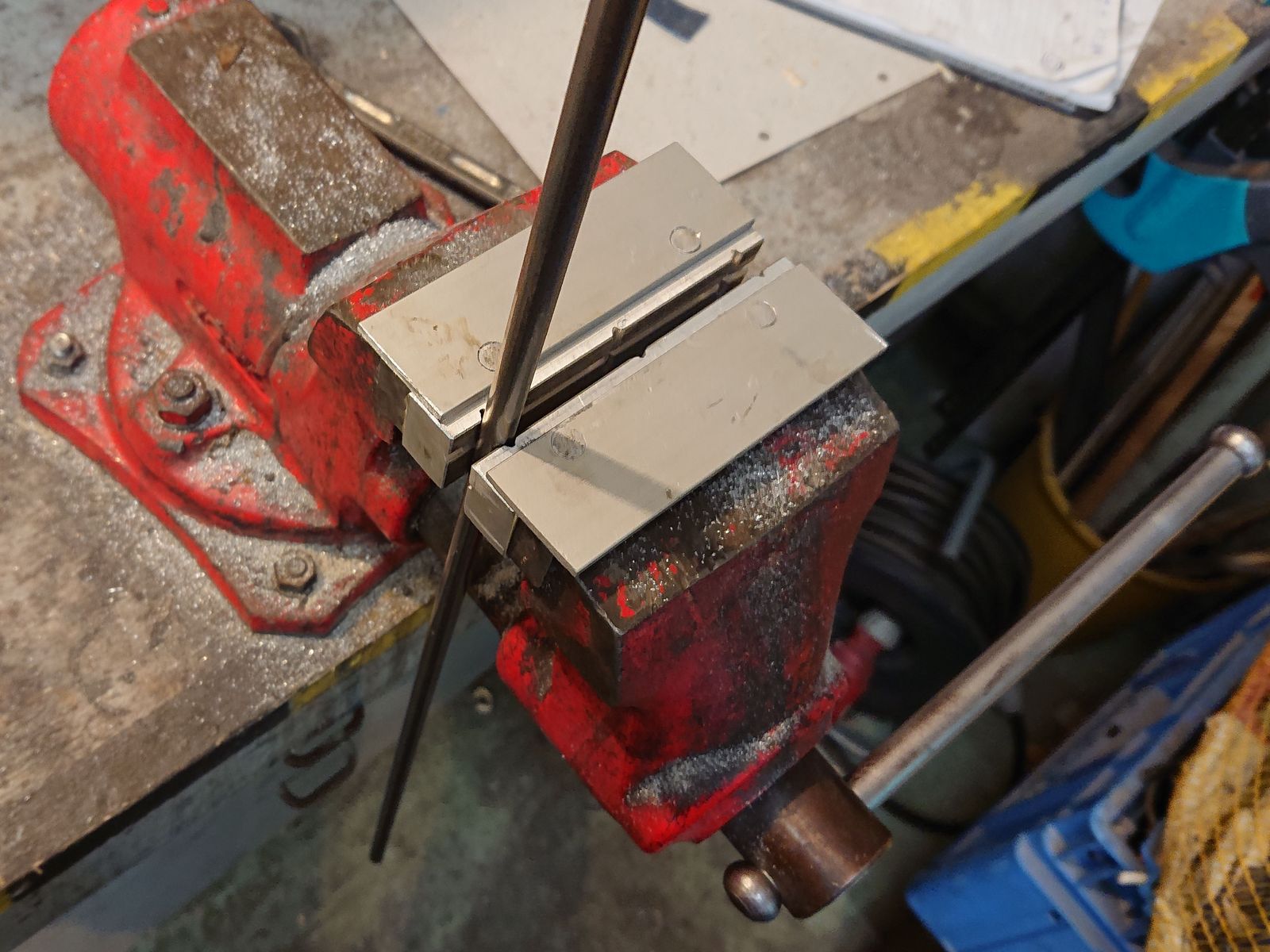
I could not work on anything else much today. Outside it is still very windy and the workshop concrete floor was freezing cold even with the fire roaring in the stove. So I could not be there for more than two hours at a time and then I had to go inside to warm my feet for about the same. But I have managed to do something useful – three sets of jaws for my bench vice.

© Charly, all rights reserved. Click for full size.
© Charly, all rights reserved. Click for full size.
On the left aluminium, then beech wood and then spruce wood covered with an old carpet. I needed these for a long time and I had to do with impromptu padding the jaws of the vice with slabs of these three materials several times on each project. And impromptu padding leads to time loss each time you use it, not to mention the cussing. For a hobbyist making one – two knives per year it is not a big problem, but now…
The dark spots on the backside covered with masking tape are where a strong 6×3 mm neodymium magnets are hidden – they collect the magnetic dust in the shop very quickly. Thus the masking tape. I had eight these magnets for a long time and I had no use for them, so I have used them for this.
And the jaws work very well. The grooves on the alluminium ones might be a bit too shallow for stock thicker than 10 mm, but I am not going to do anything about them just yet, they do seem to work just fine as they are and I will probably need to hold even 3-4 mm stock in them more often than something bigger, so they cannot be too much deeper than they are.
© Charly, all rights reserved. Click for full size.
Working with aluminium is a bugger. Whenever I have an urge to file, cut or drill aluminium, I usually sit down quietly in the corner and wait until it passes. But sometimes there is no way around it.
Did I already mention that working aluminium is a bugger? It is worth repeating. It is soft but relatively strong in tension. It is an extremely good heat conductor. And it is also extremely prone to galling and cold-welding. The end result is that it blunts and overheats saws and drillbits and clogs-up files and abrasives.
A few years ago I got a useful tip from a machinist at my former workplace. I complained about how filing and cutting aluminium by hand is more difficult than steel because of the clogging of the tool teeth. I told him that I tried using powdered chalk to coat the file and clean it with a brass brush – a tip from another machinist – to prevent this, but it did not seem to work very well. And this machinist told me “wet your file with alcohol to keep it cool”. And it does indeed help a lot. I still need to keep a brass brush at hand to clean the file from time to time, but the alcohol does prevent the shavings from sticking to it very strongly. And unlike oil, it dries off and does not make a mess, so I use it for drilling aluminium too.
Even so, it is worth repeating. Working aluminium is a bugger.

Ethel Cook Eliot. The Little House in the Fairy Wood. Illustrations by Mabel Hatt. New York, Frederick A. Stokes, 1918.
This is another short children’s storybook with delightful artwork. There are only 3 colour illustrations in the book, but I’ve included them below the fold. I love the picture of the fairies dancing. They look so free and full of joy. I hope you enjoy this book as well. [Read more…]

Allen Chaffee. Trail and Tree Top. Springfield, Mass., Milton Bradley company, 1920.