Forced obsolescence

This Pearls Before Swine cartoon struck home for me because, like Rat, I have an iPhone 5. I am not one that needs to have the latest version of anything. If the old one works, I stick with it. In fact, I have never bought a cell phone in my life. The ones I have used have all been hand-me-downs from my spouse or children when they upgrade to new phones.

I am perfectly happy with my old iPhone 5 and would be quite content to continue to use it forever because it seems to be working fine as far as its basic functions of calls and texts and its data storage features. But I am feeling pressure to upgrade. The problem is not the phone itself but that one by one, various apps are upgrading to versions that are no longer supported by the phone. The iOS operating system I have is 10.3.4 which is the latest one that my hardware can support but the updates of various apps require newer versions of iOS and that would require me to get a newer phone just to use those apps.

I am holding out for now even though some things (like depositing checks in my bank account) can no longer be done by phone and I have to do it the old-fashioned way.

Sigh.

The CAPS LOCK key should go

On the computer keyboard, apart from the space bar and shift keys which are both used considerably, the next biggest key is the Caps Lock key which is almost never used, except by those who like to use all capitals all the time. These are probably the same people who immediately get onto the fast lane on the highway and stay there, irrespective of the level of traffic.
[Read more…]

Does Newton’s law of gravity work when gravity is very weak?

This video takes a look at Newton’s law of gravity that is written in the form F=GMm/r2 and points out that although the law is referred to as a ‘universal’ law of gravity, it does not hold for very strong gravitational forces involving very large masses (where the General Theory of Relativity needs to be used). He also points out that the law has not been tested very precisely in cases where the force is very weak, such as with small masses, but that we assume it holds true in that regime.


[Read more…]

Fun with neodymium magnets

Neodymium magnets are extremely strong, as anyone who has ever handled them knows. This video shows how strong the forces generated by them are. One should be very careful though, because you can hurt yourself and any nearby electronic equipment with these magnets.

One of the practical uses of these magnets is to have cows swallow them. Yes, really. This is because cows often swallow bits of metal (nails bits of wore, staples, etc.) that are in the pastures where they feed and this can harm them. These powerful ‘cow magnets’ settle in a part of the digestive system called the rumen, where they collect the metal pieces that pass by and prevent them from going further into the system and causing harm.

Physics envy of economists

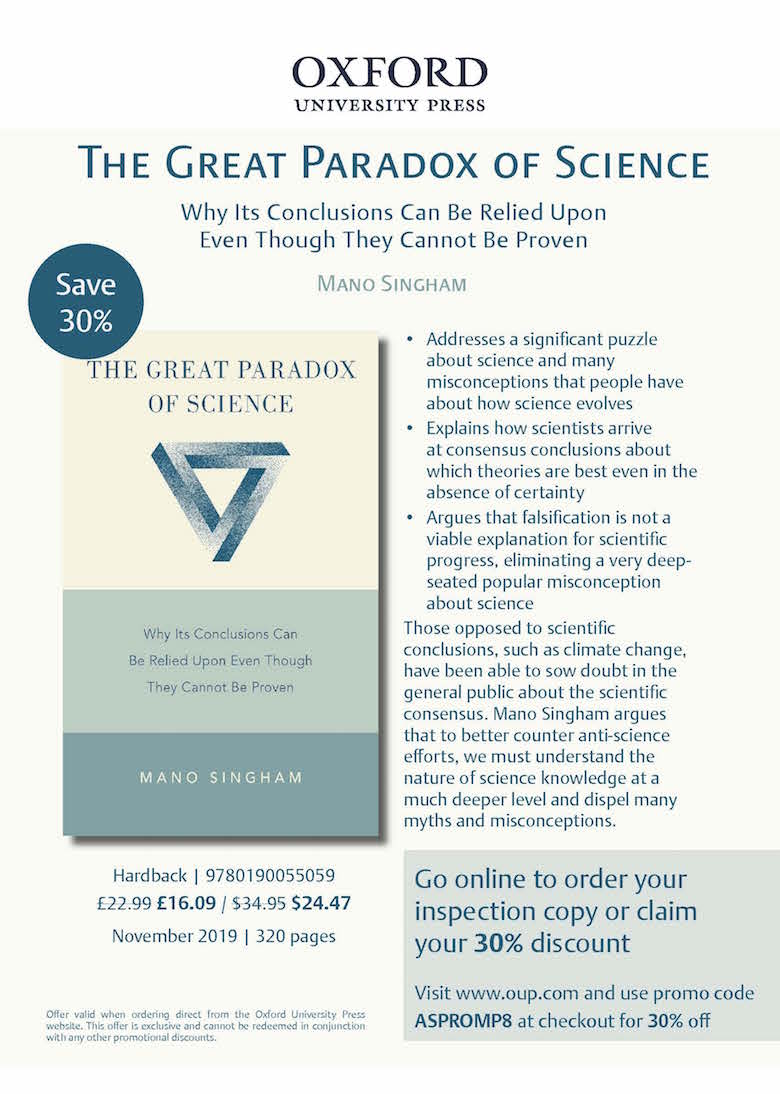
Physics has long been considered the canonical science. It is not the oldest mathematical science, since astronomy predates it by centuries but that discipline lacked an experimental basis. Physics deals with the inanimate world and so is free of the messiness and ethical constraints that complicate other disciplines that deal with living things. It has an empirical basis of observations and experiments and yet has a high level of abstraction that enables simplified models to approximate reality. And the mathematical framework in which its theories are expressed gives its predictions a level of precision and rigor.
[Read more…]

The Libet free will experiment revisited

I have long been interested in the question of free will and back in 2010 even wrote a 16-part series (!) looking into what was known about it. Many people are Cartesian dualists where they view the brain and mind as distinct, the former being a physical organ while the latter is an immaterial entity, dubbed the ‘Ghost in the Machine’ by Gilbert Ryle, that controls the cognitive processes of the former, though how that actually happens has not been made clear.
[Read more…]

Sonic attack? Crickets? Insecticide? Update on the Havana mystery

There is a new twist to the long-running saga about the mysterious ailment that struck personnel working at the American and Canadian embassies in Havana, Cuba. Initially the US accused Cuba of using some kind of sonic weapon to attack their diplomats. But this seemed highly implausible, not least because there did not seem to be any evidence that such a weapon existed and it was not clear why the Cuban government, even if it had such a weapon, would do such a thing at a time when they were trying to improve relations with the US.
[Read more…]

Richard Stallman will not be the last clueless nerd to fall

The fall of computer scientist Richard Stallman, forced to resign his position at MIT because of his apologetics for rape and sexual abuse is now widely known. But Steven Levy says that the entire nerd culture that these people were steeped in that found their eccentricities amusing is also one that made them oblivious from seeing that their views on so many matters were utterly appalling.
[Read more…]

Chess and weight loss

In my history and philosophy of science course, I used to start by asking students whether cheerleading was a sport. This aroused lively discussion because they usually had surprisingly strong feelings for and against this issue. But my real goal was to introduce them to the idea of demarcation criteria, setting up necessary and sufficient conditions that would establish whether some thing X belonged definitely to class A or definitely did not belong to class A. An important and unresolved question in the philosophy of science is the effort to identify necessary and sufficient conditions that would determine whether some theory was scientific or not, and this early exercise on cheerleading was meant to be an introduction to that more abstract question later in the semester.
[Read more…]