Don’t blame the octopus

This poor woman thought it would be funny to pose for a photo with a small octopus on her face. The octopus disagreed, and bit her.
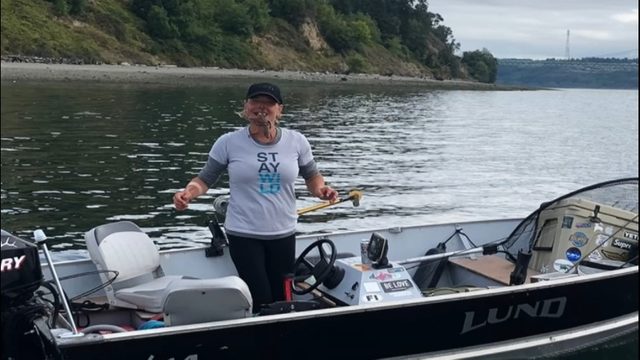
“And I’m still in pain,” said Bisceglia. “I’m on three different antibiotics. This can come and go, the swelling, for months they say.” She says the whole painful experience taught her a valuable lesson about handling a live octopus.

“This was not a good idea,” said Bisceglia. “I will never do it again.”

That’s one reason they have venoms, you know, besides streamlining the killing of prey. Never do it again. Also, tell all your friends if you survive that they shouldn’t disturb the octopus.

Isn’t evolution grand?

Chop wood, carry water

I haven’t been sleeping well lately — I woke up at 4 this morning, got up at 5 after failing to fall back into sleep. So I got up, and did my morning thing on autopilot.

Go to the bathroom. Wash hands and face. Go to kitchen. Start water boiling. While I’m waiting, feed the cat. Wash the coffee press. Grind coffee beans. Wash two cups. Add milk to one. Pour boiling water over coffee. Stand, waiting, two minutes. Think about the day to come. Pour coffee into cups. Carry the one with milk to the bedroom for my wife. Carry the one without to my office. Sit. Turn on the computer. Write something…”chop wood, carry water.”

I’m thinking this is ritual. It’s a pattern that provides a solid foundation to my day, and as a bonus, it gets things done. It might not be a grand accomplishment, but it carries me forward day by day, and makes sure I get out of bed with a plan and a series of little actions, and sets a pattern for doing. Just doing.

Ritual can be a good thing.

I can also see where it’s a danger, when it changes into a pattern of not doing, when it becomes a rut that carries one to nowhere. I’m not concerned that making coffee and feeding the cat is a path to uselessness, but I can imagine a ritual of distraction and pointlessness that can consume day after day, so I also have to be prepared to break the rituals and take pleasure in change.

Chop wood, find a new spider, carry water, teach, make the coffee, write something you didn’t write before.

Spiderzilla

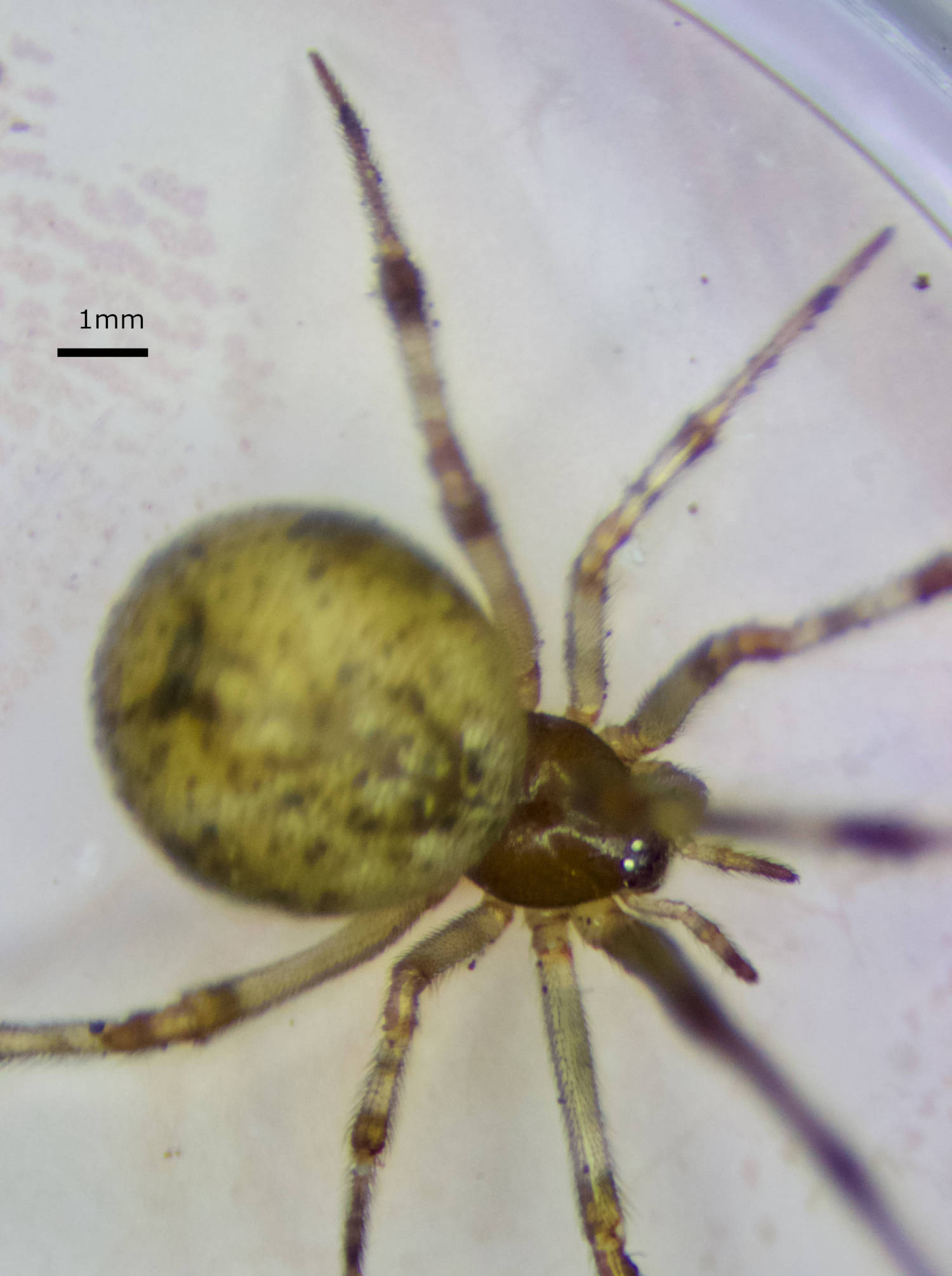
We found one unusual spider today, and she was frustrating. First thing we noticed about her: she looked like our familiar Parasteatoda, except that she was half again, maybe twice the size of the house spiders we usually see. She was also relatively lightly colored, compared to the mottled brown of our familiar friends. So I caught her, with the idea that I might be able to more closely examine her in the lab. Hah. This was the most frantically active spider I’ve ever had to work with, scrabbling non-stop at the sides of the vial. I tried everything to get her to hold still and let me do some close-ups and measurements — she was having none of that.

I put her in a vial, I put her in a small petri dish to confine her. Nothing worked.

I finally just let her out to scurry about on my hand — I thought if nothing else, it would help give some perspective on her size. Have you ever tried to focus a camera and keep a spider in view as it is running all over your hand, and while you’re trying to make sure it doesn’t escape? She wasn’t cooperative at all.

One alternative, one a real arachnologist wouldn’t balk at, would be to kill and fix her, maybe even do a little dissection. The thing is…I’ve never killed a spider, not even in my lab work, and I’d like to maintain that record. I’m a biologist, dammit, I study life, not death, and while I’ve killed flies, fish, kittens, rabbits, mice, dogs, and goats in the line of duty, I’d rather not, thank you very much, and if I can study living animals without harming them, I’d rather do that. I’m sure I’ll eventually have to do some of the dirty wicked killing business with adult spiders, but I’ll put that off as long as I can.

Anyway, I think I exhausted her eventually, and she just wanted to curl up and hang off the end of a brush. I still couldn’t get her into the orientation I wanted.

My current plan: I’ve put her in a large vial, fed her some flies, and hope she spins a nice cobweb in there. Once she’s hanging from a nice strong web frame, I might be able to rotate the vial around and get a better shot of her.

Babbies!

We were making the rounds on our spider survey today, and came across many scenes like this. The egg sacs are opening and releasing clouds of adorable little babbies!

Mom is hanging out down below, gnawing on haunch of arthropod. Families! So precious!

Free Speech and Artistic Expression…DENIED

The crazy leftists are no-platforming everyone now. Look at this magnificent work of art!

It was shown at CPAC, where everyone loved it, so it must be objectively valuable. However, when the artist, Julian Raven, demanded that the 16-foot-wide masterpiece be given space at the Smithsonian’s National Portrait Gallery, they refused. I can’t imagine why.

Raven was inspired to create the giant image in 2015 when he saw Trump campaigning on television — roughly the left third of the 300-pound painting is devoted to a giant neck-up rendering of the then-presidential candidate, with the rest depicting a bald eagle flying through space with a giant American flag in its talons and our pitiable blue planet in the background, with no idea what it had in store. Raven, driven by this searing vision to complete the painting in three weeks, hoped to display the work at the Smithsonian in coincidence with the 2017 inauguration, but found himself roundly rejected by the gallery’s director, Kim Sajet, who told him that it was “too political” and “too big” and, generally, just not very good.

“The last thing she said to me was ‘it’s no good,’” Raven is quoted as saying. Welcome to the art world, buddy.

What does a good wingnut do in such a situation? He sued, of course. His suit was dismissed, so now he’s appealing the decision.

Gee, that art director shouldn’t have said that. They were too generous — I’d have said that was a shit painting that deserves to be displayed in the dumpster out back.

Stop me if you’ve heard this one before

I know you’ve heard this one way too many times before, but this time, God tells a story.

Once there was a nation suffering the plague of gun violence. “Help us,” the nation prayed, “save us from the violence.” And God said, “You shall be provided with the legislative tools to ban assault weapons, high-capacity magazines, and other wartime instruments of death.” And lo, the nation said, “I’d rather not.” And so nothing came to pass.

“Help us,” the nation prayed a year or so later, “save us from the violence.” And God said, “You shall be provided with the best universities and research institutions in the world, so that you may study the topic of gun violence and arrive at solutions to this public health crisis yourselves.” And lo, the nation said, “Let’s make funding studies of gun violence illegal.” And so nothing came to pass.

“Help us,” the nation prayed a few months later, “save us from the violence.” And God said, “You shall be provided with the best mental health resources in the world, and you shall be provided with wealth beyond compare so that all who are struggling with homicidal or suicidal thoughts will have access to care.” And lo, the nation said, “Sounds socialist to me. Let’s make Medicaid harder to access, not easier. And, oh yeah, our leaders are going to spread hate and xenophobia to give people a reason to commit acts of violence.” And so nothing came to pass.

“Help us,” the nation prayed a few weeks later, “save us from the violence.” And God said, “If you are scared that the Supreme Court will overturn sensible gun laws, if you are scared of the lobbying power of the NRA, then you shall be provided with a way to create Constitutional Amendments overturning the Second Amendment and making it harder for lobbying groups to influence elections.” And lo, the nation said, “A Constitutional Amendment? Sounds kinda complicated. It can’t be done except for all those times it’s been done. Nope.” And so nothing came to pass.

“Help us,” the nation prayed a few days later, “save us from the violence.” And God said, “It seems like many of these shooters are white men. I think you should raise boys differently and look closely at what whiteness does to someone’s psychology.” And lo, the nation said, “How dare you even say that.”

And so God — that’s me — I’m sitting up here going, What the hell is wrong with you? I have given you people a raft. I have given you people a boat. I have given you a helicopter on top of a fucking cruise ship. And still you are drowning???

That’s so familiar. I told my own version of that very same parable in The Happy Atheist, only from the perspective of a nonbeliever. It came out a little differently.

Once upon a time, there was an atheist who was trapped in her house by a flood. As the waters rose higher and higher, she had to climb up on the roof, where she hoped for rescue.

A little later, her neighbors paddled by in a canoe, and offered to take her to high ground.

She got in the canoe.

See? That’s the difference between a godly person and an atheist. Our stories are shorter and
don’t assume the protagonist is an idiot.

I’m pleased to see that God is coming around to my perspective.

Neil deGrasse Tyson said something stupid

It happens. We all say stupid things now and then. But this gaffe was spectacularly ill-timed — he’s trying to diminish the emotional response to our Weekend O’ Mass Murder.

Yes? And? If I’m told someone died of a medical error, I will be distressed and say we should reduce the frequency of those errors, and doctors and hospitals will agree and point to efforts to prevent them. Those same doctors will tell you about vaccination and treatment programs to reduce deaths due to flu. There are suicide hotlines and therapists who strive to help people who want to kill themselves. We require licensing and training before you are allowed to drive a car, and we pay fleets of police to enforce traffic laws. The police are also paid to prevent criminals from killing people and to arrest those who do. Those terrible deaths? Society is trying to do something about them.

Mass shootings, not so much. People are grieving and terrified and even, dare I say it, emotional about these incidents because they are so arbitrary, because we would be helpless in those situations, and because nothing is being done to prevent them. Limited regulation, gun manufacturers gleefully peddling instruments of destruction to the public, and a criminal organization, the NRA, dedicated to opposing all restrictions on gun availability…so people are rightfully angry at this continuing madness. Don’t try to minimize it. Placidity in the face of preventable horror allows it to continue, while anger gets shit done.

That was a bad tweet. But there’s something even worse: Tyson’s apology. Oh my god. It’s horrible. For one thing, it’s not an apology. He regrets nothing he did, but gosh, all you other people — you should appreciate the information he has bestowed upon you.

“My intent was to offer objectively true information that might help shape conversations and reactions to preventable ways we die,” his note read. “Where I miscalculated was that I genuinely believed the Tweet would be helpful to anyone trying to save lives in America. What I learned from the range of reactions is that for many people, some information –-my Tweet in particular — can be true but unhelpful, especially at a time when many people are either still in shock, or trying to heal – or both.

“So if you are one of those people, I apologize for not knowing in advance what effect my Tweet could have on you,” he continued. “I am therefore thankful for the candor and depth of critical reactions shared in my Twitter feed. As an educator, I personally value knowing with precision and accuracy what reaction anything that I say (or write) will instill in my audience, and I got this one wrong.”

Don’t you realize that he was trying to be helpful? He admits he got something wrong…how his audience would react. He still doesn’t appreciate the difference between a flu death statistic and a specific event in which a racist murders a group of people for the color of their skin.

Neil, you need to learn how to apologize. Here’s a helpful video. I apologize in advance if it triggers resentment on your part, and for not knowing how you will react to helpful advice.

Or perhaps you’ve already researched the topic of how to make an apology and encountered this video.

If so, I have to tell you that that one is satire. It’s what not to do. Your apology seems to follow the template with surprising accuracy, unfortunately.

The new Lysenkoism

Some science conflicts with Republican ideology, so it must be suppressed.

One of the nation’s leading climate change scientists is quitting the Agriculture Department in protest over the Trump administration’s efforts to bury his groundbreaking study about how rice is losing nutrients because of rising levels of carbon dioxide in the atmosphere.

Lewis Ziska, a 62-year-old plant physiologist who’s worked at USDA’s Agricultural Research Service for more than two decades, told POLITICO he was alarmed when department officials not only questioned the findings of the study — which raised serious concerns for the 600 million people who depend on rice for most of their calories — but also tried to minimize media coverage of the paper, which was published in the journal Science Advances last year.

I don’t think it was that groundbreaking. When I got here to UMM twenty years ago and started listening to plant biologists, this was a common and accepted conundrum: plants grown in CO2 enriched atmospheres would thrive happily but they were making more carbohydrates, which require only carbon dioxide, water, and sunlight, but things like proteins, which also require nitrogen, were being synthesized at the same or lower rate. You’d get loads of carbs at the expense of all the other nutrients we like in our food. Ziska may have been one of the plant physiologists who first advanced this concern — I wouldn’t know, it’s way outside my field — but what he is saying is not controversial or unusual now.

Well, not controversial to scientists. To politicians with an ideological anti-science axe to grind, it’s data that must be buried.

Ziska, in describing his decision to leave, painted a picture of a department in constant fear of the president and Secretary Sonny Perdue’s open skepticism about broadly accepted climate science, leading officials to go to extremes to obscure their work to avoid political blowback. The result, he said, is a vastly diminished ability for taxpayer-funded scientists to provide farmers and policymakers with important information about complex threats to the global food supply.

Ziska, or “Lew” as he’s known to his colleagues, has researched plants at USDA across five administrations, Republican and Democratic, contributing significantly to the country’s understanding of how rising carbon dioxide levels and changing temperatures affect everything from crops to noxious weeds and even plants grown to make illicit drugs.

The shifts in the USDA seem petty and trivial now, but they all add up to an effort to promote obscurantism when the science contradicted the political dogma of the right.

“We were careful,” he said. “And then it got to the point where language started to change. No one wanted to say climate change, you would say ‘climate uncertainty’ or you would say ‘extreme events.’ Or you would use whatever euphemism was available to not draw attention.”

Ziska said there was never a department memo that directed legions of USDA scientists to be more careful with their language, it was simply well understood.

The signals to scientists have been subtle but frequent. For example, the National Institute of Food and Agriculture, which funnels hundreds of millions in taxpayer dollars to colleges and universities for food and agriculture research has dropped the term “climate change” from its requests for applications from scientists. Instead, the agency uses “climate variability and change.”

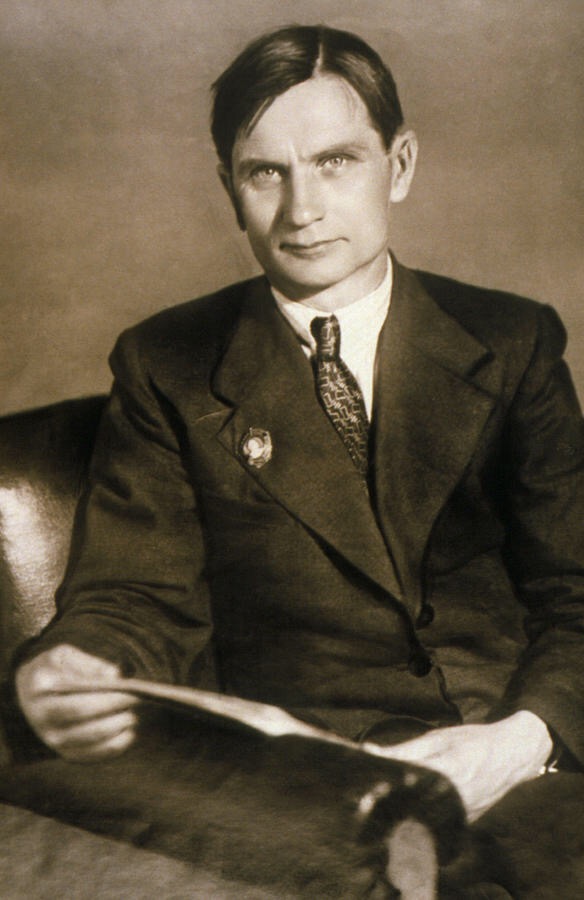
Practically every science textbook in the country — every one I’ve ever used, anyway — will have a section on the history of genetics that will mention Lysenko, the Soviet politician who was convinced that he could adapt any plant to the harsh Russian winters by vernalization, treating the seeds with exposure to cold so that they would acquire cold resistant traits. It didn’t work, but that didn’t stop him from promoting his wishful thinking, and getting the Soviet administration to censor (and imprison) people who pointed out the evidence was against him.

It’s interesting that we were all trained on this lesson with an example that involves climate and biology, and yet here we are, led by people who apparently never cracked an introductory science textbook, or they’d realize they’re repeating history.

Tricksy arachnologist. They lies, they do!

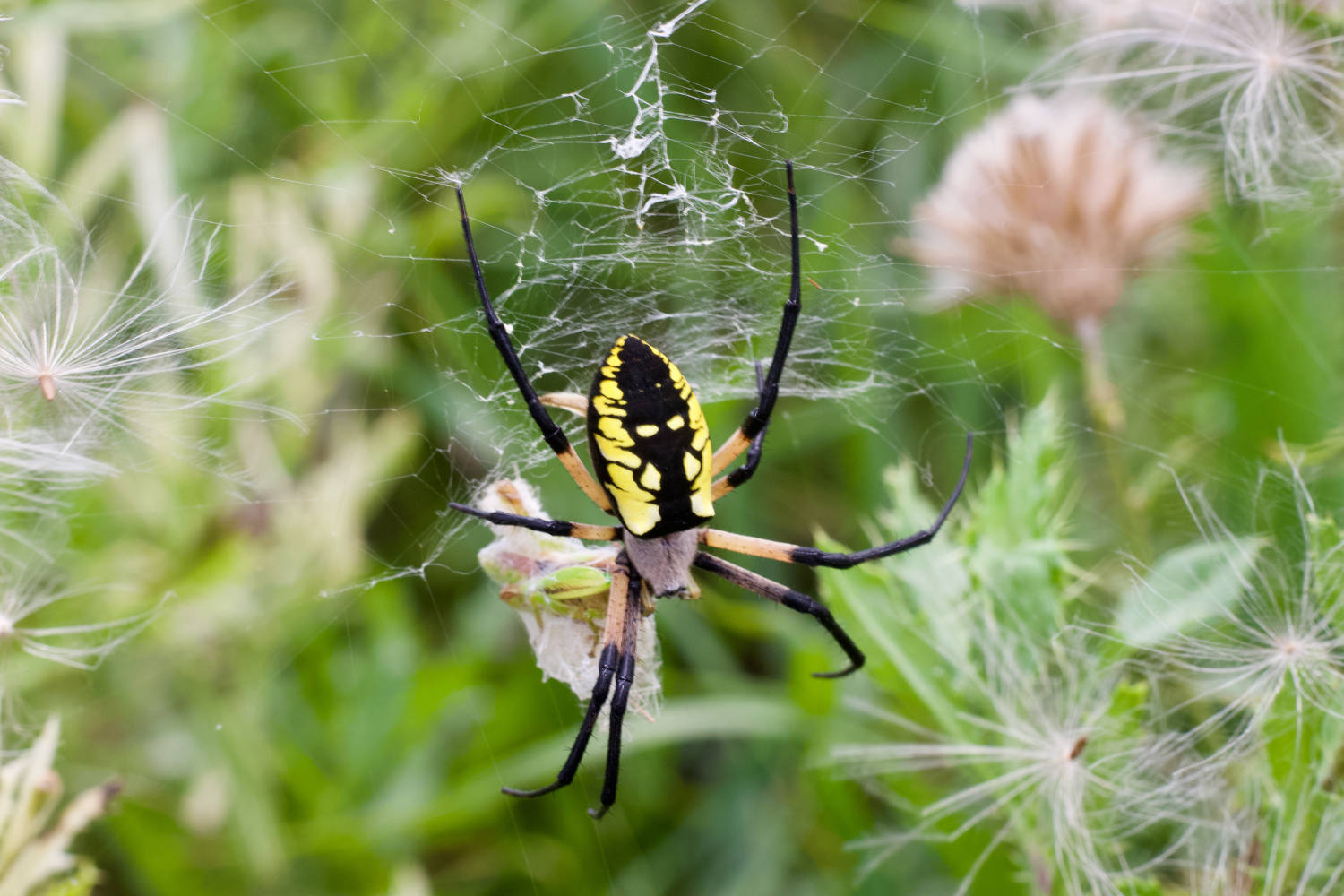
I know, I said I probably wouldn’t do any spider posts today. It just goes to show you should never trust a guy who thinks like a spider. Anyway, we finished day 1 of the phase III spider survey early — I tell you, it’s a real joy when you’ve got a couple of well-trained students who know what they’re doing and can rip through a garage at lightning speed, identifying all the spiders lurking in shadowy corners. Preston and Maya got 10 houses done before 2:00! To celebrate, Mary and I decided to check out a couple of places right here in the little town of Morris where Argiope was rumored to reside, and we found her! Down by the railroad tracks, near the Cenex gas station on the south side of town, we found a couple of them.

I also had an ulterior motive for looking for them. We captured this one and carried it home, and I released it into a patch of native prairie plants that Mary had planted for local pollinators. It’s only fair to include local predators, as well. We’ll see if she survives and thrives and maybe spawns a local line of noble Argiope in my backyard.

You may be spared any spider posts today

I know you’re going to miss them. Today is the start of our August spider survey, so shortly my students and I are going to start rummaging around in grungey garages and sheds, counting spiders, and we have to push hard because it’s a short week, since I’m flitting off to Missouri on Thursday. That means a long day and getting home all dirty and sweaty and bleary-eyed.

Maybe if I see some weird and exotic specimen, I might shoot a photo, but mainly we expect hordes of our familiar theridiidae and pholcidae, and I’ll just be ticking off tallies. It’s data, though!