Yuck, grocery stores

I made it home from our grueling grocery shopping trip, which was made worse by all the road construction this year. It’s so much fun to get to the intersection you need to take to find it’s completely closed and you can’t get there that way, and then having to back-track and take a gravel road through farm country to get on track.

I also discovered a new class of person to detest: the woman who gets a grocery cart and a handful of disinfectant wipes, proceeds to carefully wipe it down, and then marches into the store without a mask. She takes the virus seriously enough to take care of herself, but not seriously enough to care about anyone else. I felt like sneezing on her.

Now I’m back, just in time to go in to the lab and get cracking on cleanup, spider maintenance, and more class prep. Oh boy, less than a month to go!

Let the wildflowers bloom

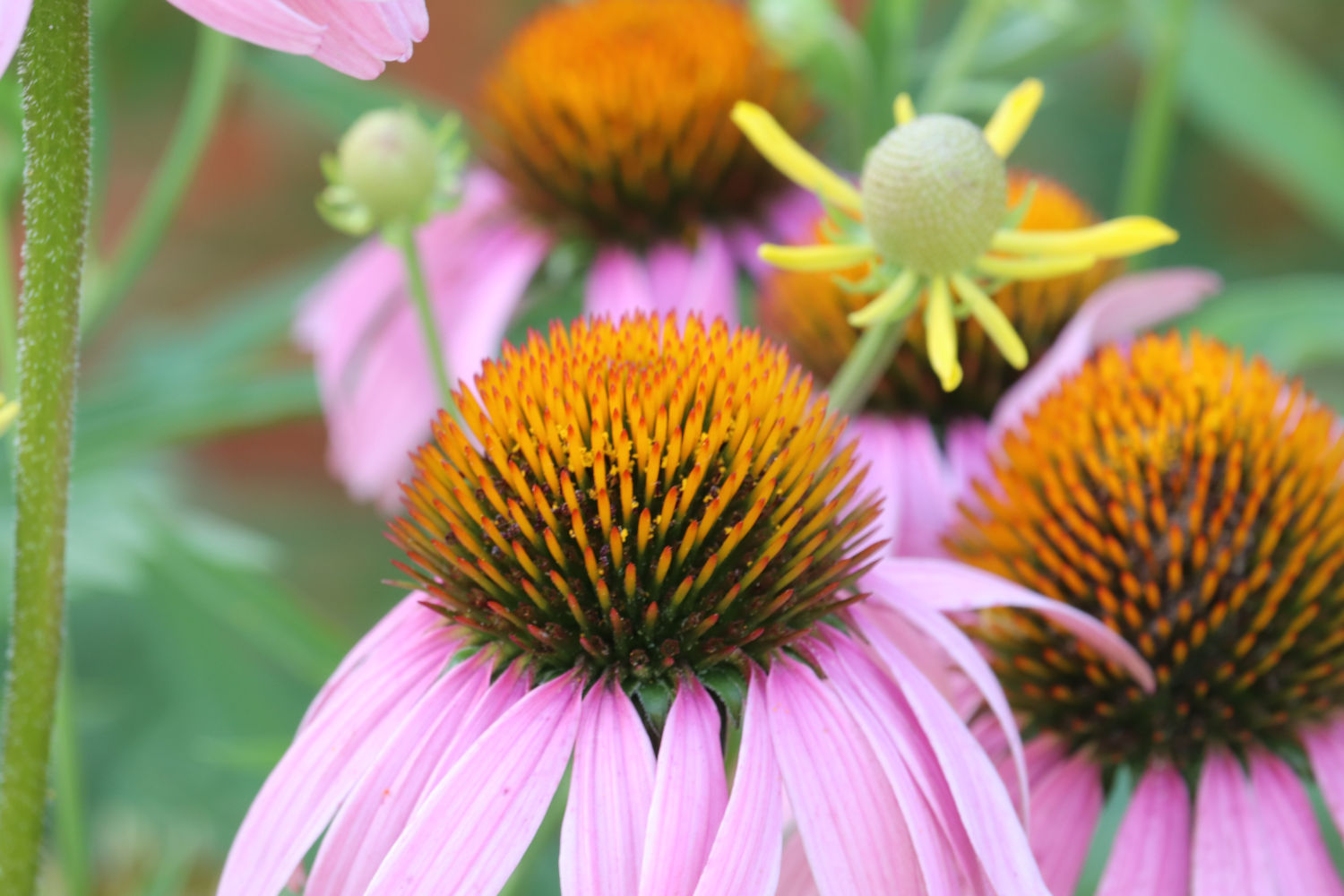
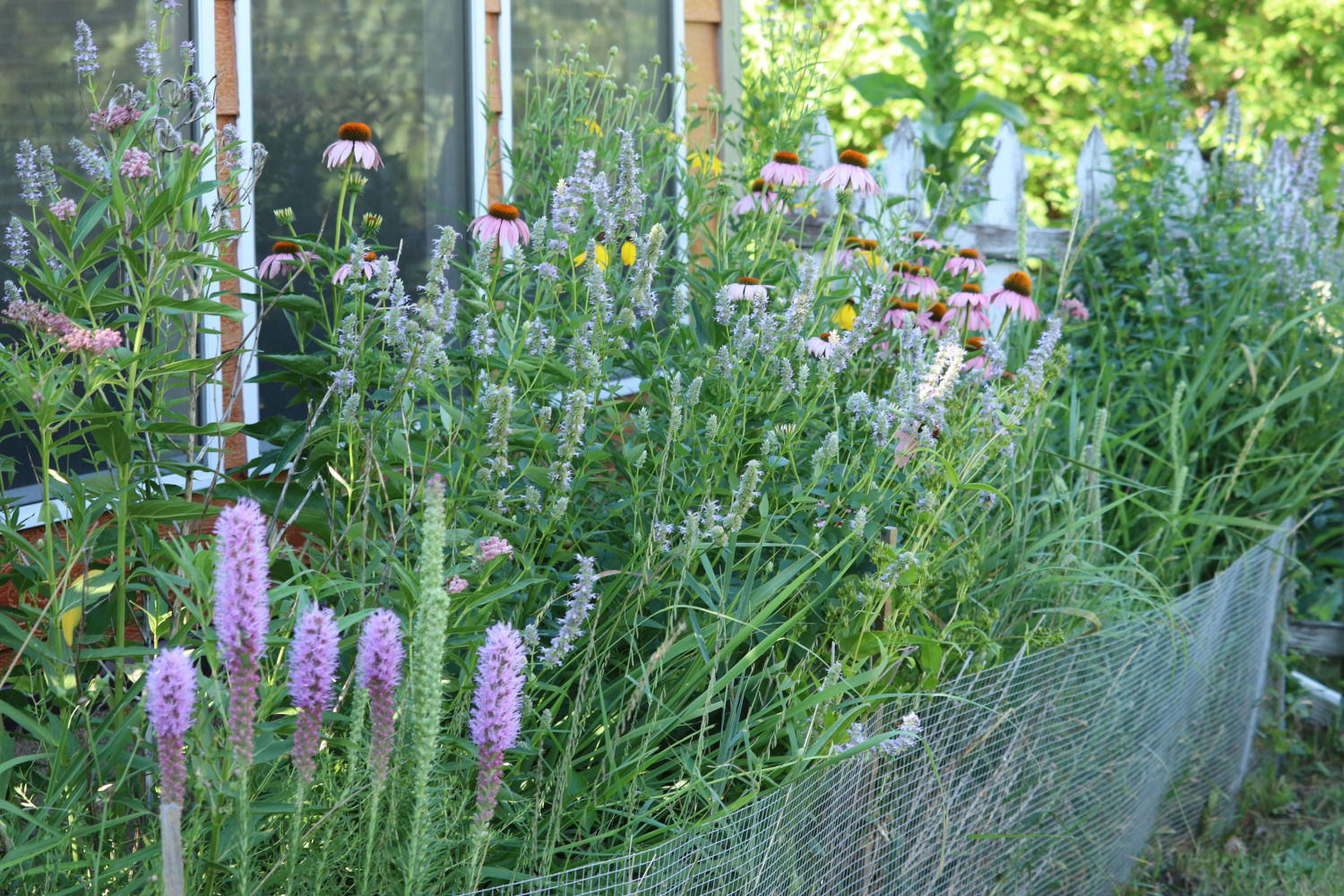
We’re about to waste our morning on a long trek north to get groceries, thanks to our local grocery store being a filthy pestilential breeding ground for disease, so I’m going to be gone for a few hours. I’ll leave you with a few views of the strip of native plants growing outside our sun room window, which Mary calls the Father’s Day Garden, because she planted it for me last year. It’s doing well!

It looks so good that I think we should dig up the whole lawn and let it flourish like this. Lawn mowers are the tools of the devil, you know.

Way to undermine my sense of relief, guy

These are not happy times for universities — after decades of declining support, the pandemic is hitting us hard, and the colleges that ought to know better are opening up for business because they can’t afford not to, which is a bad idea. Of course, it’s also an opportunity for some MBA in a business school somewhere to analyze universities from a capitalist perspective and make predictions about which are going to survive the current crisis, and which are going to break. It’s a bit ghoulish, and I’d rather efforts be spent on figuring out how to make universities viable again, but OK, let’s look into your crystal ball.

Business Week looks at over 400 universities and categorizes their ability to weather the storm. Schools will can a) thrive, which is the case for the big prestigious private colleges with massive endowments. Think Harvard. They’re going to whine and moan about having to peel off some of their riches, but they don’t have any real worries. Then there’s b) survive, where the school has enough status and income that they can make it through lean times and rebound. c) Struggle, is for schools that already have some lurking problems that will be amplified by the pandemic. And finally d) perish is the fate of those colleges that had severe issues already, like high tuition and dependency on foreign students.

There is a spreadsheet with the parameters and results. You can check you alma mater to see how it is predicted to do.

I’ve attended or worked at a long list of state schools: University of Washington, University of Oregon, University of Utah, Temple University. All are predicted to survive. I attended one small liberal arts college in Indiana, DePauw University, and it’s slated to perish, sad to say. Fortunately, my current employer, the University of Minnesota Morris, also a small liberal arts college, is expected to survive the coronavirus! Hurrah! The tea leaves have fallen in our favor!

Of course, any model is only as good as its assumptions and data, and this paragraph dispelled all of my optimism. It’s nonsense.

College is an expensive operation with a relatively inflexible cost structure. Tenure and union contracts render the largest cost (faculty and administrator salaries) near immovable objects. The average salary of a professor with a PhD (before benefits and admin support costs) is $141,476, though some make much more, and roughly 50% of full-time faculty have tenure. While some universities enjoy revenue streams from technology transfer, hospitals, returns on multibillion-dollar endowments, and public funding, the bulk of colleges have become tuition dependent. If students don’t return in the fall, many colleges will have to take drastic action that could have serious long-term impacts on their ability to fulfill their missions.

Average salary of a professor with a PhD is $141,476!!! On what planet? Here in Minnesota we have access to salary numbers as a matter of public record, and nope, no way is that accurate. The numbers for Morris are less than half that, but we are slightly underpaid compared to other institutions in the UM system. Many universities have found ways around those “near immovable objects”, hiring armies of underpaid adjuncts and using grad student labor for a pittance. Telling readers grossly inflated numbers for salary and pretending that is representative is just a way to focus blame on the faculty who are the soul of the university, and justify further actions to undercut their support. I hate it.

We just paid our taxes, so I’m painfully aware of our financial situation. Thanks to my decision to take a sabbatical, a voluntary and massive reduction in pay, my salary for the last two years has been about $40K. I’m grateful for it, and it’s enough to live a modest academic life, but to imply that it’s excessive for a senior position with decades of seniority that required about ten years of training to land is rather offensive and stupid. Yes, the majority of the expenses for a university is people, big surprise. You’re paying people to teach and do research, would you rather that real estate and buildings form the bulk of the expenses?

Anyway, great job undermining your own analysis, Scott Galloway. As always, pretending a university is a widget factory is a bad interpretation that makes your whole thesis suspect.

Doomsday arrives in November

Expect chaos and revolution after the election, because this president is not going to make a peaceful, lawful transition.

Got your pantry stocked up? Bottled water? Plywood for boarding up your windows? Prepared to hunker down for a good long while? You might want to start getting ready now.

This is part of his re-election campaign, I suspect. “Vote for me, or I will fuck you up!”

Planning another evening of Minecraft

You can watch, Tuesday, 21 July, at 7pm Central!

I have a plan: I’ve tweaked up my house, but I’m missing something: I haven’t seen a single spider in the entire game. I need to correct that, so we’re going spider hunting. Warning: I might use this as an excuse to talk about spiders. Also, I’ve spotted a desert temple, and you know what I think of temples — let’s loot it!

I was also thinking that in the future this might be more fun with more players. If you’re interested, we could try to get a few people on http://mc.sitosis.com/, and try to organize a group session. They’re taking applications, and it’s free.

Deborah Birx’s reputation will never recover

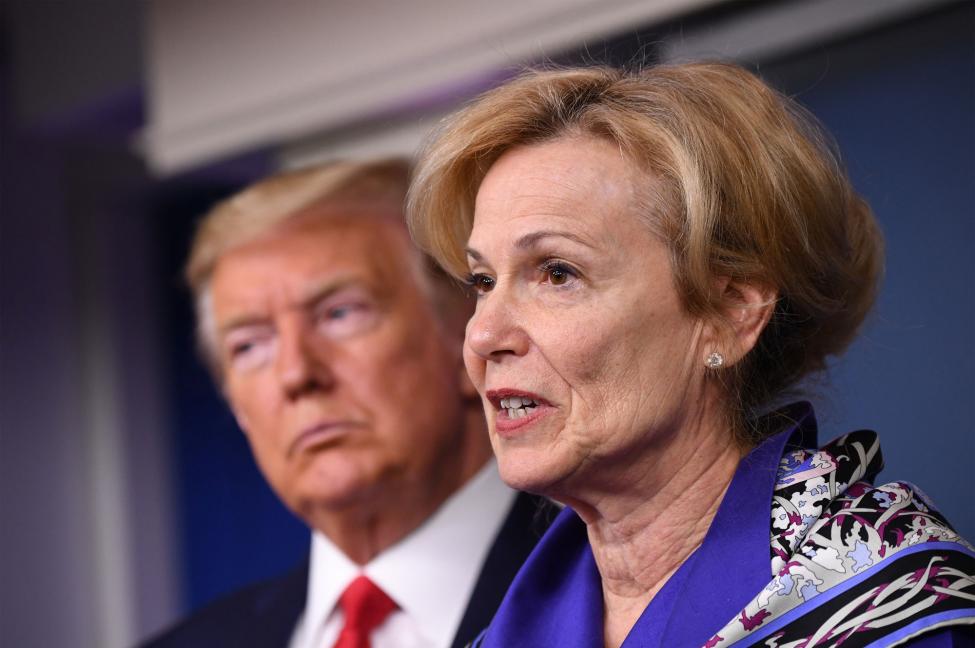
Which is only fair, since her enabling of Trump is a catastrophe from which the nation will never recover. The NY Times has a piece on how Trump failed the pandemic test, and Birx plays a prominent role in it.

For scientific affirmation, they turned to Dr. Deborah L. Birx, the sole public health professional in the Meadows group. A highly regarded infectious diseases expert, she was a constant source of upbeat news for the president and his aides, walking the halls with charts emphasizing that outbreaks were gradually easing. The country, she insisted, was likely to resemble Italy, where virus cases declined steadily from frightening heights.

On April 11, she told the coronavirus task force in the Situation Room that the nation was in good shape. Boston and Chicago are two weeks away from the peak, she cautioned, but the numbers in Detroit and other hard-hit cities are heading down.

A sharp pivot soon followed, with consequences that continue to plague the country today as the virus surges anew.

In April. I remember April. Did anyone think we were on the right path in April? We’d shut down my university, but already I was seeing people refuse to accept it, clamoring to get back to bars and beaches.

Dr. Birx was more central than publicly known to the judgment inside the West Wing that the virus was on a downward path. Colleagues described her as dedicated to public health and working herself to exhaustion to get the data right, but her model-based assessment nonetheless failed to account for a vital variable: how Mr. Trump’s rush to urge a return to normal would help undercut the social distancing and other measures that were holding down the numbers.

Yeah, models built on assumptions, like that Americans wouldn’t be stupid, and that Trump wouldn’t encourage that stupidity. Just the fact that Donald Trump is president should tell you how wrong that is.

Inside the White House, Dr. Birx was the chief evangelist for the idea that the threat from the virus was fading.

Unlike Dr. Fauci, Dr. Birx is a strong believer in models that forecast the course of an outbreak. Dr. Fauci has cautioned that “models are only models” and that real-world outcomes depend on how people respond to calls for changes in behavior — to stay home, for example, or wear masks in public — sacrifices that required a sense of shared national responsibility.

Again, a responsible nation would not have elected Donald Trump.

Dr. Birx’s belief that the United States would mirror Italy turned out to be disastrously wrong. The Italians had been almost entirely compliant with stay-at-home orders and social distancing, squelching new infections to negligible levels before the country slowly reopened. Americans, by contrast, began backing away by late April from what social distancing efforts they had been making, egged on by Mr. Trump.

The difference was critical. As communities across the United States raced to reopen, the daily number of daily cases barely dropped below 20,000 in early May. The virus was still circulating across the country.

Italy’s recovery curve, it turned out, looked nothing like the American one.

Nope. Because Italians were smarter than Americans…or rather, I should say, Italians didn’t have failed leaders who were modeling the worst possible behavior for containing the infection, and didn’t have scientists feeding their delusions.

Other nations had moved aggressively to employ an array of techniques that Mr. Trump never mobilized on a federal level, including national testing strategies and contact tracing to track down and isolate people who had interacted with newly diagnosed patients.

“These things were done in Germany, in Italy, in Greece, Vietnam, in Singapore, in New Zealand and in China,” said Andy Slavitt, a former federal health care official who had been advising the White House.

“They were not secret,” he said. “Not mysterious. And these were not all wealthy countries. They just took accountability for getting it done. But we did not do that here. There was zero chance here that we would ever have been in a situation where we would be dealing with ‘embers.’ ”

We could still take those actions that other nations did — in fact, we really ought to, despite the fact that it’s late and those measures will cost more and we’re still going to suffer the tragic consequences of our failures — but we won’t. Classes start in a month, and my university still plans on opening, and I’m going to have to teach in-person labs, and students will still be moving into the dorms, and will still be gathering in the cafeterias for meals as a group, and will probably still be heading out to the bar for quarter taps on Thursday nights. It’s madness. If the University of Minnesota had asked me, I would have told them to slam on the brakes right now, refuse to enable the massing of students in one place, and teach online classes only for a year. The summer of 2021 would be the time to discuss cautiously reopening fully, but only if the pandemic was under control.

Nobody asked me. I was only told to prepare a plan for a limited reopening, not asked whether we should open at all.

At least I’m not a Birx making happy-clappy PowerPoints to show how everything is going to be just fine. When I’m feeling optimistic, I put the chances of me being dead within a year at about 10%.

Exactly what I’d expect in Portland

In what seems to have been an effective tactic this time, a naked protester faced down the cops.

Everyone who has been to the Oregon Country Fair or the naked bike rides in Portland knows that there is a culture of casual nudity among a subset of the state. It seems to have been used to good effect in this case. I’ve seen the photos of what rubber bullets and those pepper guns can do to clothed flesh, so this was incredibly brave.

What if they made a protest, and nobody wore any clothes? What if the powerless embraced their vulnerability and threw themselves into actions that would inevitably lead to carnage? The thugs in power might be initially taken aback, but I don’t think they’d hesitate for long.

More spiders! But only trustworthy spiders, please

There has been a pleasant change to my in-box. I’m used to getting hate-mail and gay porn, but nowadays I get a flood of spider mail. People are taking photos of the spiders they’re noticing around their house and sending them to me! Some of you might think that’s worse, but I’m thrilled! It means I’m getting through to people and helping them appreciate biology more, which is exactly what I want to do. The only problem right now is that I’m getting so many photos that I can’t acknowledge them all — sorry, but I do like them.

Although I do have to mention one problem. I was sent a link to this article about an interesting spider phenomenon, which reports that “climate change is making spiders more aggressive.” As someone getting more interested in spider behavior, and planning some potential student projects around that kind of stuff I’ll be able to do over the winter. However, the article is about a paper by Jonathan Pruitt, and I have to remind you all — Jonathan Pruitt has been under suspicion of having fabricated data, and multiple papers have been retracted.

It’s been a bad couple of weeks for behavioral ecologist Jonathan Pruitt—the holder of one of the prestigious Canada 150 Research Chairs—and it may get a lot worse. What began with questions about data in one of Pruitt’s papers has flared into a social media–fueled scandal in the small field of animal personality research, with dozens of papers on spiders and other invertebrates being scrutinized by scores of students, postdocs, and other co-authors for problematic data.

Already, two papers co-authored by Pruitt, now at McMaster University, have been retracted for data anomalies; Biology Letters is expected to expunge a third within days. And the more Pruitt’s co-authors look, the more potential data problems they find. All papers using data collected or curated by Pruitt, a highly productive researcher who specialized in social spiders, are coming under scrutiny and those in his field predict there will be many retractions. The furor has even earned a Twitter hashtag—#PruittData.

That guy is going to be tainting the field for years, and I can’t trust his work until it’s been replicated.

I’ve had about enough of 2020

John Lewis is dead. Ruth Bader Ginsburg is being treated for liver cancer. Canadians had been building monuments to Nazis after WWII. And, well, Portland, Oregon.

If this were an epic fantasy novel, this is the part where all hope is lost, the cause of goodness is doomed, despair overwhelms our brave heroes…and then, a shining silver army crests the hill, eagles swoop in, the evil fortress collapses, and the bad guys fall into lava-filled crevasses. Huzzah! Except this isn’t a fantasy novel, dammit.

Portland is the test case. This is where fascism is practicing its tactics.

A block west of Chapman Square, Pettibone and O’Shea bumped into a group of people who warned them that people in camouflage were driving around the area in unmarked minivans grabbing people off the street.

“So that was terrifying to hear,” Pettibone said.

They had barely made it half a block when an unmarked minivan pulled up in front of them.

“I see guys in camo,” O’Shea said. “Four or five of them pop out, open the door and it was just like, ‘Oh shit. I don’t know who you are or what you want with us.’”

Federal law enforcement officers have been using unmarked vehicles to drive around downtown Portland and detain protesters since at least July 14. Personal accounts and multiple videos posted online show the officers driving up to people, detaining individuals with no explanation of why they are being arrested, and driving off.

The tactic appears to be another escalation in federal force deployed on Portland city streets, as federal officials and President Donald Trump have said they plan to “quell” nightly protests outside the federal courthouse and Multnomah County Justice Center that have lasted for more than six weeks.

Strange men in camo swooping in with unmarked civilian vehicles and hauling people away…where’s the transparency, due process, the goddamned justice? What’s to stop some Proud Boys or other paramilitary jagoffs doing the same thing? You know that they’re planning to spread this tactic to other cities next, and eventually, people getting picked up will be ‘disappeared’.

Perhaps you pin your hopes on the November elections. Just keep in mind that getting rid of Trump won’t instantly erase these people in power within the police and our terribly numerous federal offices that support monstrous thugs like those “police”. This is a new institution metastasizing and growing, and it won’t disappear even if you lop off the head.

No eagles. No shining elves. Get used to it.