I’m going to pretend it was my whining that prompted this move

It’s probably good news, if the FDA beats the start of the semester, which is in two weeks, on the 25th. The University of Minnesota will require vaccinations!

Upon formal Food and Drug Administration (FDA) approval of any COVID-19 vaccine (anticipated in the coming weeks), the University will add the COVID-19 vaccine to those immunizations already required for students, with appropriate exemptions. With the comfort associated with FDA approval, we will join a growing list of public colleges and universities across the country that are taking a similar approach, including, but not limited to, Michigan State University, Purdue University, the University of Florida, and many of the nation’s leading private colleges, including many in Minnesota.

Actually, it’s unlikely it was my nagging — much more likely that they noticed all those rival schools were beating us to the punch.

The morning harvest

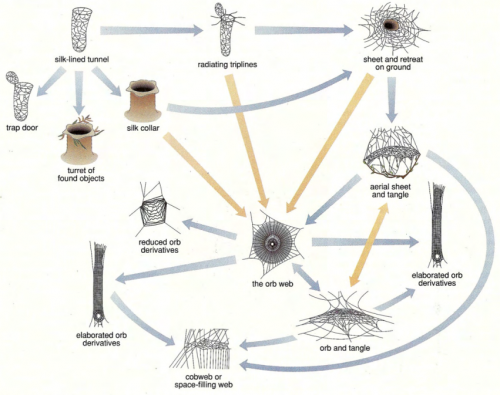
Never,ever dust or clean, that’s my motto. We looked over our neglected sun room and garage, and look what we found:

That’s a Parasteatoda egg sac, which probably contains between 20 and 100 spider embryos.

But that’s not all. We collected seven egg sacs and 4 fertile mamma spiders, all from two rooms in my house, and now sitting in vials while I anxiously await the Hatchening. Which will probably occur next week.

I’m kind of dreading this — it’s like everything happens all at once, and then I’ve got a gigantic swarm to maintain. I better set up some more fly bottles today, they’re born hungry.

Makes you think…

On my bad days, I wonder whether this might not be a good idea.

Of course, then I consider the down sides. The expense and energy of making all these mulchers, loading up all the tankers with goo, transporting it to New York, and then spraying it all out into Central Park. The shaping is kind of impossible, too, because I’m pretty sure the slime would slump into a mess that would flow into the streets and drip off the edge of the island into the Hudson and East River.

There might be some other minor difficulties.

Anthropologists and archaeologists say trans rights

A Navajo two-spirit couple is seen in this historic photo from the collection of the Museum of New Mexico. Photo by Bosque Redondo, 1866.

Do I need to state the obvious again? Biologists keep telling everyone that sex and gender are a lot more complex and diverse than the binary bill of goods the ideologues try to sell you. Now let’s add another scientific discipline shouting the truth at the public, with Archaeologists for Trans Liberation.

Human biology extends beyond and between “Male” and “Female”

The erasure of the complexity of sex and gender beyond simple binaries is a function of contemporary transphobic ideologies within archaeological analyses and not a reflection of past peoples’ lives. Moreover, this erasure risks providing fodder for accounts of the past that are used to further marginalize trans and gender fluid people.

Identifying and understanding past people’s conceptions and experiences of gender is not straightforward. The further back one goes, the fewer and more fragmented the traces of people’s lives become and the more complicated it is to interpret and understand them. We work from scraps to construct narratives that are messy, ragged and rarely twine together.

It’s a very thorough article, and well referenced. I especially appreciate the bits we mere biologists don’t know as much about.

Our current social organization, based around strict lines delineating gender, primary sex characteristics, and sexuality, is a relatively recent phenomenon. It emerged as part of European hegemonic colonialism and serves to enforce and maintain capitalist norms in the home and wider society (Monaghan 2015). An imposed and rigid gender binary regulates reproduction (a concern of nationalist states), breaks down Indigenous and non-European kin connections and families (perpetuating genocide), and positions the household as a site of capitalist surplus accumulation (through regulated social roles and relations of (re)production) (Morgensen 2010, 2012).

Indigenous studies and settler colonial studies critics such as Deborah Miranda (2010) and Scott Lauria Morgensen (2011) have documented the ways in which colonial governments engaged in violent projects of gender normalization targeting Indigenous individuals and communities. Daniel Justice (2010) draws on archaeological materials as resources for inspiring queer Cherokee worldviews, politics, and modes of belonging. Sisseton-Wahpeton Oyate scholar Kim TallBear, in her academic writing (2018) and public scholarship (Wilber, Small-Rodriguez and Keene 2019), explores the way binary structures colonised bodies and beds, breaking and distorting traditional kin relations.

Such practices seem to have been a regular or even necessary force in sustaining European colonial violence across the globe. Religious strictures against ‘sodomy’ (which often glossed a range of non-heteronormative sex practices) were frequently used by European colonial and religious authorities to punish gender nonconforming individuals in Africa and South America. Epprecht notes that the British South African Company was particularly enthusiastic in prosecuting “homosexual crimes” during its first year of occupation of Zimbabwe, suggesting the commonplace nature of non-heteronormative relationships prior to Colonization, and “[indicating] a reflexive defense of patriarchal, heterosexual masculinity by the homophobic representatives of the colonial state” (Epprecht 1998: 217). British colonial sodomy laws, despite no longer being in place in the U.K., remain on the books in many colonised countries, and continue to drive state violence and acts of bigotry against queer and gender diverse people (Sanders 2009; Semugoma 2012).

That does explain why so many of the status quo warriors are vehement in their denial of the science.

Trapped by racial genetics…get out now!

I learned two things from this peculiar article, DNA Testing Forced Me To Rethink My Entire Racial Identity: that there is a terrible undercurrent of self-loathing among some black people, and that there is a pervasive over-emphasis on genes vs. culture. The latter I already knew, the former I guess I should have known.

The story is that the author, whose last name is Garcia, always assumed she was Hispanic, even though her family had no hint of Hispanic culture and didn’t even speak Spanish. Then, they took genetics tests. Shock, horror, they were just…black Americans.

The Garcias are led by a pair of oddball patriarchs who could give Clark Griswold a run for his money: my father, Joe, 71, and his brother, Tony, 68. My dad and uncle identify culturally as African-American — they were raised by a black woman from rural Maryland. But according to the family history, their father was of Mexican-Indian descent, hence the last name.

Note that important point: they identify culturally as African-American. Why would you think a genetic test would trump your lived experience?

Well, last summer, Uncle Tony sent in his DNA sample for my niece’s school project, and what ensued was a chain of existential group texts and conversations involving all the Garcias, former Garcias, and anyone married to a Garcia.

My uncle’s ethnic breakdown identified him as more than 70 percent African and 20 percent European.

“No Spanish! Not one drop!” texted my cousin Tony, an attorney in Baltimore and Uncle Tony’s son, referring to the fact that we apparently had no Mexican roots. As if we’d all missed that part.

What do they think it means to be Mexican? There is no such thing as genetically Mexican: the people of Mexico are incredibly diverse, with no one unique genetic signature. If that 20 percent European didn’t include any Spanish loci, and there were no Native American indications, then yes, it is unlikely (but not impossible) that they have Mexican ancestry. But so what? They are who they are, with their own distinct family history.

They did their own research, non-genetic research. They talked to their family, and found out about the author’s paternal grandfather.

“I once overheard my mom and dad say Uncle Joe was a wanted man,” said another new cousin, Marie Shakoor, 71. “He was wanted under the name Will Worthey, and that’s why we think he changed his name to Joe Garcia.”

My cousin Tony said our grandfather exhibited classic escapist behavior, which supported Shakoor’s theory.

“If you’re trying to change your name and your identity, you’re typically trying to evade law enforcement,” Tony said. “Choosing to be Mexican-Indian may not have been our grandfather’s first choice, but it may have been the better option.”

Now that’s interesting and genuine, maybe a little unsavory, but it’s real. The genetic test was irrelevant. Again, who you are isn’t just an assortment of alleles, it’s the cultural influences that shape you far more. Tracing your genetic lineage is just one component of your identity, and probably not the most important part.

Then the story gets a little disturbing, when we find out why the author thought it was so important.

At first, I was in disbelief. What about all those people who came up to me on the streets of New York City and started speaking Spanish? They never doubted for a moment that I was Hispanic. And I had always killed it in Spanish class, seemingly because I had Latino blood coursing through my veins. Accepting that I wasn’t a Garcia felt dangerously close to abandoning my identity.

Oh god, so many misconceptions…language isn’t transmitted via “Latino blood”. New York is a polyglot city, and culturally Hispanic people might speak their language to you because that’s how they’re comfortable talking. When I visited Iceland, strangers tended to address me in Icelandic — it wasn’t because they had a psychic understanding that I, too, was a native. Genetically, I’m also about 4% Neandertal, but I am culturally 0% Neandertal — I can’t knap a flint worth a darn and don’t have any of the words of their language flowing in my veins.

But to cringe even more…

The more I learned, the less I wanted to know. I had always liked being a Garcia. Growing up in a black community, where surnames like Smith, Brown and Jackson are ubiquitous, being a Garcia set me apart.

Perhaps more significantly, being a Garcia meant I could trace my roots to an ancestral homeland — albeit Mexico, not Africa. This was noteworthy when you consider that many African-Americans lost all ancestral ties as a result of slavery and the slave trade.

Slavers committed a great crime, breaking the chain of cultural transmission for millions of people, and denying human beings knowledge of families and tradition and customs. But why would you want to set yourself apart from your neighbors and friends who had similar family histories?

Maybe one great result of these genetic tests is that the author will stop trying to set herself apart from her community. An additional benefit would be if she’d also see the limitations of genetics, and take pride in who she actually is.

Chickenshit universities still oppose a vaccine mandate

It’s ridiculous. The solution is so obvious and clear: require that all faculty, staff, and students at a university be vaccinated. You can get the vaccine for free — here in Minnesota, they now pay you $100 to get vaccinated. So fucking do it already. It’s for the kids.

The number of kids contracting the coronavirus is rising. In the week that ended with July 29, more than 70,000 children got COVID-19, representing nearly a fifth of all cases. Though a vanishingly small number of kids have died of the disease—358 since the start of the pandemic, as of July 29—some states, like Florida, now have dozens of children hospitalized. Few parents want to hear that their little ones may get COVID-19, no matter how low their odds of death.

The problem, of course, is that kids under 12 can’t be vaccinated yet. Until they can be, the best way to protect them is simple: Vaccinate all the eligible adults and teens around them. “The single most important thing parents can do is to get vaccinated and to vaccinate all their kids who are 12 and older,” Yvonne Maldonado, an epidemiologist and pediatric infectious-disease professor at Stanford Medical School, told me.

Kids spend the majority of their time around adults, and existing contact-tracing data suggest that adults are the ones getting kids sick. “There is with Delta, we think, a reasonably high household attack rate, meaning that one person in the household gets sick and other people are at risk of getting sick,” says Ashish Jha, the dean of the Brown University School of Public Health.

Look at the stats.

The public schools here haven’t opened yet. But next week there will be an influx of adults for the county fair (I guarantee that very few will be masked, and a large number will be unvaccinated), and a few weeks after that we’re going to be bringing in young adults from all over the region to attend the university, and then we add kids from all over the county coming in to mingle at the public school. The proper microbiological analogy for this is not a petri dish — it’s a great big flask of growth medium, constantly stirred and agitated.

That steep surge in under 17 infections is not going to plateau or even slow, given these conditions. The least the university could do is get as many adults vaccinated as possible. To do otherwise is insane. Criminally insane. I’ve lost any possibility of trusting my employers ever again.

I get to visit my grandkids one last time this summer before I get thrown into the churning flask that is Stevens County, Minnesota, and then I think I’m going to have to quarantine myself from all children for a while.

Who’d have thought the Wounded Knee Massacre was an appropriate setting for a romance?

Last year, the Romance Writers of America experienced some spectacular drama — accusations of racism, infighting, lawsuits, etc. I guess it’s a problem when the membership of your organization consists of a large number of white women, with a disproportional representation of Karens. Things had settled down, I guess, and everyone promised to do better.

This year, they were handing out their annual awards (called the Vivian), and one of the winners was…a love story about two white Christians set against the backdrop of the Wounded Knee Massacre? Which was just an accident? And it’s OK, because god forgives the American cavalry? And the author is actually named “Karen”!

This year, the Vivian in the “Romance with Religious or Spiritual Elements” category was awarded to Karen Witemeyer for At Love’s Command, and a number of its critics thought RWA was Stuck on Stupid again. Witemeyer’s book, says Religion News Service, “opens with a depiction of the Wounded Knee Massacre that some readers and authors have criticized as romanticizing the killing of Native Americans.” The love interest, an officer in the 7th Cavalry, commands the Lakota Sioux to put down their weapons, citing Scripture as his rationale. When a religious leader from the tribe begins chanting, a shot goes off (on purpose? by accident? from whose side?), the order to fire is issued and scores of men, women and children are slaughtered. Then the hero asks God’s forgiveness and, eventually, claims his woman.

What were they thinking, and worse, what was the author thinking? She should have just titled it Custer’s Revenge. You can read a more thorough summary of the mess, or you can even read the beginning of the book for free. I don’t recommend it. It’s Christian apologetics and historical revisionist nonsense, pretending that it was all the fault of the Lakota and that the soldiers didn’t really want to murder women and children.

This is the account of American Horse, a chief of the Oglala Lakota: “There was a woman with an infant in her arms who was killed as she almost touched the flag of truce … A mother was shot down with her infant; the child not knowing that its mother was dead was still nursing … The women as they were fleeing with their babies were killed together, shot right through … and after most all of them had been killed a cry was made that all those who were not killed or wounded should come forth and they would be safe. Little boys … came out of their places of refuge, and as soon as they came in sight a number of soldiers surrounded them and butchered them there.” Some women were found killed two miles from the massacre — they’d been running away, and the cavalry ran them down.

Did you know the US government handed out 20 medals of honor to the soldiers who perpetrated the slaughter? It rather diminishes the “honor” part. I’m beginning to suspect that “awards” are kind of a bad idea.

The result of this appalling romance writing award was, you guessed it, another implosion at the RWA.

The irony of the choice did not escape several who took to social media to protest: On Twitter, author Jenny Hartwell shared an email she sent to RWA board members: “Romances have flawed heroes and heroines who find redemption through the transformative power of love. However, aren’t there some people who shouldn’t be redeemed? Nazis. Slave owners. Soldiers who commit genocide.” Hartwell continued: “Can this author write this story? Absolutely. Free speech is important. But should our organization give this story its highest award? Absolutely not.”

Others resigned their membership in RWA. One member, Bronwyn Parry, served as a judge for the Vivians. “I had high hopes for the VIVIAN award and the strategies for cultural change that the RWA Board have put in place over the past two years,” Parry said in a statement on her website. She expressed pleasure at the diversity of the offerings in the category she was judging — a stated goal of the awards — but was dismayed when all the finalists in that category were (including her) white women writing heterosexual characters. When At Love’s Command was named a winner, she asked that her book be withdrawn from final consideration and her name removed from the finalists’ list.

The award has since been rescinded — I guess the judges opened their eyes and actually read the book they were honoring.

Don’t take your kids to this movie

In 1969, Night of the Living Dead was unleashed on the innocent children of America. I didn’t get to see it — I was only 12 — but I do recall browsing through my grandparents’ latest issue of The Reader’s Digest and reading Roger Ebert’s notorious review of the movie. He gave away the entire plot (we didn’t worry about spoiler warnings back then), and made it sound like we should dread the corruption of America’s youth by all the on-screen gore.

I don’t think the younger kids really knew what hit them. They were used to going to movies, sure, and they’d seen some horror movies before, sure, but this was something else. This was ghouls eating people up — and you could actually see what they were eating. This was little girls killing their mothers. This was being set on fire. Worst of all, even the hero got killed.

It’s hard to remember what sort of effect this movie might have had on you when you were six or seven. But try to remember. At that age, kids take the events on the screen seriously, and they identify fiercely with the hero. When the hero is killed, that’s not an unhappy ending but a tragic one: Nobody got out alive. It’s just over, that’s all.

I felt real terror in that neighborhood theater last Saturday afternoon. I saw kids who had no resources they could draw upon to protect themselves from the dread and fear they felt.

Man, I really had to go see this thing. I probably didn’t get around to it until I was in college, maybe ten years later. Then I’d be totally unimpressed by the bloody violence, but highly impressed by the scariness and the build-up of fear and the way it subverted most horror movie tropes — at the time, that is. It’s since become practically horror movie dogma. It’s a classic. Many of you will probably remember Night of the Living Dead, it’s still got some impact, despite being a low-budget black-and-white zombie flick about a single night of terror, and most of you will just shrug off the scene of the undead scooping up pig’s intestines out of a dummy lying on the ground. That’s kind of not the point of the story.

In 2021, The Suicide Squad arrived on the big screen, the pandemic had loosened its grip (don’t worry, it’s coming back), and I’m old enough to slip my leash and see it on opening night. I was looking forward to it. I am so tired of grimdark superhero movies, where Batman levels whole city blocks with his tank and Superman smashes through apartment buildings, killing citizens (indirectly and offscreen, usually) and everyone is so damned angry all the time. I also remember the Christopher Reeve Superman movie which was just as radical as Romero’s Dead, because it was all about optimism and hope and a superhero who was truly good, and I feel like I could use some of that light-heartedness. I expected some of that bright comic book color popping off the screen, with a cheerful pop-music soundtrack, and a plot about people coming together through adversity, you know, like James Gunn’s Guardians of the Galaxy.

Holy christ, this is not that movie.

There is so much explicit death and murder and blood in The Suicide Squad. You know that in a Zack Snyder movie the heroes will be cavalier about meting out justice — cars will explode, presumably killing their occupants, and buildings will collapse in a shower of broken glass and dust and brick, presumably destroying the families inside, but you won’t see the corpses. This movie…well, the chains have been unshackled. It’s about an expendable team of bad guys on a mission to destroy everything on a South American island, and right at the beginning we’re going to see half that team annihilated. I hope you weren’t looking forward to finding out about more of those characters you see in all the trailers, because they’re going to set foot on the island and get faces blown off, literally. Goodbye, Nathan Fillion, Pete Davidson, Flula Borg, and even Sean Gunn as the repellent Weasel — those are little more than walk-on cameos before their characters are blown away in a splatter of fluids and body parts.

If the protagonists are going to get treated as scrap bits falling off the butcher counter, that’s nothing compared to the military trying to defend their island of Corto Maltese. They are literally monster fodder. The shark man eats them alive, and they die screaming. The shark rips off a guy’s head and pops it into his jaws, complete with a shot of the head grimacing, its eyes rolling, blood spurting from the stump of its neck. People are ripped in half, both lengthwise and at the waist, showering everything in blood. The Squad guns down an entire camp of revolutionary allies on accident, and they just say “Oops, my bad”, and the leader of the revolution shrugs it off.

There is a kaiju rampage in the last quarter of the movie, but don’t think back to Godzilla or King Kong marching through a cardboard city. Nope, that wouldn’t be realistic. The streets are full of dead civilians. The monster stomps on fleeing mobs. People are crushed by all the masonry falling from the office buildings. James Gunn is not timid about the slaughter, as Zack Snyder would be…and given that Snyder is a murderous monster towards his characters, that is a surprising sentence.

Otherwise, though, this is a well-crafted movie that skips along lightly, keeps the story going, has distinctive characters, and even is loaded with humor. It’s a black, cynical humor, but sure, I guess bits of it were funny.

I do wonder what the Roger Ebert of 1969 would make of 52 years of cinema progress, though. This isn’t even a horror movie. Genre has lost all meaning.

Friday Cephalopod: Glassy

How about a glass octopus?

Yes, I’m bringing back the Friday Cephalopod. I have been diverted by my fascination with spiders, but I realized I can encompass multitudes, and my love for marine squishies never went away. I just can’t do much personally with cephalopods here in the middle of the Minnesota prairie — but I can still love them from afar.

They’re beautiful, but so are arachnids. Does that make me polyamorous?