It’s day two after the emergence of my S. triangulosa hatch. They’re starting to darken up and look less gelatinous…but still aren’t quite flitting about in their vial. I’ll probably give them some flies tomorrow.
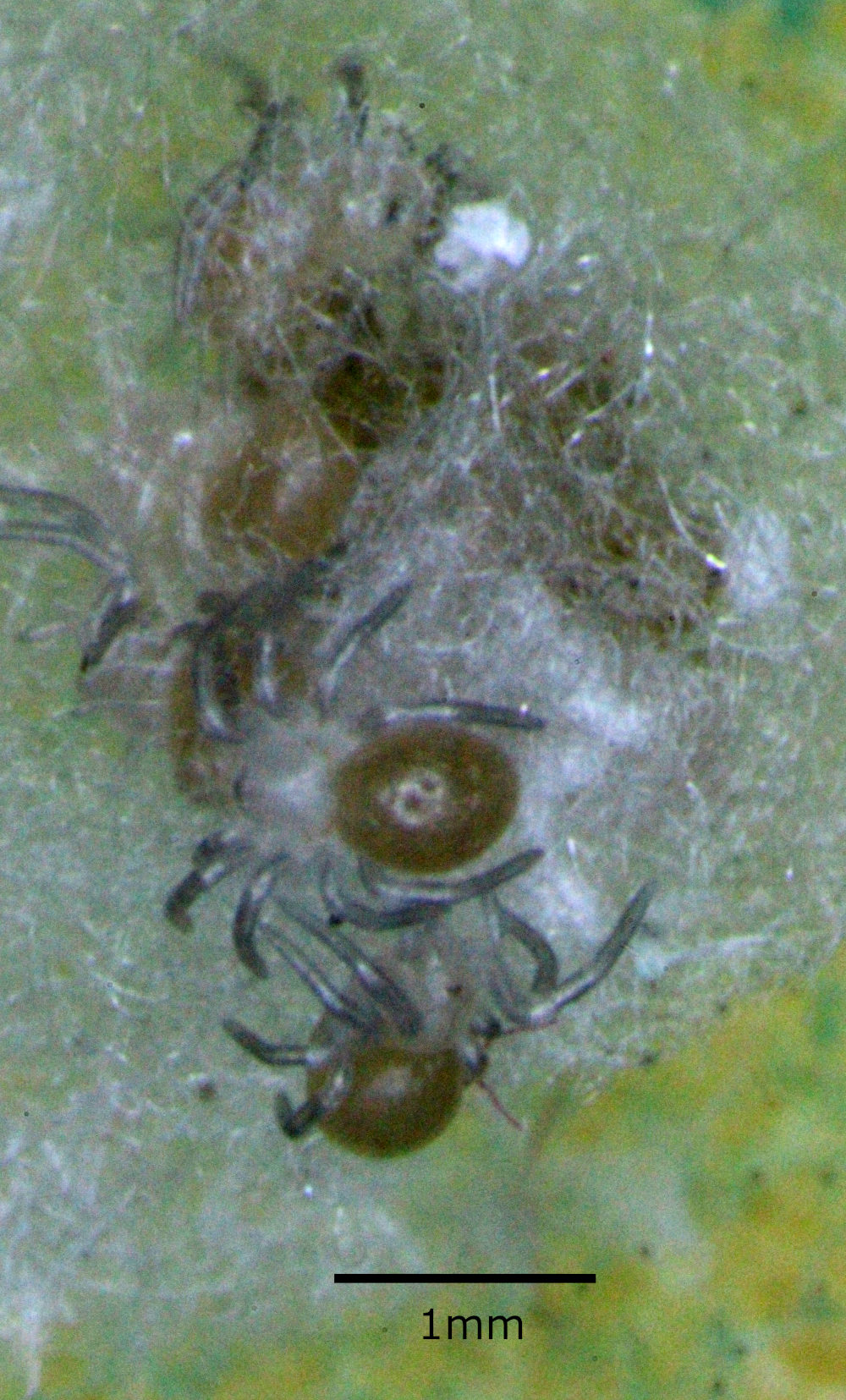

It’s day two after the emergence of my S. triangulosa hatch. They’re starting to darken up and look less gelatinous…but still aren’t quite flitting about in their vial. I’ll probably give them some flies tomorrow.

The lab is significantly cooler, at 20°C (the spiders are kept comfortable at 30°C in incubators) and our Steatoda triangulosa egg case has had a few feeble little spiderlings crawling out. Here’s one:
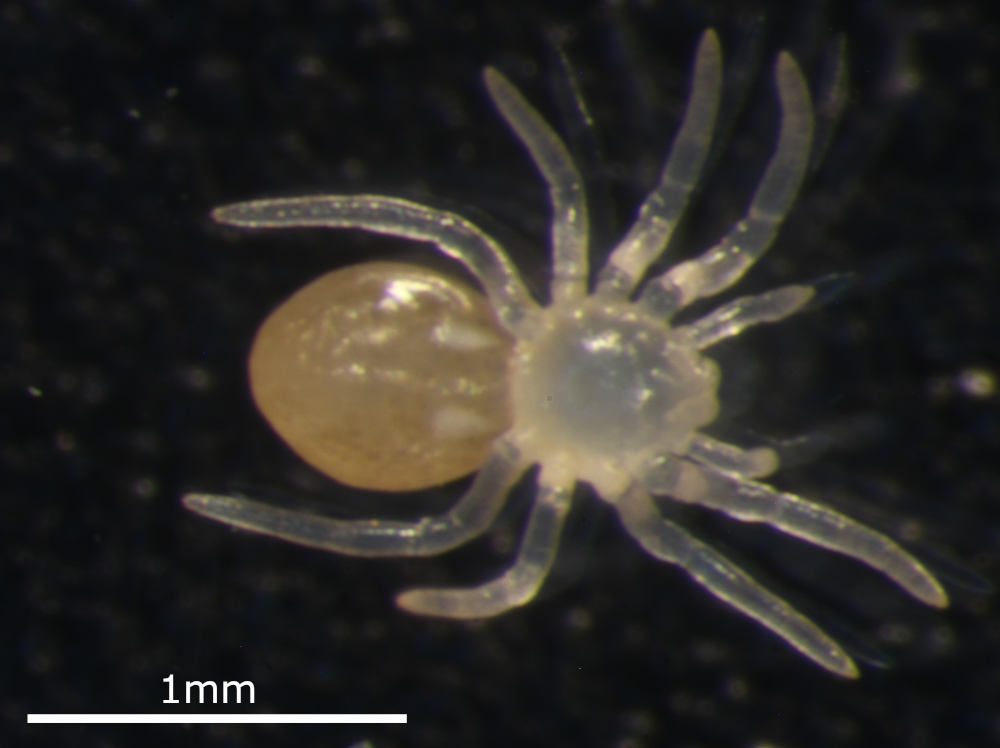
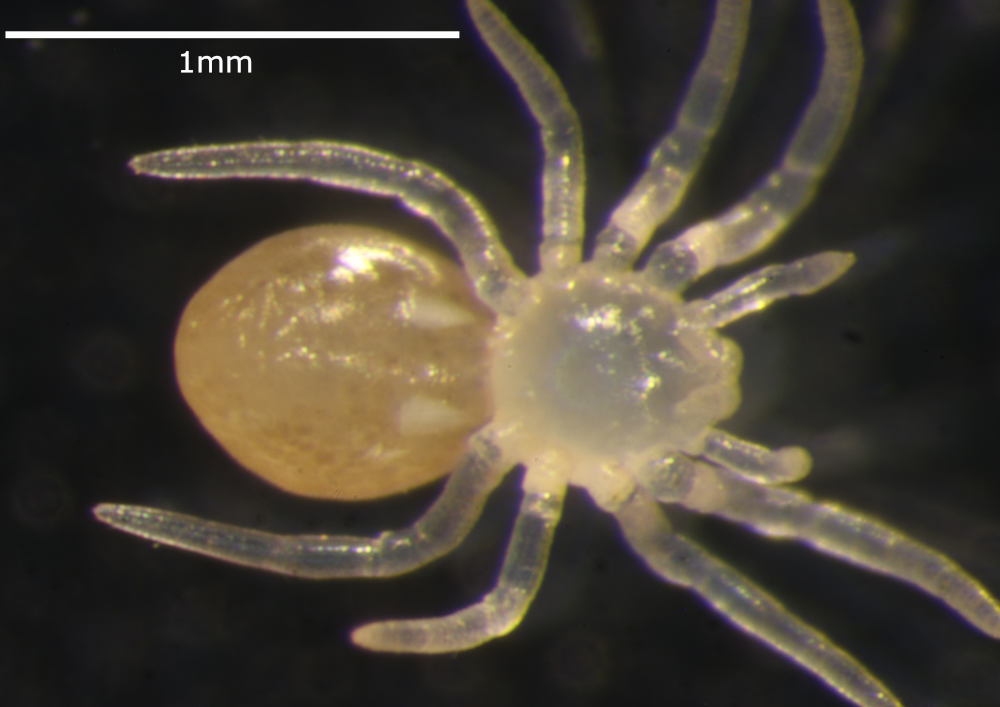
What do you think, adorable or irresistible? It was moving slowly, so it’s alive but still kind of weak and uncoordinated. Give ’em time, they’ll be hunting prey and gamboling about soon enough.
Also, useful information: S. triangulosa takes 17 days from laying to emergence from the egg sac at 30°C. File that away somewhere.

We walked into the lab today, and discovered someone has been helping. There was a gigantic lacy cobweb stretching from the sink across the lab bench to the microscope — we use that scope every day, so we know it wasn’t there yesterday afternoon, but had appeared magically overnight. I tried to photograph it with my phone, holding up a black heating pad behind it to provide contrast, but it was just too wispy and gauzy to capture. If you squint real hard you might see the grayish lines extending from the lower left upwards to the right. And if you can’t, well, you had to be there.
We looked around and couldn’t find the spider. It probably has a cozy cranny it’s cuddled up in when those clumsy humans come bumbling around.
We had to tear the web down because, like I said, we use the scope everyday. I’m hoping our little friend will web up everything else in the lab, though, because my dream would be to come to work in a huge spider web, the walls all cobbed up, and little spiders scurrying everywhere.

It’s spider feeding time at noon today. I’ll be in my lab, Sci 2390, just off the science atrium, with a bottle of flies, flicking them into containers of hungry predators. It’ll be good bloodthirsty fun.
Don’t worry, the flies are dispatched with admirable alacrity, so they don’t suffer for long.

Two things go together in the public mind: GMOs and Monsanto. I haven’t been a major crusader for GMOs, but whenever I’ve mentioned them (and my positive views toward them), I get emails accusing me of being a shill for Monsanto…but I detest the greedy corporate giant. If I were giving talks on GMOs, there’d be lots of disavowals of Monsanto, and I’d be begging people to not confuse the two.
Kavin Senapathy has been much more active on the GMO front, and she also wrestled with this problem. Now she explains all the ugly contradictions of dealing with Monsanto.
Everything I’d written and said in support of GMOs was factually correct, but my approach had been all wrong. It’s impossible to have a constructive conversation about GMOs without acknowledging that underlying the unscientific claims made by many GMO opponents is a legitimate desire for trustworthy behavior from the companies that dominate the agricultural marketplace.
For instance, I had dismissed the Non-GMO Project’s ever-present butterfly labels as an annoying tactic based on pseudoscience. But the label’s popularity showed that something in the Non-GMO Project’s narrative was resonating with the North American marketplace: The labels play to people’s desire for transparency, to their underlying lack of trust in the food system, and to their desire to have some say in the way our food is grown and made.
Yes! Every organism is genetically unique (almost) and has undergone some modifications — that we’ve moved from trial-and-error reliance on chance variation to directed modifications does not make the technique “bad”. What is bad, though, is the domination of agriculture by corporations that aren’t shy about using unethical skullduggery to maintain that position.
Senapathy is right. What needs to be done first is isolate capitalist villain Monsanto, hold them accountable for their behavior, and then, I think, GMOs will become a non-issue, as they should be.

It’s not. Read this Twitter thread and get some perspective on the kind of garbage that can trickle through peer review. It’s an analysis of a paper titled “YXQ-EQ Induces Apoptosis and Inhibits Signaling Pathways Important for Metastasis in Non-Small Cell Lung Carcinoma Cells”, which sounds fairly mundane — lots of things inhibit cancer cells in a dish. The curious question, though, is what the heck is YXQ-EQ? I’d never heard of it.
Read further and you discover it’s qigong, the traditional Chinese exercise and meditation system, which the author somehow applied to a petri dish full of cancer cells for 5 minutes. How that was done is not explained.

Further, it’s not just regular qigong, it’s Yan Xin Qigong, hence the acronym.
The first author’s name is Yan Xin.
There are four articles on this mysterious YXQ-EQ, all by the same author, on PubMed. I looked for an explanation of YXQ-EQ elsewhere on the web, and it’s only associated with quacky alternative medicine sites. Meditation is fine; arguing that your meditation cured your cancer is nonsense; but I don’t see how Yan Xin convinced a dish of cells to meditate, or do calisthenics, and somehow not a single reviewer bothered to insist that the methodology be more thorough.
The only way these multiple papers got published is if they had really lazy reviewers, or extremely biased reviewers.

I’m following some of the suggestions mentioned in the previous thread — specifically, I got some extension tubes. $20? I can afford that much, at least. They worked, really well! There was one catch: lighting. I knew it was always going to come down to lighting. The ring light I had was just too cumbersome, and I ended up juggling camera, LED lighting, and specimen, which required 3 hands, and even with a pair of tripods (eventually, as I wrestled) it was incredibly awkward — not the kind of thing where you can say, “Oooh! A bug!” and whip your camera around for a fast picture. When you’re also experimenting with the aperture and the exposure, you need 4 hands.
So now I need a better way to manage the lighting, so I need to buy more stuff. This is the nature of photography, everything funnels you into making more purchases to feed your habit. I saw this video that emphasized inexpensive solutions, so I’m going to try an extender arm and a flash cord. I tried looking for a biology site that would show me how to grow a few more arms, and came up with zilch.
So I’m getting a few more low-cost widgets. This is going to set me on that slippery path to prowling camera stores, looking for a quick fix, isn’t it? I’ll be in a ditch in skid row, begging passers-by for a few coins for a new ND filter.
Anyway, a few rough pictures of a caterpillar below the fold. It’s good enough for me to see the potential.

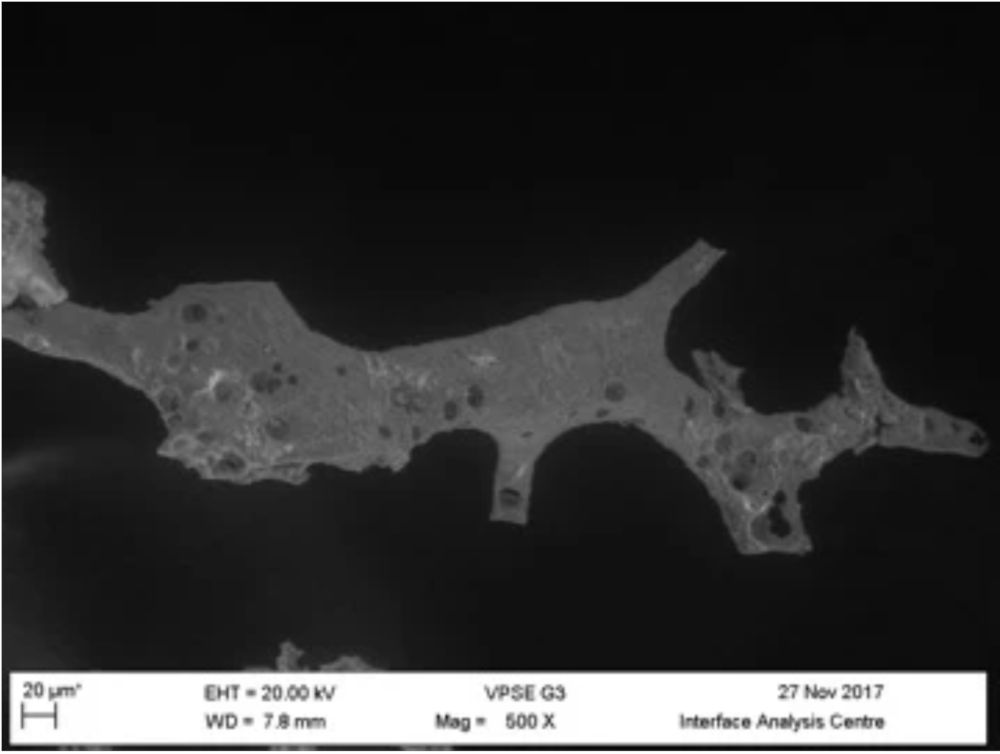
A lot of e-ink has been spilled over the claim, primarily by Schweitzer, that intact, ancient soft tissue can be found inside fossilized dinosaur bones. She made some interesting observations of mysterious stuff extracted from fossils, but what it is and whether it’s actually preserved dinosaur tissue has been contentious. It’s baffled me, that’s for sure, since it didn’t jibe with my understanding of chemistry, and I couldn’t imagine some SF stasis field operating inside old bones. Here’s an excellent summary of the problem.
Reports of dinosaur protein and complex organic structure preservation are problematic for several reasons. Firstly, it remains unclear how such organics would be preserved for tens of millions of years. If endogenous, putative dinosaur soft tissues should contain diagenetically unstable proteins and phospholipids, vulnerable to hydrolysis, although the released fatty acid moieties from phospholipids could be stabilized through in situ polymerization into kerogen-like aliphatic structures. At 25°C and neutral pH, peptide bond half-lives from uncatalyzed hydrolysis are too short to allow for Mesozoic peptide preservation, although hydrolysis rates can be decreased through terminal modifications and steric effects on internal bonds. Estimates based on experimental gelatinization suggest that, even when frozen (0°C), relatively intact collagen has an upper age limit of only 2,700,000 years. Secondly, the instances of dinosaur peptide preservation reported are older than the oldest uncontested protein preservation reported by at least an order of magnitude. The oldest non-controversial peptides include partially intact peptides from 3.4 Ma in exceptionally cold environments, as well as short peptides bound to eggshell calcite crystals from 3.8 Ma stabilized via unique molecular preservation mechanisms. The youngest non-avian dinosaur bones are 66 million years old; on both theoretical and empirical grounds, it seems exceptional that original proteins could persist for so long.
Yeah, what he said. Complex molecules like proteins and nucleotides are going to degrade slowly over time, so what’s preventing breakdown in these fossils? Idea like polymerization or chemical modification into more stable molecules have been floating around, but it’s hard to get around the empirical fact that even a molecule as stable as collagen is going to fall apart, eventually.
These authors do an exhaustive analysis of the organic compounds found in ancient fossil bones, and most persuasively, do positive controls with recent bones and bones that are fossilized, but younger, and what they find is that the original organic material degrades steadily and somewhat predictably, and that dinosaur bones are destitute of original dinosaur soft tissue. They can find collagen in, for instance, shark teeth from the Pleistocene-Holocene, but it’s undetectable in older specimens.
So how to explain the spongy soft stuff found by some investigators inside dinosaur bones? Previous investigators failed to take into account the ubiquity of microbes.
Previous studies have often reported purported endogenous ‘soft tissues’ within fossil dinosaur bone. However, these studies often do not fully address fossil bones being open systems that are biologically active. This can be seen in field observations, in Dinosaur Provincial Park and elsewhere, where fossil bone is frequently colonized by lichen on the surface or overgrown and penetrated by plant roots in the subsurface. This forces researchers to consider that subsurface biota (e.g. plant roots, fungi, animals, protists, and bacteria) could contaminate bone. Given that fungi can produce collagen, the need to rule out exogenous sources of organics in fossil bone is made all the greater. Even deeply buried bone has the potential to be biologically active, given the high concentration of microorganisms in continental subsurface sedimentary rock. The analyses presented here are consistent with the idea that far from being biologically ‘dead’, fossil bone supports a diverse, active, and specialized microbial community. Given this, it is necessary to rule out the hypothesis of subsurface contamination before concluding that fossils preserve geochemically unstable endogenous organics, like proteins.
I find the idea that bacteria and fungi can successfully infiltrate rocks and bones far more likely than that bone chemistry can somehow suspend the laws of thermodynamics for a hundred million years. I’m going to tentatively accept the explanation of recent bacterial contamination for the soft tissue in fossil bone controversy.
The study of fossil organics must consider potential microbial presence throughout a specimen’s taphonomic history, from early to late. Microbial communities interact with fossils immediately following death and after burial, but prior to diagenesis. Microbes are known to utilize bone and tooth proteins and fossil evidence of early fungal colonization has even been detected. More recent microbial colonization of fossil bone will occur as it nears the surface during uplift and erosion in the late stages of the taphonomic process. Furthermore, given that microbes can inhabit the crust kilometres below the surface, it might be predicted that bone remains a biologically active habitat even when buried hundreds of meters deep for millions of years. The extensive potential for microbial contamination and metabolic consumption makes verifying claims of Mesozoic bone protein extremely challenging.
Remember, dino fans, “life will find a way”. Bacteria are amazing.
Also, it seems to me that Schweitzer et al. have discovered an interesting and possibly important phenomenon, but it needs to be studied from the perspective of microbiology, not paleontology.
Saitta ET, Liang R, Lau MC, Brown CM, Longrich NR, Kaye TG, Novak BJ, Salzberg SL, Norell MA, Abbott GD, Dickinson MR, Vinther J, Bull ID, Brooker RA, Martin P, Donohoe P, Knowles TD, Penkman KE, Onstott T (2019) Cretaceous dinosaur bone contains recent organic material and provides an environment conducive to microbial communities. Elife. 2019 Jun 18;8. pii: e46205. doi: 10.7554/eLife.46205.

I’m getting a little worried about my wife. She’s been getting a bit…obsessive. She’s been gardening this summer, and sure, it’s great getting fresh vegetables, but she’s taken to getting down on her knees and looking under every leaf and at every stem, and I think she’s currently spending more effort pursuing spiders than anything else. It’s a little weird. So she just had me run to the lab and bring back a dozen vials so she can continue her perverse hobby of peering at arachnids.
This is her latest discovery, a lovely tetragnathid.
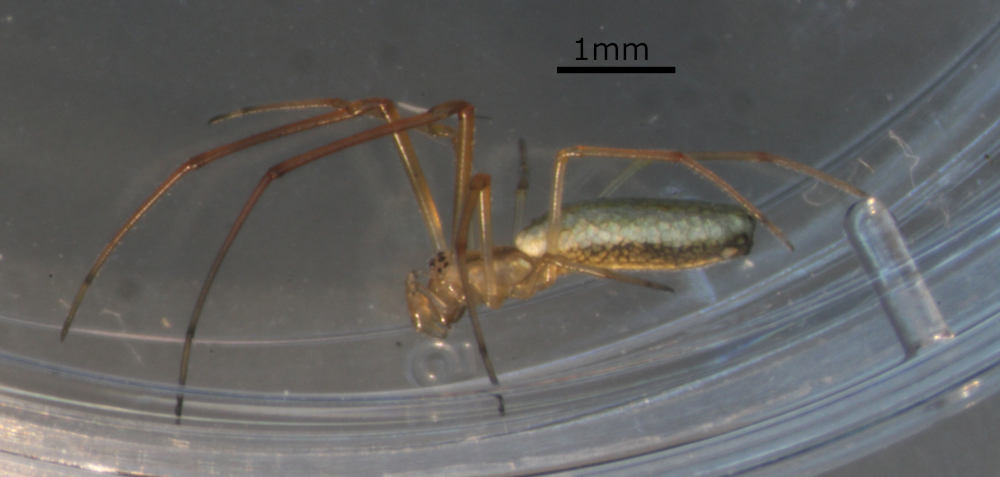
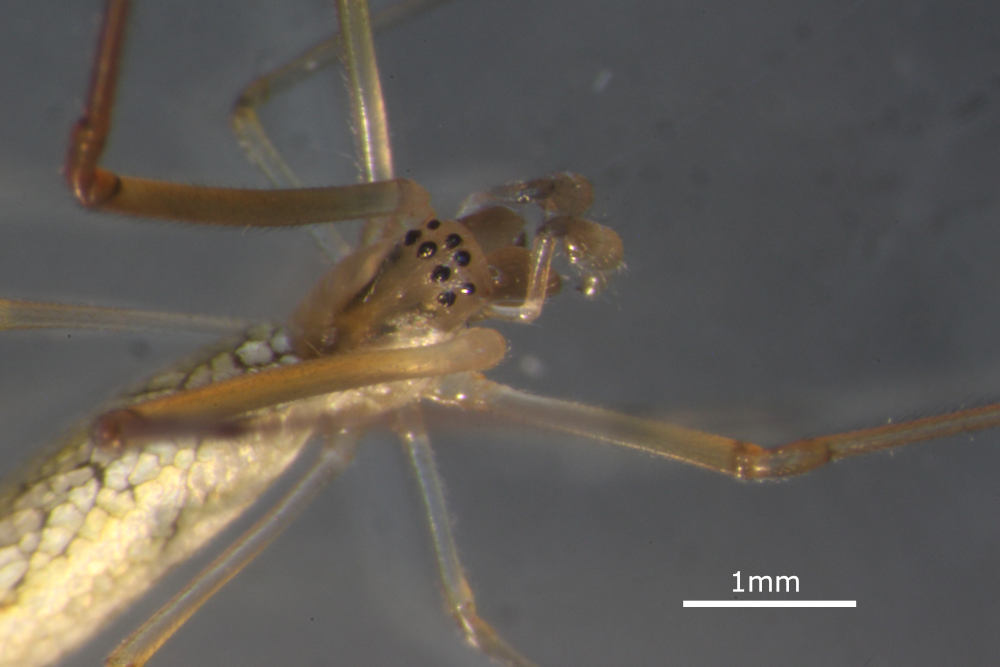
Do you think she’s getting rather carried away with this spider mania? What should I do?


It is. I’m doing a few panels at Convergence…a fairly light load, compared to previous years. They didn’t have as many sciencey panels to sign up for this time around, perhaps in part because I and several others contributed more to panel suggestions in previous years, and I was a terrible slacker this year. That might be a good thing, or I’d have stuffed the place with spiders. Stephanie Zvan has posted her panel list, and here’s mine:
Friday, July 5
10:00pm
Insects, in Sex
Insects are already wildly fascinating but do you know some of the mating behaviors and outcomes? Praying mantis may be one insect you think of, because the female will often eat the male after copulation, but what are other examples of unusual behaviors? Participants: Arthur Kneeland (mod), Jessica Wyn Miller, PZ Myers, Kelly Jo Fredrickson
I’m going to pretend that one is actually about arthropods, so I can talk about spiders.
Saturday, July 6
11:00am
Weird Biology
Animals that don’t exactly die, terminal reproduction, and aspen tree colonies. Weird and cool stuff about the world around us. Participants: Laura Okagaki-Vraspir, Lathan Murrell, Brittany Ann Kerschner, PZ Myers, Colleen C Caldwell (mod)
There is no such thing as weird biology. Or rather, there is no such thing as normal biology.
Sunday, July 7
2:00pm
Ask a Scientist
Kid-friendly panel to ask questions to scientists. Participants: Renate Marie Fiora (mod), Miriam Krause, Shannon Negaard-Paper, PZ Myers, Sarah Molasky
I don’t have to prepare for that one. Who knows what oddball questions people will ask? Maybe they’ll ask about spiders.
