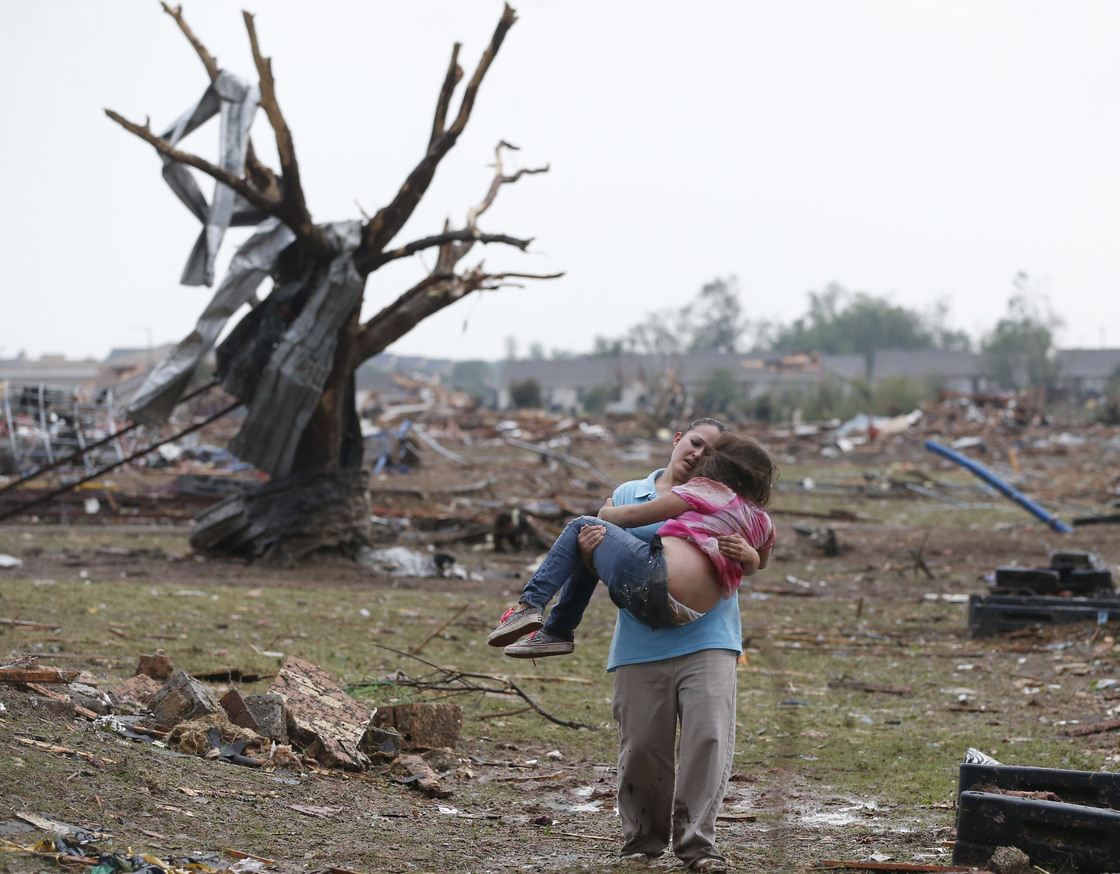
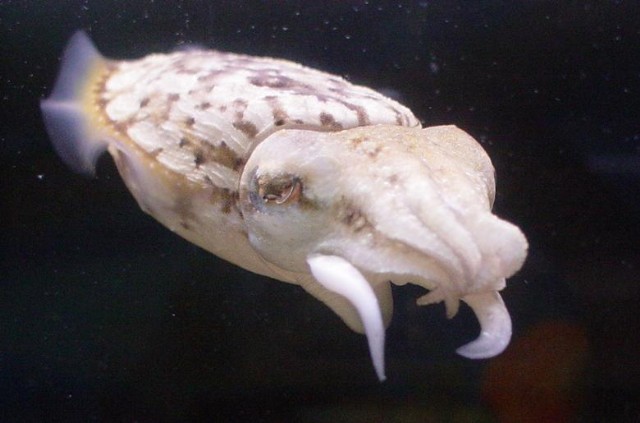
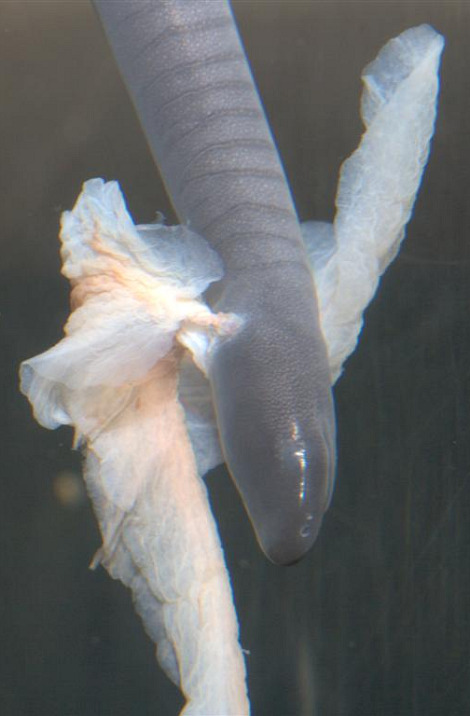
At first glance, I thought it was an epiploon or omentum, but no, it’s a lovely octopus mother tending her brood. Go hug your mom right now, or if she’s not nearby, hug a mollusc instead.
Gary Marcus, the psychologist who wrote that most excellent book, Kluge: The Haphazard Construction of the Human Mind, has written a nice essay that tears into that most annoying concept that some skeptics and atheists love: that without a proof, we’re incapable of dismissing certain especially vague ideas. It’s a mindset that effectively promotes foundation-free ideas — by providing an escape hatch from criticism, it allows kooks and delusional thinkers, who are not necessarily stupid at all, to shape their claims to specifically avoid that limited version of scientific inquiry.
Marcus goes after two representatives of this fuzzy-thinking concept. Schmidhuber is an acolyte of Kurzweil who argues for a “computational theology” that claims that there is no evidence against his idea, therefore the universe could be a giant software engine written by a great god-programmer. Eagleman is a neuroscientist who has gotten some press for Possibilianism, the idea that because the universe is so vast, we should acknowledge that there could be all kinds of weird possibilities out there — even god-like beings. “Could be” is not a synonym for “is”, however, and science actually demands a little more rigor.
Some people love to claim that an absence of a single definitive test against an idea means that it is perfectly reasonable to continue believing in it. Marcus will have none of that.
In particular, Eagleman, who drapes himself in science by declaring to “have devoted my life to scientific pursuit,” might think of each extant religion as an experiment. Followers of many religions have looked for direct evidence of their beliefs, but (by Eagleman’s own assessment) systematically come up dry. And, crucially, statisticians have shown decisively that a collection of failed efforts weighs more heavily than any single failed effort on its own. The same thing happened, of course, when scientists looked for phlogiston, and cold fusion, too. Nobody has proven cold fusion doesn’t exist, but most scientists would assign a low probability to it because so many attempts at replicating the original have failed. Any agnostic is free to believe that his favorite religion has not yet been completely disproven. But anyone who wishes to bring science into the argument must acknowledge that the evidence thus far is weak, especially when it is combined statistically, in the fashion of a meta-analysis. To emphasize the qualitative conclusion (X has not been absolutely proven to be false) while ignoring the collective weight of the quantitative data (i.e., that most evidence points away from X) is a fallacy, akin to holding out a belief in flying reindeer on the grounds that there could yet be sleighs that we have not yet seen.
That’s why I’m an atheist. Not just because there is no evidence for any god, but because all the available evidence points towards natural processes and undirected causes for the entirety of space and time. I wish people could get that into their heads. When we atheist-scientists go off to meetings and stand up for an hour talking about something or other, we generally aren’t reciting a religious litany and saying there’s no evidence for each assertion; rather, we go talk about cool stuff in science, how the world actually works, what the universe really looks like…and our explanations are sufficient without quoting a single Bible verse.
My version of science is puttering around quietly in an air-conditioned lab. Peter Ward’s version involves travel to exotic oceans, pirates, death, and crippling risks to life and limbs. And cephalopods.
Excuse me, I have to go curl up quietly in a dark corner and feel inadequate for a while.
How else is Google Maps going to get coverage of the 70% of the planet underwater?
(via Cephalove)
In a piece explaining why he won’t take Templeton money, Sean Carroll says why promoting godlessness is important. It’s how the universe works, something quite fundamental to how science operates.
Think of it this way. The kinds of questions I think about—origin of the universe, fundamental laws of physics, that kind of thing—for the most part have no direct impact on how ordinary people live their lives. No jet packs are forthcoming, as the saying goes. But there is one exception to this, so obvious that it goes unnoticed: belief in God. Due to the efforts of many smart people over the course of many years, scholars who are experts in the fundamental nature of reality have by a wide majority concluded that God does not exist. We have better explanations for how things work. The shift in perspective from theism to atheism is arguably the single most important bit of progress in fundamental ontology over the last 500 years. And it matters to people … a lot.
Or at least, it would matter, if we made it more widely known. It’s the one piece of scientific/philosophical knowledge that could really change people’s lives. So in my view, we have a responsibility to get the word out—to not be wishy-washy on the question of religion as a way of knowing, but to be clear and direct and loud about how reality really works. And when we blur the lines between science and religion, or seem to contribute to their blurring, or even just not minding very much when other people blur them, we do the world a grave disservice. Religious belief exerts a significant influence over how the world is currently run—not just through extremists, but through the well-meaning liberal believers who very naturally think of religion as a source of wisdom and moral guidance, and who define the middle ground for sociopolitical discourse in our society. Understanding the fundamental nature of reality is a necessary starting point for productive conversations about morality, justice, and meaning. If we think we know something about that fundamental nature—something that disagrees profoundly with the conventional wisdom—we need to share it as widely and unambiguously as possible. And collaborating with organizations like Templeton inevitably dilutes that message.
I’m teaching cancer biology in the fall, and if you want to get a head start over the summer, here are the texts we’re going to be using:
Biol 4103: Cancer Biology
Introduction to Cancer Biology, by Robin Heskith
Cambridge University Press, 1st ed.
ISBN 978-1107601482
The Emperor of All Maladies: A Biography of Cancer, by Siddhartha Mukherjee
Scribner, reprint ed.
ISBN 978-1439170915
Last time around, I used Weinberg’s The Biology of Cancer, which is an excellent, in-depth text, but was really heavy going for an undergraduate course — it’s more of a graduate/MD level reference book. The Heskith book is very good, giving more substantial introductions to the difficult concepts, and also as a bonus, is one third the price. Just having general chapters on cell signaling in normal cells, for instance, will be a big help in bringing students up to speed.
For you outside observers, sorry, but this class won’t be going the supplementary blogging route. I’ve got some other cunning schemes I’m going to try on the students instead.
The skeptics are circling the wagons. I knew they would. It’s what they always do to defend their naive version of “science”.
Stephanie Zvan has a good post rebutting Daniel Loxton’s defense of the skeptical delusion that atheism is “unscientific”. I can summarize his argument briefly: “I’m an atheist, skeptics have gone after some religious claims, and science can’t tell the difference between invisible dragons and nonexistent dragons and therefore doesn’t care.” And of course he props all this up with the claim that this is the official scientific view.
No, it is not. There is no one true scientific method; testability is not the sole criterion that scientists use to work towards the truth; there is no absolute definition of what constitutes science (nor can there be, I would argue), which is why the demarcation problem is so difficult. Establishment skeptics love to parade their kiddie version of how science works as justification for dismissing atheism as a legitimate scientific position in a way that they would never do to homeopathy or UFOs or any of the other subjects they are willing to pursue. Why, I don’t know. I’ve always assumed it was a political ploy to avoid annoying numerous donors and the mass media, but if they insist it isn’t, I’m going to have to fall back on another explanation: they’re just ignorant.
These skeptics love their little gotcha games. Their ideal is the experiment that, in one session, shoots down a claim cleanly and neatly. So let’s bring in dowsers who claim to be able to detect water flowing underground, set up control pipes and water-filled pipes, run them through their paces, and see if they meet reasonable statistical criteria. That’s science, it works, it effectively addresses an individual’s very specific claim, and I’m not saying that’s wrong; that’s a perfectly legitimate scientific experiment.
I’m saying that’s not the whole operating paradigm of all of science.
I’m saying that we use all kinds of methods: reason, empiricism, inference, hypothesis testing, modeling. Sometimes it conforms neatly to the standard diagram of the scientific method you’ll find in the first chapter of your introductory biology textbook, and often it doesn’t. Science has more avenues to explore questions than just the insta-test skeptics favor, and you should mistrust skeptics who tell you that we know less than we do, because simplistic reasons, like testability.
Individual skeptics may have opinions about all those philosophical matters, but none of these are questions science can answer. As Novella and Bloomberg explained [in a well-known 1999 Skeptical Inquirer article], “science can have only an agnostic view toward untestable hypotheses. A rationalist may argue that maintaining an arbitrary opinion about an untestable hypothesis is irrational—and he may be right. But this is a philosophical argument, not a scientific one.”
Uh, guys? Science is a philosophy, a very specific one. That disavowal doesn’t even make sense.
And you know, I deal with creationists all the time who use arguments very much like skeptics’ to claim that paleontology is untestable and therefore unscientific. “Were you there?” Can you design a simple test that can be demonstrated on a stage to a crowd of onlookers that really shows that that fossil bone is 70 million years old? And the answer is that no, we can’t make our tests conform to the simplistic skeptic standard. That doesn’t mean they’re unscientific, or that we should be agnostic on the age of the earth.
I think this is where the skeptic movement’s foundation in stage magicians begins to hurt. They offer a valuable perspective — they’re far better at detecting intentional fraud than most scientists — but when your whole perspective on science is shaped entirely on criteria that make for a good show, your understanding suffers. And when it leads to stage magicians yelling from the stage at scientists that they don’t understand science, you’ve got a real hubris problem.
You know how real scientists treat untestable hypotheses? Pragmatically and operationally as invalid*. If you don’t even have an evidential chain of reasoning to lead to your hypothesis, we reject it out of hand. If that hypothesis, unsupported by evidence, further contradicts known properties of the universe, we can dismiss it as falsified, even without direct testing of that specific hypothesis…especially if such testing requires elaborate, expensive, time-consuming procedures with negligible likelihood of coming up with a useful result (and if there is no possible way to test your absurd claim, then fuck it, into the trash bin with it). When there are a thousand equally unjustifiable hypotheses being flung about with fanatical certainty and equal lack of reason, we cut the Gordian knot and reject them all and start working our way through known facts to determine a root cause of all the chaos.
I like Stephen Jay Gould’s definition of a fact:
In science, ‘fact’ can only mean ‘confirmed to such a degree that it would be perverse to withhold provisional assent.’ I suppose that apples might start to rise tomorrow, but the possibility does not merit equal time in physics classrooms.
By that definition, the non-existence of gods is a fact. Those scientific atheists, the New Atheists, that the skeptics scorn have been working their way down the objective chain of evidence, not trying to disprove gods with simplistic tests (because they’re too incoherent and contradictory), but developing better ideas that more accurately describe how the world works. They’ve been doing the hard work of science. When Victor Stenger can so eloquently describe the natural origin of the universe godlessly using mathematics and physics, when Richard Dawkins can explain the origin and modification of life without recourse to magic or the supernatural, it becomes perverse to withhold provisional assent and babble about being agnostic towards religious explanations. The New Atheists aren’t expressing mere opinions, they’re telling you about hard-earned knowledge about the real world.
And the skeptic movement has become an inbred circle of perversity. They disrespect that hard-working progressive pattern of scientific inquiry because it doesn’t fit neatly into their game-show model of science.
And, as Stephanie points out, they aren’t even consistent about it. Somehow, they insist that we must be agnostic towards religion, while not being so gentle towards alternative medicine, alien astronauts, or moon landing conspiracy theories.
You do realize that the moon landing conspiracy theories are exactly as ridiculous as religion, don’t you? Assertions of insidious agents carrying out elaborate plans, selective and distorted interpretations of the available evidence, avoidance of the actual, substantial evidence that there actually was a natural event…yet no skeptic is getting up and announcing that we must be agnostic about the moon landing, nor are they all beating up Phil Plait for his “unscientific” confidence that men have walked on the moon.
*And even there, there are exceptions: think of string theory. But the exceptions prove the rule that science is a lot more complicated than the neat tidy package into which movement skeptics want to tie it up.
…like I do, here’s a useful resource: Regular Care and Maintenance of a Zebrafish (Danio rerio) Laboratory: An Introduction. It’s text and a video guide to familiar procedures.
Unfortunately, it also assumes you have a commercial zebrafish rack, which if you buy the smallest size available, will set you back about $10,000. I’ve just been using an array of 5 gallon tanks, each with its own filter system, which is cheap to set up, but a pain to maintain. I’m going to bite the bullet and build my own DIY flow-through system this summer, though, which I expect will cost a few hundred dollars…which is more in my budget. If you want to follow along, here’s a paper on a Modular, Easy-to-Assemble, Low-Cost Zebrafish Facility — it’ll be something like that. It’s not exactly the kind of show aquarium you’d have in your home, but if all you care about is embryo throughput, it’s loads of fun and lower maintenance than what I’ve been doing so far.
Very useful: it’s a list of 154 denialist claims with short rebuttals to each. Bookmark it, everyone!
Boosting signal on this, because it’s potentially very urgent and the person at risk could be anywhere in the world at this point.
A week ago, on April 30, a visitor to the Kelso Depot in the Mojave National Preserve had a bat land on his neck. The bat — a Myotis lucifugus a.k.a. little brown bat — has since tested positive for rabies, and now San Bernardino County officials are trying to find the man. They don’t know if he was bitten or scratched: it wouldn’t take much of a bite to transmit the disease, and if that happened he’s got to get vaxxed.
Details on the incident and public health contact info are here. The guy doesn’t have a lot of slack before getting to the doctor at this point: onset of symptoms can start mere days after a bite. (Or years, which has caused people to falsely assume they’ve dodged a bullet.) Before symptoms start prevention is straightforward and no longer arduous. I’ve had rabies shots and they weren’t the worst injections I had that year. (Individual mileage varies there, but they’re way better than they were back in the day. Mine were a breeze.)
And it’s a good opportunity to remind people in bat and rabies country that while transmission of rabies from bats to humans is quite rare, bats exhibiting unusual behavior (like not being shy or nocturnal) should be given a wide berth and reported to local authorities.