It’s cold and windy out there, and I can’t feel my toes right now, and so I’m thinking…

Yeah.

It’s cold and windy out there, and I can’t feel my toes right now, and so I’m thinking…
Yeah.

All is made clear.
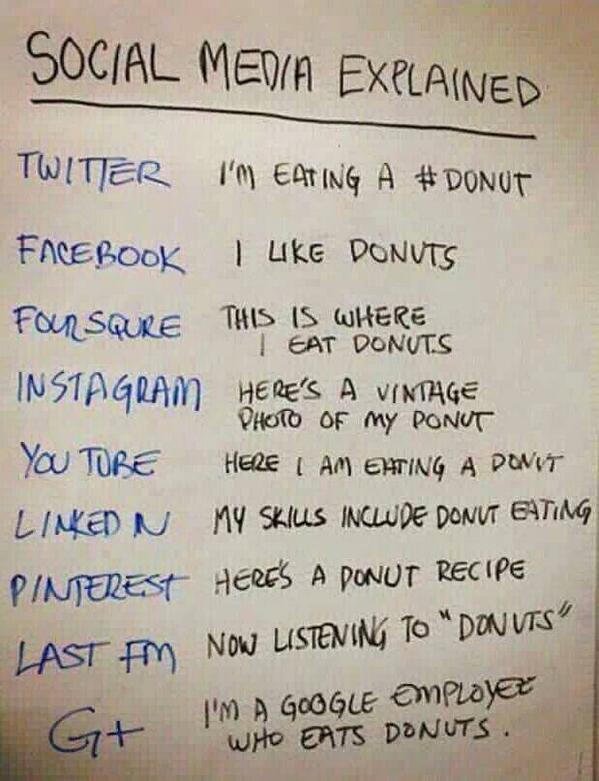
Oh, no, it left one off:
Blogs: A dated description of what it’s like to eat a donut, with links to other blogs by people who like donuts, and excoriations of blogs by people who don’t like donuts.

This entirely not-safe-for-work video purports to tell the true, scientifically accurate story of the Teenage Ninja Turtles. I don’t know — it seems to think all turtles are the same.


Deborah Blum has a terrific story about the toxicity of MCHM, the chemical that Freedom Industries dumped into West Virginia’s water supply (a plume of poison which is now on its way to Cincinnati, and eventually Indiana). The answer on the degree of toxicity is…we don’t know. It’s had minimal testing.
She summarizes the toxicity tests that have been done on animals, which found it is “slightly toxic”, but that it caused suffering in the animals at all levels of exposure. There have been no long term studies done.
Complement that reading with this personal story of a West Virginian living without running water — which also mentions the powerlessness of being poor in Appalachia.

Try asking difficult questions. I was reading this enthusiastic story about smart contact lenses, and I had one big one. It isn’t answered.
Now, Google’s taken another step in normalizing Glass. It’s unveiled a smart contact lens containing a silicon chip so small it’s the size of a piece of glitter.
The lens is intended to help diabetics track the glucose levels in their tears. It has a sensor embedded in the thin plastic and a wireless chip so that it can communicate with other devices. And engineers at Google’s secretive X labs are working on putting LEDs in the lens so that it can show users a visual warning if their glucose reaches dangerous levels.
Scale that up, and what you get is a version of Google Glass that fits in your eye.
Wait, wait, wait. The lens of your eye is not going to focus on something plastered on the surface of the lens. You aren’t going to be able to put a video screen equivalent on there and have text scroll by, for instance. I can see the specific example they mention working — a pulsing flash, out of focus and seen as a changing level of light, could work as an alert — but you’re not going to be able to scale that up into a heads-up display, for instance.
They have a video demo of a similar system. It’s a contact-lens-sized disc, all right, clamped in place with great big connectors leading into it, flashing a dollar sign under computer control. Yeah, I can see it when your video camera is focused on it from a foot away…but try sticking that directly on the lens and then shoot your video. It will be disappointing.
Miniaturizing circuitry is not news. There’s a problem in optics here that the gushing gadgeteers aren’t at all prepared to even think about.

You had to know just from the name that Freedom Industries had to be an exploiter — that’s how right-wing capitalist thugs always name their enterprises. No surprise: they’re filing for bankruptcy.
Freedom Industries, the company responsible for the chemical spill that left 300,000 West Virginians without tap water for the better part of a week, filled for Chapter 11 bankruptcy Friday.
“I think they underestimated the liabilities just a tad,” attorney Aaron Harrah, who firm filed a purported class action lawsuit against Freedom and West Virginia American Water Co., told the Wall Street Journal. According to the Charleston Gazette, the company’s assets and liabilities are each listed as between $1 million and $10 million. Freedom owes $3.66 million to its top 20 unsecured creditors, over $2.4 million in unpaid taxes dating back to at least 2000 and nearly $93,000 in Kanawha County property taxes, about half of which were past due and had become delinquent.
They haven’t paid their taxes in over a decade? And no one in West Virginia thought to crack down on the deadbeats, or that maybe a company that can’t pay their bills might be delinquent on safety maintenance as well?

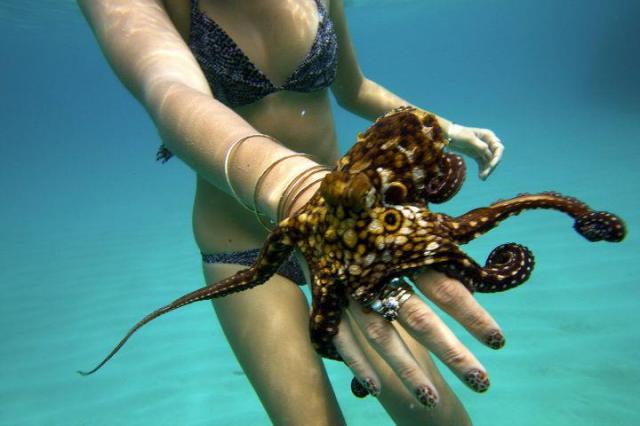
Say…has she painted her fingernails to match the mottling pattern of the octopus’s skin? I find that strangely attractive.

While we’re freezing out here in the midwest, and expecting lots of snow, ChasCPeterson is concerned about what’s going on out west.
It’s going to be a grim year out here in the Mojave Desert. The perennials are already crispy and can only get crispier. We’re already past the winter-rain window that would bring annuals. That means no food for tortoises, so no protein, no growth, low juvenile survivorship, decreased reproduction, and if it doesn’t rain this summer, adult mortality too. Nothing for jackrabbits and K-rats to eat means fewer jackrabbits and K-rats, which means in turn that coyotes will switch to digging up tortoises to eat. Crispy perennials and no annuals mean no insects, and therefore no lizards. No lizards or K-rats is bad for snakes. No lizards or snakes is bad for roadrunners and raptors. No bugs is bad for bats and birds; no seeds bad for other birds.
Drought is bad for west-coast humans, but it means death for the ecosystems that belong here.
There’s nothing bad that can’t be made worse! Governor Jerry Brown has suspended the California Environmental Quality Act to make more water available for California’s agriculture and people, which means that not only are those ecosystems strained by the weather, but the humans have just declared open season on what few resources they have left.

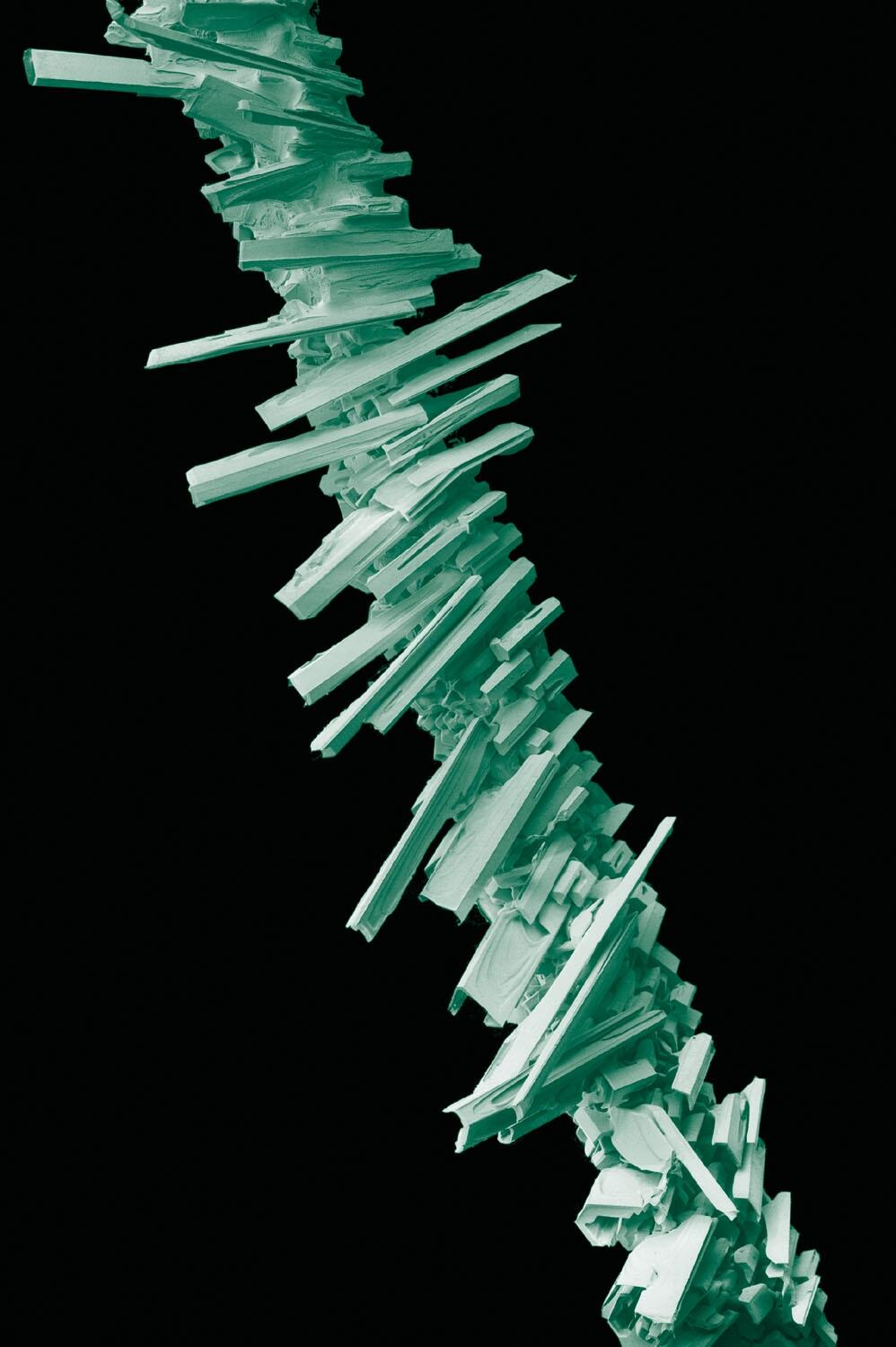
We’ve got a blizzard on the way. Plants do not exist in an uncrystallized state right now.