Celebrate the occasion, appreciate what’s going on in the deep!
Pharyngula
Evolution, development, and random biological ejaculations from a godless liberal

Celebrate the occasion, appreciate what’s going on in the deep!

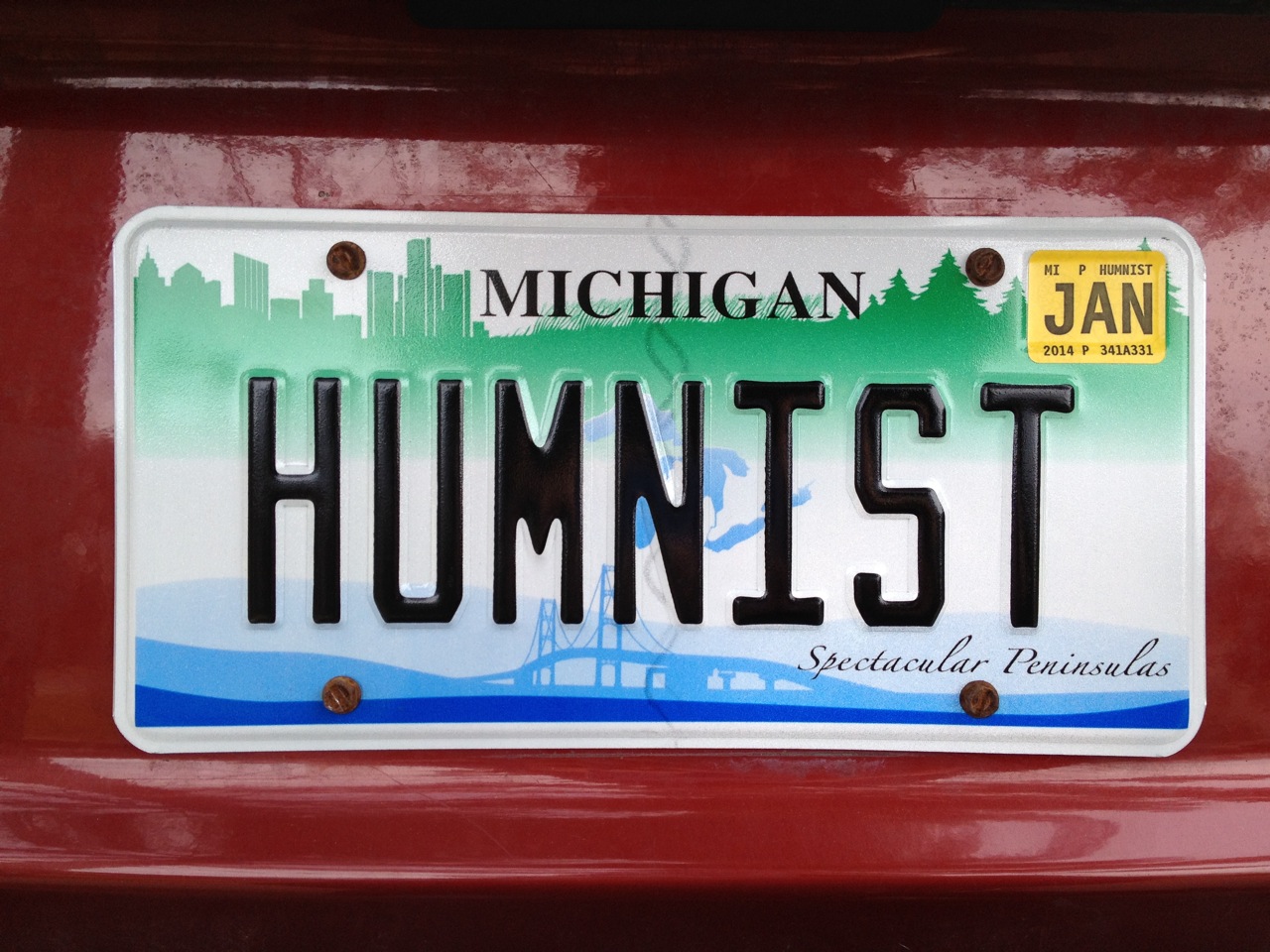
A reminder: I’ll be off to Traverse City, Michigan to speak to the Grand Traverse Humanists in the evening. It’s free! Come on out! I’m going to talk about bad biology!


The discovery of a new ceratopsian, Regaliceratops, has been published, and because it is a triceratops, I must say three things about it.


The pope has been freaking out American conservatives. He keeps saying things that annoy right-wingers.
In recent months, the pope has argued for a radical new financial and economic system to avoid human inequality and ecological devastation. In October he told a meeting of Latin American and Asian landless peasants and other social movements: “An economic system centred on the god of money needs to plunder nature to sustain the frenetic rhythm of consumption that is inherent to it.
“The system continues unchanged, since what dominates are the dynamics of an economy and a finance that are lacking in ethics. It is no longer man who commands, but money. Cash commands.
“The monopolising of lands, deforestation, the appropriation of water, inadequate agro-toxics are some of the evils that tear man from the land of his birth. Climate change, the loss of biodiversity and deforestation are already showing their devastating effects in the great cataclysms we witness,” he said.


It may be a bit unkind to crush the ambitions of a 19 year old, but Boyan Slat seems to mainly excel at self-promotion. He’s come up with a scheme to clean up the oceans of debris with anchored, floating booms and short suspended nets (or something — it’s totally unclear) that are laid out over ocean currents that bring the garbage to it. Did I mention that he’s 19? And not an oceanographer? And that his scheme hasn’t really been tested on any significant scale? But it’s still bringing in millions of dollars in donations.

If you’re really interested in reading some technical bafflegab, LaCour has posted a 23 page response to accusations that he faked his data. I think I’d recommend instead reading this shorter summary.

Nicole Gugliucci has a fine post up about a common discussion-killer: “Stick to the science!” Debates about ethics and social issues can be deftly silenced by declaring that they’re out-of-bounds for science, because as we all know, science is objective and cold and uncaring.
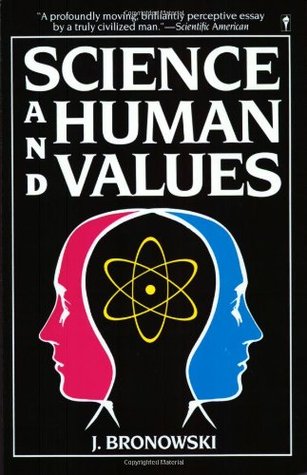
I always want to ask, when I encounter those attitudes, whether they’ve read Jacob Bronowski’s Science and Human Values. Because they should. It’s one of those books that gives equal weight to poetry and physics, and quotes Coleridge and Goethe alongside Faraday and Newton, and his entire point is that science is a human enterprise driven by human values, just as much as literature is.
The subject of this book is the evolution of contemporary values. My theme is that the values which we accept today as permanent and often as self-evident have grown out of the Renaissance and the Scientific Revolution. The arts and the sciences have changed the values of the Middle Ages; and this change has been an enrichment, moving towards what makes us more deeply human.
This theme plainly outrages a widely held view of what science does. If, as many science only compiles an endless dictionary of facts, then it must be neutral (and neuter) as a machine is, any more than literature is; both are served by, they do not serve, the makers of their dictionaries.
It always baffles me when human beings pretend to have a god-like perspective on the absolute truth, which allows them to ignore the petty concerns of other human beings. Religion has mastered that property, but science can run a pretty close second, often.

I’ve been arguing with myself again. I really liked that phony chocolate study because it so effectively demonstrated a couple of problems I tell my students about, so it’s a spectacular way to illustrate p-hacking and the unreliability of peer review. But as I was thinking about it, and how to present it to a class, it started to sink in that it also raises brand new problems that make it very difficult to use as an example. And then I started reading some other articles that emphasize the ethical concerns in this study.

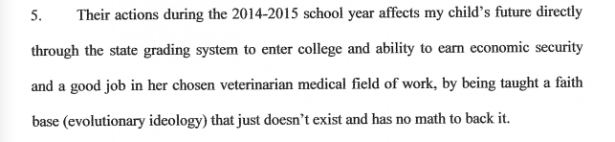
A man in West Virginia is suing the state to get evolution removed from the public schools because learning about evolution hurts his daughter’s chances of getting into college and preparing for a career in veterinary medicine.
I don’t even…

