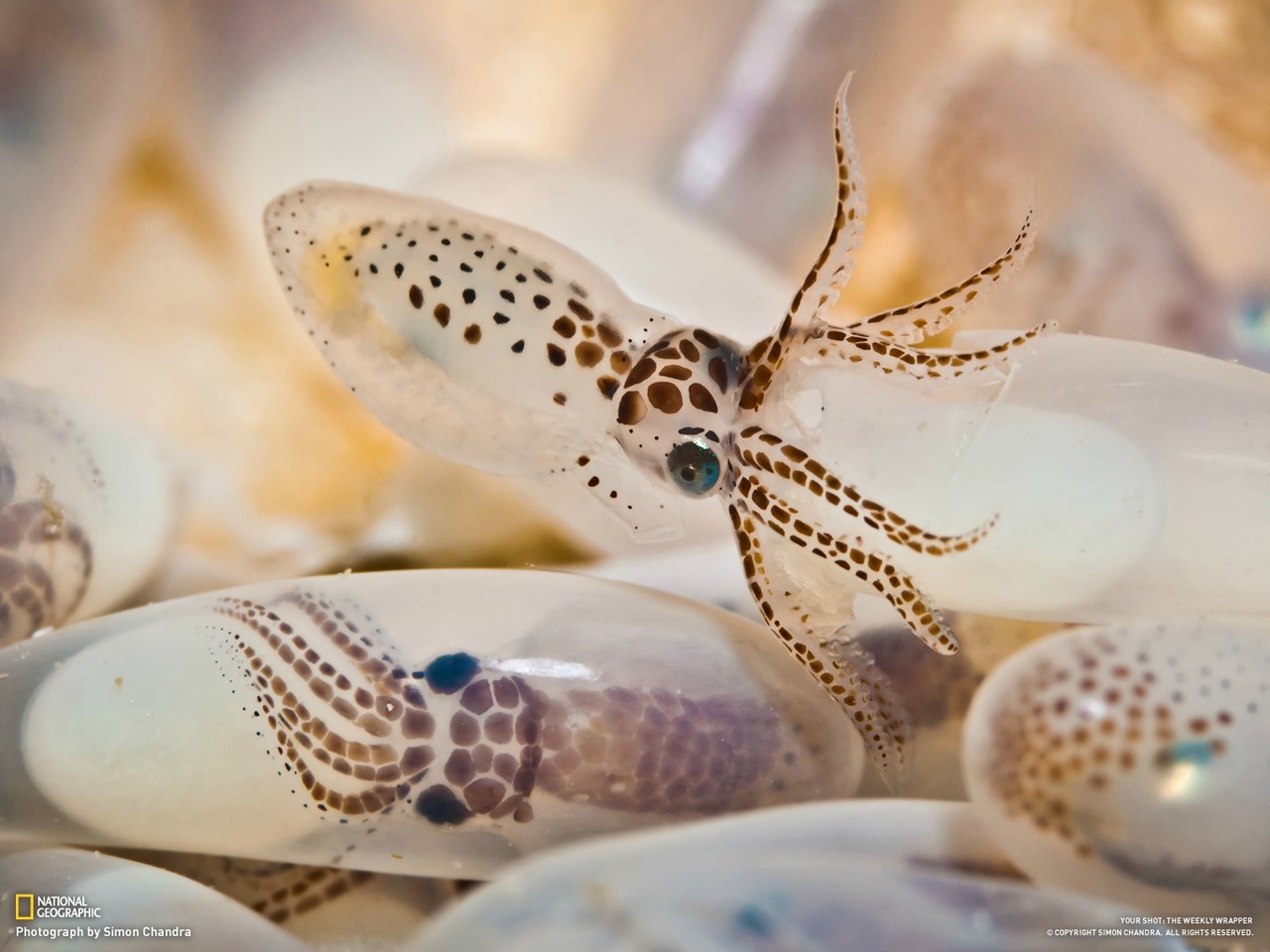
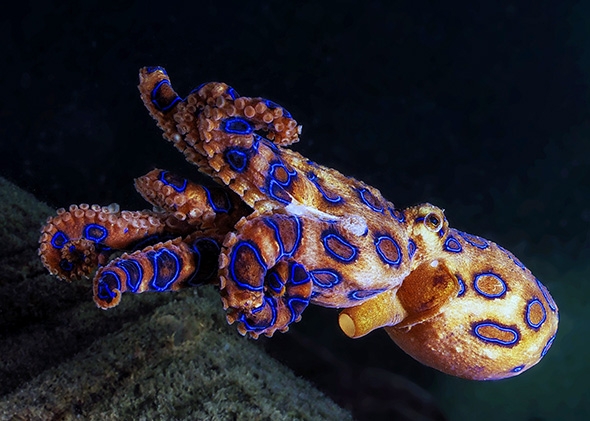
At least, not the pink ones.
I tell you, the Careers section of Science magazine is a perpetual source of pain and aggravation. In the latest, Eleftherios Diamandis explains exactly what you need to do to be a success in science. The secret, apparently, is to be noticed, and the way to be noticed is…by doing exactly the same thing all the other lab rats on the exercise wheel are doing.
Be an excellent scholar. Publish well. Work hard. Communicate with the public and your peers. But a well-planned, long-range effort to ensure your visibility among those who have hiring responsibilities can be the deciding factor.
Uh, maybe not. What if it gives you a tiny little nibble?
Now, 10 minutes later, you notice something strange. Your lips are going numb. So is your face. You want to yell for help but can’t: It’s getting harder to speak. And your stomach feels—oh, gross! Right in front of everyone.
Somebody calls an ambulance. It’s getting tough to stand. It’s getting tough to breathe. The numbness is spreading to your hands, feet, and chest. And you continue to be aware for every agonizing moment of it.
You get to the hospital in time. You get hooked up to a ventilator, the machine forcing air into your lungs because your diaphragm is paralyzed. No antidote, the doctors say. You have to wait it out. About 15 long hours later, your muscles start working again. They take you off the ventilator. You can breathe.
That story about an arrogant surgeon? It’s gone. Totally deleted.
Of note, “Hope” has since deleted her blog and Twitter account.
After consideration of your feedback on Twitter, consultation with the MedPage Today editorial team, and analysis by “Orac” at Respectful Insolance, and Peter Lipson and Janet D. Stemwedel at Forbes, I have removed the story from the website.
Whoa. That’s not a good response to what ought to be a “teaching moment”.
There is an important research facility in Florida that studies exotic insects and invasive species. You’d think a state like Florida, which is swarming with invasive plants and animals, would consider this a useful and practical operation.
The UF/IFAS (Institute for Food and Agriculture) quarantine facility is a highly secure state of the art lab in Ft. Pierce.
Security is top priority because if any insects were to escape, their impact in our environment would be unclear.
You didn’t get enough yesterday? Here’s another gag-inducing story from Jonathan Eisen. A while back, an MD at UC Davis tried an experimental cancer treatment on three patients: to amplify the immune response to a glioma, they injected fecal bacteria into the patients’ heads.
Two UC Davis neurosurgeons were treating terminally ill brain cancer patients with an unapproved, experimental treatment that is referred to as “Probiotic Intracranial Therapy for Malignant Glioma”. The treatment involved purposefully infecting patients brains with a bacterium Enterobacter aerogenes apparently because of prior anecdotes and case reports that suggested that patients with these brain cancers who also had brain infections might live longer than those with the cancer but without the infection. According to the article, there was an investigation at UC Davis into the practices of the surgeons. It was determined by UC Davis that they did not have IRB approval to carry out the treatments and that there were some other issues with the practice going on. At the conclusion of the investigation UC Davis wrote a letter to the FDA detailing the case and has banned the two neurosurgeons from performing medical research on humans.
Notice that key statement? No IRB approval. They just skipped that whole institutional review thing and squirted something radical, untested, and backed only by anecdote into the heads of very sick people. Two died within weeks, another died a year later.
What happened to the doctors? They left UC Davis after a review found their behavior unethical.
Chris Clarke writes about steelhead. It’s a subject I’m on close terms with, too; my father was an obsessive steelhead fisherman, and I grew up spending many memorable weekend mornings chilled and damp on the banks of the Green River, eyes fixed on the tip of a fiberglas rod. I also felt the year-by-year decline, as actually catching a magnificent fish became a rarer event over time. I was interested in the biology of these fish, though, and these are also things my father explained to me:
The Hacking Team, a notoriously sleazy and unscrupulous gang of malware-spreading, privacy-violating goons, has been hacked. The irony is delicious. I’m pleased to see that perfectly appropriate comeuppance.
Even more hilariously, their own passwords were exposed.
In addition to having fabulous taste in hats, Nettie Stevens is also an underappreciated scientist. She was a cytologist, embryologist, and entomologist at Bryn Mawr, where she worked with Edmund Wilson and a certain fellow you have almost certainly heard of, Thomas Hunt Morgan. In fact, she’s the person who introduced TH Morgan and Drosophila, so we would owe her just for that.
But her main claim to fame is that she’s the person who figured out all that business about X and Y chromosomes — the chromosomal basis of sex determination. Strangely, most of the genetics textbooks grant all the credit for that to TH Morgan, I can’t imagine why. Oh, wait, I can guess. When Stevens died, Morgan got to write her curiously distant obituary in Science, where he credited her with a “share” in the discovery. It’s not a terrible obit, in that he does discuss the breadth of her work, but otherwise it’s rather dry and nitpicky.*
But you know she had to be remarkable in many ways. She was a woman in a deeply sexist culture, and she was forty years old when she started studying biology in 1901, so she already had the deck stacked against her. Yet she managed to build a commendable career in just a few short years — she died in 1912 of breast cancer, just before finally getting a faculty position — and it’s a shame that what must have been a fascinating person has been lost in the rush to take credit for her work. She’s someone who deserves a bigger place in the textbooks.
*The part that annoyed me most in the obit was in the first paragraph, where he credits some of her success to the “liberality of Bryn Mawr College, which created for her a research professorship”. Was it also very generous of Bryn Mawr, Columbia, and Cal Tech to grant poor TH Morgan research positions at their institutions? It sure was liberal of them to let him in the door.
The University of Hawaii, like universities everywhere in the US, has been facing major cuts. There seems to be zero support for higher education in this country, and every legislature sees a way to save their favorite perk for the rich by carving more dollars out of the university budget. Only now the cuts are reaching vital organs … like the faculty and students. One symptom is the abuse of graduate students.
Grad students in Hawaii are working under the very same salary they would have received over a decade ago, which is ridiculous. Pay at the university must adjust to circumstances, or you’re just building up to kill the institution.