My students told me today that instead of lecturing, I ought to show that video of drunk girls and puppies over and over. I didn’t. But apparently everyone needs some cuteness. Will this do?

My students told me today that instead of lecturing, I ought to show that video of drunk girls and puppies over and over. I didn’t. But apparently everyone needs some cuteness. Will this do?


Next week, on Tuesday the 24th at 6pm in the Common Cup Coffeehouse, Sylke Boyd will be telling us all about “The Evasive Northern Lights”. I’m hoping she’ll tell us how to catch them. Come on by, it’s all open to the public.

I approve of Kim Stanley Robinson’s message: interstellar travel, and interstellar colonization, are almost certainly impossible. He breaks the obstacles down into 5 categories, physical, biological, ecological, sociological, and psychological (wait, since when is ecology not biological?) and explains how unlikely we are to overcome them. We’re part of Planet Earth, and nowhere else.
This may sound like terrible news to people weaned on Star Trek and Star Wars, but I prefer to think that closing off the fantasy alternatives helps us focus on the realistic ones.
Oh no! For some people this is a disturbing and deeply pessimistic conclusion to come to. Then when you combine that new judgment with the recently discovered problems concerning the plan to terraform and inhabit Mars (presence of perchlorates and absence of nitrogen), and we come to an entirely new realization about our species: there is no Planet B.
Earth is our only home.
Oh no again!
This conclusion, startling to some, obvious to others, has ramifications that are worth pondering. If it comes to be a generally agreed on view, it might change how we act as individuals and a civilization. These changes in behavior might turn out to be crucial for our descendants. So although this entire discussion consists of speculations about hypothetical futures, which is to say, science fictions, still they are worth thinking about, as useful orientations in our sense of our own history as a species.
I like that. It’s not a bad thing to take a sober look at what we’ve got (which is a pretty danged sweet planet) and maintain and enrich it, rather than neglecting it for a dream of building a hermetically sealed dome on a hostile planet far, far away.
Something else I like: Robinson has just written a novel about…humans colonizing a planet around Tau Ceti, titled Aurora

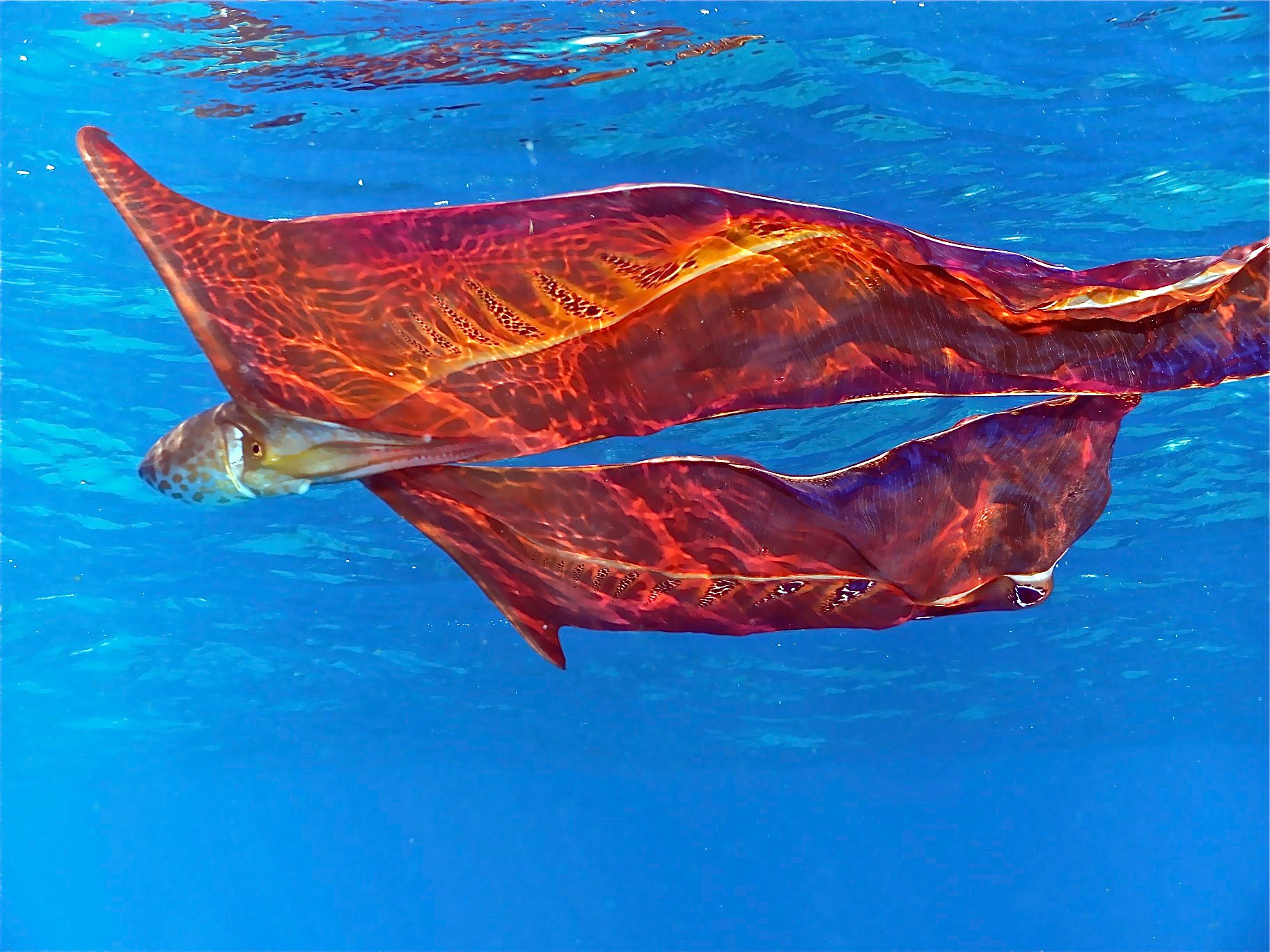
Looking gloriously sexy for their partners and spearing prey with their tentacles.
I can do neither. Way to make me feel inadequate, cuttlefish.

We are more different from apes than apes are from viruses.
I’m at Skepticon, and while waiting for registration to open this morning, I thought I’d peek in at the Discovery Institute, and their Evolution News & Views site. So much entertainingly idiotic stupidity is on display.

Did you know that women might have been driven by evolution to be “bitchy”, that is, aggressive, competitive, and insulting towards other women? An article in The Atlantic presents a couple of evo-psych studies — the usual stuff, Western college students given culturally specific choices, and then makes absurd universal conclusions about human nature and evolution. I hated it.
But at least, buried in the middle of the article, are a couple of paragraphs that state the rational response to the succession of maddening EP bullshit.

Tom Levenson has a new book, The Hunt for Vulcan:…And How Albert Einstein Destroyed a Planet, Discovered Relativity, and Deciphered the Universe
But it’s physics. There are a heck of a lot of good physics books coming out all the time — one of my colleagues here at UMM, Chrissy Kolaya, also has a new book, Charmed Particles: A Novel
But people! Don’t you know that developmental biology is the most interesting subject in the universe?


science
Ken Ham says something stupid and dishonest again.
The fish that forgot to evolve? Here’s the difference between observational and historical science: https://t.co/gDBi6iQhjh
— Ken Ham (@aigkenham) November 6, 2015
The fish that forgot to evolve? Here’s the difference between observational and historical science: ow.ly/Ug1wU
If you bother to read the awful article, it includes a standard creationist canard: Coelacanths haven’t changed a bit over their long history, and this disproves evolution.
Well, this fish apparently forgot to evolve for 65 million years! You see, the living coelacanth is easily recognizable from the fossils. Despite having supposedly “primitive” features, many of these features not seen in any living vertebrates, this fish has survived basically unchanged for an alleged 70 million years.1 How is this possible?
Well, it’s a matter of interpretation. You see the fossil of the coelacanth is studied in the present—we observe it today. But what happened to make it a fossil is in the past—it’s historical science because we can’t directly test, observe, or repeat the past. So what you believe about the past is going to influence your interpretation of the evidence. In the case of the coelacanth, evolutionists have the presupposition that the fossil record shows Earth’s history over millions of years. So when they find this fossil that doesn’t have a living match today, they interpreted that fossil to have gone extinct millions of years ago. Now, the fossil itself didn’t tell them that. Their interpretation of that fossil through their evolutionary worldview drew that conclusion. And that conclusion turned out to be very wrong. Coelacanths were happily swimming deep in the ocean all along and were even being sold in fish markets, unbeknownst to scientists.

It’s the Social Evolution Forum, and it has a lot of familiar people writing about evolution. Check it out!