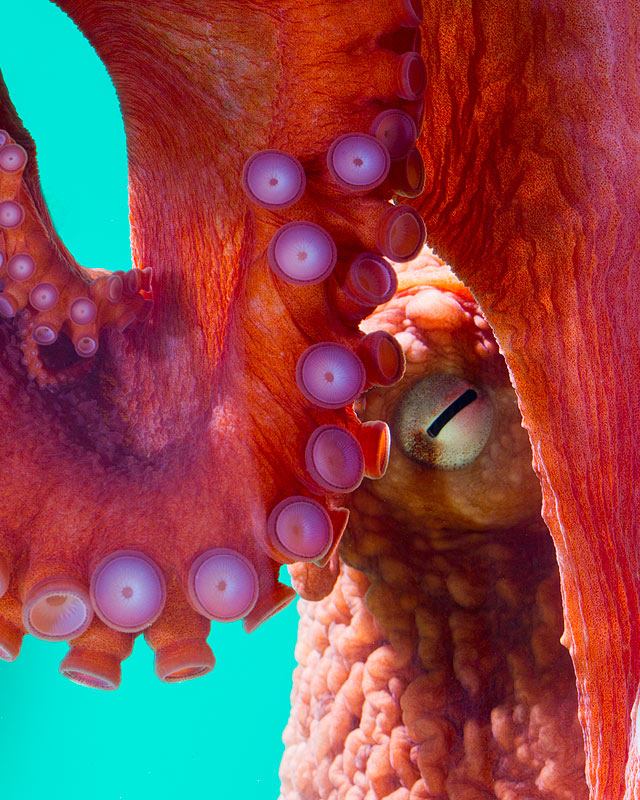
Friday Cephalopod: Our scouts have been sighted!

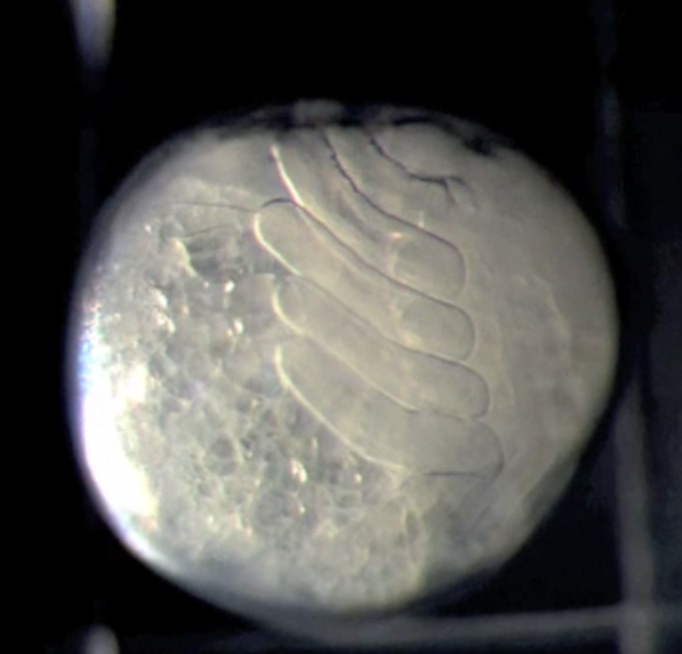
We’ll have to advance the invasion plan. A scout squad of paper nautiluses have been exposed off the coast of California.

Several of the scouts bravely tried to wrest the camera from the spy, but failed. We’re going to have to send some muscle to accompany the reconnaissance patrols from now on — all we needed was a few Humboldt squid to have been able to completely suppress this exposure.

Puny humans. Nothing will stop the massive Cephalopod Armada!

Axon guidance mechanisms are thoroughly evolutionary in origin

The Discovery Institute thinks axon guidance mechanisms are evidence for intelligent design. I think they just trawl the scientific literature for the words “complex” and “purpose” and get really excited about the imaginary interpretations in their head of papers they don’t really understand.

There’s no mention of evolution here, nor in the full paper in Science. The paper, however, does use a notable word: purpose. “These findings identify NELL2 as an axon guidance cue and establish Robo3 as a multifunctional regulator of pathfinding that simultaneously mediates NELL2 repulsion, inhibits Slit repulsion, and facilitates Netrin attraction to achieve a common guidance purpose.” In fact, they use it again in their concluding sentence:

Our results also show that Robo3.1 serves as an integrative hub: Its three diverse actions in response to three different cues — mediating NELL2 repulsion from the motor column, potentiating midline Netrin-1 attraction, and antagonizing midline Slit repulsion — act simultaneously, are mutually reinforcing, and serve the common purpose of steering commissural axons toward and across the midline. This multiplicity of mechanisms likely helps ensure high-fidelity steering of axons to their targets.

It’s one of those occasions in biology (not rare) when the term “intelligent design,” despite other merits, falls flat as a description. This is super-intelligent ultra-design.

Getting axons in the nervous system to their proper destinations actually is a very complex problem: much wires, many connections, wow. If you look at complex systems like the brain, you shouldn’t be surprised that the mechanisms are complex. And further, the functional requirements of those systems, which may require that Neuron A navigate to Target B in order for the pattern to work, it’s easy to say that the purpose of those mechanisms is to hook A up to B. It does not imply the existence of a designer, only the existence of functional constraints.

But also, they picked a system with which I’m fairly familiar. Way back in the 1990s, this is what I did: try to figure out the rules behind commissural neuron migration, the very stuff the DI is talking about. I was focusing on a cellular approach — I was observing neurons that grew across the midline to contact cells on the opposite side of the nervous system — and I reached some of the same general answers that more recent research has discovered. The question was why an axon would grow all the way across the nervous system to reach a target that had a closer equivalent right next door, on the same side.

Here’s a simple cartoon version of the problem. Neuron A is supposed to, has the function of, has the purpose of connecting to Neuron B; in the normal animal, it grows all the way across the midline to touch the contralateral (on the opposite side) B neuron.

comm1

But the question remains: there’s a left B and a right B. Why doesn’t neuron A on the left side take the lazy shortcut and grow straight to the left B?

comm2

The answer we came up with in my work is that there is a hierarchy of interactions. That A finds the midline much more attractive than B at first, so it grows to the middle of the animal, and then, after a brief flirtation with the midline, changes its priorities to favor B cells after all, and just keeps growing across the midline to find the other B. (Actually, what we found that was most important in changing the left A’s affinities was contact with the right A, which arrived at the midline at about the same time.)

We worked that out with direct observations of neuron behavior, and also a series of experiments in which we killed various cells A would interact with. What we didn’t know at all was what molecules were involved.

And that’s where the Discovery Institute is so wrong. We had a cellular description, but when other laboratories in the late 1990s started discovering the molecular signals involved, molecules like Netrin and Robo and Slit, it was a wonderful revelation. It’s like how on one level, you can see a car and watch it run and figure out general things like wheels and steering, but when you get out the wrenches and start taking the engine apart, you can really see the mechanistic basis of its operation. Every step deeper into the guts of the problem tends to reinforce our understanding that it’s fully natural, and was built around natural processes.

The other big shift was that we could now generalize to other organisms and pick apart the evolutionary foundations to these mechanisms. I was looking at specific cells in the grasshopper embryo, and we could see that those very same cells are present in other arthropods, but we didn’t have the tools to do molecular comparisons. Identifying the molecules responsible meant that we could ask if they were present in other organisms, whether they were conserved, and whether these molecular processes were used in multiple cells, rather than just the few I studied.

If the Discovery Institute had looked just a little bit harder (or had not intentionally chosen to ignore all the papers that studied the evolution of axon guidance mechanisms), they might have noticed that there’s a very interesting literature on how these molecules evolved. There are plenty of papers that survey the evolutionary pattern of axon guidance mechanisms.

When did axons and their guidance mechanisms originate in animal evolution? Many axon guidance receptors (e.g. type II RPTPs, Eph RTKs, and the DCC, UNC5 and Robo families) are related to CAMs of the immunoglobulin superfamily, suggesting that axon guidance mechanisms evolved from signaling pathways involved in general cell–cell or cell–ECM adhesion in an ancestral animal. The simplest animals with nervous systems are cnidarians, which have isopolar neurons arranged in ‘nerve nets’; simpler animals (e.g. sponges, mesozoans) have no recognizable neurons. Thus, neurons and their guidance mechanisms must have evolved in a common ancestor of all metazoans, but after the divergence of sponges (Figure 1). Intriguing recent work suggests that sponges, which have no discernible nervous systems, nevertheless contain a diverse set of receptor tyrosine kinases and RPTPs [54,102]. Thus, many of these molecules could have evolved prior to (and may have been necessary for) the evolution of nervous systems in the urbilaterian.

Many axon guidance mechanisms are not only conserved at the molecular level, but also at the level of the body plan (reviewed in [103]). For example, netrins are secreted from ectodermal cells at the ventral midline of nematodes and insects and from the floorplate of the spinal cord of vertebrates (dorsal midline ectoderm, homologous to the ventral ectoderm of insects). Thus, in an ancestral animal, circumferential movements of axons or cells around the dorsoventral axis were probably oriented towards or away from a midline netrin source, and perhaps also from a midline Slit source. Studies in the coming years are likely to reveal the extent to which the patterning roles of other guidance mechanisms have been retained during the evolution of different body plans, and may help further outline the likely organization of the nervous system of our primitive ancestors.

These molecules are also multi-functional and play roles in other systems than the nervous system. They’re important in organogenesis and the maturation of the reproductive system, and are part of an interactive network of cell signaling molecules. It’s really complex, but what the DI doesn’t appreciate is that biology and evolutionary processes are really, really good at generating complexity. Look ot all the things the SLIT-ROBO system does!

slit-robo

You might notice that they play a role in cancer signaling, too, but then everything does.

Once again, the Intelligent Design creationists completely miss the point. The work on these axon patterning systems has been deeply informed by evolutionary perspectives, while the DI is reduced to mining for mentions of “complexity” in papers, as if that somehow supports their ignorance-based position.


Chisholm A, Tessier-Lavigne M (1999) Conservation and divergence of axon guidance mechanisms. Curr Opin Neurobiol. 9(5):603-15. (Note that this paper came out very shortly after the discovery of netrins, by the fellow who discovered them — evolutionary biology has been part of this story from the very beginning.)

Dickinson RE1, Duncan WC (2010) The SLIT-ROBO pathway: a regulator of cell function with implications for the reproductive system. Reproduction 139(4):697-704.

The MFAP Hypothesis of Human Origins rides again!

pigman

A couple of years ago, I wrote a rebuttal to a crackpot claim for the origin of humans, which I called the MFAP Hypothesis. “MFAP” is short for “monkey fucked a pig”, which actually pretty much summarizes the whole idea. Eugene McCarthy (no, not that Eugene McCarthy) assembled a list of superficial similarities between humans and pigs — hairlessness, protruding noses, “snuggling”, that sort of thing — and concluded that a miscellany of appearances overwhelmed the actual genetic relationships and the absence of a feasible genetic mechanism to permit human-porcine hybridization to lead to the inevitable conclusion that, in the distant past, our primate ancestors bred with pigs.

It’s got to be a joke, but McCarthy is very, very serious, and claims that, because he has a Ph.D. in genetics, it must be a reasonable hypothesis.

[Read more…]

The Haeckelization of Paul Davies

Davies is up to his same old nonsense again: he’s in Australia, lecturing people about his theory of the causes of cancer.

Seven years ago, the National Cancer Institute in the US asked Professor Davies to use his insight as a physicist to look at cancer. His conclusion is that most cancer biologists are thinking about the problem the wrong way.

Rather than treat cancer as a disease of cell mutation, he and his colleague Dr Charley Lineweaver at the Australian National University have developed what they say is a new theory of cancer that traces its origins to the dawn of multicellular life more than a billion years ago.

Professor Davies believes cancer cells are a “reversion to an ancestral phenotype”, the physical expression of deep genetic information that springs from the very nature of multicellular life.

Goddamn.

[Read more…]

The naturalistic fallacy strikes again!

coconut

Cool story, bro. NPR tells us about an unfortunate gentleman who decided to live naked and on a natural food — a single natural food — on an idyllic tropical island in the remote Pacific. The last part sounds nice, but the rest is a bit loony, especially his diet, which consisted exclusively of coconuts, and it led to slow death by malnutrition and disease of the man and his followers (he had followers!).

What particularly struck me, though, is the logic of his choices. Guess who is blamed?

Born in Nuremberg in 1875, August Engelhardt was among the disaffected youngsters drawn to the back-to-nature Lebensreform (Life Reform) movement sweeping through Germany and Switzerland at the time. Its proponents yearned after an unspoiled Eden where people ate vegetables and raw food.

Engelhardt was especially taken by Gustav Schlickeysen’s 1877 dietary treatise, Fruit and Bread: A Scientific Diet. Influenced by Darwinism, the book claimed that since the natural food of apes was uncooked food and grain, that was also “the proper food for man.”

Poor old Chuck. Racism, capitalism, libertarianism, and now coconut diets are all his fault.

There is a faint hint of validity to Engelhardt’s ideas, though. We certainly are adapted to our environments as a consequence of our past history, and it would have some explanatory power and would possibly be helpful to consider what our ancestors lived on. There are at least two problems here, though.

  • Too often, people make unsupported assumptions about that history, and base their decision not on the actual evolution and biology of the species, but on some bizarre fantasy. I rather doubt that ancient humans were subsisting on a coconut diet which conferred resistance to malaria on them…that part was entirely made up by Engelhardt.

  • We have to recognize that many of us are living in radically novel conditions now. We did not evolve to live to the age of 50 and older — I am an unnatural creature. My ancestors didn’t die of atherosclerosis, because they could wolf down all the BBQ mammoth they wanted, without increasing their natural rates of mortality, which were largely caused by infectious disease and injury.

I feel the same way every time I hear nonsense about the Paleo Diet, or whatever other pseudo-scientific fad sweeping the country. These tend to be diets contrived by people who know nothing about paleolithic peoples or environments, and even if they were genuinely based on real information, might be excellent for people who are expected to die before they hit 30.

The Discovery Institute wants my money

royalflush

I got a begging email from our good friends at the Center for Science & Culture. They’re going to have to work a lot harder to persuade me.

Dear PZ:

Wait. Dear PZ? I’m having a tough time imagining any of those bozos addressing me as dear. But let us continue.

Intelligent design is a common sense idea. Research has shown that children intuitively recognize design in the world around them. You and I make design inferences every day. It has taken a long time for the scientific community to catch up with the kids. But that day is coming.

Intuitive and “common sense” assumptions are often wrong. You might enjoy these misconceptions children have about physics, for instance. I look forward to their new slogan: Intelligent Design: so simple, only a child would believe it. Except that it’s insulting to children.

The rest of the letter is all about the crap science they’ve been dumping on the public this year, and threatening to publish more.

For over 19 years, the Research & Scholarship Initiative of Discovery Institute’s Center for Science & Culture (CSC) has worked to build the scientific case for design and to winsomely communicate their research and scholarship to a broad audience.

Heh. This is the first time I’ve every seen the adverb “winsomely” applied to what the creationists do. I had to go to the Evolution News website to see an example of their winsome articles. Here’s one: Rubik’s Cube Is a Hand-Sized Illustration of Intelligent Design.

For those interested in explaining ID to people without a lot of memory work, the Rubik’s Cube can be a useful instructional aid. You don’t have to master the art of solving it. Save your sanity; just buy two cubes, and don’t touch the solved one. Lock it into a plastic case if you have to, so that you won’t have to try all 43 quintillion combinations in front of your audience. Or, rent a kid who can fix it in a few seconds.

Explain that the cube is a search problem. Take the scrambled one, and show how you want to get from that one to the solved one. You need a search algorithm. Which approach is more likely to find the solution — intelligent causes or unguided causes? The answer is obvious, but go ahead; rub it in. A robot randomly moving the colors around could conceivably hit on the solution by chance in short order with sheer dumb luck (1 chance in 43 x 1018), but even if it did, it would most likely keep rotating the colors right back out of order again, not caring a dime. It would take an intelligent agent to recognize the solution and stop the robot when it gets the solution by chance.

More likely, it would take a long, long time. Trying all 43 x 1018 combinations at 1 per second would take 1.3 trillion years. The robot would have a 50-50 chance of getting the solution in half that time, but it would already vastly exceed the time available (about forty times the age of the universe). If a secular materialist counters that there could be trillions of robots with trillions of cubes working simultaneously throughout the cosmos, ask what the chance is of getting any two winners on the same planet at the same place and time. The one concession blocks the other. And what in the materialist’s unguided universe is going to stop any robot when it succeeds? The vast majority will never succeed during the age of the universe.

Now rub it in. It would vastly exceed the age of the known universe for a robot to solve the cube by sheer dumb luck. How fast can an intelligent cause solve it? 4.904 seconds. That’s the power of intelligent causes over unguided causes.

Now really, really rub it in. The Rubik’s cube is simple compared to a protein. Imagine solving a cube with 20 colors and 100 sides. Then imagine solving hundreds of different such cubes, each with its own solution, simultaneously in the same place at the same time. If the audience doesn’t run outside screaming, you didn’t speak slowly enough.

Oh, man. So much wrong.

One problem with ID’s argument is that they are committed to the fallacy of a specified target for an evolutionary search. So the “goal” of evolution is to produce a human being, and given the 3+ billion years of chance and variation, and the multitude of different forms produced, I’ll agree: the likelihood of our specific form arising from a sea of single-celled organisms is extremely unlikely. But evolution doesn’t care; it doesn’t have a goal; it spawns endless different forms, so we get elephants and algae at the same time that we get, in one brief and fleeting moment of geological time, anthropoids.

One problem with their Rubik’s Cube example is that it does have a known goal: you’re supposed to get each side to a different solid color. Their single enshrined cube set to a single specific solution is a good example of the poverty of Intelligent Design creationism.

If I were to use Rubik’s Cube as a demonstration of how evolution works, I’d have to do something very different. We have about 20,000 genes, so I’d have to by 20,000 Rubik’s Cubes (not on a professor’s salary), and I’d set each one to a different arrangement. Much of it would be chance, but for some, I’d make a desultory effort. Can I get this one to display mostly green squares on one side? On this one I want three adjacent squares to be red. Another one has alternating yellow squares on one face. You get the idea — I want diversity, and I don’t have to work as hard or as narrowly to get it. I’d also just stroll through the house, tripping over these stupid Rubik’s Cubes everywhere, and occasionally twisting one.

That’s closer to evolution than the DI’s vision.

They’re always making this mistake of assuming the only correct solution is one pre-specified result. I really want to play poker with them: I’d tell them first that the goal of the game is get a Royal Flush, and they’d fold at every hand and I’d clean up with every feeble deal.

One other problem with their analogy is that they’re comparing the cube to the wrong thing. The more natural comparison is not to evolution, but to protein folding. Here’s this chain of amino acids, and you have to twist it into a specific conformation that will function…why, the numbers say this is nearly impossible! And math doesn’t lie!

Here’s a 1993 paper by Fraenkel, Complexity of Protein Folding, that says this.

It is believed that the native folded three-dimensional conformation of a protein is its lowest free energy state, or one of its lowest. It is shown here that both a two- and three-dimensional mathematical model describing the folding process as a free energy minimization problem is NP-hard. This means that the problem belongs to a large set of computational problems, assumed to be very hard (“conditionally intractable”). Some of the possible ramifications of this result are speculated upon.

All the mathematicians and computer scientists out there will recognize that word, NP-hard. This represents a computationally very difficult problem that isn’t easily solved (a Rubik’s Cube is not NP-hard, I don’t think–there are relatively simple algorithms that can solve it, although getting an optimal, minimum-number-of-moves solution might be harder — I haven’t been following the math.) Fraenkel explains the problem in words that will bring joy to the heart of every IDiot, as long as they don’t read the rest.

Each amino acid in a protein can adopt, on average, eight different conformations (Privalov, 1979). A relatively small protein, consisting of 100 amino acids, can thus potentially assume 8100 conformations.

Whoa — 8100 conformations is a much bigger number than 43 x 1018 combinations of the Rubik’s Cube that so impressed the Discovery Institute. I guess we’re done here. It’s impossible for any of my proteins to fold into a functional shape before the heat death of the universe, therefore there must be trillions of invisible tiny angels flitting about winsomely in my body, lovingly crafting DNA Polymerase II for me, cunningly assembling actin monomers into fibers, shuttling electrons about in my mitochondria with focused attention to every detail. I eagerly await the moment when the Discovery Institute lifts those 2 sentences from Fraenkel in their promotional literature.

I assume they’ll conveniently ignore the existence of the next two sentences.

Yet nature attains the native conformation in about 1 sec. (Note that the claim that nature assumes the global minimum free energy conformation in 1 sec is not equivalent to saying that it explores all the 8100 potential conformations in 1 sec!)

So protein folding is a much more difficult problem than solving a Rubik’s cube. The DI is dazzled by a human solving the cube in under 5 seconds, and thinks this demonstrates the superiority of intelligence over other natural causes. Yet the much more difficult problem is solved by the cell in under a second.

Point to physics, chemistry, and biology. Magic intelligence loses again.

Hey, do you think the writers at the Center for Science & Culture have a joke dictionary that defines “winsomely” as “stupidly”? That would make sense.

Making popcorn for the coming tardigrade wars

tardigrade

This could get interesting. I’ve seen a lot of stories about this recent paper on the tardigrade genome:

Horizontal gene transfer (HGT), or the transfer of genes between species, has been recognized recently as more pervasive than previously suspected. Here, we report evidence for an unprecedented degree of HGT into an animal genome, based on a draft genome of a tardigrade, Hypsibius dujardini. Tardigrades are microscopic eight-legged animals that are famous for their ability to survive extreme conditions. Genome sequencing, direct confirmation of physical linkage, and phylogenetic analysis revealed that a large fraction of the H. dujardini genome is derived from diverse bacteria as well as plants, fungi, and Archaea. We estimate that approximately one-sixth of tardigrade genes entered by HGT, nearly double the fraction found in the most extreme cases of HGT into animals known to date. Foreign genes have supplemented, expanded, and even replaced some metazoan gene families within the tardigrade genome. Our results demonstrate that an unexpectedly large fraction of an animal genome can be derived from foreign sources. We speculate that animals that can survive extremes may be particularly prone to acquiring foreign genes.

And here are a few of the follow-up stories in the popular press:

The Tardigrade, World’s Cutest Microscopic Animal, is Filled with Alien DNA

What the World’s Toughest Animal Is Really Made Of

Indestructible ‘Water Bears’ Have Really Weird Genomes

The authors are saying that about 18% of the tardigrade genome is a product of horizontal gene transfer…that they’re full of genes gathered up from bacteria, and that this was adaptive, playing a role in their ability to survive desiccation.

I have to say…I had my doubts. That seemed really unlikely, not only that they’d have a history of that much HGT, but that it could be assigned to functional roles. But OK, they published it, let’s see how it shakes out.

Here’s where it gets interesting: another paper has just come online that says it’s all an artifact. Tardigrades are tiny, on the order of a thousand cells, so it’s difficult to sample them for sequencing without also picking up lots of bacterial contamination. Here’s the abstract:

Tardigrades are meiofaunal ecdysozoans and are key to understanding the origins of Arthropoda. We present the genome of the tardigrade Hypsibius dujardini, assembled from Illumina paired and mate-pair data. While the raw data indicated extensive contamination with bacteria, presumably from the gut or surface of the animals, careful cleaning generated a clean tardigrade dataset for assembly. We also generated an expressed sequence tag dataset, a Sanger genome survey dataset and used these and Illumina RNA-Seq data for assembly validation and gene prediction. The genome assembly is ~130 Mb in span, has an N50 length of over 50 kb, and an N90 length of 6 kb. We predict 23,031 protein-coding genes in the genome, which is available in a dedicated genome browser at http://www.tardigrades.org. We compare our assembly to a recently published one for the same species and do not find support for massive horizontal gene transfer. Additional analyses of the genome are ongoing.

And their conclusion:

Our assembly, and inferences from it, conflict with a recently published draft genome (UNC) for what is essentially the same strain of H. dujardini. Our assembly, despite having superior assembly statistics, is ~120 Mb shorter than the UNC assembly. Our genome size estimate from sequence assembly is congruent with the values we obtained by direct measurement. We find 15,000 fewer protein-coding genes, and a hugely reduced impact of predicted HGT on gene content in H. dujardini. These HGT candidates await detailed validation. While resolution of the conflict between these assemblies awaits detailed examination based on close scrutiny of the raw UNC data, our analyses suggest that the UNC assembly is compromised by sequences that derive from bacterial contaminants, and that the expanded genome span, additional genes, and HGT candidates are likely to be artefactual.

This could get very interesting.

It’s probably a conspiracy by the Republican party to condition voters

I learned something heartbreaking this weekend. Despite thinking that I had raised her right, my daughter came right out and told me the horrible truth: she likes to watch football. She appreciates the strategy, she says. I tried to explain that it’s so boring, that it’s brief flurries of burly men bashing each other in between long sessions of inane “color commentary”, but she would have none of it. She’s too far gone.

And now I discover that Rebecca Watson is also a fan! What is this? A whole generation of young women corrupted?But at least she has a good argument against football.

The paper she cites is damning.

Public schools should end their football programs because of the high prevalence of concussions. Five to twenty percent of students experience at least one concussion in a season of play. Nine to twelve year old players experience an average of 240 head impacts per season; high school players average 650 head impacts per season. An initial football concussion increases the risk of a subsequent concussion three or four fold not simply for the balance of that season but for the following season as well. Catastrophic brain injuries, though rare, are far more common in high school and college players who have experienced a previous non-catastrophic concussion. The brains of children are more susceptible to long-term damage from concussion than adults. Although the frequency of concussion in football is about the same as in hockey, fifty times as many students play football than hockey; football causes far more brain injuries. The brain is an irreplaceable organ, the health of which is foundational for the ability to learn, socialize and for fully realizing life’s physical and vocational opportunities.

Time for the slippery slope game. If we’re going to end football programs for kids under 18, why are we going to support college football? That should go, too. And if we kill college football, there goes the farm that raises brain-damaged blocks of meat to batter each other in professional football. And if pro football dies, Texas will secede from the union!

And hey, this is true heresy around Minnesota, that fewer players play hockey is not an excuse to tolerate an equally brain-damaging sport. We’ll tear the country apart.

So, clearly, thousands of children with cognitive dysfunction, neuron injury, and lifelong cognitive impairment are a small price to pay.

…school football concussions are often followed by weeks of impaired school academic performance, memory disturbances, headaches and absenteeism. High school cheerleaders have impaired cognition for at least days after a single concussion even when claiming to be asymptomatic. Cognitive dysfunction or neuron injury occurs after repetitive mild to moderate athletic concussions; catastrophic injuries or instances of prolonged loss of consciousness are not required to cause such harm. Even when measured cognition returns to baseline, symptoms of concussion often persist. A season of collegiate play leads to persistent cognitive dysfunction that is roughly proportional to the magnitude of head impact. One study shows that greater later-life cognitive impairment in NFL players is correlated with exposure to competitive football before twelve years of age. Evidence about the effect of youth football is evolving but is sufficient to show that school football is likely to adversely affecting school performance in the short term and may, if the trauma is not stopped, may proceed to permanent cognitive dysfunction over the long term.