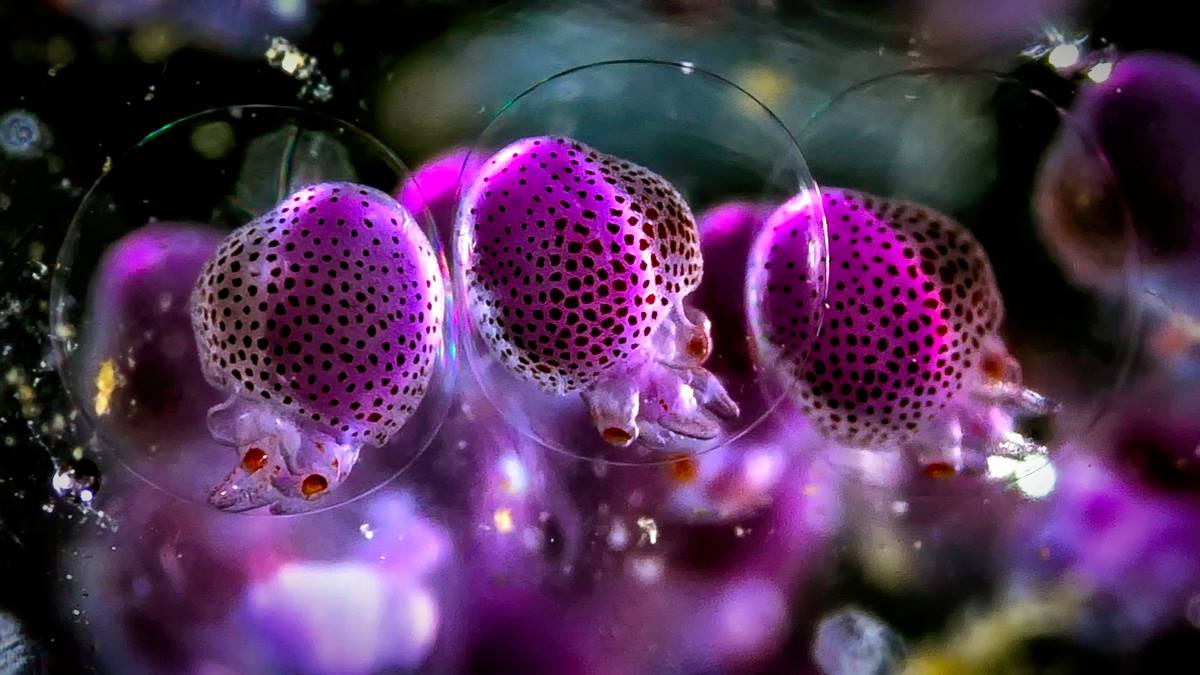
Every morning at this hour they wake me up with their chirping and cheeping. It’s spring, and the mating season, and the circle of life must go on. Heh.
Pharyngula
Evolution, development, and random biological ejaculations from a godless liberal

Every morning at this hour they wake me up with their chirping and cheeping. It’s spring, and the mating season, and the circle of life must go on. Heh.


You generally want to encourage young people to engage with science, but sometimes that means telling them that their ideas are bad. Take this Canadian boy who was in all the news, for instance: he was claiming to have discovered a method for finding Mayan ruins by basically using Google maps, aligning a star map with the terrestrial map and claiming to find that the Mayans built everything according to the layout of the constellations.
I was suspicious for a couple of reasons.
It made no sense. Yes, religion/astrology can persuade people to do foolish things, but you can’t claim that all the cities in the Yucatan peninsula were mapped out by lining them up with constellations. People also do things, like the massive resource investment involved in putting up a city made of stone, for pragmatic reasons.
The stars represent a random pattern of dots — and a pretty dense one, at that. Settlements in Mexico were also densely sprinkled about. This sounds like classic pareidolia, fitting noise to an expected pattern.
I have a little more respect for anthropology/archaeology than to think you can do it effectively in your armchair in Quebec without ever putting your butt on the ground at the study site.
Then the news reported that using his star hypothesis and satellite imagery, he had found a new ‘lost city’. That sounds like good science — hypothesis testing and all that.
Unfortunately, he hadn’t found a city. He’d found an abandoned cornfield, which, in a densely populated part of the world like that, isn’t at all unusual. His search criteria were so loose and poorly informed that he’s pretty much guaranteed to find a match somewhere near any random spot on the map, which means he’s ‘testing’ a hypothesis with a procedure guaranteed to generate false positives everywhere.
The sad part is that science has some standards for rigor, and everyone is going to tell this teenager that his method doesn’t work. Meanwhile, pseudoscientists have no standards at all, and will be telling this teenager that he’s brilliant and clever and is making a true contribution to their pseudohistory. He’s going to be denied by one and tempted by the other. Which one will he follow?
I’ll be curious to see if he gets mentioned at the Paradigm Symposium this weekend. This is exactly the kind of baloney they love…but then, the kid was smart enough to not say anything about alien astronauts, so maybe it won’t be on their radar.

It’s easy. If it uses the word “Lamarckian” without boldly prefixing it with “not“, you can just stop reading. Likewise if the word is prefixed with “pseudo-“, “semi-“, or “quasi-“. Just skip it. It’s too confused to bother with.
Epigenetics is in the news again, and in fact, it’s newsworthiness seems to be rising at a fantastic rate. Eight years ago, would you believe, I wrote a short summary of what epigenetics is, driven largely by the fact that a lot of people were writing about epigenetics without acknowledging that it was a grab-bag of mundane regulatory processes. It’s gotten worse. I had to explain the obvious: epigenetics ain’t magic. I tried to explain it last year again, that people have a lot of misconceptions about epigenetics. It’s frustrating because epigenetics encompasses a lot of cool and important stuff — genetic switches and gene regulation and plasticity and environmental responsiveness — but all the popular press wants to talk about is this weird idea that it’s a way break the tyranny of genetics and evolution and modify your genes for future generations, which is just plain wrong.
What it tells me is that there is still a lot of uneasiness about the implications of evolutionary theory. Not among most evolutionary biologists, of course, but in the general population. They wish for a way to believe that their progeny (and themselves) can be enhanced by an act of will, and they think that a poorly understood phenomenon like epigenetics provides a loophole. The whole idea that evolution is a statistical property of populations rather than something they can game to their advantage as individuals leaves them queasy. So they noodle around with the idea that somehow, by practice, they can change their whole genetic legacy using the buzzword “epigenetics”, not even realizing that epigenetic phenomena are a consequence of the properties of proteins, coded by genes, and regulatory sequences imbedded in their DNA, and that even short term cytoplasmic responses in the cell are ultimately derived from information in their genome.
People who use epigenetics as something that is anti-evolutionary remind me of Perry Marshall, the creationist who thinks Barbara McClintock’s work rebuts Darwinism, because he wrongly thinks somehow that it refutes the role of chance in evolution. They hate the whole idea of chance-driven processes, and want a way to shape genetics by an act of will, instead. It’s painful to see the contortions they put themselves through to run away from the implications of evolution and genetics.

This story about feathered dinosaurs is really good, and it also included the video below.
As the little man was strolling along past the dinosaurs that were getting bigger and bigger, I felt the urge to tell him to stop…starting about 30 seconds in.
It really should have ended with something huge stepping on him. The suspense was building up and up and was not released.


John Oliver gives the most awesomely accurate slam against pop science reporting. Why did it come out now, at the end of the term? I’ll use this next time I teach introductory biology.
(via Sandwalk)


Spare me the Kurzweil acolytes.
Google’s chief futurist, Ray Kurzweil, is known for his wildly-accurate predictions — back in the 1980s, when all of our current technological advancements seemed like sci-fi fantasies, he predicted self-driving cars, prosthetic legs for paraplegics, and wirelessly accessing information via the internet, among many other spot-on forecasts.
Now, his latest prediction is that humans are going to live forever, and he thinks it’s going to happen as soon as 2029.
He’s like the Amazing Criswell, isn’t he?
I lived through the 1980s, too, and those predictions were so mundane I could have made them. That’s the thing: he says a lot of trivial stuff that is already accepted knowledge (“Computers will get faster! Medicine will treat diseases in new ways! I will get older!”) that allows him to build a baseline of success that encourages people to think his other, wilder predictions will also come true. They won’t. Like Criswell, he says a lot of vague bunk, and his failures are just ignored…like those of any common ‘psychic’.
His prediction that we’ll live forever if we can just make it to 2029 are simply laughable. Modern medicine shows no such trend at work. The basis for his claim is aburd:
“By the 2020s we’ll start using nanobots to complete the job of the immune system,” he said. “Our immune system is great, but it evolved thousands of years ago when conditions were different.”
thousands of years ago
? What did our ancestors do a hundred thousand years ago?
He believes that nanobots — microscopic, self-propelled robots — will act as T cells, which are blood cells involved in our immune responses. Using T cells to attack cancer cells is already an idea that researchers are using in some cancer immunotherapy, but Kurzweil wants to take it a step further. Instead of harnessing the body’s own T cells, he wants to send in nanobots to do the job.
“They’re the size of a blood cell and are quite intelligent,” he told Hochman. “I actually watched one of my T cells attack bacteria on a microscope slide. We could have one programmed to deal with all pathogens and could download new software from the internet if a new type of enemy such as a new biological virus emerged.”
That is painfully naive. Does he even realize that there are multiple kinds of T cells, that they are part of an integrated network of cooperating cells, that they have to carry out a delicate balancing act of working against some antigens while not triggering on others? He seems to be imagining sending in a robot with a laser to kill ‘bad’ cells.
Plus, his tiny nanobots are going to be ‘programmed’ (how?) to deal with ‘all pathogens’ (is there a list somewhere?) and can ‘download new software from the internet’. The ignorance just makes me want to cry. But this is his schtick: he just borrows terms and ideas current in the culture right now, and claims we’ll be doing exactly the same thing, only with another tech buzzword, ‘nanobots’. He’s an idiot. He’s a clever idiot, though, who has fooled a lot of gullible people, and has even bamboozled Google.
He also claims this:
Kurzweil is 67 years old, but claims his “biological age” is in the late 40s, courtesy of his “Immortality Diet.”
Nope. He looks his age, just as I do. He’s had the advantage of the privileged life of a well-off office worker, which does help stave off the worst ravages, the product of a hard life, but there’s nothing especially young about his appearance. He looks to be of an age with Richard Dawkins, for instance, who is 75.
But then, religious leaders do get that kind of praise from their followers, no matter how decrepit they get. I’ve been in a room full of young Mormon women telling me how youthful and virile and sexy Ezra Taft Benson was…when he was in his 90s, feeble and vacant, and doomed to die a few years later. Same thing.

God sees even the sparrow falloozing between the lines

This must be how creationists think a sieve works. The smaller particles see from a distance that they’ll fit through the holes, so they make a beeline for them, while the bigger particles that won’t fit recognize that fact and get out of their way. Adding more material to be filtered reduces the effectiveness of the sieve because the bulk hampers their ability to find their way to the face of the sieve.
You may laugh, but I have to conclude that this is the inevitable rationale that they’d have to make, given their inability to think statistically and impose teleology on every explanation of natural phenomena. So Wolf-Ekkehard Lönnig raises a most peculiar argument against evolution. Populations are too large.
…in the 1950s, French biologists, such as Cuénot, Tétry, and Chauvin, who did not follow the modern synthesis, raised the following objection to this kind of reasoning (summed up according to Litynski, 1961, p. 63):
Out of 120,000 fertilized eggs of the green frog only two individuals survive. Are we to conclude that these two frogs out of 120,000 were selected by nature because they were the fittest ones; or rather — as Cuenot said — that natural selection is nothing but blind mortality which selects nothing at all?
Similar questions may be raised for the 700 billion spores of Lycoperdon, the 114 million eggs multiplied with the number of spawning seasons of the American oyster, for the 28 million eggs of salmon and so on.
He doesn’t think evolution can work, because how can it possibly find the two best individuals out of a group of hundreds of thousands or millions? And the problem becomes worse the bigger the population!