Our neighborhood is infested with the savage beasts. Here’s one that I, mighty hunter, captured today.
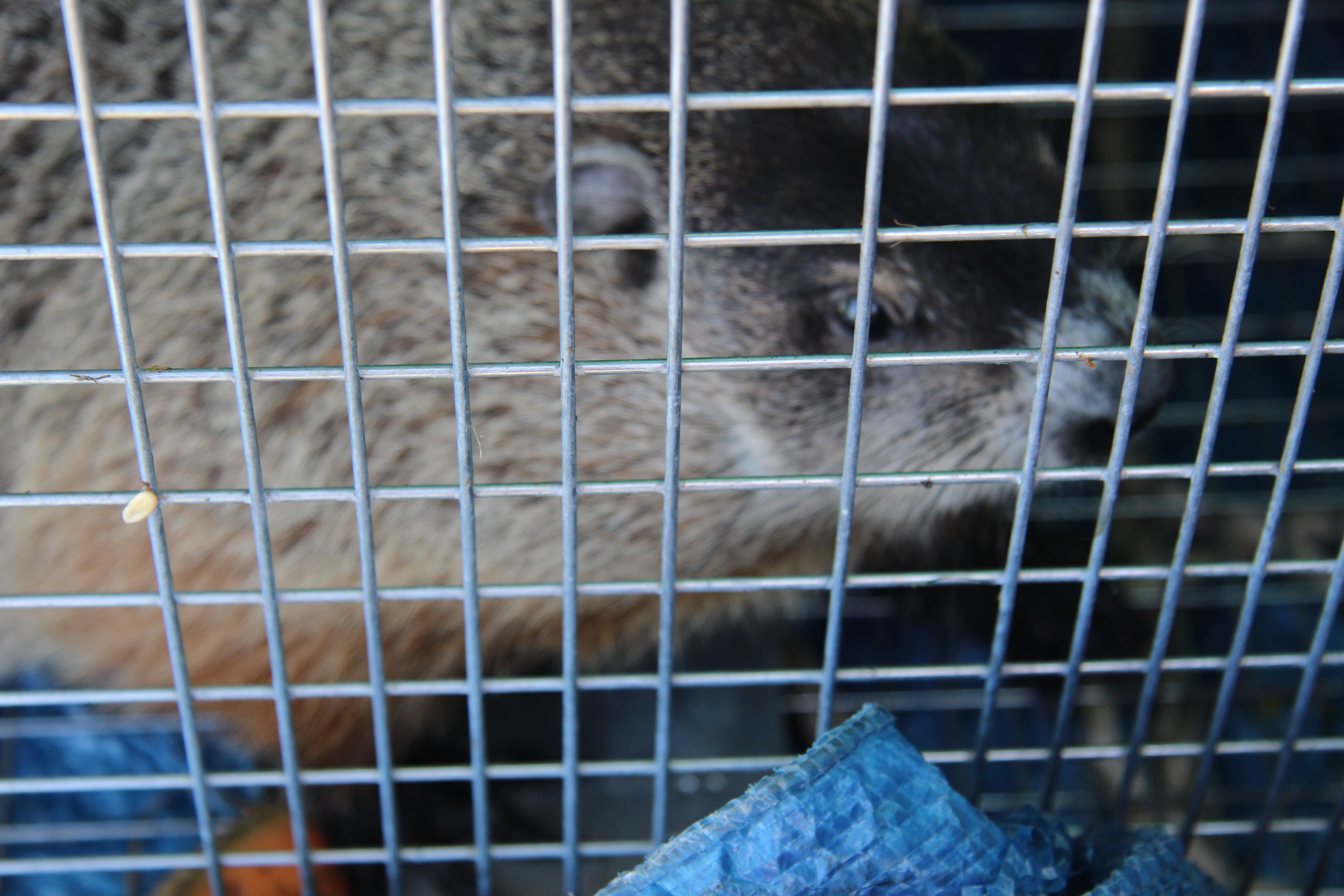
We took it for a little ride, and released it down by the river.

Action sequence! Watch its little butt as it scurries off into the underbrush.





Our neighborhood is infested with the savage beasts. Here’s one that I, mighty hunter, captured today.
We took it for a little ride, and released it down by the river.
Action sequence! Watch its little butt as it scurries off into the underbrush.

Gary Johnson is willing to admit that we have a climate change problem, but he thinks it is too expensive to do anything about it, so he wants to do nothing. Except for one thing: his solution is to emigrate.
Libertarian presidential nominee Gary Johnson offered an outta this world solution on Sunday to the planet’s environmental crises.
We do have to inhabit other planets. The future of the human race is space exploration,Johnson said on ABC’s “This Week.”
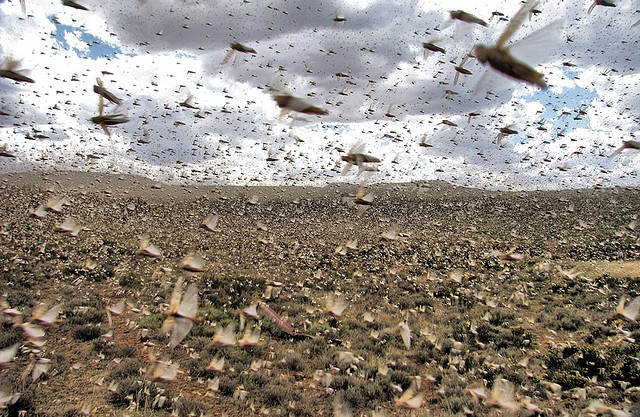
This is what I regard as the thinking of locusts: burn through what you’ve got and just move on to fresh ground. Except there’s the little problem of the “what you’ve got” being the entirety of Planet Earth.
I do have some serious questions for Governor Johnson, however.
Which planet do you think will be more habitable than Earth after Libertarian laissez faire policies get done with it, Venus or Mars?
If neither of those two, which planet do you propose as the new homeworld for humanity?
I assume that you acknowledge that some terraforming of this new home will be required. Since that would require the investment of a substantial portion of Earth’s resources to accomplish, over centuries to thousands of years, before we see any return on the investment, do you think the free market is capable of driving the greatest public works project in all of human history?
Let us pretend you have a real habitable extraterrestrial planet in mind. How do we get there? By “we”, I mean the 7 billion people now on Earth. Or do you imagine this is more of an opportunity for the few incredibly rich people, while everyone else boils, fries, broils, or fricassees on Abandoned Earth?
How do you reconcile the fact that you oppose closing coal plants because it would cost the economy too much, while proposing a solution that is immensely more expensive, currently impracticable, and requires allowing this lovely blue planet to choke on our waste? This does not sound at all cost effective.
You seem to regard natural resources as fungible. Are you capable of empathizing with people who might love pieces of this Earth so much that they don’t see any possibility of substitutions? I don’t think we should surrender the Galapagos Islands, the Olympic Rain Forest, the Great Barrier Reef, or any of the millions of treasures we ought to be protecting. Do you also see your children as interchangeable, so you’d have no problem giving one up if we provided a replacement of equal or greater value?
When do you leave?

All because I read The Angry Chef’s praise for the potato.
Potatoes are quite possibly my favourite ever thing. No, fuck it, they are my favourite thing. They are versatile, delicious, cheap, and accessible. From a culinary and scientific point of view they are deeply fascinating and they form the basis of many of my favourite foods. Cooked correctly, they can make the heart sing with joy. My reputation as a chef is, perhaps quite tragically, built on a number of remarkable dishes that I make with potatoes. I have spent many working days perfecting my potato cookery and after twenty years in professional kitchens I am still learning more about them all the time. I believe that I know how to make the perfect roast potatoes, crisped the the point of near caramelisation on the outside, with a light fluffy interior, a hint of thyme and the richness of beef fat. I can make mashed potato so silky, rich, buttery and creamy that it once made someone cry. I have spent an entire week trying to make the the perfect chips (they are good, but not perfect – yet) and it makes me genuinely weep inside when someone cooks a jacket potato in the microwave. I love dauphinoise, Lyonnaise, rostis, sautéed, Bombay, crisps, waffles, hash browns (basically working class rostis), croquettes, gnocchi and Patatas Bravas. I love cottage pies and hotpots and believe that potatoes slowly cooked with meats often become more delicious than the meat itself. When made well, freshly cooked chips are as much of a cause for celebration as the flash, needy offerings of Michelin starred restaurants and superstar chefs. When eaten out of paper by the sea they are the greatest culinary pleasure I know.
But potatoes are bland, you say — not when they’re cooked with the right spices. And what better spice is there than brutal denunciations of the paleo diet and other stupid fads?
Potatoes are a delicious, with remarkable culinary and nutritional properties. So why is it that health bloggers, Paleo nuts, wellness gurus and various other dietary fools reject them so vociferously? The reasons behind this beautifully exposes the hidden and pernicious nature of dietary wellness trends. In understanding why potatoes are rejected we reveal the true face of the wellness industry, an industry built on lies and false promises.
The pseudoscience and nutri-bollocks behind fad diets is nothing but a smokescreen to disguise their true nature. The reality of Clean Eating, Paleo, Alkaline and Detox is that they are damaging restriction diets, more about thinness than wellness. Whilst they talk about a lifestyle and wellbeing, these are just euphemisms for weight loss, driven by societies permitted fat-shaming prejudice and an insatiable desire to achieve thinness without effort.
Fad diets will proliferate if they have simple rules and pseudoscience justifications to help them stick in people’s minds, but examine them in detail and the logic falls apart. Take Paleo for instance, based on the premise that we are not ‘designed’ to eat certain foods. Newsflash genius, not sure if you missed the memo about Darwin and Wallace, but we are not ‘designed’ to do anything and neither is any part of the natural world. We evolved from a random sequence of evolutionary accidents, existing only because certain characteristics keep us marginally ahead in the arms race of existence. Nature is not pure and benign, it has no wisdom and it does not exist to nourish us and help us thrive. Nature is vicious, harmful and for thousands of years has been trying to fucking kill us. In the Palaeolithic period it was far better at doing this, with survival beyond thirty being extremely unlikely. Our ability to control the natural world, to process and store foods and to adapt our environment to meet our requirements is the one thing that has kept our head above the evolutionary waters and saved us from the miserable fate that befell every other hominid species in history.
Read the whole thing, as they say.

Let us turn now to the One True God of science and atheism, the Ground State of our existence. We shall now contemplate Caffeine. Raise your cup in praise.

This morning, as I was sipping the blessed stimulant and browsing the journals, I learned a little something. I learned how caffeine evolved, and it was both unsurprising and surprising. I am not a biochemist, so it’s always enlightening to read a little out of that field. This, for instance, is the chemical precursor in the synthesis of caffeine.

Oh, I said, I certainly do recognize that — I’ve been teaching budding cell biologists about important biological macromolecules for the past few weeks, and that’s a nucleoside. Note the ribose sugar with the attached nitrogenous base, the double ring of one pentagon attached to a hexagon? That’s xanthosine, which is also a precursor in the synthesis of those purines our cells use in signaling and assembling chains of nucleotides in DNA and RNA. That’s obvious. And then you look at caffeine, and it’s also obvious how cells make it: slap a couple of methyl groups (those -CH3s sprinkled around), and presto, you’ve got a happy drug. Easy.
Except…not all cells make significant amounts of caffeine. It takes specific enzymes to glue those methyl groups onto the core base with any reliable yield, and my cells might have xanthosine around, but they aren’t making any for me. I have to raid the vegetable kingdom and tear off their leaves and beans and hit them with boiling water to extract the blessed caffeine. And then not all plants make it — I can’t get a buzz on with a bowl of peas in the morning.
And then I learn that caffeine has evolved independently at least 5 times, and that the distribution of caffeine is patchy — some species in a genus will make it, while other related species in the same genus don’t. The caffeine molecule in Coffea (coffee) and Camellia (tea) and Theobroma is identical, but it’s synthesized by different pathways.
My mind is blown. Excuse me, but I have to take a break and think about this. I’m going to take a walk down to the coffee shop and gurgle down a couple of cups to help absorb this information. I’ll resume this post a little later.
You understand, don’t you? Go have another cup of coffee or tea while you’re waiting.


I guess New Scientist is feeling some heat over their disgraceful advocacy of Canavero’s ludicrous head transplant scheme. They just posted a rather defensive follow-up, and they’re still getting it all wrong.
It is one thing to find the science risibly weak, but on the bigger issue of head transplants – or more accurately, full-body transplants – nobody is laughing. The surgery seems macabre but is scientifically feasible and could offer real benefits to some people.
No. That’s the whole point. It is not feasible, no one is even close to being able to do it, and risibly weak
is a ridiculous understatement. You can’t claim it’s feasible while also admitting that the science is weak. This makes no sense at all, especially considering how they close the thing.
Even if head transplants prove impossible or unacceptable, full spinal cord repair would be a breakthrough of huge importance. It’s time to get serious, lest this opportunity is lost.
It’s simultaneously feasible, but may also prove impossible? Who is writing this drivel?
No one is arguing about whether spinal cord repair would be a fantastically important advance. It would be. The point is, if you want to get serious
about accomplishing that, you’re not going to get there by promoting an irresponsible hack like Canavero, or by touting nonexistent advances and bad papers as breakthroughs of huge importance.

Just Frankenstein. Reader blf tracked down some information about Surgical Neurology International, where Canavero and his pals are having a grand time publishing shoddy science about head transplants. The journal has a complicated, messy history, with a mix of credible scientific papers and far-right-wing fringe conspiracy theories. That ought to make you question the source right there.
By the way, Canavero has a new paper there: HEAVEN: The Frankenstein effect.
The HEAVEN head transplant initiative needs human data concerning the acute restoration of motor transmission after application of fusogens to the severed cord in man. Data from two centuries ago prove that a fresh cadaver, after hanging or decapitation, can be mobilized by electrical stimulation for up to 3 hours. By administering spinal cord stimulation by applied paddles to the cord or transcranial magnetic stimulation to M1 and recording motor evoked potentials, it should be possible to test fusogens in fresh cadavers. Delayed neuronal death might be the neuropathological reason.
He sounds like he’d be fun at parties, doesn’t he?
I don’t get the point of this experiment. The question isn’t whether you can get an electrical current to jump the gap, crossing a lesion in the spinal cord; that’s trivial. The question is whether his fusogens promote active, specific regrowth of nerve fibers across the lesion, and you won’t get that by shocking corpses. It might have been an interesting observation 250 years ago when Luigi Galvani was shocking dead frogs, but it’s not something that needs to be tested now.
It’s also a rather pointless paper. He hasn’t done any of these experiments, but is just arguing that we should do them. Save that for the IRB. It shouldn’t count as a publication.

I’m sure you’re all wondering what’s happening with Sergio Canavero and his dangerous and unethical plan to transplant whole heads. Three new papers have been published claiming to have achieved partial regeneration of function of severed spinal cords in mice and rats and dogs.
Credible scientists do not believe it.
However, papers published today detailing the spinal cord repair technique applied to the dog have prompted other scientists to express concerns over the work. “These papers do not support moving forward in humans,” says Jerry Silver, a neuroscientist at Case Western Reserve University in Ohio.
Jerry Silver is so nice. I’m more likely to say that these are cases of scientific fraud and that they are so shoddily done that they shouldn’t have been published. Of course, the way that they got published is that Canavero was the editor of all three who allowed them into the journal.
The “breakthrough” that they’re promoting is that after severing the cords, they tried some additional experimental treatments that were supposed to promote regrowth: they injected the site with polyethylene glycol (PEG) and with graphene ribbons. I’ve used PEG to make hybridomas — it’s basically a membrane solvent that allows adjacent cells to fuse with one another. The graphene ribbons act as electrical conductors to allow current to flow across the lesion.
I gawp in astonishment that anyone would think this would work, and that any ethical review board would allow them to continue. I should belatedly warn you that the New Scientist link includes a video of dogs and mice intentionally crippled and struggling to move.
Here’s the problem restated in cruder terms. This is a fancy cable with multiple insulated strands running through it — of course, it’s nowhere near as complicated as the human spinal cord.
It’s cut.

Now a friendly electrician tells you he can fix it easily. He’s not going to splice each wire together to restore the proper connections, instead, he has an easier solution: he’s going to inject acid into the cable to dissolve insulation and encourage the copper wires to fuse, and he’s going to fill the cable with an electrically conductive goop that will allow signals to cross the broken end.
Does this sound like it will work to you? These are generic treatments that completely ignore the specificity of the necessary connections. He’s just claiming that anything to promote fusion will work, and that the cables will somehow sort themselves out.
Would you let him reassemble your home theater system with this technique? He’s happy to show you videos of his work, with a television flickering and fading and speakers sputtering and wowing, all for verisimilitude’s sake, but he’s not actually able to show you that these botched repair jobs used these techniques.
You might ask for some quantitative measures of the success of his technique, and he tells you that it works maybe half the time, and that all of the controls, in which he just cut cables and plugged them together, burst into flames and exploded. (of his experimental mice, 5/8 showed some degree of improvement, 3/8 died, and all of his controls died, which is really suspicious right there).
In another experiment with rats, all but one of the experimental animals was accidentally killed in a flood, but that one showed great improvement. One. This is nothing but a dubious anecdote. How could it get published at all?
Somehow, though, this shabby work is getting funded, is passing review boards, and is getting published. And Canavero is planning to try it on a human subject.
Apparently, if you put on a white coat and have a medical degree, you can get away with torturing small animals before planning the torture-murder of a human being.