Pharyngula
Evolution, development, and random biological ejaculations from a godless liberal



I am a bad, foolish person, and now I’m feeling guilty. A few years ago, I made an appointment for a colonoscopy, and then what happened? Work happened, and I had to cancel my appointment. The prep work for the scan is unpleasant, and I knew it was going to mess up at least a day, and I couldn’t afford the time just then.
Worse, after canceling, I didn’t make another appointment. I’m just letting it slide. You know, that’s stupid. Especially after opening the latest issue of JAMA this morning and reading an editorial, Using Outreach to Improve Colorectal Cancer Screening. Early diagnosis of colon cancer makes a huge difference in prognosis, so you’d have to be an idiot to put it off.
Colorectal cancer (CRC) is the second leading cause of cancer death in the United States, with more than 50 000 deaths expected in 2017. Screening can reduce CRC mortality, and several methods of screening are available and recommended for average-risk adults aged 50 years to 75 years. Modeling studies suggest that several different methods of screening produce relatively similar levels of mortality reduction if there is good adherence to the underlying screening program.
Despite strong evidence of effectiveness, more than a third of age-eligible US adults are not up-to-date with CRC screening, with important disparities by ethnicity, income, education, and availability of a regular source of care. Currently, most CRC screening in the United States is achieved by colonoscopy. Studies of audiotaped encounters suggest that few clinicians and patients are having high-quality, shared discussions about screening options.
Increasing screening levels to greater than 80% has the potential to prevent an estimated 200 000 deaths in the United States in less than 20 years.
At least I’m not alone in my stupidity — a third of people in my cohort have been blowing it off. That’s no excuse, of course. Knowing that there are tens of millions of people in my situation does not make it less derpy.
So…I’m going to call in and make an appointment today. There’s a long wait time around here, so I probably won’t get in until Decemberish, which is all the more reason to call now.
Much of the editorial is about how health care providers can better inform and encourage people to get screened, and assessments of the effectiveness of various methods. I’m not a doctor, so I’ll just mention that I think outreach like Crispian Jago’s cancer diary helps me realize how important this is — and although it would be convenient to complain that my local hospital should have followed up with me after my canceled appointment, the truth is it’s all on me. And on you. If you’re over 50, contact your physician and make arrangements, if you haven’t already.
It’ll be fun! Weird liquid diets and spending a day purging your bowels so they can slide a camera up your butt? How can it not be exciting?

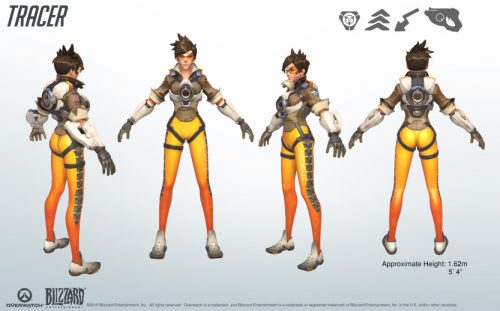
Fascinating — models in software games have some subtle but intentional design features. There is a game character in Overwatch (which looks like a fun game, but since it’s PC only, I’ve never tried it) named Tracer who was the focus of some controversy a while back because some of the promotional materials emphasized her lovely, shapely butt maybe a bit overmuch. Now there has been a detailed analysis of the design of her character to identify what makes her butt so nice in every view.
Wu discovered that the primary cause of Tracer’s plump backside is an inhumanly deep buttcrack. In fact Tracer has a butt crack so deep that regular humans could not possess similar physiology and survive. Such a crack would inevitably interfere with organs and the body’s structural integrity.
As a result of this bizarrely deep posterior, Tracer can be put in literally any pose, under any lighting, and her butt will still cast a shadow implying depth, plumpness and tautness. The way Tracer’s bottom is emphasised in any situation is a genuine feat of engineering.
On top of that, there’s more. Another aspect of Tracer’s butt that plays a big part in its eternal visibility is the fact that her outfit is either impossibly tight or glued to her ass cheeks.
Take a look at the image on the far right. Natural fabric would find a resting point between the peaks of the two cheeks, naturally bridging the gap. If the material pulls in to show cheek definition, this would be the result of both cheeks physically trapping the fabric. This is different, in that the fabric follows the contours of the cheeks and buttcrack without the two cheeks making contact. For the titillation of boys and girls worldwide, Tracer suffers a permanent wedgie that is literally designed to make her individual butt cheeks shine.
Wait, but what about realism? What about ethics in gaming?
We’ll get to that once I’m done marveling that there is such a thing as virtual butt analysis, and that there are game designers and artists working hard to maximize butt exposure.
Nature is also working on it. Check out Jon Snow’s butt.

Today is International Vulture Awareness Day.
I’m trying to figure out how to celebrate it. My wife is away all day, but when she comes home for dinner, maybe I should serve up some roadkill? Someone has to have a better suggestion.

I think it’s a portrait of my mood right now.


They might have properties of a material that would interest an engineer, but I’m still not putting on a shirt made of fire ants.

Houston is paying it today. Whose city will pay for it next?
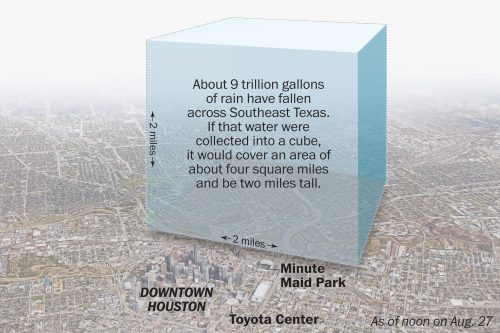
The Republican administration is going to make everything worse for everybody. Trump rolled back regulations intended to support better standards for infrastructure projects — he apparently thinks the way to encourage investment in infrastructure is to allow it to be half-assed infrastructure.
An executive order issued by Trump earlier this month revoked an Obama-era directive that had established flood-risk standards for federally funded infrastructure projects built in areas prone to flooding or subject to the effects of sea-level rise – like many of those now sinking in Texas.
Houston already has some of the laxest building regulations for structures in potential flood zones and the president wants to spread that policy across the US.
“It makes no sense,” Steve Ellis, vice-president of Taxpayers for Common Sense, said. “Taxpayers deserve to have the assurance that if they provide assistance to a community to build or rebuild, it’s done in a way that isn’t going to cost taxpayers money in the future.”
Setting better flood-risk standards wouldn’t have helped Houston — Texas has been busy doing things half-assedly for generations, for short term gain — but they would help build for the future. If we have one.

A fly that thinks it’s a beetle. Doesn’t it know that goes against God’s plan?

First, a little background:
When squid mate, a male transfers its sperm to a female enclosed in complex structures called spermatophores. These are accumulated in the spermatophoric sac, a storage organ inside the mantle cavity, before ejaculation through the penis. Squid that spawn in shelf waters and epipelagic waters of the open ocean usually have short penes hidden completely inside the mantle. Males pick the ejaculated spermatophores from inside their mantle with a specially modified arm called the hectocotylus, to transfer them to the female. Females spawning in shallow water have special places for spermatophore attachment on the body, both externally (skin ring around the mouth, and back of the head) and internally (oviducal gland openings near gills) (Nesis, 1995). As female squid lack a vagina, the use of a highly articulated arm (hectocotylus) for transfer and placement of spermatophores is more precise than by means of the comparatively poorly articulated penis.
So male squid have penises deep in their mantle. Many species have short penises, and they also have a specialized arm, the hectocotylus, that they use to reach in to their own mantle to scoop up ejaculate and then place it in the appropriate place in a female.
Other species lack the hectocotylus, but instead have a long penis, as some investicators discovered. They are also capable of erections, which was a surprise.
A mature moribund male of the greater hooked squid Onykia ingens (Smith, 1881) (38.5 cm mantle length, 1180 g body mass) was caught on the Patagonian slope south of the Falkland Islands (July 2006, 53°20′S, 59°31′W, 1050 m depth). When the mantle of the squid was opened for maturity assessment during processing of the catch onboard, the penis of the squid, which previously had extended only slightly beyond the mantle margin, suddenly started to erect. It became rigid and quickly elongated to 67 cm total length, almost the same length as the whole body of the animal (mantle, head and arms; Fig. 1). Immediately after elongation, several spermatophores were ejaculated from the penis tip.
So not only do they have penises capable of erection, they can get erections when dead and partially dissected, which means I can now show you a zombie squid dick pic.
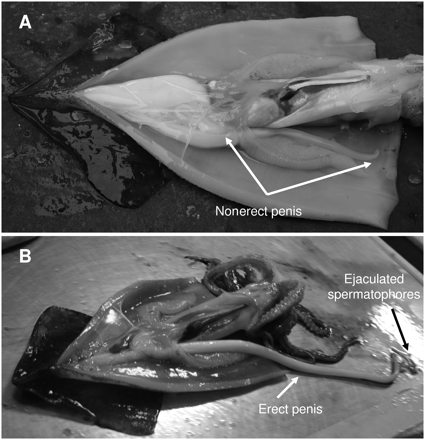
Mature males of deep-water squid Onykia ingens with cut-open mantles showing non-erect (A) and fully erect (B) penes.
(blame Tommy Leung)
Arkhipkin AI, Laptikhovsky VV (2010) Observation of penis elongation in Onykia ingens: implications for spermatophore transfer in deep-water squid, Journal of Molluscan Studies 76(3):299–300.