Dog-distracting for Halloween


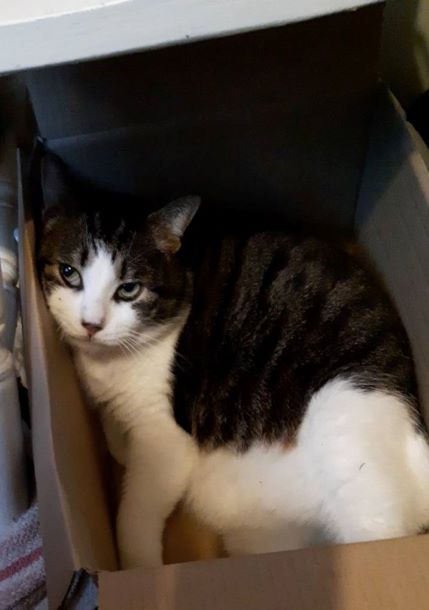
Since Halloween is fireworks season in Dublin, and tomorrow is a bank holiday, we’re at a friend’s house helping distract her dogs. Bella hates fireworks as much as Raksha did, but where Raksha would just pace and pant and hide under my desk, Bella barks at fireworks (and airplanes).

We’re playing Munchkin Cthulhu with Over The Garden Wall on in the background. It seems to be enough to mask the booming overhead.

Bella is a sheltie who hates loud noises with a fiery passion, and barks at them so they know of her hatred.


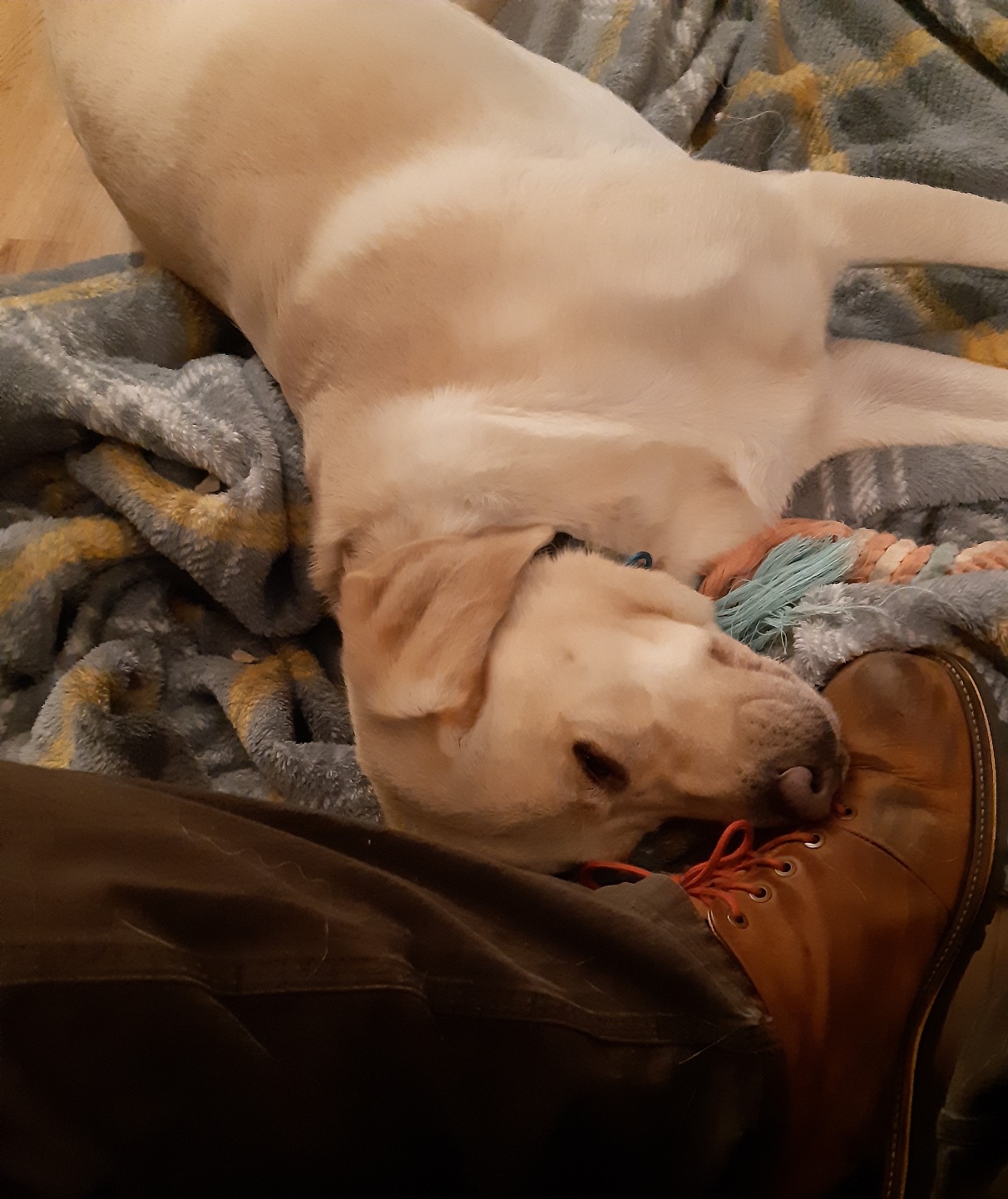
Lucy is a yellow lab sleeping with her snout on my foot. She’s more bothered by Bella’s freaking out than by the fireworks.

Video: Meet the tayra

Back in high school, I spent a lot of time tromping around in the woods in New Hampshire. In the winter, I’d sometimes go out tracking for hours, and my favorite animals to track were always mustelids. I think it’s a tie between mink and fisher. Mink were fun because in addition to the challenge of tracking something that’s as comfortable swimming as it is walking, when they came to big hills, they’d slide down them on their bellies. Sometimes they’d run back up the hill and do it again, or if there was a gully, they’d move down it by running up one side, then sliding down it, and running up the other side, zig-zagging back and forth. Fisher didn’t slide so much, but they also tended not to stick so close to streams, and they were more likely to lead me to other animals. Follow a fisher for long enough, and the odds were good I’d find something else. They also had their own way to play in the snow. If it was deep enough, they’d run up a tree, and jump off, leaving a perfect spread-eagle hole in the snow. It always looked like something out of a cartoon.

I tend to think of the Tayra as the South American version of the fisher. I don’t know how closely they’re related, beyond sharing the same family, but it seems like they occupy a similar niche in their respective habitats.

Tegan Tuesday: Cursed without cursive?

Every couple of weeks I’ll see yet another article bemoaning the state of education because darn kids and their darn texting aren’t learning cursive! Occasionally the article will appeal to parents and educators from a pedagogical point of view: this argument is about how people remember things differently when typed or when handwritten, and, obviously, cursive is the fastest writing so it should be used. Sometimes the argument is an appeal to preservation and history: kids can’t read non-typed documents oh no! The rare article sticks to complaining about Kids These Days and how they need to learn cursive just because. Because I had to. Because they hate it. Because they’re on their phones too much. Just, because. Depending on how frothing at the mouth the author of the article is, I either laugh or roll my eyes at every single one. Because each argument is nonsense.

Those who argue that memory is aided by the process of writing by hand have flawed methodology in their research. The question is not ‘which is better, typing or handwriting data?’ but rather, ‘does a person learn better when using the data preservation method they were trained on?’ Up until extremely recently, the predominant method of data recording was by hand. Even the coding that took the men to the moon was done by hand, because processing power was expensive and because the human computers had trained that way. As a millenial, I learned to take notes and write essays by hand. This means that my first training was in manual recording and it is my default. Any time I type I am surrounded by paper with hand-scrawled notes and notebooks for additional commenting. I often do essay planning or rough drafts longhand and my processing speed is different for handwriting and typing. I am a touch typist, so when I have a script to follow, I have a fairly swift typing speed. When pulling from thoughts, there are stops and starts and stuttering of my keyboard as I think slower than I type. Whereas by hand? I rarely pause because my thoughts move at a speed related to my hand speed. This combines with my visual learning style to mean that writing and seeing a handwritten note is much stickier, mentally, than a typed comment. Most of my typing rarely sticks in my thoughts at all — it’s more dictation, even when it comes from my own brain.

Contrast this with Gen Z who have been typing since they were small and have had computers in the classroom their whole lives. Many of them barely have functional handwriting at all, because typing has been their default for decades. But they are the first generation to have this pedagogical change, and thus the first to possibly truly answer the research question mentioned above about how people best learn. Any research prior to the past few years has, naturally, been conducted on people who learned handwriting first. Surprise! They remember details best when handwritten. But how does this hold up when confronted with students who learned typing first? I suspect that Gen Z thinks through their fingers on a keyboard the same way that I think with a pen in my hand. Anecdotally, I dated someone with dysgraphia for a number of years, and their brain could not actually form the pathways to build the muscle memory to write. They were gifted a typewriter for Christmas when they were 7 and never looked back. This person, naturally, thought best through a keyboard where writing by hand was an exercise in frustration.

The other argument worth addressing about cursive — or its lack — is its value to history. If children aren’t taught cursive, they won’t be able to read texts from the past! Well, I’m sorry to say that that has always been the case. Scripts have always been regionally- and temporally-based, and it is difficult to read ones outside of your own time and area. Heck, I sometimes can’t read the handwriting of the person next to me and I have to ask what a word is! Learning cursive allows for more fonts to be pre-loaded into mental storage but Spencerian is different from Secretary Hand  which is different from Palmer Method or Chancery or Sütterlin. A postdoc application that I read once included the detail that because the scholar was already familiar with the 19th century composer’s handwriting, they could actually read their diaries in all of its historical German shorthand glory. Because that’s the other thing about historical writings: the format and actual text differs from situation to situation. The go-to examples of this are diaries which often have abbreviated phrasing and spellings that are individual decisions, or handwritten recipes which have standard abbreviations that might vary from culture to culture and by time period. Where my grandmother would write “van,” or my mother would write “1 t van,” I would be more likely to write “1 tsp vanilla” — and we would all mean the same thing. But let’s take a look at an example from my research.

This is the inside page of a dictionary published in 1749. In the second inscription, (“The Gift of Anna Maria Botterell, to Bridgett Hawkins, on June the 24th 1778”) there’s an 18th century handwriting convention of spelling ‘the’ as ‘ye’ with the ‘e’ a superscript above the ‘y’. This is an artefact from when the English language included the letter ‘thorn’ and it stuck around as a shorthand in words like ‘the’ for centuries. But also look at the way Anna Maria Botterell writes ‘Hawkins’ compared to Bridgett (‘B’) Hawkins, the next Hawkins who’s first name or initial I cannot parse, or Maria Bratt Hawkins. I only know that Maria Bratt’s married name is Hawkins because of its proximity to all of the other names — and that’s nothing on how differently she wrote her location (‘Edgbaston’) from the previous person! The first writer, Sarah Botterell, has a clear difference in script between her handwriting and Anna Maria’s, although both are fairly clear to read. These five people were literate, valued book-learning (this is inside of a dictionary that remained in use for a century after publication), and even in an inscription had varying levels of legibility. How much less legible would their diaries or a note to the grocer be!

When considering the historical handwriting question, I am reminded of a dilemma from other historical pursuits. Often people living in historical homes are interested in returning the house to its previous life and spend hours searching for paint chips or evidence of wallpaper. But there is no evidence whatsoever that the previous owners of the house had taste! Just because the wall used to be lime green does not mean that you need to paint it lime green in order to “restore” the building to some form of former glory. And just as our ancestors may not have had good taste, they might have had bad handwriting. A child learning cursive only gains an extra mental font — it does not guarantee ease of handwriting decipherment.

The skill I wish schools actually taught? Proper typing. When I learned cursive, there was a great deal of emphasis on proper hand shape and how to best hold a pen. Students are typing more than ever, and there are equally more cases of repetitive stress injuries than ever before and at younger and younger ages. Please teach your kids how to hold their hands properly! We only get one set of them and trashing them with repeated use in awkward and terrible positions from a young age does no one any good. But cursive? Eh, I could take or leave it. The kids who are interested in it will find their own way (I know a lot of people who are interested in calligraphy and paleography) and rather than chivvy along a group of recalcitrant children that time could be better spent on more productive things like preventing injurious typing behavior.


If you like the content of this blog, please share it around. If you like the blog and you have the means, please consider joining my lovely patrons in paying for the work that goes into it. Due to my immigration status, I’m currently prohibited from conventional wage labor, so for the next couple years at least this is going to be my only source of income. You can sign up for as little as $1 per month (though more is obviously welcome), to help us make ends meet – every little bit counts!

I finally caught COVID (plus True Facts about parasitic birds)

I made it almost three years without getting it. I avoided it when Tegan had her first case, but I guess I got too careless this time. At the moment, it feels like a head cold with a slight fever, and trouble with temperature regulation. It’s my goal to keep posting through it, but I can’t make any promises about post “quality”.

For today, here’s Ze Frank with a cool and slightly horrific video about brood parasites:


John Oliver’s condemnation of Bolsonaro does not go far enough

John Oliver is probably my second favorite political comedian after Cody Johnston of Some More News. He has a well-deserved reputation for delving into obscure and unpleasant details to present a compelling and deep analysis of pressing problems in the world. All of this is why I find it so disappointing that Oliver still has a mysterious inability to report well on anything happening in Latin America.

I first became aware of this flaw thanks to the work of Michael Brooks, whose ability to maintain a solid understanding of international affairs went beyond any other journalist I’ve seen. He died far too young, and we’re still all a bit worse off for his death. I can’t do as good of a response as he could have, but I’ll do my best.

For those of you who don’t know, Brazil is holding the first round of its presidential election tomorrow. The race is between former president Luis Ignácio “Lula” da Silva, and current president Jair Bolsonaro. Lula was not a perfect president, if such a thing exists, but from what I can tell he was far better for the working class and international reputation of Brazil than any of its previous leaders, or any president the United States has ever had.

Lula was imprisoned on a bogus corruption conviction in April of 2018, just six months before the presidential election, and the judge, Sergio Moro, blocked efforts to release him. Moro was appointed Minister of Justice and Public Security by Bolsonaro when he took office in 2019.

Later that year, The Intercept published evidence of a plot between Moro and the prosecutor to imprison Lula to keep him from participating in the 2018 election. The conviction was annulled in 2021, apparently over jurisdiction, and a retrial was ordered in a more appropriate court. It’s unclear to me where things will go from there, but all of this, including the apparent FBI involvement, makes this seem like yet another effort by the United States to undermine a popular left-wing leader in favor of a fascist.

And that brings me to Oliver’s discussion of Bolsonaro.

There’s a lot to like about this video. I think the biggest problem with it is that it seems to stop at the points where the situation is similar to events in the US. It makes a somewhat compelling case that Bolsonaro is dangerous, but it leaves out a lot of context. This is part of a pattern for John Oliver. When it comes to Mexico, Central America, and South America, he seems to have a bizarre aversion to actually digging into stories. The most charitable explanation I can think of is that they’ve got someone on staff who’s in charge of the Latin America segments, who is either lazy, or holding some kind of odd centrist bias.

He was right to cast Bolsonaro as a threat to democracy. Bolsonaro has been openly saying that he won’t accept any result other than victory or death, casting doubt on the electoral system without evidence (sound familiar?), and he got into power in the first place via a judicial coup more blatant than the one that put George W. Bush in power in 2000.

Unfortunately, it’s worse than that. Beyond his extensive ties to both the military and Brazil’s past military dictatorship, Bolsonaro also as ties to terrorism and political assassination. Bolsonaro was twice photographed with suspects in the murder of councilwoman Marielle Franco, and turned out to live in the same high-end apartment complex as one of them.

BRASILWIREput together this timeline:

August, 2003: Jair Bolsonaro publicly defends Militias in a speech in Congress, saying, “I just heard a Congressman criticize death squads. As long as the State does not have the courage to adopt the death penalty, the crime of extermination, in my understanding, should be very welcome…. If it depended on me they would have all of my support…”

March 2007 – As a State Congressman, Jair’s son Flavio attempts to legalize militias. “For me, human rights are not for all humans, because some people cannot be called humans. They are monsters,” he says in defense of death squad executions.

August, 2011 – After Judge Patricia Acioli is assassinated with 21 gunshots by two militia members, Flavio Bolsonaro commits character assassination against her, “May God take her but the absurd and gratuitous way that she used to humiliate police officers contributed to her having many enemies,” he said. Before her assassination, Judge Acioli had convicted 60 police officers for acting in militias and for death squad activities.

February, 2018 – During a radio interview on Joven Pan, Jair Bolsonaro, again, defends Militias. “There are people who support militias,” he says, “because it is the way that they can live without violence. In those regions where people pay militias, there is no violence.”

March, 2018 – Marielle Franco and her driver Anderson Gomes are assassinated. Jair Bolsonaro is the only presidential candidate who does not publicly condemn the killings.

April 2018 – A motion is passed in the Rio de Janeiro State Legislature to posthumously award slain city councilwoman Marielle Franco with the Tiradentes Medal. Flavio Bolsonaro is the only lawmaker who votes against it.

September, 2018 – Alex and Alan Oliveira, two Rio de Janeiro Military Police officers, are arrested for committing acts of corruption and extortion as part of a Militia that operates on the West Side of Rio. It comes out that both had worked on Flavio and Jair Bolsonaro’s political campaigns, and that their sister was the Treasurer of the Rio de Janeiro state headquarters of the Bolsonaro’s PSL party.

October 2018 – Two candidates for Rio de Janeiro State Congress in Bolsonaro’s PSL party, rip a street sign honoring Marielle Franco in half at a campaign event, while gubernatorial candidate Wilson Witzel cheers. In the scandal that ensues, Flavio Bolsonaro defends their actions.

October 2018 – The Civil Police Organized Crime Unit, GAECO, arrests 18 members of a militia operating in the Rio de Janeiro suburb of São Gonçalo and discovers that they have been working on the campaign of retired Military Police Colonel Fernando Salema, running for State Congressman for the Bolsonaro’s PSL Party.

December 2018 – COAF, the Federal Board of Financial Activities Control, reveals that the Flavio Bolsonaro’s former driver, Fabricio Queiroz, made unusual money transfers valuing $R1.2 million in 2016 and 2017. The ex-Military Police officer committed at least 10 killings while on active duty.

January 2019 – COAF discovers that, in addition to the R$1.2 million, another R$5.8 million went through Queiroz’s accounts while employed for Flavio Bolsonaro during the two previous mandates.

January 2019 – COAF reveals that, during one month in 2017, Flavio Bolsonaro received R$96,000 in 50 bank deposits valued at just under the minimum limit to require money laundering investigations.

January 2019 – President Jair Bolsonaro issues a decree moving the COAF’s jurisdiction to the Justice Ministry, headed by Lula’s captor, former Lava Jato investigator Sergio Moro. In a move widely viewed as made to protect his employer, Moro fires the director of COAF and, two months later, replaces him with a former co-worker from the deeply politicized Lava Jato investigation.

January 2019 – Globo newspaper reveals that, before he went to the nation’s most expensive hospital, Albert Einstein in São Paulo, for what appears to have been frivolous treatment to delay testimony, Queiroz was hiding in the Rio das Pedras favela, which is controlled by the Escritorio de Crime militia under investigation for the assassination of Marielle Franco.

January 2019 – The media announces that Flavio Bolsonaro employed the mother and girlfriend of former Military Police special forces Captain and leader of the Escritorio de Crime militia Antonio Nobrega, in his state congressional cabinet for over a decade.

March 2019 – After legendary Rio de Janeiro Samba School Mangueira pays homage to Marielle Franco during Rio’s carnaval parade competition in an event transmitted live to tens of millions across Brazil, Carlos Bolsonaro tries to smear the group on social media, hypocritically accusing them of involvement with militias.

March 12, 2019 – Elcio Queiroz and Ronnie Lessa, two former Rio de Janeiro Military Police officers, were arrested for the alleged assassination of Marielle Franco. Lessa lives in a R$4 million home in the same small beach-side condominium complex as Jair Bolsonaro, which he purchased shortly after Marielle was murdured. During a press conference, Civil Police Organized Crime Unit officer Giniton Lages says that Ronnie Lessa’s daughter used to date one of Jair Bolsonaro’s sons. Immediately afterwards, he is removed from the case.

Maybe that’s not conclusive, but I think it’s certainly worth considering.

As I said, John Oliver is right to be concerned about Bolsonaro, but I find it strange that he would leave out so much of the history there. I also find it disappointing that Oliver’s “analysis” so often seems to rely on stereotyping and denigration of politicians who seem to be doing better by their people than anyone Oliver has lived under in the U.S. or the U.K.. I think the danger is greater that Oliver is indicating, and Bolsonaro holding on to power would be bad for all of us.

Sadly, this video from 2018 is still relevant:


If you like the content of this blog, please share it around. If you like the blog and you have the means, please consider joining my lovely patrons in paying for the work that goes into it. Due to my immigration status, I’m currently prohibited from conventional wage labor, so for the next couple years at least this is going to be my only source of income. You can sign up for as little as $1 per month (though more is obviously welcome), to help us make ends meet – every little bit counts!

Tegan is home at last, so we’re celebrating with a couple cat pictures.

Tegan is finally home from three weeks out of town, and both His Holiness and I are very happy. She’s still catching up on sleep and recovering from her journey, so I decided to use today to share a couple cat pictures. The first is from our semi-regular turn about the village. St. Ray likes to sample the various grass patches on offer, and sniffing around for traces of the various outdoor cats and strays that pass through “his” territory. When we first started this tradition, I was worried that I’d be cleaning up grass-filled puke around the apartment, but it seems to agree with him just fine, and he’s almost as insistent about his constitutional as he is about being fed. I particularly like this shot, because for some reason his legs look disproportionately short and stubby – like one of those “munchkin cats”. I think it’s just that he’s crouching a bit to make sure he’s got the best leverage for his salad.

The image shows a brindled black and gray-brown cat with white legs, a white chest, and a white muzzle and forehead. He’s craning forward with his mouth open wide to take a big chomp out of a blade of grass. The grass is growing by a tree, whose trunk fills the lefthand third of the photo.. You can see a sun-dappled patch of lawn behind the cat, and out-of-focus bushes and mulch behind that. The angle of the photo, combined with the cat’s plush fur and chunky stature make it look like his legs are comically short and stubby.

Salad is important whether or not Tegan is home.

Her homecoming is slightly marred by the fact that we are distancing in the apartment for a bit, so he doesn’t get to have both of us on the same piece of furniture. It also means that the windows are open, otherwise the distancing would be pointless. That means that it’s very chilly in here. The walls are cement, and do a great job of staying cool. That’s lovely in the summer, but Autumn has landed with a resounding crunch, the days are getting shorter fast, and it’s not uncommon for it to be colder inside than outside. This means that the natural thing to do is to huddle together for warmth, but Tegan and I are being downright irrational, so he has to cuddle with us one at a time. Normally, when he hangs out on the bed, he’ll be just under an arm’s length away, but yesterday he came and curled up as tightly against me as he possibly could:

The image shows myself (a bearded human) and His Holiness (a cat) on a bed. My gray sweater fills up most of the photo, with my head craning to fit in the bottom left corner. You can see the green flannel sheet and a bit of a black t-shirt in the top left corner, by my shoulder. His Holiness is curled very tightly under my armpit, and is resting his head on my chest. For all he’s a chonker, he looks tiny in this picture.

He’s currently doing his shift on Tegan’s lap in the other room as I write this, and he’ll shift back to me when she goes to sleep, ’cause there’s not room for both of them on the couch. Even if things aren’t fully back to normal, we’re all glad to be in the same building, and within yelling distance of each other. Tegan and I holler conversations, and he spends the two hours or so before each of his three feedings screaming about his impending doom to all who can hear.

Truly, nothing says domestic bliss like a small mammal screaming at the top of its lungs

If you want to forestall the looming starvation of His Holiness Saint Ray the Cat, or you want the ability to request more cat posts, you can support me and my work at patreon.com/oceanoxia. I’d like to increase the number of people giving $5 per month and under. That seems to be a better foundation for crowdsourced income, so if perchance you were thinking that your three pennies per day isn’t enough to make a difference, well, you can stop thinking that now! How exciting for you!

ADHD and the daily struggle to make my brain do what I want it to (spoilers for Everything Everywhere All At Once)

This tweet fired a couple neurons for me that made me realize something new about the movie Everything Everywhere All At Once. I’m going to talk about a central part of how the story works, so if you haven’t seen the movie, please watch it before continuing (unless you’re at all vulnerable to photosensitive seizures, because this movie has a lot of strobe effects throughout). Maybe a couple of entirely hypothetical people could watch it with a visiting relative! Seriously – don’t read this blog post if you haven’t seen the movie, and you’re going to at any point. It’s an emotional rollercoaster that you won’t regret, and I don’t want to take away from that.

[Read more…]

Video: True Facts about the slime mold

Today was more or less a day off. Enjoyed napping with rain on the windows, shaved parts of my head, and met up with some cool people for drinks and conversation. A pleasant time was had by all, except His Holiness, who is doubly angry. Not only did we go out, we’ve also had to cut back on his kibble, because he’s been progressing in his effort to become a literal furball. I hope you’re all having a pleasant weekend, and in service of that, here are some true facts about slime mold. These are some of the strangest and most fascinating organisms out there, and this video is a great overview of their bizarre lives.

Well, ain’t that just the sea’s bees?

Because of the way things can drift around in water, a lot of different aquatic organisms use a sort of “immersion” strategy for reproduction. Rather than going through all the bother of finding a mate and copulating, they just produce such massive amounts of gametic material that it’s guaranteed to encounter its target, just drifting around. This is particularly a good strategy for species that are either stuck to the sea floor, or that are themselves drifting without direction. Another version with which you’re probably familiar is the clouds of pollen released by trees and some other plants in the spring.

I had long assumed – and I wasn’t alone in this – that aquatic plants of all sorts relied on this dispersal method. It seems obvious, right? With water being an ever-present resource, why would any sort of “pollinator” relationship develop? Well, as always with evolution, the adaptations that provide immediate, short-term benefits are the ones most likely to stick around.

In this case, it turns out that red algae “pollen” is a bit sticky (as gametes are wont to be), and there are tiny creatures that make their living on and around the algae in question:

Are sea animals involved in the reproductive cycle of algae, like pollinating insects on dry land? Dispersal of the male gametes, or spermatia, of red algae generally relies on water movement, and up until now, scientists did not recognize the role played by animals.

Yet an international team led by Myriam Valero, a CNRS scientist affiliated with the Evolutionary Biology and Ecology of Algae research unit (CNRS / Pontificia Universidad Católica de Chile / Sorbonne University / Universidad Austral de Chile) and Roscoff Marine Station (CNRS / Sorbonne University)1 , has revealed that tiny marine creatures called idoteas act as ‘sea bees’ for the red alga Gracilaria gracilis.


The image is a black and white microscope photograph of an Idotea isopod. It has a segmented body, with at least eight legs. It’s shaped a bit like a pill bug or a prawn – longer than it is wide, with what appears to be two long, thick, segmented antennae on its head. The only color in the photo is little green dots, highlighting the places where algal gametes are stick to the Idotea’s exoskeleton. There’s a circle around two of its legs, corresponding to a zoomed-in circular photo showing a more detailed image of the Idotea’s clawed feet, and the “pollen” dusting them.

Idoteas contribute to the fertilization of G. gracilis as they swim amid these algae. The surfaces of the male algae are dotted with reproductive structures that produce spermatia coated with mucilage, a sticky substance. As an idotea passes by, the spermatia adhere to its cuticle and are then deposited on the thalli of any female alga the crustacean comes into contact, thus helping G. gracilis reproduction.

But idoteas also stand to benefit in this arrangement. The seaweed gives them room and board: idotea cling to the algae as a protection from strong currents, and they munch on small organisms growing on their thalli. This is an example of a mutualistic interaction—a win-win situation for plant and animal alike—and the first time that an interaction of this kind between a seaweed and an animal has been observed.

While these initial findings do not indicate the extent to which animal transport of gametes contributes to algal fertilization relative to the role of water movement—previously thought to be the sole means of gamete dispersal—they do offer surprising insight into the origin of animal-mediated fertilization of plants. Before this discovery, the latter was assumed to have emerged among terrestrial plants 140 million years ago. Red algae arose over 800 million years ago and their fertilization via animal intermediaries may long predate the origin of pollination on land. Valero’s team now aim to focus on several other questions: Do idoteas trigger the release of spermatia? Are they able to distinguish male G. gracilis algae from female individuals? And most importantly, do similar interactions exist between other marine species?

First off, I just want to appreciate the way the authors take time to flesh out the historical implications of this discovery. Underwater ecosystems, as far as I know, tend not to have plants that evolve organs specifically to attract animals as pollinators. I could imagine a number of reasons for this, but at the same time, I could imagine reasons why it might not be a beneficial strategy on land. For one, if the current decline in insect populations continues, wind-pollinated plants are probably going to fare a bit better in the coming century or two.

Part of me wants to assume that if there were underwater organisms that used something like scent to attract “pollinators”, we’d have noticed that behavior in the animal in question. That said, our oceans are vast, treacherous deserts, with brutal, unyielding conditions that make study extremely difficult and dangerous at times. At the end of the day, I love reminders that there’s still so much to discover, and when I get a chance to throw in a fun pun for the title, well, that’s just the sea bee’s knees!


If you like the content of this blog, please share it around. If you like the blog and you have the means, please consider joining my lovely patrons in paying for the work that goes into it. Due to my immigration status, I’m currently prohibited from conventional wage labor, so for the next couple years at least this is going to be my only source of income. You can sign up for as little as $1 per month (though more is obviously welcome), to help us make ends meet – every little bit counts!