Link Roundup: May 2019

Plugs

Skepchick is back! – That is, to say, they’ve collected a lot of their former writers, and relaunched the site.  (Although, even when Skepchick was “inactive”, Rebecca Watson was still there with some good vlogging.)

Terrible Graphs of Orientation – I collected a bunch of graphs, primarily made by ace people.  And I tried to “outdo” the graphs by drawing hypercubes labeled with comic sans.

“No romo”: An overanalysis – I wrote in great depth about “no romo”, which is an occasional meme among aromantic people.  Mostly I end up talking about the history of “no homo”, and all the different ways it has been used.

A commenter pointed out that you can hear the beating frequency between two notes, even if each note is played in a separate ear.  If you have headphones/earbuds, you can hear it for yourself.  This is fascinating, because there is no real beating frequency in the air, so the beating frequency you perceive is somehow created in your brain.

Articles

[Read more…]

Postshipping

“Shipping” is a fandom term that refers to a desire to see two fictional characters in a relationship. Shipping includes many behaviors, such as…

  • Wanting canon to bring the characters together.
  • Wanting to interpret canon in such a way that it makes sense for the characters to be together, or that they’re already together.
  • Fantasizing about two characters being together, regardless of whether that would make sense.
  • Wanting to produce or consume fan works that portray the characters together.
  • Rooting for a particular relationship over the alternatives, similar to how sportsball fandoms root for teams.

As a person who has always been on the outside of fandoms, shipping doesn’t really make sense to me. That is, I have difficulty imagining ever feeling that way about characters. Sometimes I like romantic arcs in fiction, and I even enjoy stories in the romance genre, but I don’t fantasize about counterfactual relationships between characters.

But perhaps it’s something I can understand after all. Because you see, I have fantasies in the opposite direction.

[Read more…]

Exploitation of labor

When asked about my economic politics, I say I’m “socialist, kinda”. I owe a lot of that to listening to The Barefoot Bum over many years talking directly about how economic systems work, and the problems with capitalism. By comparison, I find a lot of other socialist arguments on the internet unsatisfying. It’s all “overthrow capitalism” and “seize the memes of production”, and I wish we could talk about specifics more often.

So, I’d like to lead a discussion about the problems with capitalism, much like what I did with health insurance years ago. Don’t treat me as an authority, tell me how wrong I am, discuss.

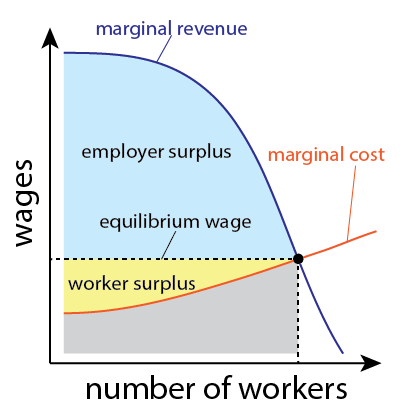
My first subject of discussion, is exploitation of labor. This is a Marxist concept, but I’m not interested in exploring what exactly Marx did or did not believe. I’m interested in exploring (and improving upon) the concept as I understand it. So here goes:

[Read more…]

Origami: Skarmory

Skarmory, designed by Shintaro Miyamoto

I dabble in many kinds of origami, especially in the context of interacting with origami groups.  I created this model, because someone at the origami group was really excited about making Pokemon, and asked if anyone could help him with this one.  It was difficult because we didn’t know the folding steps, we only had a crease pattern.

[Read more…]

Don’t cite logical fallacies

In a cooperative argument, you should never* explicitly refer to logical fallacies.

*additional qualifications below

This is a point I’ve made several times before, especially in my How To Argue post.

In that post, I make a distinction between cooperative and competitive arguments.  In a cooperative argument, you are trying to find the truth, which involves coming up with the best arguments you can, but does not necessarily involve “winning” the argument.  In a competitive argument, you are trying to win the argument, which might involve coming up with truthful arguments, but not necessarily.  I don’t mean to say there is anything inherently wrong with having a competitive argument, I’m just not talking about them here.

In a cooperative argument, you don’t want to antagonize the person you are arguing with (“interlocutor” is the term I would use).  After all, your goals are aligned.  You’re both trying to figure out the truth.  And if you tell your interlocutor that they’ve just used a logical fallacy, I think there’s something inherently antagonizing about that.  It’s like telling them not just that they’re wrong, but that they’re wrong in a particularly predictable and trite way.

[Read more…]

Stop supporting nuclear power

A powerful way to convince people of a policy, is to get them to believe they understand the policy’s disadvantages. People believe they understand the disadvantages of nuclear power: radioactive waste, and the possibility of catastrophe. Skeptical/sciencey people tend to think these disadvantages are small, because they know people often give too much weight to highly unlikely outcomes. But in fact, the main thing holding back nuclear power, is that it’s not economically competitive.

Public understanding of nuclear power is based on decades of political debate, with one side arguing that nuclear power is much cleaner than the alternatives, and the other side pointing to catastrophes like Chernobyl or Fukushima. I recall being taught these advantages and disadvantages in grade school science classes. They were also encoded into Sim City. But in the real world, the advantages and disadvantages of different energy sources are not timeless. They depend on the details of the technology. It is not possible to understand a complex and ever-changing issue based on what you were taught in grade school.

If you take nothing else away, I would like to at least persuade you of this: a) you don’t understand the disadvantages of nuclear power as well as you thought, and b) your position of “more nuclear power” should be updated to “nuclear power is an option that experts should consider”.  If you’d like to learn more, read on.

[Read more…]

The books of Gene Wolfe

cn: no significant spoilers

Sci-fi/fantasy author Gene Wolfe died last week. A shame, because I read and liked many of his books. I read nine and a half of his books (about seven years ago, so cut me some slack if I get anything wrong), and I’d like to reflect on them.

Gene Wolfe is best known for his tetralogy, The Book of the New Sun, and that is how I was introduced to him. It takes place in a post-apocalyptic sci-fi universe, but society has regressed so much that most people only understand the world around them through the lens of fantasy. The narrator, Severian, grew up in a torturer’s guild, but he breaks the rules by allowing a prisoner to commit suicide. Rather than punishing him, the guild sends him off to take a position as executioner in another city. After a long string of adventures Severian eventually becomes the Autarch, the nation’s ruler (no spoiler here; Severian says so in the first chapter).

But I think that what makes these books special, is not the plot itself. Rather, what makes the books special is how they invite the reader to pay close attention, make connections, and ponder the nature of narrative.
[Read more…]