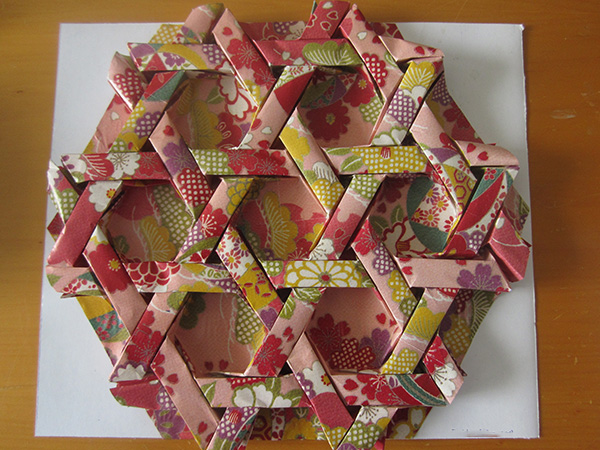
Link Roundup: September 2020

OpenAI’s latest breakthrough is astonishingly powerful, but still fighting its flaws | The Verge – GPT-3 is a new language AI with astounding power.  GPT-3 first grabbed my attention when I saw someone use it to produce a response to philosophers talking about GPT-3.  Sure, some cherry-picking is involved, but the result is more cogent than the average internet commenter.  To temper (or amplify) the hype, I suggest looking at this massive compilation of GPT-3 results, including experiments that failed.  Among other things, GPT-3 is apparently terrible at making cat puns.

Although not created by GPT-3, I also thought these image completions were incredible.

Beethoven Sucks At Music | 12tone (Video, 14 min)
Music Theory and White Supremacy | Adam Neely (Video, 44 min) – Now this is the music youtube content that I am here for.  12tone explains some of the history that led Beethoven and other classical composers to be canonized.  Adam Neely discusses how “music theory” as it is commonly understood, is really the theory of 18th century European music.  The framing of 18th century European music as the objective measure by which all music must be judged is structural white supremacy.  I have a passing interest in music theory, and it’s difficult to learn in the best of times, but I find it doubly frustrating because it fails to describe any of the music I listen to.  I feel like these videos have named the problem.

If you liked these videos, you might also appreciate the paper that Neely’s video is based on: “Music Theory and the White Racial Frame“.

[Read more…]

COVID and perspectives on causality

Recently, people have been circulating a statistic from the CDC that says 94% of death certificates listing COVID-19 as a cause of death also list at least one other cause of death. For instance, if someone catches COVID, can’t breathe anymore and dies, perhaps the doctors would also list “Respiratory failure” as one of the causes of death, in addition to COVID. Come to think of it, why do only a third of COVID deaths include respiratory failure as a cause, how exactly is COVID killing people if not by causing respiratory failure?  Before parading around this statistic, I have to ask, do we really understand what it’s even saying?

That misleading statistic came to my attention because a friend wrote a Vox article about it. He brings not a medical perspective, but a psychology perspective, discussing the cognitive biases that make people bad at understanding causation.

Causation is also a favorite topic of mine as well, although I come at it from a different set of perspectives: philosophy, physics, and law. And although I don’t have medical expertise, it’s not hard to find the medical standard of causation from google, so I include that at the end.

[Read more…]

Olivia (from Origami King)

I haven’t really felt motivated to do origami since March.  But then I played Paper Mario: Origami King.  The game itself is whatever, but the art is great.  I love the premise of having origami be the villain of the story.  In a world where all the characters are made of paper, origami plays the role of zombie menace.

There’s a pretty wide range of origami, from traditional forms to stuff that’s only possible in fiction.  On the fantastical end are the Vellumentals (video contains spoilers).  On the realistic end is the origami castle, made of Sonobe units.  And then there are these two main characters:

Concept art from Origami King. The purple character is the villain, Olly. The yellow character is the sidekick, Olivia.

These characters look nearly like real origami, but they’re not quite.  Or at least, it’s not possible to make them as simply as it is portrayed in the game.  I enjoy reverse-engineering origami, so I thought I’d give this one a shot.

[Read more…]

Moiré patterns with alternate shapes

A Moiré pattern is the interference pattern that emerges when you superimpose two grids that nearly line up. For instance, you could have two identical metal sheets with circular holes. If you put one in front of the other, and slightly rotate it, then you get a Moiré pattern.

Circular moire

Left: a Moiré pattern formed by two hexagonal grids of circular holes, one rotated by 5 degrees. Right: an artist’s (my) conception of the resulting Moiré pattern. This and all other images were drawn “by hand” (with Illustrator), so please accept some imperfection.

A reader expressed curiosity about what would happen if you replaced the circles with a different shape. As it happens, I am a former condensed matter physicist, which makes me a sort of expert in lattices. So I already know the answer, but let me walk you through with illustrations.

[Read more…]

Explaining Roko’s Basilisk

Before I move away from the topic of Rationalism and EA, I want to talk about Roko’s Basilisk, because WTF else am I supposed to do with this useless knowledge that I have.

From sci-fi, a “basilisk” is an idea or image that exploits flaws in the human mind to cause a fatal reaction. Roko’s Basilisk was proposed by Roko to the LessWrong (LW) community in 2010. The idea is that a benevolent AI from the future could coerce you into doing the right thing (build a benevolent AI, obv) by threatening to clone you and torture your clone. It’s a sort of a transhumanist Pascal’s Wager.

Roko’s Basilisk is absurd to the typical person, and at this point is basically a meme used to mock LW, or tech geeks more broadly. But it’s not clear how seriously this was really taken in LW. One thing we do know is that Eliezer Yudkowsky, then leader of LW, banned all discussion of the subject.

What makes Roko’s Basilisk sound so strange, is that it’s based on at least four premises that are nearly unique to the LW community, and unfamiliar to most anyone else. Just explaining Roko’s Basilisk properly requires an amusing tour of multiple ideas the LW community hath wrought.

[Read more…]

Effective Altruism: an outsider perspective

As readers know, I like to take retrospective looks at the New Atheist movement. What can I say, I was involved for ten years and I have grievances. But there’s another adjacent community I think a lot about, even though I was never personally involved: the Rationalist community, also known as the LessWrong community.  I also think about Effective Altruism (EA), a significant spinoff community that focused on philanthropy.

I always had issues with the Rationalist community, as well as personal reasons to keep my distance. But looking back, I honestly feel like Rationalism left a better legacy than either the Skeptical or New Atheist movements did, and that legacy came in the form of EA. I keep my distance away from EA, but at the end of the day they’re doing philanthropy, and encouraging others to do philanthropy, and I really can’t find fault with that.

[Read more…]

Review of Harry Potter and the Methods of Rationality

This is my (semi-)monthly repost.  This review was originally published in 2015.

Harry Potter and the Methods of Rationality (HPMOR) is one of the best-known pieces of fanfiction ever written, meaning it was even read by people like me, who otherwise despise fanfic.  This is my (spoiler-free) review.

I should begin with the caveat that I hardly remember most of HPMOR.  Like much of internet fiction, it has updated very slowly over a long period of time.  I started reading HPMOR over three years ago, and I know because there’s something in my blog archives about it.  Frankly it would have been better suited to reading over a short period of time rather than a period of years.  But this is hardly relevant now, because the fanfic has now been completed and you can read it at your leisure.

[Read more…]