
Mrs. Power O’Donoghue. Riding for Ladies. London, W. Thacker, 1887.
Side Saddle only, ladies.
via: The Internet Archive

Mrs. Power O’Donoghue. Riding for Ladies. London, W. Thacker, 1887.
Side Saddle only, ladies.
via: The Internet Archive
This set of adorable photos come to us courtesy of Avalus, who submitted them way back in the fall of last year. Somehow I managed to lose track of them, and I apologize for the delay. I know you’ll enjoy them.
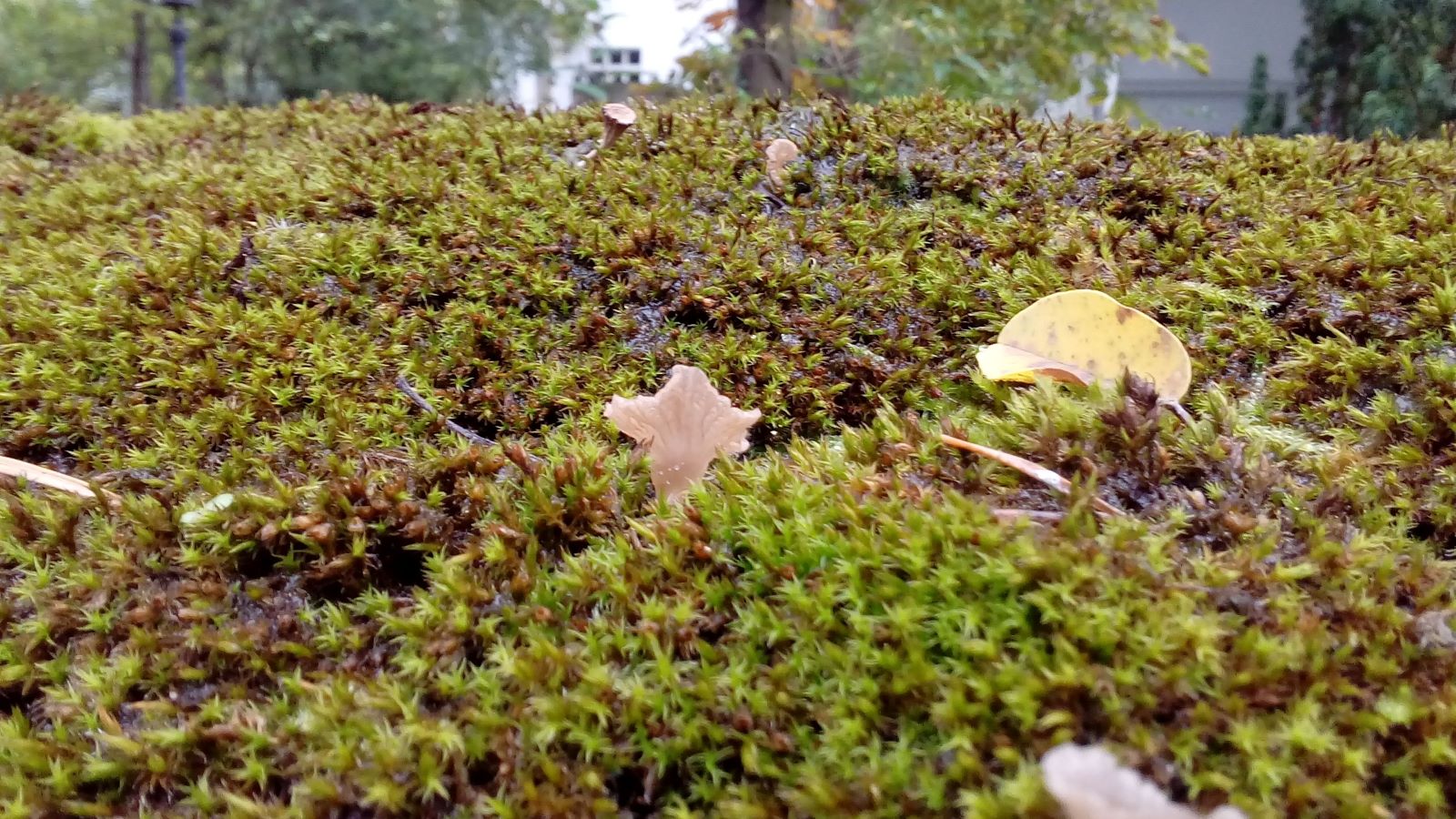
©Avalus, all rights reserved

Lilian Whiting. Athens, the violet-crowned. Boston, Little, Brown, and Company, 1913.
via: The Internet Archive
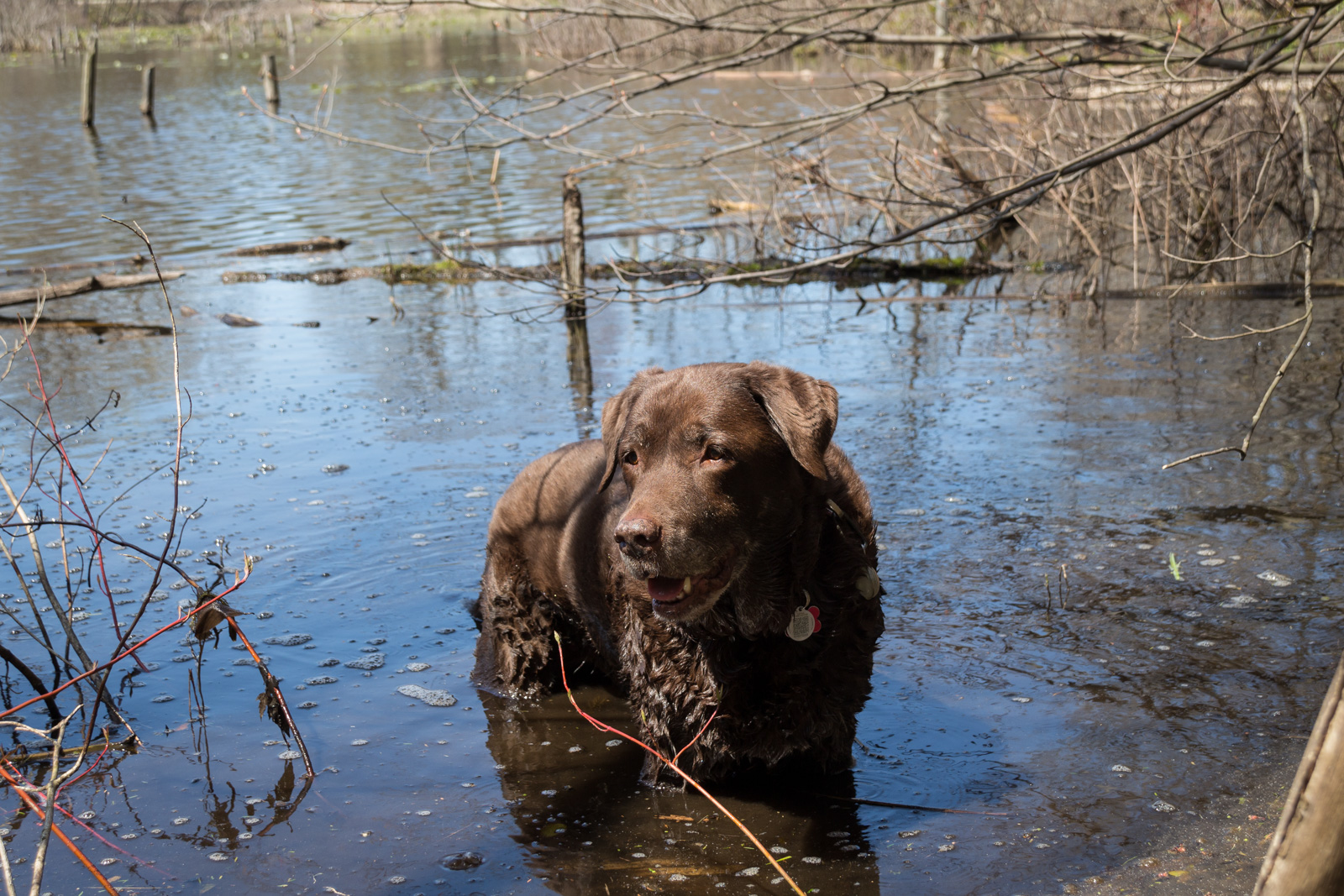
A swampy mud bath ©voyager, all rights reserved
It’s been a perfect day – warm, but not hot with a deep blue sky full golden sunshine. The growing things have sprung to life in a million shades of green, and there are bright, colourful flowers in almost every garden. It’s been wonderful. Marvellous. Splendiferous. All the good adjectives and none of the bad. It’s the sort of day when you want to be outside, and our neighbourhood came alive this afternoon with activity. The gardeners were out gardening, the old men were out gossiping over fences, and the joyful noise of children playing filtered in from yards in all directions. I’m sure their mothers were grateful. Jack and I were definitely grateful to get outside. For the first time in weeks, it wasn’t a chore, it was a pleasure. I don’t want to jinx it, but the weather is supposed to stay nice for the next few days. If it does, this gal and her dog have some gardening of our own planned. It’s finally time to change from mittens to garden gloves. Hooray!
…they just make smaller, thinner knives
When polishing the blades, I run with one of them accidentally across the edge of the platen. Literally, in a blink of an eye, I ground it paper-thin in a spot, almost through, and I overheated that tiny spot too.
Instead of simply tossing it, I have decided to re-grind it into a prototype of a small knife for peeling veggies and fruits, like garlic, onions, oranges and similar, and also for cutting small things like radishes. For these tasks, the universal kitchen knife that I was aiming for can be a bit unwieldy and I need to test various knife shapes and sizes anyways, so why waste a perfectly good hardened steel, amirite?
This is the resulting knife. The handle is from black elder (Sambucus nigra), artificially infused with silica. That makes the wood a bit harder and it also changes the color a bit in places, making the grain stand out a little more and with a greenish tint. It looks and works actually a bit like an untreated black locust – go figure.
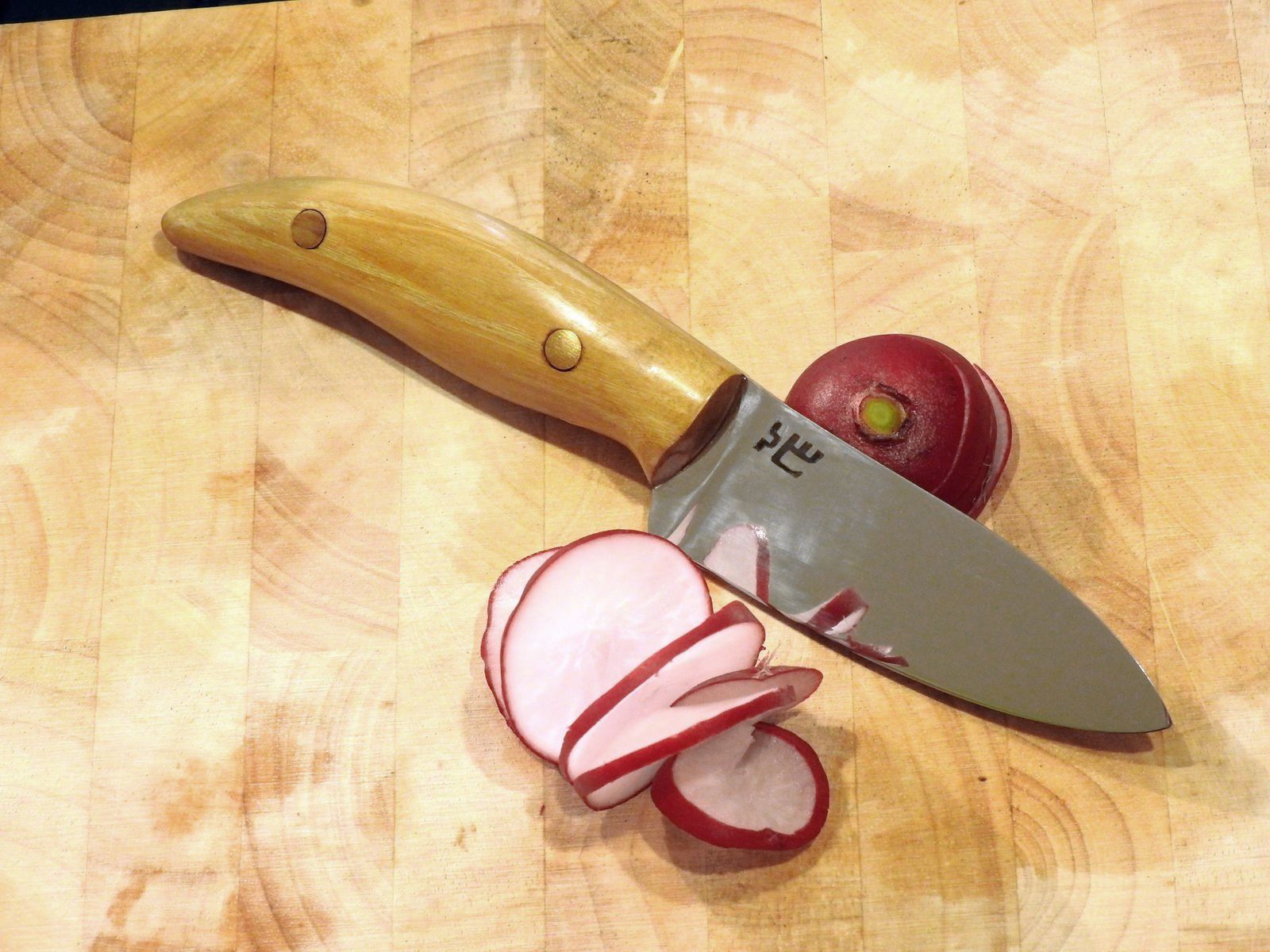
© Charly, all rights reserved. Click for full size.
It is a nifty little blade that goes well in pair with the one I gave my mother two years ago. ~19 cm overall length, 9 cm blade. So far it works well for intended purposes, we will see if my main tester (my dad) is going to have some remarks or complaints. I think that with a sheath it would be a good pocket knife for mushroom hunting too.

Kate Sanborn. Adopting an Abandoned Farm. New York, D. Appleton and company, 1892.
If you have ever wondered why are carpenter’s pencils flat, then here it is explained in detail.
From Avalus,

©Avalus, all rights reserved
This step was a real bugger this time. Forming the handle before it is assembled onto the tang has its downsides, but it also has its upsides. And they seem to prevail, in comparison to the approach I took this time. It took me a lot of time to get all the handles into shape. Part of the problem was also that I have used woods of different properties and thus I had to adjust my approach several times – something that entirely defeated the purpose of saving time by working in bulk. But I got eventually to the stage when I could impregnate the handles with boat lacquer.

© Charly, all rights reserved. Click for full size.
For some of the woods on display here infusing them with drying oil or buffing with beeswax would be entirely sufficient. For some, it would be much, much better to stabilize them with resin beforehand. But the boat lacquer is the most durable and universally applicable finish I have right now, so I have used that. And to make the work more convenient, I have built myself a little stand to put the blades in to dry.

© Charly, all rights reserved. Click for full size.
Unfortunately, I am not done yet so I do not know how much time I have lost in this step. I only have enough data right now to know for sure that I have lost a lot, maybe even an hour per blade. The reasons for this are several.
First, this step was evaluated as “high hanging fruit” because I knew upfront that saving time here will be difficult. Lacquering is the most labor-intensive wood finish imaginable in this context.
Second, some of the savings in my previous step were not really time savings, it was merely that I have changed the order of operations this time and that moved some of the work time from that step into this one.
Third, I messed up, bigly, several times. I repeated steps tat needed not repeating and in the end, I had to redo the coating for four blades. This is why I do not have full data yet – right now, only 8 knives out of 12 are truly finished. But the purpose of learning was achieved, and I have definitively saved some overall time.
I never was into sports of any kind, neither watching nor doing. But about two months ago I stumbled across this YouTube channel and I did watch quite a few videos of theirs. They are strangely captivating in their resemblance to real sports events, despite being decided solely by chance.
And yesterday I was reminded about its existence when watching John Oliver. He mentioned that if you are starved for sports events right now, then this might be something to satiate that hankering somewhat.
Open thread, talk whatever you want, just don’t be an asshole.
We all know that trees dance, but have you ever thought about dancing with a tree? A ballerina from Vancouver thought about it, and went on to create Aeriosa, a vertical dance troupe that performs with trees.
Aeriosa is the only company in Canada specializing in vertical dance, in which performers spin and dance on cables from trees, buildings and mountains.
Julia Taffe is Aeriosa’s founder, artistic director and choreographer. Since 1998, she has choreographed more than 25 works for her company. She says dancing among the clouds is no big deal, adding that “fear is healthy.”
The key, Taffe adds, is to put safety first. Aeriosa works with a team of professional riggers. Before the Saxe Point show, the site will also be inspected by a “mountain safety specialist,” who will closely monitor the weather, rain or shine.
Taff has an interesting perspective and regards the trees as active partners whose needs must also be considered.
… she refers to it as an “interspecies” collaboration. Because trees are a living thing, Aeriosa takes care not to damage them — making sure not to snap branches or leave metal spikes.
“If we can’t do our work without damaging the environment, then we shouldn’t do it,” Taffe said. “Each tree is unique and you have to be able to respond to that with your choreography and your artistic vision.
I’ll pass on dangling from the top of a tree, but next time I’m in the forest I just might ask an appropriately sized tree for a waltz.
Story from The Times Colonist
I really wanted to see this performed, so I asked the YouTube and found this. It’s a beautiful form of dance.

Dugmore, A. Radclyffe. Two Boys in Beaver-land. Garden City, New York, Doubleday, Page & Company, 1920.
This is from my own Facebook post from a few years ago, during the winter holidays, when I had a boatload of gingerbread cookie dough to go through. I’m not always a fan of baking, but I don’t mind the meditative aspects once the kids have gotten over their helping phase (they do fine, it’s just not very relaxing).
Anyway I had some thoughts about women’s work and its devaluation and how simple actions that we learn to do can have complicated underlying rules. I’d either recently bought or recently read a book on Escher with the kids, and so I imagined a book that took the idea of tiling and applied it to baking – a book that analyzes the concepts of positive and negative space and their optimization to get a maximum yield of cookies, given a plane with defined boundaries, and also a known quantity of cookie dough.
Of course, you have to calculate the rate of expansion during the actual baking, because while ordinary problems of tiling require the entire surface to be covered, you don’t want one large mass of cookie (generally speaking – of course there are exceptions). I wrote a short summary for the book jacket:
An exercise in the ancient question of tiling a regular surface with irregular shapes in order to produce a maximum yield with a minimum of fuss, “Cooking with Escher” examines several distinct categories of shapes. Inspired by the enigmatic mathematical genius, this is a purely practical analysis of the unique challenges presented by each individual shape. The categories explored in this edition are: basica, exoticb, roboticc, patrioticd and erotice. Final results are not available due to extreme consumption.
Citos vārdos, dziļi matemātiska nodarbe ar noslieci uz ģeometriju. (In other words, a deeply mathematical activity with an inclination towards geometry.)
I still imagine what this book could be, with diagrams and arrows and lots of calculus formulas.

a – Basic shapes adhere more-or-less to regular geometric shapes, in this case, a square.
© rq, all rights reserved

c – Robotic shapes are defined by their resemblance to anthropomorphic appearance and yes I know it’s a snowman.
© rq, all rights reserved

e – Erotic shapes in this case are defined by the jargon term for female genitalia, i.e. squirrel.
© rq, all rights reserved

d – Patriotic shape, self-explanatory.
© rq, all rights reserved

b – Exotic shapes are tropical animals not usually met in the wilds of the northern hemisphere.
© rq, all rights reserved
This is my idea of a fun quiet time with myself.
