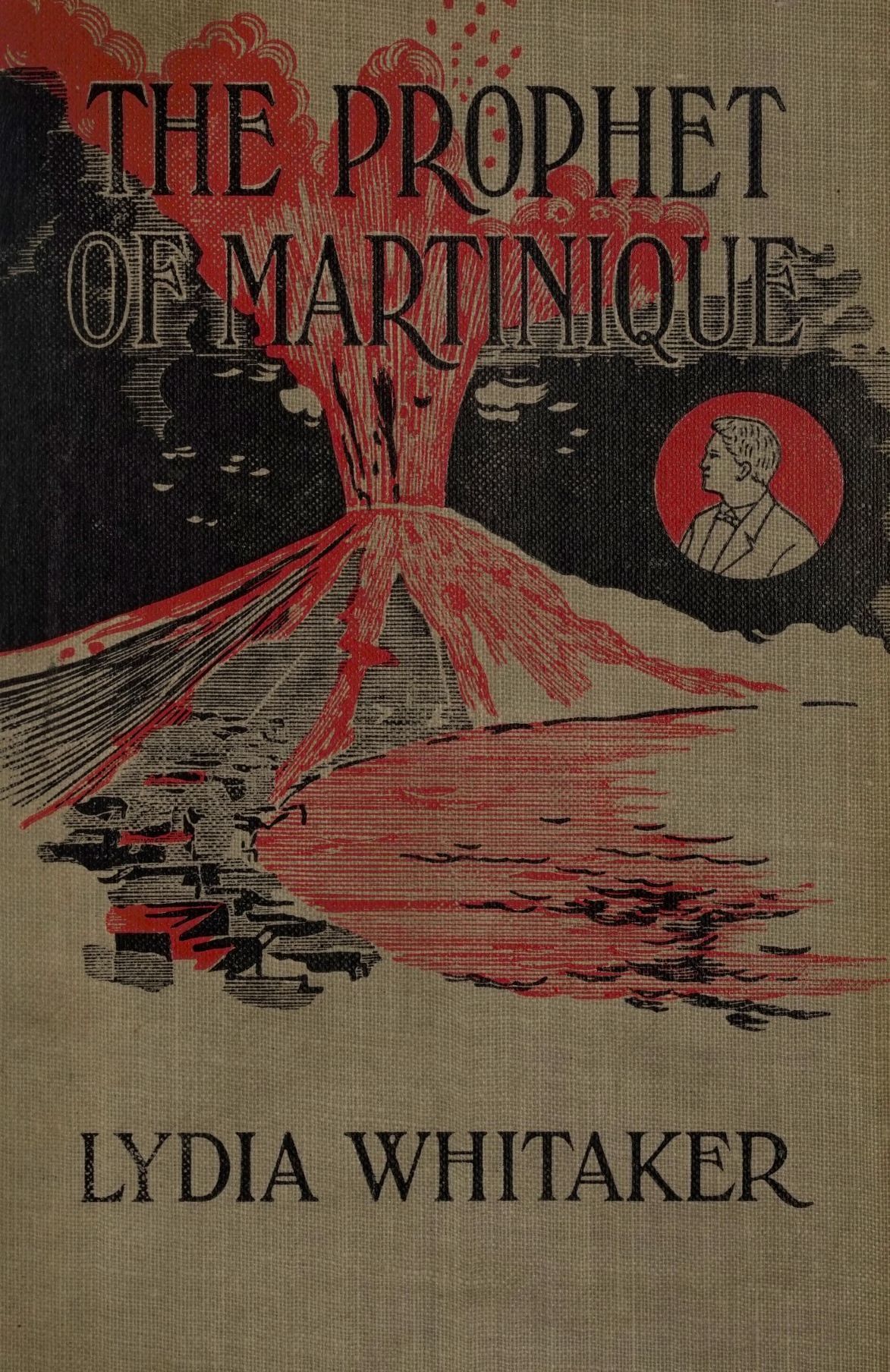
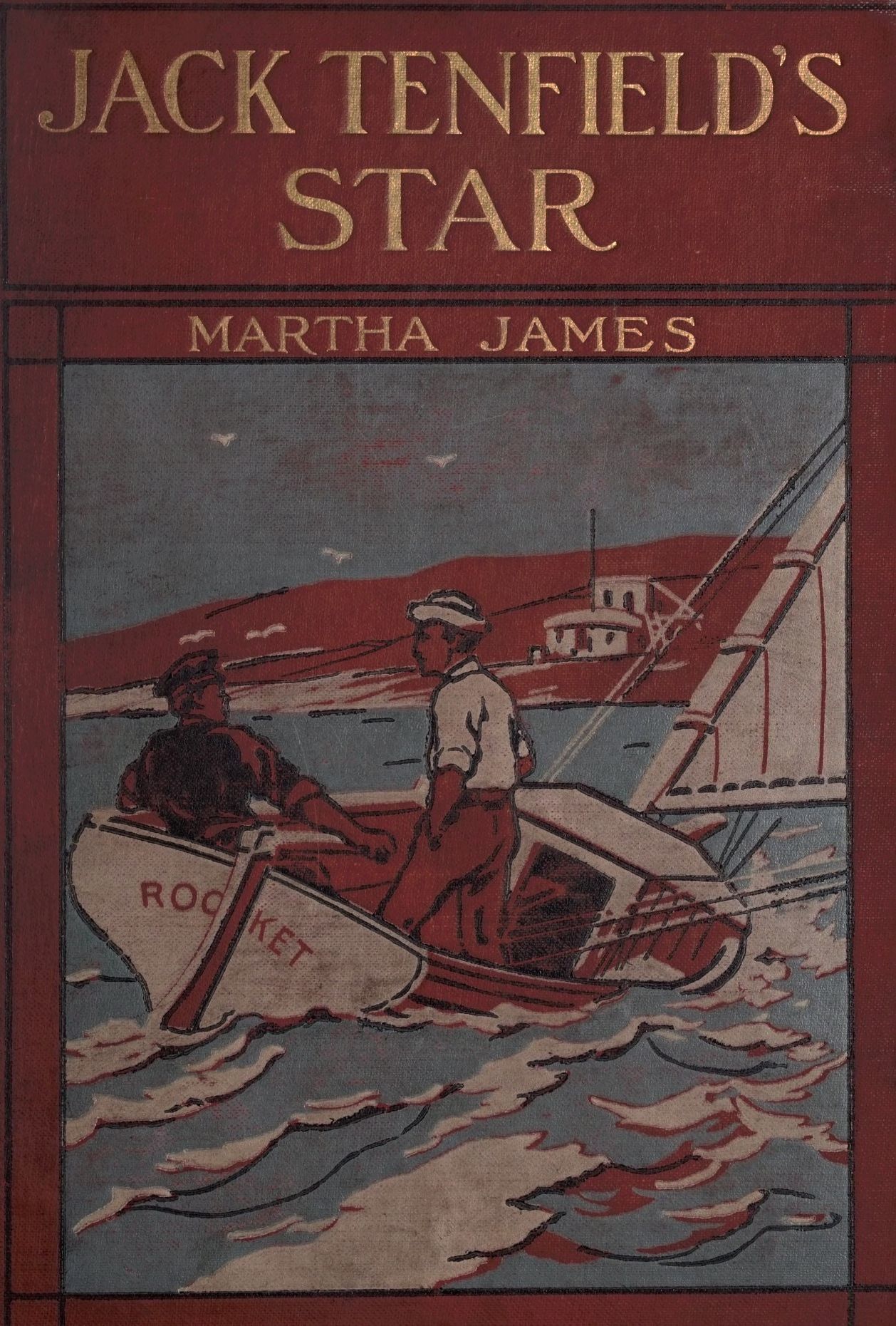
The Art of Book Design: The Orange Fairy Book

Andrew Lang. The Orange Fairy Book. Illustrated by H.J. Ford. New York, Longmans, Green, 1906.

This week’s Andrew Lang fairy book comes to us courtesy of the colour orange. As usual, I’ve attached all of the full-page illustrations and they’re a delight. Done by the talented H.J. Ford, each one is filled with wonder and whimsy. Last week I told you that this is the last book of the Andrew Lang coloured series and I was wrong. There’s one final book which I’ll post next Saturday. Until then, Enjoy.

[Read more…]

Making Kitchen Knives – Part 22 – Second Evaluation

The results are in, and there is not too much to say. First, a picture that is worth a thousand words:

© Charly, all rights reserved. Click for full size.

As you can see, I have indeed reduced the time needed to manufacture a knife by working in bulk, but only partially. The biggest time-saving was in the polishing of the blade, and that was mostly achieved by changing the method from manual polishing to mirror-polish, to satin-finish with the tumbler.

Where I have saved time by working in bulk, was in the basic grind of the blade – here has also significantly helped the magnetic jig that I have later improved again – and later on in heat treatment – here I did save a lot since I did not have to wait for the forge to heat-up and I only had to prepare everything once.

The small savings in other steps are “nice to have” but they are mostly insignificant. What I have to concentrate on now is the 20 minutes time per piece that I have spent correcting various mistakes, like re-grinding curly blades etc, and the nearly an hour that my workload grew for finishing the handles. But I think there I can only significantly save time by working with resin stabilized wood, which is not possible for all the woods involved (oak, jatoba, black locust), but could significantly help with the semi-decomposed wood that turned out some really beautiful pieces.

The overall time reduction of nearly three hours is nothing to sneeze at. Plus, it would probably be even better had I really worked on this consistently from start to finish and not with various interruptions over the span of over a year.

From this point onward I won’t write about this project in detail, but I will continue to take time measurements and trying to optimize my manufacturing process some more.

Making Kitchen Knives – Part 21 – The Last Six Knives

There is not much to say about these, they are all made from one partially rotten palette. Therefore I do not know precisely what kind of wood it is. I suspect it is birch because one of the boards had still a bit of bark on it, but the palette was obviously made from scraps, so there could be several species involves. So other realistic possibilities are poplar and beech.

Since it was from planks, I had no control over grain direction, but I have at least paired the slabs to the best of my ability so they are of the same species – they varied wildly in coloration – and in three cases, I ended up with pairs where one slab had more interesting grain. And, in those cases, I have given this slab on the right side of the knife, where the signature is.

© Charly, all rights reserved. Click for full size.

© Charly, all rights reserved. Click for full size.

© Charly, all rights reserved. Click for full size.

These three are those with more plain-looking handles, besides rich brown color from the ammonia fuming there is not much to see here. I have no idea why the logo etched so strangely on the second one, it just did. Maybe the metal was a bit dirty so it etched only on the edges, where there is stronger current? I did wipe all blades with acetone, but maybe not enough.

© Charly, all rights reserved. Click for full size.

This one has a nice dark stripe of ever so slightly more decomposed, but still hard, wood running down the middle. The placement of the pins is purely coincidental, at least I do not remember consciously putting the holes exactly into the stripe.

© Charly, all rights reserved. Click for full size.

This one has a knot in the wood. Unfortunately, it is so dark, that I currently cannot make a good photo of it without overexposing everything else. The blade on this one is one of those that curled on the edges, so I had to re-grind it into narrower shape.

© Charly, all rights reserved. Click for full size.

© Charly, all rights reserved. Click for full size.

And lastly a piece with extremely beautiful grain, almost like a burl. This one piece really shows that half-rotten wood is not necessarily only fit for burning.

If Sex is Real, How Come I Haven’t Had Any in Ages?

Wordcloud with keywords from the text like "words, how do they work"Of course, you can all see what I did there. Instead of using the meaning “collection of properties of the body usually labelled “male” or “female” ” I used the meaning “having sexual intercourse” and made a bad joke about it, swapping one flawed and socially constructed meaning for another, and everybody got the joke, even if you don’t find it funny. Yet many transphobes suddenly act like language works in a completely different way once we’re talking about sex and gender, insisting that while gender may be socially constructed, sex isn’t, and that people who are saying that sex is socially constructed as well are claiming that sex isn’t “real”.

Now, I could forgive that confusion in somebody who has never thought about how language works. For somebody with little or no background in the relevant fields it’s kind of intuitive: we can easily see how “femininity” and “masculinity” change through place and time and therefore accept that gender is socially constructed, but dicks and pussies are basically the same and babies are made the same way across the globe (except, of course, when they aren’t but bioethics in repro medicine is a topic for another day) and conclude that sex is biologically constructed. But it’s also intuitive that the sun moves around the earth because that’s what i see every day.

It’s of course much less forgivable when the people spouting such nonsense are college professors, journalists and authors, i.e. people whose jobs are words. Words do have meanings, precisely the ones we agree upon as a society. 19th century British people had a different agreement on what “gay” means than we have today, which confused the hell out of  your resident non native speaker when reading Frankenstein in college. At one point I had to admit that I was mistaken about at least one thing: either early 19th century Brits were really cool with homosexuality and the history books had lied to me, or that the word didn’t mean what I thought it means (inconceivable!).

You won’t get a biologist and a farmer to agree upon what a berry is, but transphobes want us to believe that “male” and “female” sex are two immutable definitions set in stone at the dawn of time (by whom exactly?) with no input from pesky humans with their flawed reasoning and changing horizon. Now, I won’t go into the historical construction of sex (just as a spoiler: the Christian worldview used to be very occupied with souls, regarding the body as a mere temporary vessel), but usually when pressed on the point, transphobes will say something about “chromosomes”, which most of us don’t know anyway, or organs like penises and vaginas and uteri, which most of us do know, but if that was all there was to the construct “sex”, then we wouldn’t need it (spoiler, we actually don’t need it) because then saying “this person has x genital” would be enough, though usually seen as a tad impolite. But then there’s this bazillion of other things that get typically lumped in the category of sex, like the shape and the size of tits, beard or no beard (my gran’s care timetable had a timeslot for “shaving”…), to such inconsequential things like “jaw shape”. And from what I know, trans people are very acutely aware of all those physical properties of their bodies. None of them denies having a certain physiology (though it’s really, really creepy how obsessed and intrusive transphobes are when it comes to the genitals part). But that physiology can be more accurately described with the more precise words. Because the word “sex” is not. It often includes things that are inconsequential (jaws, shoulders), or vary greatly within the population (tits, beards, height), have many variations (intersex folks) or are simply not observed (chromosomes). Sure, it serves as a handy shorthand, and in colloquial talk it will often be enough, but as soon as we are having deeper conversations, the terms need to be defined more precisely. So no, sex isn’t real, just like unicorns, but bodies are, while magical white horses with horns are not.

Jack’s Walk

©voyager, all rights reserved

I apologize for being a bit absent lately. The past few weeks have been… challenging. My scoliosis is getting worse and I’ve developed pain along the bottom ridge of my right ribcage that has been stubbornly refusing to get better. Just before the pandemic, I had a spinal x-ray taken that diagnosed my spine as a collapsing S-curve and what’s happening is that I’ve twisted so that my bottom right ribs are rubbing on the upper edge of my pelvis. Normally, I see my pain specialist every 3 – 4 weeks for injections along both sides of my entire spine, but I haven’t been since early February because of the pandemic, and, well, I waited a bit too long. Finally, late last week, I donned my mask and went to see my Dr. in the big city down the road and today I’m feeling a bit more human.

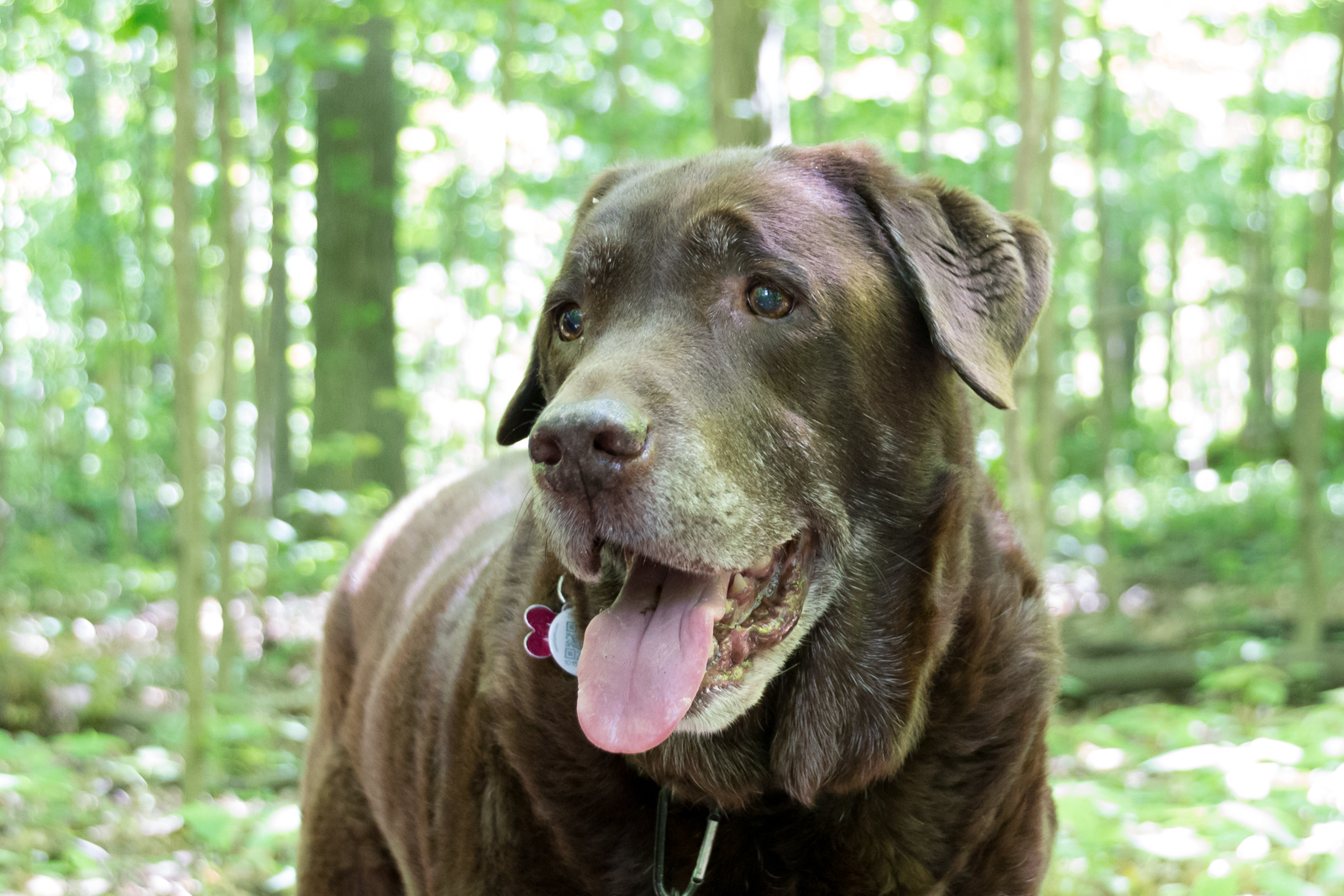
Jack and I even managed to get out to our wee little forest for a walk, today. We went slowly and watched the fairies flit for a while and then we paid a short visit to Gnorman, who was out plowing with a team of voles. The trio joined us for a cold drink of water before getting back to their work. It was a most pleasant day filled with the cheerful, company of friends, glorious sunshine and the quiet beauty of our native woodlands. It even came with a pretty reminder to stay safe and wash our hands… lots.

©voyager, all rights reserved

Making Kitchen Knives – Part 20 – Three Finished Knives

Works on this project are finished, so today I will share three more of the resulting products with a bit of commentary about the lessons learned with each.

First a knife with handle from larch.

© Charly, all rights reserved. Click for full size.

This single piece is one of the biggest reasons why I have lost a lot of time with the finishing of handles. Larch wood, as it turns out, is pretty, but it is really shitty for knife handles. It is softwood, but that would not necessarily be a problem in itself. The problems are two: 1) It is stringy, so it has a tendency to tear-out, burning, and gumming up belts. 2) The late-summer-growth is significantly harder than the spring growth and that causes all kinds of problems when trying to shape it to anything other than a plank.

Further, the ammonia fuming did nearly nothing to it, except perhaps making it a bit darker.

I suspected that it is probably not a very good wood for this purpose, and my suspicion was confirmed. I won’t use this wood anymore unless perhaps stabilized with resin. I only used this one piece because it was a gift by a former colleague, who is in turn the intended recipient of this knife. The result is not ugly, but it is much more work than it is worth.

Next is jatoba.

© Charly, all rights reserved. Click for full size.

© Charly, all rights reserved. Click for full size.

This was commissioned, so this is the only blade that will be sold (for a very moderate price). Part of the order was the etched star on the left side. I am a bit anxious about how the knife will be perceived. This customer too was warned that they cannot expect perfection, because I am still learning, but you never know. If they toss it on my head, I will have to deal with it.

I probably will not bother with treating jatoba with ammonia in the future, not in big chunks. It only makes the wood significantly darker and it is prone to develop cracks in due course, nothing else. It is not ugly – otherwise, I would toss it away – but I personally do not think it is worth the hassle. What untreated jatoba looks like you can see here.

And last today cherry.

© Charly, all rights reserved. Click for full size.

© Charly, all rights reserved. Click for full size.

I am a bit ambiguous about how this turned out.  I love the look of untreated cherry wood (see here) and I was hoping perhaps, that the orange color will become richer and deeper. Instead, it has turned into chocolate brown. Not ugly brown, mind you, but brown all the same. Cherry wood is also very prone to develop cracks, but these two pieces almost miraculously were crack-free, I suspect that the strictly perpendicular and straight grain orientation has played a role (they were split from a log, not cut). I will perhaps do the fuming for cherry in the future for thinner pieces with straight grain to use them as a contrast with untreated cherry for intarsia, spacers, inserts, etc. The wood is a joy to work treated as well as untreated, I would use nothing else if I had enough of it.

I have messed up the etch of the number, you can see the straight line where I have accidentally run with the etching graphite rod over the edge of masking tape. But nobody is going to complain about this, because I am keeping this knife for myself.

There will be one more post with the remaining six knives and then we shall look at the time-analysis.