The Art of …

… trash, by Portuguese artist Artur Bordalo

I recently discovered an artist who is bringing attention to the problem of environmental waste and, in the process, making treasure out of trash.

Big Trash Animals’ by Artur Bordalo is a series of artworks that aim to draw attention to one of the world’s most pressing problems: Waste production. The overproduction of things like plastics and metals, a general lack of recycling and the ensuing pollution that it causes has a devastating effect on the planet, and we shouldn’t just learn to accept it as a necessary evil.

The full story, along with more photos, is at Bored Panda.

Trash Cat, by Artur Bordalo. Image from Bored Panda.

Trash Bird, by Artur Bordalo. Image from Bored Panda.

So, Does Homemade Honing Steel Work?

I think it does.

My mom’s knives needed to be sharpened. Normally I would sharpen the knives with the current manufactured batch, but since the honing steels, whilst not finished yet, got to a stage when they can be at least tested, I have decided to test them. So instead of sharpening the knives on my belt grinder and stropping them with the MDF wheel, I have sharpened them the old fashioned way on a whetstone and then honed the edge on steel.

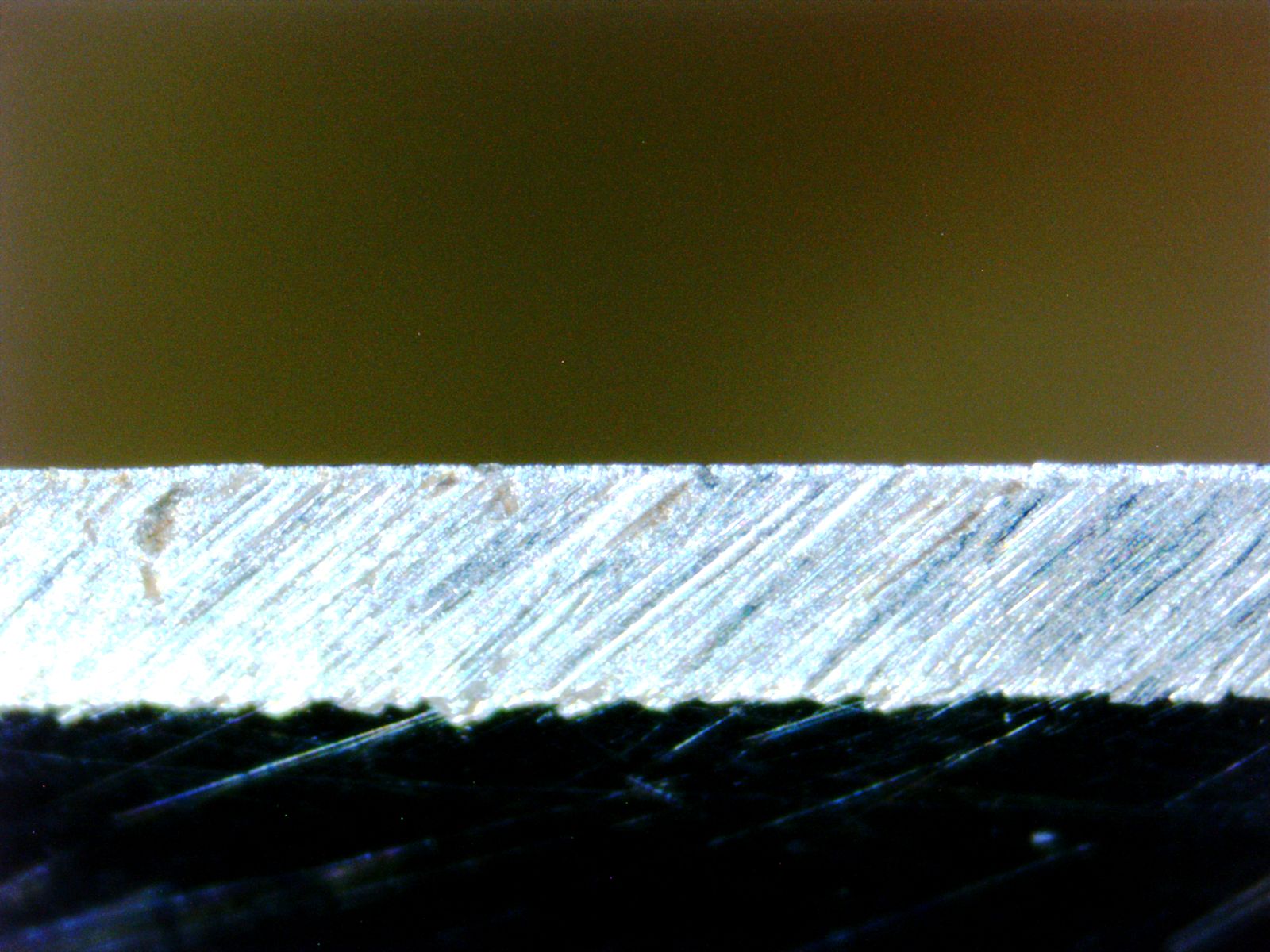
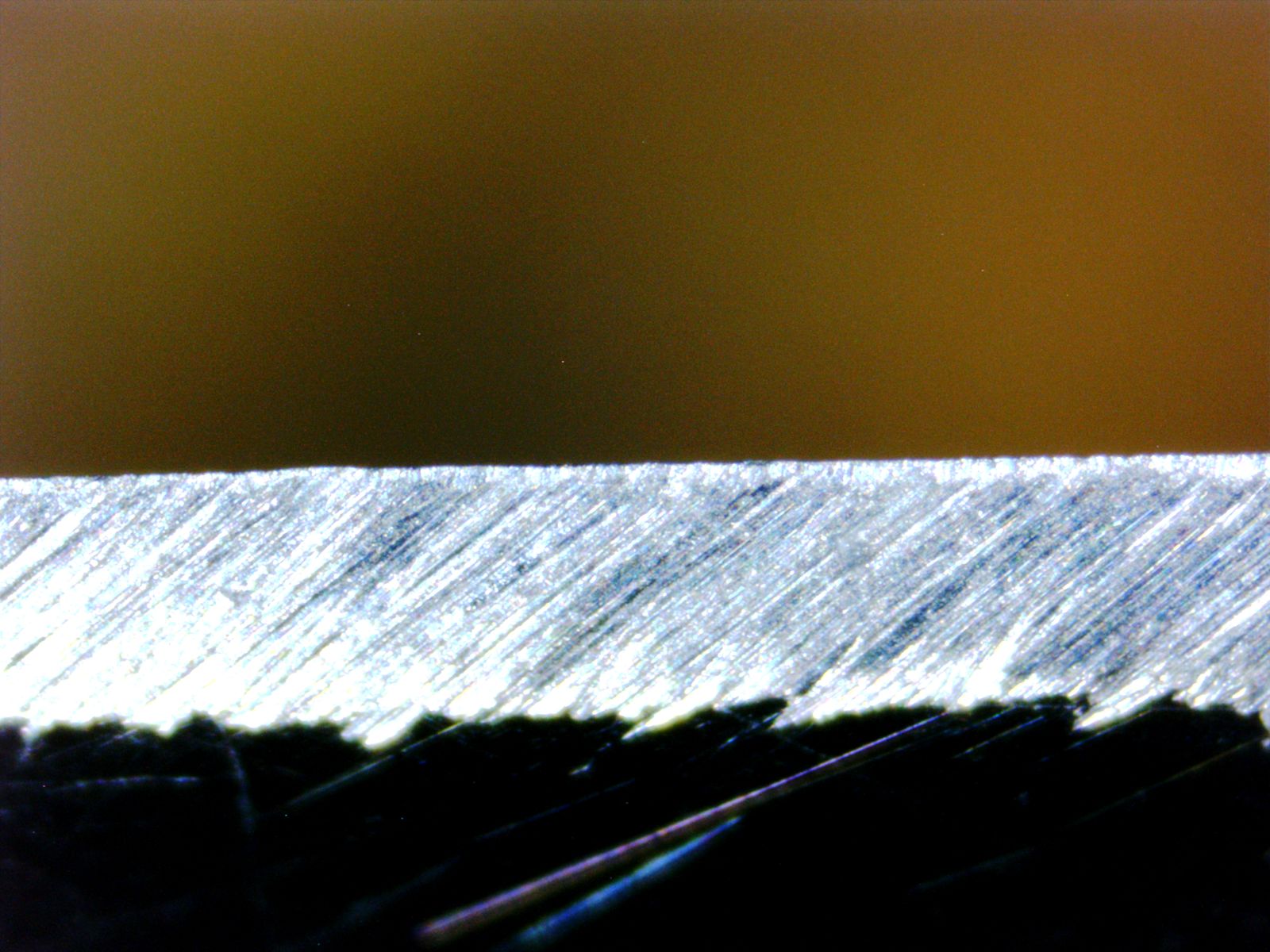
First a picture of a “blunted edge” bevel.

Edge bevel before sharpening. © Charly, all rights reserved. Click for full size.

You can see the perpendicular scratches right near the edge. Those were made by the belt sander. The angled scratches are from half-arsed maintenance with a whetstone that I have done last week when I did not have time to do the job properly. This is not, strictly speaking, a blunt knife. It would still take yer finger off in a jiffy and was perfectly fine for hard veggies like carrots and taters. But it did struggle with tomatoes a bit. Notice how the light reflects differently from the mirror-polished primary bevel, which thus appears nearly black.

As far as size goes. this bevel is very small – about 0,3 mm wide.

100 grit bevel re-established at ca 15 °
© Charly, all rights reserved. Click for full size.

First I have re-established nice regular bevels at 15° with the rough side of the whetstone, which has circa 100 grit. 15-20 passes were needed, even though the bevels are very small – the steel is very hard. It does not look very different from the first picture, except for the scratches being all angled all the way to the edge now. On carbon steel, this would establish a so-called “needle” which is a thin foil of steel on the edge that bends and cannot be ground away, but I have not seen this happen with N690. The needle here breaks usually off very easily, leaving behind a bit of jagged edge.

320 grit bevel smoothened
© Charly, all rights reserved. Click for full

Fine 320 grit side of the whetstone is used to slightly smooth the edges and eventually break off the needle on harder and brittle steels (like most stainless steels). However here it does not look that much different from the second picture, which I did not expect. The knife at this stage is perfectly capable of cutting tomatoes, but it does not shave hair yet. And this is where the test of the honing steels comes into play.

Bevel burnished by honing steel.
© Charly, all rights reserved. Click for full

Now the bevel looks significantly different from before. Note that the edge is now mirror-polished between some of the deeper scratches – the light reflects very differently from the bevel than it did before. The knife is now also shaving-sharp not only tomato-cutting-with-its-own-weight sharp.

So TLDR is –  Although this is not a scientific proof, I am convinced and I think the honing steel works as intended.

Resin Art: Just Tell me to Stop and I’ll Simply Ignore You

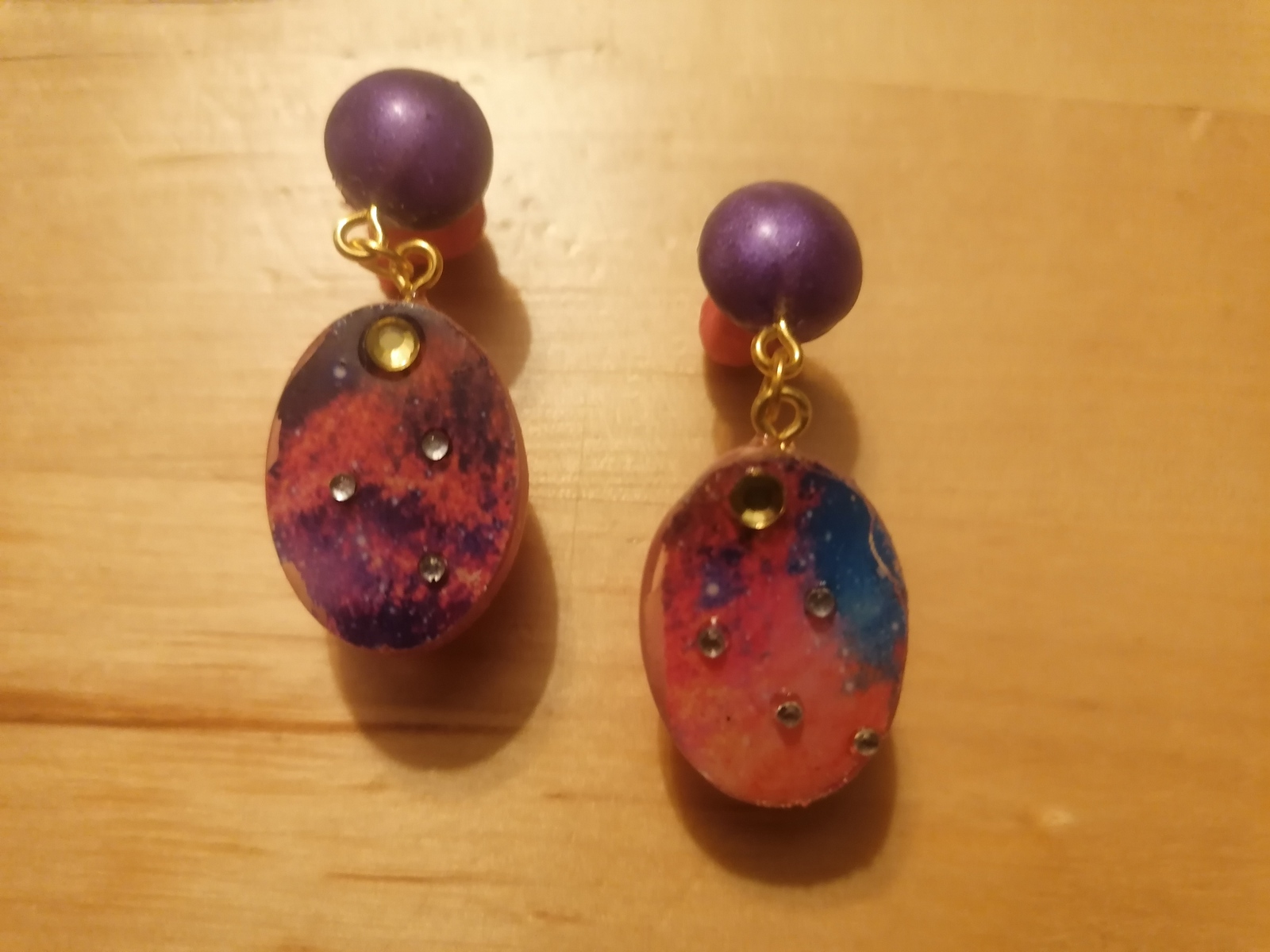
A girl can never have too many earrings…

©Giliell, all rights reserved

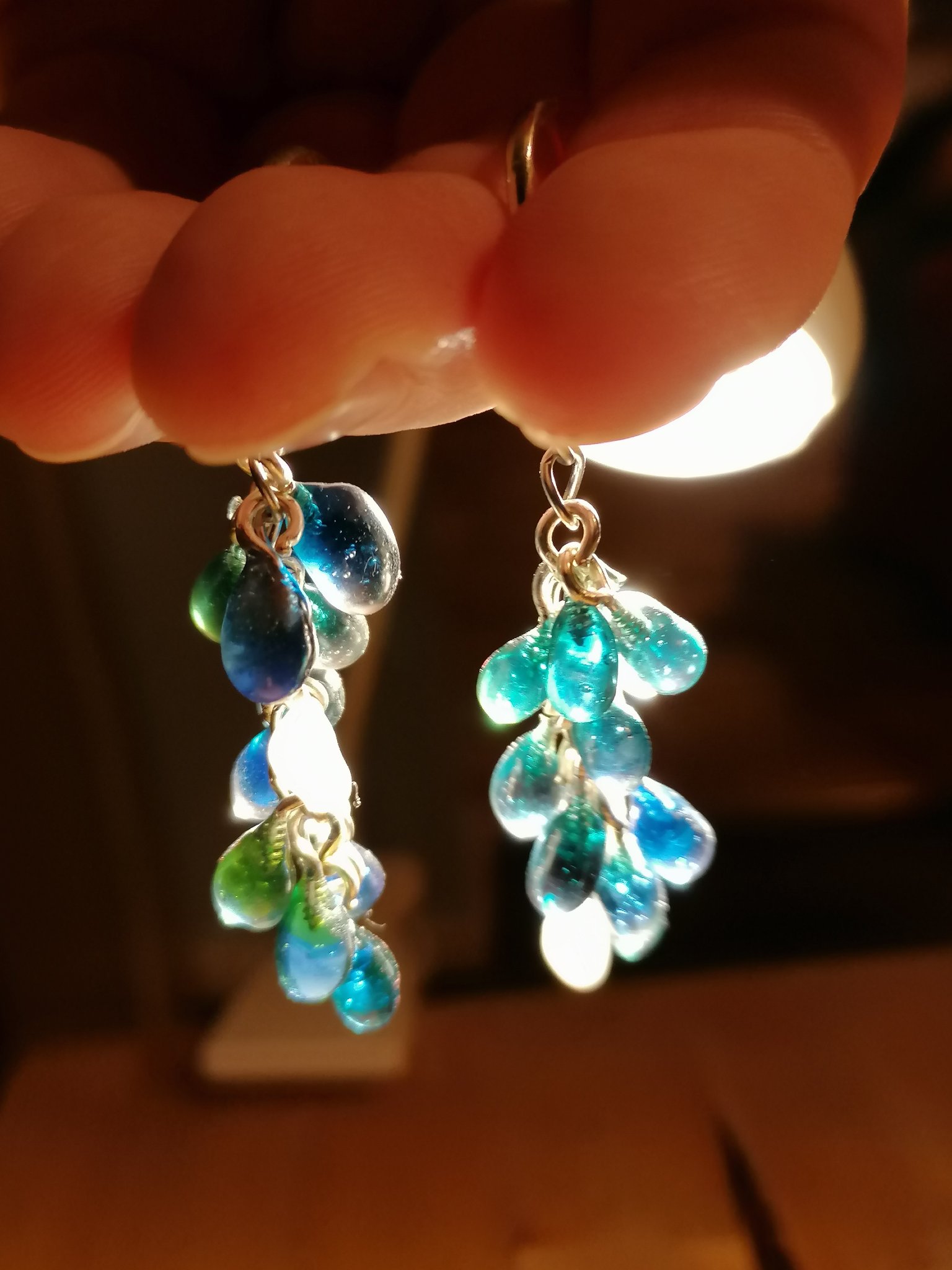
Mermaid tears. The little droplets are perfect for using up leftover resin. For one thing every resin set with moulds contains a packet of those small screw eyes. Because a 10 ct article suddenly turns three moulds into a 53 pieces craft set, so I have more than I’ll ever need. And then there’s always going to be some resin left over and I can turn it into droplets. One isn’t much, but put them together and you get this.

©Giliell, all rights reserved

Geometrical lines are another thing I dig right now. OK, I dig everything right now.

©Giliell, all rights reserved

I poured some blanks with epoxy resin because after I’m done neither the bubbles nor the matte surface matter, and it’s a good way to save up on the expensive UV resin. Art is never a cheap substitute for therapy. It’s a damn expensive one. But hey, right now I have no other way to spend my fun money but buying craft supplies on Etsy and it does me so much good. Three hours a night where everything is nice and pretty and I don’t eat my body weight in chocolate.

©Giliell, all rights reserved

I like how these turned out, I don’t like how some dyes completely change their hue when hardened under the UV light. The blue was much more pronounced before hardening. That’s probably the next trip to the virtual art supplies store.

Resin Art: A Cornflower for Jazzlet

This one’s an older piece. I share Jazzlet’s love for cornflowers. Not only are they one of the rare blue flowers, they are also very undemanding flowers. Just throw a handful of seeds and you have flowers for years to come. I really need to dry more flowers in summer so I can have fun in winter…

©Giliell, all rights reserved

Again, huge problems in getting the camera to focus…

Jazzlet, if you want it, just send me your address.

And here’s some more UV resin fun. I’m still very much into making matching necklaces and earrings.

©Giliell, all rights reserved

©Giliell, all rights reserved

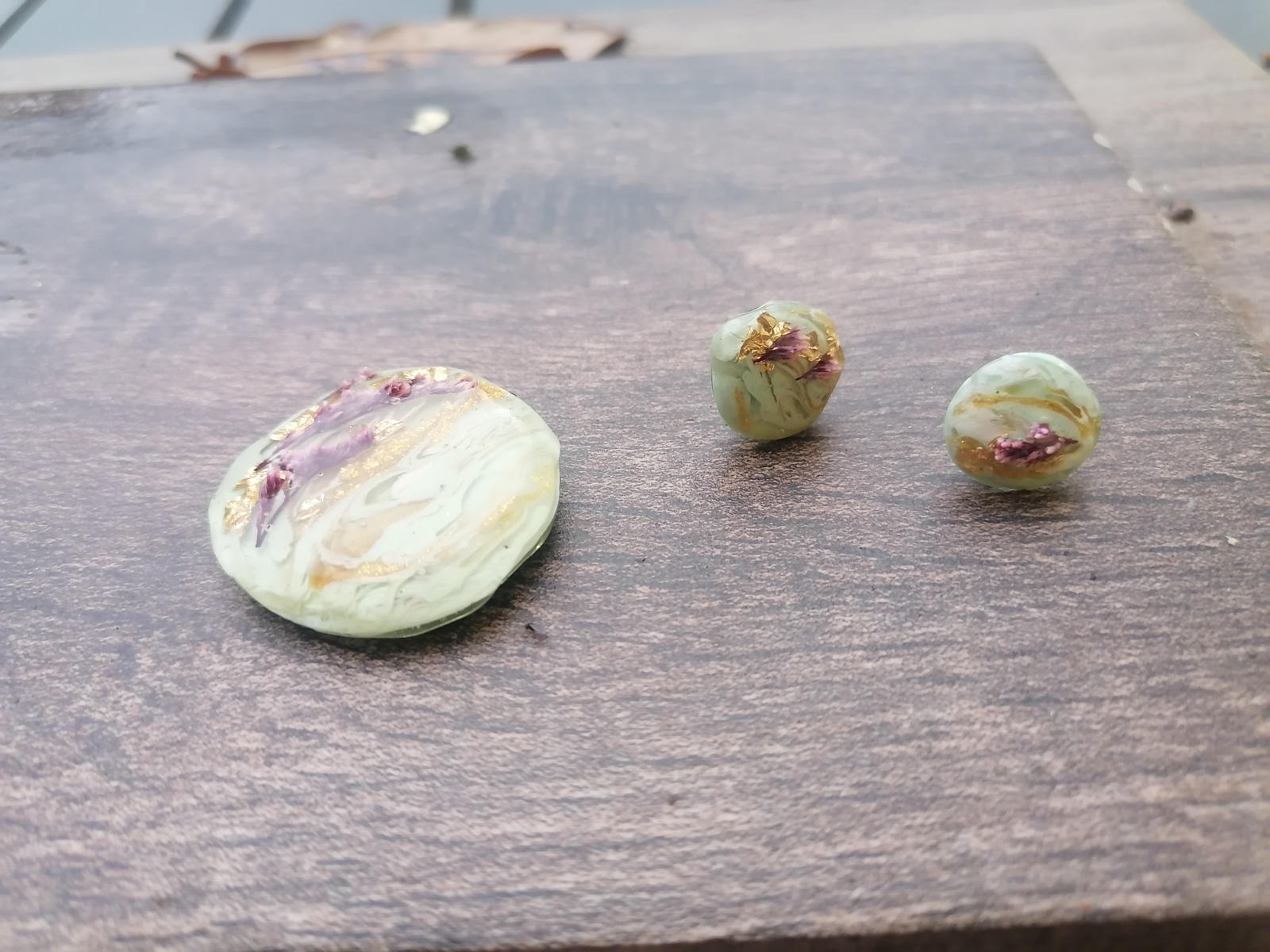
The shape is pretty irregular, but in this case I like it, as it matches the marble/pebble design.

And I made a necklace to match the cherry blossom earrings:

©Giliell, all rights reserved

As you can see, I changed the way I made the petals. They are more regular this way and much easier to work. I’m not sure which ones I like better, I just know that I would have lost patience making all the petals the other way.

Kitchen Knives Set – Part 5: “Fun” with Resin

Somebody somewhere in the comment section (I think on Marcus’s blog) expressed dislike for resin stabilized wood along the lines that it is the same as making the handles out of plastic. I disagree. Stabilized wood is a pain to work because it behaves like plastic in that regard, but it does not look like plastic and neither does it feel like plastic in the hand – it feels like wood. And as I was working on this project, I found out that it even sounds like wood – stabilized pieces give out very nice clonk-clonk when hit against each other. I think it might be possible to make musical instruments out of it, but I won’t try.

However, before said wood reaches its desired stabilized state, I have to work with epoxy resin. Lots of it.

I hate it.

It is gluey, it sticks to absolutely everything and it is transparent, so when it drops somewhere it is difficult to see in time. Tools and surfaces need to be cleaned with paper towels soaked in denatured alcohol, which is not cheap and the fumes do not smell exactly delicious. And the work needs to be done fast, because if the epoxy gels, it won’t soak into the wood no more.

With my macgyered vacuum pump I have reached a vacuum of 0,2-0,3 bar, which was sufficient for extremely porous wood, but might not be sufficient for this. Applewood has very small pores and is very hard, even the very decomposed pieces were still harder than for example poplar or basswood. So I have decided to bite the bullet and buy a small, cheap vacuum pump in the hope that it will work better. And it does – and it does not.

© Charly, all rights reserved. Click for full size.

Even with my poorly sealed pickle jar, I have easily reached vacuum 0,6 bar within a minute. The wood released so many bubbles that the resin developed foam head like beer.

However, the pump also got very hot after a few minutes of running, which made me a bit worried. My macgyvered pump was a bit cumbersome and awkward, but overheating was completely a non-issue. I am not so sure about this one. I hope it does not burn out before I at least get to sell some knives.

© Charly, all rights reserved. Click for full size.

Overheating aside, the wood soaked up the resin very nicely and although I have only used clear resin, it developed very nice and pleasant colors. The resin would cure over time at room temperature, but it is possible to speed up the curing by heating it to 60-80°C. So I did that the next day and I baked the pieces for two hours, after which I could appreciate the nice clonk-clonk that I was talking about at the beginning.

I have also approached the issue a bit more scientifically this time and I have weighed all the pieces before and after. Here you can see the results.

© Charly, all rights reserved. Click for full size

This made me very happy with the results. The relatively healthy wood has gained approx 30% in weight, the not-very-much rotten root wood doubled its weight and the more decomposed wood has almost tripled its weight. All pieces of similar size weighed approximately the same after the stabilizing process, irrespective of what wood they were made of. And finally, all pieces when put in water either sunk completely or just barely floated with 99% submerged. So even the relatively healthy wood should be soaked up with resin to sufficient depth.

Now that the wood is stabilized, the only thing that is left is to psych myself up to go into the freezing workshop and finish the knives. Which includes first a bit of grinding and drilling, and then a lot of gluing. Even more fun with epoxy awaits, hooray!

Resin Art: In the Midnight Hour, She Cried More, More, More

I hope you aren’t tired of my jewellery yet, because I’m once again firmly stuck in the crafting phase of the pandemic and I have no interest of getting out of it soon. For one thing, there are worse coping mechanisms (just don’t ask my bank account. OTOH there’s little else to spend my fun money on right now). For another, I end up with cool jewellery. I can start something and then before I notice or have time to worry, it’s midnight and I go to bed happy.

As I mentioned before, I’m currently working with UV resin, which also means I watch a lot of UV resin tutorials on Youtube. Here’s an interesting divide: Tutorials for epoxy resin, especially lamps and such are often by American guys with huge tool shops that make me constantly unhappy, because I lack the space and probably 20k to blow on the machines.

See for example this guy, who does make cool stuff:

UV resin artists OTOH tend to be female and Japanese. You can watch their videos for inspiration or pure relaxation, like this lady’s videos:

I’m wondering if it has something to do with culture, but also space, of which Americans outside the big cities seem to have more.

Anyway, I wanted to show you what I came up with:

©Giliell, all rights reserved

©Giliell, all rights reserved

These two pairs are made with nail art transfer foil. They’re not perfect yet as the transfer foil is tricky and needs some practise, but I do like them. I’m currently wearing the gold ones, which look really classy.

The next two pairs also belong together, one being trial and error the other being what I actually intended.

©Giliell, all rights reserved

Don’t get me wrong, these are perfectly lovely earrings (though the right one is a bit bubbly from the flowers). They are just not what I had planned- I first made a smaller square with the gold foil, which was then embedded in the larger square… Of course the small clear square vanished completely in the clear resin, making that extra step pretty much redundant.

Back to square one (haha). This time I mixed golden pigment in with the small square and now I get those crisp geometrical lines.

©Giliell, all rights reserved

I need to remember to dip the flowers in resin before I embed them. Too many bubbles, but I still really like the simple elegance here.

Than goodness they came out fine, because the third project for that night surely didn’t.

©Giliell, all rights reserved

I was using up some UV resin that I still had, and I still had it for a good reason: it’s horrible. I have no idea how something can be that thick and runny at the same time. As a result there are tons of irremovable bubbles but it also kept flowing over the sides, making the whole piece clunky. I was looking for some delicate elegance, I got this. I tried again yesterday and this time the results are much more what I was looking for:

©Giliell, all rights reserved

Pendant with matching earrings. The colour is a bit dark in the pic, they’re the same midnight blue as above, a pigment that I absofuckinglutely love. These pieces also show one of the great advantages of using UV resin: precise control. I can add the wire and the pearls and the beads and place them exactly where I want them.

And last but not least, a completely different technique: Cherry blossom earrings

©Giliell, all rights reserved

I like earrings where it#s clearly a pair, but two different designs. These are made by forming the wire into petals and then adding a thin layer of resin. Here you really have to get the consistence right. I first tried with the above mentioned blue pigment, but adding pigment made the resin too thick, so I had to try again with clear ink for resin. I’m not completely happy with how the flowers are dangling on the chain and might try to change that again. I also think I need a matching necklace.

Fungi Friday

It’s unusual to find mushrooms in the winter, but Avalus has a good eye and found a few to share with us. Enjoy.

Here are some photos I took over the last few days of January mushrooms.

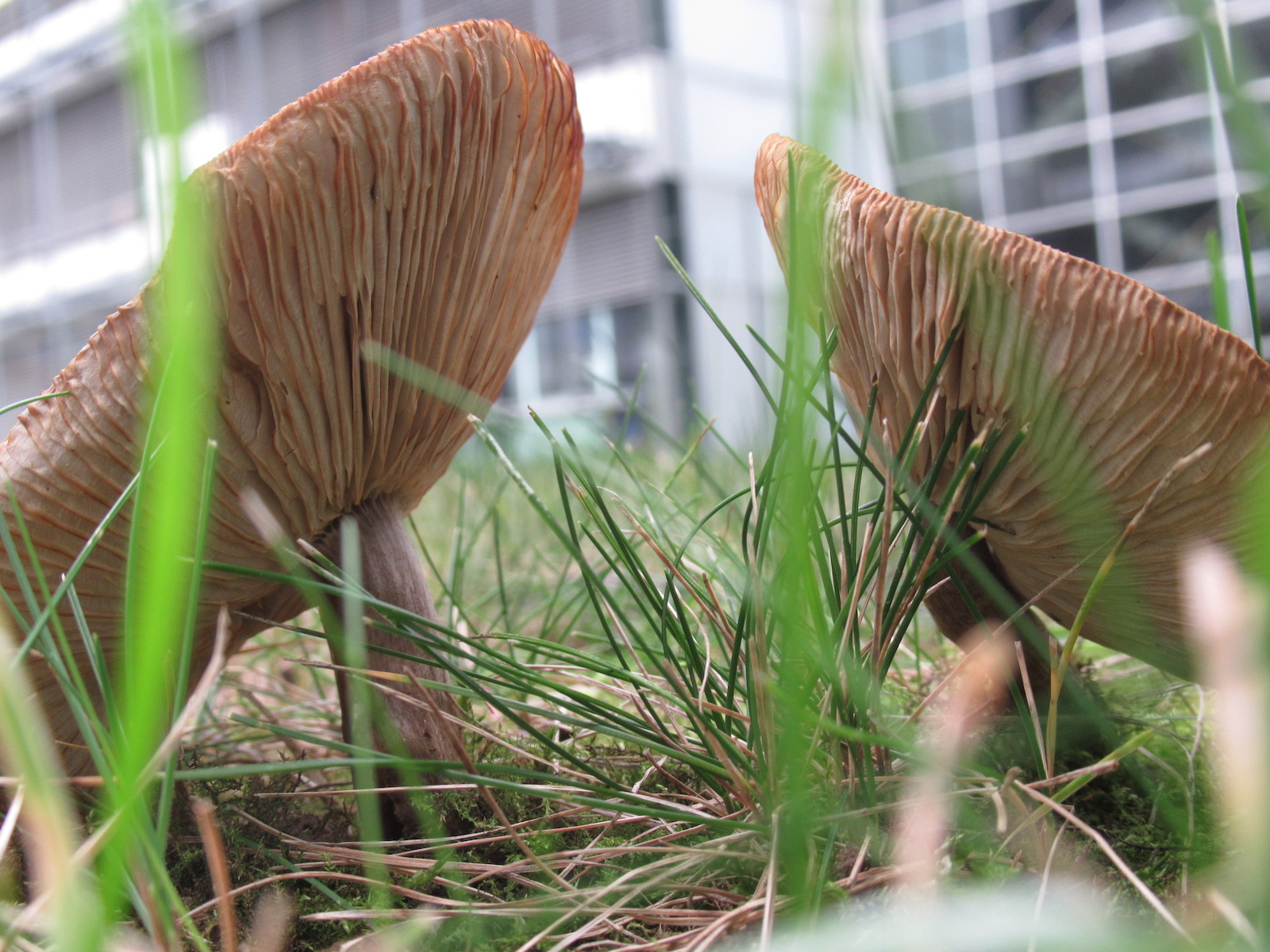
These two I found in front of the department building. I really like the colour of their tops, they look like leather. The undersides look fascinating too. (photos 1 & 2)

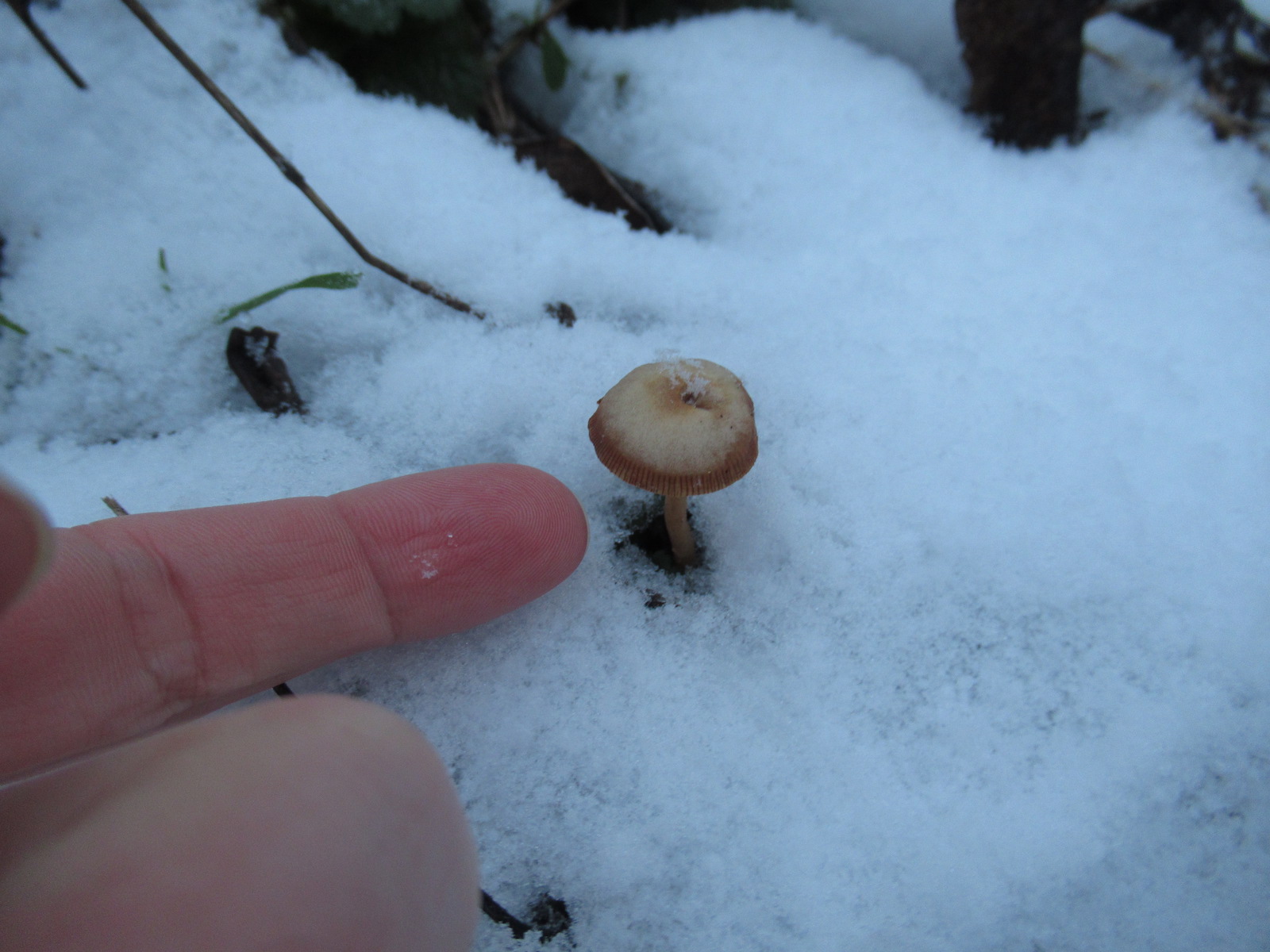
Yesterday we had some snow as well and today I found this little fella, poking out the fresh snow. (photo 3)

Photo 1, ©Avalus, all rights reserved.

Photo 2, ©Avalus, all rights reserved.

Photo 3, ©Avalus, all rights reserved.