Affinity
Art, Fun, & Nonsense.

Oh the young people! They will be the end of every society ever, you bet.
Open thread, don’t be an asshole, thanks. Previous thread.
From Giliell, click for full size!


© Giliell, all rights reserved.
 Deadpan
Adjective.
Marked by an impassive matter-of-fact manner, style, or expression.
-deadpan, adverb.
(C 1928)
Noun.
1: a completely expressionless face.
2: a deadpan manner of behaviour or presentation.
(C 1930)
Transitive Verb.
To express in a deadpan manner.
-deadpanner, noun.
(C 1942)
“Cold enough,” Tristan hazarded, “to form a Bose-Einstein condensate?” “I love it when you talk dirty,” Oda said, so perfectly deadpan that I did a double take.” – The Rise and Fall of D.O.D.O., Neal Stephenson and Nicole Galland.
The Illustrations to Tales of Mystery and Imagination, by Edgar Allen Poe, by Harry Clarke, 1919. Click for full size.
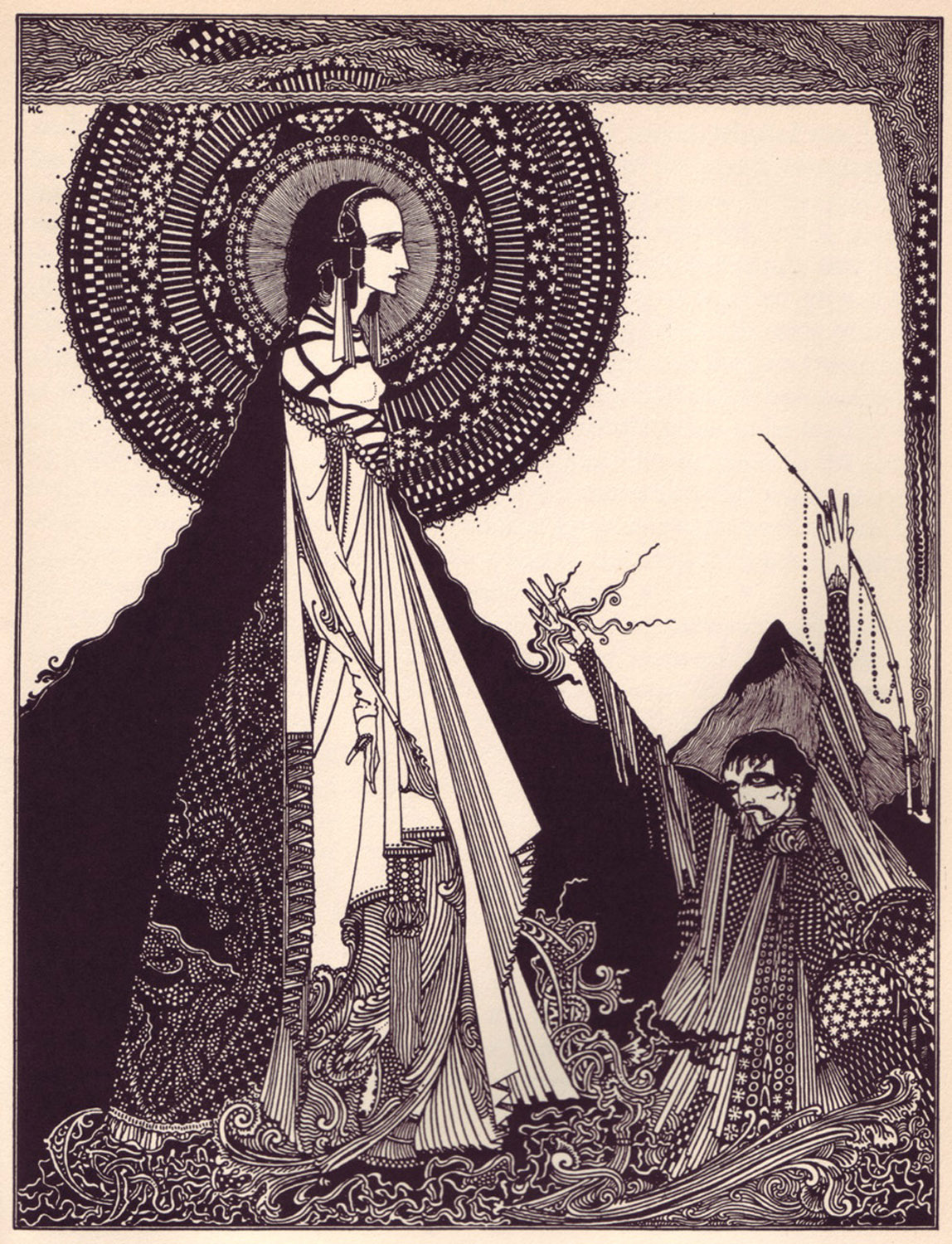
“I would call aloud upon her name.”

Two recognisable storks in a roundel. One is eating a frog, not the snake mentioned in the text and the other may be snapping its beak together.
Text Translation:
Of the stork Storks get their name, ciconie, from the creaking sound they make, like crickets, cicanie. The sound comes from their mouth rather than their voice, because they make it by clashing their bills. Storks are the heralds of spring; they share a sense of community; they are the enemies of snakes; they fly across the sea, making their way in flocks to Asia. Crows go in front of them as their guides, the storks following them as if in an army. Storks possess a strong sense of duty towards their young. They are so keen to keep their nests warm that their feathers fall out as a result of the constant incubation. But their young spend as much time caring for them when they grow old, as they spend caring for their young.
Storks make a sound by clashing their bills. They represent those who ‘with weeping and gnashing of teeth’ (Matthew, 8:12) proclaim from their own mouths the evil they have done. Storks herald the spring, like those who demonstrate to others the moderation of a mind that has undergone conversion. They have a sense of community like those who live willingly in the community of their brothers. It is said also that the stork is the enemy of snakes. Snakes are evil thoughts or evil brothers; the stork strikes snakes with its bill, as the righteous check evil thoughts or reprimand their wicked brothers with penetrating rebukes.
Storks fly across the sea and make their way in flocks to Asia. Asia signifies heavenly things. Those people also fly across the sea to Asia, therefore, who, scorning the commotions of the world, aim for higher things. Storks are are notably devoted to their young, with the result that their feathers fall out from constant incubation. Storks lose their feathers from the constant incubation of their young in the same way that prelates, when they nourish those in their charge, pluck out from their own bodies the feathers of excess and weakness. Young storks spend as much time caring for their parents as their parents spent on rearing them. Storks must nourish their young in proportion to their need, in the same way that prelates should feed their disciples with instruction according to their need. Likewise the prelates’ flock should support them with their efforts and provide them with the necessities they lack. Thus the turtle-dove, the swallow and the stork are a living reproach to those who do not believe that Christ came in the flesh and do not go in fear of the judgement of the Lord to come.
Folio 48v – the swallow, continued. De ciconia; Of the stork.
From Ice Swimmer: This set is a look back to the sunny days of summer and islands, rocky and forested ones in the Helsinki Archipelago and islands of vegetation by the shore. click for full size!

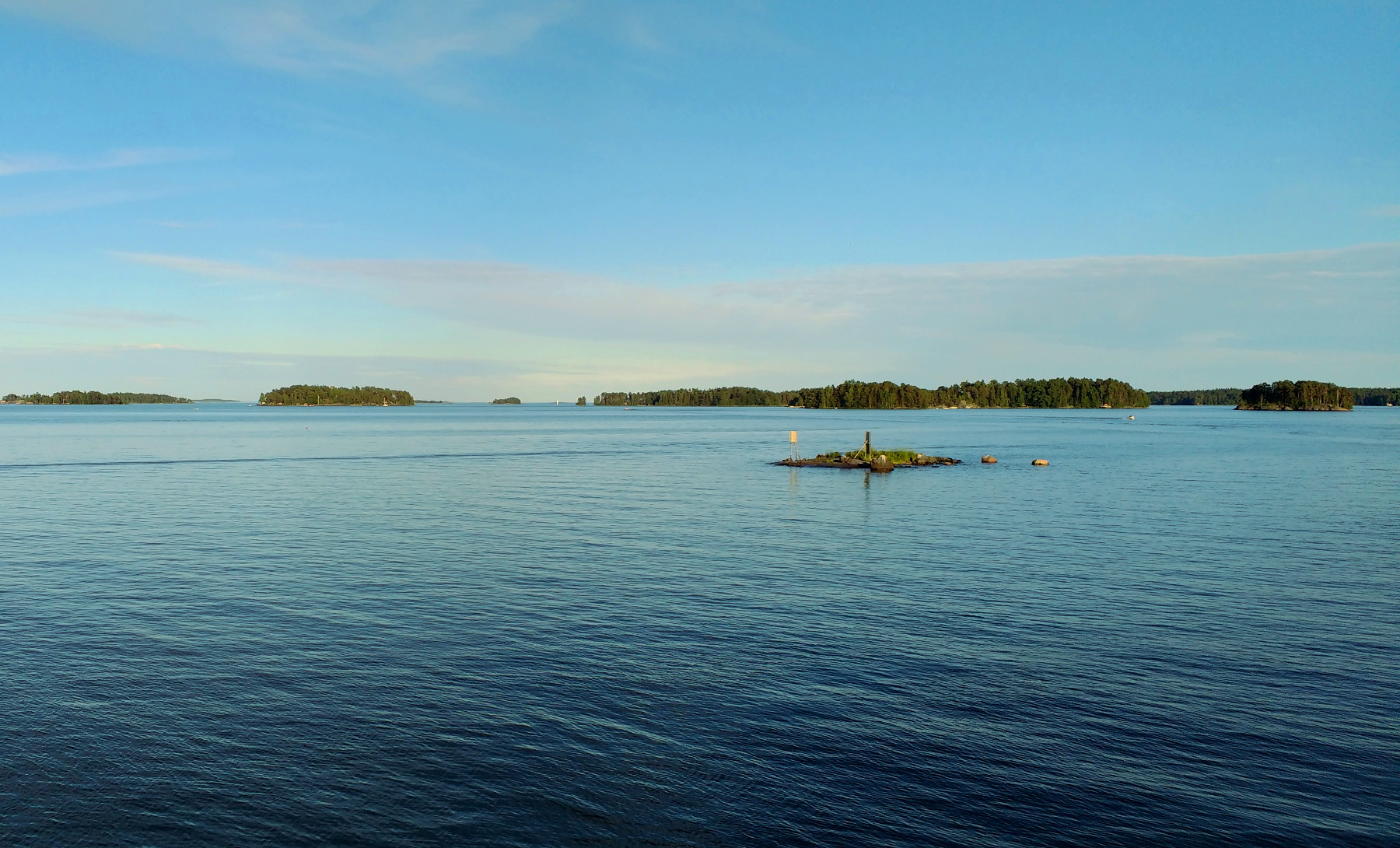




© Ice Swimmer, all rights reserved.
From Giliell, click for full size!


© Giliell, all rights reserved.
The Illustrations to Tales of Mystery and Imagination, by Edgar Allen Poe, by Harry Clarke, 1919. Click for full size.

The boat appeared to be hanging, as if by magic,…upon the interior surface of a funnel.

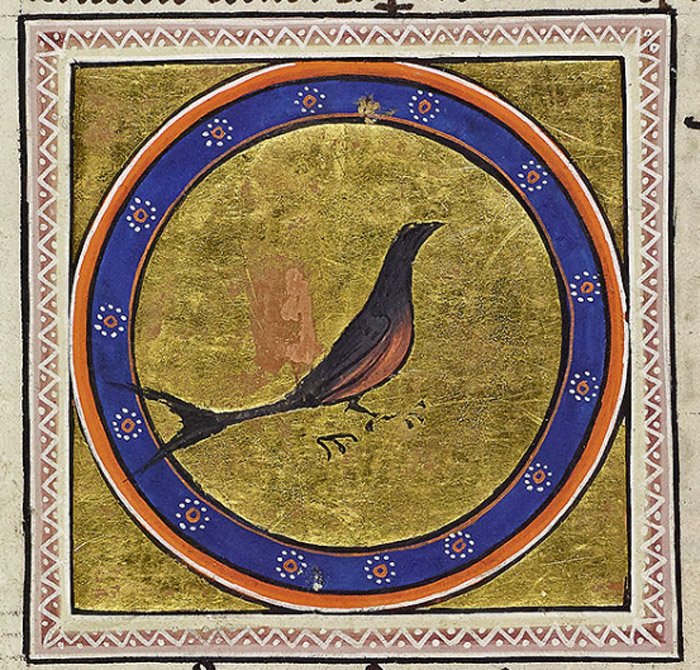
The portrait of the swallow depicts the bird quite accurately with a forked tail, dark back and red breast.
Text Translation:
Of the swallow ‘The turtle-dove and the stork and the swallow observe the time of their coming. But my people know not the judgment of the Lord’ (see Jeremiah, 8:7). We have talked of the turtle-dove; that leaves the swallow and after it the stork to be discussed.
Isidore says this about it: ‘The swallow is so called because it does not feed on the ground but catches its food and eats it in the air. It is a twittering bird that flies in twisting, turning loops and circuits, is highly skilled in building its nest and rearing its young, and has also a kind of foresight because it lets you know when buildings are about to fall by refusing to nest on their tops. In addition, it is not harrassed by birds of prey nor is it ever their victim. It flies across the sea and winters there.’ The swallow is a tiny bird but of an eminently pious nature; lacking in everything, it constructs nests which are more valuable than gold because it builds them wisely. For the nest of wisdom is more precious than gold. And what is wiser than to have, as the swallow does, the capacity to fly where it likes and to entrust its nest and its young to the houses of men, where none will attack them. For there is something attractive in the way that the swallow accustoms its young from their earliest days to the company of people and keeps them safe from the attacks of hostile bird.
Then remarkably, the swallow creates a regularly-proportioned home for itself without any assistance, like a skilled craftsman. For it gathers bits of straw in its mouth and smears them with mud so that they stick together; but because it cannot carry the mud in its claws, it dips the tips of its wings in water, so that dust sticks to them easily and turns into slime, with which to gather to itself bits of straw or tiny twigs, a few at a time, and makes them stick. It makes the whole fabric of the nest in this fashion, in order that its young can live safely as if on a solid floor in houses on the ground, lest any of them insert a foot between the small gaps in the woven fabric or the cold should get to the very young. This conscientiousness is fairly common among most birds, yet what is distinctive about the swallow is its special loving care, shrewd intelligence and the extraordinary quality of its understanding.
Then there is its skill in the arts of healing: if its young are infected by blindness or pricked in the eye, it has some kind of healing power with which it can restore their vision. The swallow, as this example proves, can be taken to represent, in some cases, pride of mind; in others, the repentance of the afflicted heart. That the swallow signifies pride is illustrated by Tobit: When he lay down beside a wall, says Tobit, and fell asleep, it happened that warm excrement fell on his eyes from a swallows’ nest as he slept and he became blind (see Tobit, 2:10).
Beautiful, bright cheer from Australia, thanks to Lofty & David. First, some beautiful flowers from Lofty:


© Lofty, all rights reserved.
And from David, an Australian Wreath:

Now that’s a festive wreath! :D