Jack’s Walk

©voyager, all rights reserved

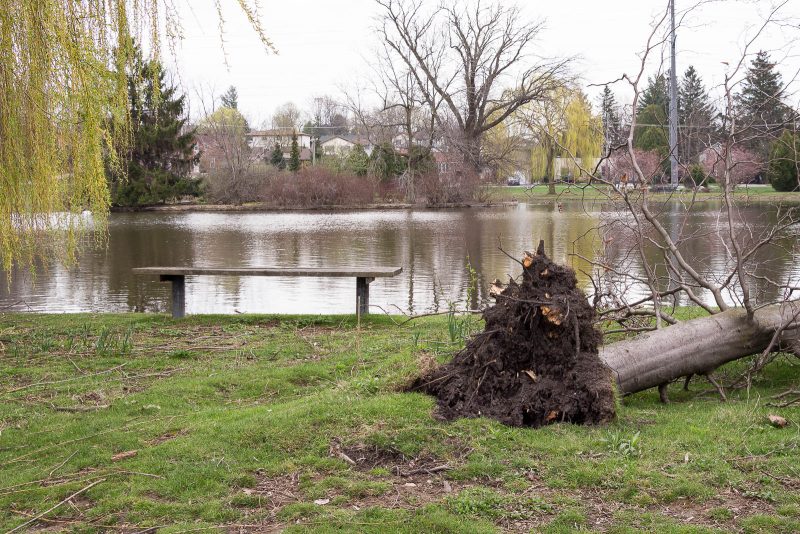
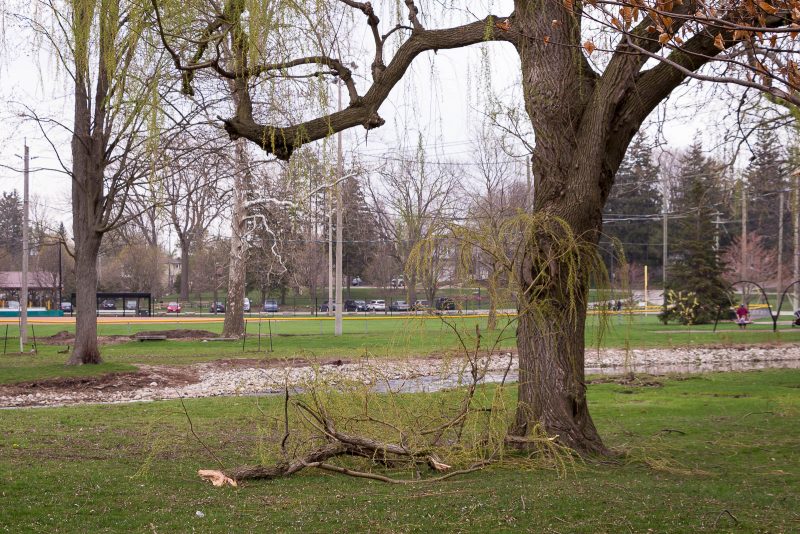
We had a wind storm on Friday that caused a lot of damage across my region in Southwestern Ontario. There were wind gusts of up to 100 km/hr and some areas suffered power outages lasting several hours because of downed trees and hydro lines. There wasn’t any real damage in my neighbourhood, but today at the park Jack and I found a small uprooted tree and several large branches down. I’m  worried that our little wooded trail in the country will also have suffered damage. There are quite a few trees there in precarious condition and it’s prone to storm damage. I plan to take Jack tomorrow to check it out.

Behind the Iron Curtain part 5 – Environmentalism

These are my recollections of a life behind the iron curtain. I do not aim to give perfect and objective evaluation of anything, but to share my personal experiences and memories. It will explain why I just cannot get misty eyed over some ideas on the political left and why I loathe many ideas on the right.


Today it seems like protecting the nature has become a leftist issue, and raping and pillaging it is the modus operandi of the right. This amuses me slightly, because the “left” that I grew up with was very different.

Unofficial motto of communist regime was “Poručíme větru, dešti.”. Translated into English “We shall take command of the winds and the rain.”. Humans were central to any policy and it was seen as imperative to take total control of nature and shape it to our needs and wants. In retrospect, some of it resembled christian ideas about humans being given dominion over the Earth.

One of the environmental abominations the communists did whose damage pays heavy dividends these last dry years had three steps.
First was connecting the by then relatively small fields divided by boundaries of bushes and small trees into vast fields. Second was to drain as many marshes and wetlands as possible so they can be ploughed by heavy machinery. Third was to straighten as many rivers and creeks as possible.

The negative consequences were visible within a few years but despite that these things were, to my memory, touted as a sucesses to the very end.

And those consequences?

Destroying the bush covered boundaries admittedly reduced slightly the occurrence of some infections affecting crops (especially the grass rust), and some insects. However it also drastically reduced the birds populations by depriving them of nesting places, and it exposed the soil in the spring and fall to heavy wind and water erosion. That took a few decades to be visible with naked eye, but today there are fields in CZ that have patches completely stripped of all topsoil.
Draining marshes and wetlands brought near to nothing to increase crop production. Thusly gained soil when dried was heavy infertile clay that did not want to take in water from rain and where nothing very much grew. The only things that seemed to prosper there were pioneering plants like birches and chamomile. What was lost almost immediately were multiple species of orchids and other wetland plants, many of which became endangered as a result and to this day grow only in few areas.
Straightening the creeks and rivers was perhaps the most damaging of these all. Together with the first two steps it created a landscape where water retention capabilities of the land are damaged beyond repair. Today we are seeing the consequences in the form of droughts and subsequent flash floods when rain water does not seep into soil, but flows away as quickly as possible across the uninterrupted fields and through the straightened water-bed. Oh, and salmon are mostly gone too.

Anther thing to consider is the regime’s contribution to acid rains and global warming, which were both acknowledged as real and both ignored on grand scale. In school we were taught that the success of a state can be measured in the tonnage of coal mined and steel produced. So coal was mined and steel produced even at a time when western European countries already realized that this is not the right way to go. And this was touted as an example of our magnanimous socialist countries outperforming those dumb evil capitalists.

Our (CZ) coal power plants burned sulphur rich coal and made no effort to filter out the sulphur oxides and fly ash even at a time when in neighbouring Germany many, if not all, such plants have been equipped with both sulphur and fly ash capture. Thus when the wind was blowing from the west, the air was fresh, when it was blowing from the east, it was foul. In a rare occurrence these facts were mentioned at school to us and I have asked the teacher why our coal plants are not equipped with the same devices. surprisingly I got what probably was an honest answer – it is expensive and our state cannot afford it. I did not ask further but I do remember the dissonance I felt thinking about it – we are outperforming those evil capitalists yet we cannot afford to protect our environment like they co?

Last thing I want to mention is the protection of animals against abuse. There was none. As a child I have read an article about this in one children magazine my parents were buying to me. The author somehow got through censors very sincere article talking about this problem, and demonstrated how wild as well as domestic animals are being abused and tortured on regular basis. He mentioned an instance where some state representative was asked why the regime does not try to enact such laws which again were common in many western countries at that time. The answer was “Socialist human does not need laws to be kind to animals.”. The author of the article finished with bitter words “Well, it is evident not everyone deserves to be called (not only) socialist.”.

The problem, like with many other things, was that whatever the regime has decided to do or not to do was correct by definition. The regime had all the smartest people, the bestest people, and was in possession of all the answers. Evidence was only acknowledged when it could not be ignored anymore, and even then very reluctantly. Remind you of something/one?

That made me wary of anyone who claims to have all answers.

J Is For Jealousy and Jardim.

Jealousy. Jardim, Portuguese for garden.

I hope I’m not the only one thinking that the wasp in the background is clearly coveting the fig that the butterfly is feeding on, in my garden’s fig tree. This is of course an excuse to show you this gorgeous and unmistakable butterfly, Charaxes jasius (foxy emperor). It’s a large butterfly that occurs in the Mediterranean region and in Africa. The adults can often be seen during summer sucking the liquids out of overripe fruits. The common Portuguese name for this butterfly is “borboleta-do-medronheiro”, which means “butterfly of the strawberry tree” referring to the larvae’s main host plant.

Click for full size!

© Nightjar, all rights reserved.

Signs of Life.

I managed a short wander today, might have pushed a bit too much. It’s still something of a shock that I have so little energy to expend, and have to stop and rest so damn much. The dizziness and ocular toxicity don’t help. Probably not a good idea to go wandering with just Jayne for company, but he did good today, sticking fairly close to me. Slowly, things are coming to life here. I saw one butterfly and one wasp, desperately searching for blossoms, of which, we have none. Surprised I got a shot of the wasp, I was shooting blind, into the sun. Most stuff under the fold, click for full size.

Box Elder Maple.

Box Elder Maple.

[Read more…]

Jack’s Walk

I’m so excited. Today Jack and I found new leaves on the maples. They’ve come so quickly this year, almost overnight, that it’s a bit astonishing. It’s likely because our temps have gone from the zeros to the twenties this week and seem to be staying there. All those plants that were waiting for some warm are making up for lost time. My grass already needs cutting. What a strange year.

©voyager, all rights reserved


Women’s Suffrage Mapped.

Click for full size.

Click for full size. Map created by Cuba Holidays.

The map above shows when women got the right to vote in each country around the world.

2018 marks the centenary of Women’s suffrage in the UK and even then only with several restrictions (had to be over the age of 30 and meet property qualifications).

You can read much more (with links) at Brilliant Maps: Women’s Suffrage Mapped: The Year Women Got The Vote By Country.

Saint Agatha’s Breasts.

Source: Atlas Obscura.

Source: Atlas Obscura.

According to the story, not only did 15-year-old Saint Agatha of Sicily refuse to abandon her faith, she also rejected a Roman governor’s advances. As such, she was punished by having her breasts amputated, then died of her wounds in prison on February 5, 251 A.D. Frescoes of the mutilated martyr are easily recognizable. She’s often depicted holding her breasts on a platter.

Known as minne di Sant’ Agata in Italian, these sweet cheese and marzipan desserts are an edible reminder of Saint Agatha’s suffering. Bakers craft the perfectly round confections using a base of shortcrust pastry topped with ricotta. After adding in chocolate or a piece of boozy spongecake to accompany the filling, they blanket everything in pistachio marzipan and a thick, creamy glaze. A candied cherry on top completes the anatomically-correct aesthetic.

Each February, hundreds of thousands of people flock to Catania to honor Saint Agatha in a three-day celebration. The centuries-old festival features an all-night procession and delicious replicas of saintly, amputated breasts at every pastry shop.

You can read more at Atlas Obscura. A bit grisly, but I’ll admit they do look on the delicious side. Religions certainly do come with a side order of weird. There are many depictions of Agatha of Sicily, including ones of her holding her breasts on a platter, her breasts alone are carved in stone, and much more.

Minne di Sant’Agata Recipe.

“Going to the Dogs?”, Workshop.

“Going to the Dogs” Workshop #2 brought together scholars from England, Scotland, and Poland to discuss the various and complex intersections of disability- and animal-studies research. Discussions centred on talks delivered by Rachael Gillibrand (Institute for Medieval Studies, University of Leeds), Dr Ryan Sweet (School of English, University of Leeds), Dr Andy Flack (Department of History, University of Bristol), Dr Neil Pemberton (Centre for the History of Science, Technology and Medicine, University of Manchester), and Dr Justyna Włodarczyk (Department of American Literature, University of Warsaw). The talks covered topics including the animal assistants of disabled people in the late-medieval West; nineteenth-century representations of animals with prostheses; connections between historical understandings of animals that live in darkness and vision-impaired people; the role of the caress in 1930s America human-guide-dog partnerships; and current controversies surrounding emotional-support animals in the US.

-Via Medievalists.

The full set of workshop videos.

I Is For Iris and Iridescência.

Iris. Iridescência, Portuguese for iridescence.

One thing I love about Iris flowers is the way they look iridescent under the right lighting conditions, but I find this very hard to capture in a picture. I tried my best here with the purple irises blooming in my garden right now.

Click for full size!

© Nightjar, all rights reserved.