Jack’s Walk

At the park, ©voyager, all rights reserved

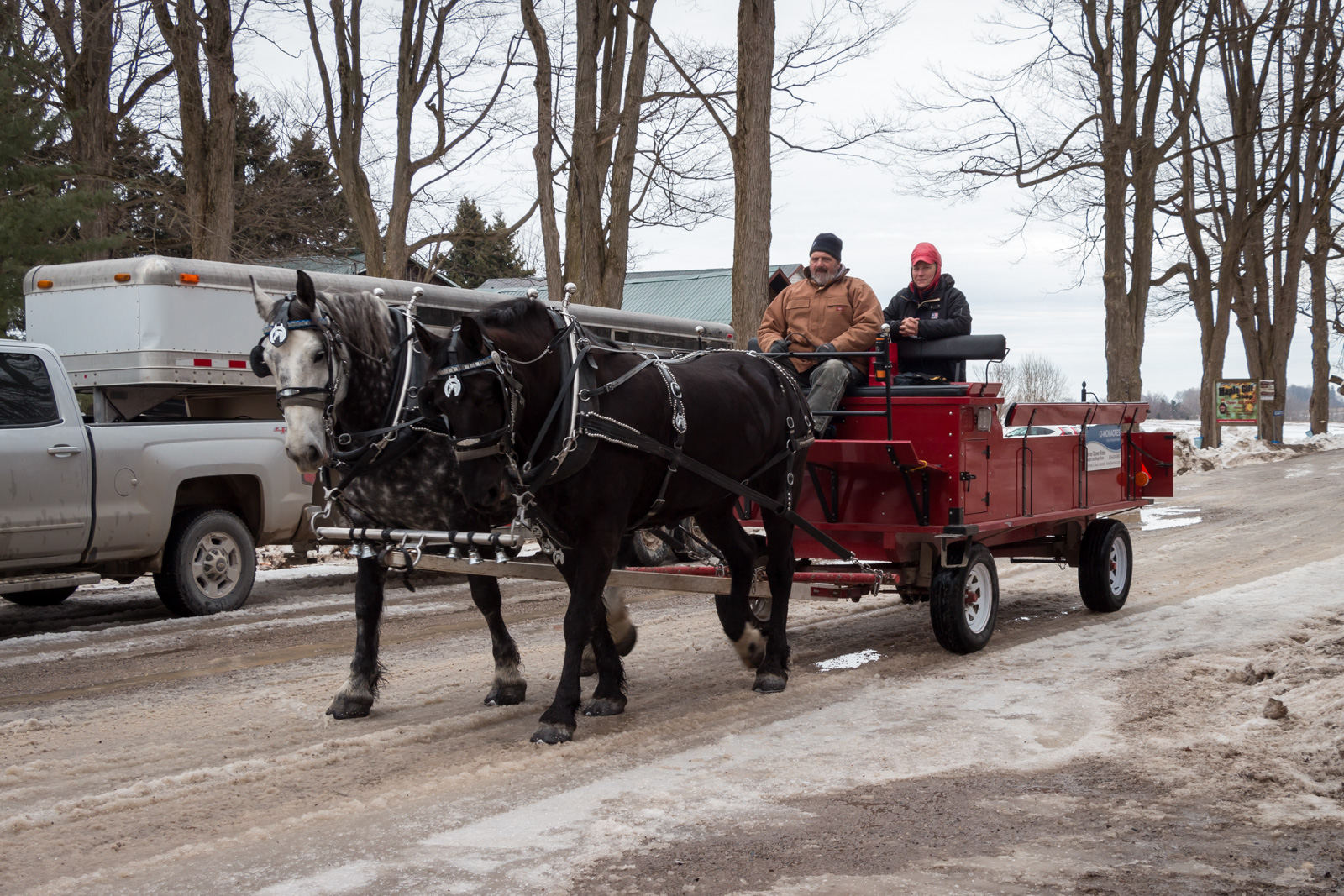
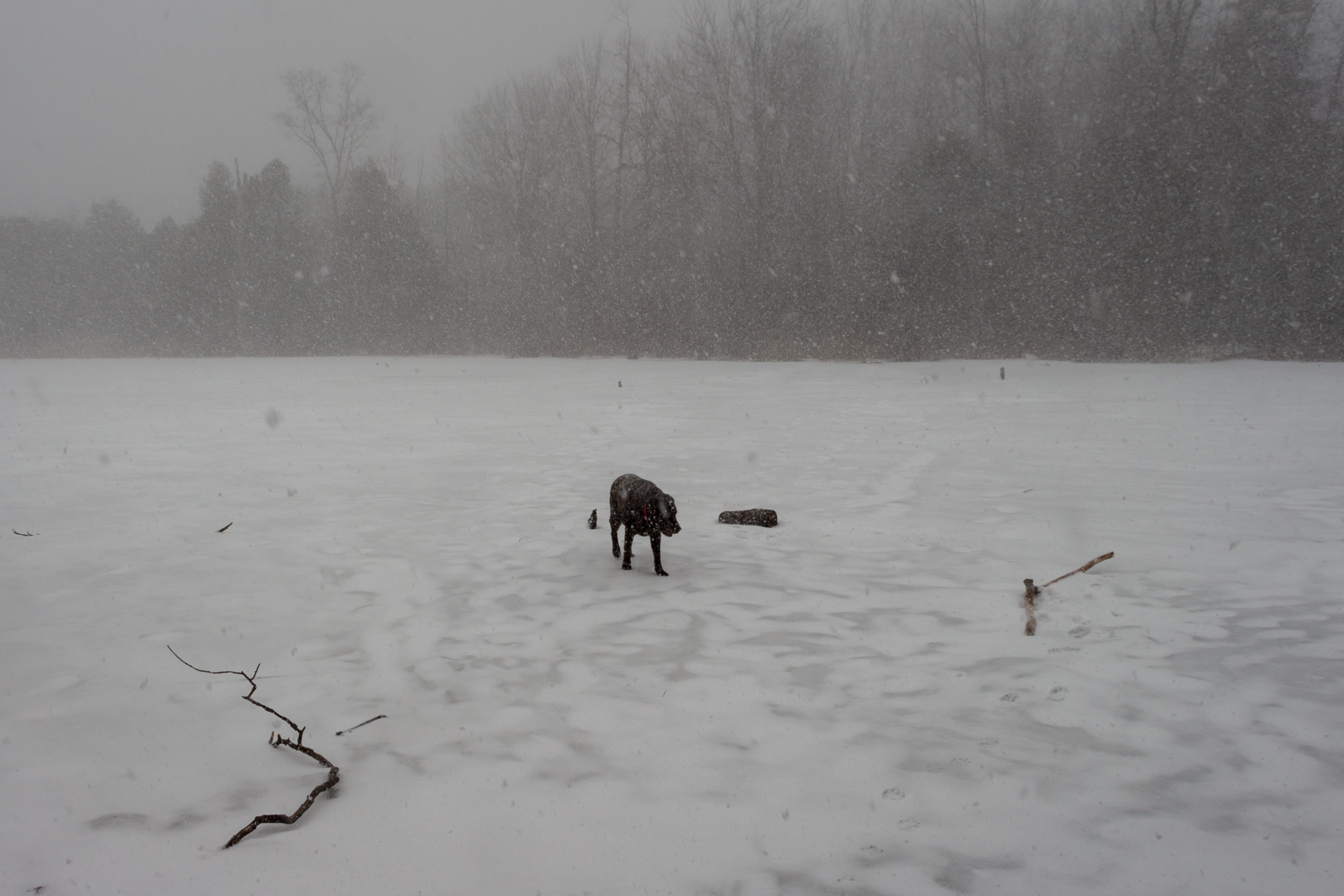
Woo Hoo! It’s +13º C today and there is melting happening. There’s also a light drizzle that’s helping the melting along and already I can see the brown earthy edges of the lawns. The ice on the sidewalks is breaking up and there is a steady stream of water running down the street to the sewers. It’s wonderful. Really wonderful. Why, it’s the most wonderful time of the year. It’s  finally Spring. At least until Saturday, that is, when it’s supposed to plummet down to zero and stay there for a week. I won’t think about that today, though. Today I’m just going to enjoy wearing my spring coat and watching Jack get muddy.

Youtube Video: Brexit, Briefly: REVISITED!

There’s three things, pick two. I use it often in engineering, where the corners of the triangle are Cheap, Fast, Good and you can only pick two. Managers always, always want to pick all three, just as well as the UK seems to want to pick now. Have your pie and eat it is the motto of the day.

I cannot even snigger at the stupidity of Britons who voted to leave, since I have no doubt that had Czech Republic had a similar referendum, our results would also be similar. Because despite the objectively measurable fact that we are much better of in the EU than we were outside it, a lot of people yearn for the good old days.

Good old days that never were. If I were to pick only one reason for why EU is a massive political success despite all its flaws it would be this:

There was not a war between members of EU for two generations. Prior to that, the whole EU history was stumbling from one war to another, and the scars from those wars still did not heal.

Killing and Dismembering an HDD

My parents PC started to act up a few weekends ago. I knew the motherboard was defect already, so I have decided to buy everything new, including an SSD – but I thought the old HDD can still be used for data storage. I was ronk. When I built the thing, it was still acting up, and finally I got the message that S.M.A.R.T. detects problems with the drive. So I decided to nix it and throw it out. It did not contain any important information, but even so I wiped it repeatedly, then performed full format, and then I disassembled it, run the platters over with a screwdriver and with strong neodymium magnet. Hopefully not even Nick Fury should now be able to recover the data that once was there, and should he go through the trouble being pissed at finding a bunch of flowers and gingerbread pictures.

When building it back together I did not build in one crucial part – the two half-moon shaped neodymium magnets that you can see to the left of the center in the photo. They are very slim and very, very strong – it is not easy to pry them apart in hand. I decided that they are simply too nice in themselves to throw into recycling and they might be useful in my workshop later on.

Two days later I got an idea how to use them and they might prove to be THE solution to a problem that I was looking for for over a month now, or at least a good part towards a solution. I hope to try that out soon, the weather is getting warmer, the flu or whatever was trying to kill me seems to have failed, so hopefully next weekend I will be able to resume working on knives.

©Charly, all rights reserved. Click for full size.

Jack’s Walk

Waiting for spring ©voyager, all rights reserved

On thin ice, ©voyager, all rights reserved

Jack and I took ourselves to our local park today and discovered that we’re not the only creatures waiting for spring. There is a paddling of ducks (I looked that up!) that is unable to paddle. The pond is still covered in ice and the river that runs through it is flowing fast and high. Not really friendly water for smallish birds. These ducks don’t migrate. They live at the park all year and are fed by a keeper in winter. These two had been sitting in the parking looking glum, but they took to the ice when they saw Jack. Sorry little ducks, stay safe.

The weather is due to change tomorrow with a promise of temps around +13º C. That sounds too good to be true, but I’ll be happy with any temp on the plus side of the scale. I’ll even happily take the rain that’s due to come with the warmer air. I’m ready for the season of mud so bring it on.

Wednesday Wings: That’s it, I move to Portugal

Nightjar hasn’t only been teasing us with her gorgeous pics of sunlight and flowers, now she’s doing it with the birds as well.

She writes: This male Sardinian Warbler is a frequent visitor to the corner of the garden in front of my bedroom’s window, the reason being evident in two of these photos: apparently, Sprenger’s asparagus berries are delicious.

©Nightja, all rights reserved

©Nightjar, all rights reserved

©Nightjar, all rights reserved

©Nightjar, all rights reserved

©Nightjar, all rights reserved

Jack’s Walk

Bon chance, mes amis ©voyager, all rights reserved

Jack and I went to the lake this morning and for the first time all winter we saw ice fishermen.  Normally we see a few ragged huts that stay on the ice all winter, but for some reason this year they were absent. Our little lake is full of bass and pike and in the winter the conservation authority lowers the level of the water by about half which concentrates the fish into the deep center of the water. I think that’s a bit unfair to the fish, but it does make sitting in the cold and watching a hole in the ice more exciting. These chaps were in good humour and full of optimism and they even took a few minutes to play with Jack before heading out to try their luck.


Tree Tuesday

The world is full of interesting trees. This for example is the Jabuticaba Tree, or the Brazilian Grape Tree, from South America and those growths on its trunk are fruits. The tree is mainly found in southern Brazil in the Sao Paulo and Minus Gerais regions, but also grows in areas of Paraguay and Argentina.

The fruit itself is a small and round, about 3 to 4 cm in diameter, with one to four large seeds, a thick, deep purple colored skin and a sweet, white or rosy pink gelatinous flesh. Naturally the tree may flower and fruit only once or twice a year, but when continuously irrigated it flowers frequently, and fresh fruit can be available year round in tropical regions. During Jabuticaba season in Minas Gerais, thousands of street vendors sell fresh Jabuticaba in small net bags, and the sidewalks and streets are stained the same deep purple by discarded Jabuticaba skins.

Jabuticaba is largely eaten fresh, but because the fruit starts to ferment just 3-4 days after harvest, they are often used to make jams, tarts, strong wines, and liqueurs. Due to the extremely short shelf-life, fresh Jabuticaba fruit is very rare in markets outside of areas of cultivation. The fruit also has many medicinal uses. Traditionally, an astringent decoction of the sun-dried skins has been used as a treatment for hemoptysis, asthma, diarrhoea, and gargled for chronic inflammation of the tonsils. It also has several potent antioxidant and anti-inflammatory anti-cancer compounds.

The full story is at Amusingplanet.com.

Mould Making

Yesterday we saw the birth of a couple of little Mermaids, today it’s two steps back in the process: mould making.

I have long wanted some more natural looking moulds and with the mermaid moulds being so frustrating I finally decided to use the materials Marcus sent me last year.

I’ll only show the process for the pebbles, but describe the squares as well.

While you can embed almost everything into silicone, if you want a mould that creates shiny resin pieces, your positive has to be smooth as a baby’s butt, so my first step was to cover some pebbles and pieces of wood in resin.

©Giliell, all rights reserved

The problem with the wood was that the cut sides soaked up the resin, staying rough, so I decided to cover the whole thing again the next day. This times the sides became smooth, but the resin decided not to stick to itself on the top…

After I covered my pieces in resin I created the “mould box”. Marcus made those four pieces you can clamp to each other, allowing for variable sizes. You just need to put some putty into the cracks to seal it, something that worked well here, but not that well with the wood pieces, so I drowned my kitchen table in silicone and then had to somehow scoop it up again because I didn’t have enough to replace it.

©Giliell, all rights reserved

The resin had created a flat foot on the pebbles that I worked a little with sanding paper, so i could put the flat on the surface and pour the silicone on top with little worries that they’d rise to the top…

©Giliell, all rights reserved

All poured, now wait…

©Giliell, all rights reserved

This is the mould with the pebbles still inside. They came out nice and clean and I

really like that mould. Now for trying it out…

©Giliell, all rights reserved

The green one on the right was a different mould, one where I tried to make all round pieces. Those still need some working on.

©Giliell, all rights reserved

©Giliell, all rights reserved

You can see that they’re really glossy while also really pebble-irregular.

The square ones are fine for making pieces that you sand down, but due to the issues with the resin not that nice and clean. Afterwards I remembered that Marcus had once sent me a “book club” block that would have made a nice clean mould…

I also tried some small globe shaped moulds, which still need some tinkering, so the next time I need to order resin I’ll also order some more silicon.

A Day at the Zoo: The Birds of Prey

Our last instalment in this series is one of the highlights of our zoo visits: the birds of prey.

We were missing Norbert, our gigantic vulture, and the bad news is that he won’t return, but the good news is that this is for the wonderful reason that he has found a mate.

African Fish Eagle, Giliell, all rights reserved


[Read more…]

Why I (Almost) Always First do and Then Learn

I have an acute case of opinions, and I have a platform. Therefore I am going to inflict them on you. Lets get ready to ramble…

During my life I have learned a lot of different stuff – building and installing computers and programming in VBA as well as masonry, plumbing, carpentry etc. Jack of all trades and all that. That is nothing exceptional, most homeowners here have at least the basic of some of those skills. But some of the skills that I have tried or intend to try my hand on – like knife-making, leather work or wood carving – require not only a lot of finicky skill, but also a lot of knowledge.

My approach to acquiring said knowledge was, is, and will remain, maybe somewhat illogical from an outsider’s point of view, but I found out that it works the best for me. I hasten to add though, that I am only using it when there are not real stakes regarding safety and/or urgency to be had in the matter – if there are, I pay for experts and craftsmen to do the job quickly and properly the first time.

That approach is this – I start with some rudimentary knowledge and dive right into it, start big, fail on so many levels and end up with a result that has so many flaws that it is pitiful at best (like my first knife, that I regrettably lost).  Then I think about what went wrong, read some more information, try again, start again big, fail a bit less and get something that I need not be ashamed of, although it is of course still very short of being a masterpiece, even an “apprenticepiece” – like my second knife:

©Charly, all rights reserved. Click for full size.

All those failures do not stop me of course from ramping up the ambitions for the next project(s), where I learn from my previous mistakes and boldly introduce completely new ones. Like in the knife I have made for my father’s fiftieth birthday and a knife I made for myself:

©Charly, all rights reserved. Click for full size.


©Charly, all rights reserved. Click for full size.

And so on and so forth. Only after each failure, will I really seriously start to research and read some serious theory on the things that I just tried to do and see what the actual craftsmen have to say. And through this process, where I first try, fail and then read, I eventually get to something half-decent, like Ciri’s dagger, which nevertheless is still somewhere in the middle of my learning curve (and probably everything ever will be).

One reason for this approach is fairly mundane – books are expensive, our local library is crap and internet with a lot of information freely available was not a thing for first half of my life. But I hold onto it even now – for example I will start reading on leather work only after I actually start to do some work in it, not before (I have actually done some small leather work – the two last sheaths shown, but nevermind). The same plan goes for engraving metal, or inlaying etc. Why do I persist in this manner of doing things, where I inevitably reinvent the wheel multiple times over? Could I not save myself a lot of trouble and time learning the theory first? After all, that is how a lot (not all) of our school system works – a huuuge chunk of theory upfront and then maybe some medium to big-ish chunk of praxis.

Well, even discarding the fact that reinventing the wheel for yourself is tremendous fun, and having fun is the whole purpose of a hobby, I think following chunks of praxis with theory and not vice versa has a practical advantage as well, at least for me.

I have read first three books out of my new purchases, those on the left in the picture. Most of the info in them was not new to me since I already tried like 90% of the techniques shown and I knew all the theory. So I only got about 10% worth of new knowledge, which does not seem like much – just a few tricks, really. But if I started with only these books without having any clue whatsoever about how thinks work in praxis, I would get a lot less out of them on first reading, most of the content would go over my head and I would forget it straightaway. And when later on trying to put the things into praxis, I would have to get back to them and re-read them, maybe multiple times, whilst trying the things and failing at them anyway. Whereas having a lot of failures and intuitive understanding as well as theoretical knowledge of the matter already has allowed me to read them fairly quickly and absorb the little info that I did not yet have much more permanently (I think) because it connects smoothly with my past experience and knowledge.

There is of course one trapping to this “try first” approach, and a big one, that should be avoided – developing bad work habits that have to be un-learned. The distance between trying something and learning the accompanying theory should not be too big either way, because it is detrimental to learning both ways.

The Plural of Mermaid is Moremaids

After the little mermaid in the last craft post, I decided to use that idea some more and insert them into landscapes.

To do that you need some larger moulds and tools to shape the result afterwards. I built my single use moulds with thin wood and popsickle sticks, lining them with tape. This worked half- well.

One came out quite nice and shiny, which was lucky, but the other one not so much, which meant sanding. To give you an idea what that means here’s a series of pics demonstarting the process:

©Giliell, all rights reserved

This is after sanding with a 120 grid to make the surface even.

[Read more…]