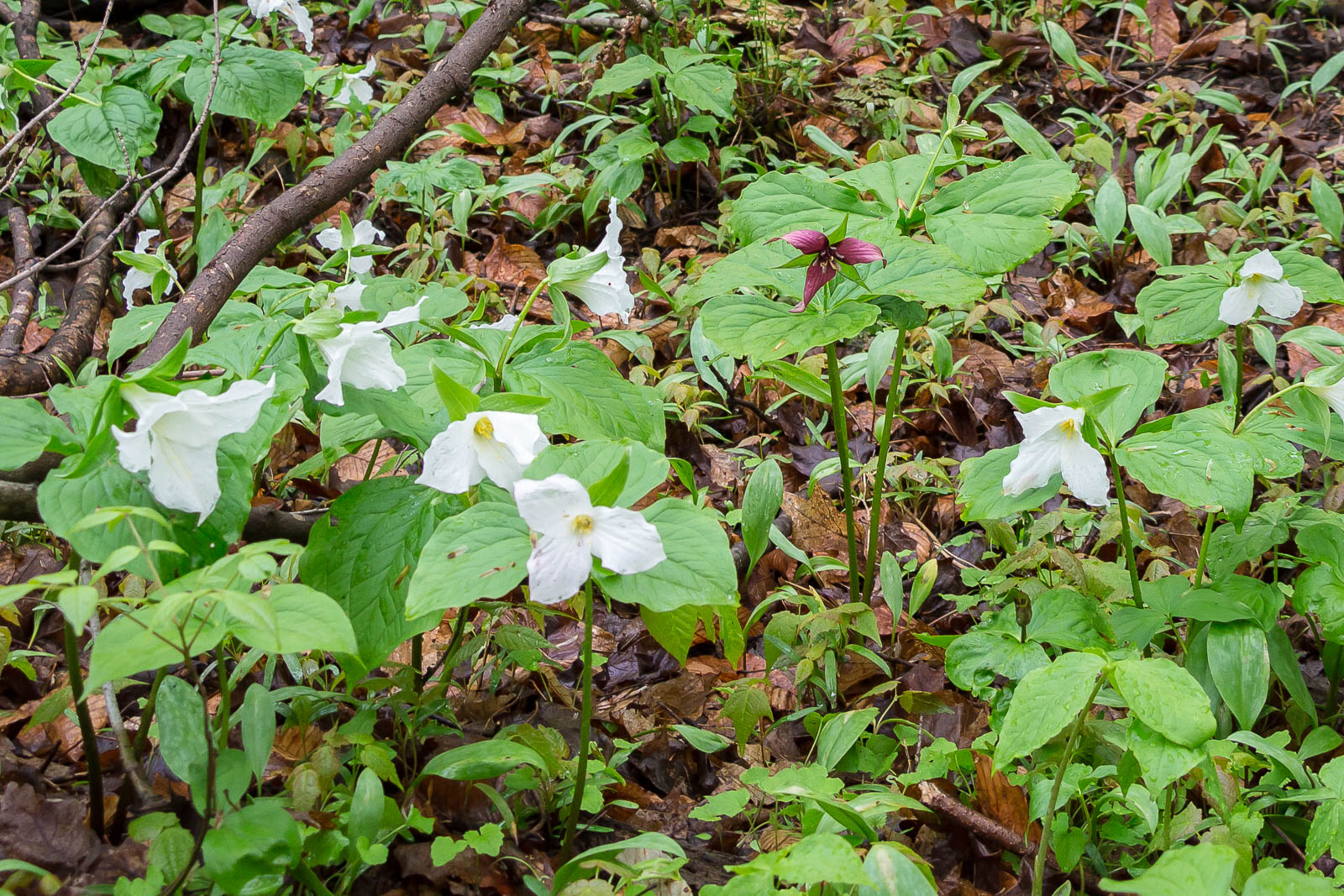
Today we found one short-lived, rare red trillium still blooming in a sea of white and green.
©voyager, all rights reserved

Today we found one short-lived, rare red trillium still blooming in a sea of white and green.
©voyager, all rights reserved
I was happily lost in The Public Domain Review the other day, and came across High Frequency Electric Currents in Medicine and Dentistry from 1910. I know there was great excitement over electricity, and there were phases of “miracle cures” where it was concerned, but in this case, it was the photos which got my attention, including one which just about had me screaming, and I’m not even a parent:

The text reads:
Plate XXII. – This beautiful picture (as exquisite as Manet’s “Boy with the Sword” which is one of the classics of the Painting Art), sets forth this boy bringing his pocket “Tesla” for the enjoyment of his beloved tonic. His sturdy strength at the age of three is a tribute to the efficacy of high frequency currents, for at the age of three days, when his treatment with them was begun, he was an illy-thriving and frail infant with but the feeblest hold on life. Look at him well, and think how many myriads of pallid children – of all ages – need the same remedy.
There is So. Much. Wrong. there, it just leaves me sputtering. Applying electrical currents to a three day old infant? All I can think is how very easily that could kill said infant. As for the photo being as exquisite as Boy with a Sword, let’s see:

L’Enfant à l’épée’ par Edouard Manet, 1861.
Yeah, I don’t think there’s any honest comparison there at all. There are other questionable and frightening photos to be seen with the magical Tesla wand, but have a care, there’s some nudity, so NSFW.
Spirulina.
A while back I was involved in preparing an activity for kids as part of a science outreach event, the goal was to show them some bacterial diversity and how different bacteria look, both macroscopically (and for that we tried our best at Petri Dish Art, I highly recommend you look that up) and microscopically. As I was scanning through a wet mount of Arthrospira platensis (spirulina), I found this delightful S-shaped filament (called a trichome) and couldn’t resist. The quality isn’t very good, this was taken by hand-holding my phone over the microscope’s eyepiece.
Click for full size!

© Nightjar, all rights reserved.
From Giliell, click for full size!


© Giliell, all rights reserved.
From Chigau, click for full size! Look all those blossoms! Our little wild plums are just starting.

© Chigau, all rights reserved.
From Kengi, a Gorgeous Baltimore Oriole, click for full size! (Kengi says he has no problem writing or typing, but still has trouble with reading.)


© Kengi, all rights reserved.

©voyager, all rights reserved
We went to the park again today and I can’t get over how much the goslings have grown in just a few days. They’re at a sort of “homely cute” stage with beaks that look too big for their heads, fuzzy hairdo’s that stick out in all directions and the beginnings of eye marks that make them look sleepy. I think they’re adorable. The parents keep a careful watch, but don’t seem to mind us being around. These are park geese who live here all year and are very used to people and dogs. Of course, Jack is also pretty laid back and usually lays quietly on the grass while I take photos.
A young black redstart, Phoenicurus ochruros, kind enough to let me get very close. It has many common names in Portuguese, the most common are pisco-ferreiro, literally meaning “blacksmith robin”, and rabirruivo-preto, literally meaning “black redtail”.
A stunning shot, click for full size!

© Nightjar, all rights reserved.
From rq, click for full size!

© rq, all rights reserved.
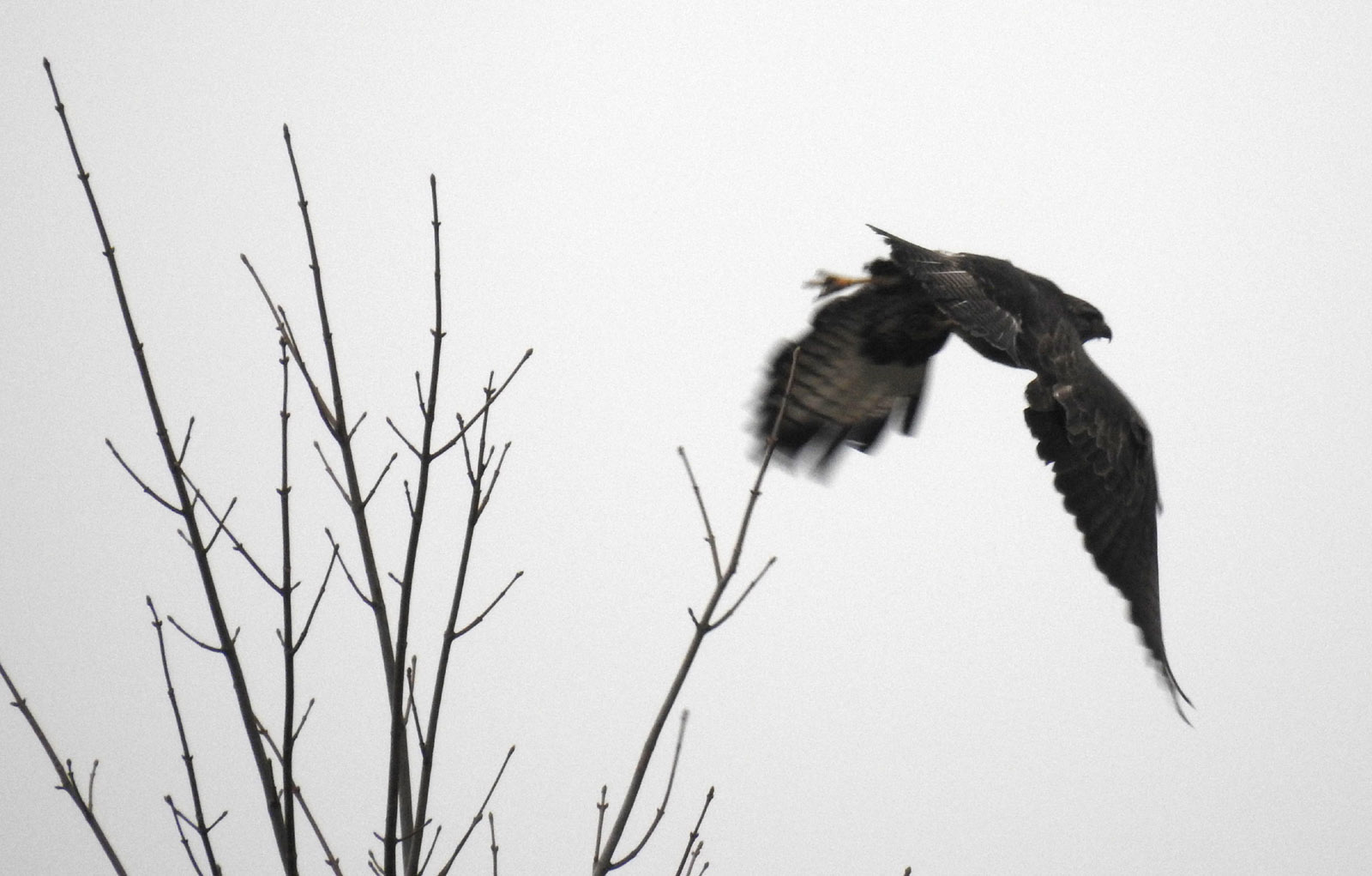
From Charly, click for full size! Oh, that second shot!




© Charly, all rights reserved.
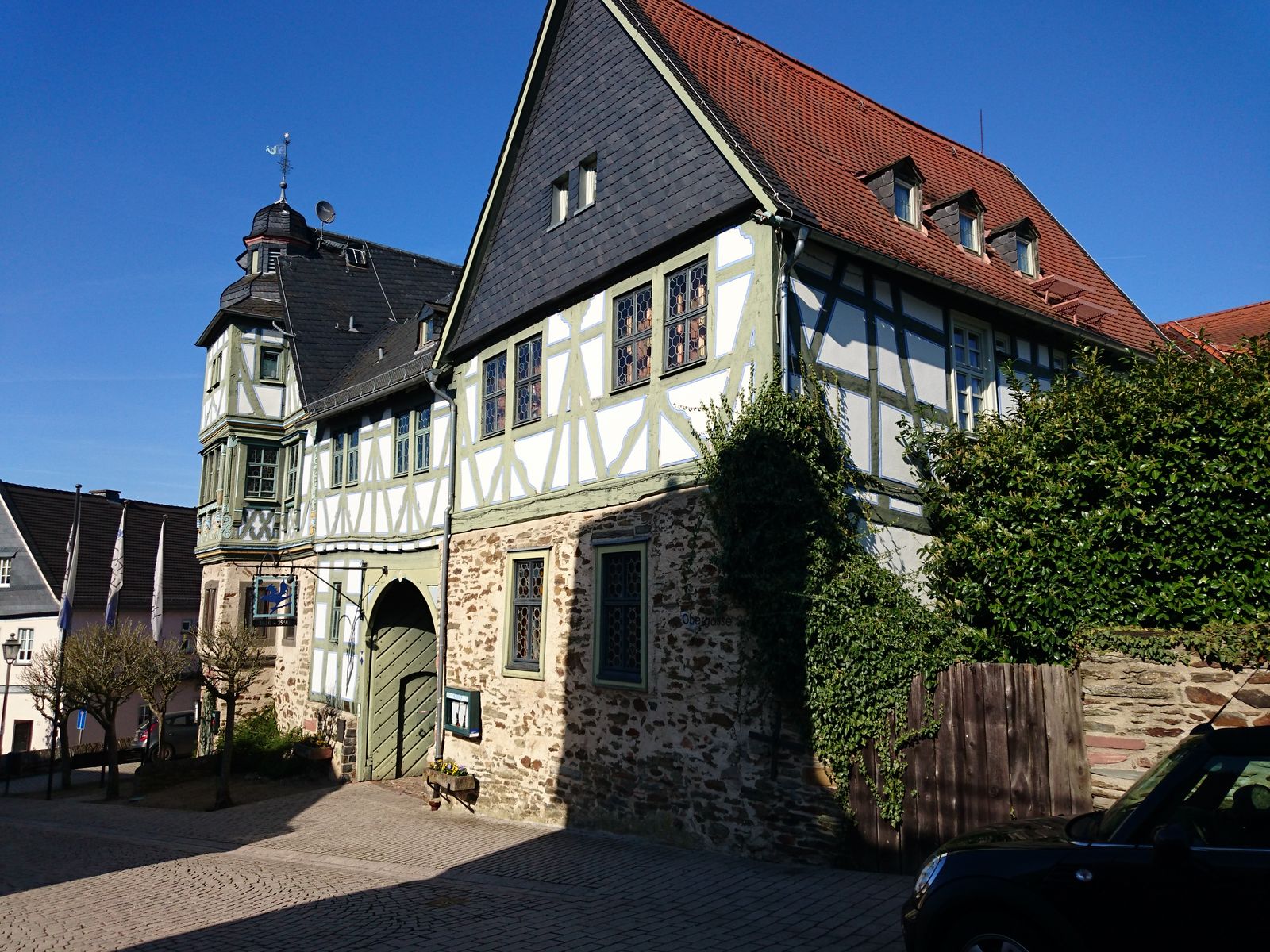
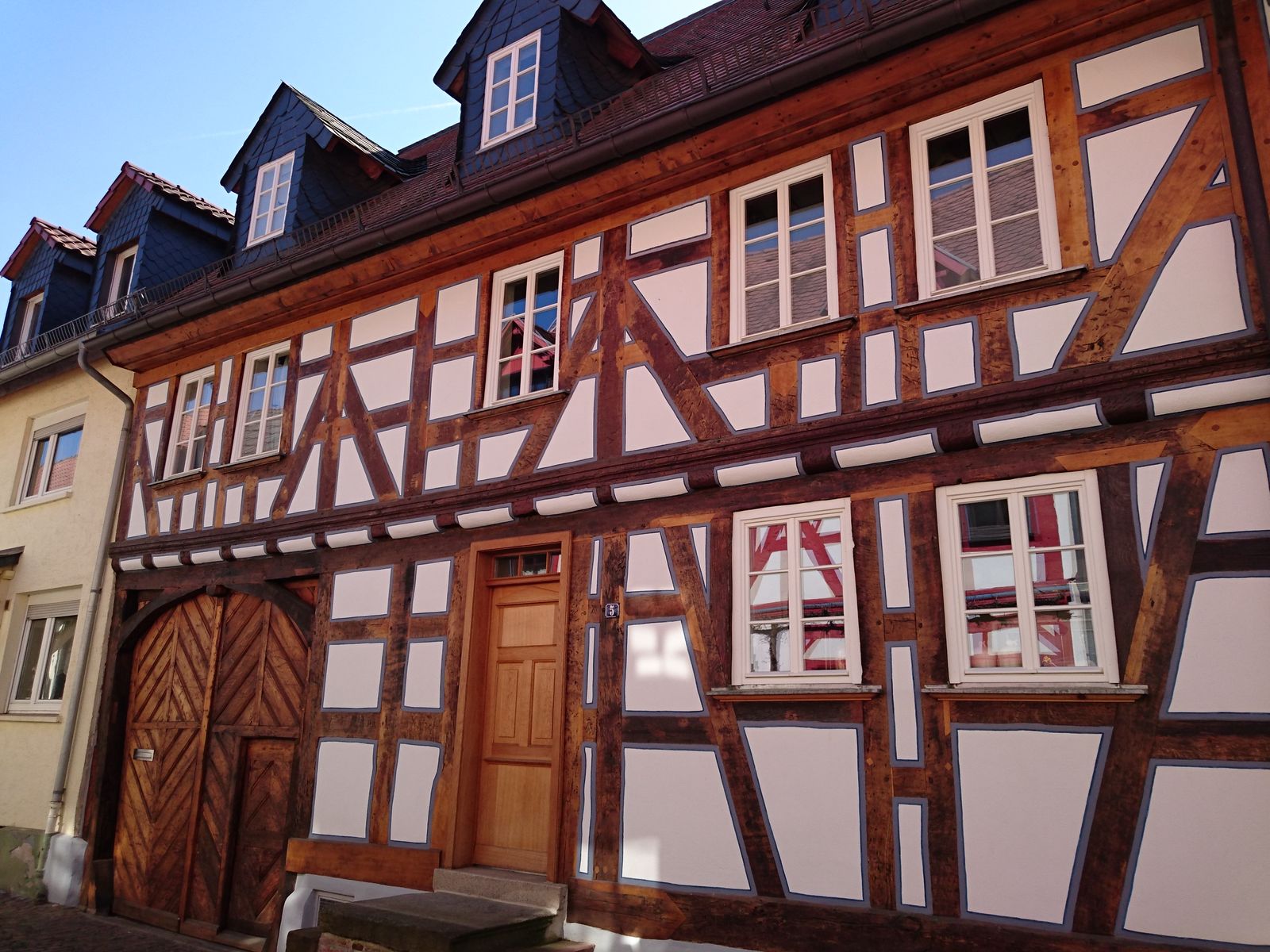
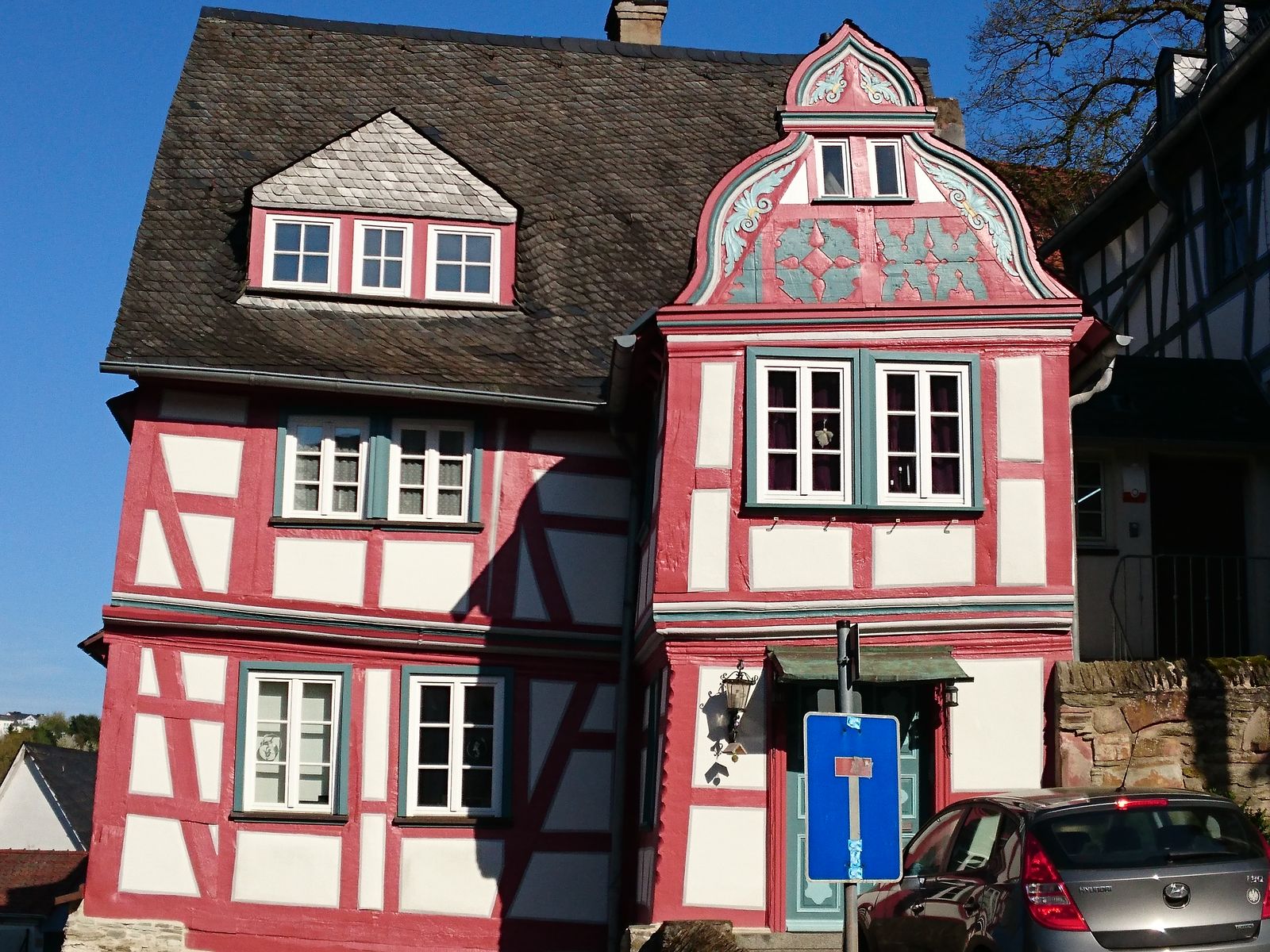
Ein Fachwerkhaus is the German term for what could be considered a typical medieval building – a frame made of beams with the gaps filled with bricks and mortar. They are in many places in CZ, but it seems to me they are much, much more common in Germany. And Idstein is certainly full of them.
What I found most interesting is the fact that some houses were built from straight timber with precise symmetric angles and all the lines straight. And others had completely irregular beams incorporated in the frame, or they were slanted in different directions like they were drunk.
These all are beautiful buildings but I would not like to live in one of them. The hotel at which we resided was not timber frame house, but it was a very old building. This means there were no right angles anywhere and all the floors were wavy and sloped in different directions. I would not mid the odd angles much but I found walking on sloped and uneven floor slightly disconcerting and uncomfortable.
Not to mention the huge amount of work that has to be invested in maintaining these buildings.


©Charly, all rights reserved. Click for full size.
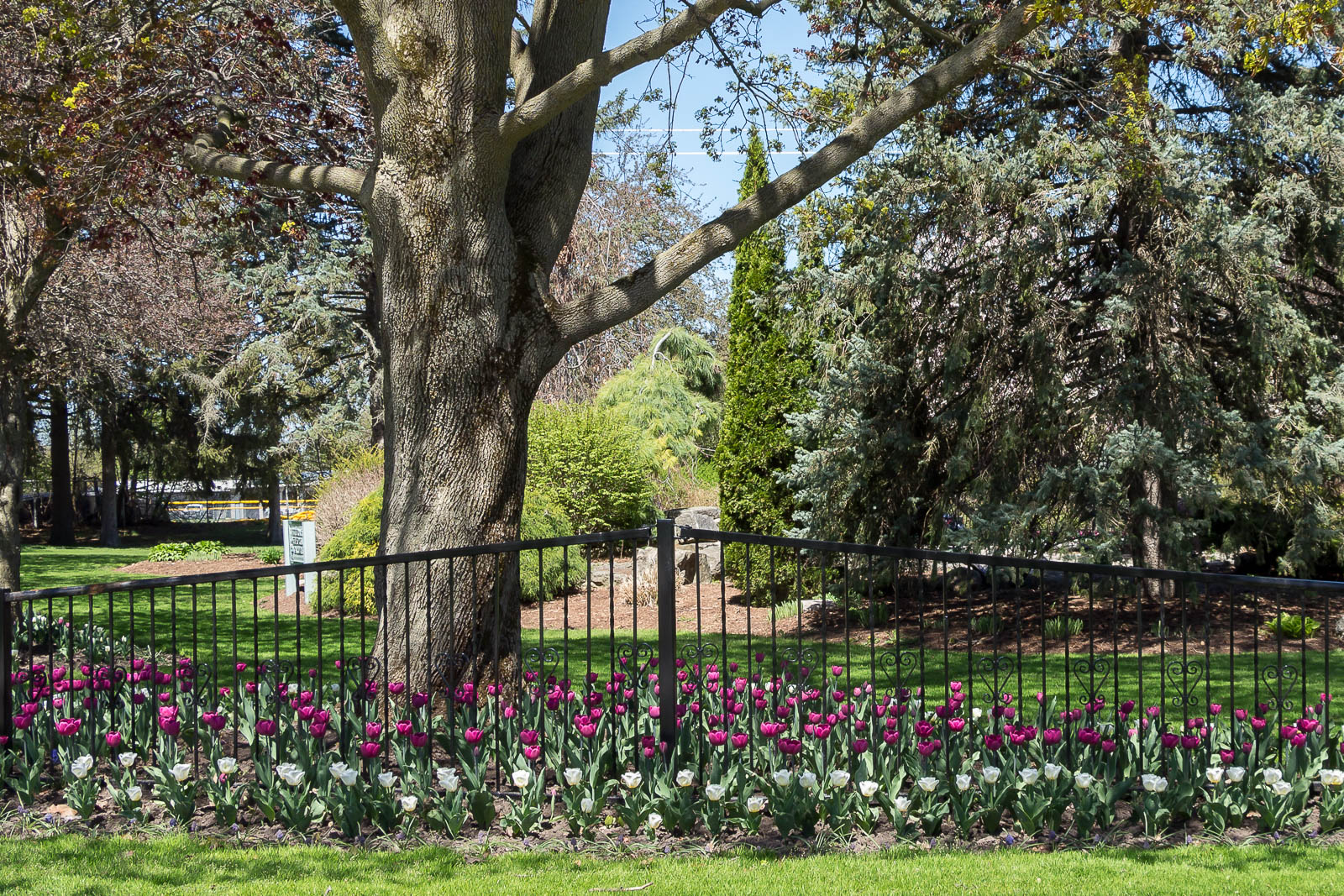
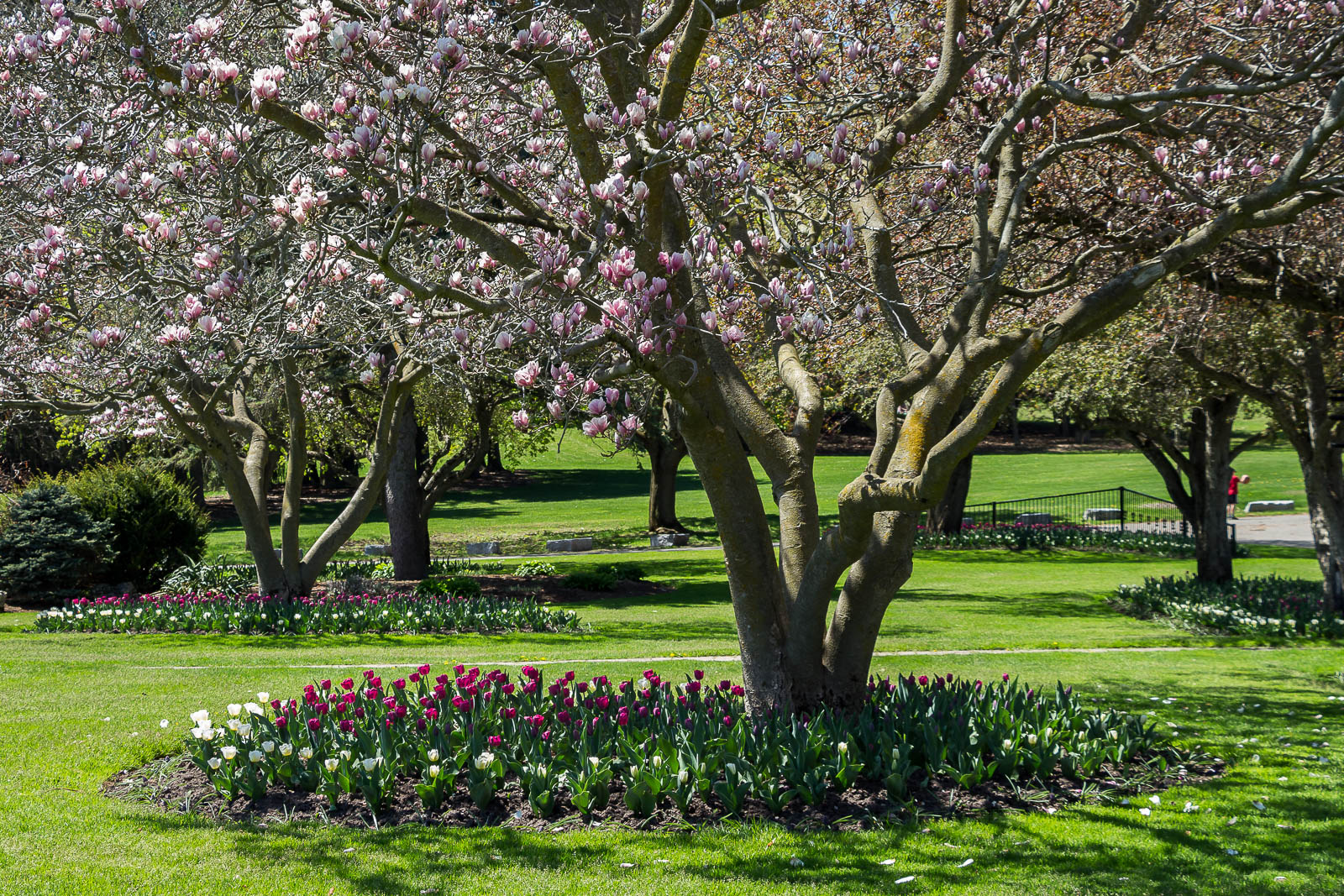
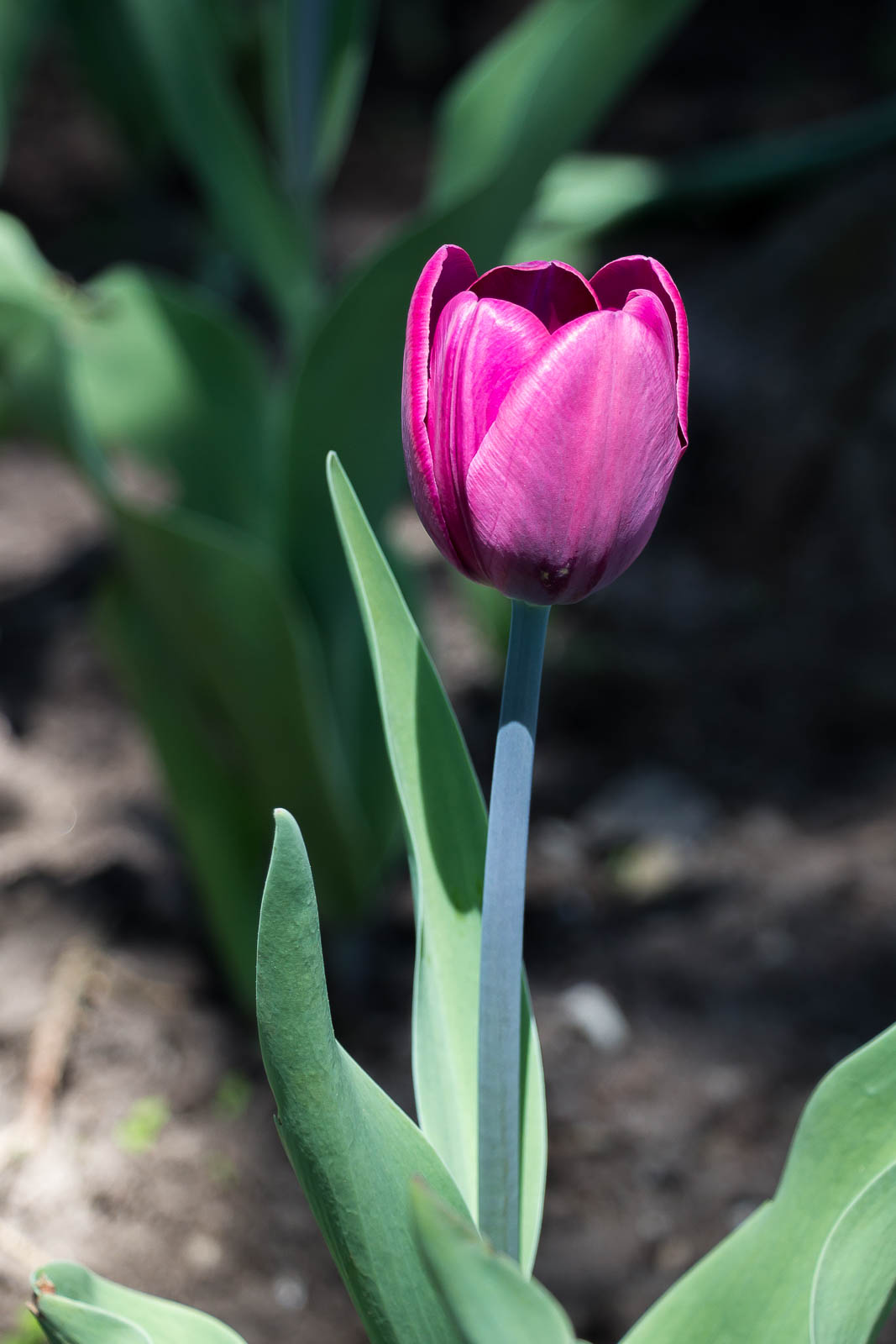
Jack and I strolled through the tulips at the park today. Our city plants thousands of bulbs every fall and they vary the colour from year to year so it’s always a surprise in the spring to see what opens up. This year it’s purple, my favourite, and the best part is that once they’ve finish blooming the city will sell all the bulbs at a good price. They start again with new bulbs in the fall and local residents get the pleasure of more tulips around the whole city.

©voyager, all rights reserved
Quercus suber.
Quercus suber is the scientific name for the cork oak, a remarkable tree. Unlike the aforementioned Eucalyptus, the cork oak is native to southwest Europe (and northwest Africa). Interestingly, both trees are classified as pyrophytes, plants that are adapted to tolerate and resist fire. But while the Eucalyptus is considered an active pyrophyte that promotes the spread of forest fires through the production of inflammable oils, the cork oak is a passive pyrophyte that resists the passage of fire through its thick and insulating bark (cork). The canopy burns, but the trunk doesn’t and the tree quickly regenerates. If the tree doesn’t burn, every 7-10 years cork can be extracted in a process that doesn’t harm the tree and will promote the regrowth of a new layer of cork. Cork extraction is a sustainable practice and cork oak forests, minimally intervened for cork extraction purposes every decade or so, support unique and rich ecosystems.
This photo shows a relatively young oak tree from which cork has been recently extracted for the first time (this is called “virgin” cork and is of less quality than the one obtained in subsequent extractions). Below, the bark layer left after cork extraction that is of a gorgeous russet colour, and above it the cork of the upper trunk and branches that has been left.
All I have to say is WOW! Click for full size!

© Nightjar, all rights reserved.
