Ice Cream Saloons: A Place For Unchaperoned Women.

Ice cream parlor of L. C. Fish, Merced, Calif.

Ice cream parlor of L. C. Fish, Merced, Calif. Source.

…Throughout the 19th century, restaurants catered to a predominately male clientele. Much like taverns and gentlemen’s clubs, they were places where men went to socialize, discuss business, and otherwise escape the responsibilities of work and home. It was considered inappropriate for women to dine alone, and those who did were assumed to be prostitutes. Given this association, unescorted women were banned from most high-end restaurants and generally did not patronize taverns, chophouses, and other masculine haunts.

As American cities continued to expand, it became increasingly inconvenient for women to return home for midday meals. The growing demand for ladies’ lunch spots inspired the creation of an entirely new restaurant: the ice-cream saloon. At a time when respectable women were excluded from much of public life, these decadent eateries allowed women to dine alone without putting their bodies or reputations at risk.

[…]

The first ice cream saloons were humble cafes that served little more than ice cream, pastries, and oysters. As women became more comfortable eating out, they expanded into opulent, full-service restaurants with sophisticated menus that rivaled those at most other elite establishments. In 1850, a journalist described one ice cream saloon as offering “an extensive bill of fare … ice cream — oysters, stewed, fried and broiled; —broiled chickens, omelettes, sandwiches; boiled and poached eggs; broiled ham; beef-steak, coffee, chocolate, toast and butter.” According to the historian Paul Freeman, the 1862 menu of an ice cream saloon in New York ran a whopping 57 pages and featured mother of pearl detailing.

[…]

Although ice cream parlors had an air of dainty domesticity, they also developed more sultry reputations. At the time, they were one of the few places where both men and women could go unchaperoned. As a result, they became popular destinations for dates and other illicit rendezvous. “Did a young lady wish to enjoy the society of the lover whom ‘Papa’ had forbidden the house?” the New York Times wrote in 1866. “A meeting at Taylor’s was arranged, where soft words and loving looks served to atone for parental harshness, and aided the digestion of pickled oysters.”

Innocent young couples weren’t the only pairs tucked together in the velvet booths. During a trip to Taylor’s, one writer observed “a middle-aged man and woman in deep and earnest conversation. They are evidently man and wife—though not each others!” Moralists were also outraged by the presence of pimps, prostitutes, and women “who were not over particular with the company they kept.” These scandalous scenes prompted rumors of ice cream “drugged with passion-exciting Vanilla” that seduced virtuous women into taking “the first step…which leads to infamy.”

These charges did little to dissuade respectable women from patronizing ice cream saloons. In fact, their reputation as “a trysting ground for all sorts of lovers” may have made the saloons all the more enticing. According to the Times, Taylor’s “always maintained its popularity, in spite of (or perhaps because of) rumors that it afforded most elegant opportunities for meetings not entirely correct.”

Oh my, passion-exciting Vanilla! I have vanilla ice cream in my freezer, and I had no idea of the evil I was hosting. I’ll enjoy it all the more for that. You can read much more about the history of Ice Cream Saloons at Atlas Obscura.

Sure, Macramé Your Hair, Why Not?

I got distracted. Again. Seems my brain has been having a bit of a vacation too, I’ve been quite the space case lately. Anyroad, came upon these um, attachments? Extensions? Falls? (Does anyone else remember falls?) I’d love to have some of these done with my hair, if it ever achieves thickness again. These are from 1840. Click for full size!

The Moscow Canal


©voyager, all rights reserved

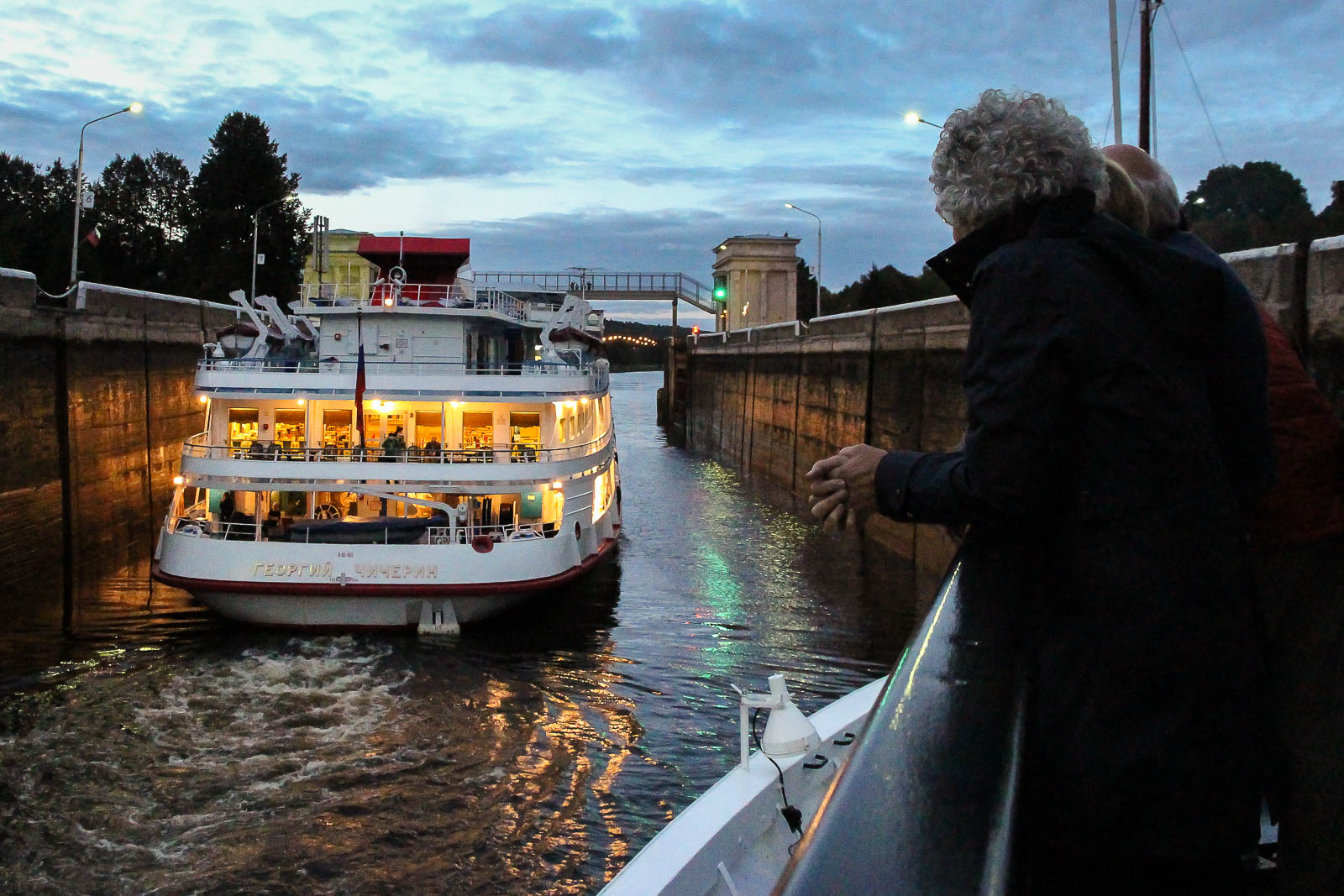
Our ship traversed most of the Moscow Canal at night so I don’t have many photographs, but I think the story of how the canal came to be is tragic and deserves to be told.

The Moscow Canal was built between 1934 and 1937 under the direction of Stalin. It was a massive engineering project, larger in scope than either the Panama or Suez Canals. The project included 7 concrete dams, eight earthen dams, 8 hydroelectric power stations, 5 pump stations, 11 locks, 15 bridges and the Northern Passenger and Cargo Terminal.  This massive system was built rapidly, being entirely completed in under 5 years. It was a huge accomplishment for the fledgling Stalinist regime and was celebrated. What wasn’t celebrated or even spoken of was the forced labour of  the millions of gulag prisoners responsible for its construction. Their work was brutish and constant, relentlessly continuing throughout the harsh Russian winters. Food and supplies were scarce. Many prisoners lost their lives. Our group was told that if the project needed more workers, Stalin would simply direct the KGB to make more arrests.

The canal connects the Moskva River with the Volga River and gives Moscow access to the Baltic Sea, the White Sea, the Black sea, the Caspian Sea and the Sea of Azov. Because of this, the interior city of Moscow is known as the port of 5 seas. Today, the canal is an integral part of life in Russia. It connects the current capital city of Moscow with the former capital city of St. Petersburg and it’s vitally important to doing business in the country. It’s also beautiful, passing through areas of forest and farmland and dotted with picturesque bridges and cottages. Our ship slipped through canal at night, but there was still a bit of twilight as we entered the first lock. This was the first time our ship had moved out of harbour and there was an air of excitement on board. Passengers crowded the railings and spoke excitedly about the adventures that lay ahead. I felt that excitement too, but it was bittersweet because I couldn’t stop thinking about the story of the canal and all those millions of lives ruined or lost in its building.


Link to previous Post – Leaving Moscow

The Bakemono Zukushi “Monster” Scroll.

Rokurokubi (ろくろくび), a long-necked woman is pictured next to an Inugami (犬神) dog spirit.

Rokurokubi (ろくろくび), a long-necked woman is pictured next to an Inugami (犬神) dog spirit.

These wonderful images featured here are from a Japanese painted scroll known as the Bakemono zukushi. The artist and date is unknown, though its thought to hail from the Edo-period, sometime from the 18th or 19th century. Across it’s length are depicted a ghoulish array of “yokai” from Japanese folklore. […]

The class of yokai characterised by an ability to shapeshift, and that featured in this scroll, is the bakemono (or obake), a word literally meaning “changing thing” or “thing that changes”. The founding father of minzokugaku (Japanese folklore studies), Yanagita Kuno (1875–1962), drew a distinction between yurei (ghosts) and bakemono: the former haunt people and are associated with the depth of night, whereas the latter haunt places and are seen by the dim light of dusk or dawn.

Amongst the bakemono monsters depicted in the scroll is the rokurokubi (ろくろくび), a long-necked woman whose name literally means “pulley neck”. Whether shown with a completely detachable head (more common in Chinese versions), or with head upon the end of a long threadlike neck as shown here, the head of the rokurokubi has the ability to fly about independently of the body. In his 1904 collection Kwaidan, Lafcadio Hearn provides the first extended discussion of this yokai in English, telling of a samurai-turned-travelling-priest who finds himself staying the night in a household of rokurokubi intent on eating their guest.

Daichiuchi (大地打) is a mallet-wielding monster with a bird-like face.

Daichiuchi (大地打) is a mallet-wielding monster with a bird-like face.

Fascinating monsters all, and you can see and read much more at The Public Domain Review.

Bad American Blood.

Hervé Garnier poses with a bottle of wine from Beaumont. Courtesy of Hervé Garnier.

Hervé Garnier poses with a bottle of wine from Beaumont. Courtesy of Hervé Garnier.

A story of an illicit wine, one with a history of a hysterical hunt to destroy these vines with bad blood in them. This wine is still illegal, and I have to say after reading the story, that I’d love to get my hands on a bottle, it sounds delicious.

“This cuvée hails from the tiny, remote village of Beaumont, where it’s been perfected by five generations of local winemakers,” whispers Borel. For the past 84 years, the French government and, most recently, the European Union, has sought to eradicate Beaumont’s grapevines due to their American “blood.” Although the vines are French-American hybrids, they are more than 140 years old. Beaumont’s Association Mémoire de la Vigne makes just 7,000 bottles a year.

[…]

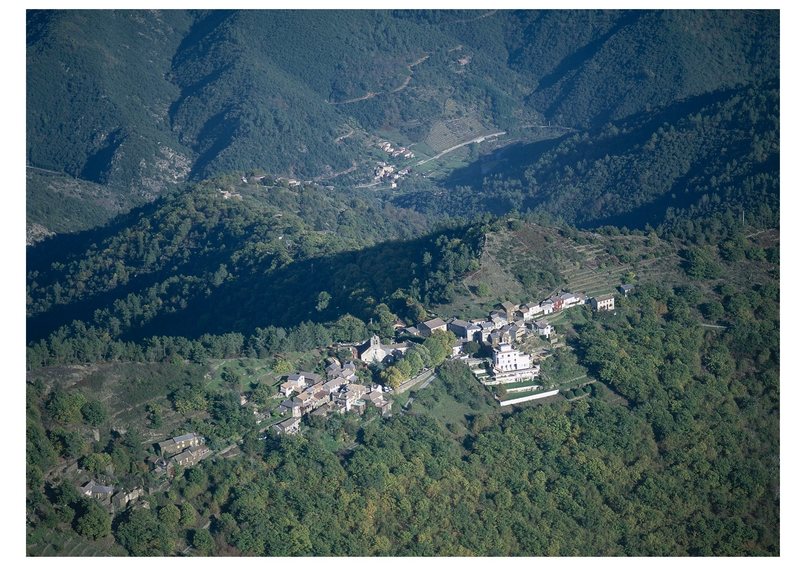
“This wine should be celebrated as others are,” says Hervé Garnier, the 66-year-old Association Mémoire de la Vigne president and founder. Garnier loves Beaumont, which is situated in Cévennes National Park along France’s highest mountain range, and is home to groves of chestnut trees, wild boar, and high rocky cliffs. Its centuries-old stone buildings have terracotta roofs and rocky terraces, and are etched into the hillsides overlooking the Beaume River. Since its founding in the 11th century, sheepherders have practiced transhumance—moving herds to summer in alpine meadows—by way of traditional paths. They are some of the last in the world to do so.

“What wine do you think they carry when they go?” fumes Garnier. “For 150 years, the Cuvée des Vignes d’Antan is the taste of this land. And yet, a ridiculous archaic law tries to destroy it!”

Indeed. If it wasn’t for Garnier and a group of unruly older winemakers, Beaumont’s wine would be lost to history.

The village of Beaumont; it’s location in a national park makes its wine a nationally protected folkway. Courtesy of Hervé Garnier.

The village of Beaumont; it’s location in a national park makes its wine a nationally protected folkway. Courtesy of Hervé Garnier.

You can see and read much more at Atlas Obscura.

Medieval Sex Tips.

A brand new translation of Symphorien Champier’s The Ship of Virtuous Ladies is now available, and it sounds most intriguing. I’ll be ordering.

First published in 1503 in Lyons, Symphorien Champier’s The Ship of Virtuous Ladies helped launch the French Renaissance version of the querelle des femmes, the debate over the nature and status of women. The three books included in this edition include arguments for gender equality, and a catalogue of virtuous women modeled on Boccaccio’s Famous Women and Jacobus de Voragine’s Golden Legend. Titled “The Book of True Love,” book 4 is especially important in gender history, importing and transforming the male-centered Neoplatonic philosophy of Marsilio Ficino for pro-woman ends.

Medievalists has a look at some sex tips from the volumes.

1. The Right Age

Following Plato, Champier declares that the perfect age for women to marry is 16-20, and for men, 30-35. Any younger, and you might marry a girl who will be sick forever – “So instead of being served by them, [you] must serve them”, Champier warns. The only exception is if the young woman is tall. If she is short, you should definitely wait until she’s 21. And if both man and woman are over twenty-one, you’re in the clear: “the children will be attractive and have good temperaments, with well-proportioned members and will have good minds.” Be sure to wait, if at all possible, because if you have children earlier, “they will be imperfect and short.”

2. The Right Time

People should not have sex at just any old time of the year, Champier says. If you want to conceive, make sure you have sex in the spring, because it’s “warm and moist”, which is the best kind of humour. “Next after spring,” if you can’t manage it then, “winter is the season most conducive to conception, while summer is bad and autumn is the worst of all.” As for time of day, it can’t be right after eating. As we’ve always been told about swimming right after a meal, the consequences would be dire:

If a man, when he is full and has eaten, enters the world of the carnal, he weakens his body and his nerves and causes pain for himself in his legs and knees. He also causes obstructions all throughout his body and causes thick humors in his body; and if he does this regularly, his body parts retain too much water, he has great difficulty breathing, and his limbs start to shake.

If you thought it was safe to have sex before eating, think again:

If he acts carnally when he is hungry or thirsty or when he has an empty body or when his body has been bled … he damages his body and dries it out, and its natural heat dissipates, negatively affecting his sight, and sometimes he becomes paralyzed.

(Same goes for if you’re just been bled, bathed, worked, fasted, or been sad.)  You’ve been warned. Best to play it safe and just have sex first thing in the morning, “after a [good] night’s sleep.”

You can read the rest of the tips at Medievalists.net.

A Sad History of Monopoly.

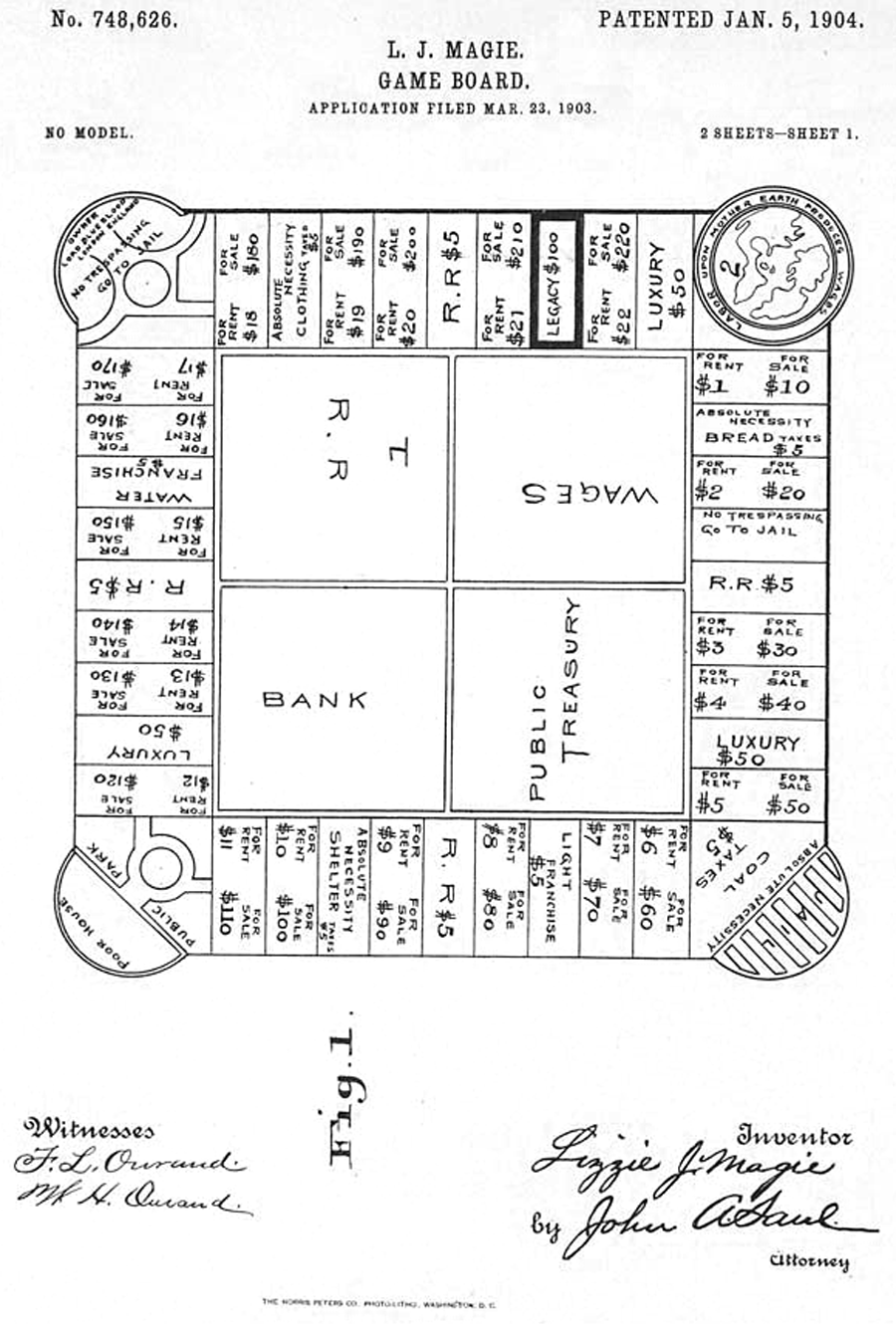
Elizabeth Magie's 1904 board design.

Elizabeth Magie’s 1904 board design. Source and Credit. Click for full size.


Source.

It’s a right pity that Monopoly didn’t turn out the way Elizabeth Magie envisioned. Just goes to show that greed always wins. (I couldn’t get the twitter video to play; if you also have such problems, head to Required Reading, and scroll down to the bottom. That one works fine for me.

No. That’s Just Wrong.

I was happily lost in The Public Domain Review the other day, and came across High Frequency Electric Currents in Medicine and Dentistry from 1910. I know there was great excitement over electricity, and there were phases of “miracle cures” where it was concerned, but in this case, it was the photos which got my attention, including one which just about had me screaming, and I’m not even a parent:

The text reads:

Plate XXII. – This beautiful picture (as exquisite as Manet’s “Boy with the Sword” which is one of the classics of the Painting Art), sets forth this boy bringing his pocket “Tesla” for the enjoyment of his beloved tonic. His sturdy strength at the age of three is a tribute to the efficacy of high frequency currents, for at the age of three days, when his treatment with them was begun, he was an illy-thriving and frail infant with but the feeblest hold on life. Look at him well, and think how many myriads of pallid children – of all ages – need the same remedy.

There is So. Much. Wrong. there, it just leaves me sputtering. Applying electrical currents to a three day old infant? All I can think is how very easily that could kill said infant. As for the photo being as exquisite as Boy with a Sword, let’s see:

L'Enfant à l'épée'' par Edouard Manet, 1861.

L’Enfant à l’épée’ par Edouard Manet, 1861.

Yeah, I don’t think there’s any honest comparison there at all. There are other questionable and frightening photos to be seen with the magical Tesla wand, but have a care, there’s some nudity, so NSFW.

The Philosophy of Beards.

Thomas Gowing felt the mighty yet fragile English Beard to be threatened with extinction by an invasive foreign species, the Razor. So he set out to defend the furry face mammal in every conceivable way. The resulting lecture was received so enthusiastically by a bushy-faced audience in Ipswich that it was soon turned into The Philosophy of Beards (1854) — the first book entirely devoted to this subject.

It is Gowing’s ardent belief that the bearded are better looking, better morally and better historically than the shaven.

[…]

In the last section, Gowing gambols through the ancient and modern past, attaching a beard or lack thereof to thousands of years of heroism and cowardice, honour and deceit. Viewing history through the prism of the beard makes things nice and simple: “The bold Barons outbearded King John, and Magna Charta was the result,” … “Henry the 7th shaved himself and fleeced his people”. Napoleon I only allowed men in his empire to have an “imperial”, an upturned triangle of a beard, as a way of letting them know “that they were to have the smallest possible share in the empire”.

[…]

Finally, he dismisses as “a foul libel” the idea that ladies don’t fancy a beard. He declares, presumably without much survey data to hand, that “Ladies, by their very nature, like everything manly,” and cannot fail to be charmed by a fine flow of curling comeliness.”

You can read much more at The Public Domain Review, including the book itself. The book has also been recently republished by the British Library, for the first time since 1854. You’ll find a link at The Public Domain. I’d think the book would be a fine gift for anyone’s bearded friends and loved ones.

You might also be interested in Beards of Time:

Two photographs of the same unknown man, each taken at a different studio in Texas – Source: left and right.

Two photographs of the same unknown man, each taken at a different studio in Texas – Source: left and right.

Women’s Suffrage Mapped.

Click for full size.

Click for full size. Map created by Cuba Holidays.

The map above shows when women got the right to vote in each country around the world.

2018 marks the centenary of Women’s suffrage in the UK and even then only with several restrictions (had to be over the age of 30 and meet property qualifications).

You can read much more (with links) at Brilliant Maps: Women’s Suffrage Mapped: The Year Women Got The Vote By Country.

Cheddar Gorgeous: Let’s Get Visible!

Trump in Drag, credit: Cheddar Gorgeous / Facebook.

Trump in Drag, credit: Cheddar Gorgeous / Facebook.

Oh, I would give so much to be a part of this, it sounds absolutely fabulous and it has the added bonus that it will make the Tiny Tyrant squirm all over.

Queen Elizabeth won’t the only queen greeting Donald Trump when he visits the U.K. in July.

A thousand people have signed onto a Facebook invitation for a drag-queen protest to greet the president in London on July 13. Another nearly 7,000 people are interested in attending.

Manchester drag performer Cheddar Gorgeous and four other performers have issued the call to all drag kings, queens, queers and our allies.

“Due to the appalling way the Trump administration has regarded the rights and welfare of the LGBTQI communities in the U.S., the idea of a Trump visit to the U.K. is unacceptable,” the invitation says.

“Let’s get visible, stand with our sisters, brothers and others in America.”

You can read much more at LGBTQ Nation, and The Guardian. Cheddar Gorgeous on Twitter.  I wish all the attendees the very best, and I hope there are going to a ton of photos.