whitehouse.gov
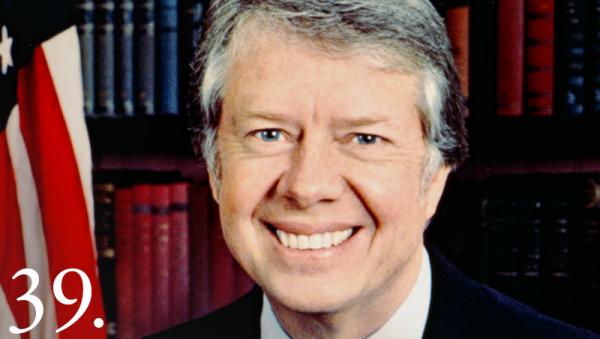
James Earl “Jimmy” Carter Jr., made no public mention of American Indians during his entire first year in office.
The 39th president of the United States, Carter only briefly mentioned Indians in his first State of the Union Address, a 12,000-word speech delivered to Congress in January 1978. Even then, Carter’s remarks were vague.
“The Administration has acted consistently to uphold its trusteeship responsibility to Native Americans,” he told Congress. “In 1978, the Administration will review Federal Native American policy and will step up efforts to help Indian tribes assess and manage their natural resources.”
The reference, likely the work of Carter’s speechwriter, Chris Matthews, set the tone for an administration that—in the beginning—largely ignored Indians. In fact, by the end of 1978, the Carter administration had decided not to announce any formal presidential Indian policy at all, historian George Pierre Castile wrote in his 2006 book Taking Charge: Native American Self-Determination and Federal Indian Policy, 1975-1993.
“Absent a presidential message, the policy of self-determination remained in place by default, but never seems to have gotten a clear endorsement by the Carter domestic policy staff,” Castile wrote. “Indian matters were dealt with piecemeal.”
Carter, who took office in January 1977, followed Richard M. Nixon and Gerald R. Ford—two presidents who championed for the end of Indian termination and ushered in an era of self-determination. Yet Carter, who inherited the new approach to Indian Affairs, maintained minimal involvement and thrust primary responsibility for Indians on the Interior Department.