
E.W. Bullinger. The Witness of the Stars. London, published by the author, 1893.
A book of biblical astronomy, self-published by the Rev. Ethelbert Bullinger, D.D.
via: The Internet Archive

E.W. Bullinger. The Witness of the Stars. London, published by the author, 1893.
A book of biblical astronomy, self-published by the Rev. Ethelbert Bullinger, D.D.
via: The Internet Archive
It was not a major revelation, but I did realize that all craft videos that I posted so far were about men. So for several weeks, I shall post videos of woman artisans who create just as beautiful things as the men do. Today a presentation that yes, a woman can swing a hammer and forge a sword.
From Nightjar,
This is the last set of photos and it shows the olive plantations that are also an important part of the landscape, some wine cellars, and the Pinhão river, a Douro tributary. I hope you enjoyed this series. The Douro Valley is a magical place with a long tradition of wine and olive oil production. Its sustainability is currently threatened by an increase in intensive farming and tourism. In a way, it’s being a victim of its own beauty and of the quality of its products.

Olive plantations, ©Nightjar, all rights reserved
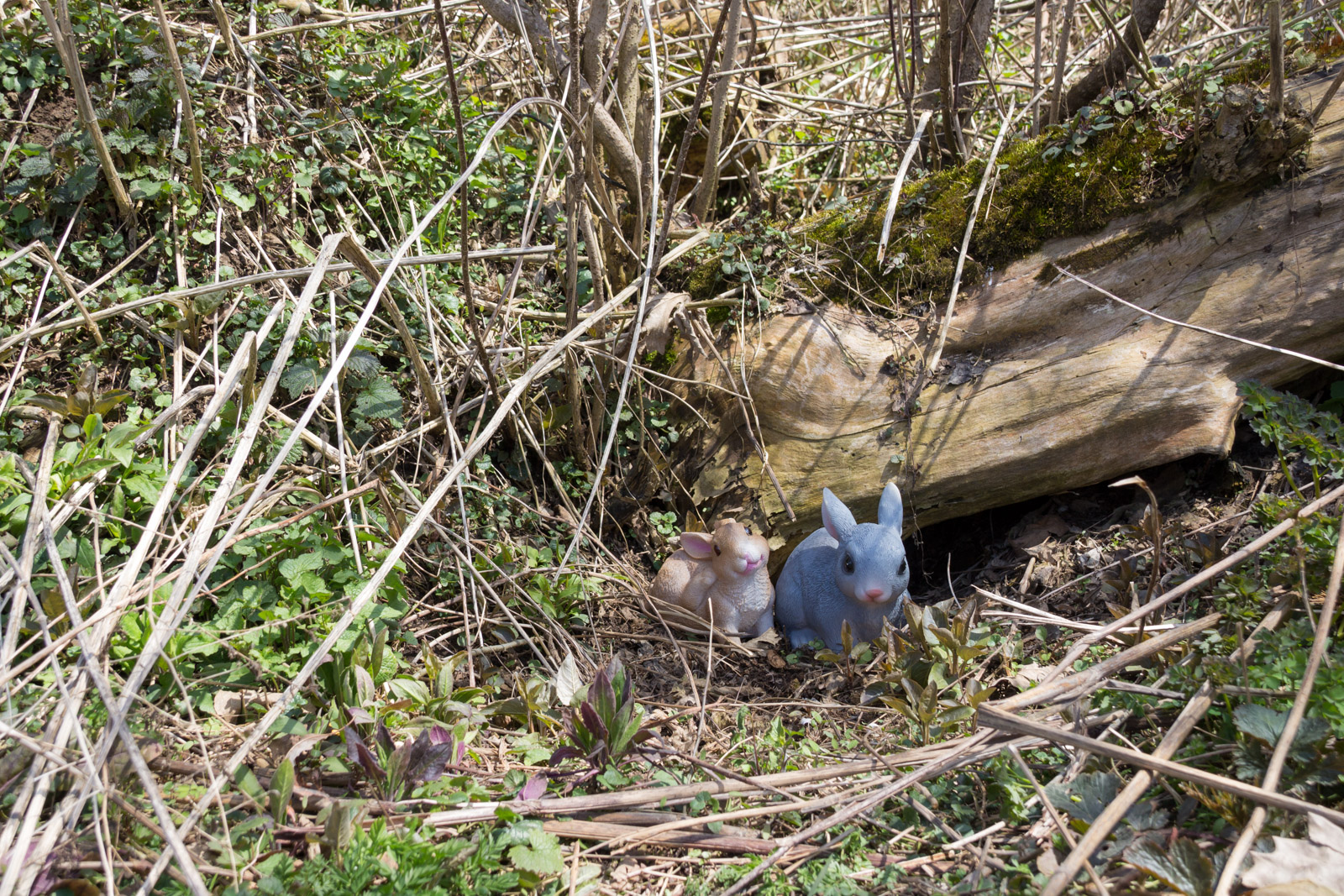
Bixby and his mom, ©voyager, all rights reserved
I watched Jack hurry past the far edge of the field and toward a small wooded area. Suddenly he stopped and lifted his head, moving it from side to side and sniffing. Then he turned toward me and lowered his head again and stuck out his tongue to take a small taste of the grass. I was getting close enough that I could see a gleam come into his eye as he turned to his left, sniffing deeply for a few steps and then suddenly he plunged his big square head down behind an old log. The next thing I knew, Jack was jumping backwards and hollering “Ow, Ow, Ow” again. Great, I thought, more snakes, but Jack was rubbing his big rubber nose, not his toes, and his nose looked bright red and seemed to be throbbing. I hurried to Jack’s side, and that’s when I saw the rabbit, who was obviously hopping mad.
She was small with soft, lustrous fur that shone a blue-grey in the sunlight. Her ears lay flat against her back, and she was waving a large wooden spoon in the air toward Jack and yelling at him, “Get out, bad dog before I strike you again. How dare you burst into my warren and try to eat me. And with my son at home, too. Bad dog! Go on now, get out of here.”
Jack looked shocked and gave his nose another lick before saying, “I wasn’t trying to eat you. Honest, I wasn’t. I like rabbits. What I mean is I like to talk to rabbits, not that I like to eat rabbits. Oh dear, I’ve bumbled this all up. I’m trying to find someone, and I thought I smelled her down your hole.”
“Hmf,” said the rabbit, “It isn’t a hole, it’s my home, and you can’t just suddenly stick your head into someone’s home like that. It frightened me. You didn’t knock or announce yourself. You’re a very rude dog. Didn’t your mother teach you better manners than that?”
“I’m his mother,” I said, “and his manners are usually quite good. Please excuse him today. We’re trying to find a lost fairy who is very far from home, and Jack is quite worried about her. We both are.”
“That is no excuse to forget your manners,” the rabbit said, waving her spoon in the air again. “You haven’t even introduced yourselves.”
“I apologize,” I said. “It seems my manners are lacking today. My name is Voyager, and this is my dog, Jack. May I ask your name?”
“It’s Mrs. O’Hare,” said the rabbit.
Suddenly a smaller light brown rabbit popped up and peered at us from behind her. “And this young fellow is my son, Bixby. She turned to him and said sternly, “I thought I told you to stay inside.”
“I’m sorry, Mama,” he said. “but the old fairy is crying again, and I thought you’d want to know.”
“That’s Oma,” Jack cried out. “I knew she was here. Can you bring her out to us? We want to take her home.”
Mrs. O’Hare waved her spoon at Jack again and said, “Not so quickly, Mr. Jack. I haven’t been able to get a lick of sense out of this fairy. How do I know she’s who you’re looking for and how do I know you won’t eat her.”
“I don’t eat fairies!” Jack exclaimed. “Not fairies. Not rabbits. I eat dog food, that’s all.”
“Well,” said Mrs. O’Hare, “you look very well-fed, whatever it is that you eat. Are you sure you only eat dog food?”
Jack is sensitive about his weight, and I could see he was flustered, so I spoke up. “He has an occasional cookie treat, Mrs. O’Hare, but I can assure you that Jack doesn’t eat fairies. If we can speak with Oma, I mean the fairy, she can tell you that she knows Jack.”
“That fairy hasn’t been able to tell me anything that makes sense,” she said. “She keeps going on about being home late from school and saying that her mother will be upset. When I try to get more information, she tells me that her mother doesn’t want her to talk to strangers and then she starts to cry. About the only thing that calms her down is my honey biscuits, and she’s eaten almost all of them. I was hoping to take those to choir rehearsal tomorrow. Everyone loves my honey biscuits, and now I’ll need to make another batch, but even so, I’m not prepared to send this fairy away unless I know she’s safe.”
I crouched down beside Jack and said, “I promise you we’ll take her home to her family and friends. They’re all very worried about her. Oma has fairy ‘forgetting disease,’ and she gets mixed up. She was having an ill-advised adventure with a silly fox who lost her, and she’s very far from her home. We have a car, though, so we can get her back quickly,” I said.
“I hate cars,” said Mrs. O’Hare, “I lost an uncle to a shiny red car that was going too fast.” She turned and said to Bixby, “go see if you can get the fairy to come outside. There are a few honey biscuits left in the tin. Get one and try to get her to follow you.” Then she looked up at me and said, “Are you careful when you drive your car, voyager?”
“Yes, M’am. I am. I’ve never hit a rabbit with my car. Or any other animal,” I added quickly. “I’m sorry about your uncle.”
Just then, Bixby was back, holding out a cookie to a small figure emerging from the warren. Her grey hair had come unpinned and was wildly framing a tear-stained face full of creases. Her dark eyes were troubled but brightened as soon as she saw Jack.
“Hello, young man,” she said. ” I know you, don’t I.”
“Yes, you do. My name is Jack, and I visit with you in the forest where you live.”
“I live by the ocean, not in a forest,” she said, “but you are familiar to me. Do you know where my mama lives? I need to get home. I got lost on my way home from school, and mama will be worried.” Her eyes filled with tears.
Jack calmly laid down on the ground and looked into Oma’s eyes. His own eyes were getting moist, and he said, “Oma, I do know the way to get you home, and if you come with me, I promise I will take you there safely.”
Oma fiddled with the hem of her skirt, and after a moment, she said, “You do seem familiar. What is your name?”
“My name is Jack, and this is my mama, Voyager. We are here to take you home.”
“Oh, I’m so glad. My mom is going to be so mad at me. I’ve lost my books, and I’ve gotten dirty, and I can’t remember how to get home,” Oma started to cry softly.
“That’s alright,” said Jack. “I’ll explain that it wasn’t your fault.”
“That’s very nice of you,” she said. “What’s your name?”
“Jack. My name is Jack. Will you let my human pick you up,” he asked?
Oma was still fiddling with a loose thread on her hem, and without looking up, she clearly said, “Nope. Nobody is going to pick me up. You just lead the way, and I’ll fly behind you.”
“Your wings haven’t grown in yet,” said Jack. “and it’s too far for you to walk.”
Oma let go of her hem and frantically reached up to touch her shoulders, crying out, “Don’t tell me I’ve lost my wings, too. Mom is really going to be mad,”
Jack patiently said, “You haven’t lost your wings. They moult in the winter, and they haven’t grown in yet. It’s only early spring. They’ll grow back soon.”
She picked up her hem again and said, “Will you look at this loose thread. I hope Mom can fix it. Do you know where I live? I need to get home.”
“We’re going to take you home,” said Jack
“Are you sure you know how to get to my place? Who are you?” Oma said, looking at Jack, “I’ve forgotten the way, and my mama is going to be upset. I’ve gotten my dress dirty, and I’ve lost my books.”
“I’m your friend, Jack, and I do know the way,” he said, and he gently laid his big bowling ball of a head on the ground beside Oma and told her, “climb up onto me now and hold on tight. Careful of my nose, please. It’s a bit sore,” he said, looking at Mrs. O’Hare’s wooden spoon before continuing, “Your family will be happy to have you home again. I’m sure no one will be upset with you.”
“You do seem like a nice dog. And you are familiar. What’s your name?” she asked, reaching out to Jack and grabbing a handful of his neck ruff and pulling herself up.
“Jack,” he said patiently.
“What’s my name,” she asked.
“Your name is Oma Troutchen, and I’m going to take you home.”
“Do you know the way,” she asked again as she started to climb up Jack’s neck.
“Yes, I know the way to your home. We’re going to go there now.”
Oma had made it to the top of Jack, and he softly stood up and told Oma to grab onto his collar and hold on tight. She reached out both hands, grabbing on and started to laugh.
“This is a bit like surfing. I often surf with my friend Slippery Seal. Do you know him?”
“I don’t know any seals by name, but I like to surf,” said Jack.
“Well, let’s go find some water, and you can take me surfing,” Oma said, still laughing.
Jack turned to Mrs. O’Hare and Bixby and said, “Thank you for taking good care of Oma. I’m sorry if I was rude.”
Mrs. O’Hare snuggled up to Bixby and said, “You’re forgiven. Manners are important, but it’s even more important to have good friends who remember the things we forget. Bixby, give the biscuit to Voyager in case Oma needs it on the way home.”
Bixby reached up to me, and I gently took the cookie from him. “Thank you both,” I said, “I won’t forget your kindness, and I will make sure that Oma’s family know that you took excellent care of her.”
“Off with you now, before that fairy changes her mind,” said Mrs. O’Hare, and she and Bixby stood together watching us slowly make our way to the car.

James Baker. Pictures from Bohemia. London, Religious Tract Society, 1894.
via: The Internet Archive
It’s time for the next leg of our journey with Nightjar.
The vineyards planted on Douro’s steep hillsides produce grapes with unique properties for wine production. We went in August, middle of the dry season and a little before harvesting starts. This region has been producing wine for nearly 2 millennia and is a UNESCO heritage site. Traditional farming methods are still used for the most part, but lately and due to increased demand, the pressure put on the river has been increasing to worrying levels. In addition to erosion, environmentalists have been denouncing the massive use of herbicides that obviously end up poisoning the river.

©Nightjar, all rights reserved
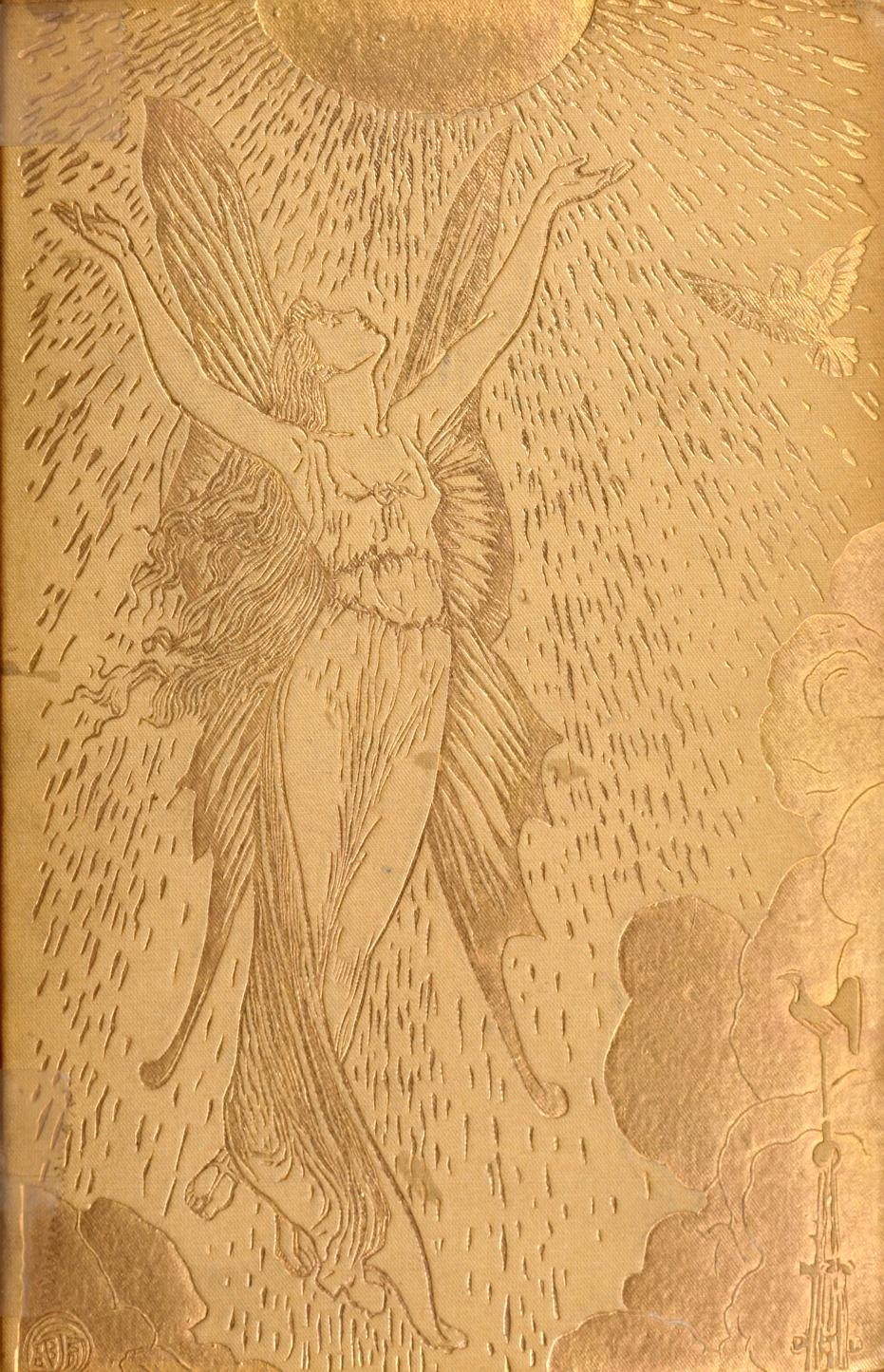
Andrew Lang. The Yellow Fairy Book. Illustrations by H. J. Ford. London & New York, Longmans, Green, and Co., 1894.
This week’s Andrew Lang book of fairy stories is brought to you by the colour yellow. The illustrations are again done by the talented H. J. Ford and I’ve added my favourites below the fold. There are big birds, dancing dragons, serpents, witches, beautiful maidens, brave dogs and a goat who made me smile. I hope you enjoy
At least when making rulers. It’s a fun mould that works really well. The fairy stickers are a gift from Anne, but #1 has decided to be currently too grown up for hers, so I got to use them.

©Giliell, all rights reserved
Last time I did this, I shaped the handle-scales first, then I fumed them wit ammonia and then I glued them onto the knives. This time I have changed the order of doing things, but time comparison should still be possible.
After taking the pieces of wood out of the solution I have left them dry. First for a few days outside, out of direct sunlight and out of the wind, with both end-grain ends covered with plastic to reduce cracking (still insufficient, next time I will have to try something more drastic). After they were dry and stink-free, I put them for a few days into the direct sunlight to dry even more, and then I left them to stabilize in the workshop for a few days. That way the wood should be neither too wet nor too dry and hopefully, it won’t change in size too much.
When I started to polish the pieces to sort them out properly – any markings were taken out by the solution – I could not find the oak pieces anywhere. So I took an offcut that was not in the solution and I polished that a bit and I realized that it is not, in fact, oak, but an especially dirty and grimy piece of black locust. I do not even remember where I got it and why I thought it is oak in the first place…
Anyhoo, after grinding all the pieces to flat and parallel, I drilled the holes for pins, cut all pieces to a rough shape on the bandsaw and I paired them up and I shaped and fully polished the forward-facing facets since those won’t be accessible once the scales are glued on. What I learned here was that I will need some finer scaled drill bits, since different woods react differently and when you drill with a 6 mm drill bit, the resulting hole can be anywhere between 5.5 and 6 mm. And trying to force the 6 mm brass pins through some pieces was a real pain in the nether regions. I have to drill the holes in wood ever so slightly bigger than the intended pin, but whilst 6.5 mm was fine for the softer woods it was almost too much for the harder ones.
The next step was glue-up.
To get as near perfect flat surfaces as I can, I have bought a spray-on glue and I used ti to attach a piece of coarse sandpaper to a granite tile. It worked really well, I have got a very nearly perfect match between the tangs and the scales on all twelve knives, the best result I have got yet for this type of handle construction. But I also managed to get a lot of glue on my hands and I lost the spray nozzle when wiping it off and it took two days before it resurfaced under the shop vacuum. So yeah, not my finest hour and the good came with some bad-ish.
During the glue-up, I have suffered from a common ailment – the insufficient clamping power syndrome. I had to do it in two stages, gluing six blades in the evening and the remaining six in the morning next day, Which was not too much of a problem this time, since I was tired and I would have to call it quits anyway, but I will probably need some more clamps or maybe even some thingamajigs for gluing the scales on the tangs more efficiently.

© Charly, all rights reserved. Click for full size.
And this is what I got in the end – a pile of roughly shaped handles attached to the finished blades.
During the subsequent grinding to shape with a 40 grit belt, I still could not do too much to evaluate the real effect of ammonia fuming on these woods, but I did get some inkling of what the results might be already. And let us say that for some of the woods I have preliminarily considered the results promising, for some surprising and for some completely “meh”. More about that when the knives are finished.
This whole step took me approximately 73 minutes per knife, and that is a significant improvement against last time – 38 minutes, 34%.
The last step is polishing the handles up to ~300 grit (already done) and putting on a protective coat of boat lacquer. That will take about a week, an hour or so a day. We shall see how that goes, but that part should be relatively free of any surprises.
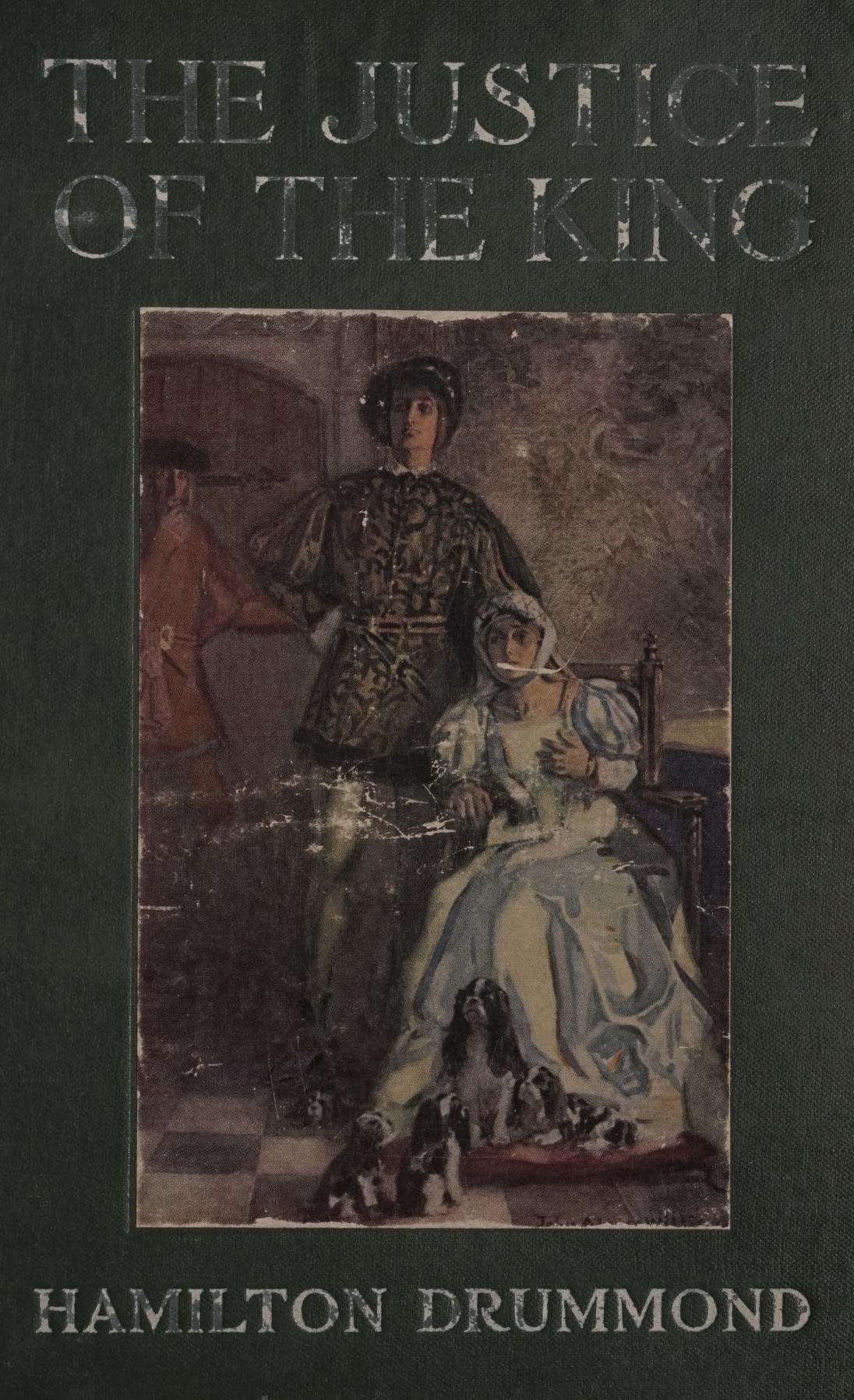
Hamilton Drummond. The Justice of the King. New York, The Macmillan company, 1911.
I’m including the frontispiece for this book because it’s a better depiction of the cover. The artwork is by J.A. Williams
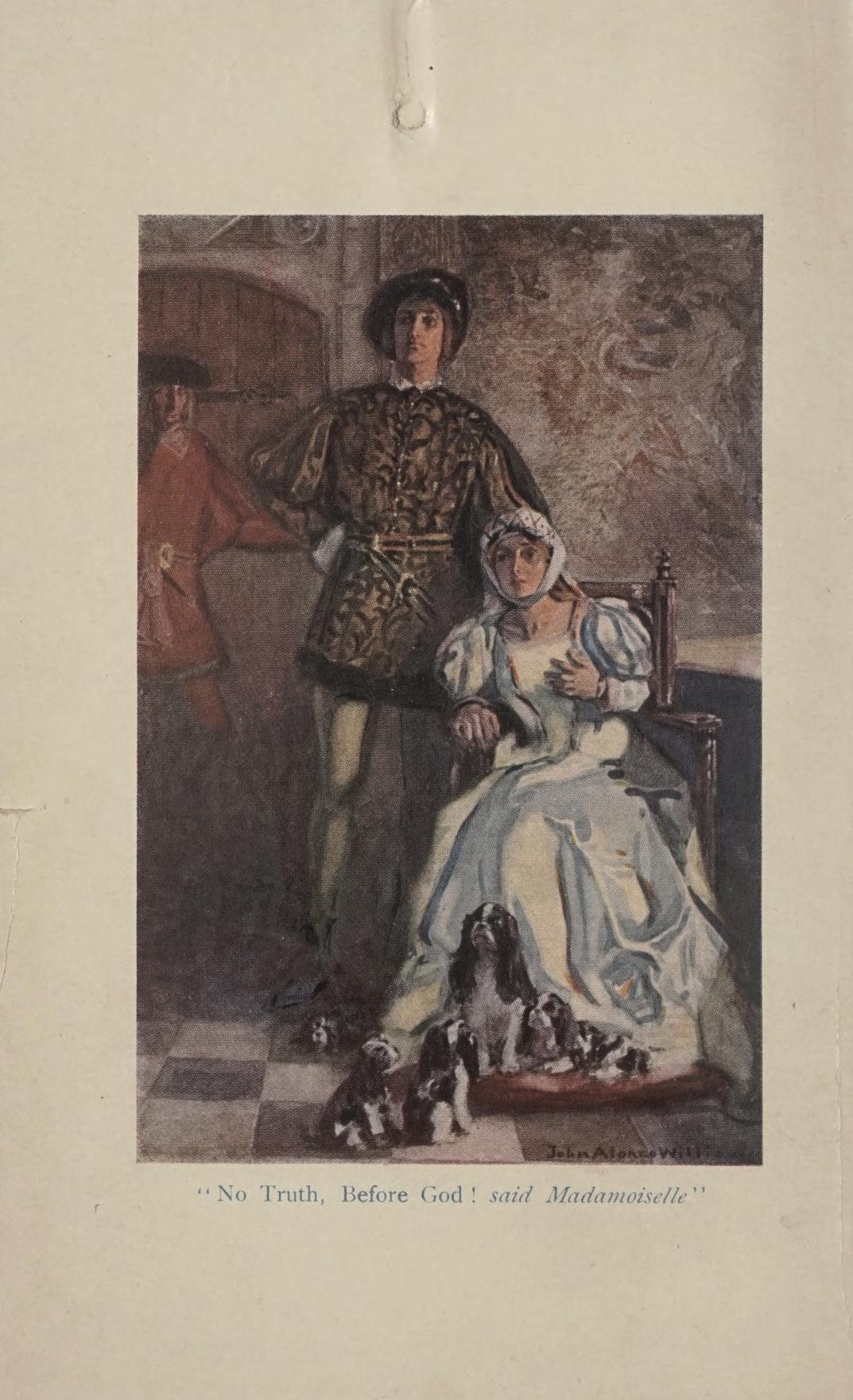
Frontispiece, The Justice of the King. Artwork by J. A. Williams.
via: The Internet Archive
The next part of Nightjar’s series.
The views upstream of the dam were even more striking, but it’s quite clear this isn’t a natural landscape. It made me wonder how this placed looked like before humans started reshaping it many centuries ago.
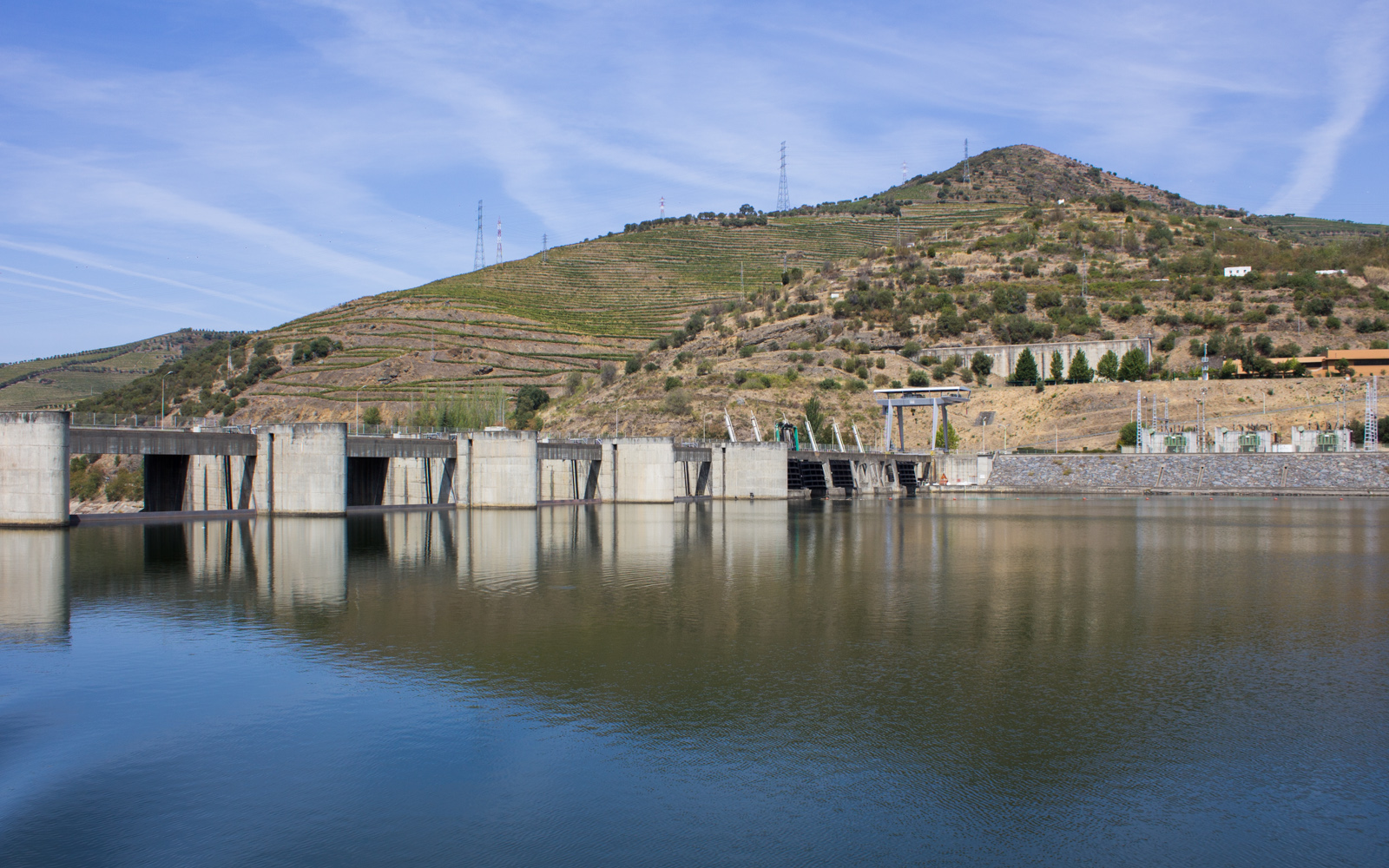
Upstream, ©Nightjar, all rights reserved

