Bonsai Tree – Growing Fast

Previous post.

This is just to let you know that the little persimmon tree is growing like mad. It is about 30 cm in height now and still growing, it might reach over half a meter before fall. Which would be awesome. The leaves are a bit big, not too big, but definitively on the upper limit of what I find permissible for a bonsai. There are techniques to make the leaves temporarily smaller, but it remains to be seen if persimmon is able to handle them. Preliminarily I would hazard a guess and say yes. Still, a deciduous tree with very big leaves can still make smashing bonsai in winter and early spring and I am excited that this tree is healthy and prospering, unlike many others in last years.

© Charly, all rights reserved. Click for full size.
The Art of Book Design: The Orange Fairy Book

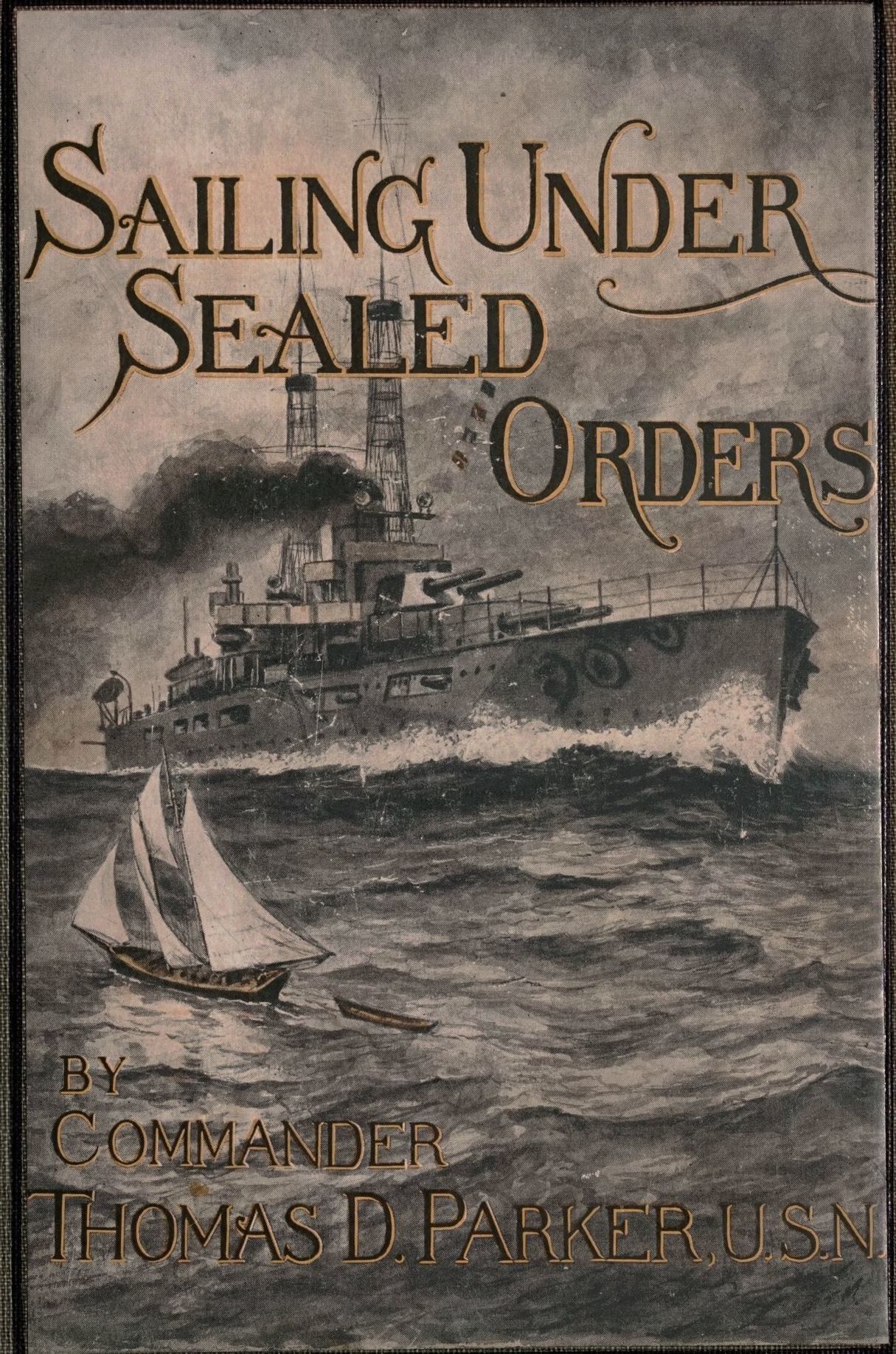
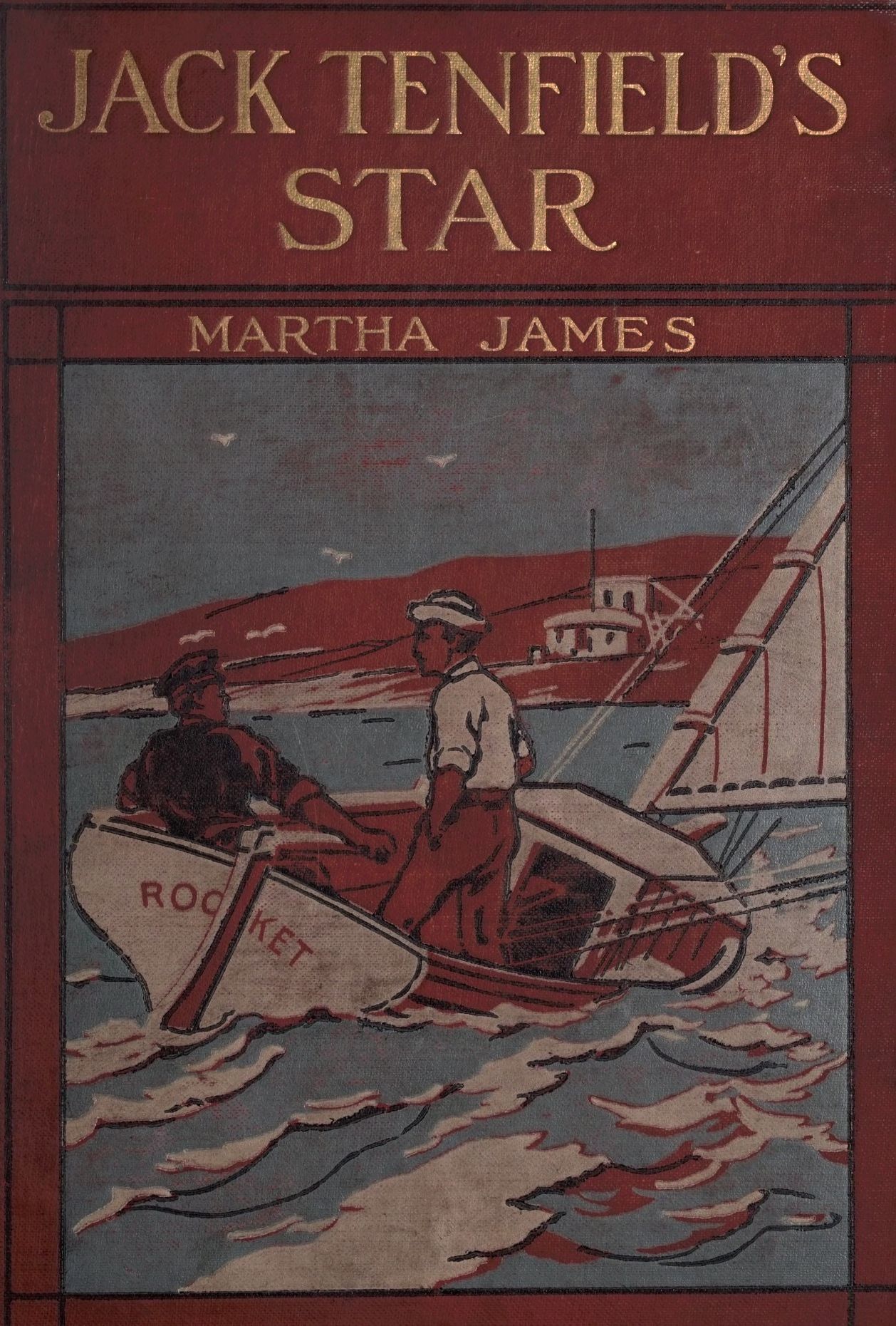
Andrew Lang. The Orange Fairy Book. Illustrated by H.J. Ford. New York, Longmans, Green, 1906.

This week’s Andrew Lang fairy book comes to us courtesy of the colour orange. As usual, I’ve attached all of the full-page illustrations and they’re a delight. Done by the talented H.J. Ford, each one is filled with wonder and whimsy. Last week I told you that this is the last book of the Andrew Lang coloured series and I was wrong. There’s one final book which I’ll post next Saturday. Until then, Enjoy.

[Read more…]

Making Kitchen Knives – Part 22 – Second Evaluation

The results are in, and there is not too much to say. First, a picture that is worth a thousand words:

© Charly, all rights reserved. Click for full size.
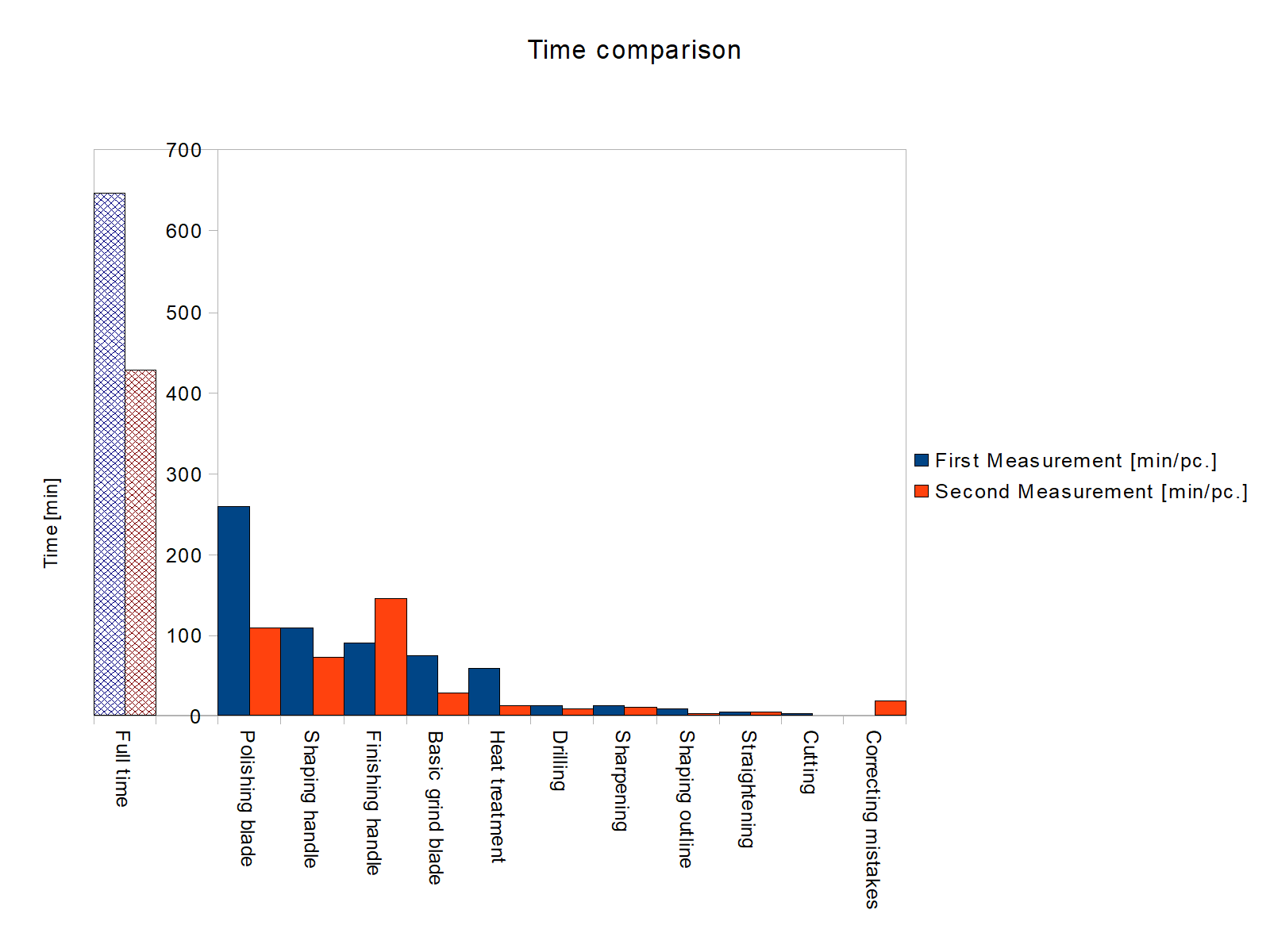
As you can see, I have indeed reduced the time needed to manufacture a knife by working in bulk, but only partially. The biggest time-saving was in the polishing of the blade, and that was mostly achieved by changing the method from manual polishing to mirror-polish, to satin-finish with the tumbler.

Where I have saved time by working in bulk, was in the basic grind of the blade – here has also significantly helped the magnetic jig that I have later improved again – and later on in heat treatment – here I did save a lot since I did not have to wait for the forge to heat-up and I only had to prepare everything once.

The small savings in other steps are “nice to have” but they are mostly insignificant. What I have to concentrate on now is the 20 minutes time per piece that I have spent correcting various mistakes, like re-grinding curly blades etc, and the nearly an hour that my workload grew for finishing the handles. But I think there I can only significantly save time by working with resin stabilized wood, which is not possible for all the woods involved (oak, jatoba, black locust), but could significantly help with the semi-decomposed wood that turned out some really beautiful pieces.

The overall time reduction of nearly three hours is nothing to sneeze at. Plus, it would probably be even better had I really worked on this consistently from start to finish and not with various interruptions over the span of over a year.

From this point onward I won’t write about this project in detail, but I will continue to take time measurements and trying to optimize my manufacturing process some more.

Making Kitchen Knives – Part 21 – The Last Six Knives

There is not much to say about these, they are all made from one partially rotten palette. Therefore I do not know precisely what kind of wood it is. I suspect it is birch because one of the boards had still a bit of bark on it, but the palette was obviously made from scraps, so there could be several species involves. So other realistic possibilities are poplar and beech.

Since it was from planks, I had no control over grain direction, but I have at least paired the slabs to the best of my ability so they are of the same species – they varied wildly in coloration – and in three cases, I ended up with pairs where one slab had more interesting grain. And, in those cases, I have given this slab on the right side of the knife, where the signature is.

© Charly, all rights reserved. Click for full size.

© Charly, all rights reserved. Click for full size.
© Charly, all rights reserved. Click for full size.

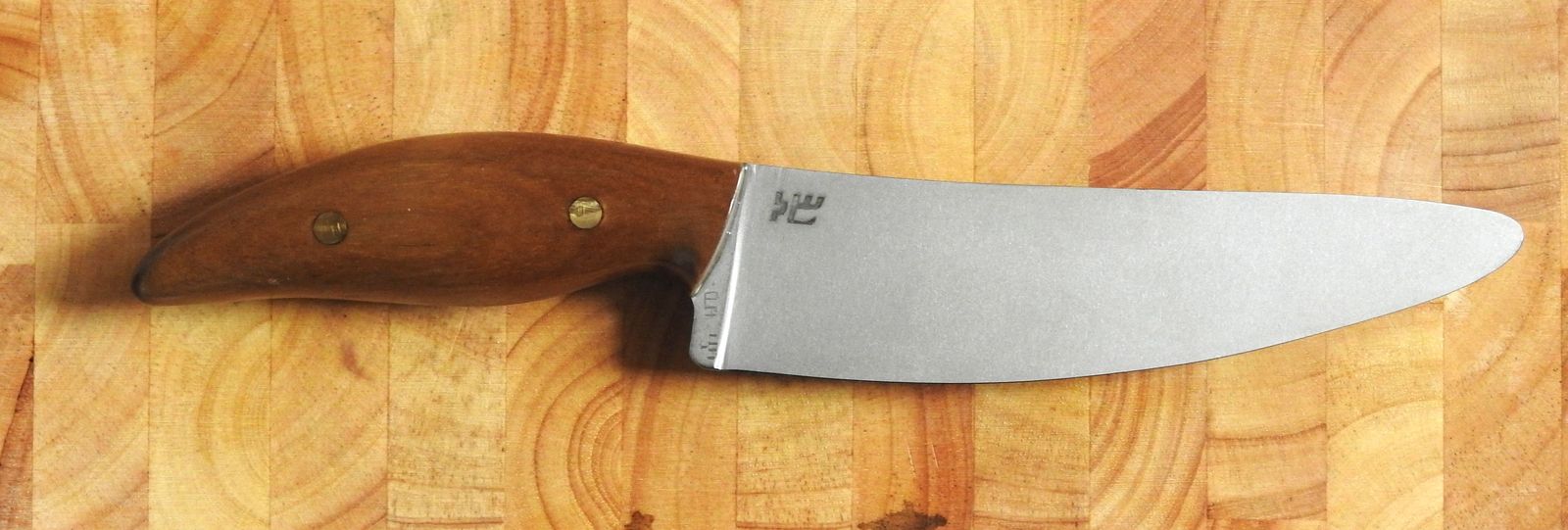
These three are those with more plain-looking handles, besides rich brown color from the ammonia fuming there is not much to see here. I have no idea why the logo etched so strangely on the second one, it just did. Maybe the metal was a bit dirty so it etched only on the edges, where there is stronger current? I did wipe all blades with acetone, but maybe not enough.

© Charly, all rights reserved. Click for full size.
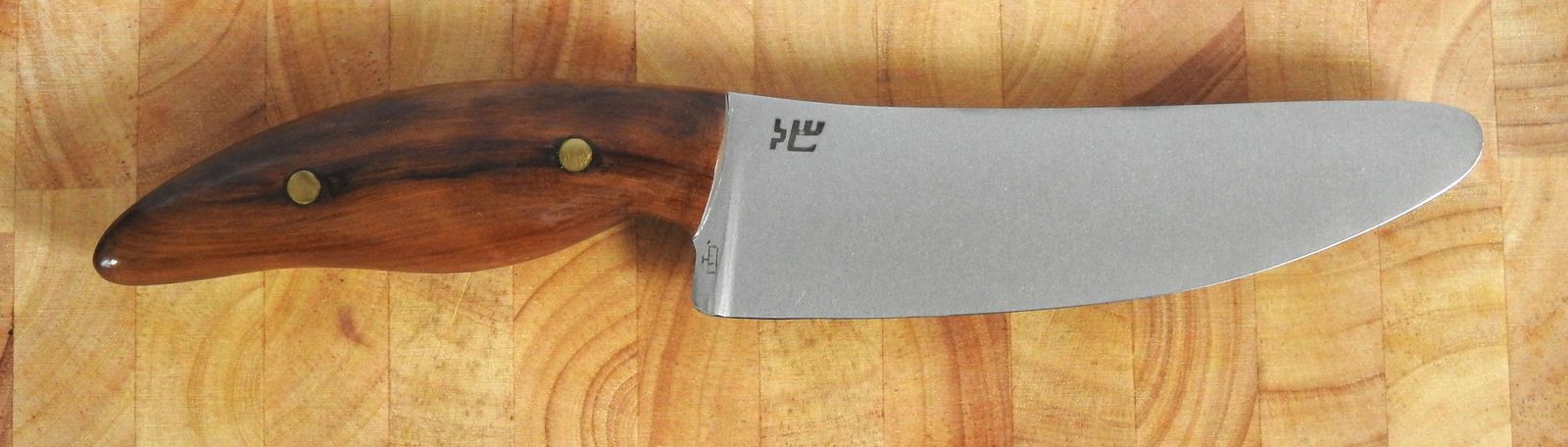
This one has a nice dark stripe of ever so slightly more decomposed, but still hard, wood running down the middle. The placement of the pins is purely coincidental, at least I do not remember consciously putting the holes exactly into the stripe.

© Charly, all rights reserved. Click for full size.

This one has a knot in the wood. Unfortunately, it is so dark, that I currently cannot make a good photo of it without overexposing everything else. The blade on this one is one of those that curled on the edges, so I had to re-grind it into narrower shape.

© Charly, all rights reserved. Click for full size.

© Charly, all rights reserved. Click for full size.
And lastly a piece with extremely beautiful grain, almost like a burl. This one piece really shows that half-rotten wood is not necessarily only fit for burning.

Making Kitchen Knives – Part 20 – Three Finished Knives

Works on this project are finished, so today I will share three more of the resulting products with a bit of commentary about the lessons learned with each.

First a knife with handle from larch.

© Charly, all rights reserved. Click for full size.
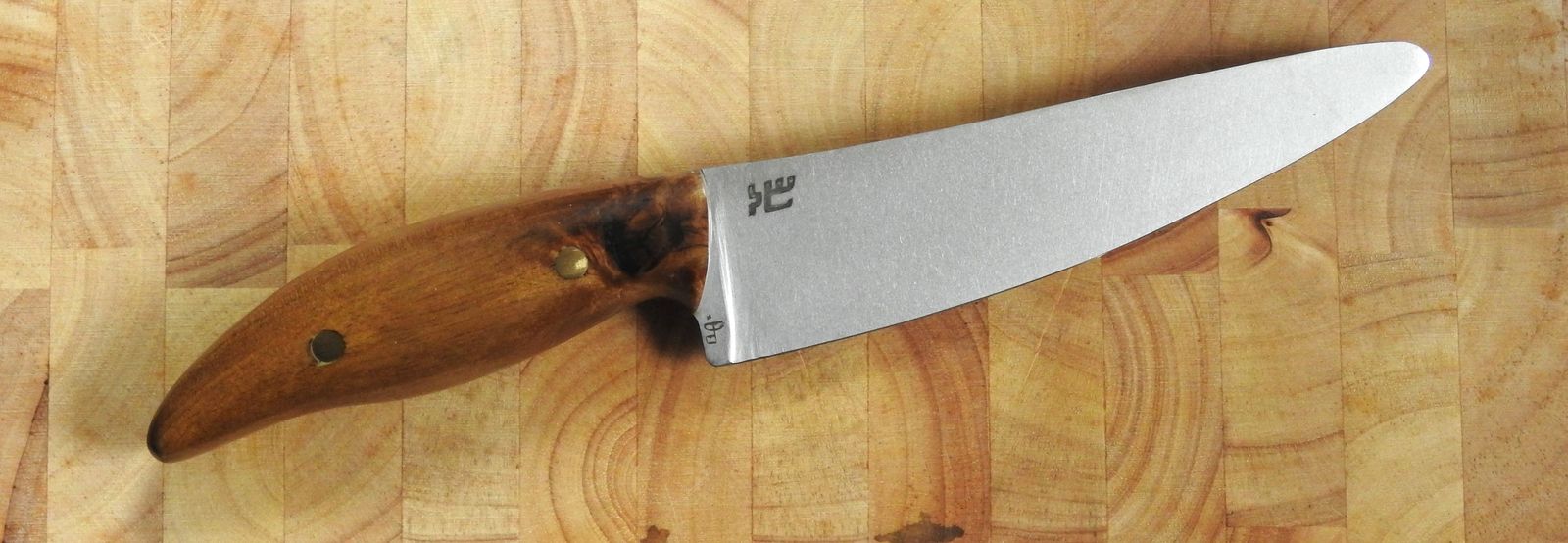
This single piece is one of the biggest reasons why I have lost a lot of time with the finishing of handles. Larch wood, as it turns out, is pretty, but it is really shitty for knife handles. It is softwood, but that would not necessarily be a problem in itself. The problems are two: 1) It is stringy, so it has a tendency to tear-out, burning, and gumming up belts. 2) The late-summer-growth is significantly harder than the spring growth and that causes all kinds of problems when trying to shape it to anything other than a plank.

Further, the ammonia fuming did nearly nothing to it, except perhaps making it a bit darker.

I suspected that it is probably not a very good wood for this purpose, and my suspicion was confirmed. I won’t use this wood anymore unless perhaps stabilized with resin. I only used this one piece because it was a gift by a former colleague, who is in turn the intended recipient of this knife. The result is not ugly, but it is much more work than it is worth.

Next is jatoba.

© Charly, all rights reserved. Click for full size.
© Charly, all rights reserved. Click for full size.
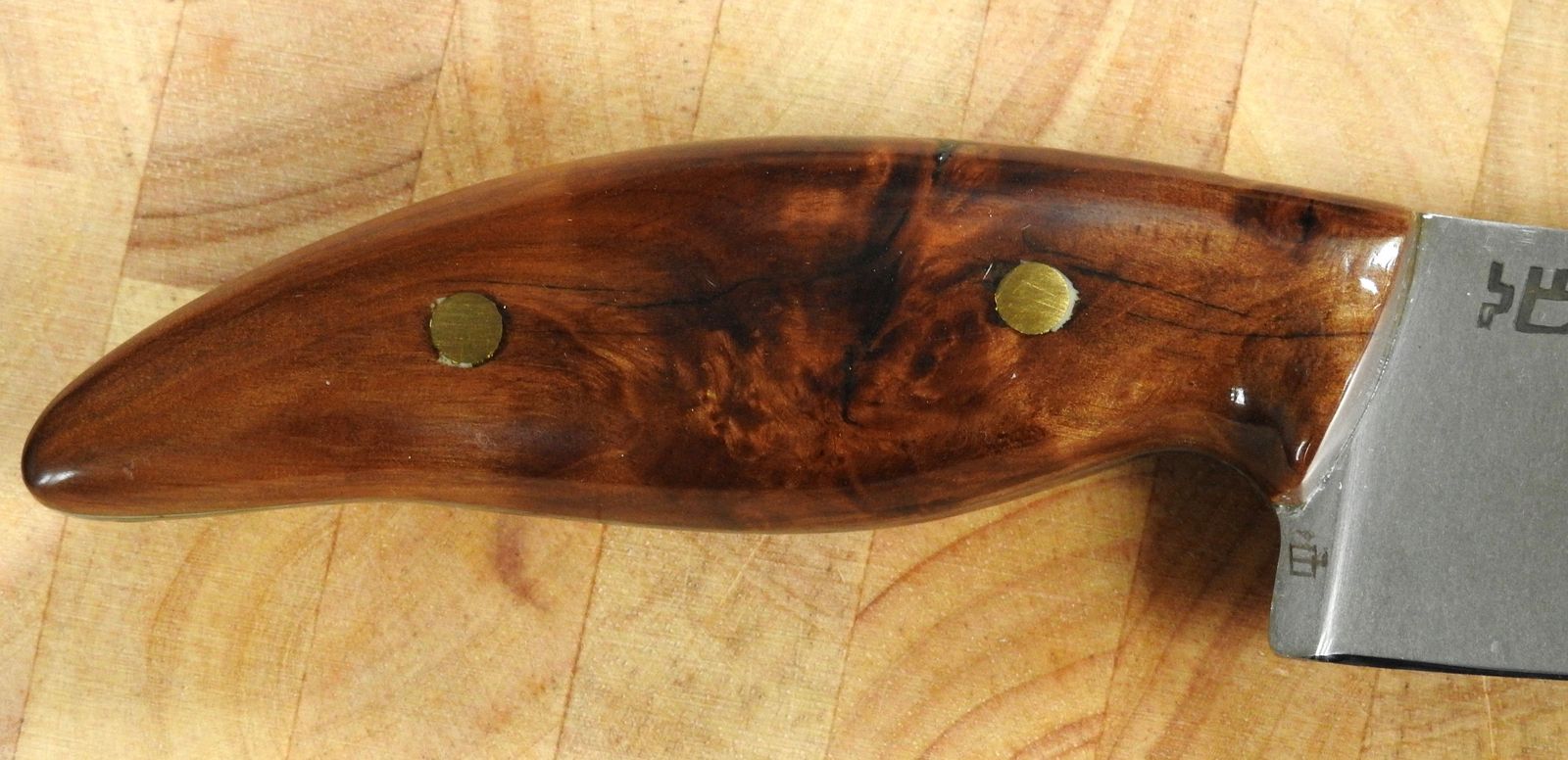
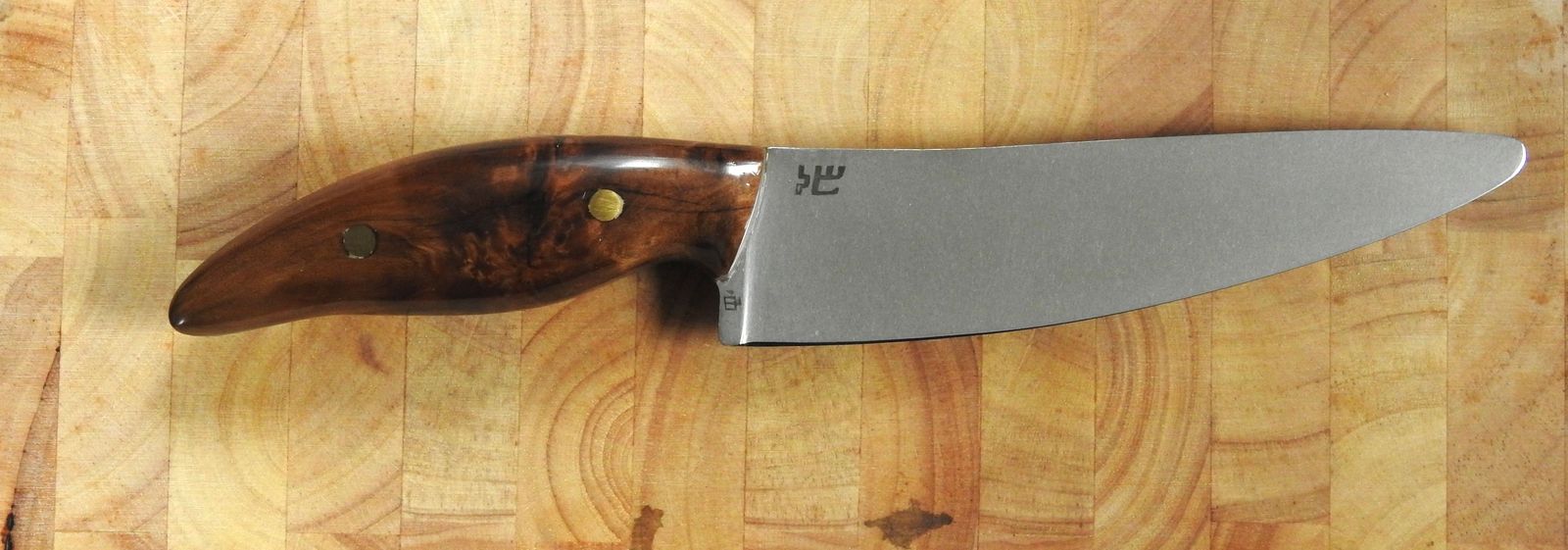
This was commissioned, so this is the only blade that will be sold (for a very moderate price). Part of the order was the etched star on the left side. I am a bit anxious about how the knife will be perceived. This customer too was warned that they cannot expect perfection, because I am still learning, but you never know. If they toss it on my head, I will have to deal with it.

I probably will not bother with treating jatoba with ammonia in the future, not in big chunks. It only makes the wood significantly darker and it is prone to develop cracks in due course, nothing else. It is not ugly – otherwise, I would toss it away – but I personally do not think it is worth the hassle. What untreated jatoba looks like you can see here.

And last today cherry.

© Charly, all rights reserved. Click for full size.
© Charly, all rights reserved. Click for full size.

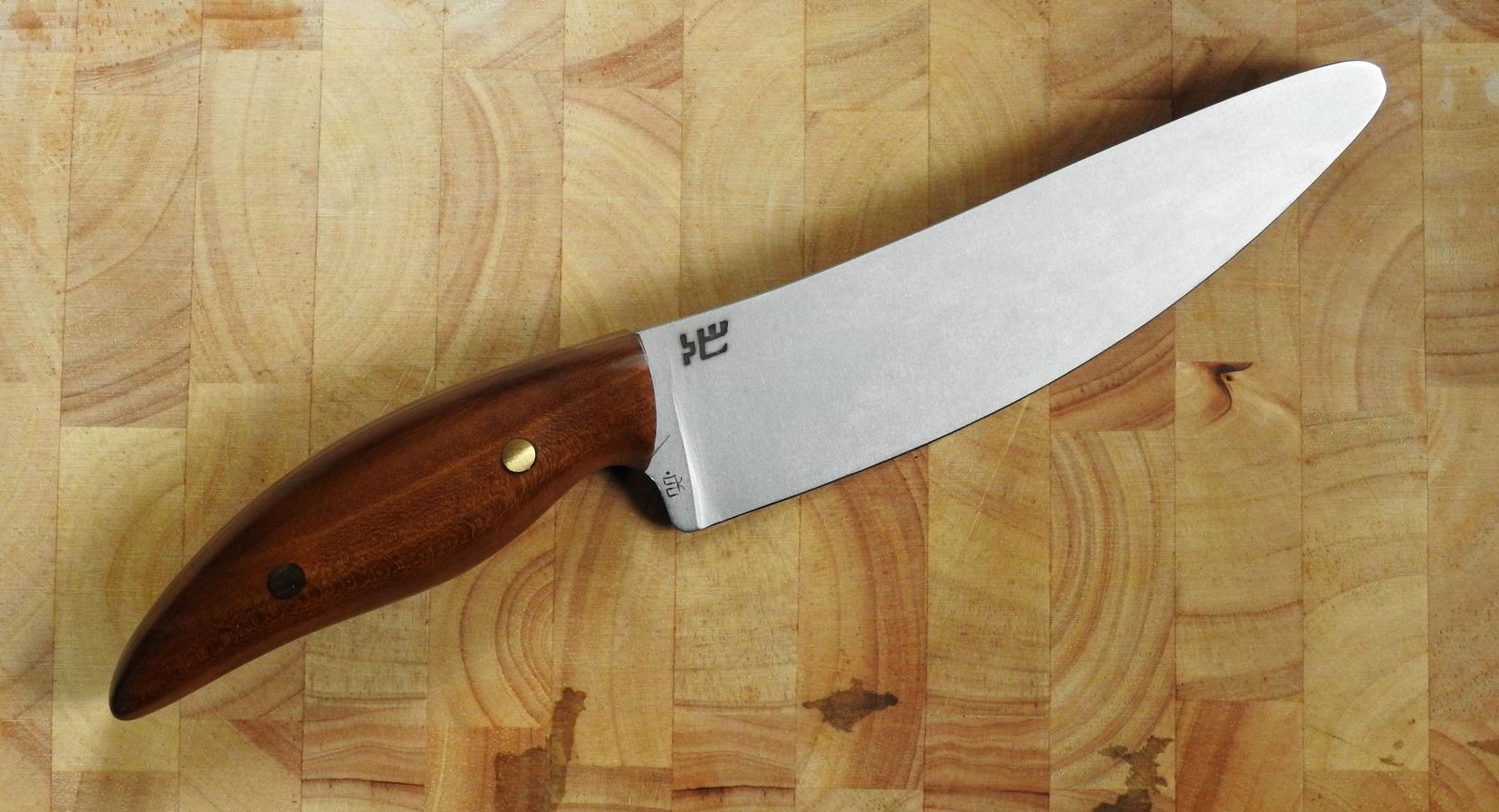
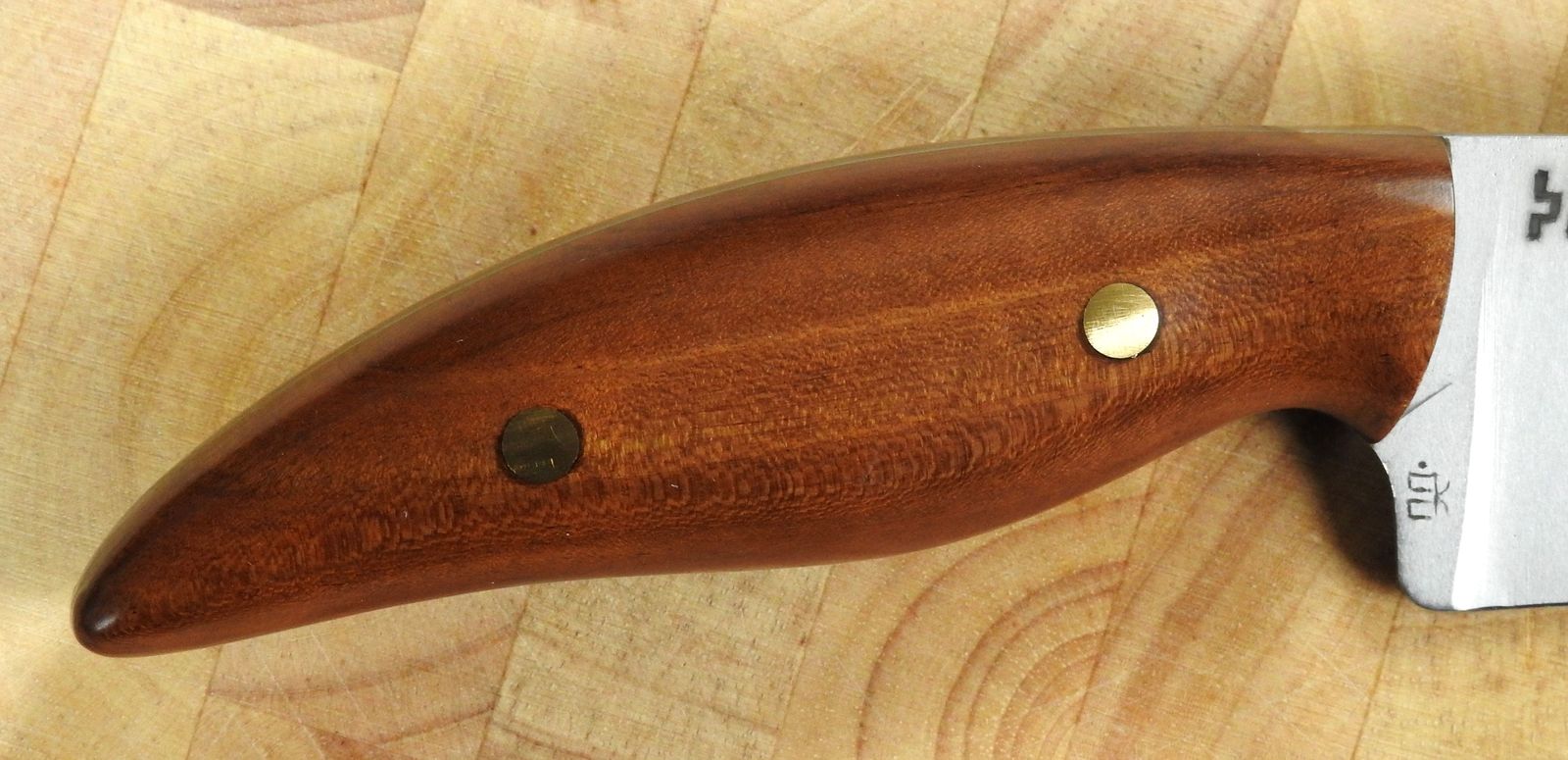
I am a bit ambiguous about how this turned out.  I love the look of untreated cherry wood (see here) and I was hoping perhaps, that the orange color will become richer and deeper. Instead, it has turned into chocolate brown. Not ugly brown, mind you, but brown all the same. Cherry wood is also very prone to develop cracks, but these two pieces almost miraculously were crack-free, I suspect that the strictly perpendicular and straight grain orientation has played a role (they were split from a log, not cut). I will perhaps do the fuming for cherry in the future for thinner pieces with straight grain to use them as a contrast with untreated cherry for intarsia, spacers, inserts, etc. The wood is a joy to work treated as well as untreated, I would use nothing else if I had enough of it.

I have messed up the etch of the number, you can see the straight line where I have accidentally run with the etching graphite rod over the edge of masking tape. But nobody is going to complain about this, because I am keeping this knife for myself.

There will be one more post with the remaining six knives and then we shall look at the time-analysis.